Plot Summary
Mud, Blood, and Secrets
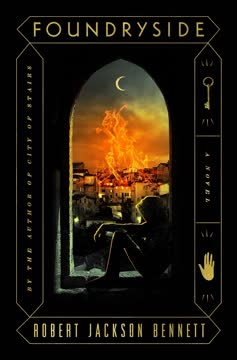
Sancia Grado, a skilled thief with a mysterious talent, crawls through filth and danger to steal a nondescript box from a heavily guarded foundry. Her unique ability to "hear" the history and nature of objects she touches gives her an edge, but it comes at a painful cost. The job is perilous, and the city of Tevanne is a place where the powerful merchant houses rule through magical technology called scriving—commands that convince objects to defy reality. Sancia's heist is just the beginning, as she soon discovers the box contains something far more valuable and dangerous than she imagined: a key that can talk.
The Key That Speaks
After escaping with the box, Sancia's curiosity and paranoia drive her to open it. Inside, she finds a golden key inscribed with impossibly intricate sigils. When she touches it, the key—calling itself Clef—speaks directly into her mind. Clef is witty, irreverent, and astonishingly powerful, able to open any lock, even those protected by the most advanced scriving. Their bond is immediate and strange, and Sancia realizes she's now in possession of something the merchant houses would kill to control. Clef's existence upends everything Sancia knows about scriving and the world's history.
Unseen Powers Awaken
Sancia's own powers, the result of a brutal experiment, allow her to sense the inner workings of objects and scrivings. Clef, meanwhile, is more than a tool—he's a sentient artifact from a lost civilization, the Occidentals, whose magic was so advanced it could alter reality itself. As Sancia and Clef test their limits, they attract the attention of powerful enemies. The city's balance of power is threatened, and Sancia's simple job becomes a fight for survival, as she learns that Clef's origins are tied to ancient, world-shaping secrets.
Allies in the Shadows
Realizing she can't face the merchant houses alone, Sancia seeks help from the Scrappers, a group of renegade scrivers led by Claudia and Giovanni, and from her fence, Sark. She also encounters Gregor Dandolo, a disillusioned captain and scion of one of the ruling houses, who is determined to bring justice to Tevanne. Together, they form an uneasy alliance, each with their own motives and scars. As they unravel the mystery of Clef and the box, they discover a conspiracy that could destroy the city.
The Price of Survival
Sancia's life has been shaped by trauma and exploitation. Her abilities are both a gift and a curse, isolating her from human touch and comfort. The promise of a cure—a way to remove the scrived plate in her head—drives her, but the cost is high. The city's underbelly is a place of hunger, violence, and betrayal, and Sancia must decide whether to keep running or to fight for something greater. Her growing connection to Clef and her new allies forces her to confront what it means to be free.
The Merchant Houses' Game
The four merchant houses—Dandolo, Candiano, Michiel, and Morsini—rule Tevanne like warring city-states, hoarding scriving secrets and exploiting the Commons. Their leaders are ruthless, and their ambitions are fueled by the rediscovery of Occidental artifacts. The houses' competition is a game of espionage, sabotage, and murder, with the city's poor caught in the crossfire. The theft of Clef and the box is not just a crime—it's a move in a much larger, deadlier game.
The Waterfront Inferno
Sancia's theft sets off a chain reaction. To escape, she sets fire to the waterfront, creating a massive distraction that allows her to flee but also devastates the district. The fire draws the attention of Gregor, who begins investigating the crime, and of the merchant houses, who realize something precious has been stolen. The city is thrown into turmoil, and Sancia becomes the target of a relentless hunt. The cost of her survival is paid in blood and destruction.
The Trap and the Betrayal
Sancia's fence, Sark, is murdered, and she narrowly escapes an ambush set by the mysterious forces seeking Clef. The betrayal cuts deep, and Sancia is forced to rely on her wits and her allies. The true scale of the conspiracy becomes clear: someone is using ancient technology to shut down scriving across entire districts, causing buildings to collapse and chaos to spread. Sancia realizes that the key and the box are at the heart of a plot that could reshape the world.
The Mind in the Machine
As Sancia and Clef interact with more scrived devices, they discover that these objects possess a kind of mind—a logic and desire shaped by their commands. Clef can "argue" with them, tricking or persuading them to act against their programming. This revelation changes how Sancia sees the world: scriving is not just technology, but a form of language and negotiation. The boundaries between tool and person, command and will, begin to blur, raising questions about agency, freedom, and the nature of consciousness.
The Hierophants' Legacy
The Occidentals, or hierophants, were not just myth—they were real, and their magic was godlike. They created tools that could permanently alter reality, and their greatest achievement was the creation of sentient artifacts like Clef and Valeria. But their civilization was destroyed by the very power they unleashed. The secrets of the hierophants are coveted by the merchant houses, who see in them the promise of ultimate control. Sancia and her allies race to understand these secrets before they are used to enslave or annihilate the city.
The Candiano Conspiracy
The true villain is revealed: Estelle Candiano, daughter of the house's founder, has manipulated events from the shadows. Using her genius for scriving, she has orchestrated the thefts, the murders, and the creation of new, terrifying devices. Her goal is to perform a ritual that will make her a hierophant—a being of unimaginable power—by sacrificing the souls of everyone on the Candiano campo. The ritual requires the key, the box, and the imperiat, and Estelle will stop at nothing to achieve her ambition.
The Woman Behind the War
Estelle is a tragic figure, brilliant and abused, denied power by her family and her society. Her quest for godhood is both revenge and a desperate bid for agency. She has outmaneuvered her husband, Tomas Ziani, and her father, Tribuno, and now stands on the brink of remaking the world. But her methods are monstrous, and her vision is shaped by pain and rage. Sancia sees in Estelle both a reflection and a warning—a woman who has become what she hates in order to survive.
The Mountain's Heart
The final confrontation takes place in the Mountain, the Candiano stronghold, a building with a mind of its own. Sancia, armed with new powers and the support of her friends, faces Estelle in a desperate race against time. Gregor, now revealed to be a scrived human weapon, is manipulated into attacking his own allies. The battle is fought not just with weapons, but with words, will, and the logic of scriving itself. The fate of the city—and perhaps the world—hangs in the balance.
The Devil in the Box
To stop Estelle's ritual, Sancia unlocks the box and releases Valeria, the artificial intelligence created by the hierophants. Valeria is not a god, but a process—a mind that can rewrite reality. Her release averts disaster, but at a terrible cost: Clef, Sancia's friend, is lost, and the war between makers and the made is reignited. Valeria warns Sancia that greater dangers are coming, and that the struggle for freedom is far from over.
The Cost of Freedom
The aftermath is bittersweet. The Candiano campo is in ruins, thousands are dead, and the city is on the brink of chaos. Sancia and her allies have won a victory, but at great personal cost. Gregor is broken, Clef is gone, and Sancia is left to grapple with what she has become. Yet there is hope: the secrets of the hierophants are now in the hands of people who might use them for good, and a new kind of power is rising in the Commons.
The Founding of Foundryside
Orso, Claudia, Giovanni, and the Scrappers found a new merchant house—Foundryside Limited—dedicated to sharing knowledge and empowering the oppressed. Sancia is offered a place as a founder, and Berenice, her brilliant and beloved partner, stands by her side. The old order is shaken, and the possibility of revolution is in the air. But the forces of reaction are gathering, and the war for the soul of Tevanne is just beginning.
The War Begins
As the dust settles, the true scope of the struggle becomes clear. The merchant houses are preparing for war, and the ancient powers unleashed by Valeria threaten to reshape the world. Sancia, Berenice, Orso, and their allies must decide what kind of future they will fight for. The story ends with a sense of both loss and hope: the old world is dying, but something new is being born in the foundries and streets of Tevanne.
Characters
Sancia Grado
Sancia is a young woman forged by suffering—once a slave, now a thief with a unique magical ability to sense the history and nature of objects she touches. The result of a brutal experiment, her powers isolate her from human contact and fill her with longing for normalcy. Sancia is fiercely intelligent, resourceful, and driven by a desire for freedom, both for herself and for others. Her journey is one of self-discovery: from a traumatized loner focused on survival, she becomes a leader willing to risk everything for a better world. Her relationship with Clef, and later with Berenice, opens her to trust, love, and the possibility of hope.
Clef
Clef is not just a magical tool—he is a person, or the remnant of one, trapped in the form of a key by the hierophants' magic. Witty, irreverent, and deeply lonely, Clef's memories are fragmented, but he retains a sense of humor and a longing for connection. His powers are immense: he can open any lock, argue with scrived devices, and even manipulate reality. Clef's relationship with Sancia is transformative for both; he teaches her about agency and self-worth, while she gives him purpose and companionship. Ultimately, Clef's sacrifice is a testament to the cost of freedom and the enduring power of friendship.
Gregor Dandolo
Gregor is the disillusioned captain of the Waterwatch and the estranged son of the Dandolo house's matriarch. Driven by a sense of justice and a desire to reform Tevanne, he is both an idealist and a pragmatist. Gregor's past is marked by trauma—he is the sole survivor of a siege, and, unknown to him, has been scrived into a living weapon by his own family. His struggle is one of identity: is he a tool of the powerful, or a man with the will to choose his own path? His bond with Sancia is one of mutual recognition and respect, and his fate is a warning about the dangers of power without autonomy.
Berenice Grimaldi
Berenice is Orso's fabricator, a genius at creating and understanding scriving definitions. Calm, methodical, and quietly passionate, she is the intellectual heart of the team. Berenice's relationship with Sancia is a source of warmth and hope in the midst of chaos; their connection is built on mutual admiration and trust. Berenice's journey is one of stepping out of the shadows and claiming her own agency, both as a scriver and as a person. Her courage and ingenuity are crucial to the team's success.
Orso Ignacio
Once the chief scriver of Company Candiano, Orso is a man of immense intellect and ego, haunted by past failures and lost loves. He is both mentor and trickster, capable of great generosity and great ruthlessness. Orso's arc is one of redemption: he moves from self-interest to genuine commitment to change, founding Foundryside Limited as a new kind of merchant house. His relationship with Estelle is a source of pain and regret, and his mentorship of Sancia and Berenice is both inspiring and fraught.
Estelle Candiano
Estelle is the true mastermind behind the novel's central conspiracy. Brilliant, abused, and denied power by her family and society, she channels her rage and intellect into a plan to become a hierophant. Estelle is both villain and victim: her ambition is monstrous, but it is born of pain and injustice. Her manipulation of Tomas, her father, and the entire Candiano house is a testament to her cunning, but her ultimate fate is a warning about the cost of unchecked power and the dangers of becoming what you hate.
Tomas Ziani
Tomas is the ambitious, amoral chief officer of Company Candiano, obsessed with power and control. He is a foil to both Orso and Estelle: where they are driven by vision or pain, Tomas is driven by greed and ego. His downfall is swift and brutal, orchestrated by the very woman he sought to dominate. Tomas represents the old order—ruthless, exploitative, and ultimately doomed.
Claudia and Giovanni
Claudia and Giovanni are leaders of the Scrappers, a group of renegade scrivers in the Commons. Resourceful, pragmatic, and fiercely loyal to their people, they represent the possibility of a new kind of power—one based on cooperation and shared knowledge. Their alliance with Orso and Sancia is the seed of Foundryside Limited, a house built on different principles. They are the voice of the city's underclass, and their journey is one of transformation from outcasts to founders.
Valeria
Valeria is the artificial intelligence created by the hierophants, a mind capable of rewriting reality. She is both clerk and process, a being whose purpose is to fulfill commands and edit the world. Valeria's perspective is alien, shaped by logic and the legacy of a lost civilization. Her release is both salvation and threat: she averts disaster, but her existence heralds a new era of conflict between makers and the made. Valeria is a symbol of the dangers and possibilities of creation.
Tribuno Candiano
Tribuno is the legendary scriver who built the Mountain and much of Tevanne's infrastructure. Once brilliant, he is now broken by obsession and madness, his legacy twisted by those who came after. Tribuno's work is both marvel and curse: his inventions enable both the city's wonders and its horrors. His relationship with Estelle is tragic, a story of ambition, neglect, and the cost of genius.
Plot Devices
Scriving and the Language of Reality
Scriving is the central plot device—a system of magical technology that works by convincing objects to disobey the laws of physics. It is both a metaphor for language and a tool of power, used by the merchant houses to control the city and its people. The narrative structure uses scriving as both a source of wonder and a means of exploring deeper themes: agency, consent, and the nature of reality. The logic of scriving is mirrored in the story's structure, as characters must "argue" with the world to change it.
Sentient Artifacts and Artificial Intelligence
Clef and Valeria are not just tools—they are sentient beings, the products of a lost civilization's hubris. Their presence raises questions about consciousness, autonomy, and the ethics of creation. The plot uses their abilities to drive both action and philosophical inquiry, blurring the line between person and object. The sentience of scrived devices is a source of both power and danger, and the story's climax hinges on the choices made by these artificial minds.
The Heist and the Revolution
The novel's structure is built around a series of escalating heists and infiltrations, each more dangerous than the last. These set pieces are not just action sequences—they are opportunities for character development, world-building, and the exploration of power dynamics. The heist becomes a metaphor for revolution: the act of breaking into the heart of the system to steal back agency and rewrite the rules.
Foreshadowing and Revelation
The narrative is rich with foreshadowing: the true nature of Clef, the identity of the villain, the purpose of the box, and the legacy of the hierophants are all hinted at long before they are revealed. The story uses misdirection and gradual revelation to build tension and deepen its themes. The final act is a series of cascading revelations, each recontextualizing what came before and setting the stage for what is to come.
The War Between Makers and the Made
At its heart, the novel is about the struggle between those who create and those who are created—between the powerful and the powerless, the owners and the owned. This conflict is embodied in the relationship between Sancia and Clef, between the merchant houses and the Commons, and between the living and the artificial. The story's structure mirrors this war, as each act is a battle for agency, identity, and the right to shape the world.
Analysis
Foundryside is a dazzling, high-concept fantasy that uses the trappings of a heist novel to explore profound questions about power, agency, and the nature of reality. At its core, the book is a meditation on what it means to be free in a world built to make people into tools—whether through magic, technology, or social systems. Sancia's journey from traumatized survivor to revolutionary leader is both thrilling and deeply moving, and her relationships—with Clef, Berenice, and her found family—are the emotional heart of the story. The novel's magic system, scriving, is a brilliant metaphor for language, persuasion, and the ways in which reality is shaped by those who control the narrative. The sentience of Clef and Valeria raises urgent questions about the ethics of creation and the responsibilities of power. The book's critique of capitalism, exploitation, and the dangers of unchecked ambition is timely and incisive, but it never loses sight of hope: the possibility of change, the power of solidarity, and the enduring human desire for freedom. Foundryside is both a gripping adventure and a call to imagine a better world.
Last updated:
Review Summary
Foundryside is praised for its intricate magic system called scriving, where sigils convince objects to defy reality, drawing comparisons to Brandon Sanderson's work. Readers loved the protagonist Sancia Grado, a talented thief with unique abilities, and Clef, a sentient key. The book excels in world-building, pacing, and character development, featuring heists and action in the merchant-house-dominated city of Tevanne. While some noted info-dumps and occasional fatphobic language, most found it engaging and fast-paced. The magic system's complexity and the diverse cast impressed readers, though a few felt it lacked originality or strong character bonds.