

Key Takeaways
Aim for a life that tolerates uncertainty, not a mind without doubt
A recovery built on risk. Melanie spent years trapped by OCD and body dysmorphic disorder, convinced that minor marks ruined her schoolwork and that her appearance made her unfit to be seen. After treatment, she joined Grayson’s muddy camping trip, an experience that would once have seemed impossible. Her progress illustrates the book’s central claim: recovery does not require certainty that feared events will never happen. It requires learning to live without treating every doubt as an emergency.
Doubt is ordinary; the struggle is not. Grayson defines OCD’s central problem as trying to eliminate uncertainty in selected areas of life. People without OCD also face risk, but usually act on a best guess. The book cites lifetime OCD prevalence of roughly 2 to 3 percent and reports that about 70 percent significantly benefit from exposure and response prevention. These are the book’s figures, not a personal prognosis.
The book’s most useful reframing separates uncertainty from danger: feeling unsure is not itself evidence that harm is imminent. That distinction echoes decision science, where people routinely act on probabilities without possessing proof. It also explains why reassurance can feel compelling yet fail to settle the matter. The approach has an important boundary, however. Accepting uncertainty does not mean dismissing genuine medical or safety concerns. The therapeutic task is to reduce compulsive certainty-seeking while preserving ordinary, evidence-based precautions.
Recognize how rituals trade lasting freedom for brief relief
Relief can train fear. Grayson describes two kinds of learning that help explain OCD. Classical conditioning links fear to a cue, such as a public restroom. Operant conditioning strengthens actions that bring immediate relief, such as avoiding the door handle or washing again. The relief teaches the brain to repeat the response, even though the feared outcome was never actually resolved.
The circle widens. Ira, a man with contamination fears, separated outside clothes from home clothes, repeatedly washed laundry, and made his family follow elaborate entry and cleaning rules. These rituals occupied his household without giving him the certainty he wanted. Avoidance can have the same effect: fewer places feel safe, so everyday life shrinks. Grayson argues that rituals are choices made under intense pressure, not evidence of weakness or proof that resistance is easy.
This account makes a powerful learning-theory point: relief is a reward even when it does not solve the underlying problem. In behavioral science, this is called negative reinforcement, because an action becomes more likely when it removes distress. The concept helps explain why a ritual can grow despite its poor long-term results. It also discourages moral blame. Still, calling behavior a choice should not be mistaken for saying it is simple to change. Biological vulnerability, habit, and context can make the available alternatives feel painfully narrow.
Address biology and learning together, instead of choosing one explanation
Two forces interact. Grayson presents OCD as involving both biological vulnerability and learned responses. Biology may make uncertainty more distressing or weaken the ordinary feeling that a task is finished. Learning then shapes which situations become feared and which rituals appear to help. The account does not claim that a person, their parents, or a character flaw caused the disorder.
Medication can help, not complete the job. In Mary’s case, therapy helped her resist learned rituals, while an SSRI prescribed with her physician reduced persistent urges. Grayson describes medication as potentially lowering sensitivity to triggers and making it easier to let thoughts go, while leaving learned patterns for therapy to address. He reports an average medication-related symptom reduction of 30 to 50 percent, but emphasizes individual variation. There is no single test in the book’s account that determines who needs medication. Decisions, dose changes, and discontinuation belong with a physician.
The interaction model resists two familiar errors: reducing OCD to faulty chemistry or treating it as a habit a person should simply stop. It also gives medication and behavioral treatment complementary roles rather than forcing an either-or choice. The book’s specific medication estimates and prescribing guidance reflect its own clinical context and should not be treated as current individualized advice. A clinician can weigh symptoms, depression, side effects, medical history, and preferences. The broader insight remains valuable: biological support can make learning-based change more manageable without making practice irrelevant.
Practice exposure to uncertainty, not experiments that promise safety
Face the cue without neutralizing. Exposure and response prevention, or ERP, pairs contact with a feared situation with stopping the ritual that usually follows. The exposure may occur in real life or through imaginal exercises, such as listening to a carefully prepared account of a feared possibility. Grayson warns that exposure is not meant to prove the feared outcome cannot happen. Seeking that proof would simply create another demand for certainty.
The response matters too. A person who fears a driving mistake, for instance, may drive without repeatedly retracing the route or checking the car afterward. Mental review and reassurance can also function as rituals. Fear may rise before it settles, and Grayson describes repeated contact as helping the response change. Exposure must be individualized and clinically safe. It is not permission to handle biohazards, disregard real hazards, stop medically indicated hygiene, or carry out dangerous exercises without an experienced OCD professional.
The distinction between exposure and a safety test is central: if an exercise succeeds only when nothing bad happens, the person may learn that safety depended on luck. Contemporary learning models also emphasize that improvement need not be measured by anxiety falling during a single exercise. Repeated experiences of acting while uncertainty remains can matter even when distress persists. Grayson’s immersion language is memorable, but it needs a firm clinical boundary. Effective exposure targets compulsive avoidance, not reasonable precautions or objectively hazardous behavior.
Map the full cycle before deciding what to confront
Assess beyond the obvious. Grayson asks readers to identify feared situations, the consequences they imagine, the rituals they use, and what they avoid altogether. A person may notice handwashing but miss mental reviewing, repeated questions, or arranging family life around a fear. His assessment uses symptom checklists and a three-day log recording triggers, responses, time spent, and distress.
Rank the work. A fear hierarchy is an ordered list of situations, from less distressing to more distressing. It gives treatment a personalized sequence rather than a generic checklist. Grayson recommends including both manageable starting points and difficult situations that reveal the full shape of the fear. The goal is not to create a perfect record. It is to see patterns clearly enough to plan specific exercises, monitor behavior, and notice forms of avoidance that have quietly narrowed daily life.
Assessment is more than paperwork here. It shifts the problem from a vague feeling of being controlled to observable links among triggers, responses, and consequences. That resembles functional analysis in behavior therapy, where the question is not only what someone does but what the behavior accomplishes in context. A hierarchy can also support collaboration by making difficult work visible and negotiable. Its limitation is that a list cannot itself determine clinical safety, diagnosis, or readiness. Those judgments benefit from an OCD-trained therapist, especially when symptoms are severe or tangled with other conditions.
Use reasoning to reveal uncertainty, not to manufacture reassurance
Ask what the ritual is for. Grayson’s Downward Arrow technique follows a feared situation through successive what-if consequences until the central fear becomes clearer. A person who checks a car door, for example, might discover that the deeper concern is not merely theft but being responsible for what follows. The book also proposes a Gun Test, a thought exercise that asks for a best guess when perfect certainty is unavailable.
Keep thinking from becoming a ritual. The Survey Method compares behavior with ordinary social practice; the Double-Standard Method asks whether someone demands more of themselves than of others. A cost-benefit analysis records what OCD has taken and what recovery could restore. These tools are meant to support action, not prove that the feared event is unlikely. If analysis becomes another way to settle the question once and for all, it is serving the compulsion rather than recovery.
The book makes a subtle distinction between using logic to decide how to act and using it to force feelings of safety. That distinction is useful well beyond OCD: evidence can guide a decision without eliminating regret, fear, or ambiguity. The best-guess exercise makes uncertainty explicit instead of disguising it as certainty. Yet comparisons with what most people do can be misleading when social norms are unsafe or when a person has a legitimate medical need. These techniques work best as prompts for reflection, not universal rules or substitutes for professional judgment.
Treat intrusive thoughts as mental events, not reliable evidence of character
Content is not the whole story. Grayson describes violent, sexual, religious, relationship, and seemingly neutral obsessions. He argues that an intrusive thought does not, by itself, establish what a person wants or what they will do. The common trap is trying to determine its meaning, suppress it, or monitor feelings for proof. Those efforts can keep the thought at the center of attention. Imaginal exposure and response prevention can address mental rituals as well as visible ones.
Look at the whole pattern. The book also discusses overvalued ideation, meaning a strong belief that the concern behind a symptom is realistic, as in some presentations involving health or appearance. It cautions that similar-looking problems can require different assessment. Intrusive thoughts alone do not establish dangerous intent, but actual plans, relevant behavior, psychotic experiences, or immediate safety concerns call for prompt professional evaluation, not self-diagnosis from a book.
This section counters a common reasoning error: assuming a thought must reveal a hidden desire because it feels vivid or disturbing. Research on thought suppression also supports the broader observation that monitoring for a forbidden idea can keep it cognitively accessible. The practical alternative is neither to endorse every thought nor to prove it harmless, but to change the response to it. Careful assessment still matters. Distress, intrusive imagery, intent, and behavior are not interchangeable, and a brief description cannot reliably sort every case.
Let recovery protect time with people, not just reduce symptoms
The present is part of recovery. Donna’s constant checks on her adult daughter Margie were meant to keep her safe, but they also strained their relationship and consumed attention when they were together. Grayson’s point is that rituals cannot guarantee a loved one’s safety; they can, however, take over the time and connection available now. Recovery therefore includes deciding what kind of family member or friend a person wants to be.
Support without accommodation. Grayson recommends helpers who notice progress, encourage planned exercises, and avoid reassurance or acting as the anti-OCD police. His GOAL support groups combine discussion with specific behavioral goals between meetings, so members can report what they attempted rather than only recount distress. For some readers, acceptance and commitment therapy ideas, including values-guided action and mindfulness, can help connect treatment to a meaningful life.
The relational focus adds an important measure of change: not only whether symptoms diminish, but whether attention returns to ordinary shared life. Family involvement can be constructive when it reduces accommodation without turning loved ones into monitors or enforcers. The structured GOAL format also translates solidarity into accountable, modest action. At the same time, the book’s forceful examples of parental responsibility may land as motivation for some and shame for others. Support works best when it respects autonomy, acknowledges the burden on families, and keeps treatment decisions collaborative.
Treat a slip as a warning signal, then restart before it expands
Old learning can return. Grayson describes recovery as learning that competes with prior habits, not as erasing them. Under stress, illness, major life changes, or familiar triggers, old urges may reappear. A minor ritual can grow if it is repeatedly dismissed as harmless, while a sudden surge in anxiety can make relapse feel inevitable. Neither experience proves that treatment failed.
Prepare for vulnerable moments. The book recommends recording triggers and noting whether they are internal or external, predictable or surprising, and controllable or not. A person who knows that a stressful season or recurring situation raises risk can refresh exposure practice and arrange support in advance. After a slip, the useful question is what happened and what action to take now, not whether the person has ruined recovery. Medication changes should be planned with a physician, not made abruptly in response to a difficult period.
This maintenance model replaces all-or-nothing thinking with an early-warning approach. That is a strength shared with relapse prevention in other areas of health: small deviations are easier to address than entrenched patterns, and context can explain vulnerability without excusing inaction. The emphasis on recording triggers makes prevention practical rather than dependent on perfect memory. A useful qualification is that monitoring should remain proportionate. If tracking becomes another ritual or source of self-surveillance, it can recreate the very cycle it is meant to interrupt.
Analysis
Grayson’s central argument is that OCD is not defined by unusual thoughts or ordinary rituals, but by the effort to erase uncertainty through compulsions, avoidance, and reassurance. The book’s strongest contribution is how consistently it applies that model across visible behaviors and private mental acts. Washing, checking, confessing, reviewing a conversation, testing one’s feelings, and trying to force a thought away may look different, but each can promise certainty while keeping doubt alive. The emphasis on individualized assessment also helps explain why a symptom checklist alone is not a treatment plan.
Its practical architecture is unusually concrete: track triggers, identify feared consequences, rank exposures, prepare scripts, enlist support, and plan for setbacks. Grayson makes a persuasive case that motivation improves when recovery is connected to specific losses, relationships, and activities rather than to symptom reduction alone. His cases, especially Melanie’s return to school and Donna’s struggle to be present with her daughter, give the clinical concepts human stakes.
The book also requires careful interpretation. Its strong exposure language and examples of total response prevention should not be copied literally without qualified clinical guidance. Exposure is not reckless contact with genuine hazards, rejection of ordinary hygiene, or neglect of medical care. Its framing of generalized anxiety, body dysmorphic disorder, health anxiety, and obsessive-compulsive personality disorder as OCD-related presentations is the author’s clinical position, not a universal diagnostic consensus. Medication claims and recommendations should be discussed with a current prescriber. The most durable message is narrower and safer: stop using compulsions to demand certainty, and practice responding to uncertainty in ways that preserve health, values, and daily life.
Review Summary
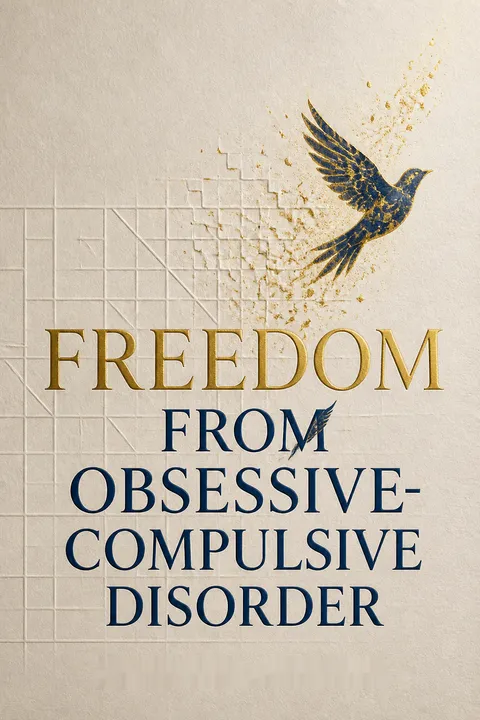
Freedom From Obsessive-Compulsive Disorder receives high praise for its comprehensive approach to understanding and treating OCD. Readers find it informative, validating, and life-changing, despite some triggering content. The book is lauded for its clear explanations, practical strategies, and emphasis on living with uncertainty. Many appreciate the step-by-step instructions for exposure and response prevention therapy. While some note an overemphasis on contamination OCD, the book is widely recommended for OCD sufferers, their families, and therapists. Readers particularly value the checklists, worksheets, and sample scripts provided.
People Also Read







Glossary
Exposure and Response Prevention
Facing fears without ritualsA behavioral treatment for OCD that combines planned contact with feared situations or thoughts, called exposure, with refraining from the compulsions or avoidance that normally follow, called response prevention. In Grayson’s approach, the purpose is not to prove that feared outcomes are impossible, but to practice living with uncertainty. Exercises should be individually planned and clinically safe.
Fear hierarchy
Ranked exposure planAn ordered list of feared situations, thoughts, or cues, arranged from less distressing to more distressing. The hierarchy helps a person and clinician choose and sequence exposure exercises. Grayson recommends including both approachable starting points and difficult concerns, so the plan reflects the person’s broader pattern rather than only the easiest symptoms.
Downward Arrow
Trace fears to consequencesA questioning technique that follows a feared situation through successive possible consequences. The person asks what might happen if a ritual is not performed, then what would follow from that outcome, until the underlying feared consequence becomes clearer. Grayson uses the answers to identify what the person is trying to prevent and what uncertainty treatment must address.
Gun Test
Choose a best guessA thought exercise in which a person must make a single guess about a feared situation, without being allowed to seek certainty. Grayson uses it to distinguish an ordinary best estimate from the emotional feeling of certainty OCD demands. It is not a safety test, a probability calculation, or proof that an exposure carries no risk.
Treatment Interfering Behaviors
Patterns that disrupt treatmentBehaviors that hinder participation in a recovery plan, regardless of the person’s intention. Examples include repeatedly avoiding planned exercises, hiding missed work from a helper, or not preparing agreed support materials. Grayson recommends identifying the specific behavior and its context, then making a concrete plan to address it rather than treating it as a character flaw.
Overvalued ideation
Strong belief in feared concernsA strong conviction that the concern underlying a symptom is realistic or that related rituals are necessary. Grayson discusses it in conditions such as health anxiety and body dysmorphic disorder, where reassurance that the concern is mistaken may not be persuasive. The term describes a feature of belief, not proof that the feared condition is present.
SUDs
Distress rating scaleSubjective Units of Discomfort, a self-rating scale Grayson uses to record distress, from 0 for calm to 100 for the most intense anxiety imaginable. A rating can help compare situations and track perceived difficulty over time. It is not an objective measurement, and the book advises against treating precise scores as essential.
GOAL
Action-focused OCD support groupGiving Obsessive-Compulsives Another Lifestyle, a support-group format Grayson helped establish. Meetings include discussion of an OCD-related topic, planning specific behavioral goals between meetings, and informal socializing. The goal-planning component distinguishes it from groups focused only on sharing difficulties: members define an achievable action and review what happened.
Intolerance of uncertainty
Difficulty living with doubtGrayson’s term for the central process he sees across OCD symptoms: treating uncertainty about selected fears as unacceptable and trying to remove it through rituals, avoidance, reassurance, or analysis. Recovery does not require liking risk or believing disaster is likely. It involves changing behavior without obtaining absolute certainty first.
Neutralizing rituals
Acts meant to cancel fearBehaviors or mental acts performed to prevent, undo, explain away, or reduce the feared consequences of an obsession. Examples include repeated washing, checking, seeking reassurance, mentally reviewing events, or trying to suppress thoughts. Grayson emphasizes that a ritual’s function matters more than whether it looks logical to an observer.
FAQ
1. What is Freedom From Obsessive-Compulsive Disorder by Jonathan Grayson about?
- Comprehensive OCD recovery guide: The book provides a detailed, personalized program for overcoming OCD, focusing on living with uncertainty as the foundation of recovery.
- Treatment strategies explained: It covers the nature and causes of OCD, practical treatment methods—especially exposure and response prevention (ERP)—and how to tailor these to individual symptoms.
- Self-guided and holistic: Grayson offers tools, scripts, and worksheets for self-guided therapy, addressing both symptom reduction and relapse prevention.
- Wide range of OCD types: The book addresses various OCD manifestations, including contamination, checking, perfectionism, and primary mental obsessions, as well as related spectrum disorders.
2. Why should I read Freedom From Obsessive-Compulsive Disorder by Jonathan Grayson?
- Expertise and credibility: Jonathan Grayson, PhD, is a leading OCD expert with over 30 years of clinical experience and a recipient of the International OCD Foundation Lifetime Achievement Award.
- Empowering and practical: The book equips readers to become their own therapists, offering actionable steps, motivational scripts, and strategies to overcome common treatment challenges.
- Addresses complex and subtle OCD: It covers not only classic OCD symptoms but also less-discussed forms like religious obsessions, relationship OCD, and sensory-focused OCD.
- Hopeful and supportive: Grayson balances scientific rigor with empathy, providing hope and encouragement for lasting recovery.
3. What are the key takeaways from Freedom From Obsessive-Compulsive Disorder by Jonathan Grayson?
- Uncertainty is central: The core of OCD is an intolerance of uncertainty, and recovery requires learning to accept and live with it.
- ERP is essential: Exposure and response prevention (ERP) is the cornerstone of effective OCD treatment, supported by cognitive and mindfulness tools.
- Personalization matters: Treatment must be tailored to each individual’s symptoms, triggers, and feared consequences for best results.
- Support and relapse prevention: Building a support system and preparing for slips are crucial for maintaining progress and long-term recovery.
4. What is the core concept of OCD according to Freedom From Obsessive-Compulsive Disorder by Jonathan Grayson?
- Intolerance of uncertainty: OCD is fundamentally about the desperate need for 100% certainty, which is unattainable and drives anxiety and compulsions.
- Emotional vs. logical certainty: Sufferers often know their fears are irrational, but emotional uncertainty persists, fueling obsessions and rituals.
- Living with doubt: Grayson encourages making peace with uncertainty, using tools like the "Gun Test" to distinguish between intellectual knowledge and emotional certainty.
- Acceptance as recovery: Embracing uncertainty is the foundation for breaking OCD’s cycle and reclaiming one’s life.
5. How does Jonathan Grayson explain the causes of OCD in Freedom From Obsessive-Compulsive Disorder?
- Biological vulnerability: Genetics and neurobiology, including serotonin regulation and specific brain circuits, increase sensitivity to uncertainty and intrusive thoughts.
- Learning and conditioning: Classical and operant conditioning reinforce rituals and avoidance, creating a self-perpetuating cycle of anxiety and compulsion.
- Interaction of factors: Both biology and learned behaviors interact to shape the severity and persistence of OCD symptoms.
- Contextual influences: Internal states and environmental contexts can modulate symptom intensity and trigger relapses.
6. What are obsessions and compulsions as defined in Freedom From Obsessive-Compulsive Disorder by Jonathan Grayson?
- Obsessions: Intrusive, anxiety-provoking thoughts, images, or fears focused on uncertainties like harm, contamination, or imperfection.
- Feared consequences: Common fears include causing harm, being immoral, forgetting something important, or being imperfect.
- Compulsions: Rituals or mental acts performed to prevent or neutralize feared outcomes, which can be behavioral (e.g., handwashing) or mental (e.g., counting, analyzing).
- Cycle of reinforcement: Compulsions temporarily reduce anxiety but ultimately reinforce obsessions and maintain the disorder.
7. What is Exposure and Response Prevention (ERP) in Freedom From Obsessive-Compulsive Disorder by Jonathan Grayson?
- Core behavioral treatment: ERP involves confronting feared situations (exposure) and refraining from rituals (response prevention) to break the OCD cycle.
- Habituation process: Repeated exposure without rituals leads to reduced anxiety over time, known as habituation.
- Active and imaginal exposure: Both real-life (in vivo) and imaginal exposures are used, especially for mental obsessions or situations that can’t be recreated physically.
- Daily, planned practice: Grayson recommends daily, structured ERP sessions, supported by scripts and reminders, for maximum effectiveness.
8. How does Freedom From Obsessive-Compulsive Disorder by Jonathan Grayson recommend designing a personalized OCD recovery program?
- Fear hierarchy creation: Identify and rank feared situations from least to most anxiety-provoking to guide exposure order.
- Motivational scripts: Develop detailed, believable scripts that reinforce reasons for recovery and acceptance of uncertainty, avoiding reassurance.
- Active and passive exposures: Plan daily active exposure sessions and use passive exposures (like listening to scripts) throughout the day.
- Addressing Treatment Interfering Behaviors (TIBs): Identify and manage behaviors that sabotage treatment, with specific anti-TIB plans.
9. What are Treatment Interfering Behaviors (TIBs) and how are they managed in Freedom From Obsessive-Compulsive Disorder by Jonathan Grayson?
- Definition: TIBs are actions or avoidances that directly undermine participation in treatment, such as ritualizing after exposure or avoiding exposures altogether.
- Identification: The book provides tools and forms to help sufferers recognize their TIBs and understand the underlying reasons (e.g., anxiety, lack of time).
- Anti-TIB strategies: Develop specific, actionable plans to counter TIBs, detailing when and how to act differently.
- Reframing setbacks: TIBs are seen as manageable obstacles, not failures, and addressing them is integral to successful recovery.
10. How does Freedom From Obsessive-Compulsive Disorder by Jonathan Grayson address specific OCD types like contamination, checking, ordering, and mental obsessions?
- Contamination OCD: Gradual, total immersion in feared contaminants, with strict response prevention and family support to avoid enabling rituals.
- Checking compulsions: Exposure involves leaving things "wrong" or unchecked, using reminders to prevent automatic checking, and stopping reassurance seeking.
- Ordering, symmetry, and counting: Exposures disrupt order and perfection, encouraging sufferers to make things "wrong" and resist movement or counting rituals.
- Primary mental obsessions: Use of imaginal exposure scripts and behavioral exposures, with a focus on moving mental rituals to the background and involving family support.
11. How does Freedom From Obsessive-Compulsive Disorder by Jonathan Grayson address religious obsessions, scrupulosity, and sensory-focused OCD?
- Religious obsessions: Treatment respects faith, encourages consulting religious authorities, and adapts ERP to align with beliefs, using imaginal exposure to feared blasphemous thoughts.
- Scrupulosity: The "Two Gods" metaphor helps sufferers choose a forgiving perspective, reducing fear of damnation and supporting treatment risks.
- Sensory-focused OCD (SF-OCD): Involves distress over internal or external sensations; treatment uses single-word or sound exposure scripts and behavioral exposures to habituate and reduce anger or avoidance.
- Neutral obsessions: Similar methods are used for obsessions with no negative meaning, focusing on habituation and acceptance.
12. What advice does Freedom From Obsessive-Compulsive Disorder by Jonathan Grayson give for maintaining recovery, building support, and handling slips?
- Slips are normal: Relapses are expected and should be seen as red flags, not failures, with quick recovery possible through self-monitoring and coping plans.
- Support systems: Involving family, friends, and self-help groups like GOAL provides encouragement, accountability, and practical help during difficult times.
- Ongoing exposure: Continued, even low-level, exposure and response prevention act as barriers against relapse and help maintain progress.
- Building a meaningful life: Focusing on rewarding activities and relationships beyond OCD makes symptom-free living more desirable and sustainable.
Download PDF
Download EPUB
.epub digital book format is ideal for reading ebooks on phones, tablets, and e-readers.








