


Key Takeaways
Treat social confidence as a skill you can practice, not a birthright.
Practice beats waiting. Rian Stone describes a dating life repeatedly interrupted by the Royal Canadian Navy: long deployments, irregular schedules, and little time to build relationships. Ordinary dates and polite conversation brought him little success, so he studied pickup techniques and treated flirting as a learnable skill. He calls this structured approach Game: planned ways to start conversations, build rapport, and notice whether interest is mutual.
A score is not insight. One night, Sara recognized him as a man she had slept with before, though he could not remember her. He had kept a mental tally of partners and imagined that remembering them made him more discerning. The awkward reunion exposed the gap between collecting experience and learning from it. He began to value practice and honest reflection more than the number attached to his record.
What's useful here is the shift from fixed identity to trainable behavior. Rehearsal, feedback, and repeated low-stakes attempts can make social skills less mysterious, much as practice improves public speaking or negotiation. But the analogy to a game has limits: another person is not an obstacle course, and success cannot be measured only by whether a date leads to sex. The strongest version of this lesson is to practice initiating conversation while also learning to notice comfort, reciprocity, and disinterest. Skill should make interaction more mutual, not merely more efficient.
Stop protecting the identity that keeps you from doing difficult work.
Talent can become shelter. Stone grew up being praised as unusually smart, then used that identity to avoid tasks where he might fail. He recalls a Navy supervisor ordering him to clean toilets despite his test scores and ideas. The humiliation helped separate his self-image from the work actually required. Intelligence mattered less than doing the job.
Comparison distorts the rules. He also judged himself superior to his friend Mike, who had more dating success, by inventing standards that made his own performance look better. Sara's surprise recognition revealed the hollowness of that self-protective accounting. His replacement principle is humility without self-contempt: accept that no impressive label guarantees results, and treat setbacks as information rather than proof of personal failure.
This resembles self-handicapping, a well-studied pattern in which people protect a valued identity by avoiding situations that could test it. The supervisor's blunt correction works in the story because it breaks the link between being smart and being exempt from ordinary effort. Still, the book's language sometimes implies that a person's worth depends on usefulness. That is a harsher claim than the lesson requires. Results matter for improving a skill, but human dignity need not be earned through productivity or sexual success.
Choose a destination before you start improving yourself.
Effort needs a purpose. Stone argues that self-improvement can become an endless collection of rituals: exercise, earning more, reading philosophy, or chasing status without deciding what those efforts are meant to accomplish. He asks the reader to begin with an outcome. If fitness is the aim, define what kind of health or appearance matters. If money is the aim, decide what freedom or security it should buy.
Measure the result, not the ritual. Going to the gym is not the same as reaching a fitness goal, just as working longer hours is not automatically a better life. Stone favors concrete aims because they expose the difference between progress and activity. He also allows that goals can change. When direction is unclear, he recommends building options and resources rather than following a prescribed self-improvement checklist.
The distinction between activity and outcome is valuable in a culture that readily turns personal development into consumption. Goal-setting research generally finds that specific aims can direct effort, particularly when people receive feedback. Yet goals can also narrow attention or reward what is easy to count. A richer approach pairs measurable targets with values: what kind of life should the result support, and what costs are unacceptable? That keeps a fitness plan from crowding out health, or a financial plan from quietly displacing relationships and rest.
Read the setting, not just the person you hope to persuade.
Context changes the odds. Stone uses logistics to mean the practical and social conditions surrounding an encounter: where people meet, who is present, how easy it is to leave, and whether a private conversation is possible. He found that a large group of friends or a venue centered on public status often made flirtation harder, while smaller gatherings and less conspicuous venues sometimes created more room for one-to-one conversation.
Find a less crowded arena. He borrows the business metaphor of red and blue oceans. A red ocean is a crowded arena where competitors fight for attention; a blue ocean is a niche with less direct competition. His examples include creating a social scene around a band, a house party, or an online community. These are observations from his own dating life, not reliable rules about what any individual wants.
The broader insight is about affordances: environments make some actions easier and others harder. A crowded event, a quiet cafe, and a private party each shape the available interactions before anyone says a word. This kind of contextual thinking is useful in networking, sales, and community building. The caution is that a setting can suggest opportunity without establishing consent or interest. Stone's claims about what women intend in particular venues are personal interpretations, not universal evidence. Context should guide a respectful opening, never substitute for another person's response.
Use scripts as training wheels, then let the real interaction lead.
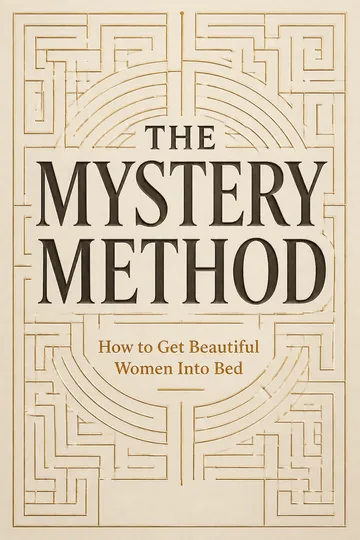
Structure helps novices. Stone learned the M3 method, a pickup framework he associates with Mystery. In broad terms, it moves from making an initial impression, to establishing comfort and rapport, to exploring whether greater intimacy is welcome. Prepared conversation starters gave him something to practice and a way to review where an interaction faltered. He also used a playful personality exercise called The Cube to invite stories instead of conducting a list of interview questions.
A framework is not a verdict. Stone says he eventually became less dependent on checklists and more responsive to the person in front of him. That transition matters because a memorized script can make an interaction feel mechanical. Some of the book's advice interprets hesitation as concern about reputation rather than lack of desire. That interpretation is not safe to rely on: ambiguity is not consent, and interest must be clear, ongoing, and freely given.
Scripts can lower the cognitive burden of a first attempt, a principle familiar from simulation training and clinical practice. A rehearsed opening can help someone focus on listening rather than panic. The danger arrives when the script becomes a theory of what another person secretly means. The book's framework sometimes treats hesitation as a puzzle to solve, especially when it attributes reluctance to social reputation. A more defensible model keeps the useful structure, conversation, attention, and checking in, while treating a pause or refusal as decisive unless the other person clearly says otherwise.
Judge commitment by repeated actions, not the explanation you wish were true.
Watch the pattern. Stone recalls Charlie, who initially seemed uncannily suited to his preferences, then became less responsive and less reciprocal. He kept pursuing the earlier version of the relationship instead of accepting what her present behavior showed. In contrast, his casual arrangement with the Dog Walker worked because both people appeared to want the limited relationship they had, including a particular sexual dynamic.
Boundaries need no diagnosis. Stone's practical lesson is to assess consistency, effort, and mutual enthusiasm rather than inventing explanations for someone's motives. He also discusses remorse as something demonstrated through accountability, honesty, and effort to repair harm, not simply an apology. These ideas are strongest when applied to observable conduct. The book's broader claims that people, especially women, routinely deceive themselves go beyond what these anecdotes can establish.
Behavioral evidence is often more dependable than confident guesses about another person's inner life. In relationships, repeated follow-through, honest repair, and respect for boundaries offer practical information that a compelling explanation cannot replace. This approach also reduces the temptation to diagnose a partner from a distance. Its limit is that behavior still needs context: illness, stress, or mismatched expectations can look like indifference. Direct conversation can clarify those possibilities, but it cannot obligate anyone to stay. The useful standard is not perfect certainty, but whether the relationship remains respectful and reciprocal.
Separate a memorable story from a genuinely good experience.
Anecdotes edit out the cost. Stone describes sleeping with Rose, who was engaged, as a striking story from his Navy years. In the moment, he focused on getting back to work on time; the future impact on her fiancé was largely outside his account. Elsewhere, a night with a flight attendant ended with Stone passed out, while his friends supplied the entertaining version of events. A dramatic story can make an experience sound successful even when it was uncomfortable, disappointing, or harmful.
Bravado is selective evidence. Stone also recalls how military authorities made minor disciplinary trouble sound terrifying to encourage sailors to cooperate. The consequences were often less severe than the warning suggested. His point is that stories are told for reasons: to impress, frighten, excuse, or persuade. Readers should ask what details are missing and whether the storyteller's vivid account reflects the actual quality of the experience.
Narrative is not a neutral recording device. People compress events into stories that protect status, create meaning, or make an awkward outcome entertaining. That makes the chapter's skepticism toward conquest stories useful, and it should also apply to the narrator himself. Stone's candid admission of failures adds texture, but the comic framing can soften the harm to people outside the scene. A good test is to ask whose perspective the story leaves out, and whether the punchline depends on treating someone else's trust or vulnerability as background scenery.
Treat heartbreak as grief, not a problem solved by collecting partners.
Stone's prescription is sexual replacement. He compares the pain after a breakup to withdrawal and argues that dating or sleeping with several new people can dilute attachment to an ex. He describes oxytocin, a hormone involved in social bonding, as part of why separation can feel so destabilizing. In his account, new romantic experiences provide an alternative source of connection and help restore perspective.
The metaphor is not a treatment plan. The book presents this as a practical answer to obsessive longing, but the argument relies heavily on analogy and personal experience. It does not establish that casual sex helps everyone recover, or that a set number of partners is necessary. The more durable lesson is to rebuild a life that has become organized around one person, while choosing forms of connection that fit one's own needs and values.
The withdrawal metaphor captures something real about attachment: a breakup disrupts routines, expectations, and sources of comfort, not just sexual access. But describing new partners as a substitute dose risks reducing people to instruments of recovery. Research on rebound relationships is mixed, and individual outcomes depend on motives, emotional readiness, and the quality of the new connection. Friends, meaningful activity, time, and professional support can also help. The key distinction is between reopening a social life and using another person to numb grief or prove that the former partner was replaceable.
Build options around a life you value, not a need for validation.
Abundance means choice. Stone uses thirst to describe desperate pursuit of a scarce source of sexual attention. He argues that having options makes a person less likely to cling to an unsuitable relationship or sabotage other priorities for approval. He also praises mess culture, his term for purpose-driven male groups, such as Navy messes, where peers share work, meals, and private conversation under common expectations.
The ending complicates the conquest. The book recounts years of casual encounters, but its epilogue says Stone is still with Cat after eleven years. That conclusion suggests that dating skill can serve a lasting relationship, not only increase the number of partners. His account presents male-only groups as especially valuable, though the deeper ingredients may be shared purpose, trust, and mutual responsibility rather than exclusion itself.
The strongest version of abundance is not a crowded dating roster; it is a life with enough purpose, friendship, and self-respect that one person's approval does not govern every choice. The Navy mess gives the book a vivid example of belonging built around shared work rather than constant emotional display. Yet the story does not prove that such belonging must be male-only. Inclusive groups can also create trust and accountability. Stone's eleven-year relationship with Cat supplies an important counterweight to the book's scorekeeping: options matter most when they support a chosen life, not when they become another status contest.
Analysis
FUCCFILES is part memoir, part field manual, organized around fifteen stories from Stone's years as a Royal Canadian Navy sailor and the lessons he draws from them. Its narrative engine is a useful transformation: a young man who repeatedly fails at dating adopts structured practice, then discovers that tools can improve confidence while also becoming fresh material for ego and scorekeeping. The strongest ideas are practical and broadly transferable: choose goals over vague improvement, pay attention to context, learn from results, and distinguish repeated behavior from a desired explanation. The book is also unusually candid about humiliating failures and unflattering motives, which makes its advice more memorable than a triumph-only success story.
Its central weakness is evidential. Stone often moves from personal encounters to broad claims about women's psychology, biology, and motives. Anecdotes can generate hypotheses, but they cannot establish universal gender rules; some claims about self-deception, sexual strategy, and relationship roles are presented with more certainty than the evidence in the text supports. The pickup framework also risks turning ambiguity into a cue for persistence. Any useful account of social confidence must distinguish reading interest from overriding reluctance, and treat consent as explicit and continuing.
The book's ending is more complex than its conquest-driven rhetoric. Stone's account of a long relationship with Cat suggests that the lasting value is not a high score but the ability to act without desperation, recognize mutual investment, and choose deliberately. Read as a memoir of learning through mistakes, it offers sharper insight than when treated as a scientific theory of women or a universal dating manual.
Review Summary
FUCCFILES receives mostly positive reviews, with readers praising its practical insights into male-female dynamics and the author's unique voice. Many appreciate the combination of personal anecdotes and theoretical concepts, comparing it to "The Game." Some find it entertaining and informative, particularly for understanding modern relationships. Critics note it could have been more comprehensive, and a few suggest reading other works first. Overall, readers value the book's straightforward approach and real-life applications in navigating the sexual marketplace.
People Also Read









Glossary
Game
Structured dating practiceStone's term for learned techniques used to initiate and develop flirtatious interactions. In his account, Game includes conversation routines, attention to social cues, and reflection on what worked or failed. It is presented as a practical skill set rather than an innate gift, though the book's framing can make social interaction seem more controllable and mechanical than it is.
M3 method
Pickup interaction frameworkA framework Stone learned from pickup literature and identifies with Mystery. It organizes an interaction into broad movements from attracting attention, to building comfort, to exploring intimacy. The author presents it as training structure for inexperienced men, not as a guarantee of success. Its usefulness depends on reading the other person's responses rather than following steps regardless of consent.
The Cube
Imaginative rapport exerciseA conversational exercise Stone uses to invite a date to imagine a cube, a ladder, flowers, a horse, and a storm in a setting. He interprets each image as a metaphor for aspects of the person's identity, work, relationships, ideal partner, or fears. In the book, it serves as a playful prompt for stories and personal reflection, not a validated psychological assessment.
Logistics
Practical social contextStone's term for the situational conditions that shape an interaction, including venue, group size, transportation, privacy, timing, and the ease of moving between places. He argues that favorable logistics can make connection more likely and reduce friction. These conditions may create an opportunity to talk, but they do not establish attraction or consent.
red and blue oceans
Crowded and niche arenasA business metaphor Stone applies to dating. Red oceans are crowded settings where many people compete for attention, such as popular clubs or campuses. Blue oceans are less contested niches where someone may stand out by building a distinct social space or reputation. The metaphor encourages attention to competition and context, but it does not guarantee that a niche will attract compatible partners.
mess culture
Purpose-based peer communityStone's term for the trust and informal norms built among peers who share a military mess, a communal space for eating and socializing. He associates it with discretion, mutual responsibility, common work, and handling problems within the group. His examples come from male-dominated Navy settings; the underlying features of shared purpose and trust are not necessarily limited to men.
thirst
Desperate pursuit of approvalStone's slang for pursuing sexual or social validation with such urgency that other priorities and relationships are damaged. He treats desperation as a liability in dating, friendship, and business because it can lead people to cling, compete destructively, or abandon their own goals. The term describes a behavior pattern in the book, not a clinical diagnosis.
FAQ
1. What’s "FuccFiles: Lessons from a Decade of Women" by Rian Stone about?
- Candid memoir of dating: The book is a brutally honest memoir chronicling Rian Stone’s experiences with women over a decade, primarily during his time as a sailor in the Royal Canadian Navy.
- Lessons from real stories: Each chapter is built around a real-life story or "field report," followed by the lessons and insights Stone extracted from his successes and failures in the dating world.
- Focus on male self-improvement: The book explores the intersection of self-improvement, sexual strategy, and masculinity, often critiquing mainstream advice and offering a "Red Pill" perspective.
- Practical and philosophical: It blends practical advice on dating, relationships, and pickup with philosophical musings on male identity, ego, and the realities of the modern sexual marketplace.
2. Why should I read "FuccFiles: Lessons from a Decade of Women" by Rian Stone?
- Unfiltered male perspective: The book offers a rare, unvarnished look at the realities of dating and relationships from a man who’s lived through both triumphs and humiliations.
- Actionable lessons: Stone distills each story into practical takeaways, making it useful for men seeking to improve their dating lives or understand the dynamics of attraction.
- Critique of mainstream advice: It challenges conventional wisdom, self-help platitudes, and the "nice guy" approach, providing alternative frameworks rooted in real-world experience.
- Entertaining storytelling: The writing is engaging, humorous, and self-deprecating, making it as entertaining as it is informative.
3. What are the key takeaways from "FuccFiles: Lessons from a Decade of Women"?
- Ego is the enemy: Letting go of ego and self-delusion is crucial for growth in both dating and life.
- Game is a skill: Attraction and success with women are skills that can be learned, practiced, and improved, not innate traits.
- Abundance mindset matters: Developing abundance and not over-investing in any one woman is key to both happiness and success.
- Self-improvement needs direction: Self-improvement for its own sake is "masturbation"—it must be goal-oriented and not just a way to feel good about oneself.
- Women are human, not ideals: Seeing women as flawed individuals, not as perfect archetypes, leads to healthier relationships and better decision-making.
4. How does Rian Stone define and use "Game" in "FuccFiles: Lessons from a Decade of Women"?
- Game as a system: Stone treats "Game" as a set of learnable, repeatable behaviors and routines that increase a man’s attractiveness and success with women.
- Gamification of dating: He likens learning Game to playing video games—requiring practice, pattern recognition, and iterative improvement.
- Structured frameworks: The book details frameworks like the Mystery Method (Attract, Comfort, Seduce) and emphasizes the importance of logistics, escalation, and reading subtext.
- Beyond tricks—internalization: While routines and techniques are useful for beginners, true mastery comes from internalizing the principles and adapting them naturally.
5. What is the "Red Pill" perspective in "FuccFiles: Lessons from a Decade of Women" and how does it shape the book?
- Male self-reliance: The Red Pill view emphasizes that men must take responsibility for their own growth, as societal institutions have failed to guide them.
- Brutal honesty about women: Stone adopts a realistic, sometimes cynical view of female nature, focusing on observable behaviors rather than idealized narratives.
- Iterative learning: The Red Pill is presented as an ongoing process of men sharing notes, learning from each other, and constantly refining their understanding of relationships.
- Critique of victimhood: The book rejects the idea of men as victims of women or society, instead urging readers to focus on what they can control.
6. What are the most important concepts and mental models in "FuccFiles: Lessons from a Decade of Women"?
- Abundance vs. Thirst: Cultivating abundance (having options) is essential; "thirst" (neediness) is deeply unattractive and self-sabotaging.
- Self-delusion and ego: Recognizing and overcoming self-delusion is a recurring theme; ego protection often blocks real progress.
- Logistics and environment: Success with women is often about being in the right place at the right time—logistics matter as much as personal qualities.
- Process communication/subtext: Understanding what women mean (not just what they say) is crucial; subtext often reveals true intentions.
- "She wasn’t yours, it was just your turn": Accepting the impermanence of relationships and not over-investing emotionally.
7. How does "FuccFiles: Lessons from a Decade of Women" address self-improvement and its pitfalls?
- Self-improvement as masturbation: Stone argues that self-improvement without clear goals is just a way to feel good, not to achieve anything meaningful.
- Goal-oriented action: Improvement should be tied to specific, desired outcomes (e.g., better dating results, more fulfilling life), not arbitrary standards.
- Avoiding ego traps: Many men use self-improvement to protect their egos rather than to confront their weaknesses or failures.
- Iterative growth: True growth comes from making mistakes, learning from them, and continually refining one’s approach.
8. What does Rian Stone say about women, relationships, and the modern sexual marketplace in "FuccFiles: Lessons from a Decade of Women"?
- Women act as "shitty as you let them": Stone argues that women’s behavior is shaped by what men tolerate, not by inherent virtue or vice.
- Hypergamy and impermanence: He discusses women’s tendency to seek the best available option and the reality that "it’s just your turn."
- Reputation management: Women are highly concerned with how they are perceived, often more than with the actual act of sex or relationships.
- Modern dating is easier and harder: While opportunities for casual sex have increased, so have the challenges for men who lack social skills or abundance.
9. What practical advice does "FuccFiles: Lessons from a Decade of Women" offer for men seeking success with women?
- Care less, be aloof: Being less invested than the woman and maintaining unpredictability is attractive and prevents neediness.
- Go where women are buying: Focus efforts on environments where women are open to meeting men, rather than competing in "red oceans."
- Escalate and screen: Always escalate with women and screen for genuine interest; don’t waste time on "maybes."
- Learn, then forget the script: Use structured routines as training wheels, but aim to internalize and adapt them naturally over time.
10. How does "FuccFiles: Lessons from a Decade of Women" approach the topic of heartbreak, moving on, and emotional resilience?
- Get under ten to get over one: Stone advocates sleeping with other women as the most effective way to move past heartbreak and recalibrate emotionally.
- Oxytocin and addiction: He explains the chemical basis for attachment and why breaking it requires new experiences, not just time or introspection.
- No closure from women: Don’t expect apologies or closure; focus on your own healing and growth.
- Remorse and forgiveness: True remorse is shown through high-investment actions, not words; don’t accept cheap apologies.
11. What are the best quotes from "FuccFiles: Lessons from a Decade of Women" and what do they mean?
- "Self-improvement is masturbation." – Improvement without purpose is just self-soothing; set real goals.
- "You ain't shit, and that’s OK." – Let go of ego and accept your flaws; only then can you grow.
- "She wasn’t yours, it was just your turn." – Don’t over-invest emotionally; relationships are often temporary.
- "Thirst is the worst." – Neediness and desperation are deeply unattractive; cultivate abundance.
- "Don’t care, got laid." – Don’t overthink failures or successes; keep moving forward and enjoy the process.
12. How does "FuccFiles: Lessons from a Decade of Women" differ from other books on dating, pickup, or masculinity?
- No bravado or ego inflation: Unlike many pickup or memoir books, Stone doesn’t embellish his stories to look cool; he shares failures as openly as successes.
- Focus on honest self-assessment: The book is about learning from mistakes and being brutally honest with oneself, not just about "winning" with women.
- Critique of mainstream and PUA advice: Stone critiques both mainstream self-help and traditional pickup artistry, offering a more nuanced, experience-based approach.
- Integration of life lessons: The book connects lessons from dating to broader themes of masculinity, self-improvement, and living a fulfilling life, making it relevant beyond just the sexual marketplace.
About the Author
Other books by Rian Stone

Download PDF
Download EPUB
.epub digital book format is ideal for reading ebooks on phones, tablets, and e-readers.








