

Plot Summary
A Text After Three Years
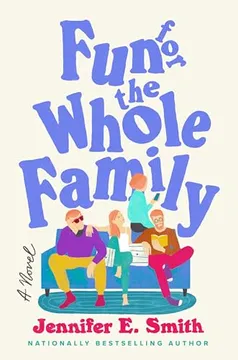
At forty-three, Gemma Endicott is waiting to learn whether IVF has worked, unsure if she wants the motherhood her husband, Mateo, longs for. Then her youngest sister, Jude, asks her to come to North Dakota.
The four siblings have barely seen one another since their father’s funeral, when they fought over Connor’s novel, a fictionalized account of their childhood that exposed private family wounds. Gemma has kept birthdays and holidays alive with polite messages, but she has not managed to repair the silence.
She tells herself she cannot leave Chicago before her pregnancy test, then reads Jude’s plea and changes her mind. Mateo understands why she must go. Their childhood map, once studded with pins from family road trips, comes back to Gemma as proof that the four of them once knew how to travel together.
Gemma’s decision begins the plot as an act of care, but it is not simple self-sacrifice. Her hesitation contains the story’s central tension: she has spent much of her life tending to other people, and now she must decide whether responding to family means abandoning her own uncertain needs. The old map makes that conflict tangible. It once recorded movement and shared discovery; now it measures distance, both geographical and emotional. Mateo’s support matters because he does not demand that Gemma choose between him and her siblings. His trust gives her room to return without pretending she is already reconciled.
One More Season
In Washington, D.C., Roddy is a thirty-eight-year-old professional soccer player grieving the end of his long career when Orlando offers him one more season. He accepts immediately, then realizes the preseason begins two days before his planned Valentine’s Day wedding to Winston, a scientist and his fiancé.
Roddy tells Winston too little about the timing and hopes they can work around it; Winston agrees to join the North Dakota trip but makes clear that the decision affects his life too.
At the same time, Jude’s brief message reaches Roddy, who has not seen her in three years. He decides he must go, and asks Winston to come with him so his fiancé can finally meet the family he has kept at a distance. Their trip begins with both a reunion and a postponed argument.
Roddy’s instinct is to treat opportunity as an emergency: a career door has opened, so he runs through it before asking who will be left standing behind him. His fear of retirement is real, but so is his habit of confusing personal determination with a decision that belongs only to him. The wedding date sharpens this flaw because it turns an abstract future into a promise already made. Winston’s willingness to travel shows care, not consent to being overlooked. Roddy’s reunion with Jude also exposes how family loyalty can remain powerful even after years of silence, sometimes stronger than the commitments he is building in the present.
The Portree Reunion
Connor, a prizewinning novelist stalled after his divorce from Nicola, brings Rosie and Hugh from Nashville to Portree, North Dakota, where Jude has arranged to meet them. On the drive, their Uber driver, Annie, proves both funny and capable, and Connor feels an unexpected ease around her.
At the worn Portree Inn, the children help him convince the nervous clerk that Jude is truly his sister. Jude appears, and the three-year gap briefly collapses as she hugs Connor and meets his children.
Roddy arrives with Winston, followed by Gemma, and the siblings gather in the lobby, awkward but relieved. Jude hands out a professionally prepared itinerary titled for a family weekend. Her plans include small-town attractions and a remote cabin, but she still refuses to explain why she chose this particular place.
The reunion is staged through ordinary obstacles: a hotel clerk, a child’s knowledge of Jude’s movies, and the awkward business of introducing a fiancé. Those details keep the famous actress from eclipsing the sibling who used to share ice cream with Connor. Rosie’s excitement also shows how absence changes family relationships: she knows Jude partly through films and gifts, not through daily life. Annie’s brief presence creates a contrasting possibility for Connor. She meets him without the fame attached to his book, while Jude’s family knows too much about the cost of his success. The itinerary signals that Jude wants to direct the gathering, perhaps because structure feels safer than explaining what she has come to confess.
Portree Held a Memory
At dinner, the siblings try to catch up through small disclosures. Jude admits she is dating actor Spencer Nolan; Roddy reveals his Orlando move; Connor acknowledges his divorce and stalled writing; Gemma describes her ordinary life with Mateo.
When Connor and Gemma press Jude about the itinerary, she finally explains that their mother, Frankie, once came to Portree with her. The trip happened twenty years earlier, after the Texas fire had ended the family road journeys. Frankie had contacted Jude alone, and Jude went without telling her siblings.
The revelation unsettles the table: they thought their mother had vanished from their lives after the fire, and they do not yet know why she returned or what happened on that visit. The old family wound is no longer safely buried in Connor’s novel.
Jude’s first disclosure gives the weekend a historical center, but it also reproduces the family’s old pattern: one sibling receives information the others do not. Her secrecy is not yet explained, so the revelation creates intimacy and suspicion at once. The dinner’s round of personal updates reveals how thoroughly the siblings have become strangers to one another, despite having followed each other’s careers from afar. Connor’s book matters here as more than a source of resentment. It has become the only public account of their childhood, which means each sibling must decide whether to trust the written version, their own memories, or the person sitting across the table.
A Cabin Under Snow
The group drives through worsening snow toward a remote cabin, with Annie guiding the rental car after the planned van cancels. Once they arrive, the power and landline fail, and the private chef cannot reach them.
The family finds sleds in a shed and goes out together, turning the forced outing into a rough, laughing race down the hill. Connor and Jude fall into a snowball fight, then apologize for their part in the old conflict over his novel. He admits he did not consider how publication would affect them; she acknowledges the pain of staying away.
Their reconciliation is tentative, not a return to childhood, but it loosens the room. Around the fire, Winston cooks dinner, Gemma dances with Hugh, and Connor grows closer to Annie before his son’s nightmare interrupts them.
The storm removes the conveniences that help the siblings maintain distance: phones, schedules, private rooms, and easy departures. Their shared labor in the cabin makes cooperation physical rather than sentimental. The sledding matters because it lets the adults briefly recover the bodily ease of childhood without erasing what happened since. Connor’s apology is also more precise than his earlier defense of the novel. He recognizes that artistic intention did not cancel the effect on his siblings. Yet the cabin’s temporary warmth cannot solve the family’s central secret. The scene offers repair as a practice, a series of imperfect gestures, rather than a single emotional declaration.
The Test in the Dark
Unable to contact Mateo and tired of waiting, Gemma asks Roddy to help her enter a closed market near the cabin. She finds a pregnancy test and pays for it, then uses it in the bathroom while the others sleep. The result is positive.
Jude walks in before Gemma can keep the news private, and Gemma finally explains why motherhood has frightened her: she spent her childhood raising her siblings, then delayed trying for a baby until IVF made the decision feel immediate and fragile.
Jude tells her she was already a mother to them and promises the family will support her now. Gemma is still unsure what she feels, but she no longer has to hold the answer alone. The news gives the stranded weekend a new future, even as another family secret is about to surface.
The test makes Gemma’s ambivalence concrete. A small object gives her a result, but not a ready-made emotion; she must face the possibility that desire and fear can arrive together. Her confession reframes her long delay as more than indecision. Caregiving began so early that parenthood could look less like a choice than another assignment. Jude’s response recognizes the labor Gemma performed without turning it into a debt. The scene also reverses their childhood roles: the younger sister offers reassurance to the older one. That reversal is a small but meaningful sign that the siblings may learn to support Gemma rather than simply rely on her.
Jude Started the Fire
A candle ignites a stack of magazines in the cabin, and the brief flames freeze Jude in place. The scare prompts her to tell the truth about the fire that ended the family road trips in Texas. At fourteen, she took the car keys while everyone slept, climbed into the Honda, and lit one of Frankie’s joints.
She fell asleep; the car caught fire, burning Jude’s arm before she escaped through the back door. Frankie took responsibility, claiming she had been in the car and caused the blaze.
Their father then barred her from seeing the children, and the siblings believed their mother had endangered Jude. Jude kept the truth for years, bound by her promise to Frankie and by fear of how her family would judge her. Her confession leaves them stunned and angry.
The revelation changes the meaning of the family’s defining injury without making the injury disappear. Jude was a child who made a dangerous choice, Frankie was a mother who protected one child at the cost of losing contact with the others, and the siblings built their understanding around incomplete facts. The fire is therefore both an event and a false family story, repeated until it became an explanation for years of separation. Jude’s silence preserved her bond with Frankie but denied her siblings the chance to interpret their own past. Her guilt is real, yet it cannot account for every adult choice that followed.
Jude Almost Stays Behind
After the confession, Jude retreats upstairs while Roddy leaves the cabin to clear his head. Connor wants to leave her there, furious that she kept the secret, but Rosie reminds him that Jude was only fourteen when the fire happened.
He goes to her door and admits he is angry while also recognizing that she was a frightened child carrying a promise. He invites her to come with the family. At the local bar, Spencer appears after driving through the storm to find Jude.
He has learned she saw an oncologist after a call reached their house, though he does not yet know what she is facing. Jude says she cannot let him into that part of her life and ends their relationship. At the same time, Roddy and Winston remain distant, with their wedding plans unresolved.
Connor’s choice to return for Jude is the weekend’s clearest test of whether the family motto survives adulthood. He does not excuse her silence; he recognizes that anger need not become abandonment. Rosie’s intervention is important because it gives the adults a child’s scale of the event. Jude was not an adult strategist but a frightened teenager whose decisions hardened into a family history. Her rupture with Spencer shows the same defensive reflex at work in a different relationship: when vulnerability feels dangerous, she withdraws before someone else can leave. The bar gathers the family physically while exposing how many of them still confuse love with self-protection.
Smoke at O'Brien's
A grease fire sets off the bar alarm, and the smell of smoke sends the siblings back into the terror of Texas. Connor gets Rosie and Hugh outside while the adults gather, shaken by how quickly the old fear returns.
Jude apologizes for the fire and admits how often she still relives it; Roddy, Connor, and Gemma tell her they forgive her, while refusing to pretend the past was harmless. Then Gemma doubles over with cramps and begins bleeding. Spencer drives her and Jude through the snow to an emergency room, where Mateo answers her call and stays on the line.
An ultrasound shows the pregnancy is in the right place and appears safe. The doctor tells Gemma to rest and follow up with her own physician. Relief reaches the family, but the scare makes Gemma’s new hope unmistakably real.
The bar fire is objectively small, but for the Endicotts it reactivates a danger that has been lodged in their bodies for decades. Their response shows how trauma can outlast the facts that first produced it: the siblings know this is not the Texas car, yet their fear arrives before reason. Their forgiveness of Jude is not a verdict that nothing was lost. It is a choice to stop assigning one child the entire weight of a family’s fracture. Gemma’s medical emergency then shifts the scene from memory to immediate care. Spencer’s practical help and Mateo’s voice connect the family’s past crisis to a fragile present they now want to protect.
A Ring from the Claw
On the drive back to Portree, Connor tells Roddy that Winston is asking for partnership, not an end to soccer. Roddy calls his agent and negotiates a three-day delay before reporting to Orlando. At a town arcade, he wins a stuffed diamond ring and finds Winston, then asks him again to marry him on their original Valentine’s Day.
Winston accepts, and they invite their families. Connor and Annie also stop circling their attraction and kiss. Later, Jude tells Spencer she loves him and admits she has ovarian cancer; she also shares the diagnosis privately with Gemma, asking for time before telling the brothers.
Gemma agrees to keep the confidence. These choices repair several relationships, but not through easy forgiveness: Roddy changes his terms, Jude finally lets someone help, and Gemma receives support without being asked to manage everyone else.
The stuffed ring makes Roddy’s change of scale visible. He has not stopped loving soccer; he has stopped treating the career offer as the only decision that matters. By negotiating with Orlando, he turns compromise into action rather than asking Winston to absorb the consequences. Connor and Annie’s kiss similarly follows Connor’s willingness to be honest about his unfinished life. Jude’s disclosure is more complicated. She begins to trust Spencer and Gemma, but chooses when and how to tell the rest of the family. The distinction matters: intimacy is not the same as surrendering control. Her confidence remains fragile, yet secrecy no longer has to be the only form of self-protection.
The Map Stays Open
Back together at the Portree pub, the siblings count the states they have visited. Jude has been keeping her own list for years and believed she had reached all fifty, but the map exposes one omission: Montana. Instead of treating the mistake as failure, she suggests they travel there together.
Gemma gives Connor the map she took from the market, and he reminds her that her family already has one for the children. Their conversation turns the old childhood record into a promise for a new generation.
Mateo sends flowers and waits to meet Gemma at the airport; Roddy and Winston prepare for their wedding and Orlando; Connor has Annie’s number. The siblings leave North Dakota with unresolved grief and repaired ties, but they have chosen to keep making plans that include one another.
The map’s final correction is deliberately modest. Jude has mistaken completion for closure, and discovering Montana still unvisited prevents the weekend from ending as a neat restoration of the past. The siblings cannot recover the childhood trips or undo the years of silence; they can choose what to do next. Their new map also belongs to a broader family, including the children who experienced the gathering as an adventure rather than a reckoning. The novel’s idea of repair is therefore temporal: connection must be renewed through future acts, not secured by one reunion. A shared itinerary becomes more meaningful than a perfect tally.
Epilogue
One year later, the family gathers at a Montana ranch, where Gemma carries her six-month-old son, named Jude, up to the ridge. Jude has died after her cancer, and the siblings scatter her ashes into the wind.
They remember the extra holidays and final road trip they managed to share while she was ill, then read the last instructions she left in the North Dakota itinerary: take a trip together every year. The family follows the plan, even as they grieve. When Connor asks what comes next, Gemma answers by looking beyond the fifty states. They will need a new map.
The epilogue makes the family’s reconciliation costly without reducing it to tragedy. Jude’s death does not erase the damage of her earlier secrecy, but the time she spends with her siblings after the North Dakota reunion gives their renewed bond a lived form. The ashes scattered in Montana turn the missing state into both destination and farewell. Her itinerary, once an attempt to control a weekend, becomes a durable instruction to keep gathering. Naming Gemma’s child Jude carries affection forward without suggesting that a new baby can replace the sister who died. The final map opens outward, making grief part of a continuing family practice rather than its endpoint.
Analysis
Fun for the Whole Family treats family memory as something negotiated, not inherited intact. Each Endicott sibling has a different account of Frankie: Gemma remembers the labor she absorbed, Jude remembers the mother who recognized her talent, Roddy remembers a person who made him feel brilliant, and Connor turns those competing memories into fiction. Their conflict over his novel is not simply about privacy. It exposes the danger of mistaking one person’s emotionally convincing version for the whole family’s truth.
The book’s structure reinforces that problem. Childhood scenes interrupt the present and revise what readers thought they knew, while repeated fires make memory bodily as well as narrative. The Texas blaze is first understood as proof of Frankie’s irresponsibility, then revealed as a more complicated act of fear, guilt, and protection. The correction changes the moral picture without absolving everyone. Frankie’s lie helped preserve Jude’s opportunity and cost the other siblings a chance to understand what had happened.
The four siblings also inherit different survival strategies. Gemma becomes useful, Connor becomes observant, Roddy becomes relentless, and Jude becomes adaptable. Those skills help them build adult lives, but each can harden into avoidance: caretaking that suppresses desire, storytelling that bypasses consent, ambition that excludes a partner, and charm that postpones confession. The storm makes their usual strategies harder to maintain. They have to cook, travel, wait, and respond to crises together.
The novel’s resolution is deliberately provisional. Gemma’s pregnancy offers a future she is only beginning to want; Roddy learns to negotiate rather than simply choose; Connor risks connection without knowing where it will lead; Jude begins telling the truth while still deciding how much control to surrender. Their annual-trip promise cannot repair the childhood they lost, and Jude’s later death prevents reunion from becoming a permanent cure. What the family can do is keep showing up, allowing care to become a repeated action rather than a claim that the past has been settled.
Review Summary
Fun for the Whole Family is a character-driven novel about four estranged siblings reuniting after years apart. The story explores family dynamics, secrets, and reconciliation through dual timelines of childhood road trips and present-day struggles. Reviews praise the well-developed characters, emotional depth, and relatable family drama. Some critics found the plot predictable or slow-paced. The audiobook narration by Lauren Graham received positive feedback. Overall, readers appreciated the book's portrayal of sibling relationships and its ability to evoke both laughter and tears.
Characters
Gemma Endicott
The reluctant caretakerThe eldest Endicott sibling, Gemma became responsible for keeping the household and her younger siblings functioning while their mother came and went and their father worked long hours. She is practical, observant, and skilled at anticipating what other people need, but that competence has often left little room for her own wishes. She works in marketing, lives in Chicago with her husband Mateo, and values the ordinary life she built after childhood. Her uncertainty about becoming a parent is bound up with years of already having acted like one. Gemma’s care is neither effortless nor limitless; she wants to love her family without being reduced to the work of holding it together.
Jude Endicott
The dazzling youngest siblingJude is a celebrated actor whose charisma and quick improvisation have made her comfortable in public and less comfortable with private vulnerability. As the youngest child and Roddy’s twin, she grew up especially attached to their mother’s artistic ambitions and to the excitement of the family road trips. She can make almost any place feel vivid, but her instinct to keep moving can become a way to avoid difficult conversations. Jude values independence and privacy, yet she also longs for the closeness she once shared with her siblings. Her central psychological tension is between performing composure and risking the honesty that real intimacy requires.
Roddy Endicott
The relentless midfielderRoddy is Jude’s twin and a professional soccer player whose discipline, optimism, and physical courage have shaped his identity since childhood. He is affectionate and instinctively loyal, especially toward Jude, and tends to show love through presence and practical help. His devotion to the sport has also taught him to treat every opportunity as something he must seize before it disappears. That urgency can make him overlook the people who share the consequences of his choices. Roddy is a gay man building a future with Winston, and his challenge is to understand that commitment is not a rival team to his career. It asks him to play cooperatively.
Connor Endicott
The family chroniclerConnor is the bookish sibling, a novelist who has long recorded the family’s travels and studied its behavior from the safer position of an observer. His talent for turning experience into narrative has brought him acclaim, but it has also made him underestimate how exposed his siblings might feel when their childhood becomes material. He is intelligent, self-deprecating, and emotionally guarded, often using analysis or humor to delay a vulnerable admission. As a divorced father of Rosie and Hugh, Connor is trying to stay present while rebuilding a stalled writing life. His development depends on recognizing that describing people honestly is not the same as taking responsibility for how his choices affect them.
Frankie Endicott
The restless artist motherFrankie is the Endicott siblings’ mother, an aspiring actress whose love of performance and appetite for travel make her magnetic and unpredictable. She gives her children a vivid childhood of road trips, stories, and sudden departures, but her pursuit of a creative life leaves them with uneven care and unanswered questions. Her children remember different versions of her: Gemma remembers the responsibilities she left behind, while Jude is especially attuned to her hopes and artistic self. Frankie’s influence persists in the family’s ambitions, their affection for storytelling, and their uncertainty about where parental devotion ends and personal longing begins.
Paul Endicott
The distant working fatherPaul is the siblings’ father, a UPS driver whose long and irregular hours make him a peripheral presence through much of their childhood. He is not portrayed as cruel, but his emotional reserve and reliance on Gemma leave the children to manage more than they should. Later, he brings Liz into the household and provides a steadier structure, though the family’s earlier imbalances remain. Paul represents a quieter form of parental failure than Frankie’s dramatic absences: the harm of being decent and present in theory, but not available enough in practice.
Mateo
Gemma’s steady partnerMateo is Gemma’s husband, a Brazilian-born middle-school science teacher who brings warmth, humor, and an uncomplicated desire for family life. His hope about becoming a parent contrasts with Gemma’s caution, but he does not treat her uncertainty as a flaw to overcome. He supports her trip to North Dakota and gives her room to make decisions at her own pace. Mateo’s steadiness is not passivity; he continues to show up with tenderness even when the future is unclear. His relationship with Gemma offers a model of commitment that does not depend on identical feelings or perfectly synchronized certainty.
Winston
The brilliant fiancéWinston is Roddy’s fiancé, a Nigerian British scientist researching Parkinson’s disease at the National Institutes of Health. He is intelligent, dryly funny, and more cautious than Roddy about what it means to build a shared life. His childhood experiences of racism and homophobia have made him alert to how other people’s assumptions can shape a relationship. Winston wants partnership to be practical as well as affectionate: decisions should account for both people. He is willing to support Roddy’s ambitions, but not to disappear inside them. His patience is a strength, though it cannot substitute for Roddy’s willingness to listen.
Annie
The grounded local driverAnnie is a Portree native who drives for Uber, works at the local bookstore, and takes on several jobs while caring for her sick mother. She once pursued anthropology in New York, and her unfinished studies leave her uncertain whether returning home is a temporary pause or a new life. Annie is direct without being unkind, and she approaches Connor’s fame with enough skepticism to meet him as a person rather than a reputation. Her connection with him grows through conversation, shared reading, and practical help during the storm. She understands the cost of leaving home and the difficulty of deciding whether to return.
Spencer Nolan
Jude’s famous boyfriendSpencer is a young, successful actor who begins a relationship with Jude after they work together on a film. He is playful, handsome, and accustomed to a life in which difficult matters can be postponed, but he is more sincere than Jude initially assumes. He wants to support her and is willing to travel into a snowstorm when he cannot reach her. His celebrity makes him a source of public fascination, yet his most important role is private: he challenges Jude’s belief that a relationship can remain meaningful only while it stays uncomplicated.
Rosie
Connor’s perceptive daughterRosie is Connor’s eleven-year-old daughter, sharp, independent, and more attuned to adult tensions than the adults realize. She admires Jude as an actress but also responds to her as family, and she sees how fear and silence shape the reunion. Rosie’s blunt observations interrupt the older generation’s habits of turning pain into accusation or avoidance. She is not responsible for repairing the family, but her ability to recognize that Jude was once a frightened child helps Connor reconsider what compassion can look like.
Hugh
The youngest family witnessHugh is Connor’s six-year-old son, energetic, affectionate, and focused on the practical adventures of the weekend. He carries a paper penguin named Harold and wants pictures to prove what he has done with his family. His uncomplicated attention to games, snacks, and familiar people gives the adults moments of relief from their history. Hugh’s presence also reminds Connor that fatherhood is made of ordinary acts of attention, not grand performances.
Nicola
Connor’s former wifeNicola is Connor’s former wife and the mother of Rosie and Hugh. A demanding career and a long partnership with Connor placed her inside the family’s life for years. Even after their separation, she coordinates parenting with him and remains a steady presence in the children’s lives.
Liz
The steady stepmotherLiz is Paul’s second wife, a pediatric nurse who enters the Endicott household after the children have already experienced years of instability. She brings practical order without trying to replace Frankie, a quality the siblings recognize as both her strength and a source of emotional distance.
Plot Devices
The childhood map
A record of belongingThe large map that the children mark with pins turns their mother’s summer road trips into a shared record. Each sibling keeps a different private souvenir of the journeys, but the map gives them one visible account of where they have been together. Years later, Jude’s habit of tracking states helps shape the North Dakota reunion, while Gemma’s stolen map gives the siblings a way to imagine traveling together again. The map cannot restore lost time or settle which memories are true, but it makes continued movement possible. Its final discovery of an unvisited state turns an apparent ending into a reason to plan another family trip.
The family road trips
A childhood in motionFrankie’s annual drives across the country provide the siblings with their brightest shared memories and their most unstable form of family life. The children learn to read landscapes, tell stories, argue over seats, and rely on one another while their mother pursues an artistic life. The trips make freedom and neglect difficult to separate: the siblings experience adventure, but Gemma also has to manage practical responsibilities that should belong to an adult. When the journeys stop after the Texas fire, their loss marks a break in the family’s structure. The later North Dakota trip deliberately echoes those journeys, but the siblings travel as adults who can question the past.
Connor’s bestselling novel
A contested family mirrorConnor’s novel transforms recognizable elements of the Endicotts’ childhood into fiction, including their absent mother and a devastating fire. Its success brings public attention to a history the siblings had never agreed how to interpret. Connor sees writing as a way to process experience; his siblings see that he has made private pain available to strangers without asking them. The book therefore causes both the family’s estrangement and Connor’s later creative paralysis. It also complicates the idea of truth: his account is personal, but it is not complete, because he misunderstands what happened in Texas. The novel forces the siblings to distinguish artistic freedom from the responsibilities of telling other people’s stories.
The Texas car fire
A secret that split themThe car fire is the event that ends the family road trips and separates Frankie from her children. For years, the siblings believe Frankie caused the blaze while smoking in the car with Jude. The truth is more complicated: Jude started the fire after secretly lighting a joint, and Frankie took responsibility to protect her daughter. That choice shields Jude from immediate blame but helps create the false account that drives the family apart. The fire returns in dreams, scars, arguments, and the brief blaze at the cabin. Its repetition shows how an event can remain active in a family long after the flames are gone, especially when those involved are forbidden to tell the same story.
The North Dakota storm
Forced time togetherThe storm traps the siblings, their partners, and Connor’s children in and around a remote cabin, cutting off phones, power, and easy travel. Jude’s carefully arranged schedule cannot control the weather, and the group must make decisions together about food, warmth, transportation, and safety. The isolation also gives old secrets time to surface. Without the usual distractions, the siblings confront their mother’s final visit, Jude’s role in the Texas fire, Gemma’s pregnancy, and the strained relationships they carried into the trip. The storm is not a magical cure for estrangement; it creates the circumstances in which the family must either attend to one another or repeat its pattern of retreat.
About the Author
Other books by Jennifer E. Smith


Download PDF
Download EPUB
.epub digital book format is ideal for reading ebooks on phones, tablets, and e-readers.








