

Plot Summary
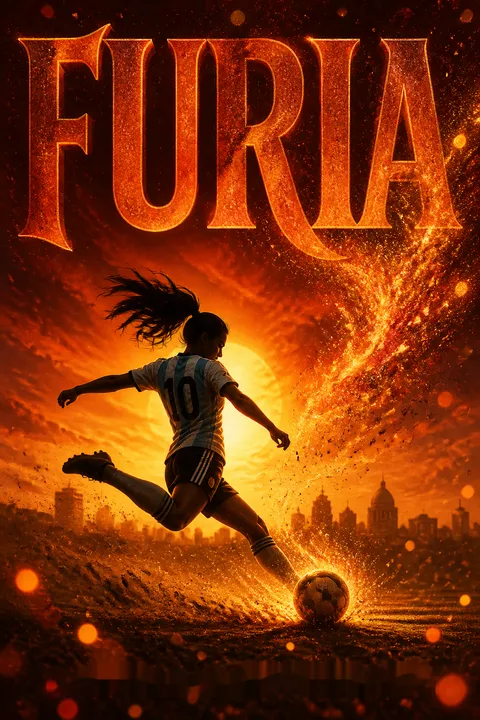
A Trophy Named Furia
Seventeen-year-old Camila Hassan slips away from her Rosario home to play football, the game her parents insist is no place for a respectable girl. On the bus, she gives her last fifty pesos to a boy selling a holy card and asks the saint for help. At the championship, Coach Alicia makes Camila captain.
Her cross sets up Cintia, then Camila scores from the rebound and later blocks a dangerous free kick with her face. Eva María wins 2-0. The crowd's new name for Camila is Furia, a version of herself that takes up space instead of asking permission. A reporter films the celebration. Across town, Diego Ferrari, her childhood friend and first love, returns from Italy and spots her near the stadium.
The Titan Comes Home
Camila avoids Diego when cameras surround him, then returns late to find her father boasting that Pablo, her professional-footballer brother, will rescue the family with his future earnings. Pablo privately warns her not to get involved with Diego, though he will not explain his own tension with him.
At midnight, Diego visits after learning Camila is home. Their old closeness survives the silence that followed his move to Juventus: he admits that homesickness and pressure made him stop writing, and asks her forgiveness.
Camila tells him she has earned an English qualification and needs money. He connects her with Father Hugo, who needs a teacher at El Buen Pastor, a church shelter for children. Diego then asks her to spend the next day with him.
A Date Beyond the Barrio
At El Buen Pastor, Father Hugo explains that Camila would teach English and help children with schoolwork, then warns her that their hardships will not be quickly repaired. She accepts the paid job. Diego takes her through Rosario in his luxury car, lets her practice driving in an empty lot, and walks with her beside the river.
They eat street food, watch a kite surfer, climb the steps at Parque España, and dance cumbia among the crowds. Diego treats the city as home rather than a place he has outgrown; Camila sees that his fame has not erased his attachment to it. When he kisses her before taking her home, their childhood friendship becomes a real romance, though his return to Italy is only days away.
Love Becomes Leverage
After the date, Camila's father corners her and urges her to use Diego's feelings and money to improve the family's fortunes. His words expose how he sees affection as a transaction.
The next morning, Camila's mother, Isabel, describes becoming pregnant with Pablo as a teenager and losing her chance to finish school; she fears Camila will repeat her choices. Camila responds by asking Diego for distance, then reports for work at El Buen Pastor. There she protects Karen, a gifted girl whose stutter makes classmates mock her, and discovers that Karen takes food home for younger siblings.
The encounter gives Camila a glimpse of the responsibility behind a child's silence. Meanwhile, Coach Alicia arranges a scrimmage against her sister Gabi's American team, which will be watched by professional scouts.
A Scout Sees Furia
Coach Alicia introduces Rufina, a player from the rival Royals, as Marisa's replacement for the coming Sudamericano tournament. Against Gabi Tapia's visiting American team, Camila beats defenders and sends a precise cross to Rufina, who scores. Diego has come to watch and calls attention to Camila's play, but the moment breaks her concentration: she steps into a hole and twists her ankle.
Coach Alicia takes her off, and the Americans score repeatedly as Eva María lose their shape. Gabi praises Camila's instinct and says she wants to see her healthy in December. Camila is left with a swollen ankle, a damaged chance to impress, and the knowledge that Diego has finally seen her play. When he offers to take her to eat, she agrees.
The River Keeps Them
At the river, Diego listens as Camila lays out her ambition to play professionally in the United States, not simply to follow him to Italy. He gives her his red good-luck ribbon and recognizes that she is building a future of her own.
They share an intimate night, then agree not to tell their families yet. In the rain, Diego gives her a Juventus jersey bearing her name. The next day, before flying back to Italy, he visits El Buen Pastor with gifts for the children, including school supplies for Karen, new cleats and training clothes for Camila, and a phone so they can stay in touch.
As Camila heads to the church, she sees her father leaving a young woman's home with an intimacy he denies Isabel. Diego leaves Rosario, and Camila's private life now holds both promise and risk.
Her Mother Signs On
Camila shows Isabel the bruises from her injury and admits she has played for Coach Alicia's team for a year. Isabel first objects: she has planned for Camila to study medicine and has already imagined her graduation dress.
But she remembers being forbidden to play football as a girl, and the memory changes the conversation. She agrees to review the tournament forms, takes Camila to a folk healer for her ankle, and eventually signs the registration. At a team meeting, Isabel meets Coach Alicia and watches Camila's championship goal on video.
She also learns that several players have quit, including Marisa, whose boyfriend has stopped her playing, and that Rufina is recruiting former rivals. Camila's ambition is no longer only a secret she must protect from her family.
The Photograph Splits Them
A gossip account publishes a photograph of Camila and Diego by the river, turning their private intimacy into public speculation. Isabel sees the image; Roxana, who has not been told about the relationship, feels Camila has excluded her and stops answering her calls.
At home, Andrés's contempt for women surfaces again when he berates Pablo over Marisol's pregnancy and the possibility that fatherhood will interfere with football. Pablo leaves the apartment, carrying their father's idea that a man's career must come before everything else.
Camila visits a public clinic to have her ankle checked. The doctor finds no fracture but asks whether someone has hurt her and makes clear that help exists for women in danger. At practice, Camila plays badly, and Coach Alicia questions whether Diego is pulling her away from the team.
Eda's March, No Retreat
Three days before the tournament, twelve-year-old Eda, Marisa's sister, disappears on her way home from school. Her body is found before the neighborhood can finish organizing its search. Camila and Roxana reunite at the march, where the team joins Eda's family in demanding justice.
Coach Alicia urges the players to honor the girl by continuing to play. At home afterward, Pablo tells Camila that Marisol is pregnant and argues with Andrés, who insults them both. When Camila challenges their father's hypocrisy, Andrés grabs and strikes her, then threatens her with his belt.
Pablo steps between them, Isabel tells Andrés to leave, and neighbors call the police. Officers take him away. Camila, Isabel, and Pablo are left shaken, but the family's long-standing silence has finally been broken in public.
The Ticket She Refuses
After the assault, Camila's bruised face draws Coach Alicia and Roxana back to her home. Roxana apologizes for withdrawing, and Camila tells Diego what happened using Roxana's phone. Diego leaves Juventus training and flies to Rosario. He arrives with a ticket for Camila and a plan to take her to Italy, believing that distance from Andrés is the safest answer.
Camila refuses: her Sudamericano begins in days, and she wants to earn a football future through her own play. She tells Diego she loves him, but will not abandon her team or her ambitions for his rescue. Diego cannot accept a long-distance relationship and walks out. His departure leaves Camila heartbroken, yet the choice is hers, not her father's or Diego's.
Three Games, One Furia
Camila enters the Sudamericano with a bruised face and Diego's red ribbon on her wrist. Eva María holds defending champions Praia Grande to a scoreless draw, then beats Tacna after Camila assists Rufina and scores herself.
In the decisive group match against Itapé, Camila wears the captain's band while her mother cheers from the stands for the first time. Itapé takes a three-goal lead, but Coach Alicia urges the team to play with joy rather than surrender to the score. Camila scores twice and passes to Rufina instead of chasing a possible hat trick; Rufina scores the equalizer.
Eva María's campaign ends short of the tournament title, but Camila's unselfish play impresses the American scout. The scout offers to help her find further opportunities, including a possible national-team pathway.
Utah Calls Her Name
After the tournament, Camila stays close to Isabel, who begins planning an atelier of her own, and prepares to try out for teams in Buenos Aires. On her eighteenth birthday, Gabi Tapia calls with a more immediate opening: the new Utah Royals want Camila as a discovery player, and their head coach will assess her in person.
It is a chance, not yet a contract, but Camila has a passport, savings, and a mother willing to act as her agent. Before leaving, she gives Karen the books that helped shape her own imagination and leaves water and a football at La Difunta Correa's shrine. Friends, teammates, neighbors, and family gather to see her off. Camila boards for Utah carrying Rosario with her, rather than mistaking departure for escape.
Epilogue
Seven months later, Camila plays for Utah against Orlando Pride and earns an assist in a win. Young fans wear her jersey, and she signs it for two girls before calling Roxana, who remains her closest friend across the distance.
Diego has sent a message apologizing for making her choose and asking to see her when Juventus tours Utah. Camila reads it, then calls him. Their shared future is unresolved, but the conversation begins without the secrecy and evasion that once shaped their bond.
The epilogue grants Camila public recognition without treating achievement as a cure for every wound. She has reached a professional field, yet the scene's emotional center is her call to Roxana and her decision to answer Diego. Fame has not replaced friendship, and romantic possibility does not require her to surrender the life she built. The girls who ask for her autograph embody a new audience for her example: they can see football as compatible with being girls. Her choice to reconnect is not a return to dependence. It is an act of contact made from a position of agency.
Analysis
Furia treats football not as a metaphor pasted over ordinary life, but as a contested resource. For Camila, playing means using her body on her own terms in a culture where adults police girls' movement, clothing, sexuality, and ambition. The pitch offers a temporary freedom, but its real promise is material: team registration, scouting, travel, and the possibility of paid work. The story therefore refuses to make desire alone sufficient. Camila needs skill, money, adult allies, and institutions willing to recognize her.
The book also distinguishes care from control through the competing forms of protection Camila receives. Andrés calls exploitation a practical plan; Diego initially imagines that love means carrying her away; Isabel's fear can become another limit. Each believes some version of safety requires Camila to yield authority over her future. Coach Alicia, Roxana, and eventually Isabel offer a different model: support that equips Camila to choose, even when the choice frightens them. The conflict is not whether Camila loves her family or Diego, but whether affection can survive without ownership.
The women's team and El Buen Pastor widen the story beyond one girl's success. Karen's books, Marisa's constrained choices, and Eda's murder show how opportunity is distributed unevenly and how danger becomes normalized. The team's response to Eda makes playing publicly an act of refusal, not a claim that sport can repair violence by itself. Camila's decision to pass to Rufina instead of pursuing a personal hat trick gives that refusal its clearest form: excellence is not merely individual escape. The ending rewards her ambition while preserving uncertainty in romance. She can call Diego because she has already chosen herself.
Review Summary
Furia by Yamile Saied Méndez is a powerful, feminist YA novel set in Argentina. It follows Camila, a talented soccer player who must hide her passion from her family. The book explores themes of women's rights, domestic abuse, and pursuing one's dreams against societal expectations. Readers praise the strong protagonist, authentic cultural representation, and empowering message. While some found the pacing slow, most were deeply moved by Camila's journey and the book's portrayal of Argentina's social issues. The romance subplot and family dynamics add depth to this inspiring story.
People Also Read




Characters
Camila Hassan
The barrio-born strikerCamila is a gifted seventeen-year-old footballer from Rosario who has learned to conceal her ambition from a family that expects her to pursue a safer, more conventional future. She is observant, quick-witted, physically brave, and often too proud to ask for help. On the field, her intensity becomes invention; off it, she measures every risk against the possibility of losing her freedom. Her love for Diego is genuine, but it is only one part of the life she wants. Camila's deepest struggle is not choosing between love and ambition in the abstract. It is learning to make choices without letting fear, family duty, or another person's expectations make them for her.
Diego Ferrari
The hometown football starDiego is Camila's childhood friend, first love, and a Rosario football prodigy playing for Juventus in Italy. Fame and professional discipline have sharpened his confidence, but he remains attached to the barrio and to the people who knew him before the crowds did. His affection for Camila is tender and longstanding; he sees her talent clearly and wants to protect her. Yet his instinct to solve danger through decisive action can make him mistake rescue for understanding. Diego's emotional life is shaped by the distance between the boy who once needed a home and the celebrated athlete expected to belong everywhere.
Roxana Fong
Camila's steadfast goalkeeperRoxana is Camila's best friend, teammate, and Eva María's goalkeeper. Her secure, affectionate family gives her a kind of support Camila envies, but Roxana is not sheltered from the dangers and judgments around them. She is outspoken, protective, and deeply invested in women's football and women's rights. Her distrust of professional male players grows from watching football culture reward arrogance and excuse harm. Roxana's loyalty is fierce, though her fear for Camila can sometimes become judgment. She offers Camila a friendship sturdy enough to survive anger, distance, and the painful work of admitting when each has misunderstood the other.
Isabel Hassan
Camila's seamstress motherIsabel sews elaborate dresses to support her family and has spent years trying to keep her daughter safe by narrowing the risks she can take. Her caution comes from lived disappointment: she became a mother young, left school, and built a life around a man whose charm concealed an appetite for control. She worries that football, romance, and public attention will expose Camila to harm. Beneath that fear is a memory of the girl she once was, with ambitions of her own. Isabel's relationship with Camila is marked by affection, friction, and the difficulty of supporting a daughter's freedom when she has never been allowed to practice her own.
Andrés Hassan
The controlling fatherAndrés is Camila and Pablo's father, a former footballer who believes talent should serve the family's escape from poverty. He is charismatic when it benefits him and quick to turn disappointment into blame. His hopes for Pablo carry the weight of his own abandoned sporting career, while he treats Camila's independence as defiance rather than ability. Andrés uses money, gender expectations, and family loyalty to keep others aligned with his ambitions. His presence helps explain why Camila hides her game and why Isabel fears the consequences of a daughter's public life.
Pablo Hassan
The burdened older brotherPablo is Camila's older brother and a professional player for Rosario Central. Their bond is affectionate and playful, formed in childhood around football, but adult pressures have made him more guarded. He has absorbed their father's belief that a successful player must carry the family, even when that burden narrows his own choices. Pablo encourages Camila privately, yet his protectiveness can echo the same restrictions she faces at home. His relationship with Marisol brings questions of responsibility and adulthood into sharper focus. He is neither simply a rival nor a rescuer to Camila, but a brother trying to distinguish his own wishes from the role assigned to him.
Coach Alicia
Eva María's relentless coachCoach Alicia is a seasoned advocate for girls who want to play football in a system that offers them little support. She discovers Camila and gives her a team, a captain's band, and a demanding standard. Her coaching is fierce because she understands how easily opportunity can vanish, yet she also knows that pressure can squeeze joy out of a player's game. Alicia's commitment extends beyond tactics: she builds a team from girls with different resources and histories, then teaches them to recognize one another as teammates. She represents practical mentorship, insisting that talent must be developed while refusing to treat the girls as instruments for someone else's ambition.
Gabi Tapia
The American scout's bridgeGabi is Coach Alicia's sister and a football coach in the United States. Her visit links Rosario's under-resourced women's game with professional and college pathways abroad. She recognizes Camila's flair during the scrimmage but does not promise an easy passage; she looks for players who can develop and compete. Gabi combines the intimacy of family with the authority of a recruiter, making her encouragement meaningful without making it a guarantee.
Father Hugo
El Buen Pastor's caretakerFather Hugo runs programs for children at El Buen Pastor, a former institution for women that he is trying to turn into a place of learning and care. He is candid about the limits of charity and the emotional demands of working with children whose needs cannot be solved quickly. His respect for Camila's ambitions is practical rather than sentimental: he pays her for teaching and asks her to commit to the work. He helps connect her language skills, need for income, and instinct to support younger children.
Karen
The young translatorKaren is a bright, book-loving girl at El Buen Pastor who stutters and is mocked by some of the boys. She translates poetry into English and reads with a concentration that reveals how much she values words. Her responsibilities at home are visible in the food she carries to younger siblings, and they limit the time she can spend at the center. Karen is wary of kindness that might come with condescension, but she recognizes when someone treats her as capable. Her hunger for books gives Camila a way to offer encouragement without pretending that encouragement can erase hardship.
Marisa
The sidelined team strikerMarisa is Eva María's strongest striker and the mother of a young daughter. Her boyfriend's control and violence make it harder for her to train, while the demands of caring for a child already constrain her choices. She is not merely a player who drops out of a tournament; her circumstances show how abuse can close doors while making the person harmed appear to have chosen to leave. Marisa's friendship with Roxana has grown complicated since her pregnancy, but Roxana's concern for her remains genuine.
Rufina Scalani
The rival turned teammateRufina begins as a Royals player who challenges Camila on the field and becomes an important Eva María teammate. She is competitive, composed, and proud of her skill, meeting Camila's ambition as an equal rather than a rival to be diminished. Their goal-scoring contest gives way to cooperation when the tournament demands it. Rufina's presence also shows how a team can absorb former opponents without requiring them to become less ambitious.
Luciano Durant
The injured former prodigyLuciano, once a promising Central player known as El Mago, had his football career derailed by a serious knee injury. He now works at a factory and becomes involved with Eva María as a manager and practical mentor. His past makes him alert to the cost of playing through pain, especially for Camila. Luciano is dryly funny and generous with young players, but his own lost opportunity gives his support a quiet urgency. He also shares a growing, tentative interest in Roxana.
Eda
Marisa's younger sisterEda is a twelve-year-old student and Marisa's younger sister. Her ordinary journey home from school places her among the girls whose safety is treated as negotiable. Her life matters to the neighborhood beyond the tragedy that overtakes it, and her family's grief brings Camila's football team together around a public demand for justice.
Marisol
Pablo's teenage girlfriendMarisol is Pablo's girlfriend, a schoolmate who is often judged by Camila and by the adults around her for her appearance and ambitions. Her relationship with Pablo is entangled with youth, financial insecurity, and expectations placed on footballers' partners. She becomes a focus of Andrés's suspicion and criticism, while her own perspective is easy for the family to overlook.
César
The family's uneasy friendCésar is one of Andrés's longtime friends, though his warmth toward Isabel and Camila sets him apart from the father's orbit. He admires Diego and recognizes Camila's promise. His guarded silences suggest a loyalty divided between old friendships and the unease of watching Andrés's behavior.
Nico
Camila's loyal dogNico is the family's shedding, affectionate dog and Camila's most reliable quiet companion at home. He follows her between rooms, welcomes Diego, and responds to danger before the family does. His uncomplicated attachment offers Camila a rare form of comfort without judgment.
Plot Devices
La Difunta Correa's card
A pocket-sized pleaCamila receives a holy card of La Difunta Correa from a child on the bus and gives him her last fifty pesos. The saint associated with impossible requests becomes an object through which Camila can express hopes she cannot safely voice at home: the chance to play, to be free, and to reach a future she cannot yet see. Camila treats the card with both belief and skepticism, placing water beside it and later taking an offering to a shrine. Its function is not to provide a supernatural solution. It makes her wishes tangible, while the story keeps asking what faith can do when the decisive work must still be done by Camila and the people around her.
The name Furia
A self made on-fieldThe crowd names Camila Furia after seeing her play with force and invention. The nickname marks a self she can inhabit on the pitch, in contrast to the daughter, sister, and potential medical student her family expects her to be. It is not a separate personality that replaces Camila; it is a way for her physical confidence to become visible. Over the story, the name follows her from a neighborhood championship to a larger stage, gathering the hopes of teammates and girls who watch her. Furia works as both a memory anchor and a question: can Camila carry that freedom into the rest of her life without letting other people define what it means?
El Buen Pastor
A prison remade as refugeEl Buen Pastor once confined women labeled disobedient; Father Hugo now uses the building for children's meals, school support, and workshops. The history matters to Camila, who recognizes how readily authority can punish girls for wanting choices. Her English-teaching job brings her into contact with Karen and other children whose lives complicate easy ideas about ambition and rescue. The place links Camila's own education to her responsibility toward others, while showing a community institution being repurposed without erasing its past. Its former identity as a women's prison is introduced early and pays off as a lens through which Camila understands the label of being incorrigible.
The Sudamericano tournament
A door beyond RosarioWinning the local league qualifies Eva María for the Sudamericano, where the team can test itself against clubs from across South America and attract scouts. The tournament gives the plot a deadline, but its importance is larger than a trophy: it offers Camila a credible route toward professional football and gives the team a public reason to claim space. Fees, registration forms, practice schedules, injuries, and family permission make that route materially difficult. The competition's pressure also forces Camila to decide whether she plays for personal recognition or for her teammates. It is the mechanism that turns her private talent into an opportunity others can evaluate, without guaranteeing that opportunity will become a contract.
Football gossip accounts
Private life made publicA photograph of Camila and Diego by the river circulates through online accounts devoted to footballers' relationships. The image strips away context: it cannot show their shared childhood, Camila's own career plans, or the unequal risks she faces as a young woman. Its circulation intensifies family scrutiny and contributes to the strain between Camila and Roxana, who learns about the romance from public gossip rather than from her friend. This device turns Diego's fame into a force that reaches Camila's home and friendships even when he is abroad. It also exposes how quickly a girl's choices can be recast as evidence about a famous man's life.
FAQ
Synopsis & Basic Details
What is Furia about?
- Secret passion, societal constraints: Furia tells the story of Camila Hassan, a young Argentinian woman who secretly pursues her dream of becoming a professional fútbol player, despite her family's traditional expectations that she should focus on more "appropriate" pursuits.
- Love, ambition, and identity: The novel explores Camila's complex relationships, particularly with her childhood friend Diego, a famous soccer star, and her controlling father, as she navigates love, ambition, and her own identity.
- Breaking free, finding voice: Camila's journey is about breaking free from societal norms, finding her voice, and fighting for her place in a world that often tries to silence women, especially in sports.
Why should I read Furia?
- Inspiring female empowerment: Furia offers an inspiring story of female empowerment, showcasing a young woman's determination to overcome obstacles and pursue her passion in a male-dominated field.
- Complex family dynamics: The novel delves into complex family dynamics, exploring themes of tradition, expectation, and the struggle for individual freedom within a close-knit community.
- Passionate love story: Readers who enjoy passionate love stories will be drawn to Camila's relationship with Diego, which adds depth and emotional resonance to her journey.
What is the background of Furia?
- Argentinian culture and society: Furia is deeply rooted in Argentinian culture and society, exploring themes of family, tradition, and the role of women in a patriarchal society. The setting of Rosario, Argentina, provides a vibrant backdrop to Camila's story.
- Fútbol's cultural significance: The novel highlights the cultural significance of fútbol in Argentina, where it is more than just a sport; it is a source of national pride, identity, and social connection.
- Feminist movement context: The story is set against the backdrop of the Ni Una Menos movement, reflecting the growing awareness of gender-based violence and the fight for women's rights in Argentina.
What are the most memorable quotes in Furia?
- "Lies have short legs.": This proverb, repeated throughout the novel, underscores the importance of honesty and the consequences of deception, a central theme in Camila's struggle to reconcile her secret life with her family's expectations.
- "You have something Pablo doesn't. Freedom from society's expectations.": Coach Alicia's words highlight the unique advantage Camila possesses as a woman defying societal norms, allowing her to pursue her dreams without the same pressures as her brother.
- "I'm not going anywhere with you guys. I'd leave this house the first chance I got, but not by chasing after a boy, including my brother. I'd do it on my own terms, following my own dreams, not someone else's.": This quote encapsulates Camila's fierce independence and determination to forge her own path, rejecting the traditional role of women in her family and community.
What writing style, narrative choices, and literary techniques does Yamile Saied Méndez use?
- First-person narration: The story is told from Camila's perspective, allowing readers to intimately experience her thoughts, feelings, and struggles. This creates a strong connection between the reader and the protagonist.
- Vivid imagery and sensory details: Méndez uses vivid imagery and sensory details to bring the setting of Rosario to life, immersing readers in the sights, sounds, and smells of Camila's world.
- Authentic voice and dialogue: The author employs an authentic voice and dialogue, capturing the nuances of Argentinian Spanish and the rhythms of everyday conversation, adding to the story's realism and emotional impact.
Hidden Details & Subtle Connections
What are some minor details that add significant meaning?
- The estampita of La Difunta Correa: The yellowing saint card represents Camila's internal conflict between her lies and her dreams, and her need for a miracle to reconcile them. It also foreshadows the sacrifices she will make.
- The yellow lollipop: The yellow lollipop Diego trades Camila for her pink one symbolizes their connection and the bittersweet nature of their relationship, as it is exchanged on the night he leaves for Italy. It represents a moment of shared sweetness amidst impending separation.
- Nico's behavior: Nico, Camila's dog, is a barometer of the emotional climate in the Hassan household. His cowering or enthusiastic greetings often foreshadow or reflect the power dynamics and tensions within the family.
What are some subtle foreshadowing and callbacks?
- Gimena Márquez's story: The mention of Gimena Márquez, a girl killed by her boyfriend, foreshadows the potential dangers Camila faces due to her father's controlling and potentially violent nature. It also highlights the pervasive issue of violence against women in Argentina.
- The "rat hole" comment: Andrés's repeated disparaging remarks about their home foreshadow his desire to exploit his children's talents for personal gain and escape their current circumstances.
- The recurring phrase "What can you lose, eh?": This phrase, first uttered by the boy selling estampitas, becomes a recurring motif, prompting Camila to take risks and pursue her dreams, even when the odds are stacked against her.
What are some unexpected character connections?
- César's affection for Isabel: The subtle hints of César's unrequited love for Isabel add a layer of complexity to the family dynamics, suggesting a history of unspoken desires and sacrifices.
- Luciano's past as a promising player: Luciano's past as a promising soccer player whose career was cut short by injury creates a parallel with Camila's own struggles and adds depth to his role as a mentor and supporter.
- Gabi and Alicia's shared history: The bond between Coach Alicia and her sister Gabi, both pioneers in women's soccer, highlights the importance of mentorship and the legacy of female athletes who paved the way for future generations.
Who are the most significant supporting characters?
- Roxana Fong: Roxana is more than just a best friend; she is Camila's confidante, teammate, and moral compass, providing unwavering support and challenging her to stay true to herself.
- Coach Alicia: Coach Alicia serves as a mentor and advocate for Camila, recognizing her talent and pushing her to overcome obstacles, both on and off the field. She represents the power of female mentorship and the importance of believing in young women's potential.
- Isabel Hassan: Isabel, Camila's mother, is a complex and conflicted figure who ultimately becomes a source of strength and support for her daughter, challenging traditional expectations and embracing Camila's dreams.
Psychological, Emotional, & Relational Analysis
What are some unspoken motivations of the characters?
- Andrés's desire for validation: Andrés's controlling behavior stems from a deep-seated need for validation and recognition, fueled by his own failed soccer career and a desire to live vicariously through his children.
- Isabel's longing for freedom: Isabel's quiet support of Camila's dreams reflects her own unspoken longing for freedom and self-expression, which she was denied due to societal expectations and her marriage.
- Diego's need for redemption: Diego's unwavering support of Camila's ambitions may be driven by a need for redemption, seeking to atone for his own past mistakes and the circumstances of his childhood abandonment.
What psychological complexities do the characters exhibit?
- Camila's imposter syndrome: Despite her talent and determination, Camila struggles with imposter syndrome, doubting her abilities and fearing that she is not good enough to achieve her dreams.
- Pablo's identity crisis: Pablo's identity is heavily tied to his success as a soccer player, leading to an identity crisis when he faces challenges and comparisons to Diego.
- Andrés's narcissistic tendencies: Andrés exhibits narcissistic tendencies, characterized by a grandiose sense of self-importance, a need for admiration, and a lack of empathy for others.
What are the major emotional turning points?
- Camila's father destroys her phone: This act of violence marks a turning point in Camila's relationship with her father, solidifying her resolve to break free from his control and pursue her own path.
- Diego leaves to return to Turin: This departure forces Camila to confront her feelings for Diego and make a difficult choice between love and her own ambitions.
- The team ties against Itapé: This game, despite not being a win, shows Camila that she can play with joy and that she has the support of her team.
How do relationship dynamics evolve?
- Camila and Roxana's friendship: Camila and Roxana's friendship is tested by secrets and conflicting desires, but ultimately strengthened by their shared passion for fútbol and their unwavering support for each other.
- Camila and Diego's romance: Camila and Diego's romance evolves from childhood friendship to passionate love, but ultimately falters due to their differing priorities and the challenges of long-distance relationships.
- Camila and Isabel's mother-daughter bond: Camila and Isabel's mother-daughter bond strengthens as Isabel begins to support Camila's dreams, challenging traditional expectations and embracing her daughter's individuality.
Interpretation & Debate
Which parts of the story remain ambiguous or open-ended?
- The future of Camila's relationship with Diego: The ending leaves the future of Camila's relationship with Diego open-ended, suggesting the possibility of reconciliation but also acknowledging the challenges of maintaining a long-distance relationship while pursuing individual goals.
- The extent of Andrés's abuse: The novel hints at a history of abuse within the Hassan family, but the full extent of Andrés's violence and control remains somewhat ambiguous, leaving room for interpretation.
- The long-term impact of Pablo's choices: The novel leaves Pablo's future uncertain, raising questions about the long-term impact of his choices and whether he will be able to break free from his father's influence and find happiness.
What are some debatable, controversial scenes or moments in Furia?
- Camila's decision to prioritize her career over Diego: Some readers may debate whether Camila made the right choice in prioritizing her career over her relationship with Diego, questioning whether she sacrificed personal happiness for ambition.
- Isabel's enabling behavior: Isabel's enabling behavior towards Andrés may be seen as controversial, with some readers questioning her passivity and others empathizing with her difficult situation.
- The portrayal of traditional gender roles: The novel's portrayal of traditional gender roles may spark debate, with some readers criticizing the reinforcement of patriarchal norms and others appreciating the nuanced exploration of these issues within a specific cultural context.
Furia Ending Explained: How It Ends & What It Means
- Camila chooses her dream: The ending signifies Camila's ultimate decision to prioritize her own dreams and ambitions, even at the cost of her relationship with Diego. It underscores the importance of self-discovery and the courage to forge one's own path.
- Breaking the cycle of abuse: Camila's decision to leave her father and pursue her career represents a break from the cycle of abuse and control that has plagued her family for generations. It symbolizes her empowerment and her determination to create a better future for herself.
- Hope for the future: The ending offers a message of hope, suggesting that even in the face of heartbreak and adversity, it is possible to find strength, pursue one's dreams, and create a new beginning. It also suggests that love can exist, but it must be on equal footing with personal ambition.
Download PDF
Download EPUB
.epub digital book format is ideal for reading ebooks on phones, tablets, and e-readers.








