

Key Takeaways
Make the GM a facilitator of shared play, not its sole author.
The players are the stars. The Game Master presents the world, responds to characters’ choices, and interprets rules, but does not control everything at the table. The guide’s central principle is that the game belongs to the group: use, change, or discard rules to create the experience everyone wants. Mastery is not a prerequisite. A GM can learn through play, ask players to help with rules, and leave some world details undecided until they matter.
Agree before adventuring. A session zero lets players build characters together, establish relationships, share preferences, and flag themes that need care. That groundwork gives the GM useful story hooks and helps players feel invested in one another before the first crisis arrives.
What's striking is the shift from authority to stewardship. That resembles good facilitation in classrooms and collaborative design: the leader shapes conditions for participation rather than supplying every idea. The model also protects the GM from the impossible standard of total preparation. Its limit is that shared authorship is not equally comfortable for everyone. Some players prefer a carefully controlled setting, while others want to invent details. A session zero is most useful when it surfaces those differences without treating one style as more mature or creative.
Rule quickly and consistently, then review uncertain calls between sessions.
Protect the flow. When a rule is unclear, make a fast, fair ruling using the game’s basic principles and your previous decisions. If the question is minor, decide now and look up the exact rule later. If the stakes are substantial, a brief pause may be worthwhile. Listening to concise input from players can improve accuracy and make the decision feel collaborative.
Make precedent visible. Explain why a ruling fits, especially when a similar situation has come up before. A creative action can often succeed with a cost, a check, or a limited effect rather than a flat refusal. If a decision seems questionable afterward, review it before the next session and tell players about any change. Record recurring changes as house rules.
This is a practical form of procedural fairness. In organizations, people often accept an unfavorable outcome more readily when the process is consistent and understandable. The same is true at a game table: explaining the basis of a ruling helps players plan, even when the answer is not what they hoped for. The advice to keep play moving is valuable, but speed should not become an excuse to dismiss concerns. A reversible ruling is especially useful when uncertainty is high and the cost of a mistake is small.
Give players clear stakes, visible consequences, and a path forward after failure.
Make the risk legible. Players should understand what they might lose and what success could change. Consequences work best when they are specific and visible: a village falls under an enemy’s rule, an ally’s funeral follows a failed rescue, or townspeople celebrate the characters’ victory. The GM should show the results in the world, not merely report a change in numbers.
Keep failure consequential, not paralyzing. Failing forward means a failed check can reveal information, worsen the situation, or open a new route without granting the original goal. It prevents one missed roll from turning exploration into a dead end. Pace matters too: alternate intense challenges with quieter scenes, and use sensory details or a cliffhanger to give important moments weight.
The approach resembles contingency planning: people make better decisions when they can see plausible outcomes before committing. It also fits narrative design, where setbacks create movement rather than merely halt action. The important nuance is that forward motion should not erase failure. If every failed attempt secretly produces the same success, player choices lose force. A strong consequence changes the price, timing, information, or relationships involved, while preserving the group’s ability to act.
Build encounters that change the problem, not merely the enemy statistics.
Give the fight a reason. A memorable encounter has a place in the story, opponents with motives, and a setting that affects choices. A narrow corridor can favor melee combatants; a flooded chamber can complicate movement; a trap can force the party to divide its attention. Consider whether enemies retreat, surrender, protect an objective, or fight for a cause rather than assuming every foe attacks to the death.
Vary the pressure. Mix trivial, low, moderate, and severe challenges instead of repeating one difficulty. Secondary goals, such as rescuing captives or stopping a ritual, let characters contribute in ways beyond dealing damage. Hazards, reinforcements, shifting terrain, and time limits can transform a static battle. Use such elements selectively: a room that changes every round can exhaust the GM and players as surely as a flat room can bore them.
Encounter design here borrows from systems thinking: a battlefield is a network of constraints, incentives, and changing states, not just a collection of targets. An objective can make a weaker opponent strategically interesting, while terrain can reveal character strengths that a damage race would miss. Complexity still has a cost. If every encounter demands tracking hazards, timers, and multiple goals, players may spend more attention on procedures than on choices. Contrast is what makes a set piece feel exceptional.
Use progress systems when a scene deserves more than one roll.
Track the journey. Victory Points are a flexible way to measure progress toward a goal across multiple checks or decisions. The GM chooses how points are earned, what thresholds mean, and what happens if progress stalls or the opposition advances. The book applies this structure to social influence, research, chases, infiltrations, and reputation, among other situations.
Match mechanics to drama. In an influence scene, characters learn an NPC’s preferences and try different approaches. Research can reveal information at set thresholds while time or danger creates pressure. A chase uses obstacles rather than raw Speed alone. Infiltration tracks both progress and the opposition’s awareness. These systems add structure when the scene matters, but a simple check remains better for a brief, low-stakes interaction.
Progress systems make invisible accumulation visible, a technique also used in project management and behavioral design. They help a table remember that several modest actions can add up to a major result. Their strength is also their risk: once points become the focus, players may optimize the meter instead of inhabiting the scene. The GM can counter that by tying each threshold to new information, a changed relationship, or a concrete complication. If a roll changes nothing in the fiction, the subsystem is probably doing too much bookkeeping.
Reskin familiar material before spending hours inventing new game pieces.
Start from a working model. The guide recommends adapting existing creatures, items, hazards, and settings before building from scratch. A creature can be reskinned by changing its description and making a few thematic adjustments while retaining its statistics. For original creatures, begin with the concept and intended role, then choose statistics that support it. Strong numbers should be balanced by weaker ones, and special abilities should make visible, useful choices rather than quietly alter arithmetic.
Design for the table. Creature abilities compete for actions, so an elaborate stat block may go unused in a short fight. Hazards should create a meaningful decision or lasting complication, not just drain a few Hit Points. Items should fit their role and level, with their bonuses and special powers considered together. A compact design that works in play is more valuable than a clever one the GM cannot run smoothly.
This is the design equivalent of using a prototype. Existing mechanics provide a tested baseline, so creativity can concentrate on the distinctive part of the idea rather than rebuilding every supporting component. The approach also acknowledges a real constraint: a GM has limited preparation time and working memory. Reuse is not automatically safe, however. A reskinned monster can still be an unfair match for a particular party, and a new combination of familiar abilities can create an unexpectedly powerful effect. Testing the concept against the actual encounter remains essential.
Let character goals and campaign events change the world in view.
Connect the episodes. A campaign can be a one-session story, a brief introduction, an extended arc, or a journey to the highest levels. Whatever its scale, each adventure should connect to characters, recurring people, clues, or consequences from other adventures. Ask what the characters want, then place opportunities and obstacles in the world that relate to those goals. A character seeking to build an institution, for example, might need money, allies, and public trust.
Show what changed. Villains should have motives and plans, and their actions should affect the setting even when the heroes stop them. The group’s victories and failures should alter how people respond, which factions hold power, or what places look like. Worldbuilding can begin with a cosmic map or with the party’s first village. Rarity helps signal what is ordinary in a setting and what requires a special story to access.
The emphasis on visible change gives campaigns a form of civic memory. In political history, institutions and communities are shaped not only by leaders’ intentions but by the accumulated effects of decisions. Making those effects tangible helps players experience their characters as participants in a world rather than visitors to a sequence of encounters. Long arcs can still become overplanned. Recurring villains and escalating threats work best when they leave room for players to redirect the story, rather than making their choices decorative.
Make NPCs memorable, but never let them solve the heroes’ problems.
Give each person a handle. The NPC guidance favors a simple, legible starting point: a merchant grieving a spouse, a child who asks uncomfortable questions, or a stern official. A single hook makes an NPC easier to introduce; further history can emerge if the characters keep engaging. Recurring NPCs should change in response to events, and betrayals need groundwork so they feel earned rather than arbitrary.
Keep the spotlight with the party. A powerful ally should have other responsibilities or limitations that explain why the characters must act. An NPC who functions as the GM’s own hero can make players feel coerced or unnecessary. The extensive gallery of sample people, from courtiers and criminals to healers and tradespeople, offers ready-made starting points. When depicting sensitive experiences, the GM should check in with players, avoid clichés, and respect boundaries.
The one-hook method resembles a useful principle in human-computer interaction: a clear cue makes an unfamiliar person easier to recognize and remember. It is economical for a GM and leaves room for improvisation. But a memorable trait is not a full person. If every NPC becomes a quirk or plot device, the world can feel like a parade of caricatures. The guidance to listen to players and develop characters through repeated interaction helps turn a shorthand introduction into a relationship with history.
Adapt the table to its players before treating friction as a character flaw.
Design for the people present. Groups vary in size, experience, attention, and sensory needs. Small groups may need extra characters or challenges tailored to their abilities; large groups benefit from delegation, concise recaps, and prepared turns. A quiet space, breaks, or permission to doodle can help some players stay engaged. Describing sounds, smells, temperature, and movement gives more people a way into a scene than relying on visual description alone.
Set boundaries and address harm. Safety tools such as the X-Card and Lines and Veils let players signal discomfort and clarify what content is out of bounds. For ongoing disruptive behavior, speak privately and calmly, distinguish a bad night from a pattern, and be firm when necessary. The goal is not to preserve every player at any cost; it is to make a fair, enjoyable table possible for the group.
This is an accessibility principle as much as a conflict-management one: participation improves when barriers are addressed in the environment rather than attributed automatically to individual failure. Universal design often helps people beyond the group initially targeted, such as clear recaps benefiting both newcomers and distracted veterans. Flexibility needs boundaries too. Accommodating one person should not require others to accept harassment or abandon their own enjoyment. A table works best when needs are discussed openly and expectations apply consistently.
Choose variant rules to serve a theme, then test their side effects.
Change the experience deliberately. The guide offers variants for groups seeking different character progressions or tones: dual-class characters gain the features of two classes; a free archetype gives everyone additional themed options; level 0 play starts before characters take up a class; and simplified skill feats reduce choices. Automatic Bonus Progression replaces many item-based numerical increases, while Proficiency without Level changes the game’s underlying math so lower-level enemies remain relevant.
Use a small experiment. Variants can make characters more versatile, rebalance what equipment contributes, or change how threatening the world feels. Combining them may suit a particular campaign, but overlapping effects can cause surprises. Tell players what is changing, try the rule for a defined stretch, and remove or revise it if it undermines the intended story. The guide’s many options are a menu, not a checklist.
The strongest idea is not that customization is always an improvement, but that rules encode a genre. Removing level from proficiency, for instance, changes the emotional scale of power as well as the encounter math. This resembles model selection in science: a different model can reveal different phenomena, but it also introduces different distortions. A trial period makes the choice reversible and gives the group evidence from play. The tradeoff is real: more options can increase agency, while also increasing cognitive load and preparation.
Analysis
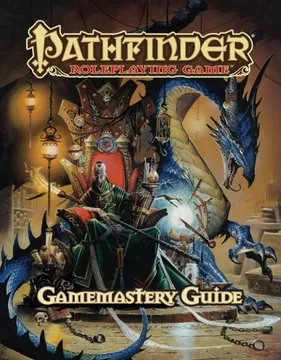
The Gamemastery Guide is less a single argument than a working philosophy supported by a large toolkit. Its organizing idea is that the GM’s authority is legitimate when it serves shared play. That principle connects apparently different subjects: a fast ruling protects momentum, a visible consequence protects agency, a well-designed hazard gives choices mechanical weight, and a safety tool protects the conditions under which people can keep choosing.
The book’s most useful design move is its shift between levels of abstraction. It offers advice for a whole campaign, then structures for a session, then procedures for a scene, and finally tables for an individual creature or item. This helps a GM scale effort to importance. A minor encounter can use a reskinned stat block; a pivotal infiltration can use Awareness Points and multiple routes. The approach treats preparation as a budget, not a contest to produce the most material.
Its central tension is between narrative flexibility and procedural consistency. Improvisation lets a clever action matter, but inconsistent rulings can make players doubt whether choices are being judged fairly. Subsystems offer repeatable structure, but too much structure can turn dramatic scenes into point accounting. The guide’s implicit answer is selective rigor: use rules where they clarify stakes, and simplify where they obstruct play.
The worldbuilding and variant sections extend the same principle beyond individual sessions. Rarity can communicate a setting’s values; character goals and organizational changes can make the world responsive; alternate progression rules can alter genre and power. These tools are most effective when chosen for a defined purpose rather than accumulated indiscriminately. The result is a manual for designing experiences, not merely enforcing mechanics: a useful distinction for anyone who wants the rules to create momentum without taking over the story.
Review Summary
Gamemastery Guide receives mostly positive reviews, with an average rating of 4.11/5. Readers find it valuable for new GMs but also useful for experienced ones. It offers advice on running games, world-building, and handling players. The book includes helpful tables, NPC stats, and optional rules. Some criticize it for basic content, but many appreciate its system-neutral advice applicable to various RPGs. Reviewers particularly praise the social aspect guidance, NPC gallery, and inspirational tables. Overall, it's considered a worthwhile resource for GMs, especially those new to Pathfinder or RPGs in general.
Glossary
Victory Points
Track progress toward a goalVictory Points are a flexible way to measure progress across multiple actions, decisions, or encounters. A GM sets how points are gained or lost, what total represents success, and whether reaching particular thresholds changes the story. Different subsystems may rename the points to fit their subject, but the underlying idea is cumulative progress rather than a single decisive check.
Influence Points
Measure sway over an NPCInfluence Points track how much sway the player characters have earned with a particular NPC during a social encounter. Characters can try to impress that NPC or discover what appeals to them. Reaching specified thresholds may secure a favor, cooperation, or a changed attitude. Resistances and weaknesses make different approaches more or less effective.
Infiltration Points
Measure progress through obstaclesInfiltration Points represent a character’s progress toward overcoming a particular obstacle during an infiltration. A character gains them through checks or actions suited to the obstacle. Some obstacles are overcome individually, while others allow the party to pool progress. Failing can increase Awareness Points, making the opposition more alert to the group’s presence.
Awareness Points
Track how alert opposition becomesAwareness Points measure how much an opposing group has noticed or suspected the characters during an infiltration. They can rise when characters fail checks, act disruptively, or simply let time pass. At specified thresholds, the infiltration becomes harder or complications arise. Accumulating too many can mean the plan is discovered and the infiltration fails.
Edge Points
Spend advantages during infiltrationEdge Points represent advantages gained through preparation, helpful contacts, or opportunities during an infiltration. They might stand for forged documents, disguises, inside information, or a useful favor. A character can spend an appropriate Edge Point to turn a failed check to overcome an obstacle or complication into a success. Some points apply only in particular situations.
Automatic Bonus Progression
Replace item bonuses with character growthAutomatic Bonus Progression is a variant rule that gives characters scheduled potency bonuses as they level, replacing many numerical benefits normally supplied by magic items. It includes progression for attacks, defenses, Perception, saving throws, skills, and weapon damage dice. The variant lets a GM reduce reliance on magic equipment while preserving much of the game’s expected mathematical progression.
Proficiency without Level
Remove level from proficiency bonusesProficiency without Level changes the proficiency system by removing a creature or character’s level from proficiency-based modifiers. The GM also adjusts statistics and skill DCs, and uses a different experience-point scale for creatures. The variant flattens the power gap between levels, so lower-level enemies can remain a threat to experienced characters.
Deep Backgrounds
Build backstory through guided choicesDeep Backgrounds replace a single background selection with a sequence of choices about family, homeland, childhood events, influential people, and relationships. Each choice adds possible ability boosts, skills, feats, or equipment to a final pool. The character’s player selects from that pool, producing a backstory with more specific personal and social connections.
Stamina Points
Absorb damage before Hit PointsStamina Points represent a character’s readiness and energy. Under the stamina variant, damage reduces Stamina Points before Hit Points, while healing spells restore Hit Points rather than Stamina Points. Characters regain Stamina through a short rest, Resolve Points, or certain actions and feats. Hit Points still determine consciousness and whether a character is dying.
Download PDF
Download EPUB
.epub digital book format is ideal for reading ebooks on phones, tablets, and e-readers.








