

Key Takeaways
Go out for possibility, not the fantasy of finally belonging
The bar is a wager. Jeremy Atherton Lin and his partner, the Famous Blue Raincoat, go out for desire, surprise, and the chance of contact with strangers. They are not escaping an unhappy relationship. They are seeking the heightened possibility a room of other people creates, even when the night includes rejection, awkwardness, or a disappointing hookup.
Arrival is not the point. Across London, Los Angeles, and San Francisco, the author repeatedly finds that a gay bar can be exciting and uncomfortable at once. Its appeal is not a promise that everyone inside will feel at home. It is the charged uncertainty of who might be there, what might happen, and how the scene might change the way someone feels about themselves.
What's distinctive here is the refusal to confuse pleasure with satisfaction. The bar matters because it intensifies expectation, not because it reliably delivers romance, friendship, or belonging. That distinction clarifies why a disappointing night does not necessarily make the venue pointless. At the same time, uncertainty is a privilege unevenly distributed: for some visitors, the same unpredictability brings danger, not just excitement. The book's most persuasive account of nightlife holds both possibilities together without reducing either to a verdict.
A refuge can shelter queer desire while disciplining its expression
Visibility has a price. Gay bars offered people a place to meet when public life and law treated same-sex desire as suspicious. Yet the California court ruling that restored the Black Cat bar's liquor license protected homosexuals' right to gather more clearly than their right to show affection. Bars could remain open by enforcing restraint.
Respectability can police from within. San Francisco's Twin Peaks Tavern became notable for its large street-facing windows, but its owners also maintained a no-touch rule. Customers could be visible as respectable patrons while desire stayed controlled. The book's history shows that a refuge is never outside society's rules. Sometimes it provides room to breathe; sometimes it reproduces the demands that made the refuge necessary.
This tension resembles a broader institutional tradeoff: recognition can protect a group while narrowing the behavior considered acceptable. The visible, respectable patron becomes easier for outsiders to accept, but less room remains for the unruly people whose presence originally made the space necessary. Neither secrecy nor visibility is automatically liberating. The useful question is who controls the terms of appearance, and whose conduct those terms are designed to quiet.
Keep queer venues legible as history, not just nightlife real estate
Buildings hold evidence. The author describes London bars disappearing amid property speculation, changing nightlife habits, and the shift toward meeting people through apps. Their closure is not merely the loss of a place to drink. It can erase the settings where generations met, flirted, organized, and developed shared customs.
Preservation is political. Campaigners secured Grade II protection for the Royal Vauxhall Tavern, a rare case of a public building recognized largely for queer history. Its columns and performance spaces preserve traces of earlier patrons and performers. But the campaign also shows how difficult preservation can be when owners and heritage institutions have different interests. A building can survive physically while its unruly past is softened into an official display.
A venue can function as social infrastructure and as an archive, especially when a community's private lives were rarely recorded elsewhere. That makes preservation more than nostalgia: it protects evidence of ordinary gatherings that formal histories tend to overlook. Yet official recognition can turn living conflict into a polished heritage narrative. Preservation works best when it protects a site's material traces while leaving room for disagreement about what those traces mean.
Follow the city's queer geography without forcing it into a tidy lineage
Place carries layers. In Los Angeles, Lin first visits Probe as a young student, unaware that the nightclub had been a major gay venue. Before that, the building hosted the Paradise Ballroom, where Black and brown gay men helped develop dance styles that fed into later popular forms. The address changes uses, but its earlier scenes remain part of its meaning.
History resists straight lines. The book traces cruising and queer nightlife through London's old pleasure gardens, the Adelphi's dark arches, and modern bars. These connections make the city feel haunted by possible histories. But the author warns against simply assigning today's identity labels to people in the past. A street or building can reveal continuity without proving that everyone who passed through it understood themselves in the same way.
This approach treats urban history as layered rather than settled. A familiar building can hold several communities, each leaving traces that are visible only from a particular angle. That method is especially useful for histories shaped by concealment, where records are incomplete and place can supply clues. Its necessary caution is interpretive: resemblance across eras does not establish identical identities. The book's willingness to leave some connections unresolved is a strength, not a failure of research.
Treat gay identity as something staged, borrowed, and revised
Style makes identity legible. As a young man in Los Angeles, Lin tries on the looks and manners of different gay scenes without feeling that any one of them reveals a settled self. In San Francisco, neighbors Michelle Tea and Rocco Kayiatos help him see the slur fag as a word that can hold masculinity and flamboyance together. The label feels less like a hidden essence than a way of appearing in the world.
Performance is not necessarily false. The salvaged sign from London's former London Apprentice pub depicts a working man whose clothing and pose blur the line between laborer and erotic image. The book uses camp, a sensibility that finds pleasure in artifice and double meanings, to show how gay men can imitate and exaggerate masculinity while exposing its constructed quality.
The account complicates the familiar idea that identity is either authentic or performed. People often become recognizable through styles, words, and shared references, yet those performances can be deeply felt. The insight also helps explain why labels change meaning between groups and generations. Still, self-fashioning does not happen on a level playing field: race, class, gender expression, and a venue's door policy shape which performances are welcomed and which are treated as imposture.
A liberated scene can reproduce racism, class privilege, and body rules
Belonging has gatekeepers. The Los Angeles club Studio One was celebrated as a major gay disco, yet contemporary reporting recorded women and people of color being turned away at its door. Its owner defended the policy as a way to preserve a gay atmosphere. The claim shows how a space built for an excluded group can define belonging narrowly and exclude people within that group.
A shared label does not erase hierarchy. In San Francisco, the clone ideal prized a particular masculine, white, working-class look, while other gay men were dismissed as too feminine, too polished, or otherwise unlike the norm. Gay bars could offer collective life while also rewarding specific bodies and styles. The book refuses to treat liberation as proof that a scene has become fair.
This is an important corrective to the assumption that marginalization automatically produces solidarity. Groups can resist one hierarchy while reproducing others, often by treating one group's style as the natural standard. The history also suggests that exclusion is not always announced as prejudice; it can be presented as atmosphere, taste, or safety. Yet individual venues should not stand in for an entire community. The point is to examine who gets access, who sets the norm, and who bears the cost.
Remember that bars turned commerce into a tool of collective power
Business could build leverage. Gay bars were commercial businesses, but they also became meeting points for organizing. San Francisco's Tavern Guild helped owners and workers coordinate against raids, share information, and support people whose venues or jobs were threatened. The bar was not just a marketplace for drinks and sex; it could also be a base for mutual aid.
Spending could become political. Harvey Milk and labor organizer Allan Baird used gay bars to support a boycott of Coors after the company resisted a union agreement. The campaign connected gay customers with organized labor and helped pressure the holdout distributor. The book calls attention to the pink pound, meaning money spent by gay consumers, as a force that could support businesses but also be mobilized for public aims.
The history resists a simple opposition between commerce and activism. Commercial venues can create repeated contact, shared communication, and a practical way to coordinate collective pressure. But market power is not evenly shared, and a venue dependent on customers may prioritize profitable patrons over those most in need of protection. The lesson is not that spending is liberation. It is that economic tools can serve political goals when people organize around them.
Make safety accountable, but admit every inclusive space draws boundaries
Safety requires choices. After attacks around London's George and Dragon, organizers formed the Friends of the Joiners Arms and developed parties with explicit rules against harassment and discrimination. They also trained support volunteers to help guests respond to incidents. The effort asks a practical question: what did older venues fail to provide, and who needs protection most urgently?
Every rule draws a line. At a benefit event in the Royal Vauxhall Tavern, a confrontation involving visiting cricket fans exposed how quickly a declaration of welcome could become a dispute over who belonged. Lin recognizes that his own pleasure in risk does not represent everyone's needs. A safer space may require boundaries, but its organizers must keep asking whom those boundaries protect and whom they exclude.
This tension is a design problem, not a reason to dismiss safety efforts. Clear rules and trained support can make participation possible for people who are otherwise pushed out by harassment. At the same time, calling a venue inclusive does not settle disagreements about conduct, power, or belonging. Accountability depends on processes that can hear complaints and revise decisions, rather than treating a slogan or charter as proof that the work is finished.
Value a bar's temporary orbit of strangers over an imagined family
Recognition can be enough. When the George and Dragon closes, Lin sees familiar faces and people who had once been new to the scene. He realizes that many were never close friends; part of the pleasure was simply recognizing one another amid a changing crowd. He resists the common claim that a gay bar necessarily creates one coherent community.
Difference can still connect. In Blackpool, he encounters venues serving people of different ages, genders, and styles, sometimes in the same room. The book's final image is not a unified family but people briefly held together by a place, while remaining distinct. A bar needs newcomers and strangers as much as regulars. Its social bond can be real without being permanent or complete.
The metaphor of an orbit captures a form of association that is neither loneliness nor intimacy. People share a setting and affect one another without needing a common biography or settled consensus. That model is valuable for plural societies, where demands for a single community identity can erase internal differences. It also avoids romanticizing casual contact: a temporary gathering may offer recognition, but it cannot replace the durable care and material support that some people need.
Analysis
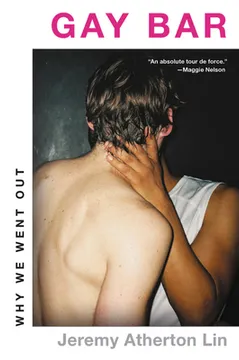
Gay Bar: Why We Went Out is a braided memoir and social history, organized around the author's movement through venues in London, Los Angeles, and San Francisco. Its central argument emerges through contradiction rather than a single program: gay bars are commercial, sexual, exclusionary, protective, and historically consequential at once. The author's relationship with the Famous Blue Raincoat gives this inquiry an intimate throughline, while the buildings and their past occupants expand private experience into urban history.
The book's most valuable move is to treat place as active. A club's door policy, windows, location, and changing ownership do not merely reflect identity; they help determine who can gather and what kinds of desire become visible. That perspective makes the history of nightlife more than a sequence of famous uprisings. It includes mundane practices, such as a no-touch rule, a bartender's role, or a group recognizing familiar strangers. Those details show how social worlds are built and constrained in daily life.
The narrative also challenges easy stories of progress. Decriminalization, visibility, and heritage recognition can expand freedom while imposing new standards of respectability. A gay venue may resist heterosexual norms yet exclude women, people of color, or gender-nonconforming patrons. The author is strongest when he lets those conflicts remain unresolved instead of declaring one scene wholly emancipatory or corrupt.
The account is necessarily partial. Its emotional center is a gay male couple, and its richest descriptions concern men's desire and the spaces organized around it. The book acknowledges lesbian, trans, and racial exclusions, but those lives do not receive equal narrative depth. That limitation does not undo its argument; it clarifies why no memoir can serve as a complete map of queer life. The result is a history of one person's changing attachments, attentive to the fact that places outlast some identities, while their meanings remain contested.
Review Summary
Gay Bar receives mixed reviews, averaging 3.76/5. Admirers praise Lin's vivid, lyrical writing and unique blend of memoir, history, and cultural criticism, calling it a nostalgic and thought-provoking exploration of queer spaces. Critics argue the book is overly self-indulgent, sexually focused, and lacks meaningful engagement with race, trans experiences, and non-metropolitan gay communities. Some feel it struggles to commit to being either a comprehensive history or a compelling personal narrative, while others celebrate it as a moving meditation on identity and belonging.
Glossary
post-gay
Life beyond fixed gay identityA cultural position associated with being openly gay while questioning whether gay identity remains necessary or meaningful. In the book's account of 1990s Britain, post-gay writers and styles criticized a fixed, supposedly unified gay culture and presented departure from its norms as modern. The idea itself can become prescriptive if uncertainty is treated as more enlightened than identification.
clone
A standardized masculine gay lookA term for a recognizable gay male style that flourished in places such as San Francisco's Castro district. The image combined masculine presentation and working-class references, including jeans, flannel, and a mustache. The label also criticized conformity: men who seemed to embody gay liberation could look interchangeable, and the style could exclude people who did not fit its racial, bodily, or gender expectations.
rough trade
Class-coded masculine sexual appealA British gay subcultural term for men imagined as working-class, physically tough, and sexually available, often in contrast to more privileged gay men. The book examines how this desire could involve real encounters and mutual negotiation, but also romanticize class difference and cast poorer men as erotic types. The figure could have agency, while still being shaped by the fantasies of wealthier admirers.
spatial defenses
Design choices managing visibilityArchitectural features used by queer bars to control exposure to the street and help patrons assess one another. Examples discussed include covered windows, discreet entrances, rear dance floors, dim lighting, and staff positioned to observe arrivals. These arrangements could protect patrons from hostile attention, while also creating a clandestine atmosphere that made secrecy part of the venue's appeal.
gray bar
A mixed bar with gay characterA local description for a bar that is not exclusively gay but has a recognizable gay atmosphere or history. The author's San Francisco example, the Phone Booth, drew gay and straight patrons, with the latter sometimes appearing open to queer interaction. The term captures venues that do not fit neatly into the categories of gay bar or straight bar.
community of memory
Community sustained by shared historyA concept used in the book to describe a community that remembers its past, including painful experiences of collective loss. Remembered events and stories can connect people across generations and distinguish a durable community from a lifestyle grouping held together mainly by consumption or leisure. The book also asks how memory survives when the venues and organizations that carried it disappear.
Gay Shame
Queer critique of assimilationAn activist current that challenged gay respectability, consumerism, and efforts to join institutions such as marriage, the military, and the marketplace without changing them. In San Francisco, the author encounters its direct actions and critiques of corporate influence in gay life. The book respects its political force while questioning whether shame can become a way to police people who make different choices.
pink pound
Gay consumer spending powerA phrase for money spent by gay consumers, treated as a market by businesses and, at times, as a source of political leverage. The book shows bars and other gay institutions relying on commercial income, while activists also organized boycotts and used customer networks to support labor causes. The term points to both the practical power and the limits of market-based influence.
Download PDF
Download EPUB
.epub digital book format is ideal for reading ebooks on phones, tablets, and e-readers.








