

Key Takeaways
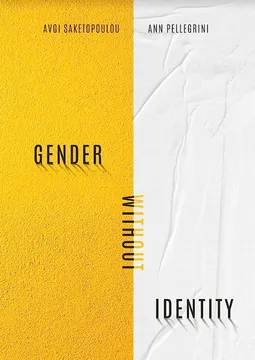
Gender is made through experience, not discovered as an inner fixed identity.
Identity takes shape over time. A student once asked a queer studies teacher why she had become a lesbian. Years later, that student identified as trans. The authors use the question to challenge the idea that a person’s gender or sexuality must express a stable truth hidden inside them. Categories such as lesbian, trans, and nonbinary are historically available ways to understand experience, but they cannot explain exactly why one person takes up a particular term at a particular moment.
The self is not self-made. The authors call the process of forming an account of oneself self-theorization. It is not simply a conscious choice or a story told by a fully formed person. It develops as someone responds to other people, relationships, and cultural meanings. Gender can change, but its movement is neither freely chosen nor predictable.
The argument usefully separates respect for a person’s current identity from the claim that identity must be timeless to be real. That distinction makes room for change without treating change as evidence of confusion or deception. It also complicates the familiar search for a single origin story: a person’s account can be meaningful without serving as a universal explanation. The framework is strongest as a way to listen, not as a replacement theory that claims to know what produces every gender. Its value lies in keeping a person’s experience authoritative while leaving its history open to interpretation.
Treat trauma as possible material for becoming, never proof that queerness is damage.
Ory’s story resists a simple cause. Ory, a feminine 12-year-old in a religious family, was brought to treatment because his parents hoped to correct his behavior. His mother, Ilana, had herself experienced a frightening period of religious doubt at the same age. The authors cautiously consider whether Ory’s gender became entangled with family fears, shame, and his mother’s history. They do not present that hypothesis as the origin or truth of his gender.
An orchid becomes a turning point. Ory loved collecting fabric and learning about orchids. When he described a bent orchid his mother had tried to straighten, the analyst suggested it might have been beautiful as it was. Ory stopped treatment soon after. The authors later wonder whether they had interpreted too quickly, shifting attention from Ory’s own creative life to his injury.
This case shows why a developmental hypothesis needs ethical guardrails. A link between trauma and gender can be used to understand experience, but it can also be turned into a story of damage that supposedly demands correction. The difference is not merely a clinician’s good intention. It lies in whether the patient’s meaning and timing lead the inquiry, and whether the interpretation preserves the patient’s claim to their own experience. Ory’s departure also makes a valuable point about clinical limits: a thoughtful interpretation can still feel intrusive, and the analyst’s later account cannot establish what the patient actually felt.
Read gender, sex, and sexuality as intertwined processes, not interchangeable facts.
Laplanche separates three terms. In the chapter reprinted here, Jean Laplanche distinguishes gender, sex, and what he calls the sexual. Gender concerns the social and personal process through which a person is assigned and comes to experience a place among gendered people. Sex refers to a symbolic, often binary way of organizing bodily difference. The sexual names infantile, unconscious desire and fantasy, which do not fit neatly into reproductive or gender categories.
Assignment is ongoing. A child receives more than a birth announcement. Family members communicate expectations through names, relationships, care, and everyday behavior. Those messages are mixed with the adults’ own unconscious feelings, creating enigmas the child cannot simply decode. In the authors’ account, people draw on cultural meanings to respond to these enigmas, and their responses help shape a sense of self.
This vocabulary makes a useful analytic distinction: bodily classification, social positioning, and unconscious desire are related, but none can be used as a shortcut for the others. It also shifts attention from an isolated individual to the relationships and messages through which a self takes form. That is a productive counter to explanations that treat anatomy as a complete account of gender. The framework is theoretical rather than a diagnostic instrument, however. Its concepts can sharpen a clinician’s questions, but they do not independently verify a particular person’s developmental history.
Let the patient set the pace and preserve freedom to translate gender.
Patient affirmation is a practice. The authors use this term for an approach that supports a patient’s right to work through gender on their own timeline. It does not require the analyst to declare an identity permanent, nor does it mean pushing someone toward a particular outcome. It differs from both rushed confirmation and attempts to steer someone back toward an assigned gender.
The patient leads the inquiry. A clinician may explore family history, shame, relationships, and changing feelings when the patient is ready. But curiosity must not become a disguised effort to prevent transition or eliminate difference. The authors reject the idea that analysts can reliably predict which future gender will make a patient’s life best. If someone’s gender shifts, the change is not automatically proof that an earlier identity was false.
This approach reframes clinical patience as restraint on the analyst, not delay imposed on the patient. It asks clinicians to tolerate uncertainty without making uncertainty the patient’s burden to resolve on demand. That is especially important where access to care depends on presenting a coherent story. At the same time, preserving freedom does not mean withholding practical support or avoiding difficult conversations. The principle is not passivity. It is to make exploration available without letting the professional’s preferred destination quietly determine its terms.
Use a patient's pronouns as participation in exploration, not a verdict.
A request changes the relationship. The chapter imagines Kyle, a 30-year-old patient who asks their analyst to use they/them pronouns. The authors argue that the request need not be treated as proof of a final gender destination. It can be part of Kyle’s effort to see whether a new way of naming themself fits and what it makes possible.
Refusal is not neutral. Using the requested pronouns does not settle every question about Kyle’s history or future. But refusing them also communicates a position, often one that assumes the analyst already knows the patient’s gender better than the patient does. The authors present pronoun use as a way to join the patient’s inquiry, while remaining attentive to the analyst’s own anxieties and assumptions. Their point is not that language alone resolves conflict, but that forms of address shape recognition.
Pronouns operate at once as grammar and as a repeated interpersonal act. This helps explain why a seemingly small change can matter in a clinical relationship: it affects how a person is held in mind, not just how a sentence is constructed. The authors also avoid making pronoun use a test of ideological purity. The deeper question is whether a clinician can stay curious without using curiosity to delay recognition. That distinction matters because compliance alone can be mechanical, while genuine listening asks what the requested language means in this relationship.
Treat cisgender development as complex, not the invisible natural baseline.
Normativity has a history. The authors challenge the habit of treating cisgender experience as effortless and natural while viewing trans or nonbinary experience as requiring explanation. They argue that every gender takes shape through social messages and psychic work. The work required to fit a dominant norm is often less visible because the surrounding institutions already support it.
Gender rules can be enforced harshly. The book describes how children who fail to meet expectations of masculinity or femininity can face shame, pressure, and punishment, even if they later identify as cisgender. It also stresses that gender norms intersect with race and other forms of social power. The term cisness can describe a position of relative social privilege, but it should not erase the varied histories of people who occupy that position.
Making normative gender visible improves clinical reasoning because it prevents one group’s experience from becoming the unexamined standard against which everyone else is measured. The same move also helps explain why distress may arise from policing rather than from gender variance itself. Yet cisness is not a complete account of any individual’s experience, and the authors are careful to distinguish a social position from a fixed personal identity. That distinction is important: a critique of privilege should expose unequal conditions without flattening the people who live within them.
Honor born-this-way stories without making immutability the price of dignity.
The slogan served a purpose. Born-this-way arguments have helped counter claims that queer and trans people could be changed through treatment, religion, or pressure. The authors recognize this protective history and do not ask individuals to abandon personal accounts that describe their identity as always present.
A limiting choice is still a choice. Public debate often opposes innate identity to a supposedly damaged or acquired one. In that framing, if an experience has a history, it can be treated as removable; if it is immutable, it deserves protection. The authors argue that this opposition leaves little room to understand how a gender can develop through relationships and still be genuinely one’s own. A person’s identity does not need to be biologically fixed to merit care, respect, or freedom from coercion.
The political strength of an argument and its explanatory reach are not the same thing. An immutability claim can defend people against coercion, yet it can also make protection depend on proving that identity never changes. The authors’ alternative is ethically expansive because it makes dignity independent of a theory of origin. Still, the practical value of the born-this-way argument should not be dismissed: people may use it strategically in hostile settings, and that can be protective. A richer account allows both its political usefulness and its conceptual limits to remain visible.
Let outside ideas change psychoanalysis, not merely decorate its vocabulary.
The book begins in conflict. The authors wrote the volume after a journal withdrew earlier acceptance of their award-winning essay and asked them to remove passages it considered too political. They refused to make the requested changes, and the essay was ultimately rejected. Another press invited them to develop the work as a book.
Contact must alter the field. The authors argue that psychoanalysis should engage queer theory, trans studies, race scholarship, and other disciplines without reducing their ideas to familiar analytic categories. The Tiresias myth, included in the book’s introduction, offers a warning: when Tiresias encounters an ambiguous scene, he first responds with violence, then learns not to strike. The image frames the challenge of meeting unfamiliar gender forms with curiosity rather than control.
The publication dispute gives the book’s argument an institutional dimension: theories are shaped not only by clinical encounters but also by decisions about what may be said and published. The authors’ call for genuine interdisciplinary contact is therefore more demanding than adding new terminology to established practice. It asks a discipline to risk changing its assumptions. The Tiresias story supports that ethical demand, though a myth cannot settle clinical or political questions by itself. Its value here is as a memorable image of the pause required before unfamiliarity becomes a reason to punish.
Own clinical harm without making the patient manage the analyst's guilt.
Good intentions do not prevent mistakes. In the epilogue, Saketopoulou describes using language about a trans woman patient’s body that did not match the patient’s own understanding. The patient objected. The analyst apologized, but did not insist that the patient discuss the incident to relieve the analyst’s discomfort. They addressed its effect on trust years later, when the patient was ready.
Care is shown in practice. The patient said the treatment was otherwise helping and that the analyst seemed to be trying. The authors use the episode to reject the assumption that queer and trans patients are necessarily unwilling to sustain long-term work. More broadly, they argue that clinicians and institutions must take responsibility for the harm they cause, rather than treating every opinion about gender as equally useful or harmless.
This example makes repair concrete: acknowledge the misstep, respect the patient’s choice about whether to discuss it, and allow time for its effects to become speakable. The clinician’s apology matters, but it does not erase the patient’s experience or automatically restore trust. The account also avoids turning the patient into a lesson in the analyst’s moral growth. Its wider implication is that ethical care depends on observable conduct, not self-description as an ally. Accountability remains imperfect, but refusing it makes the relationship more fragile.
Analysis
Gender Without Identity is both a theoretical intervention and a record of institutional conflict. Its central move is to detach the legitimacy of queer and trans life from the claim that identity must be innate, stable, and discoverable as a hidden essence. In its place, the authors offer a relational account: gender takes shape through messages from others, cultural categories, unconscious conflict, and the person’s own response. This makes development thinkable without making it a repair project.
The clinical case of Ory carries the argument’s greatest force and its greatest risk. It shows how family history may become relevant to gender without proving that it caused gender. The analyst’s orchid interpretation, followed by Ory’s withdrawal, gives the book a rare willingness to examine clinical error rather than merely advocate a position. Still, this material is a psychoanalytic reconstruction, not evidence that the proposed family dynamics explain Ory’s gender. The authors acknowledge that uncertainty, and readers should preserve it. Their framework is most persuasive as a discipline of listening, not as an etiological account that can be generalized to other children.
The book’s account of cisness extends the same scrutiny to what usually escapes explanation. If normative gender also involves assignment, psychic labor, and social enforcement, then the analytic question becomes less about why some people depart from a natural baseline and more about how different gendered lives are made possible or constrained. This reframing is also political: clinical theories can distribute suspicion unevenly, even when they claim to be neutral.
The major unresolved tension is practical. Complex developmental interpretation can deepen care, but it can also be weaponized by clinicians or institutions seeking to delay or prevent transition. The book cannot eliminate that risk through better language alone. Its answer is an ethic of patient-led inquiry, institutional accountability, and skepticism toward professional claims to predict another person’s future. That answer is demanding because it replaces diagnostic certainty with responsibility under uncertainty. It does not ask analysts to stop thinking about gender. It asks them to think without making difference the problem that must be solved.
Glossary
self-theorization
Personal psychic meaning-makingA process through which a person develops ways to understand and organize experience, including gender and sexuality. In this book, it is not simply a conscious story told by an already complete self. It arises in response to other people and cultural meanings, and helps constitute the person’s sense of self.
mythosymbolic
Shared cultural meaningThe circulating myths, symbols, stories, and categories available in a person’s social world. In Laplanche’s account, people draw on these materials when making sense of enigmatic messages from others. They do not simply copy cultural meanings; they use and combine them in ways that contribute to individual self-understanding.
enigma
Untranslatable surplus in messagesThe disturbing, partly unknowable element in messages a child receives from adults. Laplanche argues that care and communication are compromised by the adult’s unconscious, including the adult’s sexual unconscious. The child cannot decode this element as a clear statement, but responds to it by developing fantasies and meanings.
gender assignment
Ongoing social designationThe process through which others position a child within gendered categories. It includes formal acts such as naming and birth registration, but also repeated messages conveyed through family relations, expectations, and behavior. In Laplanche’s model, assignment is not a single event and does not by itself determine the child’s eventual gender.
patient affirmation
Patient-led clinical supportThe authors’ term for supporting a patient’s right to explore gender on their own timeline without directing them toward a predetermined outcome. It is neither rushed approval nor a strategy for slowing or preventing transition. The clinician’s task is to support the patient’s process while remaining attentive to its meanings and difficulties.
core gender identity
Proposed fixed gender foundationA concept associated with psychoanalyst Robert Stoller, who described an underlying, enduring sense of gender and gave it a biological basis. The authors criticize this model for treating gender as a fixed inner core. They argue instead that all gendered positions develop through relational and psychic processes.
the sexual
Unconscious infantile desireLaplanche’s specialized term for infantile, polymorphous sexuality, distinguished from reproductive sex or ordinary adult genital sexuality. It concerns unconscious drive, fantasy, and desire, and does not map neatly onto gender categories. The book presents it as a crucial dimension of psychic life that becomes bound and organized through cultural meanings.
traumatophobia
Rigid fear of traumaA term used for the tendency to treat trauma only as damage or catastrophe. The authors argue that this view can prevent clinicians from considering how people may respond creatively to painful experience. They do not deny trauma’s harm; they oppose using its presence as automatic evidence that a person’s gender or sexuality is pathological.
general theory of seduction
Messages shape psychic lifeLaplanche’s account of how the child’s psyche develops through messages from adults. Ordinary communications, including care, are altered by the adult’s unconscious and therefore contain elements the child cannot fully understand. The child responds by translating these messages, using available cultural meanings to form fantasies and psychic organization.
Download PDF
Download EPUB
.epub digital book format is ideal for reading ebooks on phones, tablets, and e-readers.








