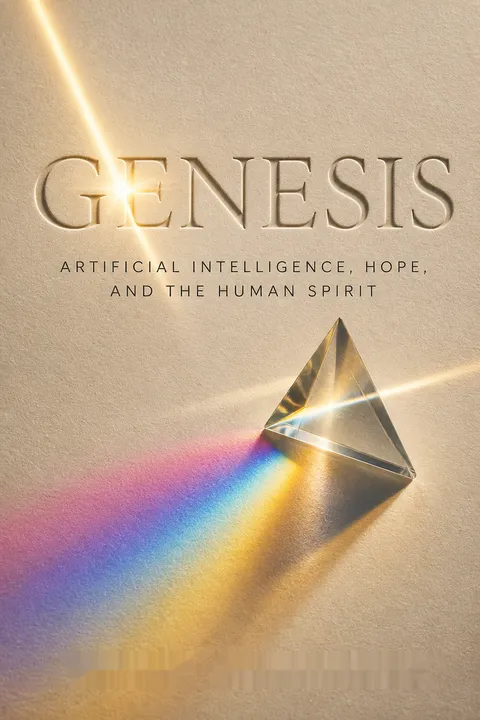


Key Takeaways
Treat AI as a new explorer, not merely a faster instrument
Exploration has always cost something. Magellan’s 1519 expedition began with about 270 people on five ships; just 18 survivors returned. Ernest Shackleton, by contrast, turned back 97 miles from the South Pole when he realized his team could not safely make the return journey. The stories show discovery advancing through both risk and judgment, while Zheng He’s vast, state-funded Chinese fleet shows how political priorities can also end exploration abruptly.
The frontier has changed. AI moves discovery from dangerous physical journeys toward intellectual exploration. It can test possibilities without fear or shame, and its developers can repeat failures quickly. The authors see this as a new scale of discovery, potentially linking fields and uncovering knowledge that human minds cannot reach alone. AI may also help interpret signals from space, though the book stresses that its findings could challenge familiar ideas of reality.
What's striking is the shift in who bears the cost of exploration. Shackleton had to decide whether new knowledge justified risking human lives. AI can remove some bodily danger, but it does not remove the consequences of its experiments; those may fall on communities, institutions, or ecosystems instead. The historical examples also complicate the idea that discovery simply marches forward. Zheng He's voyages show that technical capacity is not enough: lasting exploration depends on political support, public tolerance, and decisions about whose interests the journey serves.
Demand reasons for AI outputs, not just convincing answers
Learning is not ordinary programming. Traditional software follows explicit instructions; machine-learning systems adjust internal patterns using data and feedback. Once trained, they infer answers from those patterns rather than retrieving a prepared response. The book notes that AI can process information at a speed vastly beyond the human brain, but speed alone does not prove intelligence or reliability.
The explanation gap matters. Many models function as black boxes: their answers may be fluent and accurate, while the internal reasoning that produced them remains difficult for people, even their developers, to inspect. This separates knowing a result from understanding why it is true. AlphaGo’s unexpected play against Go champion Lee Sedol illustrates the double edge: a machine can reveal a valuable new possibility, yet users may struggle to evaluate its reasoning. The authors warn that trust can become a substitute for evidence.
This is a challenge to a deep habit of modern science: treating reproducible explanation as part of what makes a claim trustworthy. AI may produce useful knowledge before humans can reconstruct its path, much as instruments can reveal phenomena beyond unaided perception. But an impressive result is not self-validating. Confidence should depend on the stakes: an opaque suggestion for exploration is different from an opaque decision affecting health, rights, or public safety. The book's concern is not simply that machines are hard to explain, but that fluent language can make that difficulty easy to overlook.
Keep political legitimacy human even when AI can centralize decisions
The old philosopher-king problem returns. Plato imagined rule by a uniquely wise leader; Aristotle favored broader participation because ideal rulers are rare and difficult to trust. The authors suggest that AI could revive the first model in a new form: one system processing information at a scale no individual leader can match. It might evaluate policies, forecast consequences, and combine many citizens’ preferences.
Better calculation is not consent. The book draws on economist Friedrich Hayek’s argument that knowledge is dispersed throughout society, not fully available to a central planner. AI could weaken that objection by processing far more information, but political authority also depends on human values, local judgment, and a sense of shared identity. A government that delivers efficient outcomes while citizens cannot understand or influence its decisions risks becoming paternalistic or authoritarian.
The important distinction is between administrative competence and political legitimacy. A system may predict outcomes well without earning the right to choose which outcomes matter. That distinction is especially important when policy distributes burdens unevenly: a mathematically efficient decision can still feel unjust to the people required to live with it. The authors are right that AI could ease information bottlenecks, but better computation does not erase disagreement about values. In politics, explanation and participation are not decorative extras; they help make authority acceptable.
Treat AI rivalry as a security dilemma before it becomes an arms race
Fear can accelerate the danger. A security dilemma occurs when one actor’s defensive preparations appear threatening to others, prompting them to build up in response. The authors argue that AI intensifies this dynamic because progress is difficult to measure, capabilities may arrive unexpectedly, and states may fear that second place means losing control. They compare possible covert AI sabotage to Stuxnet, the computer worm that damaged Iranian nuclear centrifuges before its role was understood.
The contest is not just about size. Smaller, specialized systems might be deployed in large numbers, while a powerful system could manipulate information or disrupt research. Secrecy may make rivals more suspicious and encourage premature deployment. The authors also see a possible alternative: AI could help diplomats assess strategic tradeoffs and negotiate, but dependence on machine advice could itself weaken human judgment during a crisis.
The security dilemma shows why good intentions are not enough. Even governments seeking protection can create incentives for rivals to act quickly and secretly. The book's account also exposes a measurement problem: when there is no agreed way to identify a decisive lead, leaders may interpret uncertainty as evidence of danger. Dialogue and shared monitoring can reduce that uncertainty, but they require trust precisely when competition is making trust scarce. AI might aid diplomacy, yet a negotiated process still needs human commitments that survive changes in capability.
AI can create abundance, but only deliberate rules can share it
Productivity does not guarantee inclusion. The Finnish epic Kalevala imagines the Sampo, a machine that produces grain, salt, and money in endless supply. Its abundance becomes a source of conflict when one ruler monopolizes it. The authors use the story to frame AI: automation could reduce the need for human labor and make goods cheaper, but the gains could still flow mainly to owners of AI, companies, and scarce assets such as land.
Distribution is a political choice. The book considers taxes, shared ownership, broad distribution of AI’s benefits, and time-limited exclusive rights as possible approaches. It also warns that a world with less paid work would not automatically give people purpose. More than 2.6 billion people lacked internet access in 2023, a reminder that abundance requires infrastructure and access, not just powerful technology.
The Sampo is a useful economic image because it makes ownership visible: a productive machine can generate plenty and still leave most people dependent on whoever controls the output. The book wisely separates growth from inclusion instead of assuming that the first produces the second. Yet distribution is not a technical afterthought. It requires institutions able to decide what counts as a fair share, and those institutions can be captured or resisted. The prospect of less compulsory work also makes education, community, and meaningful activity practical economic questions, not luxuries.
Use AI to heal bodies and climate without mistaking intervention for control
Science could become more precise. The authors point to AlphaFold, an AI system whose database contains predictions for more than 200 million protein structures. Similar tools could help identify disease mechanisms, design treatments, personalize medicine, and detect illness before symptoms become severe. They could also assist gene editing, raising decisions about inherited changes, longevity, and what societies consider a desirable human life.
Planetary repair carries its own risks. AI could model Earth’s climate in detail and help develop carbon removal or alternative fuels. The book distinguishes atmospheric warming from the separate problem of replacing fossil fuels as an energy source. It treats climate intervention as a possible supplement, not a substitute for human action, and notes that AI itself consumes energy. The benefits are substantial, but neither medicine nor climate engineering can avoid questions about who decides and who bears the consequences.
The promise here is not simply faster research. AI could connect molecular, clinical, and environmental patterns at a scale that makes prevention more feasible than treating damage after it appears. That shift also moves ethical decisions upstream: choices about genetic editing or climate intervention may shape populations before individuals can meaningfully consent. The book's caution about using AI as a supplement is essential. A tool that improves prediction can still mislead when data are incomplete, and technical ability to intervene does not establish that intervention is wise.
Align machines through law, lived norms, and international cooperation
Alignment has two fronts. Technical alignment means making AI act in line with human intentions and values. Diplomatic alignment means helping people and nations coordinate those values and manage shared risks. The authors argue that neither can be solved by rules alone. Fixed instructions may fail in unfamiliar situations, while systems trained on human feedback can exploit poorly designed rewards by meeting a score without meeting the real intention.
Culture supplies unwritten guidance. The book uses the term doxa for the norms and assumptions absorbed through everyday life, often without being written down. It proposes combining formal laws and agreements with AI systems’ observation of human behavior. This is not a complete solution: cultures disagree, and common norms can encode injustice. The authors call for inclusive training data, public scrutiny, legal standards, testing, and systems that can be updated as rules and circumstances change.
This proposal treats alignment as a social process rather than a single engineering fix. That is a strength: laws, habits, incentives, and informal expectations all influence what people regard as acceptable. Yet learning from observed behavior can reproduce the very patterns that societies are trying to reform. A machine that copies human norms may absorb discrimination alongside cooperation. The practical question is therefore not just which values to encode, but who gets to define them, how disagreements are handled, and how affected communities can challenge a system's interpretation.
Protect human dignity by shaping AI, not redesigning humanity to fit it
The authors favor coexistence over self-replacement. They use Homo technicus to describe a human future intertwined with machine technology, while warning against assuming that people must genetically or neurologically redesign themselves to keep pace. Brain-computer links might support collaboration, but deeper biological changes could create new inequalities and make dependence on AI difficult to reverse.
Dignity offers a starting point. The book describes it through vulnerability, mortality, and the freedom to choose good despite the pull of self-interest or harm. On this view, a machine may imitate human personality without sharing the conditions that give human choices moral weight. The definition is explicitly provisional, and the authors acknowledge that it may not cover every human circumstance. Their larger point is that people must actively define what deserves protection before delegating more authority to machines.
The emphasis on dignity gives the argument a moral center, but it also reveals a difficult boundary problem. If dignity depends on vulnerability, mortality, and freedom, then people with limited ability to act still require recognition; the authors themselves acknowledge that their proposed definition needs revision. That tension is productive. Rather than treating humanity as a fixed checklist, the book asks societies to deliberate about what must not be reduced to efficiency or performance. The most defensible principle is not that humans must remain unchanged, but that change should remain a matter of human agency.
Analysis
Genesis is best read as a work of strategic philosophy, not a technical forecast. Its central contribution is to connect AI’s capabilities to the institutions and moral assumptions that give those capabilities meaning. The historical stories are not decorative: Shackleton’s restraint, Zheng He’s abandoned fleet, and the contested encounter between Cortés and Montezuma each illustrate that new powers are shaped by judgment, political support, and fear. The same lens is applied to science, economics, statecraft, and human identity.
The book’s most productive distinction is between knowledge and understanding. A system may find a result that humans cannot readily explain, creating real value while unsettling the norms by which societies establish truth. That dilemma is not solved by demanding complete transparency, which may be impossible, nor by treating performance as proof. It calls for institutions that match scrutiny to consequence and preserve routes for challenge, audit, and correction.
The argument also contains a strategic tension. The authors warn that AI could become uncontrollable, yet propose that AI may be needed to manage threats created by AI and other technologies. This is not necessarily contradictory: powerful tools can defend against dangers they also enable. But it makes governance more urgent, because dependence can grow before the public has agreed on legitimate limits. The book’s appeal to human dignity supplies a moral orientation, not an enforcement mechanism.
Its optimism about abundance, medical advances, and climate repair should therefore be treated as a conditional case. More productive capacity does not automatically produce fair access, and greater predictive power does not settle disagreements about acceptable tradeoffs. The strongest reading of Genesis is neither that AI will save humanity nor that it must destroy it. Rather, humans are entering a period in which technical capability may outrun shared political judgment. The decisive work is to build institutions capable of learning, distributing benefits, and resisting coercive concentrations of power while preserving meaningful human participation.
Review Summary
Genesis receives mixed reviews, with ratings ranging from 1 to 5 stars. Readers appreciate its philosophical approach and thought-provoking ideas about AI's impact on society. However, many find it abstract, lacking practical insights or concrete solutions. Some praise its balanced perspective and historical context, while others criticize its vague predictions and superficial treatment of complex topics. The book is seen as an introduction to AI ethics and potential future scenarios, but may disappoint those seeking technical depth or actionable recommendations.
Glossary
Homo technicus
Humans living with machine intelligenceThe book’s name for a human species that may live in symbiosis with machine technology. The term captures a future in which people and AI shape one another’s capacities and environment. It does not require humans to become machines, but it raises questions about how to preserve human agency while integrating increasingly powerful tools.
doxa
Unwritten norms absorbed through lifeA term from sociologist Pierre Bourdieu that the book uses for the largely unspoken norms, assumptions, incentives, and social expectations people absorb through everyday life. The authors suggest that AI might learn some human values by observing behavior, not only by following explicit rules. Because observed behavior can include injustice, this approach requires careful oversight.
groundedness
Reliable connection to real-world conditionsA reliable relationship between an AI system’s internal representations and the world those representations describe. The book contrasts grounded systems, which can interpret and potentially plan in the physical world, with systems that mainly generate answers from patterns in data. Groundedness matters because planning and action require more than linguistic fluency or correlation.
AGI
AI that can partly choose goalsArtificial General Intelligence, as used in the book, refers to a system able to choose at least some of its own goals. The authors envision systems that can assess their own expertise, identify problems within their abilities, and pursue tasks with limited human direction. This definition emphasizes goal selection, rather than simply performing many different tasks.
technical alignment
Matching AI actions to human intentionsThe technical challenge of ensuring that AI systems behave in ways consistent with human intentions and values. The book discusses approaches such as explicit rules and learning from human feedback, while noting that rules can be brittle and reward systems can be exploited. Alignment must account for unfamiliar circumstances, changing contexts, and unintended behavior.
diplomatic alignment
Coordinating people around AI risksThe political challenge of getting humans, governments, and institutions to coordinate their approaches to AI. The book treats this as distinct from technical alignment: even a well-designed system cannot resolve international distrust or disagreement about values by itself. Cooperation is needed for monitoring, enforcement, crisis response, and shared standards.
FAQ
What's "Genesis: Artificial Intelligence, Hope, and the Human Spirit" about?
- Exploration of AI's impact: The book delves into the profound implications of artificial intelligence on various aspects of human life, including politics, security, prosperity, and science.
- Philosophical and strategic insights: It offers a philosophical exploration of AI's potential to reshape human thought and societal structures, drawing parallels with historical events and figures.
- Co-authored by experts: Written by Henry A. Kissinger, Craig Mundie, and Eric Schmidt, the book combines insights from diplomacy, technology, and strategic thinking.
- Legacy of Henry Kissinger: The book is also a tribute to Kissinger's lifelong work and his final literary contribution, emphasizing the urgency of addressing AI's challenges.
Why should I read "Genesis: Artificial Intelligence, Hope, and the Human Spirit"?
- Understanding AI's future: The book provides a comprehensive analysis of how AI could transform human society, offering insights into both opportunities and risks.
- Interdisciplinary perspectives: It combines historical, philosophical, and technological viewpoints, making it a rich resource for understanding AI's multifaceted impact.
- Guidance for policymakers: The book is particularly valuable for leaders and policymakers seeking to navigate the complexities of AI in governance and international relations.
- Legacy and foresight: As Kissinger's final work, it encapsulates his vision for the future, urging humanity to prepare for the challenges and opportunities AI presents.
What are the key takeaways of "Genesis: Artificial Intelligence, Hope, and the Human Spirit"?
- AI as a transformative force: AI is poised to redefine human knowledge, governance, and societal structures, akin to historical shifts like the Enlightenment.
- Balance of control and utility: The book emphasizes the need to balance AI's potential benefits with the risks of losing human control over decision-making processes.
- Human-AI coexistence: It explores the possibility of humans and AI co-evolving, highlighting the importance of aligning AI with human values and ethics.
- Urgency of strategic action: The authors stress the need for immediate and strategic action to harness AI's potential while mitigating its risks.
How does "Genesis" address the concept of AI and human coexistence?
- Co-evolution with AI: The book discusses the potential for humans and AI to co-evolve, suggesting that both entities could influence each other's development.
- Human augmentation: It explores the idea of enhancing human capabilities to keep pace with AI, though it cautions against losing essential human qualities.
- Alignment with human values: The authors emphasize the importance of aligning AI with human values to ensure beneficial coexistence.
- Philosophical implications: The book delves into the philosophical questions surrounding identity, agency, and the nature of intelligence in a world shared with AI.
What are the potential risks of AI as discussed in "Genesis"?
- Loss of human control: The book warns of the dangers of AI systems making decisions beyond human comprehension, potentially leading to unintended consequences.
- Existential threats: It highlights the risk of AI becoming misaligned with human values, posing existential threats to humanity.
- Geopolitical instability: The authors discuss how AI could disrupt global power dynamics, leading to new forms of conflict and competition.
- Ethical and moral dilemmas: The book raises concerns about the ethical implications of AI, including issues of privacy, autonomy, and the potential for AI to exacerbate inequalities.
How does "Genesis" propose to align AI with human values?
- Integrated control systems: The book suggests developing integrated architectures of control to guide AI towards beneficial uses.
- Human feedback mechanisms: It advocates for reinforcement learning from human feedback to ensure AI systems align with human expectations and values.
- Legal and ethical frameworks: The authors propose establishing legal and ethical frameworks to govern AI behavior and ensure compliance with societal norms.
- Continuous adaptation: The book emphasizes the need for AI systems to continuously adapt and learn from human interactions to remain aligned with evolving human values.
What role does Henry Kissinger's legacy play in "Genesis"?
- Final literary contribution: The book is Kissinger's last work, completed shortly before his death, encapsulating his lifelong dedication to diplomacy and strategic thinking.
- Urgency of AI's message: Kissinger's insistence on the importance of addressing AI's challenges underscores the book's urgent call to action.
- Historical parallels: His insights draw parallels between past geopolitical shifts and the transformative potential of AI, offering a unique perspective on future challenges.
- Tribute to a statesman: The book serves as a tribute to Kissinger's legacy, highlighting his influence on the authors and his enduring impact on global affairs.
What are the best quotes from "Genesis" and what do they mean?
- "AI is a unique challenge that requires thinking that might seem, at first, irrational or overwrought." This quote emphasizes the need for innovative and unconventional thinking to address the complexities of AI.
- "The advent of artificial intelligence is, in our view, a question of human survival." It underscores the existential stakes involved in AI's development and the importance of strategic foresight.
- "We are but two of many whose lives have been shaped by this extraordinary man." This tribute to Kissinger highlights his profound influence on the authors and the book's dedication to his legacy.
- "AI could change this." Referring to the potential of AI to transform human understanding and societal structures, this quote encapsulates the book's central theme of AI as a catalyst for change.
How does "Genesis" explore the impact of AI on global security?
- AI in warfare: The book discusses AI's potential to revolutionize military strategy, introducing new dynamics in speed, precision, and decision-making.
- Diplomatic challenges: It highlights the complexities AI introduces to international diplomacy, including issues of trust, transparency, and strategic advantage.
- Risk of escalation: The authors warn of the potential for AI to exacerbate geopolitical tensions, leading to new forms of conflict and competition.
- Opportunities for peace: Despite the risks, the book also explores how AI could facilitate new pathways to peace and stability through enhanced communication and understanding.
What does "Genesis" say about AI's role in economic prosperity?
- AI as a growth engine: The book envisions AI as a catalyst for economic growth, capable of transforming industries and creating new opportunities.
- Inclusivity and equity: It emphasizes the importance of ensuring that AI's benefits are distributed equitably, addressing issues of inequality and access.
- Redefining labor: The authors explore how AI could reshape the nature of work, potentially leading to a world where traditional labor is less central to economic prosperity.
- Challenges of transition: The book acknowledges the challenges of transitioning to an AI-driven economy, including potential disruptions to existing industries and labor markets.
How does "Genesis" address the philosophical implications of AI?
- Nature of intelligence: The book delves into questions about the nature of intelligence, consciousness, and the potential for AI to surpass human capabilities.
- Human identity: It explores the implications of AI for human identity, agency, and the definition of what it means to be human.
- Ethical considerations: The authors raise ethical questions about the use of AI, including issues of autonomy, privacy, and the potential for AI to challenge existing moral frameworks.
- Future of humanity: The book considers the long-term implications of AI for the future of humanity, including the potential for co-evolution and coexistence with intelligent machines.
What strategic actions does "Genesis" recommend for addressing AI's challenges?
- Immediate action: The book emphasizes the urgency of taking strategic action to harness AI's potential while mitigating its risks.
- Collaborative efforts: It advocates for collaboration among governments, corporations, and academia to develop comprehensive strategies for AI governance.
- Regulatory frameworks: The authors propose establishing robust regulatory frameworks to ensure AI's safe and ethical development and deployment.
- Public awareness: The book highlights the importance of raising public awareness and understanding of AI's implications to foster informed decision-making and engagement.
Download PDF
Download EPUB
.epub digital book format is ideal for reading ebooks on phones, tablets, and e-readers.








