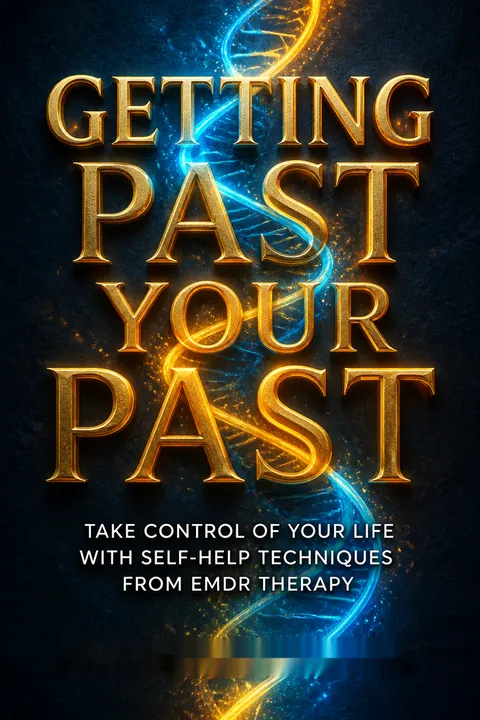


Key Takeaways
Trace today's overreaction to the memory that taught your brain what danger means
Old alarms can persist. Shapiro’s central idea is that present-day distress may be driven by memories still carrying the fear, bodily sensations, and beliefs of the original experience. She calls these unprocessed memories: experiences that have not been integrated into a broader understanding of what happened. A breakup can therefore feel like childhood abandonment, even when the adult knows the relationship is wrong.
Justine’s parents did not hear her cries during a frightening storm when she was six. Years later, a boyfriend’s departure triggered the same terror of being alone and unsafe. In another case, a childhood threat about talking too much fed a businessman’s adult fear of presentations. The past can shape reactions without appearing as a clear, conscious memory.
The model gives confusing reactions a humane explanation: a response can be understandable in its history without being useful in the present. That distinction can reduce shame and create room for choice. It also resembles predictive processing, the idea that the brain interprets new events through prior experience. But a plausible link is not automatically the cause. Present relationships can be genuinely unsafe or painful, so tracing history should complement, not replace, judging current facts.
Don't assume time heals; check whether the experience became usable learning
Distress can remain unintegrated. Shapiro describes the brain’s Adaptive Information Processing system as a natural capacity to connect upsetting experiences with useful information, reducing distress while preserving lessons. After an ordinary argument, a person might sleep, reflect, and recognize that a coworker’s behavior is familiar and manageable. The memory remains, but it no longer dictates the emotional response.
In Shapiro’s account, overwhelming distress can interrupt this process. A reminder then brings back the original fear or helplessness as if it were happening now. She relates this process to learning during REM sleep, when memories are consolidated, but presents the connection as a theory, not a settled explanation. Her practical distinction is whether an old event can be remembered with perspective or still brings the body and mind back into its original alarm.
This framework usefully separates remembering an event from reliving its emotional state. It also aligns with the broader clinical idea that avoidance can preserve fear while new, safe experiences can revise expectations. Still, distress does not prove that a memory is frozen, and ordinary pain is not necessarily a malfunction. Grief, anger, and fear can be appropriate responses. The useful question is not whether discomfort exists, but whether it is persistent, disproportionate, and narrowing a person’s life.
Log triggers, body sensations, and beliefs before deciding what your reaction means
Observe before interpreting. Shapiro’s TICES Log is a simple record of a disturbing moment: Trigger, Image, Cognition, Emotion, and Sensation, with distress rated on a 0-to-10 SUD scale. The entries can help show whether different situations share the same emotional theme, such as feeling powerless or unimportant. Her Affect Scan and Floatback technique use a current upset, its bodily feeling, and a negative belief to prompt memories that may be related.
The earliest remembered event connected to a present problem is called a Touchstone Memory. These exercises are for noticing patterns, not proving what happened. Shapiro cautions that images or memories can mislead; in Stacey’s case, a memory of a fatal car crash was checked with her mother. Readers with complex or intense symptoms are advised not to explore distressing memories alone.
The log turns vague self-criticism into observable data, a strength shared by methods such as cognitive behavioral self-monitoring. Repeated entries can reveal patterns without requiring a grand theory of the self. Memory, however, is reconstructive, and an image that surfaces during an exercise is not independent evidence of an event. Treat emerging memories as hypotheses to handle carefully, not recovered facts. A qualified clinician is particularly important when exploration brings intense distress or uncertainty.
Use EMDR with a trained clinician, not as solo trauma excavation
Treatment requires a plan. EMDR means Eye Movement Desensitization and Reprocessing. In the therapy, a clinician helps a client focus on a disturbing memory while using alternating eye movements, taps, or tones. The client notices what comes up, and the clinician monitors distress and guides the process. Shapiro describes a full treatment that also addresses present triggers and prepares for future situations. The goal is not simply to make a memory less vivid, but to connect it with more adaptive information.
The book cites more than 20 controlled studies supporting EMDR for trauma and reports that major professional bodies recognized it as an effective trauma treatment at the time of publication. It also acknowledges that researchers disagree about precisely how the method works. Shapiro’s self-help exercises are not a substitute for the training, preparation, and safeguards needed for memory reprocessing.
The distinction between a researched clinical treatment and a book’s self-help tools matters. It protects readers from treating intense trauma processing as a do-it-yourself exercise. EMDR has an established role among trauma treatments, while its exact mechanism remains debated and outcomes vary by person and condition. The book’s case stories make change vivid, but individual cases cannot establish typical speed or guarantee results. Evidence for a treatment should be considered separately from the most dramatic examples used to explain it.
Practice calming skills for distress, but don't confuse relief with resolution
Create a pause. Shapiro’s self-regulation tools aim to lower immediate distress, not erase its source. The Safe or Calm Place exercise pairs a positive memory with a cue word, then practices bringing back the associated feeling. The Breathing Shift uses the slower, lower breathing often present when calm. Other options include imagining a disturbing picture being washed away or giving a harsh inner voice a comical cartoon sound.
The Butterfly Hug uses slow alternating taps on the shoulders, usually for four to six taps per set. Shapiro advises stopping if a tool brings up negative associations or increases distress. These techniques can help someone return to balance before responding to a situation. Persistent or severe symptoms, however, may require professional care rather than repeated attempts to soothe them away.
These exercises resemble grounding and distress-tolerance practices used in several therapeutic traditions: first regain enough steadiness to act, rather than letting alarm make the decision. Their value depends on function. If calming helps someone address a real problem, it supports agency; if it becomes a way to silence valid fear or avoid necessary action, it can reinforce avoidance. The book’s instruction to monitor whether a technique helps is therefore essential, not a minor caveat.
In relationship fights, notice the old attachment pattern beneath the present demand
Two histories meet. Shapiro uses attachment styles to explain how early patterns of care can shape later expectations. A child whose feelings are dismissed may learn not to express needs. A child facing inconsistent or frightening responses may become clingy, controlling, withdrawn, or quick to anger. These are learned adaptations, not fixed identities.
Barry tried to avoid conflict with his wife Trudy, whose childhood experience of being ignored made his passivity feel like neglect. She became more demanding, he withdrew further, and each response intensified the other’s alarm. Processing their histories helped them see the loop rather than treat each other as the original source of the pain. The book also stresses that violence requires safety planning and individual help; understanding a pattern does not require tolerating abuse.
The relational lens is powerful because it locates conflict in an interaction, not just in one person’s character. Attachment research similarly describes how early caregiving can shape expectations of closeness and safety. Yet a history-based explanation must not flatten present behavior into a harmless reenactment. A partner may actually be neglectful, coercive, or dangerous. Understanding can support compassion and change, but boundaries and immediate safety remain more important than preserving a relationship.
Investigate body symptoms without assuming they are either imaginary or memory-made
The body is involved. Shapiro emphasizes that fear and memory can produce real physical sensations because the brain directs bodily responses. She describes clients whose panic, headaches, sexual difficulties, or phantom-limb pain changed after trauma-focused treatment. One Marine with severe pain in an amputated leg reported major improvement after processing memories of the accident and its aftermath. Such examples illustrate the book’s mind-body argument, but they are case reports rather than proof that memory explains every symptom.
The book explicitly warns that EMDR cannot remove a purely physical condition and is not a medical manual. A puzzling or persistent symptom deserves medical evaluation. Psychological treatment may be an additional avenue when stress or painful memories appear connected, but it should not be used to dismiss bodily suffering or delay appropriate care.
A biopsychosocial perspective avoids the false choice between “physical” and “psychological”: brain, body, and context interact. That can be validating for people whose pain has been minimized. The caution is equally important. Case reports cannot show that processing caused a bodily symptom to disappear, and some conditions require medical treatment regardless of emotional history. The strongest application is collaborative care, where psychological factors are explored without presuming they are the whole explanation.
Treat trauma-related harm while holding perpetrators responsible for their choices
Explanation is not absolution. Shapiro argues that trauma, neglect, and addiction can contribute to behavior that harms others. Zach, a young child repeatedly fighting at school, began to improve after therapy helped him express grief about his parents’ imprisonment. Tom, whose addiction worsened after his brother’s death, described recovery after confronting painful experiences and receiving structured treatment. The book’s broader point is that punishment alone may fail when a person cannot regulate or understand distress.
Shapiro does not argue that harm should be excused. In domestic violence, she stresses safety plans and individual treatment, and notes that couples therapy may be inappropriate while abuse is active. Helping perpetrators address trauma can reduce future harm, but it does not replace accountability, protection for victims, or evidence that a particular intervention works for a particular person.
This approach resists the easy story that harmful people are simply beyond help, while preserving the distinction between causes and responsibility. Trauma-informed care can improve treatment engagement by recognizing what behavior may be protecting or expressing. But compassion must not shift the burden onto victims or overpromise rehabilitation. Public safety, survivor support, and rigorous outcome monitoring belong alongside treatment. The ethical test is whether an intervention reduces harm and expands accountability, not merely whether it produces a moving narrative.
Prepare for performance by clearing old fear, then mentally rehearse the task
Practice the future. Shapiro describes performance anxiety as sometimes linked to memories of humiliation, failure, or impossible expectations. A Future Template is a guided mental rehearsal: picture a specific upcoming task, identify the desired thoughts and feelings, and imagine completing the task from beginning to end. The rehearsal includes possible setbacks, such as equipment trouble, and a confident response to them.
Preparation still matters. A person giving a presentation needs to know the material; imagining success cannot replace the work. The book also recommends breathing, posture, and positive memories to shift from fear toward useful intensity. It cites a survey in which 90 percent of athletes and 94 percent of Olympic coaches reported using imagery, and research suggesting mental rehearsal can support performance.
Mental rehearsal is most credible when it supplements concrete practice. Imagining a sequence can make actions more familiar and expose obstacles before they occur, while posture and breathing can influence felt confidence. The method is not magic, and visualization can become fantasy if it skips preparation or feedback. Its strongest use is specific and testable: rehearse a real task, include plausible complications, then compare the imagined plan with what happens.
Interrupt inherited pain with compassion, boundaries, and deliberate care
Healing has a social reach. Shapiro presents painful patterns as capable of passing through families: a parent’s unresolved distress can shape a child’s sense of safety, which may influence that child’s later relationships and parenting. She also connects individual suffering with forces such as racism, homophobia, violence, and family secrecy. Helene’s understanding of generations of abuse and shame helped her choose a healthier role with younger relatives, without pretending that explanation erased the harm.
The book closes by urging ongoing self-care, mindfulness, and help-seeking. It frames recovery as more than symptom relief: a person may regain the ability to grieve, choose supportive relationships, or contribute to others. Forgiveness, where it occurs, does not require renewed contact with an abusive person. Personal change can interrupt a pattern, though it cannot by itself repair every social cause of suffering.
The intergenerational view expands healing beyond private symptom management. Family systems and social conditions can shape what feels normal, what gets hidden, and who has access to care. That broader frame discourages blaming a single generation for patterns formed under pressure. At the same time, individual resilience should not be asked to substitute for institutional change. Therapy and self-care may help a person choose differently, while safer communities and accessible services address conditions no person can resolve alone.
Analysis
The book’s most durable contribution is its reframing of automatic reactions. Instead of treating shame, panic, avoidance, or relationship repetition as evidence of weakness, it asks whether a learned alarm is being activated by the present. That account is emotionally useful and clinically legible: it joins bodily response, memory, and behavior, then gives the reader ways to observe the chain. The cases make the theory memorable because ordinary events, such as being ignored or humiliated, can matter deeply to a child even when adults would discount them.
The framework is strongest as a hypothesis-generating map, not a universal explanation. The book’s language can make unprocessed memories sound like the primary cause of a very wide range of conditions, from relationship patterns to asthma and chronic pain. Yet vivid case histories do not establish causation, and symptoms can have multiple biological, social, and psychological contributors. A memory that emerges during therapy also does not by itself verify historical detail. The text’s own warning to seek confirmation and professional support is crucial.
The treatment discussion benefits from a similar distinction. EMDR is presented as a structured clinical therapy with research support for trauma, while the precise mechanisms, including the role of eye movements, remain unsettled. This does not invalidate its use, but it does argue against treating the book’s most rapid case examples as typical promises. The best reader stance is hopeful and discerning: use the memory model to ask better questions, use self-regulation for manageable distress, and seek qualified care when symptoms are severe or persistent. Above all, explanation should increase agency without erasing current reality, medical needs, or responsibility for harm.
Review Summary
Getting Past Your Past receives mixed reviews. Many praise its insights into EMDR therapy and trauma processing, finding the techniques helpful for personal growth. Some appreciate the case studies, while others find them repetitive. Critics argue the book oversells EMDR's effectiveness and lacks depth in explaining its mechanisms. Several readers note the book's accessibility but question its usefulness for self-help without professional guidance. Overall, reviewers acknowledge the potential benefits of EMDR therapy but have varying opinions on the book's presentation and practical value.
People Also Read






Glossary
Adaptive Information Processing
proposed brain learning systemShapiro’s model of the brain’s capacity to connect new experiences with useful information already stored in memory. When this process works, a disturbing event can become a learning experience, retaining relevant lessons while its intense emotional charge fades. The model is used to explain why some memories remain distressing and how EMDR may help.
Unprocessed memories
disturbing memories not integratedIn Shapiro’s framework, these are experiences retained with the emotions, bodily sensations, images, and beliefs present at the time, without being integrated with more adaptive information. Later situations that resemble part of the experience may reactivate those reactions. The term describes a proposed source of persistent distress, not a diagnosis or proof of what caused a symptom.
EMDR
structured trauma-focused psychotherapyEye Movement Desensitization and Reprocessing is a psychotherapy in which a trained clinician helps a client focus on distressing memories while using alternating eye movements or other bilateral stimulation. Shapiro describes it as a multi-phase treatment that addresses past memories, present triggers, and preparation for future situations. The book emphasizes that memory reprocessing should be conducted by a trained, licensed clinician.
Touchstone Memories
early memories linked to problemsThe earliest remembered events that may have contributed to a current problem, in Shapiro’s terminology. A therapist or a guided self-observation exercise may use a present trigger, bodily sensation, and negative belief to identify candidate memories. A memory identified this way is a treatment lead, not conclusive evidence that the event alone caused the current difficulty.
Negative cognitions
distress-linked negative beliefsBrief beliefs about oneself that express how a person feels when a disturbing memory or current trigger is activated. Examples in the book involve worthlessness, danger, helplessness, or failure. Shapiro groups them broadly around responsibility, safety, and control. In EMDR, identifying a negative cognition helps specify the distress attached to a target memory.
TICES Log
daily distress-monitoring recordA tracking tool for a disturbing situation. Its letters refer to Trigger, Image, Cognition, Emotion, and Sensation, with a distress rating also recorded. The log helps a person notice which situations, beliefs, emotions, and bodily reactions recur. It can support discussion with a clinician, but it is not a diagnostic instrument.
Subjective Units of Distress (SUD) scale
self-rated distress measureA 0-to-10 scale used in the book to rate how disturbing a current situation or memory feels. Zero represents no distress, and ten represents the most distress imaginable. The rating helps track subjective change during exercises or treatment. It is a personal report, not an objective measure of clinical severity.
Floatback technique
memory-association exerciseAn exercise that begins with a current upsetting situation, its related negative belief, and the bodily feeling associated with it. The person then allows earlier memories connected with that feeling to come to mind. Shapiro presents it as a way to identify possible Touchstone Memories. Strong distress, complex symptoms, or uncertainty call for clinician support.
Safe or Calm Place
positive-memory calming exerciseA guided imagery practice that pairs a personally chosen positive memory or imagined setting with a short cue word. Recalling the image and word is intended to bring back feelings of calm or safety. Shapiro recommends practicing when not distressed and stopping if the exercise evokes negative associations or fails to feel safe.
Future Template
guided rehearsal for future tasksAn imagery exercise used in EMDR preparation and performance work. A person imagines a specific future situation, identifies desired thoughts and feelings, and mentally rehearses handling the task from beginning to end, including possible obstacles. It is intended to strengthen a useful response pattern, while complementing real-world preparation and practice.
Butterfly Hug
alternating shoulder-tapping exerciseA self-administered form of bilateral stimulation in which a person crosses their arms over the chest and slowly taps each shoulder in alternation. In the book it is used to reinforce a positive Safe or Calm Place or to help with mild stress. The person should monitor the response and stop if distress increases.
FAQ
What's Getting Past Your Past about?
- Focus on Trauma Healing: The book delves into how unprocessed memories from past traumas can impact current emotions and behaviors. It introduces EMDR therapy as a method to process these memories and promote healing.
- Practical Self-Help Techniques: Francine Shapiro offers self-help techniques derived from EMDR therapy, making the concepts accessible to those who may not seek formal therapy.
- Real-Life Case Studies: Numerous case studies illustrate the transformative effects of EMDR therapy on individuals dealing with various emotional and psychological issues.
Why should I read Getting Past Your Past?
- Empowerment Through Knowledge: The book empowers readers by explaining how past experiences shape current lives, aiding in understanding emotional responses.
- Effective Self-Help Strategies: It provides practical strategies for addressing emotional challenges, making it a valuable resource for personal growth.
- Expert Insights: Written by Francine Shapiro, the developer of EMDR therapy, the book offers authoritative insights into trauma and healing.
What are the key takeaways of Getting Past Your Past?
- Understanding Unprocessed Memories: Unprocessed memories can lead to negative emotions and behaviors, which can be addressed through EMDR therapy.
- Connection Between Mind and Body: The book highlights the link between mental and physical health, showing how emotional distress can manifest physically.
- Self-Help Techniques: Readers learn techniques like the Safe Place technique and the Butterfly Hug to manage emotional responses effectively.
What is EMDR therapy as described in Getting Past Your Past?
- Definition of EMDR: EMDR stands for Eye Movement Desensitization and Reprocessing, a therapeutic approach developed by Francine Shapiro to help process traumatic memories.
- How It Works: The therapy involves guiding clients through eye movements while recalling distressing memories, allowing the brain to reprocess these memories and reduce their emotional charge.
- Phases of EMDR: EMDR therapy consists of eight phases, including history-taking, preparation, assessment, desensitization, installation, body scan, closure, and reevaluation.
How does Getting Past Your Past address childhood trauma?
- Impact of Childhood Experiences: The book discusses how negative childhood experiences can lead to unprocessed memories affecting adult behavior and emotional health.
- Case Studies: Shapiro uses case studies to show how individuals can trace current emotional issues back to childhood events and process these memories for healing.
- Reparenting Yourself: Emphasizes recognizing and addressing childhood wounds to foster a healthier self-image and emotional resilience.
What are some self-help techniques from Getting Past Your Past?
- Safe Place Technique: Involves visualizing a safe and calming place to reduce anxiety and promote feelings of safety, practiced regularly to strengthen positive emotions.
- Butterfly Hug: A form of bilateral stimulation where individuals cross their arms and tap their shoulders alternately, helping reduce anxiety and promote relaxation.
- Lightstream Technique: This guided imagery technique helps individuals visualize healing light entering their bodies, promoting relaxation and alleviating emotional pain.
What are the symptoms of unprocessed memories mentioned in Getting Past Your Past?
- Emotional Distress: Symptoms include anxiety, depression, anger, and feelings of inadequacy or shame triggered by daily life events.
- Physical Symptoms: Unprocessed memories can manifest as chronic pain, headaches, or gastrointestinal issues without a clear medical cause.
- Behavioral Issues: Difficulties in relationships, work, or social situations may arise due to emotional responses influenced by past traumas.
What is the significance of the "TICES Log" in Getting Past Your Past?
- Tracking Disturbances: The TICES Log helps individuals track triggers, images, cognitions, emotions, and sensations related to their disturbances, identifying patterns in emotional responses.
- Facilitating Memory Processing: By documenting experiences, individuals can explore underlying memories and process them through techniques like Floatback.
- Self-Monitoring: Encourages self-awareness and helps individuals recognize when influenced by unprocessed memories, allowing proactive emotional management.
What are some common negative cognitions discussed in Getting Past Your Past?
- Feelings of Inadequacy: Includes beliefs like “I’m not good enough,” “I’m unlovable,” and “I’m a failure,” often stemming from unprocessed childhood experiences.
- Lack of Safety: Cognitions such as “I cannot trust anyone” and “I am in danger” reflect vulnerability and fear from traumatic experiences.
- Powerlessness: Beliefs like “I am powerless” and “I cannot get what I want” indicate a lack of control traced back to early negative experiences.
How does Getting Past Your Past suggest dealing with anxiety and stress?
- Self-Control Techniques: Provides techniques like the Breathing Shift and Safe/Calm Place exercises to manage anxiety and stress, promoting relaxation and emotional regulation.
- Daily Self-Care Practices: Encourages incorporating exercise, mindfulness, and healthy eating to support mental health and mitigate stress effects.
- Awareness and Reflection: Stresses the importance of self-awareness in recognizing stress triggers and emotional responses, improving overall well-being.
What are some case studies in Getting Past Your Past?
- Alexandra's Journey: Illustrates how childhood neglect and criticism led to unhealthy relationship patterns, processed through EMDR to assert needs in relationships.
- George's Transformation: Highlights the impact of a critical upbringing on adult relationships, improved by addressing childhood trauma through EMDR.
- Anisha's Healing: Demonstrates how trauma led to unhealthy attachments, with EMDR helping establish healthier boundaries and self-worth.
What are the best quotes from Getting Past Your Past and what do they mean?
- “The past stays present.”: Emphasizes how unresolved past traumas continue to influence current emotions and behaviors, highlighting the importance of processing these memories.
- “It’s not what happens that matters. It’s how you deal with it.”: Reflects the idea that responses to experiences shape lives more than the experiences themselves, underscoring the power of choice in healing.
- “You can’t outrun what’s inside you.”: Serves as a reminder that unresolved issues persist until addressed, encouraging individuals to confront emotional pain rather than avoid it.
About the Author
Download PDF
Download EPUB
.epub digital book format is ideal for reading ebooks on phones, tablets, and e-readers.








