

Plot Summary
The Mansion on Hill Street
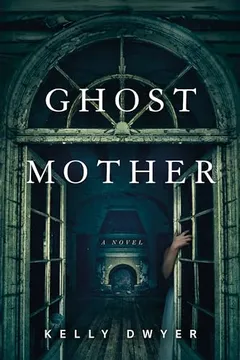
Lilly Bly, a former Chicago actor and teacher, falls for a crumbling Wisconsin mansion built by circus owner Edgar Lawrence. Her husband, Jack, worries about its failing roof, unsafe wiring, and cost, but agrees to a low offer if Lilly finds work. They have moved to Haven for Jack's new medical-imaging job, carrying debt, recent miscarriages, and Lilly's fierce hope that she will become a mother in this house.
They buy the estate and its worn furniture for more than they can comfortably afford. On moving day, Lilly imagines restoring the conservatory and nursery. Three local children soon warn her that a woman haunts the house, giving a name to the unease she has already felt there.
The purchase joins Lilly's longing for a child to her longing for a home she can repair. The mansion's damage makes it a project and a mirror: she sees a place that needs rescuing, while Jack sees an expensive liability. Their differing responses establish the marriage's central strain. Lilly's certainty that motherhood belongs here is powerful, but it also makes the house difficult to relinquish before she knows what it will demand.
The Murder House Records
Lilly's first nights bring a woman's laughter, and she finds the attic ballroom door open after Jack had shut it. Seeking the mansion's history, she visits the library and learns that Haven calls it the Murder House. Newspaper reports say trapeze artist Beatrice Birdy Lawrence Shawcross shot her husband, Bobby, then jumped from the backyard cliffs; their eight-year-old daughter, Amelia, was found dead inside.
A later article identifies thallium in Amelia's tea and presents Birdy as a mother who poisoned her child before killing Bobby. The official account leaves Lilly horrified and searching for a motive. The house's nursery, the river precipice, and the reported deaths now overlap with her own desire for a baby.
The newspaper record supplies facts but not understanding. Its language turns Birdy into a convenient diagnosis, explaining violence through a period's sexist label for women's distress rather than evidence of motive. Lilly notices this gap because she has herself been called unstable. The archive therefore does more than establish a mystery: it makes her question who gets to define a woman's actions, especially when the woman cannot answer back.
A Message in Dust
A leak forces Lilly to catch rainwater in mixing bowls, while her attempt to treat the house's problems as ordinary falters. She glimpses a woman at the nursery window, then finds the word JUMP traced in dust on the rocking chair. When Jack denies writing it, the marks disappear. Later, Lilly hears phantom bathwater and feels an icy hand grip her leg.
She finally tells Jack about the incidents and the newspaper murders. He admits he learned the house's reputation at a hardware store but kept quiet because he feared she would panic. Lilly chooses to stay, still convinced the house is where she will become a mother, even as Jack urges a rational explanation.
The manifestations attach themselves to the rooms where Lilly's hopes and fears are most concentrated. A nursery chair carries a command, while a bath becomes a site of bodily violation. Jack's concealment mirrors Lilly's own secrecy about her research, making trust a two-sided failure rather than a simple clash between reason and superstition. Her decision to stay is not proof that she feels safe. It shows how strongly she needs the house to mean something beyond its danger.
A Job and a Grave
At the library, Lilly finds an assistant's job and begins investigating the Lawrence family between her shifts. The former caretaker, Lorenzo DeMarcos, says Birdy was isolated and jealous of Bobby's attention, then shuts down when Lilly asks about the child. He mentions that his predecessor, a Lawrence nephew, left before the murders.
Lilly visits the family plot, where Birdy and Amelia lie beside Bobby, and asks Birdy to stop frightening her. The graves stir memories of Lilly's own miscarriage: alone, she buried its remains beneath an oak in a Chicago cemetery, then collapsed from blood loss and woke in hospital. Her history makes the dead family's loss feel intimate, while her secret research grows more urgent.
Lilly's investigation is driven by more than curiosity. She is trying to give the dead a story that makes their suffering intelligible, while her memory of burying a miscarriage reveals how often she has had to grieve without dependable support. The cemetery links the two losses without making them identical. Her request for peace also exposes a contradiction: she wants the haunting to stop, but she cannot stop pursuing the truth that may explain it.
Chas Refuses the Past
A call to Jim Lawrence, a surviving cousin of Birdy's, identifies the former caretaker as Chas Lawrence, now living with dementia at Golden Oaks. Lilly visits him without permission and asks about Bobby. Chas becomes distressed, speaking as though Bobby is pressuring him to do something he refuses. His wife, Katya, later rebukes Lilly for upsetting him and forbids another visit.
Lilly also consults psychic Ricarda Heller, who senses a dangerous presence upstairs and warns of a dark room and hidden secrets. Her lavender ritual produces no relief. When Jack leaves for a work trip, Lilly is left with the warning, her unanswered questions, and a house she believes is trying to communicate.
Chas's fragmented recollection makes memory both evidence and injury. Lilly treats his distress as a clue, but Katya's anger reminds her that the search has consequences for living people. Ricarda offers certainty without verification, giving Lilly a new vocabulary for danger but no practical escape from it. The section narrows Lilly's support: the witness cannot reliably speak, the psychic cannot clear the house, and Jack remains outside the experience she is trying to explain.
The Family in the Living Room
On Halloween night, Lilly hears 1950s music and finds the Lawrence-Shawcross family occupying the restored-looking living room of her mind. Birdy and Amelia dance while Bobby smokes on the sofa, an ordinary family scene that clashes with the newspaper's murder story. Later, Bobby appears to Lilly alone, touches her, and turns the encounter into a sexual invitation while implying that her husband might disappear.
Lilly wakes with marks on her neck. When Jack returns, she admits seeing the family, but he suggests medical help. During sex with him, Lilly imagines Bobby in his place and cannot keep the two men distinct. The haunting has become not only frightening but seductive, complicating her loneliness and her trust in herself.
Bobby's charm works by recognizing Lilly's hunger to be desired and understood, then exploiting it. The sexual encounter does not simply signal supernatural danger; it exposes how neglected and uncertain she feels within her marriage. At the same time, the family's domestic ease destabilizes the official account of Birdy as a monster. Lilly is drawn toward a past that appears tender, even though its tenderness may conceal violence.
The Attic Album
During Jack's two-week work assignment, Lilly tries to repair the mansion and becomes consumed by wallpaper and floor projects. She sleeps badly, neglects meals, and makes repeated mistakes at the library. After a negative pregnancy test and another spell of despair, she hears knocking from the unsafe attic. Inside a built-in cabinet, she finds a protected photo album.
Its pages show Birdy's marriage, Amelia's childhood, and a family that once appeared affectionate. The final images change the mood: Bobby and Amelia wear strained smiles, while a last photograph shows Birdy with thinning hair, a rash, and Amelia clinging to her. Lilly sees evidence of illness and fear that the official newspaper account never explains.
The album replaces a public verdict with private traces. Photographs cannot establish innocence, but they make the newspaper's flat story harder to accept: gestures, faces, and bodily decline ask for interpretation. Lilly's exhausting repair work parallels her investigation, as she scrapes away coverings to reveal what lies underneath. Her worsening sleep and judgment show the cost of treating the house's mystery as her sole source of meaning.
The Basement She Feared
Lilly returns to Golden Oaks and, by singing a song from Chas's youth, reaches a lucid moment. He remembers that Bobby wanted him to steal a copy of Birdy's prenuptial agreement from a law office. Chas refused and was fired, but believes his refusal somehow doomed Birdy and Amelia. Lilly has also missed a workday and lost her library job.
When Jack returns, she admits she went to see Chas, then finally tells him why she avoids basements: she found her father after he died by suicide and cut him down herself. Jack treats the confession as another lie and leaves. With his departure, Lilly follows a voice to the basement, confronting the place her trauma has kept her from entering.
Chas's guilt and Lilly's trauma meet around the question of what a person could have prevented. Both carry responsibility that may not belong to them, yet Lilly's account of her father's death is the first truth she has withheld from Jack that directly explains her behavior. His disbelief compounds her isolation. Going downstairs becomes an act of agency, but it also means approaching the buried evidence and the pain she has organized her life to avoid.
A Prenup and a Ghost
In the vast basement, Lilly finds an envelope addressed to Lily, with her name misspelled in the same shaky handwriting as the messages on the rocking chair and wall. It contains Birdy's prenuptial agreement and a later revision to her will. The agreement bars Bobby from claiming Birdy's fortune if they divorced, while the revised will leaves him her possessions if she dies first.
Lilly realizes Bobby had reason to seek the agreement he asked Chas to steal. Soon Bobby's ghost appears and admits deep involvement in the deaths, though he avoids a full confession. He flatters Lilly's longing for a child and suggests she could remove Jack. The documents turn a ghost story into a murder investigation with a living emotional threat.
The paperwork makes money legible where the historical account offered only madness. The will's reversal raises the possibility that Bobby had a path to wealth through marriage and a reason to control the legal record. His seduction of Lilly repeats the social mechanism by which he may have manipulated others: attention first, coercion beneath it. Yet the evidence does not absolve Birdy or reveal every act. Lilly must keep investigating rather than mistake a persuasive ghost for a reliable witness.
Tea Laced with Poison
Unable to sleep, Lilly is drawn into a memory of the mansion on the night of the deaths. Birdy is sick, her hair falling out and her face marked by a rash, while Bobby offers her tea and promises to stay home. He prepares the drink with Thall-Rat, then leaves Amelia a bottle of soda. Birdy falls asleep before she can drink the poisoned tea.
Amelia, hurt that her father is leaving, pours herself tea instead and drinks the pot. When she collapses, Birdy finds the poison bottle left visible in a cabinet and understands that Bobby has been making her ill as well. She tries to reach a doctor, but Amelia's body convulses and goes still before help can arrive.
The memory turns an abstract clue into an intimate catastrophe. Bobby's poison is not a single impulsive act but a calculated process hidden inside domestic care, with tea and reassurance serving as camouflage. Amelia's death occurs through a child's ordinary trust, not through the monstrous intention the newspapers assigned to her mother. Lilly's helpless witnessing also echoes her own history of loss: she can finally see what happened, but cannot alter it.
Birdy's Final Flight
When Bobby returns, Birdy confronts him outside with a gun. He denies killing Amelia, but Birdy says she found the poison and recognizes that he has been poisoning her too. She shoots him repeatedly, then goes inside and holds Amelia's body, pleading with her to remain. Amelia's spirit stands beside them, still in her bunny pajamas, and later follows Birdy to the cliffs.
Birdy leaps from the same precipice where Lilly has often stood. Amelia explains that her mother followed her but never came back, and that Birdy's plea to stay kept her spirit in the house. The revelation recasts the haunting: the child, not Birdy, has been reaching for Lilly all along.
Birdy's violence is shown as retaliation after she discovers a murder in progress, not as the inexplicable eruption described by the papers. Her leap is both an ending and a separation: she follows Amelia physically, yet the child's understanding is that Birdy crossed beyond reach. Amelia's continued presence comes from a child's literal loyalty to her mother's final plea. That loyalty is tender, but it has also trapped her in the place of her loss.
The Child Who Stayed
Back in the present, Amelia appears openly to Lilly and explains that she has been trying to communicate, not frighten her. She has stayed with Bobby in the house, while he wanders toward the woods and speaks of leaving. Amelia says Bobby believes Lilly can take his place and care for her. After spending days reading, playing, and watching films with the child, Lilly promises to be her mother.
She then calls her own estranged mother for financial help. Her mother refuses money, offers instead to host Lilly and the child in Aruba, and questions whether Amelia counts as a grandchild. Lilly ends the call without help, but her promise to Amelia has given her a purpose beyond the house and its mystery.
Lilly accepts care as a relationship she chooses, not as a biological reward she has been denied. Amelia's request answers her deepest longing while creating a new obligation: the child needs a dependable adult, not an idealized rescue. The call to Lilly's mother shows the limits of inherited repair. Her mother can offer comfort at a distance but will not meet the material need or recognize the bond Lilly has made.
The Cliff Takes Jack
Jack arrives with a For Sale sign and says their marriage is ending; he believes Lilly is unfit to be a mother and insists they cannot afford the mansion. Lilly goes outside, where Bobby appears and draws her toward the cliffs as she considers jumping. She turns away from the edge, but Bobby grabs Jack and pushes him backward over it.
Lilly calls emergency services and tells police that Jack slipped on the snowy ground. The officers investigate her recent instability, then close the case. They also tell her that Jack had been having an affair, a fact she did not know. His death leaves Lilly grieving, financially exposed, and bound to the house by the promise she made Amelia.
The climax converts Lilly's suicidal vulnerability into an act Bobby controls. Her decision to turn back matters, but it cannot undo his violence against Jack. The false account to police protects Lilly in the moment while extending the story's pattern of concealed truths. Jack's affair complicates grief without making his death deserved. The cliff has now taken two people from Lilly's present, linking her fate to the violence that shaped the house.
A Home Restored
After Jack's death, Lilly seeks confirmation from Lorenzo, the only living witness who can explain Bobby's role. Lorenzo admits he bought Thall-Rat for Bobby under a false explanation and stayed silent after Bobby threatened to implicate him.
The confession confirms the vision Lilly witnessed. Three weeks after police close their investigation, Jack's life insurance pays Lilly $1.5 million. She clears her debts and spends the next year restoring the mansion to its 1955 appearance, including the nursery and ballroom.
She scatters Jack's ashes beneath the willow and continues living with Amelia and Olivier. The house is beautiful again, but Lilly's promise to stay is permanent, and the comfort she has found carries the weight of an endless maternal duty.
Restoration gives Lilly financial security and repairs the physical structure that once seemed to mirror her unraveling. It does not restore the losses or resolve the moral cost of Jack's death. Amelia's companionship fulfills Lilly's longing, but the ending deliberately resists a clean rescue: the bond is also a binding promise. The house becomes both sanctuary and confinement, making love feel sustaining precisely because it asks Lilly to remain.
Analysis
Ghost Mother makes haunting inseparable from the stories people tell about women who suffer. The newspaper labels Birdy unstable and closes the case, but its certainty rests on incomplete evidence and a culture ready to interpret female distress as pathology. Lilly recognizes the danger in that language because it has been used to discount her own emotions. The novel does not make her perceptions infallible; her financial denial, workplace failures, and deteriorating health are real. Instead, it holds supernatural experience and psychological crisis together, asking why one must cancel the other.
The mansion functions as an archive that cannot be read at a glance. Microfilm, family photographs, legal papers, and the memories of aging witnesses each preserve only part of the truth. Lilly's investigation improves when she learns to distinguish testimony from inference, though her hunger for answers also pushes her to violate boundaries. The story treats curiosity as both a form of care and a potential intrusion.
Motherhood is the emotional engine, but not a simple cure for grief. Lilly's losses shape her longing, while Amelia's need is distinct from Lilly's wish to have a child. Their bond gives Lilly a chosen responsibility, yet the promise to remain with Amelia has a cost that the ending refuses to disguise. Love sustains, but it can also bind.
Jack and Lilly's marriage fails partly because each responds to crisis through a different language. He seeks evidence, budgets, and treatment; she seeks meaning and recognition. His practical care cannot replace belief, while her secrets erode the trust that might have made disagreement survivable. Bobby's charm exploits that fracture. The final restoration of the house offers order and beauty, not moral repair. Lilly has a home and a child to care for, but the novel leaves readers with the uneasy question of whether rescue can become another form of confinement.
Review Summary
Reviews for Ghost Mother are mixed, averaging 3.44/5. Many readers praise its atmospheric gothic setting, compelling unreliable narrator, and emotional depth surrounding infertility and grief. Fans of haunted house stories appreciate the blurred lines between supernatural horror and psychological breakdown. However, critics frequently cite the protagonist Lilly as frustratingly irresponsible and insufferable, making poor financial decisions and lying repeatedly. Some found the plot predictable and lacking originality, while others felt the pacing was slow. The ending proved divisive, with some finding it satisfying and chilling, others disappointing.
Characters
Lilly Bly
The searching homeownerA former Chicago actor and teacher, Lilly is imaginative, generous, and often unsure how to manage the practical demands of adult life. She has survived family upheaval, grief, and repeated pregnancy loss, but tends to disguise distress with performance and humor. Her attraction to the Lawrence mansion is emotional as much as aesthetic: she sees a neglected home she might restore and imagines it as the place where she will become a mother. Her curiosity draws her toward the house's history even when that pursuit threatens her work, marriage, and sense of reality. Lilly's central tension is between wanting someone else to care for her and discovering that she can choose whom to care for herself.
Jack
The rational caretakerLilly's husband is a medical-imaging software trainer whose work takes him across the Midwest. Practical, methodical, and deeply responsible, Jack has spent much of his life caring for family members and brings that same instinct into his marriage. He manages money carefully and looks for explanations grounded in evidence, qualities that can steady Lilly but also leave her feeling patronized when he treats her fears as errors to correct. His loyalty is genuine, though the couple's financial strain, infertility, and different ways of confronting uncertainty test the partnership. Jack's identity is built around keeping things functioning, even when emotional needs resist the solutions he knows how to offer.
Birdy Lawrence
The famous aerialistBeatrice Birdy Lawrence is the daughter of circus impresario Edgar Lawrence and a celebrated trapeze artist known for performing without a safety net. Her public glamour conceals a private temperament described by others as reserved and lonely. Birdy is also a wife and mother, living in the mansion that holds her family's history and fortune. Her life is shaped by performance, bereavement, and the pressure of being watched by a public that prefers a simple story about a famous woman. To Lilly, Birdy becomes a figure whose motives cannot be understood from headlines alone, and whose connection to motherhood carries both tenderness and fear.
Bobby Shawcross
The charming impresarioBobby is Birdy's husband and a former manager in the Lawrence circus world. Handsome, sociable, and skilled at making people feel specially chosen, he moves easily among performers and family members. His charm contrasts with the strain surrounding his work, money, and marriage. The people around him interpret that charm differently: to some it signals generosity, while to others it masks unreliability. Bobby's appeal is part of his power over others, particularly in a community where personal loyalty and financial dependence overlap. His presence in Lilly's investigation makes him difficult to dismiss, even when his behavior raises serious questions.
Amelia Shawcross
The lonely childAmelia is Birdy and Bobby's eight-year-old daughter, a bright, affectionate child raised in a family surrounded by circus history. She loves her parents and seeks their attention, while the adults' tensions shape the atmosphere of her home. In the family photographs, she appears playful and devoted, but later images suggest that something has changed. Amelia's childlike trust becomes central to the novel's treatment of safety and belonging. Her relationship to Lilly echoes Lilly's longing for a child, while making clear that a child's need for care is not simply a cure for an adult's grief.
Lorenzo DeMarcos
The guarded witnessLorenzo was the Lawrence estate's gardener and caretaker during the period surrounding the family tragedy. In old age, he lives nearby and guards his privacy, initially offering Lilly only a limited account of what he observed. His memories are precise in some places and deliberately withheld in others, shaped by fear, guilt, and years of silence. He represents the ordinary people who can become entangled in powerful families' secrets without having the means to challenge them.
Chas Lawrence
The troubled family nephewChas is a nephew of Edgar Lawrence who once worked as caretaker at the mansion. Now living with dementia, he moves unpredictably between confusion and vivid memories of his youth. He is gentle but emotionally vulnerable, and discussion of the Lawrence family can unsettle him. His recollections offer Lilly a fragile link to the past, while his condition makes clear that testimony has human costs and cannot be extracted without care.
Jim Lawrence
The surviving family linkJim is Chas's younger brother and a surviving member of the extended Lawrence family. He is candid about his own life and willing to help Lilly trace her connection to the family, though decades have blurred some details. His openness contrasts with the secrecy surrounding the mansion and gives Lilly a practical route toward Chas. Jim's perspective also conveys how public disgrace can become a family inheritance.
Katya Lawrence
The protective spouseChas's wife is fiercely protective of him and wary of Lilly's research. She knows that revisiting the Lawrence tragedy can distress her husband and insists that his wellbeing matters more than a stranger's questions. Katya's anger is rooted in caregiving rather than mystery, making her a reminder that historical investigation can intrude on the private lives of people still affected by the past.
Lilly's mother
The distant parentLilly's mother lives in Aruba with her wealthy husband after divorcing Lilly's father. She sends occasional advice shaped by Zen ideas and speaks of attachment as something to overcome. Her relationship with Lilly is marked by distance and an inability to offer the maternal presence Lilly longs for. She is not simply cruel or indifferent; she believes she was not suited to motherhood and has built a life that keeps difficult emotions at arm's length.
Ricarda Heller
The confident psychicRicarda is a professional psychic who visits the mansion after Lilly contacts a paranormal group. Poised and self-assured, she interprets the house through spiritual energy and ritual rather than investigative evidence. Her warnings intensify Lilly's sense of danger, though her attempt to clear the home does not resolve its activity. Ricarda offers a different kind of certainty from Jack's rationalism, but neither approach can fully explain the house.
Carl Williams
The library directorCarl directs the Haven Public Library and gives Lilly a chance to work despite her lack of library experience. He is warm and encouraging, but responsible for enforcing the city workplace's rules. His patience has limits when Lilly's absences and mistakes affect the staff and patrons. Carl represents a community institution that offers Lilly a possible foothold, provided she can remain present in ordinary life.
Jess
The exacting librarianJess is a red-haired librarian with strong interests in science fiction and popular culture. She is sharp about workplace rules and skeptical of Lilly's explanations when Lilly conducts personal research on the job. Their relationship begins with curiosity but grows tense as Lilly's fixation disrupts her responsibilities. Jess is not a supernatural antagonist; she is a colleague responding to what she can observe.
Olivier
The wary house catOlivier is Lilly and Jack's rescued Persian cat, recognizable by his fluffy gray-and-white coat and flattened, grumpy-looking face. He provides Lilly with ordinary comfort through feeding, brushing, and quiet companionship. His skittish reactions to parts of the house also sharpen Lilly's uncertainty about what she is experiencing, though his behavior never serves as a simple proof.
Carmen Alvarez
The local historianCarmen directs the Haven Historical Society and helps Lilly trace the Lawrence family through local genealogy. Curious and welcoming, she is intrigued by the mansion's history and open enough to ask whether it might be haunted, despite her professional reserve.
Al Martin
The evasive realtorAl is the real estate agent who shows Lilly and Jack the mansion. He emphasizes its architecture and circus connection but does not volunteer its notorious history. His salesmanship helps the couple imagine the house's beauty while obscuring the information that might have changed their decision.
Plot Devices
The Lawrence Mansion
A home built over secretsThe mansion concentrates the novel's major pressures in one place: its nursery holds Lilly's hopes for motherhood, its ballroom and rooms preserve the Lawrence family's past, and its cliffside yard makes danger part of the landscape. Its decaying roof, broken plaster, and costly heating also create practical conflict between Lilly and Jack. As they try to repair it, the house becomes both a physical burden and a site where private grief and public history meet.
The Archive and Album
Evidence against the official storyNewspaper microfilm gives Lilly the town's accepted version of the Lawrence deaths, while the hidden album offers images that complicate that account. Family photographs register affection, changing expressions, and Birdy's physical decline without explaining them outright. The documents Lilly later finds add legal context to the photographs. Together, these objects let the mystery develop through competing records rather than a single authoritative explanation.
The House's Manifestations
A haunting told through roomsLaughter, opened doors, writing in dust, phantom water, knocks, voices, and apparitions make the house communicate through specific physical spaces. The signs first seem connected to Birdy because of the town's story, but they gradually lead Lilly toward a more complicated family history. Their ambiguity keeps both supernatural and psychological explanations in play, while their increasing clarity forces Lilly to make decisions rather than remain a passive observer.
Lilly's Fertility and Grief
Longing shapes every choiceLilly's miscarriages, an earlier abortion, and her desire to become a mother shape how she reads Birdy's story and responds to Amelia. Fertility tracking turns intimacy with Jack into a planned task, while each failed pregnancy deepens Lilly's shame and fear that she cannot parent well. These experiences make the haunted nursery emotionally charged before its history is known. The motif connects bodily loss to the novel's questions about care, inheritance, and chosen family.
Performance and Pretending
A mask that protects and isolatesLilly's acting background gives her a practiced way to manage other people's expectations. She performs the competent new employee, the calm wife, and the stable homeowner even when she feels frightened or overwhelmed. The habit helps her navigate social situations, but it also makes it easier to lie to Jack and harder to ask for help. The novel uses performance not as proof that Lilly is deceptive by nature, but as a survival strategy that eventually prevents intimacy.
Download PDF
Download EPUB
.epub digital book format is ideal for reading ebooks on phones, tablets, and e-readers.








