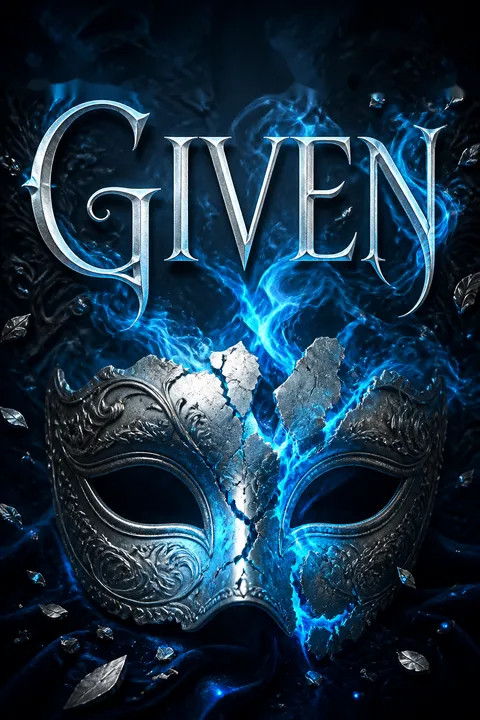


Plot Summary
Amelia’s False Blessing
Twenty-year-old Wren Nightingale,1 a curious village girl with a glowing blue Mark, sneaks into Esyn’s temple to watch her best friend3 Amelia’s3 Giving. She expects the priestesses to reveal Amelia’s3 future service, but a silver-haired head priestess draws a dagger while a black-robed stranger5 restrains Amelia3 over the altar. The blade cuts Amelia’s3 throat.
As Wren1 watches her friend3 die, the priestesses laugh and discuss earlier victims as casually as village gossip. Their ease makes the truth impossible to dismiss: the ceremony is not a passage into service, but a killing concealed beneath religious ritual. Wren1 leaves the temple carrying a knowledge that overturns every belief she has about her own imminent Giving.
The ceremony’s horror comes not only from the violence but from its bureaucratic calm. The priestesses do not behave like people committing an unprecedented crime; their talk implies a practiced system, while the sacred setting lends that system moral cover. Wren’s hidden vantage point makes her a witness without power, a position that intensifies both her guilt and her resolve. Amelia’s murder transforms curiosity from a harmless trait into survival knowledge. The religious story Wren was raised to trust has become an instrument of concealment, and the next day’s ceremony is no longer a promise of purpose but a deadline.
A Toast to Escape
At home, Wren’s1 parents11 and siblings gather for the farewell dinner planned before her Giving. They celebrate her future without knowing that Amelia3 has been killed, or that Wren1 expects the same fate. Wren1 cannot expose her family to the danger of helping a fugitive, so she endures the meal in silence, watching them laugh while her grief hardens into a decision.
Her parents11 offer her a gold necklace, and her missing best friend’s3 bracelet now bears only one of its two wooden suns. After everyone sleeps, Wren1 packs a notebook, a quill, medicine, bandages, dried meat, and her father’s11 hunting knife. She changes out of the required green gown, says goodbye to her cat Truffle, and slips into the night alone.
The dinner makes Wren’s loss intimate before it becomes political. Her family’s affection is real, yet their celebration sharpens her isolation because she cannot share the knowledge that could save her. Keeping them uninformed is both an act of love and a painful refusal of comfort. The missing wooden sun on Amelia’s bracelet gives grief a physical form: the friendship remains on Wren’s wrist, but its paired promise has been broken. Her escape begins not with confidence but with a choice made under pressure. She leaves behind the family that shaped her so that they will not be punished for her resistance.
The Hunter in the Bush
As Wren1 runs through River Bend Forest, Gabriel Moreau2 receives an enchanted royal dispatch: a gods-blessed woman has fled her Giving, and he is to hunt her. The capture would complete his fiftieth successful hunt and secure his ambition to become the kingdom’s youngest Master Hunter. Soon afterward, attackers beat Gabriel2 unconscious and steal his sword.
Wren,1 exhausted and injured from her flight, hears him beneath a thorn bush and drags him to shelter instead of abandoning him. She uses precious enchanted salve on his wounds and her blistered feet, then gives him water and food. Gabriel2 wakes with amnesia about the attack, grateful to the hooded stranger who saved him. Neither yet knows the other’s role in the coming chase.
The first meeting binds the protagonists through an ethical contradiction: Wren saves a stranger because she cannot ignore suffering, while Gabriel has been assigned to return someone like her to a system she knows is murderous. Their mutual ignorance briefly creates a space outside those roles. Wren’s care is not strategic; she spends scarce medicine on a man who could become a threat, revealing that compassion remains part of her identity even after betrayal. Gabriel’s hunt, meanwhile, is motivated by recognition and career advancement, not by personal knowledge of the fugitive. Their intimacy begins before either can interpret it, making later conflict more than a simple contest between pursuer and escapee.
One Day’s Mercy
When Wren’s1 hood slips, Gabriel2 sees her glowing forehead Mark and matches her to the royal notice. He reveals that he is a Hunter,2 the soldier charged with pursuing outlaws, and demands her real name. Yet he cannot immediately seize the woman who saved his life. He offers one day’s head start as repayment, warning that he will hunt her when the time expires.
Wren1 runs again, crossing the forest while hunger and exhaustion threaten to stop her. A rabid-looking bear drives her into the river, and she is swept over a waterfall. She wakes downstream beside Alba7 and her young daughter, Nakisha,8 who pull the half-drowned fugitive from the water and bring her to their cottage.
Gabriel’s bargain is an unstable compromise between duty and gratitude. He grants Wren time but still frames her freedom as a temporary allowance that he controls. For Wren, the head start is both hope and humiliation: it lets her live, yet confirms that another person believes he has the right to decide when her life ends. The forest strips away any romantic notion of escape. Physical survival depends on luck, water, and strangers, not simply willpower. Her near-drowning also makes the cost of ignorance tangible: she has no training for the world she must navigate, but she keeps moving because returning is no longer possible.
Alba’s Inherited Boots
Alba7 and Nakisha8 warm Wren1 by their fire and feed her a meal, while Wren’s1 feet begin to heal. Alba7 recognizes the danger around the stranger but does not demand her identity. Instead, she explains that her partner, Draven,24 was Given years earlier, leaving her to raise their infant daughter alone. His absence taught Alba7 what the system costs the families left behind.
She gives Wren1 Draven’s24 old boots and three gold coins, then agrees to protect her if authorities come searching. Wren1 leaves a full jar of enchanted salve in return and carries Alba’s7 help forward as evidence that the Giving has harmed more than its victims. She continues toward Mora, hoping to find a route out of Myreth.
Alba’s story turns Wren’s private discovery into a social pattern. What Wren saw in the temple is not an isolated atrocity: the disappearance of Given people has shaped families for years, while official language turns loss into religious service. Alba’s gift of Draven’s boots is practical, but it also transfers a memory of the system’s human cost to someone still able to resist it. Their exchange refuses a simple division between helper and helpless. Wren gives back medicine she needs, while Alba gives resources she can scarcely spare. Mutual aid becomes a counter-institution, built from choices the kingdom’s laws would call criminal.
Mora Celebrates the Given
Wren1 reaches Mora, Eskana’s capital, and slips past guards by using the name of her dead friend, Amelia.3 The city’s Giving Festival fills its streets with dancers, music, and crowds wearing removable imitation Marks.
At first, the spectacle offers Wren1 a glimpse of belonging; then she learns the celebration leads into the next day’s ceremonies. She sees three genuinely Marked young people presented as honored participants, while priests praise their coming service.
A woman in an emerald dress slips Wren1 a vial of red liquid and a piece of red mushroom, offering them without explanation. The festival’s cheerful pageantry now looks like public consent manufactured through pleasure. Wren1 leaves with the vial and a growing certainty that the deception reaches far beyond her village.
Mora’s festival shows how a violent system can recruit ordinary participation without making every participant a knowing accomplice. Music, food, costumes, and public ritual turn the Giving into a communal celebration, while removable Marks blur the line between authentic identity and performance. Wren’s brief attraction to the city matters: she discovers that her desire for people and noise was not a flaw, even as the festival corrupts that same public life. The unexplained vial introduces a morally dangerous tool at the moment her options are narrowing. Its meaning is uncertain, but its arrival asks whether survival can remain innocent when institutions have made ordinary resistance impossible.
The Vial and the Garden
Gabriel2 finds Wren1 in a crowded tavern and prepares to escort her back to the temple. Refusing to return, she empties the mysterious vial into his drink. Its contents cause him severe, burning pain, and Wren1 realizes the danger only after she sees him collapse outside Mora. She uses the red mushroom as a possible antidote, gives it to him, and leaves him alive, though still determined that he will pursue her.
Rather than flee the city, Wren1 returns to the Moran Gardens, where three Given are guarded overnight. She reaches the tent and warns them that the ceremonies are executions. Mirabelle21 and Joshua22 reject her account, but Kadyn4 believes her because his older brother vanished after his own Giving. Kadyn4 joins Wren’s1 escape.
Wren’s decision to drug Gabriel marks a break with the self-image she inherited from Amelia, whose steadiness serves as an inner measure of right and wrong. Wren does not become cruel, but she accepts that protecting herself may require harming someone who intends to deliver her to death. Her return to the gardens complicates that survival logic: she risks capture for strangers even after the vial has already made escape possible. The three Given respond differently because belief depends on personal history, not merely evidence. Kadyn’s family loss gives him a reason to question the official story, while Mirabelle and Joshua cling to faith that has not yet been broken by experience.
The Road to Rosebridge
Kadyn4 hides Wren1 inside a secret compartment in a family-built wagon headed from Mora to Mivat. As they travel, a nightmare leaves Wren1 with blood on her neck and troubling fragments about the Blessed, the Inherited, and a Harvest.
A roadside inspection ends when the driver persuades Watchers to leave his cargo alone, but he mentions that King Andreas5 has chosen twins as honored guests for the Winter’s Eve Ball. Wren1 suspects the girls are her sisters, Violet9 and Marie,10 and her familiar sense of danger turns escape into a rescue mission.
Meanwhile, Gabriel2 recovers, learns another Given has disappeared, and resumes the pursuit. The king5 confronts him with magic, demands Wren’s1 capture before the season ends, and threatens the bond between Gabriel and his panther, Mist.
The wagon’s hidden compartment is a literal refuge that also narrows Wren’s choices: progress requires accepting confinement and trusting Kadyn’s expertise. Her nightmare introduces a vocabulary of power she cannot yet interpret, suggesting that the Giving conceals more than murder. The twins’ selection changes the emotional geometry of the story. Wren’s escape had been an effort to reclaim her own future; now she believes her flight may have placed her family in danger. Gabriel faces a parallel coercion. The king’s threat to Mist exposes how the monarchy governs through intimate attachments, making obedience feel like the only way to protect those one loves.
Gabriel Breaks the Hunt
In Saltwater, Wren1 and Kadyn4 separate briefly to avoid attracting notice. Watchers post a wanted notice naming Wren,1 and she buys different clothes before three sailors corner her in an alley and threaten sexual violence.
Gabriel2 arrives in time to kill two attackers, while Mist6 kills the third, and he pulls Wren1 out of their grasp. Wren1 challenges him about the Giving, explaining that the Marked are sacrificed and that temple workers’ Marks are false.
Gabriel2 recognizes that he has returned fugitives to their deaths, and his career-long certainty collapses. He gives Wren1 money and orders her to flee Myreth, forfeiting his chance to capture her. Wren1 does not leave for the coast. With Kadyn,4 she turns toward Rosebridge to reach her sisters.
Gabriel’s rescue does not erase the danger he posed to Wren; it exposes the limits of the role he has mistaken for moral purpose. Her account forces him to reinterpret every successful hunt as complicity, a psychologically destabilizing reversal because his professional identity has also been his escape from a cruel childhood. Wren’s choice to poison him earlier and his choice to release her now are not equivalent, but each reveals the person beneath the assigned role. Their attraction remains entangled with coercion, so the release matters precisely because Gabriel gives up control rather than treating desire as entitlement.
The King’s Ball
Wren1 and Kadyn4 reach Rosebridge and enter the Winter’s Eve Ball in borrowed finery and masks, finding Violet9 and Marie10 beside the royal throne. The girls look frightened, though Wren1 still does not know why the king5 selected them. She and Kadyn4 plan to reach a servants’ passage and escape with the twins.
When Wren1 spots Gabriel2 speaking with King Andreas,5 she freezes; the king5 notices her, and Kadyn4 creates a diversion by overturning a banquet table. Wren1 reaches her sisters and leads them through a concealed door behind the thrones. The group races down the palace corridors, but a dozen Protectors block the stairway. King Andreas5 appears and makes clear that he has been hunting both Wren1 and Kadyn.4
The ball converts the kingdom’s private lie into an elaborate public image. Masks allow Wren to move through the court, but they cannot disguise the risk that recognition will bring. Her reunion with her sisters does not restore the home she left; the girls have been questioned, watched, and placed inside the king’s power. Kadyn’s diversion shows how their escape now depends on coordinated trust rather than Wren’s solitary endurance. The palace passage briefly promises a route around authority, only to reveal that the king has anticipated resistance. Wren’s rescue attempt is driven by love, but the setting makes clear that love alone cannot negotiate with a sovereign who treats people as possessions.
Blue Fire at Midnight
King Andreas5 blocks the fugitives and prepares to kill them with crimson magic. Kadyn4 shoves Wren1 and her sisters out of the spell’s path, taking the strike himself. As he dies, green light leaves his body and enters Wren;1 at midnight, on her twenty-first birthday, her Mark ignites and blue magic bursts from her hands. The blast kills the surrounding guards, while a shield protects Wren1 and the twins.
She recognizes the king’s5 ruby ring as the one worn by Amelia’s murderer,5 and Andreas5 flees when his magic cannot penetrate her defense. Gabriel2 reaches the corridor in time to witness the power. A new, overwhelming bond draws Wren1 and Gabriel2 toward each other, ending the story with their connection revealed but their danger unresolved.
The climax overturns the hierarchy that has organized the novel: Wren, raised to believe she is powerless, becomes the source of a force the king cannot control. Kadyn’s intervention saves Wren and the twins, but his death also transfers an unknown power or inheritance that the book calls a Harvest. The birthday’s timing links her emergence to the Giving calendar without explaining the mechanism, preserving the mystery rather than resolving it. The king’s flight is a reversal of public power, not a defeat. Wren’s bond with Gabriel offers intimacy at the instant their political conflict remains acute, closing on possibility rather than safety.
Analysis
Given builds its central conflict around a distinction between what a society says it is doing and what its institutions actually do. The Giving is not maintained by secrecy alone. Families repeat its language, towns celebrate it, and even people who suffer its consequences may interpret absence as service because no alternative explanation is available. Wren’s1 discovery therefore requires more than escape: she must learn how to act after the moral map she inherited proves false.
Her compassion is the story’s most consequential trait and its chief vulnerability. It leads her to rescue Gabriel,2 spend scarce medicine, return to the gardens, and risk herself for strangers. Yet survival forces her to drug the Hunter,2 an act that unsettles her sense of goodness without erasing it. The novel treats ethics as something practiced under coercion, not as a purity test. Wren1 can regret the pain she causes while still refusing to surrender her life.
Gabriel’s2 arc asks a parallel question about responsibility. He has built a self-image around competence and service, but learning that his hunts have delivered people to execution makes intent inadequate as a defense. His decision to free Wren1 is an initial act of accountability, not a complete redemption. The attraction between them intensifies this conflict rather than resolving it: desire cannot make the unequal positions of Hunter2 and fugitive disappear.
The recurring Marks and paired suns give private relationships physical weight. Amelia’s3 broken bracelet registers a friendship interrupted; Alba’s7 inherited boots carry a family’s loss; Gabriel’s2 bond with Mist shows how attachment can become both refuge and political leverage. At the end, Wren’s1 new power overturns the king’s5 immediate control, but the larger system and the meaning of the Harvest remain unknown. The novel closes with a powerful connection between Wren1 and Gabriel,2 yet refuses to mistake that revelation for safety or justice.
Review Summary
Given receives mixed reviews, averaging 3.84/5. Readers praise its intriguing premise—a god-marked woman fleeing sacrifice while hunted by a brooding tracker—along with its slow-burn tension and likable characters. Many highlight the addictive pacing and easy readability. However, common criticisms include excessive repetition, particularly in character descriptions and internal monologue, underdeveloped world-building, rushed romance, predictable plot twists, and an anticlimactic ending. Some felt it read more as YA than epic fantasy, and many noted the story felt like a prologue rather than a complete installment.
Characters
Wren Nightingale
Runaway witnessWren is a curious, talkative young woman whose blue Mark on her forehead has shaped how her family and village understand her. Before the story begins, she imagines her Giving as the start of a useful life, perhaps as a healer. Her instinct to help injured animals and people remains strong even when she has little food, medicine, or safety to spare. Wren is also impulsive and inexperienced beyond her village, qualities that repeatedly complicate her escape. Her deepest struggle is to separate the identity imposed on her from the person she wants to become. Grief over Amelia3 and loyalty to her family give her courage, while her stubbornness helps her act before certainty or permission arrives.
Gabriel Moreau
Royal HunterGabriel is an accomplished Hunter who has spent years pursuing people the crown labels criminals. His work gives him status, direction, and distance from an abusive upbringing, while his bond with his panther, Mist, provides a rare source of trust. Beneath his discipline, he is shaped by a hunger to prove his worth to the king5 and by the moral advice of his late grandmother. Gabriel can be ruthless in pursuit, but he is not indifferent to the people caught in his path. Wren1 unsettles him because she is both the person he has been ordered to capture and someone whose courage and compassion he cannot easily dismiss.
Amelia Lockheart
Wren’s closest friendAmelia is Wren’s1 lifelong friend and fellow Marked girl. More composed and dutiful than Wren1, she excels at school and often plans carefully where Wren1 acts on instinct. Their friendship gives Wren1 a model of loyalty and a shared language for facing the isolation imposed on the gods-blessed. Amelia’s optimism does not make her naïve; it makes her a source of steadiness in Wren’s1 life.
Kadyn
A fellow Marked fugitiveKadyn is a young Marked man whose family history has made him question the temple’s promises. Quiet and practical, he knows how to use his family’s wagon-making skills to move unseen. He does not trust easily, but when he accepts Wren’s1 account, he becomes a dependable companion. Grief for his older brother23 sits beneath his restraint and shapes his willingness to risk a different future.
King Andreas Bloodthorn
The feared monarchAndreas rules Myreth through a combination of ceremony, surveillance, and formidable magic. Public ritual presents him as guardian of the kingdom’s religious order, while his interactions with subordinates reveal a volatile need for control. He expects obedience from the Hunters and treats their attachments as leverage. His authority reaches into private lives as readily as it fills palace halls, making him a constant threat even when he is physically absent.
Mist
Gabriel’s bonded pantherMist is Gabriel’s2 black panther familiar, joined to him by royal magic. She hunts independently, reads as a powerful presence in the forest, and responds to Gabriel2 through their emotional bond. Her companionship gives Gabriel2 a form of loyalty he has rarely found among people. She is neither tame nor merely an instrument; her own instincts and strength remain evident.
Alba
A fugitive’s protectorAlba raises her daughter8 in a forest cottage and earns a living through skilled textile work. She carries grief from losing her partner24 to the Giving, but turns that pain into a promise to help other Marked people. Alba is perceptive without being intrusive: she offers Wren1 food, shelter, clothing, and money without demanding a confession. Her kindness is practical, costly, and informed by experience.
Nakisha
Alba’s curious daughterNakisha is an energetic young girl who finds Wren1 after she is swept downstream. She is fascinated by the enchanted salve and eager to help, bringing warmth and uncomplicated curiosity into Wren’s1 frightening journey.
Violet Nightingale
Wren’s outspoken sisterViolet is one of Wren’s1 fifteen-year-old twin sisters. More outspoken and quick to challenge a situation than Marie10, she is protective of the family and wary of choices that could threaten it. Her resemblance to their mother12 makes her presence especially affecting for Wren1.
Marie Nightingale
Wren’s quieter sisterMarie is Violet’s9 twin and Wren’s1 younger sister by two minutes. She is calmer and more observant than Violet9, often taking time to assess a situation before responding. The twins share a close, almost wordless understanding, and their bond gives Wren1 a powerful reason to keep moving.
Charles Nightingale
Wren’s devoted fatherCharles is Wren’s1 father, a butcher and hunter who provides for a large family. He is affectionate and protective, though the laws governing the Marked shape how he prepares Wren1 for separation. His practical knowledge supplies her with the knife and medical goods she takes when she flees.
Rya Nightingale
Wren’s loving motherRya is Wren’s1 mother and the emotional center of the family home. She comforts Wren1 while also upholding the customs that teach the family to keep distance from a future Given. Her tenderness and her participation in that tradition reveal how deeply official beliefs shape ordinary love.
James Nightingale
Wren’s protective brotherJames is Wren’s1 older brother and the sibling closest to her in age. He shares her love of stories and gave her a quill. His affection remains important to Wren1 even when the rules around her Giving keep the family at arm’s length.
Markus Nightingale
Wren’s eldest brotherMarkus is Wren’s1 older brother, a butcher and hunter who lives with his wife15 and daughter16. His practical, settled life represents the ordinary family future Wren1 fears she may lose.
Yvette Nightingale
Markus’s wifeYvette is Markus’s14 wife and the mother of their young daughter, Lydia16. She belongs to Wren’s1 affectionate extended family and helps make the farewell gathering feel like a genuine home, not merely a ritual.
Lydia Nightingale
Wren’s young nieceLydia is the four-year-old daughter of Markus14 and Yvette15. Her uninhibited playfulness embodies the ordinary childhood and family life that Wren1 wants her younger sisters9 to retain.
Philip
James’s partnerPhilip is James’s13 partner and a member of Wren’s1 close family circle. His easy affection with James13 adds to the warmth of the family gathering that Wren1 must leave without explanation.
Queen Lucille
The royal healerLucille is Queen of Myreth and the maker of the enchanted salve sold across the kingdom. Her healing work offers real help to ordinary people, even as she remains part of a court dominated by Andreas’s5 authority. Her public role links royal magic to both care and power.
Mikal
Gabriel’s old friendMikal is a printer in Mora and one of Gabriel’s2 few longstanding friends. He is practical and generous, helping Gabriel2 obtain money, clothes, and a weapon without demanding every detail of his hunt.
Maia Villeneuve
Gabriel’s court confidanteMaia is a noblewoman and one of Gabriel’s2 few friends at court. Witty and protective of her independence, she faces pressure from her father to marry. Her conversations with Gabriel2 reveal how constrained even privileged women can be.
Mirabelle
A steadfast temple believerMirabelle is one of the Marked youths presented at Mora’s Giving Festival. She is close to Joshua22 and Kadyn4, and her faith in the goddess makes her reluctant to accept a stranger’s warning.
Joshua
A doubtful stranger’s targetJoshua is a young Marked man at the Mora festival and a close friend of Mirabelle21 and Kadyn4. He is skeptical of Wren’s1 sudden warning and wary of leaving the life he understands.
Kaleb
Kadyn’s missing brotherKaleb is Kadyn’s4 older brother, whose Giving left a lasting absence in his family. His disappearance shapes Kadyn’s4 distrust of the official assurances surrounding the temples.
Draven
Alba’s lost partnerDraven was Alba’s7 partner and Nakisha’s8 father. His Giving separates him from his family, leaving behind the boots Alba7 later offers Wren1 and a grief that guides Alba’s7 choices.
Mistress Fyona
Wren’s village teacherFyona teaches Wren1 and Amelia3 at the village school. Her lessons encourage Wren1 to breathe through fear, and her explanations of the kingdom’s customs help establish the beliefs Wren1 later has to question.
Plot Devices
The Giving
Ritualized social controlThe Giving is presented as an ancient religious duty: people born with Marks are expected to attend a ceremony in their twentieth year and serve the gods afterward. Families are taught to prepare for separation, while festivals and temple teaching make the tradition seem honorable. Wren’s1 discovery that the ceremonies conceal killings changes the meaning of every custom around her. The institution drives the plot by making her escape illegal, turning Gabriel2 into her pursuer, and putting other Marked people in danger. Its power rests not only on force but on ordinary people believing that disappearance is service.
The Glowing Mark
Identity and threat signalEach gods-blessed person bears a distinctive Mark, usually concealed by clothes or hair, that begins glowing as the time for the Giving approaches. Wren’s1 Mark sits on her forehead, making concealment unusually difficult. It identifies her to Gabriel2 and can flare with emotion, complicating her attempts to pass unnoticed. The festival’s removable imitation Marks reveal how easily symbols can be counterfeited, while the authentic glow distinguishes the people actually at risk. The Mark is both a social label and a physical mystery whose meaning changes as the story’s magic unfolds.
Gabriel and Mist’s Bond
A vulnerable magical tieHunters are linked to animal familiars through royal magic. Gabriel2 and Mist6 share feelings and a sense of one another’s presence, and her companionship steadies him during hunts. The bond gives the king5 leverage: Gabriel2 fears that failure will cost him the connection that has become his closest source of loyalty. This device makes the pursuit personal before Gabriel2 understands the truth of the Giving. It also contrasts a bond created by royal authority with the deeper connection the story hints may exist between people.
The Festival Disguises
Deception made celebratoryMora’s Giving Festival surrounds the Marked with music, dancers, food, and public praise. Vendors sell fake Marks, allowing the symbol of divine favor to become a costume and making authentic Marks harder to pick out in the crowd. The spectacle conceals the danger awaiting the actual Given while encouraging citizens to participate in a tradition they do not fully understand. For Wren1, the festival first suggests belonging, then exposes how public joy can be organized around a hidden violence.
The Hidden Harvest
Unexplained transfer of powerWren’s1 nightmare introduces the mysterious terms Blessed, Inherited, and Harvest before the story explains them. At the palace, Kadyn’s4 death releases green light that enters Wren1, and her own Mark ignites with blue magic at midnight on her birthday. The king5 calls the transferred power a Harvest he expected to claim, but its full nature and the history behind it remain unknown. This device turns the climax into a revelation as much as a confrontation: Wren1 gains the power to resist the king5, while the source and cost of that power become the story’s unanswered questions.
About the Author
Other books by Elayna R. Gallea



Download PDF
Download EPUB
.epub digital book format is ideal for reading ebooks on phones, tablets, and e-readers.








