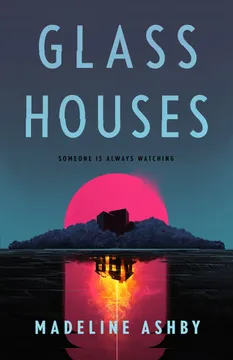


Plot Summary
A Crash Without Pilots
When Kristen Howard comes to on a remote island, blood mats her hair and the wrecked plane sits beside an empty airstrip. She finds Craig floating in the shallows and wades out to retrieve him, only to be pulled back by Sumter Williams, her CEO. Sumter has lost his watch and remembers the automated plane warning them about turbulence, not a crash.
Kristen cannot remember waking or escaping the aircraft. Without her biometric contacts or their network, she is suddenly cut off from the identity and routines that defined her work. She and Sumter drag Craig to shore, then realize the plane had no pilot. Their shared suspicion that someone might have tampered with it gives the accident its first sinister edge.
The crash strips Kristen of the technology that normally measures and interprets her, leaving her with bodily sensation and inference. Her first impulse is not heroic confidence but surrender; survival feels like labor she did not choose. Sumter's familiar presence offers comfort, yet the autonomous plane makes his company’s faith in frictionless systems suddenly suspect. The story begins by turning a workplace catastrophe into a question of agency: who made the decisions that put these people here, and who is still able to act?
The Black House
Kristen and Sumter follow a paved track through the palms and find Mason, Wuv's CTO, who leads them to a huge black-glass house. Eight more coworkers have gathered there, leaving ten survivors in all. Five colleagues are dead, including Craig, and the group has no signal, working transport, or clear route to rescue.
Sumter tries to turn the terrace into a team-building exercise; Kristen instead starts assigning practical tasks. She sends pairs to search the island and plane, orders a latrine dug, and directs the group to gather fuel so they can dispose of the dead safely.
The house remains sealed, but its elevated terrace offers shelter. The survivors begin to depend on Kristen's blunt organization even as Sumter keeps presenting the crisis as a challenge they can overcome together.
The black house gives the survivors shelter without offering welcome. Its scale and blank facade make it feel less like a home than a system whose rules have not yet been disclosed. Sumter tries to reproduce his managerial role through optimism, while Kristen translates danger into assignments and resource limits. Their contrast matters: one makes crises narratively useful, the other treats them as material constraints. The group’s first order is not simply a struggle for food or rescue; it is a struggle over whose interpretation of the emergency will govern their choices.
Wuv's Human Cost
Before the island, Sumter hires Kristen to manage Wuv's people and public image. Her parents died in a fire after her father disabled a faulty smart-home alarm to keep his cryptocurrency mining rigs running; Kristen later sued the service provider.
That history makes her wary of technology that claims to know people better than they know themselves. Wuv proposes turning bodily emotional responses into a currency that can fund causes, but Kristen questions its biases and its lack of context.
Sheila, the programmer who built the system, gives Kristen a demonstration and becomes her closest colleague. Later, after Sheila dies by suicide, Kristen helps the company shape the public story of the loss. Her work depends on emotional understanding, while the company keeps trying to automate it.
Kristen’s employment joins personal trauma to institutional expertise: she knows what it means when a system fails and someone else controls the explanation. Wuv’s promise to convert feeling into value treats emotion as measurable input, but Kristen recognizes that a signal is not the same as a person’s account of it. Sheila’s presence makes that tension intimate. The company’s response to her death also shows how emotional labor can be used to protect an organization’s reputation rather than the people it employs.
A Door Opens
While Kristen is alone with Hari, a door in the glass facade clicks open. They slip inside, where the lights, plumbing, and an enormous stocked pantry come alive. The house may keep the group alive, but Kristen notices that she cannot open some food cabinets herself. Sumter and the others arrive with luggage from the plane, and he comforts Kristen before taking her upstairs.
There he admits that the aircraft's black-box compartment was empty. Either someone removed it before the flight or took it after the crash, and Kristen was the last person to leave the plane. Sumter makes her promise to keep the discovery secret. The house has given them shelter and provisions, but the missing recorder turns their rescue plan into an investigation.
The house’s abundance is initially a reprieve, then a source of unease. It behaves selectively, opening itself at a moment that coincides with Hari’s presence, while Kristen’s inability to access food is dismissed as possible injury. The missing black box introduces a second kind of enclosure: evidence is absent, and Sumter controls who knows it. His secrecy may be protective, but it also establishes an unequal flow of information that will matter more than the scarcity of supplies.
The Investor's Grandson
In an earlier trip to Los Angeles, Kristen pitches Wuv to Ilyas Qureshi, a wealthy investor who rejects the company's plan to quantify emotion. Qureshi sees how such technology could be misused and questions the founders' grasp of consent.
He also recognizes Kristen's history as a child whose parents shared her life online. Later that evening she meets Anton, Qureshi's grandson, a discreet analyst whose work connects investors with intelligence agencies.
Their attraction turns intimate, and the next morning Qureshi agrees to fund Wuv after speaking privately with Sumter. Sumter credits Kristen with persuading him, though she does not know what passed between the men. Anton offers a rare sense of being seen as a person, not as the story attached to her scars.
Qureshi and Anton represent two forms of attention. Qureshi sees surveillance as a violation because he understands how little people can consent to being observed; Anton offers personal attentiveness that Kristen wants to trust. Yet both men are connected to hidden systems of influence. Sumter’s ability to turn Kristen’s private conversation into a business victory blurs the boundary between her emotional life and the company’s capital. The intimacy feels genuine, but its setting makes privacy an increasingly fragile assumption.
The Island Takes Two
When Kristen organizes an island survey, Hari and Fawn set out together. They are caught by the tide as the low-lying land breaks into separated stretches. Fawn eventually returns alone, badly wounded, with a deep injury in her thigh and no Hari beside her.
She says the island took him. Kristen and Pearce try to treat her, while Mason holds her hand; the wound proves too severe, and Fawn dies from blood loss. Her bluntness before death shocks the coworkers who had treated her optimism as frivolous.
Mason's grief is unusually raw, but no one yet understands why. The survivors have lost another colleague and learned that the island is physically dangerous, not merely isolated. Their search for food and rescue now carries the risk of being hunted or trapped.
Fawn’s transformation from relentless optimist to lucid, furious witness is a psychological rupture, not a simple change of mood. Her injury forces the group to confront bodily limits that startup language has disguised as solvable inconveniences. Kristen’s medical composure helps Fawn, but cannot reverse the damage. Mason’s grief signals a private attachment the group has not been allowed to see. In a story about systems that claim to read emotion, the people around Fawn repeatedly fail to understand what her behavior conceals.
A Keynote Becomes Evidence
At a Las Vegas technology conference, Kristen abandons her prepared talk to confront a man fondling himself while touching a young woman beside him. Her intervention goes viral, and Mason accuses her of damaging Wuv's image.
Kristen answers with evidence that he has intruded into Fawn's private medical records. Anton, who reconnects with her around this period, becomes her lover and the one person who treats her trauma without turning it into a public narrative.
Their closeness falters when he tells her about his dead wife and she asks what he has hidden from her. In Tokyo, he ends the relationship rather than explain more. These episodes deepen Kristen's distrust of managed narratives, even as she keeps working for a company whose ethics she questions.
Kristen’s keynote turns a public performance into an intervention for someone the room has chosen not to see. Her response is effective, but the backlash reveals the institutional price of disrupting a founder’s preferred story. Anton’s intimacy offers a counterexample to Wuv’s data extraction, yet his refusal to share his past reproduces another form of asymmetry. Kristen is skilled at reading others, but reading is not the same as knowing; her need for control can make uncertainty feel like betrayal.
Women Locked Out
After Fawn's death, Kristen tests what she has noticed in the kitchen. The pantry, refrigerator, and cupboards open for Jasper but not for Kristen or Nora Mae. Brock suggests the system mistakes them for children; the explanation collapses when they test other users.
Then the group realizes Jong-soo has disappeared after leaving with Fawn's body. Pearce finds no tracks leading to a burial place, and a later inventory shows that someone has taken knives, food, and medical supplies.
Kristen understands that the house is not simply malfunctioning: its access rules discriminate against women and may be designed to prevent them from leaving. The missing colleague and the house's selective controls turn a survival problem into evidence of deliberate confinement.
The kitchen converts gender bias from an abstract design flaw into an immediate threat to nourishment and movement. The men's first responses seek neutral explanations, preserving their belief that the system is fair until evidence makes that belief untenable. Kristen and Nora Mae have to produce proof of an experience the men do not share. Jong-soo’s disappearance complicates the pattern: the women are excluded by the house, yet someone has found a way to move through it and take supplies.
Nadine's Smart Door
In a memory from Toronto, Kristen learns that her coworker Nadine's smart condo door has begun trapping her inside. Nadine's husband, Nigel, had once made her solve puzzles to leave his home; Kristen suspects he has altered the building's access settings to control her.
With Anton's help, she studies the system and later redirects an autonomous car intended for Nigel. It crashes at an abandoned mine, leaving him injured and dependent on Nadine; he eventually chooses medically assisted death.
Kristen also tells Nadine about a former professor who used a smart lock to trap her and record her naked. She says she arranged for him to die. The memories expose how often Kristen answers coercion by turning its machinery against the person using it.
The domestic subplot makes the island house part of a longer pattern, not an isolated technological nightmare. Kristen sees coercive design quickly because she has lived through it, but her remedies escalate beyond protection into punishment. Her intervention against Nigel leaves Nadine with the burdens of caregiving, a consequence Kristen did not adequately account for. The episode asks whether technical fluency becomes justice when applied to an abuser, or merely gives a wounded person more efficient means of retaliation.
The Elevator Opens
As the survivors argue over Jong-soo, Sumter resists the idea that the house is controlling them. Brock insults him, and the two men fight beside the sealed elevator. Mason throws Brock toward the doors; they open, and the elevator carries Brock down. In the argument that follows, Mason reveals that he and Sumter had expected a child with Fawn.
The confession breaks the group's understanding of their relationships just as the house plunges into darkness. When the lights return, Mason holds an ice pick near Sumter, then flees. Kristen urges Nora Mae to leave with her, but Nora Mae hesitates, unwilling to enter the island's dangers. Kristen finally goes alone, leaving the door propped in case Nora Mae changes her mind.
The elevator is the house’s most literal threshold, but its opening offers no reassurance: it carries Brock into an unknown level rather than toward safety. Mason’s revelation reframes Fawn’s death as a private family loss hidden inside the company’s public team culture. The blackout makes the house seem responsive to the group’s emotional conflict, turning fear into an environmental condition. Kristen can persuade Nora Mae only so far; trust, like access, cannot be imposed simply because escape is urgent.
The Island's Hidden Teeth
Outside, Kristen finds Mason, Pearce, and Jasper near an unfinished foundation. Mason says the island belongs to Sumter's family and accuses him of bringing them there deliberately. Sumter arrives, confirms that he controls the situation, and dismisses the deaths as a plan that went wrong.
He activates concealed tiger traps beneath Pearce and Jasper, then makes Mason disappear as well. Nora Mae has escaped the house and hides beside Kristen as Sumter returns toward the black-glass building.
She points out that the construction must have required a dock, so a boat may be nearby. Kristen decides to go back after Sumter while Nora Mae searches for a way off the island. Their partnership is now built on a practical division of risk rather than easy trust.
The traps give physical form to Sumter’s leadership style: people are managed as resources, and resistance is answered by removal. His casual assurances that the plan merely misfired are chilling because he treats deaths as operational setbacks. Nora Mae’s escape route is a small but crucial refusal to accept the system’s map of the island. Kristen, meanwhile, chooses confrontation despite knowing that her own survival instinct has often been entangled with violence.
Anton Confesses
Before the flight, Anton had found Kristen in London and admitted that his intelligence employers had asked him to spy on Wuv. He had installed spyware on her devices, then learned that Sumter and Qureshi knew about their affair and were sharing information.
Anton also confronted Kristen with evidence that she had caused the fire that killed her parents: she had manipulated her father's cryptocurrency mining operation and told him to disable the alarm, making the resulting blaze appear accidental.
Kristen recognizes that the accusation is true. Anton warns her not to board Sumter's plane, but she goes anyway. His confession joins two betrayals at once, the surveillance she hates and the secret she has spent years hiding, without giving her time to make a different choice.
Anton’s confession collapses the distinction Kristen has relied on between being watched and being understood. His affection may be real, but he has used access to her private life for institutional purposes. His revelation about the fire also breaks the self-protective story that her parents’ deaths were an unforeseeable accident. Kristen’s decision to board despite his warning shows the force of her attachment to Sumter’s project and her belief that she can still manage the danger from inside it.
Mars Below the House
Kristen returns to Sumter and lets him believe she accepts his plan. Beneath the house, he shows her a reconstruction of her childhood home and a room where his dead colleagues are stored in hibernation bags. He intends to fake his death, take Kristen and Mason to Mars, and use frozen embryos to populate the settlement.
He also admits that Wuv never worked as promised, and that he silenced Sheila when she threatened to expose its risks. Kristen pretends to welcome their future, then stabs him with an ice pick. He breaks her wrist and attacks her, but she finally suffocates him. Badly injured, she uses his hand to operate the elevator and rigs a fire to summon help. The carefully staged future ends in the machinery he built to preserve it.
Sumter’s reconstruction of Kristen’s home is not care; it is an attempt to make his control feel like healing. His Mars plan extends the same logic, treating bodies, embryos, and employees as assets to be transported into a future he owns. The failed Wuv project exposes the company’s central fraud, while Sheila’s fate reveals the human cost of protecting its valuation. Kristen’s victory is not clean redemption. She survives by using the systems and violence that have shaped her, then turns their infrastructure toward rescue.
Epilogue
Anton reaches the island by helicopter after persuading a friend with a yacht to help. Kristen wakes with her wrist and wounds treated, while Nora Mae is alive nearby and has already questioned Anton about his intentions.
Kristen resigns from Wuv and decides to step away from public attention, hoping for work behind the scenes and time to understand what she wants next. Anton offers her a new job with a single assignment: accompany him to his father's wedding. Kristen accepts the prospect of helping the bride, though her ideas are likely to be more inventive than conventional.
The rescue does not erase what Kristen has done or restore the life she had before the island. Instead, it gives her a choice about what kind of attention she will accept. Her wish to leave the spotlight contrasts with the public identity that has long been built from her trauma. Anton's invitation offers intimacy without pretending their history is uncomplicated, while Nora Mae's presence keeps the ending accountable to someone beyond the romance. Survival becomes less a triumph than the chance to choose a next task.
Analysis
Glass Houses treats technology not as a neutral tool but as a set of decisions that can be hidden inside ordinary conveniences. Wuv promises to make emotion legible, yet its measurements strip away history and context. The island house makes that problem tangible: it decides who may reach food, who may pass through a door, and who is allowed to leave. Its smooth surfaces conceal a hierarchy that the occupants first try to explain away because they have been trained to trust the interface.
Kristen is both critic and participant in this world. Her life began with a smart-home failure, and she has spent her career trying to understand how systems turn one person's choices into another person's danger. That expertise gives her unusual power, but it also becomes a defense against grief and uncertainty. She can identify coercion and sabotage; she is less able to admit when her own interventions harm people who were already vulnerable. The novel refuses to make her either a spotless victim or a simple villain. Her competence is real, and so is the damage she causes when she treats other people as problems she alone can solve.
Sumter's Mars project is the ultimate version of a founder's fantasy: preserve the future by selecting which people and bodies deserve to enter it. His language of innovation and survival masks coercion, just as the house's comforts mask confinement. Kristen's escape does not prove that violence is a satisfying answer to violence. It shows how easily a system built without consent reproduces itself in the methods of those resisting it. The ending instead turns toward a harder possibility: relinquishing the spotlight, accepting help, and making room for a life not organized around crisis or public performance.
Review Summary
Glass Houses receives mixed reviews, averaging 3.25/5. Readers praise its Black Mirror-meets-Agatha Christie premise, dual timelines, and sharp critique of tech culture and gender dynamics. The emotion-mapping AI concept and near-future world-building intrigue many, while the protagonist Kristen divides opinion. Common criticisms include dense tech jargon, imbalanced timelines favoring backstory over island action, underdeveloped characters, and a muddled ending. Fans of speculative fiction and locked-room mysteries tend to enjoy it most, while thriller readers expecting more island survival action often feel misled by the marketing.
Characters
Kristen Howard
The skeptical survivorKristen is Wuv's chief emotional manager, a sharp observer who can read a room without trusting the devices that claim to read it for her. Her parents' death in a smart-home fire left her with severe burns and a lifelong suspicion of technological certainty. She is capable, disciplined, and often funny, but she also uses analysis to keep emotional distance and to justify taking control when others seem dangerous. Her work requires her to manage coworkers' feelings while guarding her own. Kristen's central tension is between care and control: she wants to prevent harm, yet her certainty that she can see the whole system can make other people's choices disappear from view.
Sumter Williams
The visionary CEOSumter is Wuv's charismatic founder, a wealthy orphan whose ideas reach from emotional computing to human settlement beyond Earth. He can be warm, funny, and attentive, especially when he wants to hold a group together. He also expects loyalty and tends to treat disagreement as a problem of presentation rather than substance. His confidence lets him inspire people, but it can also shield him from the consequences of his ambitions. Kristen is both his most trusted aide and the person most likely to tell him what he does not want to hear, a role that blurs their professional and personal boundaries.
Anton Almasi
The guarded analystAnton is an investor and discreet intelligence analyst whose travels and private work make him difficult to know. He is attentive to Kristen in a way that does not reduce her to her scars or public history, and he is unusually comfortable with silence. His own grief and guardedness complicate that tenderness. Anton prefers to limit expectations, keeping relationships and personal details compartmentalized, yet he is drawn to Kristen's intelligence and fierce independence. Their connection offers genuine intimacy, but his professional obligations and secrecy repeatedly test whether care can survive when one person has access to the other's private life.
Mason
The wary cofounderMason is Wuv's CTO and Sumter's oldest friend and business partner. He is technically capable, socially restrained, and often irritated by the founder's appetite for grand gestures. His apparent cynicism can look like mere obstruction, but he notices contradictions others prefer to ignore. Mason's loyalty to Sumter is both a source of stability and a limit on his independence. He has spent years shaping his own ambitions around the company and its founder, leaving him unsure where friendship ends and complicity begins.
Nora Mae
The practical dissenterNora Mae works in wearables quality assurance and brings a grounded, unsentimental intelligence to the group. She is physically capable, observant, and willing to challenge assumptions that others disguise as common sense. Her care for coworkers is direct rather than performative, and she is alert to how technology can reproduce old forms of exclusion. She and Kristen share skepticism, though Nora Mae is less willing to let competence excuse harm. Her independent judgment makes her a valuable ally and a difficult person to manage.
Sheila
Wuv's brilliant programmerSheila helped build Wuv and is one of the few people in the company willing to raise ethical concerns about its emotional surveillance. She is perceptive, creative, and invested in the work, but she is also expected to fit a narrow image of a woman in technology. Her relationship with Kristen is marked by professional respect and an understanding of the pressure placed on women to make difficult systems seem benevolent.
Fawn
The bright brand-makerFawn works in product image and brand, and she tends to turn uncertainty into opportunity. Her optimism can irritate colleagues who see it as denial, but it also helps her maintain momentum in a company built on constant persuasion. She is socially perceptive in flashes, even when others underestimate her. Her relationships with Mason and the rest of the team contain private stakes that the workplace's cheerful surface does not acknowledge.
Jong-soo
The quiet programmerJong-soo is one of Wuv's programmers, with experience in military robotics reconnaissance. He is reserved and tends to speak through action rather than self-display. His history gives him practical skills that matter in a crisis, while his colleagues know little about the private burdens he carries. His quietness is not passivity; he watches carefully and makes decisions on his own terms.
Hari
The alert engineerHari is a Wuv programmer who notices irregularities and approaches problems with the focus of a security-minded engineer. He is independent of the team's social rituals and wary of explanations that do not fit what he has observed. His suspicion puts him at odds with Kristen, but it also reflects a sincere effort to understand the danger around them.
Pearce
The former soldierPearce works in trust and safety and has military experience that makes him useful in emergencies. He is practical, physically capable, and willing to take responsibility when others hesitate. His instinct to protect the group can make him blunt, but he takes the care of injured people seriously. He is one of the few colleagues who understands that survival includes how the living treat the dead.
Jasper
The lone designerJasper is a front-end designer who often stands apart from the company's tight social circles. He uses humor to manage tension and is more willing than some colleagues to admit when he does not know what is happening. His design background gives him an eye for the systems and interfaces the others take for granted.
Brock
The combative coderBrock is a software engineer with a strong gym-built physique and an even stronger sense of entitlement. He favors blunt jokes and quick rationalizations, especially when confronted with evidence that challenges his assumptions. His confidence can be useful in a crisis, but it often arrives without much curiosity about who bears the cost.
Ilyas Qureshi
The analog investorQureshi is a wealthy investor who avoids the online systems that dominate the lives of the people he funds. He prefers direct conversation and considers the political consequences of technology rather than only its market potential. His reserve makes him difficult to read, but his skepticism is principled. As Anton's grandfather, he is connected to both the financial and personal worlds surrounding Wuv.
Nadine
The trapped coworkerNadine is a Wuv colleague whose public-facing work began with online hair tutorials. She is careful and gentle, and she is accustomed to managing other people's expectations of her. Her marriage places her in a difficult private situation that she is hesitant to name as a problem. She and Kristen share a workplace bond shaped by the different kinds of scrutiny women face.
Craig
The lost colleagueCraig is a Wuv employee remembered as inoffensive and well-liked, though he was not especially close to Kristen. His body is the first sign that the crash has cost the team more than its bearings and supplies.
Plot Devices
Wuv
Emotion as currencyWuv collects bodily signals and interaction data to estimate how users feel, then translates those estimates into a spendable emotional currency. Sumter presents it as a way to fund causes and replace advertising with direct measures of response. Kristen doubts that physical data can capture context, and Sheila worries about political misuse. The system connects the corporate plot to the novel's questions about consent, measurement, and the difference between a signal and a person's meaning. Its limitations become central to the company's hidden history.
The autonomous plane
A flight with no pilotThe company's chartered aircraft navigates itself to an isolated airstrip after a crash, leaving the survivors without a pilot to explain what happened. Its automated warnings describe turbulence rather than the danger ahead. The missing black box prevents Kristen and Mason from checking the flight record, and the aircraft's dependence on automation makes sabotage difficult to distinguish from system failure. The plane is both the inciting catastrophe and the first piece of evidence in the larger conspiracy.
The black-glass house
Shelter that confinesThe enormous island house supplies water, food, power, and medical equipment, yet its opaque glass and hidden access rules make it impossible to understand from outside. Its kitchen privileges differ by user, and its doors appear to limit who can enter or leave. Later, the building's buried systems reveal that it is more than a convenient shelter. The house embodies the book's recurring question about who benefits when an automated environment decides what its occupants are allowed to do.
The six-fist gesture
A remote commandSumter repeatedly closes and squeezes his fist in a specific pattern. The gesture first appears during a demonstration of Wuv's emotional currency, where it changes Kristen's balance. On the island, similar movements coincide with the activation of hidden mechanisms. The gesture links the company's interface culture to Sumter's physical control of the environment, making a polished product demonstration retrospectively ominous.
Hibernation system
A one-way escape planBeneath the house, Sumter has equipment designed to lower bodies into a controlled torpor for long-distance space travel. The system is presented as a practical way to survive a journey to Mars, but it can also preserve people without their consent. Its existence reframes the island's resources, the missing bodies, and Sumter's interest in embryos as parts of a private colonization project. The technology turns his abstract long-term vision into a physical plan made from the lives of his coworkers.
Download PDF
Download EPUB
.epub digital book format is ideal for reading ebooks on phones, tablets, and e-readers.








