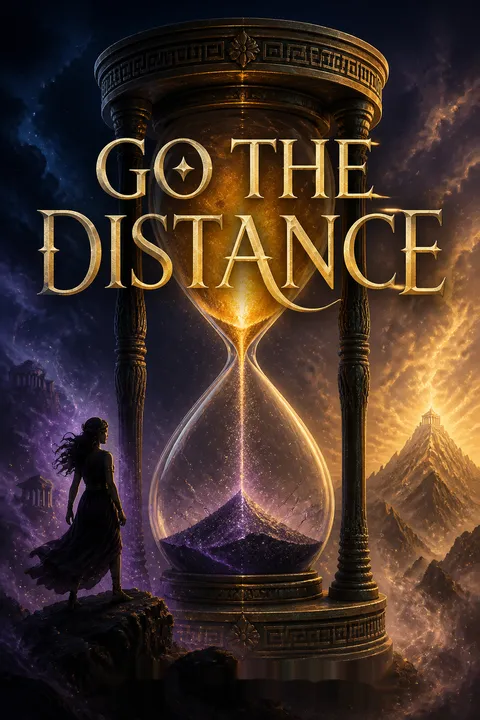


Plot Summary
Prologue
Five-year-old Megara listens from the next room as her parents fight over money. When her father, Leonnatos, leaves, her mother, Thea, packs their few belongings and escapes through a window before the landlord can collect rent.
Meg retrieves the wooden spinning top he once gave her, but it slips from her grasp as Thea lifts her outside. They run into the crowded streets with no home and little food. Thea tells Meg to depend on herself, and Meg absorbs the lesson as a shield: love, she decides, is not worth the trouble.
Meg’s first lesson in self-reliance comes not from triumph but from watching adults fail to protect a child’s sense of safety. Thea’s practical escape saves them from eviction, yet her warning turns a desperate circumstance into a rule for living: needing someone invites abandonment. The dropped spinning top gives that rule a physical shape. It is the only gift Meg remembers from her father, and she must leave it behind to survive. The prologue establishes why later acts of trust feel dangerous to Meg, even when they are freely offered.
Olympus Refuses Meg
After Meg sacrifices herself to save Hercules, he becomes a god and carries her to Olympus, where his parents welcome him home. He asks to remain mortal with her, but Zeus refuses, dismissing Meg as unworthy of a god. Meg exposes the rumor that Zeus knew Hercules was alive as a child and waited until he could fight the Titans.
Zeus admits he delayed their reunion to protect Hercules, but still orders Meg back to Earth. Hera, moved by Meg’s defense of her son, offers a way for the couple to be together: Meg must prove she understands love as trust and mutual support. Her first task is to recover Athena’s lost double flute. A pink-sanded hourglass gives her ten days, and Hercules lends her Pegasus and a rare orchid that can summon him.
The story begins by turning a victory into a problem of belonging. Hercules has reached the home he wanted, but his new status makes Meg seem like an obstacle rather than a partner. Zeus’s refusal echoes the abandonment Meg already fears, while his explanation complicates her first judgment: protection and control can look alike from the outside. Hera’s quest makes emotional growth concrete. Meg cannot earn a place beside Hercules merely by loving him; she must learn to accept dependence without surrendering agency. The hourglass ensures that this inward struggle will have an external cost if she avoids it.
The Price of Aegeus
After Thea dies in a cart accident, Meg survives by playing the flute her mother bought instead of food. Music brings her work and, eventually, Aegeus, a gifted lute player who becomes her partner. When he falls gravely ill, Meg begs the gods for help; Hades answers, saves Aegeus, and claims her soul in exchange.
He sends her back to Earth to recruit monsters for his campaign, keeping her under his control. Meg’s time below distorts her sense of how much time passes above. Hades shows her Aegeus with Katerina and lets her believe he moved on almost immediately. Hurt and furious, Meg destroys her flute and hardens herself against love. Now Hera’s questions force her to face the losses that shaped that distrust.
Meg’s contract with Hades is an act of love that reproduces the very danger she thinks love contains: she gives herself away to keep someone else alive. Hades then weaponizes missing time and selective evidence, turning grief into a tool of recruitment. The flute carries the cost of that manipulation. It began as Thea’s hopeful gift, became Meg’s livelihood, and is finally destroyed when she believes Aegeus has forgotten her. Her past therefore explains more than her guardedness. It shows how a genuine capacity for care can be trained into suspicion when others control the story of what happened.
The Flute Behind the Waterfall
The hourglass points Meg to Koufonisia, where Pegasus hears Athena’s melody behind a waterfall. Inside the cave, a beautiful musician lures Meg toward the double flute, then reveals herself as an Empusa surrounded by bones.
Burned and wounded, Meg escapes with the instrument only by improvising with rocks, Pegasus, and a boulder that crushes the creature. The victory leaves both travelers injured, and Meg admits she cannot manage every danger alone. She takes Pegasus to Phil, Hercules’s retired trainer, who reluctantly heals them and agrees to help.
When Meg plays Athena’s flute, Athena appears and asks what she truly wants. Meg cannot give a clear answer, so Athena names the next trial: travel to the Underworld and retrieve Katerina, the woman connected to Meg’s first love.
Meg succeeds through resourcefulness, not mastery. The cave punishes her assumption that a dangerous task can be solved by courage alone, and her survival depends on adapting when her first weapon is lost. Her decision to seek Phil is a small but significant reversal of Thea’s rule: asking for help does not erase what Meg can do herself. Athena then refuses to treat achievement as sufficient. By asking what Meg wants, she exposes the difference between persistent action and chosen purpose. The first quest gives Meg an object; the second makes her confront the emotional history she has tried to bury.
Aegeus's House of Grief
In Athens, Meg finds Aegeus holding his infant daughter, Cassia, and sees the unfinished house she once imagined sharing with him. She assumes he built it for Katerina and angrily accuses him of abandoning her.
When she returns calmer, Aegeus explains that he searched for her for nearly two years. The house was meant as a memorial, and he married Katerina only after accepting that Meg was gone. Katerina later died when a flood swept away their home, leaving Aegeus and Cassia behind.
He describes Katerina’s love for her dead sister, Layla, and for poppies. Meg recognizes that Hades distorted their timeline and accepts that Katerina is not the villain she imagined. Holding Cassia, she decides the child deserves a chance to grow up with her mother.
The revelation dismantles a story Meg had treated as settled fact. Hades did not need to invent Aegeus’s later marriage; by manipulating time and what Meg could see, he made a real event serve a false account of betrayal. Aegeus’s unfinished house becomes evidence of mourning rather than replacement. Meg’s response also shifts from self-protection toward responsibility: Cassia is no longer merely proof that Aegeus moved on, but a child whose loss resembles Meg’s own. The scene asks her to distinguish pain from accusation. She can acknowledge how badly she was hurt without making Katerina responsible for it.
The Orchard's Iron Flock
Meg follows the newly formed river toward the Underworld with Phil and Pegasus. On the way, she leaves the boat to steal golden apples for Hades, hoping they might buy cooperation. Stymphalian birds attack, and living vines trap her while the flock carries Phil and Pegasus into the air. Athena’s gifts prove essential: Meg uses the clapper, or krotala, to drive birds away and her bow to free Phil.
Hercules arrives and completes the rescue, but Meg, ashamed to need him, lashes out and throws his irreplaceable orchid into the water. Aphrodite makes her see that accepting help does not cancel independence. Meg and Phil repair the boat together, pray to Notus for wind, and catch the orchid as the storm he sends drives them onward.
The orchard makes Meg’s flaw visible through action: she ignores Phil’s warning, acts before forming a plan, and then treats rescue as an insult to her competence. Her anger is less about Hercules’s intervention than about the fear that others will define her as helpless. Aphrodite offers a more useful distinction: agency is not isolation. The repaired mast and shared rowing embody that lesson more persuasively than advice alone. The returning orchid also refuses to let one impulsive choice become final. Meg can admit she needs others, recover what she discarded, and still remain the person steering her quest.
Cerberus Hears Her Song
At the river crossing, Meg uses a drachma Athena provides to board Charon’s ferry. When Cerberus blocks the passage, she plays Thea’s old song on Athena’s flute until the three-headed guardian falls asleep. In the Underworld, Meg avoids Tartarus and searches for Asphodel Meadows, but Hades catches her in a magical lift and attacks.
Interrupted by the Fates, he drops her from the stairway; Meg catches a ledge, climbs back, and reaches the Meadows. There she meets a dark-haired gardener who asks her to keep her presence secret. Meg does not yet know the woman is Persephone, Demeter’s missing daughter, hiding with Hades. The Underworld’s shifting time and crowded districts make finding Katerina harder with every passing hour.
The passage into the Underworld tests whether Meg can use the past without being ruled by it. The song that once belonged to her mother becomes a tool for crossing the threshold, and its success comes from renewed attention rather than supernatural force. Yet entering is not the same as controlling the journey: Hades’s lift and the confusing divisions of the Underworld expose how little Meg can command there. Her encounter with the gardener introduces another form of concealment, one born from fear rather than malice. As Meg navigates secrets, she must decide which ones deserve protection and which ones keep people trapped.
The Sister in Poppies
Following clues from Aegeus, Meg reaches the Evergreen, where newly dead souls reunite with family, then searches its poppy fields for Katerina and Layla. She finds the sisters together, but Katerina has lost her memories of Aegeus and Cassia.
When Meg explains that a husband and baby are waiting, Katerina refuses to leave Layla alone. Meg tells her how losing Thea shaped her own life, but the comparison cannot overcome Katerina’s guilt about her sister’s childhood death.
Katerina tears apart the orchid petal Meg hoped would summon help. Soon Pain and Panic seize Meg and bring her to Hades. As he prepares to throw her into the furnace, the gardener appears and stops him: she is Persephone, and Meg’s earlier kindness has earned her a chance to bargain.
Katerina’s refusal prevents Meg from treating rescue as an uncomplicated good. To return to the living, Katerina would have to abandon the person she has spent years protecting in her mind. Meg recognizes the shape of that loyalty because she once feared losing Thea, but experience alone does not entitle her to overrule another person’s grief. The destroyed petal marks the failure of coercive persuasion: Meg cannot make Katerina remember by insisting on facts. Her capture also brings the hidden gardener into the plot’s center, linking Meg’s willingness to help a stranger with a new possibility for escape.
Persephone's Seasonal Bargain
Persephone protects Meg from Hades and admits she is hiding because she fears Demeter will take her away. The Fates have warned Hades that Earth may be Persephone’s only hope, so Meg proposes a compromise: Persephone can spend half the year with Hades and half tending the Earth. She uses the orchid’s final petal to summon Hera, who approves the arrangement and orders Persephone to return for spring.
In gratitude, Hades lets Meg continue her quest, though the deadline is nearly gone. Persephone sends Meg speeding back to the poppy fields. Layla tells Meg she has a plan, while Katerina still rejects the offer. Meg has to find a way to awaken Katerina’s own memories before the last grains fall.
Meg’s bargain matters because she uses her scarce advantage for someone else rather than preserving it for her own romance. She does not promise Persephone a painless solution; she offers a structure that honors both her bond with Hades and her responsibilities to the living world. That is the practical form of the lesson Hera set: love can involve negotiation instead of possession. The decision also changes Meg’s standing with Hades. He remains dangerous, but he now permits a limited chance because Meg has helped the person he loves. Her remaining task is harder still, since Katerina must choose freely.
The Rattle Remembers
Meg offers Katerina Cassia’s wooden rattle, which she had carried from Aegeus’s house. Katerina walks away, but Meg then plays Athena’s flute, weaving Aegeus’s tune together with the song she learned from Thea. Katerina remembers her marriage and daughter. Layla blesses her departure, promising she will not remain alone.
Persephone takes both women aboard Charon’s boat, but Hades points out that Meg’s hourglass is empty and tries to stop them. Persephone insists they be allowed to attempt the crossing. As they leave, Hades calls with the voice of Thea, but Meg resists turning back; the real Thea understands and urges her onward. At the river’s end, Katerina returns to life. Meg has missed the deadline, yet Hera lets them pass.
The rattle and the music work differently from Meg’s earlier explanations. The object gives Katerina a sensory link to the family she cannot consciously recall, while the melody joins several strands of Meg’s life without reducing one to another. Most importantly, Meg does not force the final choice. Layla gives Katerina permission to leave, and Katerina chooses her daughter. The false call from Thea then tests Meg’s own attachment: she can love her mother without returning to the Underworld. Her success is not a perfect score against the hourglass; it is the ability to carry love forward without being pulled backward.
Ambrosia After Failure
Pegasus brings Meg and Katerina to Aegeus, Phil, and Cassia. Aegeus and Katerina reunite, and their baby reaches for her mother. Meg admits she did not finish before the sand ran out, but Athena, Aphrodite, and Hera recognize that she completed the purpose of the quest: she restored a family and learned to accept help.
Hera offers ambrosia despite the missed deadline. Meg drinks it and becomes a goddess, named to guide mortals through vulnerability. She and Hercules reunite, and Meg apologizes for rejecting his support. Their future is no longer something she must earn by proving she can survive alone; they can build it as partners.
The resolution deliberately separates formal failure from meaningful completion. Meg misses the stated deadline, yet the gods judge her by what she did under pressure: she chose Katerina’s family, trusted allies, and refused Hades’s attempt to turn grief into retreat. Ambrosia therefore feels less like a prize for obedience than recognition of a changed capacity. Meg’s new divine role gives public form to what she once concealed: vulnerability can guide rather than diminish. Her reunion with Hercules resolves the opening conflict not by making her equal through status alone, but by making mutual support part of the life she chooses.
Epilogue
Months later, Meg visits Katerina and Aegeus in their garden. She uses the pond to show them Layla in the Underworld, happily living with Thea, who has become the motherly companion both girls needed. Katerina can see that Layla is cared for, easing the guilt she carried when she left.
Cassia reaches toward the image, joining the two families across the water. Meg then returns to Olympus, where Hercules is waiting for her. She has become a goddess who answers mortals in need, but she still makes time to mend the losses her quest uncovered.
The epilogue resolves the story’s earliest wound without pretending that death or separation can be undone. Meg cannot bring Thea back to life, and Katerina cannot keep Layla beside her in the living world. Instead, Meg creates a connection that allows each woman to care and be cared for across that boundary. The pond functions as a witness rather than a portal: it lets the living see that the dead are not abandoned. Meg’s final work is therefore relational, not heroic spectacle. She uses her new power to give other people knowledge and reassurance she once lacked herself.
Analysis
Go the Distance makes a familiar heroic structure serve an inward conflict. Meg must retrieve objects, survive monsters, cross the Underworld, and meet a deadline, but the true obstacle is her belief that needing anyone makes her vulnerable to abandonment. Each major encounter gives that belief a different test. Phil offers competence without control. Hercules offers help that Meg initially mistakes for doubt. Katerina forces Meg to respect another person’s grief rather than treating rescue as an automatic good. Persephone shows that love can require negotiated boundaries, while Thea’s voice at the river asks Meg to separate devotion from retreat.
The novel’s most consequential deception is Hades’s manipulation of time and evidence. He does not invent Aegeus’s later marriage; instead, he frames it so Meg experiences a genuine future as an immediate betrayal. This distinction matters. Meg’s pain is real, but the meaning she assigns to it has been engineered. Her growth therefore involves more than forgiveness. She must examine how certainty can be built from partial information, especially when a powerful person benefits from her believing the worst. Music and objects carry memory where explanation fails. Meg’s flute connects her to Thea, to Aegeus, and finally to Katerina’s lost family. The rattle allows care to travel across generations, from Aegeus’s hands to Cassia and into the Underworld. These objects do not erase grief; they make relationship available again. That is why the resolution can honor both the dead and the living without pretending separation is painless.
Meg’s eventual divinity is not presented as proof that she has outgrown ordinary need. Her new role emerges from recognizing vulnerability in herself and others. The story’s central claim is consequently practical: self-reliance can keep a person alive, but it becomes a fuller strength when joined to trust, reciprocity, and the willingness to let another person help.
Review Summary
Go the Distance received mixed reviews, with an average rating of 4.03 out of 5. Many readers enjoyed the continuation of Meg's story and her character development, praising the book's connection to the original movie. Some appreciated the exploration of Greek mythology and Meg's backstory. However, critics found the writing style too juvenile and felt it didn't capture Meg's original sassy personality. Some readers were disappointed by the plot and character portrayals, while others found it a fun, nostalgic read for Disney fans.
Characters
Megara
The guarded questing musicianMeg is a resourceful musician whose childhood instability taught her to treat independence as protection. She is quick-witted, observant, and capable under pressure, but her confidence can harden into refusal when accepting help feels like surrendering control. Her relationships with Thea, Aegeus, Hercules, and Phil reveal different versions of care: maternal instruction, romantic trust, mutual partnership, and earned companionship. Music preserves memories she would rather avoid, while practical skills let her act when frightened. Meg’s central tension is not whether she is strong, but whether she can let strength include honesty, reliance, and the risk of being known.
Hercules
The hopeful heroHercules is earnest, physically powerful, and inclined to see possibility where Meg expects disappointment. His affection is expressed through concrete care: he provides Pegasus, supplies, and an orchid that can summon him. He wants to support Meg, though his instinct to intervene can collide with her need to prove herself. His own complicated relationship with Zeus gives him reason to value chosen bonds over inherited status. Beneath the heroic strength is a person learning that partnership requires listening as well as rescuing. His optimism challenges Meg’s guarded worldview without dismissing the experiences that formed it.
Hera
The demanding matchmakerHera is the Olympian goddess of marriage and birth, and she takes Meg and Hercules’s relationship seriously enough to test it rather than simply bless it. Regal and perceptive, she asks questions that expose what Meg has not told herself about love, grief, and dependence. Her challenges can feel severe, but she is not merely testing obedience; she wants Meg to understand the emotional responsibilities behind an immortal bond. Hera’s authority gives her unusual power over the quest, while her attention to the people affected by divine decisions makes her more discerning than Zeus’s first judgments suggest.
Hades
The bargaining underworld kingHades rules the Underworld with theatrical flair, sharp humor, and a deep investment in remaining in control. He is skilled at turning people’s needs into leverage, especially when they are grieving or desperate. His treatment of Meg reflects his belief that affection is temporary and every bond can be used in a negotiation. Yet he is not emotionally simple: he values companionship and responds strongly to the person who challenges him. The contrast between his manipulative dealings and his need for connection makes him both an antagonist and a revealing example of how fear can disguise itself as power.
Phil
The reluctant trainerPhiloctetes, usually called Phil, trained Hercules and would prefer a quiet retirement to another dangerous assignment. He is blunt, proud of his experience, and initially suspicious of Meg because she once worked for Hades. His grumbling masks a practical caretaker’s instincts: he treats injuries, reads dangers, and stays when a quest turns difficult. Phil’s coaching tests Meg’s independence without asking her to become passive. He knows that heroes need both competence and judgment, and his bond with Meg grows through shared risks rather than sentimental speeches.
Thea
Meg's resilient motherThea raises Meg while working precarious jobs in a society that gives women little security. She is resourceful, affectionate, impulsive, and capable of changing a difficult moment with humor or a gift. Her repeated insistence that Meg trust herself gives her daughter resilience, but also leaves Meg with a narrow idea of strength. Thea’s love is practical as well as emotional: she finds work, teaches skills, and tries to make a home wherever they land. Her influence remains present in Meg’s music, memories, and instinctive responses to hardship.
Aegeus
Meg's first musical loveAegeus is a gifted lute player who shares Meg’s love of music and imagines building a stable home with her. Gentle and attentive, he encourages her talent and offers a contrast to the men who have made her wary. His grief and loyalty are difficult for Meg to interpret because she has only seen them through Hades’s distorted account. As a partner and father, he is defined by his capacity to remember people without insisting that memory freeze the future. His relationship with Meg helps explain both her longing for partnership and her fear of trusting it.
Katerina
A mother caught between worldsKaterina is Aegeus’s wife and Cassia’s mother, a thoughtful woman whose loyalty to her younger sister Layla is central to how she understands family. She has known grief from an early age and carries guilt over a loss she could not prevent. Her bond with Aegeus is shaped by shared remembrance rather than competition with his past. Katerina’s reserve is not indifference; it protects a tender attachment she fears will be damaged by another separation. Through her, Meg must confront the difference between offering someone a chance and deciding for them.
Athena
The exacting wisdom goddessAthena is the goddess of wisdom and war, direct in her judgments and alert to the gap between skill and purpose. She recognizes Meg’s courage but challenges her to identify what she wants before entering a dangerous task. Athena’s gifts are practical, tailored to Meg’s strengths and weaknesses, and her guidance often arrives as a demand to think more clearly. She respects competence, yet does not mistake self-sufficiency for wisdom. Her attention to Meg’s music also links strategic judgment with emotional truth.
Persephone
The hidden garden goddessPersephone is Demeter’s daughter and a goddess with a particular love of plants and cultivation. She is living in the Underworld under circumstances she wants to control, wary of being returned to a life chosen by others. Her garden reveals a patient, creative side that contrasts with Hades’s harsher realm. Persephone is capable of loyalty and compromise, but she needs to be heard as a person rather than treated as a missing daughter or divine responsibility. Her presence makes Meg’s quest intersect with another couple’s struggle to define a life together.
Layla
Katerina's vivid younger sisterLayla is Katerina’s younger sister, remembered for inventing elaborate stories and gathering poppies. She meets the world with curiosity and surprising emotional insight. Her closeness to Katerina makes the choice to leave the Underworld genuinely painful, not a simple obstacle in Meg’s quest. Layla understands that love can continue across separation, though she is still a child who deserves care and company. Her imaginative nature also gives Meg a way to recognize her among the many souls in the Meadows.
Zeus
Olympus's commanding fatherZeus is the ruler of Olympus and Hercules’s father, accustomed to making decisions on a scale that can obscure their personal cost. His authority is matched by volatile anger when challenged, yet his choices can arise from a sincere desire to protect his family. He believes divine status carries obligations and that Olympus has a rightful claim on Hercules. His conflict with Meg turns on who gets to define belonging: a father, a lover, or the person making the choice for himself.
Aphrodite
The advocate for loveAphrodite, goddess of love, sees Meg’s argument with Hercules as a moment to clarify what partnership asks of both people. She is warm, observant, and willing to intervene practically rather than offer only romantic encouragement. Her counsel emphasizes reciprocity: accepting help can be an expression of trust, not weakness. Aphrodite’s role is brief but important because she names the emotional choice Meg keeps avoiding and helps her return to the work of the quest.
Demeter
Persephone's searching motherDemeter is the goddess of harvest and Persephone’s mother. Her concern about her daughter is visible among the Olympians, though she does not know where Persephone has gone. She represents the pull of family duty and the pain of loving someone whose choices cannot be fully controlled. Her presence in Meg’s story links private attachment to the seasonal work that sustains the world.
Pegasus
The winged companionPegasus is Hercules’s winged horse and Meg’s transport through the mortal world and toward the Underworld. He is spirited, easily alarmed, and more loyal than Meg expects. Their relationship develops through perilous flights and shared escapes, while Meg gradually learns to read his signals and trust his judgment. Pegasus is not simply a means of travel; his willingness to return for her repeatedly makes loyalty visible in action.
Hermes
The hurried divine messengerHermes carries messages and supplies between Olympus and the mortal world. Quick, talkative, and perpetually in motion, he connects the gods’ plans to the people expected to carry them out. His deliveries include tools that become crucial when Meg encounters dangers she did not anticipate.
Charon
The ferryman of soulsCharon transports souls across the rivers leading into the Underworld. He is skeletal, businesslike, and unmoved by travelers’ fears, enforcing the boundary with the expectation of payment. His ferry makes Meg’s return journey feel like a passage that must be earned, not a door she can simply open.
The Fates
The keepers of destinyThe Fates oversee the threads of mortal lives and appear when the Underworld’s order is at stake. Their unsettling presence reminds both gods and mortals that power has limits and that prediction can shape choices even when its meaning is unclear.
Cassia
The child awaiting her motherCassia is the infant daughter of Aegeus and Katerina. She cannot understand the losses around her, but her needs make the consequences of the quest immediate. Her rattle, made by Aegeus, becomes a tangible link between her family’s present and the memories Katerina has lost.
Leonnatos
Meg's absent fatherLeonnatos leaves Meg and Thea when Meg is five, unable to provide for the family and unwilling to continue their life together. His departure gives Thea and Meg the precarious independence that shapes their years of moving from place to place.
Pain and Panic
Hades's nervous henchmenPain and Panic serve Hades as anxious, opportunistic attendants. They carry out his orders and add comic disorder to the Underworld’s threats, often trying to please their ruler while avoiding his anger.
Plot Devices
Hera's hourglass
A visible deadlineHera gives Meg an hourglass filled with pink sand and ten days to complete the quest. Its steady fall turns the journey’s emotional tests into practical decisions: delays matter, detours cost time, and Meg cannot postpone choosing what she values. Because time moves differently in the Underworld, the measure is also a warning against trusting familiar assumptions about duration. The hourglass appears to declare a simple pass-or-fail rule, but the story ultimately asks whether the value of Meg’s actions can be measured only by the sand.
Athena's double flute
Music crosses barriersThe aulos first draws Meg into the Empusa’s cave, making music a lure as well as an art. Athena then entrusts the instrument to Meg, who uses it to quiet Cerberus and later to reach Katerina through memory. The flute links Meg’s life with Thea and Aegeus, but its power depends on more than technical skill. Meg must recover the emotional attention that once made music meaningful to her. The instrument turns memory into action without making grief disappear.
Hercules's orchid
A limited lifelineHercules gives Meg a rare orchid with three petals, each able to summon a god. Its scarcity makes every use a choice between seeking help for herself and spending the gift on another person. Meg’s anger leads her to throw it away, but she later recovers it from the river. She uses its remaining power to summon Hera for Persephone’s negotiation, surrendering her last direct chance to call Hercules. The orchid measures Meg’s changing understanding of love as something that gives as well as receives.
Cassia's wooden rattle
A memory made tangibleAegeus’s handmade rattle comforts Cassia and reminds Meg of how her own father once denied her a noisy toy. Meg carries it into the Underworld without knowing it will matter later. When Katerina cannot remember her husband or daughter, the rattle supplies a physical trace of the life she has lost. Paired with Meg’s music, it helps Katerina reconnect with her memories. The object’s effect is intimate rather than magical: it gives recognition a form that words alone could not provide.

Download PDF
Download EPUB
.epub digital book format is ideal for reading ebooks on phones, tablets, and e-readers.








