

Key Takeaways
Going woke can go broke when corporate advocacy clashes with customers
A chicken sandwich test. The book opens with a reported debate among Goldman Sachs associates over whether ordering Chick-fil-A would endorse its founder’s conservative religious views. The argument reportedly reached human resources for a ruling. Gasparino uses the episode to show how politics can intrude into ordinary business decisions, even dinner during a late work shift.
The larger warning. He connects that climate to Bud Light’s influencer campaign, Target’s Pride displays, and Disney’s fight with Florida’s government. His central claim is that companies risk alienating customers when they act as political advocates rather than focus on products and service. In his account, Bud Light lost its top-selling position after its 2023 campaign, while Target faced a boycott.
What's striking is how small, everyday choices become tests of corporate identity. A food order, an advertisement, or a store display can carry political meaning once customers believe a company is trying to persuade them, not simply serve them. Brand research often calls this fit: customers expect a product to behave consistently with the image they already trust. But the book's thesis should not be treated as a law of nature. Companies sometimes gain loyal customers through public commitments, and a sales decline alone cannot establish that activism caused it. The useful question is whether a position fits the brand and its audience.
When CEOs serve every stakeholder, nobody knows who holds them accountable
A changed corporate mission. The book traces a shift from shareholder capitalism, where executives prioritize returns to owners within the law, toward stakeholder capitalism, where firms also claim duties to employees, communities, and society. In 2019, the Business Roundtable, led by JPMorgan CEO Jamie Dimon, publicly embraced this broader view. Gasparino argues that the change gave CEOs room to pursue social goals without a clear way to judge trade-offs.
The accountability problem. Milton Friedman’s opposing view was that executives are hired to run businesses, not to act as unelected political leaders. The book treats the mission shift as a route through which environmental, social, and diversity priorities entered decisions about hiring, investment, and advertising. When every group is a principal, it becomes harder to tell whose interests management actually serves.
This is a governance problem as much as a political one. In agency theory, managers act on behalf of owners, and clear measures make it easier to assess whether they are doing so. A broader purpose can still be coherent: employee safety, community trust, and environmental exposure may affect a company's long-term prospects. The difficulty is not that firms consider these matters, but that stakeholder commitments can lack priorities, measures, and consent. A board should be able to explain which goals are binding, how success is judged, and who bears the cost when goals conflict.
Separate fair access from identity-based hiring rules
A disputed boundary. DEI means diversity, equity, and inclusion. The book distinguishes its stated aim of widening opportunity from what Gasparino describes as its coercive practice: training that assigns employees racial guilt, and hiring or promotion targets that may function as quotas. He recounts employees at several firms alleging that sessions on race and identity were politically prescriptive. In the American Express case, a former employee sued over training he called race-based indoctrination; the company disputed his account and denied using hiring quotas.
Why the distinction matters. The book also describes diversity statements used in hiring and a University of California, Berkeley analysis in which 679 of 893 qualified applicants were rejected for insufficiently favorable DEI statements. The example concerns a university, but illustrates how an inclusion policy can become an ideological screening test.
The strongest version of the book's argument is not that diversity is undesirable, but that a worthy aim can be undermined by rigid categories and compelled assent. Fair access, outreach, and protection from discrimination are not the same as selecting people by identity or requiring agreement with a political theory. That distinction is essential because the same policy label can cover very different practices. The Berkeley example also raises a general measurement question: a screening statement may reward fluency in approved language rather than demonstrate a candidate's ability to build an inclusive workplace.
Treat ESG as an investment choice, not a substitute for evidence
Three letters, wide discretion. ESG refers to environmental, social, and governance factors used to assess companies and guide investment. Gasparino argues that its loose definitions let investment managers and activists push political priorities through financial decisions. He highlights the power of BlackRock, Vanguard, and State Street, which the book says together managed about $22 trillion. Their holdings gave them influence over companies even when investors had not specifically chosen a social-impact fund.
Influence in practice. The book points to the 2021 Exxon board contest, when the activist fund Engine No. 1 won three seats with support from major asset managers. It also criticizes ESG funds for high fees and weak performance, while arguing that restrictions on fossil-fuel investment can carry costs for consumers. Its broader point: investment criteria should be clear and their consequences measured.
ESG is not one uniform investment strategy. A climate exposure measure, a board-independence test, and a social policy screen answer different questions, so combining them can make a score look more objective than it is. The book is persuasive when it asks who defines the standards and whether investors understand them. It is less persuasive when it treats ESG as a single, inherently political practice. Environmental or governance risks can be financially material; whether a particular fund measures them well is an empirical question, not something settled by the label.
In a crisis, corporate gestures can magnify political division
The summer of 2020. After George Floyd’s death, many companies issued statements, increased diversity initiatives, and donated to racial-justice organizations. Jamie Dimon was photographed kneeling with employees; banks announced large programs aimed at narrowing racial wealth gaps. Gasparino sees this as a turning point, when CEOs treated public advocacy as a corporate responsibility and accepted a particular political account of events.
A disputed consequence. The book argues that corporate statements helped normalize claims that American institutions were systemically racist and gave legitimacy to policies such as defunding police. It also describes employees who felt pressured to attend race-focused training. Those claims about political consequences are the author’s interpretation, not proof that corporate statements caused later crime or policy outcomes. The episode nevertheless shows how quickly a company can take sides in a national conflict.
A public statement can reassure employees and customers that a company takes injustice seriously. It can also flatten a complicated event into a slogan, especially when leaders speak before facts are established or treat disagreement as moral failure. Organizations are not neutral simply because they avoid politics, but they need more than symbolism to justify their authority. A credible response identifies the specific workplace or community problem, explains what the company can change, and reports results. That approach is less dramatic than a viral gesture, but it is easier to evaluate and less likely to turn employees into unwilling participants in a political performance.
Bud Light's influencer gamble exposed how little brand trust forgives
A mismatch went viral. In 2023, Bud Light worked with transgender influencer Dylan Mulvaney on social media. Marketing executive Alissa Heinerscheid had described wanting to move the brand away from its traditional masculine image and appeal to a broader audience. The campaign included a personalized can and posts linked to March Madness. Customers objected, boycott calls spread online, and Bud Light's sales fell sharply. By early 2024, the book reports, year-over-year sales were down about 30 percent and Modelo had become the top-selling US beer.
A weak recovery. The company initially offered vague explanations, then put executives on leave and turned to more conventional beer advertising. Gasparino argues that cost cutting and reliance on influencers left the brand without careful oversight. The episode suggests that an identity-focused campaign cannot replace a clear understanding of a product's existing customers.
The case is best understood as a failure of brand governance, not as a verdict on whether a transgender person should appear in advertising. A brand can broaden its audience, but the change needs a credible connection to the product and a plan for communicating with existing customers. The company's response also matters: evasive explanations make a campaign look like a hidden corporate agenda, even when the decision was made lower in the organization. At the same time, the sales drop does not prove that every customer objected for the same reason. Viral boycotts can combine genuine preference, organized politics, and media attention.
Disney's culture war turned internal pressure into costly corporate policy
A CEO caught between sides. In 2022, Florida passed a law restricting classroom instruction on sexual orientation and gender identity in early grades. Disney CEO Bob Chapek initially said the issue should be decided by the state’s political process. Employees and Hollywood voices pushed him to oppose the law, which critics called the “Don’t Say Gay” bill. Chapek reversed course, publicly criticized it, and said Disney would support LGBTQ+ employees and organizations.
Political exposure. Florida’s governor, Ron DeSantis, then moved against Disney’s special governing district, escalating the conflict. Chapek was later ousted amid broader financial and management problems, and Disney’s 2023 annual filing acknowledged that public positions could create reputational risks when consumers disagreed. Gasparino presents the clash as a warning about corporate leaders being pulled into disputes by employees, boards, and politicians.
The episode exposes a classic leadership bind: silence may alienate employees, while intervention may antagonize customers and public officials. A corporation can take a position, but it should be able to explain why the issue belongs within its mandate and what governance process authorized the stance. The book emphasizes political and reputational costs, but Disney's financial difficulties also involved streaming, debt, and succession turmoil. Treating one controversy as the explanation for every business problem would be too simple. The more durable lesson is that a CEO needs a consistent decision rule before the next public dispute arrives.
BlackRock learned that speaking for all investors invites backlash from both sides
A financial giant becomes a symbol. Larry Fink, BlackRock’s CEO, repeatedly urged companies to consider sustainability and social issues. Because BlackRock managed enormous sums and held shares across much of corporate America, critics on the right saw its ESG advocacy as political control. Climate activists on the left, meanwhile, argued that BlackRock still invested in fossil fuels. The book recounts attacks by Consumers’ Research, state officials withdrawing funds, and calls from New York City’s comptroller for BlackRock to reduce fossil-fuel holdings.
A retreat in emphasis. By 2023, Fink was using the ESG label less and BlackRock was narrowing where it applied ESG screens. The book links the shift to reputational and commercial pressure, alongside broader market changes. The episode shows that a manager may serve clients with different values, but public advocacy can make the firm itself the target.
BlackRock's experience illustrates a problem of representation: managing money for many clients does not mean speaking for all of their political preferences. A fund manager can offer products with distinct objectives, but a company-wide mandate is a different proposition. The symmetrical criticism from climate advocates and conservative officials is revealing: no single position satisfied all audiences. The book sometimes treats the political campaign against BlackRock as evidence that ESG itself failed, though market declines and shifts in investor demand also matter. Transparency about which portfolios use which screens helps separate client choice from corporate policy.
Protect risk controls from mission creep, especially in financial firms
Silicon Valley Bank's failure. The book opens its broader investigation with SVB, which collapsed in March 2023 after a rush of deposit withdrawals. Its customers included many venture-backed technology firms; its balance sheet was vulnerable to rising interest rates, and the bank struggled to manage the resulting risks. Former employees told Gasparino that SVB spent time on ESG events and diversity efforts while financial warnings went unaddressed.
Keep causes distinct. The account does not establish that DEI or ESG caused the collapse. The clearer failure involved interest-rate exposure, concentrated customers, and inadequate risk management. Gasparino uses the bank as a cautionary example of leadership attention being diverted from core duties. The lesson for boards is to check whether essential controls, capital planning, and regulatory oversight are working before celebrating peripheral initiatives.
This is the book's most important case for separating association from causation. A bank can conduct diversity programming and still fail because of poor balance-sheet management; the presence of one does not explain the other. Yet management attention is finite, so boards should ask whether visible commitments are crowding out less glamorous controls. In financial institutions, risk management is not a competing value or a box to tick after culture work. It is a core obligation. A sound account should identify the mechanism of failure, then assess whether any organizational priority weakened it.
Use backlash as a signal, then test what customers actually reject
The counter-movement grows. Gasparino describes an anti-woke response led by business figures such as former McDonald’s USA CEO Ed Rensi, campaigns by Consumers’ Research against Larry Fink, and Elon Musk’s purchase of Twitter, which he renamed X. Musk published internal records he said showed the platform had restricted some viewpoints. The book connects these events to companies reducing ESG messaging, reconsidering diversity programs, and reconsidering political content.
A signal, not a verdict. The cases show that customers, employees, investors, and political groups can all pressure companies. Some firms changed course after boycotts or reputational damage; others faced criticism from the opposite side. Gasparino’s conclusion is that the corporate turn toward progressive advocacy is in retreat, but that the underlying institutions and incentives remain. The practical task is to distinguish real customer dissatisfaction from online noise.
Backlash deserves attention because it reveals that a company has lost trust with at least some audience. It does not, by itself, reveal how large that audience is, why it objected, or whether the criticism is fair. The same caution applies to campaigns against corporate activism: pressure groups can simplify evidence and mobilize outrage too. A disciplined response measures sales, retention, employee sentiment, and investor impact, then asks whether the contested policy serves a clear business purpose. That is a better guide than treating either a viral boycott or a wave of praise as a referendum on the whole country.
Analysis
Go Woke, Go Broke is a reported business polemic, not a neutral empirical study. Its organizing idea is that corporate leaders have moved from running companies for shareholders toward using company resources to advance political and social objectives, with costs to customers, workers, and investors. The book makes that argument vivid through recognizable episodes: a reported Goldman Sachs debate over Chick-fil-A, Bud Light's Mulvaney campaign, Disney's Florida conflict, BlackRock's ESG advocacy, and Silicon Valley Bank's collapse.
Its strongest contribution is to frame political engagement as a governance and brand-risk question. If a company makes public commitments, who authorized them, which stakeholders are represented, how is success measured, and what happens when values conflict? The examples demonstrate that a statement can become an operational decision, affect a brand, or provoke retaliation from customers and officials. They also show how weak crisis communication can turn a disputed choice into a prolonged controversy.
The central weakness is causal overreach. The book often places declining performance beside corporate activism and implies that activism caused the decline. But temporal sequence and anecdote do not establish causation. Disney faced debt and streaming problems; SVB had major balance-sheet vulnerabilities; BlackRock's assets moved with markets as well as public sentiment. The book sometimes acknowledges these complications, yet its rhetoric can blur them. Its claims about DEI also require careful separation: outreach and anti-discrimination are not equivalent to quotas or compelled political agreement. Likewise, ESG can include financially relevant risks as well as contested social objectives.
The most useful reading is therefore neither simple agreement nor dismissal. Treat the cases as warnings about accountability, customer research, and the political exposure that follows when executives speak for a diverse set of owners and customers. Then test each causal claim against performance data, alternatives, and the company's actual decision process. Corporate purpose can be legitimate, but it needs a clear mandate, transparent measures, and an honest account of trade-offs.
Review Summary
Go Woke, Go Broke receives mixed reviews, with ratings ranging from 1 to 5 stars. Supporters praise Gasparino's critique of corporate "wokeness," arguing it prioritizes politics over profits. Critics claim the book lacks solid data and balance, viewing it as more of a rant than research. Some readers find it insightful about corporate changes, while others see it as poorly researched and reductive. The book's aggressive tone and use of profanity are noted by several reviewers. Overall, opinions are divided along ideological lines, with conservatives generally more favorable.
Glossary
Corporate wokeness
Political activism through businessGasparino's term for companies adopting progressive social and political priorities as part of corporate culture and decision-making. In the book, it includes public advocacy, employee training, hiring targets, investment policies, and marketing. The author uses the term critically, especially when he believes companies are advancing political goals without a clear shareholder mandate or measurable business benefit.
Stakeholder capitalism
Serving multiple corporate constituenciesA view of corporate purpose in which executives consider the interests of groups beyond shareholders, including employees, customers, suppliers, communities, and society. The book traces its growing prominence to the Business Roundtable's 2019 statement. Gasparino argues that the model can obscure which interests take priority and give executives room to pursue social goals without clear accountability.
ESG
Environmental, social, governance screensAn investment and corporate assessment approach organized around environmental, social, and governance factors. Examples discussed in the book include emissions, workforce and board diversity, and governance practices. ESG standards vary across providers and investment products. Gasparino argues that the label can be used to direct capital toward political aims, while critics of that position may see some measures as material indicators of risk.
DEI
Diversity, equity, inclusion programsAn umbrella term for policies intended to address diversity, equity, and inclusion in workplaces and institutions. The book discusses recruitment and training, as well as diversity statements and representation goals. Gasparino distinguishes the stated aim of broadening opportunity from practices he views as coercive or based on identity categories. The term covers varied policies, so its meaning depends on how a particular organization applies it.
Critical race theory
Race-focused legal and social analysisA body of legal scholarship examining how laws and institutions can produce or preserve racial inequality. The book focuses on versions of critical race theory used in corporate training, where employees may be asked to examine concepts such as systemic racism or white privilege. Gasparino criticizes these workplace applications as politically prescriptive, while the term itself refers to a broader and varied field of scholarship.
Intersectionality
Overlapping identities shape experienceA framework for examining how social categories such as race, gender, and class can overlap and shape a person's experiences of advantage or discrimination. The book discusses its use in corporate diversity programs and criticizes applications that assign benefits according to identity categories. The concept does not necessarily prescribe quotas or particular workplace policies; its practical meaning depends on how it is interpreted and used.
Corporate-social-political action
Politics expressed through corporate activityA phrase the book uses for the integration of social and political positions into a company's marketing, product choices, and public identity. It contrasts with earlier forms of cause marketing, such as supporting broadly shared charitable campaigns. Gasparino argues that this newer approach can frame consumers as political groups and expose brands to backlash when a company's stance conflicts with customer expectations.
FAQ
What's Go Woke, Go Broke about?
- Corporate Wokeness Critique: The book examines the infiltration of progressive ideologies into corporate America, a phenomenon termed "corporate wokeness."
- Historical Context: It traces the origins of this shift to events like the death of George Floyd and the rise of movements such as Black Lives Matter.
- Consequences of Wokeness: The author argues that this shift has detrimental effects on businesses, leading to financial ruin for companies like Budweiser and Disney.
Why should I read Go Woke, Go Broke?
- Insightful Analysis: Charles Gasparino provides a thorough investigation into the intersection of business and politics, offering a unique perspective on current events.
- Cultural Relevance: The book addresses timely issues regarding social justice, corporate responsibility, and consumer backlash.
- Call to Action: It encourages business leaders and the public to reconsider the role of corporations in social issues, advocating for a focus on shareholder value.
What are the key takeaways of Go Woke, Go Broke?
- Wokeness is Costly: Companies prioritizing wokeness over profitability risk alienating their customer base and going bankrupt.
- Consumer Backlash: There is a growing trend of consumers rejecting brands that engage in political activism, leading to boycotts.
- Corporate Responsibility: Gasparino argues that corporations should focus on their core mission rather than engaging in social engineering.
What are the best quotes from Go Woke, Go Broke and what do they mean?
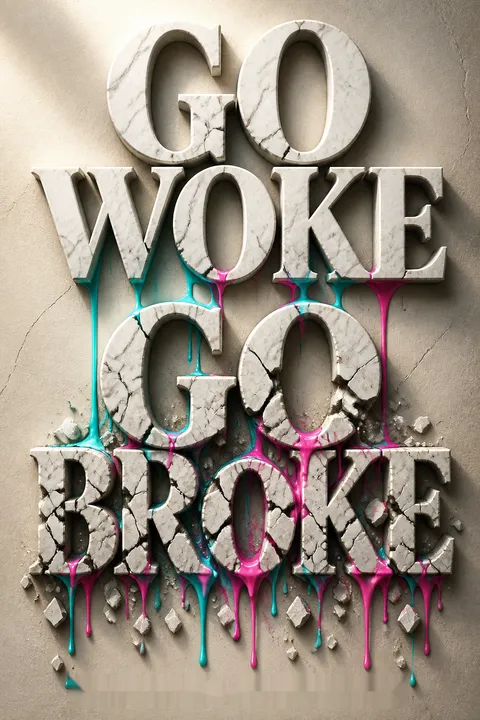
- "Go woke, and you just might go broke.": This encapsulates the central thesis, suggesting financial failure from prioritizing progressive ideologies.
- "The noxious ideology of progressive politics in the boardroom—aka corporate wokeness—needs to die a thousand deaths.": Gasparino believes corporate America must abandon wokeness to restore profitability.
- "The American public is mad as hell and doesn’t like being proselytized to wokeness.": Reflects consumer sentiment against corporate activism.
How does Go Woke, Go Broke define corporate wokeness?
- Ideological Shift: Described as the adoption of progressive ideologies within corporate governance, often at the expense of traditional business practices.
- Impact on Business: Leads to poor decision-making and financial mismanagement, alienating customers and harming brand loyalty.
- Cultural Influence: Influenced by external pressures from social movements and activist groups, creating a culture of fear among executives.
What examples does Go Woke, Go Broke provide of companies going woke?
- Budweiser's Marketing Misstep: Partnership with a trans influencer led to a significant decline in sales, illustrating risks of alienating traditional customers.
- Disney's Political Engagement: Opposition to Florida's legislation regarding sex education sparked consumer outrage.
- Goldman Sachs' Internal Debates: Debate over eating at Chick-fil-A due to the company's conservative values highlights corporate wokeness in everyday decisions.
How does Go Woke, Go Broke address the backlash against corporate wokeness?
- Consumer Reactions: Highlights how consumers are increasingly rejecting brands that engage in political activism, leading to boycotts.
- Courageous Business Leaders: Points to figures like Ed Rensi and Bernie Marcus, who oppose corporate wokeness and advocate for traditional business values.
- Cultural Shift: Argues that the backlash signals a broader cultural shift among the American public against corporate activism.
What role do DEI and ESG play in Go Woke, Go Broke?
- Definitions and Importance: DEI (Diversity, Equity, and Inclusion) and ESG (Environmental, Social, and Governance) are key components of corporate wokeness.
- Critique of Implementation: Gasparino critiques how these initiatives can lead to hiring quotas and practices that undermine merit-based decision-making.
- Financial Implications: Focus on DEI and ESG can lead to poor financial performance, diverting resources from core business functions.
How does Go Woke, Go Broke suggest companies can avoid the pitfalls of wokeness?
- Focus on Core Mission: Advocates for concentrating on primary business objectives rather than engaging in social engineering.
- Avoid Political Activism: Suggests refraining from political stances that could alienate customers.
- Embrace Traditional Values: Encourages a return to practices that prioritize meritocracy and shareholder value.
What is the future of corporate wokeness according to Go Woke, Go Broke?
- Inevitability of Backlash: Posits that corporate wokeness is unsustainable and will lead to significant backlash.
- Potential for Change: Expresses hope that business leaders will shift back to focusing on profitability and shareholder value.
- Long-Term Consequences: Warns of broader economic instability if corporate wokeness continues unchecked.
How does Go Woke, Go Broke address the relationship between corporate America and social movements?
- Corporate Responsibility: Discusses the tension between corporate social responsibility and profitability.
- Impact of Social Movements: Argues that movements related to race and gender have significantly influenced corporate policies.
- Backlash from Consumers: Highlights consumer pushback against corporate wokeness, leading to boycotts and declining sales.
What future trends does Go Woke, Go Broke predict for corporate America?
- Retreat from Wokeness: Suggests companies will distance themselves from wokeness due to its negative impact on the bottom line.
- Increased Focus on Shareholder Value: Predicts a shift back to prioritizing shareholder interests.
- Emergence of Unwoke Brands: Anticipates the rise of brands that reject wokeness, appealing to consumers tired of political correctness.
About the Author

Download PDF
Download EPUB
.epub digital book format is ideal for reading ebooks on phones, tablets, and e-readers.








