

Plot Summary
Five Hundred Steps Down
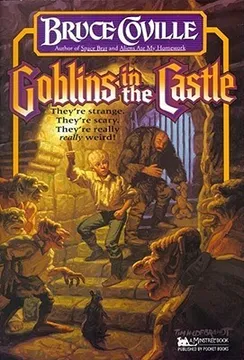
Found as an infant on Toad-in-a-Cage Castle’s drawbridge, William has grown up almost entirely alone. The Baron barely notices him, Karl the librarian teaches him when he can, and the locked North Tower remains the one place William cannot explore.
During a restless night, William discovers a hidden stairway behind a clock and follows it five hundred steps into the dungeon. There he finds Igor, a hump-backed stranger who claims to have lived in the castle for centuries.
Igor survives by taking food from upstairs and says his secret job is to watch something. When he hears movement in the dark, he sends William away, then disappears down the passage to face it alone. William keeps their meeting secret and returns, drawn by the castle’s growing night noises.
The discovery gives William something more consequential than a puzzle: a person who recognizes him as worth speaking to. His childhood has made secrecy familiar and questions dangerous, so Igor’s warning tests whether curiosity can become loyalty. The dungeon also reverses the castle’s apparent order. Its hidden stairways and concealed resident suggest that the household’s tidy surface depends on histories no one upstairs wants to examine.
The Door at Midnight
When William returns to Igor’s cell, an eccentric magician named Ishmael appears, makes a carving float, and vanishes after warning that a dangerous night is near. Igor cannot explain the warning, but his fear sharpens when William mentions the North Tower.
Soon the moans that have kept William awake begin calling his name. On Halloween at midnight, they draw him to the tower door, where a silvery warning symbol cannot compete with the voices promising him a reason to belong. Karl reaches him, but William touches the latch first.
The door bursts open and ghostly shapes rush through the castle. William steps into the darkness beyond the threshold and finds no floor or walls to guide him back. While Karl fetches a rope, unseen feet wrench the door open, giving William time to grab the rope and escape.
The voices exploit the wound William has carried since infancy: the suspicion that his presence in the castle has no purpose. Their promise of belonging turns a forbidden door into an apparent answer to his identity. Yet the warning symbol and Karl’s resistance show that desire is not evidence. William’s mistake is understandable, not harmless, and the emptiness beyond the door makes his choice physically isolating before its consequences reach the whole castle.
Goblins Behind the Pranks
By morning, the castle looks freshly cleaned but has been rearranged into a series of traps: laundry is knotted, soap slicks the stairs, and the kitchen offers a bucket of water overhead and salt in the sugar bowl.
The Baron admits that his grandfather sealed something in the North Tower, though he never learned what it was. Igor does. He explains that the old Baron and Ishmael stripped the spirits from the goblins and locked them in the tower, while Igor was ordered to guard their living bodies below.
The goblins are now free and seeking those bodies. Igor says their anger could bring disaster, then decides they must find Granny Pinchbottom, the frightening figure William once believed was only a story. William leaves the castle with Igor, knowing he helped cause the release.
The pranks make the first consequence of William’s choice vivid and almost comic, but Igor’s account changes their scale: the disturbance comes from a people imprisoned for generations. Igor’s forgotten duty connects his apparent oddness to an old system of secrecy, while William must face responsibility without yet knowing the full history. Their decision to seek Granny turns guilt into action, though neither boy knows whether she can be trusted.
Beyond the Drawbridge
Igor leads William through a passage beneath the moat, and the boy sees the outside world for the first time. Goblins attack in the dungeon tunnels and again beside a forest gorge. William fights beside Igor until a blow knocks him unconscious; when he wakes, Igor has been carried toward Nilbog and his battered bear lies on a ledge.
A beautiful stranger appears, then reveals herself as Granny Pinchbottom. After William loses her in the woods, Fauna, an armed girl who lives alone, guides him to her cottage.
Granny listens to what happened and admits she has worked for the goblins’ return, hoping to restore the land’s lost vitality. She gives William an amulet, an invisibility cloak, a golden collar, and a map, assigning him to fasten the collar around the Goblin King’s neck.
The rescue mission begins with a reversal: the supposed source of childhood fear is also William’s only available ally, while the goblins he released have taken Igor. Granny’s explanation offers a moral alternative to the castle’s silence, but her gift comes with a demand William cannot yet assess. Fauna’s practical help grounds the enchantment in human trust. The journey now asks William to act beyond the walls that have defined both his safety and his ignorance.
Waterfall Road to Nilbog
William wakes in a forest clearing with Granny’s gifts and map, then meets Herky, a small goblin who has lost the way back to Nilbog. Fauna joins William despite her distrust of goblins, and Herky comes along, hungry and eager to prove how fierce he is.
The map directs them through a waterfall into glowing caverns. When it changes course, Herky follows a misleading sign and catches his tail in a rock. William holds him steady while Fauna frees the swollen tail with her knife.
Their detour lets goblins seal the passage behind them; the map warns that they have left the route. Forced onward, the three cross a perilous ledge and crawl through a narrowing tunnel. As goblins approach, something reaches through the darkness and drags William out.
The group forms through uneasy dependence rather than instant affection. Fauna’s suspicion keeps William from romanticizing the goblins, while her gentleness in freeing Herky’s tail contradicts her threats. Herky’s error makes the cost of impulsiveness concrete, and William chooses to help him anyway. When the map ceases to protect them, the children have to rely on judgment and one another instead of a magical route.
The Hero in Nilbog
The goblins pull Fauna from the tunnel, take the travelers’ belongings, and carry William and Fauna into Nilbog. Herky emerges among their captors, ashamed and unable to help. The city is vast, lit by glowing fungus and crowded with goblins whose energy is sharpened by rage. In the throne room, William sees the Goblin King’s head resting inside a wooden box, while Igor stands chained nearby.
The old goblin Borg recognizes William as the human who freed his people, and the crowd celebrates him as a hero. Borg warns that the goblins consider Igor an enemy and that William will lose their favor if he claims him as a friend. William stays outwardly compliant, hoping to remain free long enough to help both his companions.
Nilbog turns William’s private mistake into a public identity. The goblins see him as their liberator, while William knows that he did not understand what he was opening. Borg’s forced choice between Igor and the goblins reproduces the castle’s old habit of making silence seem like safety. William’s outward compliance is not agreement; it is a strategy formed under captivity, and the distinction matters to his developing sense of responsibility.
The King's Missing Body
During William’s first days in Nilbog, Borg explains why the goblins call the present the Time of Revenge. He says the old Baron invited them to a peace celebration, then trapped them with Ishmael’s spell and imprisoned their spirits for 121 years. The goblins once played tricks but also tended homes, gardens, and children; isolation has left them furious and the city damaged.
William searches the castle in Granny’s invisibility cloak, looking for his friends and the King’s body. He finds it in a tower bedroom, lying headless on a golden bed. The King’s head remains in the throne room, so William realizes the collar cannot help while the two are separated. Before he can steal the head, the goblins announce a banquet in his honor.
Borg’s history complicates the simple division between mischief and harm. The goblins’ pranks irritated people, but their care was largely invisible, making it easy for fear and resentment to erase their contributions. William’s search converts that history into a practical problem: healing the King requires restoring what imprisonment divided. Yet Borg’s account is still one perspective, and the story leaves room for another version to challenge it.
Igor at the Banquet
At the feast, William sits beside the King’s head while Borg points out celebrated goblins and the court prepares for war. The King raves about victory, then has Igor wheeled into the hall in chains so the guests can jeer and throw food at him. William can preserve his privileged place by staying quiet. Instead, he climbs onto the table and publicly claims Igor as his friend.
The goblins erupt, and Igor breaks the wooden beams holding his chains as he fights toward William. Their captors overwhelm them both. William wakes in a dark cell, stripped of his status and separated from Igor and Fauna. He still has the cloak and collar hidden beneath his shirt, but no clear way to reach either friend or the King’s body.
William’s declaration turns friendship into a costly action rather than a private feeling. He refuses Borg’s bargain, even though he knows that losing the goblins’ favor makes the rescue harder. The banquet also exposes the danger of inherited grievance: the goblins now repeat the cruelty they remember suffering. William cannot undo their history, but he can refuse to let that history dictate whom he treats as disposable.
Herky's Costly Return
After William has counted ten meals in the dark, Herky slips through the food hatch with a key, the glowing amulet, and Igor’s bear. He confesses through his actions: ashamed of betraying the group, he went back for what the goblins had taken. William frees himself and then Fauna, whose cell is far away. He explains Granny’s belief that the King’s recovery could calm the goblins, and Fauna agrees to help.
Herky is reluctant when William insists that rescuing Igor must remain part of the plan, but finally leads them onward. Wearing the invisibility cloak, William guides Fauna and Herky through the twisting castle corridors. They reach the throne room while goblins sleep, and William lifts the King’s box from its throne.
Herky’s return repairs trust through effort, not an apology. The amulet and bear matter because they carry both practical help and the memory of the companions William has lost. William now refuses to postpone Igor’s rescue until after the mission, recognizing that a supposedly noble goal can become another excuse to abandon someone. The stealth plan depends on mutual care, but its first success is fragile: the King is awake inside the box.
A Head Reunited
The King wakes during William’s escape, and his shouting brings two guards after the invisible boy. William and Fauna race to the tower holding the King’s body, bar the door, and bring the head to the bed. Ishmael appears and warns William not to use the collar.
He admits that he and the old Baron lured the goblins to the castle and imprisoned them because their chaos was intolerable; the King’s head was cut off to complete the spell. William rejects Ishmael’s justification and reaches for the collar.
As goblins break in, Herky returns with Igor, who uses his bear to fend them off. Fauna sets the King’s head in place. William fastens the collar around his neck, and the King wakes restored, ending the fighting. Ishmael falls from the window as Herky clings to him, then Herky climbs back inside.
The competing histories finally meet in one room. Ishmael’s orderly account makes control sound reasonable, but his admission confirms the cruelty beneath it: the goblins were deceived, divided from their bodies, and left to suffer. William’s choice is not to excuse their rage; it is to stop answering one injustice with another. Reuniting the King’s head and body gives the goblins a center capable of interrupting revenge, while Igor’s arrival makes friendship part of the rescue itself.
Home Through the Tower
With the King restored, the goblins’ fury gives way to celebration. Ishmael’s admission clears Igor of knowingly helping the old Baron, and the goblins gradually accept him again. William, Fauna, Igor, and Herky stay in Nilbog for three days before the goblins guide them back to the surface. On the castle drawbridge, Hulda, Karl, and the Baron welcome William home.
The Baron invites Igor and Herky to live upstairs; Fauna keeps her own home but agrees to visit. Later, William and Karl climb the North Tower. The sealed emptiness has become an ordinary staircase leading to rooms and a rooftop view of the surrounding world. William looks beyond the castle with his friends beside him, no longer confined to wondering what lies outside.
The ending answers William’s opening isolation with a home that has become more than a place of shelter. The castle’s invitation to Igor and Herky turns hospitality into a repair of the household’s old exclusions, while Fauna’s choice to keep her own home preserves her independence. Most importantly, the North Tower no longer hides a history that can only be approached through fear. Its stairs lead upward, and William’s world finally extends beyond the walls.
Analysis
Goblins in the Castle builds its conflict from a child’s reasonable desire to know what the adults have hidden. William’s first mistake is not simple disobedience: the spirits persuade him that opening the tower may explain why he belongs in the castle. His vulnerability makes the release understandable, while its consequences make clear that good intentions do not erase responsibility.
The novel then unsettles the division between order and chaos. The old Baron and Ishmael treated goblin mischief as a threat to stability, yet the goblins had quietly cared for homes, gardens, and children. Their helpfulness does not make every prank harmless, and their imprisonment has not made their anger harmless either. The story resists easy moral sorting by showing how fear can turn inconvenience into justification for cruelty, then teach the injured to repeat it.
William’s friendships provide the alternative. He chooses Igor in public when doing so costs him safety, trusts Fauna’s competence even when she distrusts his companions, and accepts Herky’s return as a meaningful act rather than demanding perfection. The magical collar can help restore the King, but it cannot by itself repair the history between peoples. That repair begins when William refuses the false choice between protecting a friend and recognizing a whole community’s pain.
The reopened North Tower completes the book’s movement from enclosure to possibility. At the start, William looks outward from windows and inward through secret passages, with almost no route into the wider world. By the end, the tower has stairs, the castle has welcomed new residents, and the rooftop gives him a view beyond the walls. Curiosity has become more than a search for hidden rooms: it is the willingness to meet unfamiliar lives without surrendering judgment.
Review Summary
Goblins in the Castle is a beloved children's fantasy novel that has captivated readers for decades. Many reviewers fondly recall reading it in their youth and still enjoy it as adults. The book is praised for its engaging plot, memorable characters, and blend of adventure and humor. Readers appreciate the hidden passages, magical elements, and themes of friendship and honesty. While some find it simplistic, most agree it's an excellent choice for young readers, offering excitement and imagination in a well-crafted story.
Characters
William
The castle-raised seekerFound as a baby on the castle drawbridge, William has grown up with little company and almost no knowledge of the world beyond the walls. Books and secret passages feed his curiosity, while the adults around him teach him that important questions are best left unasked. He is observant, imaginative, and sometimes too quick to trust an explanation that promises belonging. His relationships with Igor, Fauna, and Herky challenge his solitary habits and make him consider how responsibility differs from blame. William’s courage is not a lack of fear; it comes from continuing to act when he has no complete map of what is right.
Igor
Dungeon's gentle bruiserIgor is a strange, powerful resident of the castle’s dungeons who speaks in a blunt, childlike way and relies on a worn stuffed bear for comfort and defense. He values food, companionship, and the job he believes he has been given, even when its purpose has faded from memory. His fierce reaction to anyone touching his hump hints at old hurt beneath his comic manner. Igor becomes William’s first genuine friend in the castle, offering affection without the formal distance William knows from its other inhabitants. His loyalty is steady, though his muddled memories make it difficult for him to understand how past events fit together.
Fauna
Self-reliant forest guideFauna lives alone in the forest, carries a knife, and knows paths through the woods that William could never find by himself. Her independence has made her wary of strangers and especially suspicious of goblins. She speaks plainly, acts quickly, and does not confuse kindness with softness: she can threaten Herky, then handle his injured tail with care. Fauna’s practical judgment balances William’s curiosity, while her willingness to join him grows from a desire to protect her home. She keeps her own boundaries even when she becomes part of a close-knit group.
Herky
Mischief-prone lost goblinHerky is a small goblin separated from his people and eager to be considered fierce. He grabs hair, hunts for food, dislikes rain, and gives his name as if it were a full account of his character. Beneath the boastful mischief is a lonely creature who wants to get home and be accepted. His impulsiveness causes real trouble for William and Fauna, but his attachment to them becomes increasingly visible through what he risks and retrieves. Herky’s odd mixture of nuisance, vulnerability, and loyalty makes him difficult to classify as either harmless or dangerous.
Granny Pinchbottom
Shape-shifting woodland witchGranny Pinchbottom is a powerful, shape-shifting woman whose fearsome reputation has haunted William since childhood. She speaks with confidence about the land’s past and believes the goblins have been wrongly removed from it. Her magical knowledge gives her influence, but she cannot simply act openly in Nilbog, so she recruits William for a task that requires someone less conspicuous. She combines clear conviction with a taste for unsettling tests, leaving William to judge where her wisdom ends and her self-interest begins.
Karl
Bookish older confidantKarl tends the Baron’s enormous library and gives William lessons when his work allows. His books provide William’s main window onto the outside world, and his attention offers a rare form of steady care. Karl is thoughtful but cautious, especially around the North Tower, where his own questions once brought him close to losing his position. His knowledge has limits, and he sometimes chooses silence rather than risk a direct challenge to the household’s rules. He is William’s closest link to the ordinary world of learning and the adult world of withheld truths.
The Baron
Distracted castle rulerThe Baron is William’s guardian and the present ruler of Toad-in-a-Cage Castle. He spends much of his time buried in books and often fails to remember William’s name, creating an atmosphere of neglect despite the boy’s secure place in the household. He is not a deliberate tormentor, but his distance leaves William to raise himself and investigate the castle alone. The Baron’s uncertainty about his family’s history reflects how easily a comfortable inheritance can conceal the decisions that shaped it.
Hulda
The hard-hearing housekeeperHulda keeps the castle kitchen running and speaks at full volume because her hearing is poor. Her stories about Granny Pinchbottom both entertain and frighten William, revealing how folklore becomes part of a child’s education. Though her bluntness can make her seem severe, she feeds and watches over him in the practical ways the Baron does not. Hulda represents the castle’s everyday care: imperfect, noisy, and more dependable than William first understands.
Borg
Angry goblin elderBorg is an old goblin, adviser to the King, and one of Nilbog’s most experienced elders. He is intelligent, politically alert, and openly shaped by the harm his people have endured. Borg welcomes William as a symbol of liberation, but his anger leaves little room for people who do not fit the goblins’ idea of friend or enemy. His account of the past gives William crucial context while also showing how grief can harden into collective judgment.
Ishmael
Erratic old magicianIshmael is an aging magician with a long white beard, powerful spells, and a memory that often fails him. He appears unexpectedly, changes the physical world with magic, and can lose the thread of a conversation almost as quickly as he begins one. His formal authority contrasts with his confusion, making it difficult for others to know when to trust his warnings. Ishmael’s presence connects the castle’s present dangers to a history of magic and decisions made by adults.
The Goblin King
Ruler in fractured formThe Goblin King is the central authority of Nilbog, watched over by Borg and regarded by the goblins as the source of their shared direction. His pronouncements are grand and disordered, reflecting the strain carried by a ruler expected to embody a people’s anger and hopes. The goblins’ relationship to him is not merely political; his condition affects the atmosphere of the entire city. He stands at the center of William’s mission without being easy to understand from the outside.
The Old Baron
Long-dead castle patriarchThe Old Baron, grandfather of the present ruler, is a powerful figure in the castle’s inherited history. He was capable of organizing people and magic around a problem, but his decisions about the goblins remain difficult for later generations to interpret. His legacy explains why the North Tower was sealed and why Igor was given a duty he continued long after the household forgot its purpose.
Mervyn
William's small companionMervyn is William’s pet rat and one of the few creatures who shares his solitary rooms. His presence offers William a small, familiar companionship within the enormous castle. Though he does not influence the central conflict, his ordinary routines help show how long William has made a life inside the walls.
Nurse
William's childhood caregiverThe nurse cares for William when he is very young and is remembered for her fondness for toads. Her brief presence belongs to William’s earliest experience of being looked after, before he learns to manage much of castle life on his own.
Plot Devices
The North Tower Door
Seals a hidden prisonThe locked tower is the castle’s most conspicuous mystery, kept out of William’s reach by an unspoken rule. Its changing symbols and the voices calling from beyond it draw on his need to understand why he lives in the castle. Once opened, the door connects the household to an empty magical space where the goblins’ spirits have been confined. The tower’s threshold makes a private act of curiosity the cause of a public crisis.
Granny's Magical Gifts
Equip the rescue missionGranny gives William three objects for his journey: an amulet that provides light in deep darkness, a cloak that hides its wearer, and a golden collar meant for the Goblin King. Each gift solves a different practical problem, but none can replace judgment or trust. The collar’s purpose depends on restoring the King’s connection to his body, while William’s use of the other objects helps him travel through Nilbog and reach the people he is trying to help.
Igor's Bear
Comfort and comic defenseIgor’s handmade stuffed bear is a prized possession, a comfort object, and an unexpectedly effective club. Its soft, roughly stitched body gives the intimidating Igor a tenderness that William would not otherwise see. Igor also uses the bear to express affection and to defend the people he cares about. Because the bear travels between friends, it becomes a tangible reminder of loyalty in a story where memories and accounts of the past are unreliable.
Granny's Changing Map
Guides and tests travelersThe enchanted map marks the travelers’ current location and changes as they move, directing William, Fauna, and Herky through the forest and into the caverns. It appears to offer a dependable route, but its usefulness depends on following it. When Herky leads the group away from the marked path, the map becomes a warning rather than a guide. The device externalizes the travelers’ choice between magical instruction and impulsive confidence.
Download PDF
Download EPUB
.epub digital book format is ideal for reading ebooks on phones, tablets, and e-readers.








