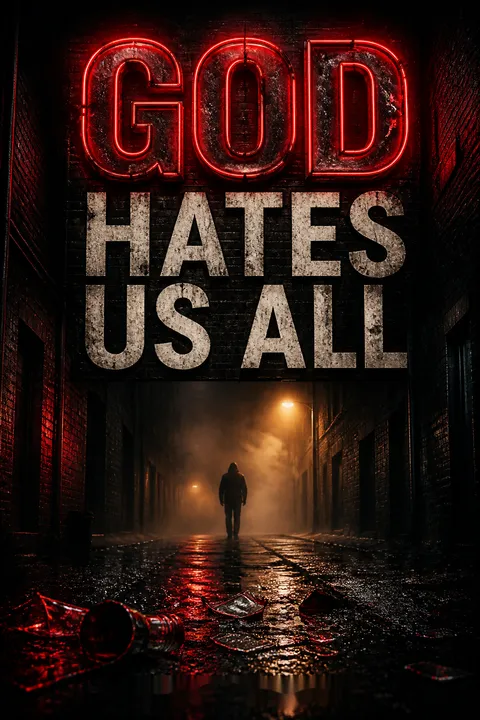


Plot Summary
Niagara Ends in Blood
The unnamed narrator meets Daphne while looking for work at college, and her appetite for music, sex, and stimulants pulls him out of his ordinary life. Their relationship swings between intense pleasure and explosive fights. A year later, they take a Thanksgiving trip to Niagara Falls, where Daphne’s Italian pills keep her awake and manic.
After she attacks him on the drive home, he follows her into the snow, where she stabs him several times. He survives, but the romance that shaped his idea of love has left him wounded and newly wary. The story opens at the moment when desire and danger become impossible for him to separate.
The stabbing makes the narrator’s romantic history physical: what he treats as an exciting story about appetite has a body count in wounds. His breezy recollection also reveals a defense mechanism, turning fear into comedy before he can admit how little control he had.
A Job in the Underworld
After recovering, the narrator returns to the Kirschenbaums, where his friend Tana remains his trusted confidante. Her uncle Marvin pays him to buy marijuana in Manhattan. A visit to the Pontiff, a guarded dealer with a delivery operation, unexpectedly becomes a job interview. The narrator leaves as a courier, carrying small orders between a supply chain and customers around the city.
The work offers cash and a new identity, though he forgets the bag Marvin sent him to buy. Tana later gives one of his deliveries to her boyfriend, hoping it will improve their intimacy. The narrator mistakes this small act of usefulness for the beginning of a more connected life.
The job answers practical needs before the narrator has considered its consequences. His willingness to follow instructions and his attraction to the operation’s cleverness let him recast criminal work as a harmless social role, while Tana’s presence supplies the intimacy he cannot yet build elsewhere.
The Chelsea Hotel
On his first solo deliveries, the narrator meets Danny Carr, a wealthy client who offers extra money for larger quantities, and Nate, a rock musician living at the Chelsea Hotel. Nate’s order brings him into a debauched party, where he meets K, a model caught between her ambitions and the stalled life of Nate’s band.
They talk over drinks, and K helps persuade the skeptical hotel manager, Herman, to rent the narrator a cramped room. He moves in with a typewriter, a duffel bag, and the belief that proximity to artists and beautiful people will cure his loneliness. Instead, the Chelsea gives him a new audience to impress and another place to hide from home.
The hotel functions as both refuge and stage. The narrator wants proximity to artistic freedom, but he arrives as a visitor who must invent a poet’s identity to gain a room. His new address changes his surroundings faster than it changes his self-understanding.
A Kiss, Then Arson
Lonely at the Chelsea, the narrator relies on brief customer conversations and watches Ray, a photographer who charms models with calculated insults. K invites him to a fashion show, where their flirtation finally becomes a kiss. Then Tana pages him with worse news: Daphne has tried to set his parents’ house on fire.
At the psychiatric hospital, the narrator visits Daphne and learns that she is being evaluated after the attack. He tells her about his new life, but cannot lift her mood. Instead, she asks him to find her estranged father, Peter Robichaux. The narrator agrees, turning a plea from his dangerous former lover into a task he can pursue with money from Danny’s side deal.
Two women draw the narrator in opposite directions: K offers an imagined fresh start, while Daphne asks him to face a past he has tried to convert into a funny anecdote. His promise to search for her father is a rare commitment not organized around sexual reward.
The Baby in the Bedroom
The narrator takes K to a Knicks game, but Nate returns unexpectedly, and K leaves with him. The narrator then reconnects with Liz, a customer he has mistaken for a carefree young woman. They go home together, only for him to discover that she is a mother when her baby cries.
He stays, and the encounter gives way to a morning of shame and confusion for Liz. Back at the Chelsea, K makes clear that she has a boyfriend. The narrator calls Daphne and renews his promise to find Peter. Private investigator Henry Head takes his money but can locate little more than a handful of names in a phone book, leaving the search stalled.
The baby interrupts the narrator’s usual script of conquest with a responsibility he did not know he was entering. His decision to stay complicates his cynical self-image, but he still approaches intimacy through improvisation, and both Liz and K expose the distance between his intentions and their lives.
Christmas Breaks the Family
At the Kirschenbaums’ Christmas gathering, the narrator’s father admits he plans to leave his wife for Janine. Before the family can absorb the confession, the narrator’s mother collapses and is taken to hospital. Doctors first suspect a brain tumor, then diagnose lung cancer after tracing the neurological symptoms to an immune response.
As his mother begins treatment, the narrator returns to New York and avoids facing the family crisis. Tana offers to be his first sexual partner, but he declines because he sees her as a sister. Soon K arrives after ending things with Nate, and the two begin a relationship. Their intimacy brings comfort, though it begins in the wreckage of choices neither has fully sorted out.
The mother’s illness strips the narrator’s family of its familiar comic distance: his father’s betrayal is no longer the only emergency. His refusal of Tana reveals a boundary grounded in affection, while his quick turn toward K shows how often he seeks comfort before he has learned to offer it.
A Ticket Across the World
Ray proposes that the narrator visit K in Korea, where both she and a revered former child goddess named Devi are modeling. A courier agency offers him a cheap route, but Danny returns demanding a large supply of marijuana. When police raid Danny’s office, the narrator arrives carrying the drugs and escapes questioning without being arrested.
He misses his planned courier contact, then persuades an airline employee to sell him a first-class seat by pretending his mother is hospitalized in Seoul. Once there, he discovers Nate has surprised K with roses and diamonds. K’s suite is inaccessible, and the narrator is left outside the romance he crossed an ocean to interrupt. He follows Ray’s advice to seek shelter at a youth hostel.
The trip is built from compounding shortcuts: a dubious job, a lie about his mother, and the belief that a dramatic arrival can secure love. When Nate has already made the gesture the narrator hoped to make, the fantasy of controlling the romantic story collapses.
Seoul’s Long Night
At the hostel, the narrator meets Ray, an English traveler, a former Mormon, and Janie, an American carrying LSD. Their night at a Seoul dance club ends in confusion when Ray learns he has nowhere to stay and fights Gene, the former Mormon. The narrator restrains Ray, while Sunny, a dancer, finds coins and buys subway tickets for the stranded group.
At the airport, Ray pays for breakfast, and the narrator boards his return flight. On the plane, he writes a list of people he has wronged, including his parents, Tana, Daphne, K, and Nate. Back in New York, he calls his father for a ride and admits the trip was about a woman. His father tells him his mother is close to death.
The night’s slapstick misadventures expose the cost of treating other people as scenery for the narrator’s impulses. Sunny’s practical kindness and his father’s willingness to collect him provide care without romantic spectacle, prompting the inventory that turns regret into a first step toward accountability.
The Last Farewell
The narrator spends his mother’s final days moving between work and her hospital room. After she dies, Tana challenges his claim that everyone dies alone, pointing to the family and friends who surrounded his mother. At the Chelsea, Herman reveals that the narrator has fallen behind on rent and packs his belongings away.
K apologizes for the confusion in Korea, but the narrator accepts that his own pursuit helped create it. The Pontiff later fires him after Danny’s arrest damages the operation. He returns to his father’s house, visits Daphne, and watches his father begin a new life with Janine. With his old work and room gone, he must rebuild without the city’s convenient escape routes.
Loss makes the narrator’s comic detachment harder to sustain. Tana offers a counterargument to his isolation, while the eviction and firing remove the identities he had assembled around the Chelsea and his courier job. Grief does not resolve his character, but it makes evasion less possible.
The Tunnel Burns
The narrator takes a restaurant job from Zach, his former boss, and brings Daphne home after her release from the hospital. They resume their relationship and settle into domestic life. Henry Head finds an old address for Peter, while Uncle Marvin traces him to a homeless encampment beneath the Brooklyn Bridge.
Daphne approaches a disoriented man she believes is her father, then sets him alight with the lighter fluid she brought. The group escapes the spreading fire, but Peter disappears into the smoke, and Daphne returns herself to the hospital. During a later visit, she rejects the narrator’s fantasy of a neat, permanent love story. He leaves the institution, gets into the car, and drives toward an uncertain new life.
The search does not deliver recognition or healing; it recreates the violence that first defined the narrator’s bond with Daphne. His final departure is not a triumph over grief or a promise of cure. It is a modest refusal to turn pain into another spectacle.
Analysis
The narrator’s comedy is not an escape from consequence so much as a delay mechanism. He makes drugs, sex, poverty, and family betrayal sound like material for a good story, but the plot repeatedly interrupts the performance: Daphne’s knife, the baby in Liz’s home, his mother’s diagnosis, and the failed search beneath the bridge. Each interruption asks whether he can recognize another person as more than a role in his own romantic mythology. Tana’s argument at the funeral directly contests his habit of imagining people as isolated, while his father’s unpolished acts of care complicate the moral categories he has inherited. The novel refuses a clean conversion. Daphne’s illness remains unstable, the father search fails to restore a family, and the narrator’s final departure offers no guaranteed future. What changes is his willingness to see that love does not make him innocent, and that other people’s suffering cannot be transformed into a private legend without cost.
Review Summary
God Hates Us All receives mixed reviews, with an average rating of 3.46/5. Many readers appreciate its connection to the TV show Californication, finding it a quick, entertaining read that captures Hank Moody's voice. The book is praised for its witty writing style and exploration of relationships, drugs, and rock 'n' roll culture. However, some critics find it lacking depth and purpose, arguing it fails to live up to the masterpiece status portrayed in the show. Overall, opinions are divided on whether it succeeds as a standalone novel or merely serves as a TV tie-in.
Characters
The narrator
Comic romantic fugitiveA college dropout who moves between odd jobs, risky romances, and elaborate jokes, the narrator uses wit to keep shame at a manageable distance. He wants to be seen as worldly and generous, yet often treats other people’s lives as opportunities to prove his own charm. His affection for Tana and Daphne, and his later ties to K, expose different limits in that self-image. He is most revealing when his schemes fail and he must decide whether to flee or take responsibility.
Daphne Robichaux
Volatile first loveDaphne is a punk-rocker and former art student whose energy can make ordinary life feel charged with possibility. Her relationship with the narrator mixes sexual intimacy, drug use, humor, and frightening conflict. She carries unresolved pain about her missing father and resists the tidy roles other people imagine for her. Her vulnerability and volatility are inseparable in the narrator’s memory, making her more than either his dangerous ex or his romantic ideal.
Tana Kirschenbaum
Loyal truth-tellerTana is the narrator’s closest friend and chosen sister, a perceptive adviser who listens to his romantic confessions while struggling to claim space for her own desires. Her humor can be blunt, but she also notices when he uses cynicism to dodge grief. She is tied to the Kirschenbaum family that gives him a steadier home than his own. Tana’s loyalty is not passive: she challenges his assumptions and expects him to recognize her as a person beyond their familiar friendship.
K
Model seeking directionKatherine, who uses the initial K professionally, is a model whose success brings travel and attention without guaranteeing belonging. She is drawn to Nate’s rock-star life but also sees its stalled ambitions and self-destructive habits. With the narrator, she shares attraction and moments of tenderness, yet both are entangled in uncertain loyalties. K is neither a prize nor a cure for his loneliness; her own career, relationships, and judgments remain independent of his fantasies.
The narrator’s father
Flawed, distant parentA heavy drinker and unfaithful husband, the narrator’s father has trained his son to expect disappointment. Yet beneath his selfishness is an awkward capacity for practical care. Their relationship is shaped by shared habits and long silences as much as by resentment.
The narrator’s mother
Quiet family anchorThe narrator’s mother tries to care for him through meals, clothes, and questions about his future. He often treats her concern as an inconvenience, failing to imagine the private life behind her role as mother. Her steadiness gives the family an emotional center he recognizes only gradually.
Ray Mondavi
Flirtatious photographerRay is a confident fashion photographer whose teasing charm masks a calculating eye for insecurity. He helps the narrator navigate the Chelsea’s social world and encourages his impulsive trip to Korea. His appetite for risk makes him an entertaining guide and an unreliable judge of consequences.
Nate
Self-involved rock musicianNate is the guitarist and frontman of Venomous Iris, a man whose charisma helps keep K attached to a band that struggles to finish its next album. He enjoys attention and treats romance as something he can reclaim with grand gestures. His confidence often hides how little he considers other people’s needs.
Danny Carr
Wealthy risky clientDanny is a high-powered investor and marijuana customer who turns his money and confidence into leverage. He offers the narrator a lucrative side arrangement that pushes him beyond the careful limits of the delivery operation. His appetite for excess makes him both an attractive source of income and a source of danger.
Uncle Marvin
Blunt neighborhood fixerA retired New York police officer with a permanent limp, Marvin is connected to Tana’s family and has little patience for politeness. He first gives the narrator an errand that opens the door to city work. Beneath his harsh manner, he has useful contacts and a strong instinct for investigating people the official channels miss.
The Pontiff
Cautious drug operatorThe Pontiff runs a carefully organized marijuana delivery business built to minimize risk and keep each courier’s role narrow. His odd ceremonial manner contrasts with his practical command of the operation. He offers the narrator a job but expects discipline and loyalty to the system.
Herman
Chelsea gatekeeperHerman manages the Chelsea Hotel’s front desk and takes its artists seriously, sometimes more seriously than their claims deserve. His skepticism and affection for the building make him a gatekeeper to the narrator’s imagined bohemian life.
Liz
Young mother and customerLiz is one of the narrator’s customers, a polished young woman whose private responsibilities complicate his first impression of her. Their encounter exposes the gap between sexual spontaneity and the ordinary demands of parenting. She does not fit neatly into the role he invents for her.
Henry Head
Unorthodox investigatorHead is a former police officer turned private investigator who accepts the narrator’s money to search for Daphne’s father. His slow, eccentric methods frustrate the narrator, though an old directory eventually offers a useful lead.
Plot Devices
Simpamina
Speed toward disasterThe Italian stimulant Daphne takes drives her sleepless bursts of energy and intensifies the reckless mood of the Niagara trip. Its effects help turn sexual excitement into agitation, making the drug part of the relationship’s danger rather than mere background color.
The Motorola pager
A criminal tetherThe pager links the narrator to the Pontiff’s delivery system, directing him to pickups and customers while keeping interactions brief. It also lets work interrupt private life, collapsing romance, family emergencies, and the narrator’s illegal job into the same vibrating object.
The father search
A promise with consequencesDaphne’s request to locate Peter Robichaux gives the narrator a task that initially seems more manageable than addressing his own relationships. Henry Head’s weak leads and Uncle Marvin’s street connections move the search from phone books to the encampment beneath the Brooklyn Bridge.
FAQ
Synopsis & Basic Details
What is God Hates Us All about?
- Chaotic Relationship Focus: The story centers on the tumultuous relationship between a college-aged narrator and the volatile Daphne, exploring their intense bond amidst drug use, reckless behavior, and emotional instability.
- Self-Destructive Patterns: It delves into the narrator's self-destructive tendencies and his struggle to find meaning and stability while being drawn into Daphne's chaotic world.
- Search for Meaning: The narrative follows the narrator's journey as he grapples with love, loss, and the search for redemption, often amidst a backdrop of reckless decisions and their consequences.
Why should I read God Hates Us All?
- Raw Emotional Honesty: The book offers a raw and unflinching portrayal of flawed characters and their messy lives, exploring the complexities of love, addiction, and mental health with brutal honesty.
- Compelling Narrative Voice: The narrator's cynical yet vulnerable voice draws the reader into his world, making the story both engaging and thought-provoking.
- Exploration of Dark Themes: It delves into dark themes of self-destruction, toxic relationships, and the search for meaning in a chaotic world, offering a unique and often uncomfortable reading experience.
What is the background of God Hates Us All?
- Late 20th Century Setting: The story is set in the late 20th century, reflecting the cultural landscape of that era, including references to music, drugs, and societal norms.
- Personal Struggles: The narrative is rooted in the personal struggles of the characters, exploring themes of addiction, mental health, and the search for identity within a specific cultural context.
- Urban and Suburban Contrast: The story contrasts the chaotic energy of New York City with the more mundane suburban life of Long Island, highlighting the narrator's internal conflict and search for belonging.
What are the most memorable quotes in God Hates Us All?
- "Daphne amava la velocità.": This opening line encapsulates Daphne's character and foreshadows the chaotic nature of her relationship with the narrator, setting the tone for the entire book.
- "Forse si può diventare tanto intelligenti da non voler più fare sesso.": This quote reflects the narrator's cynical view of love and relationships, highlighting his emotional detachment and fear of vulnerability.
- "Dio ci odia tutti.": This recurring phrase, spoken by a bartender, encapsulates the book's nihilistic undertones and the characters' sense of alienation and despair.
What writing style, narrative choices, and literary techniques does Hank Moody use?
- Cynical First-Person Narration: The story is told through the eyes of a cynical and self-aware first-person narrator, whose voice is both engaging and unreliable, offering a unique perspective on the events.
- Non-Linear Storytelling: The narrative often jumps between past and present, creating a fragmented and chaotic feel that mirrors the narrator's own state of mind and the unpredictable nature of his life.
- Dark Humor and Irony: Moody employs dark humor and irony to explore serious themes, often using sarcasm and wit to mask the characters' pain and vulnerability, creating a complex and often uncomfortable reading experience.
Hidden Details & Subtle Connections
What are some minor details that add significant meaning?
- The Timex Watch: The narrator's "merdosissimo Timex" watch, ironically called his "eredità" by his father, symbolizes his strained relationship with his family and his rejection of their values.
- The "Al Camelot sono venuto un sacco di volte" T-shirts: The tacky t-shirts from the Royal Camelot Inn highlight the superficiality and kitsch of the narrator and Daphne's attempt at a romantic getaway, foreshadowing the trip's disastrous outcome.
- The Italian Pills: The pills from Dino, with their "sinistro" black and transparent halves, symbolize the dangerous allure of Daphne's chaotic lifestyle and the narrator's own complicity in it.
What are some subtle foreshadowing and callbacks?
- The Car Crash Foreshadowing: The initial car crash at the drive-in foreshadows the later, more serious car accident caused by Daphne, highlighting the recurring theme of recklessness and its consequences.
- Sid & Nancy References: The narrator's repeated viewing of "Sid & Nancy" and the references to the Chelsea Hotel foreshadow the destructive nature of his relationship with Daphne and its potential for tragedy.
- The "Top Five" Fights: The list of "top five" fights between the narrator and Daphne, constantly being updated, foreshadows the escalating violence and instability of their relationship, culminating in the knife attack.
What are some unexpected character connections?
- Larry Kirschenbaum and the Narrator's Father: The close relationship between the narrator's father and Larry Kirschenbaum, despite their different backgrounds, highlights the narrator's own search for male role models and his complicated relationship with his own father.
- Ray Mondavi and K: The connection between Ray Mondavi and K, both involved in the modeling and music scene, reveals the interconnectedness of the characters' lives and the narrator's own entanglement in their world.
- The Pontefice and Marvin: The connection between the Pontefice and Marvin, through their shared history and the drug trade, reveals the hidden networks and connections that exist beneath the surface of the story.
Who are the most significant supporting characters?
- Tana Kirschenbaum: As the narrator's confidante and "sister," Tana provides a grounding force and a voice of reason, offering a contrasting perspective to the chaos of his life and relationships.
- Uncle Marvin: As a former cop and drug user, Marvin represents a cynical and world-weary perspective, offering the narrator a different kind of male role model and a connection to the darker side of life.
- Ray Mondavi: As a charismatic photographer, Ray introduces the narrator to a world of glamour and excess, highlighting the allure and superficiality of the entertainment industry and its impact on relationships.
Psychological, Emotional, & Relational Analysis
What are some unspoken motivations of the characters?
- Narrator's Need for Chaos: The narrator's attraction to Daphne's chaotic lifestyle stems from an unspoken need to escape his own mundane existence and a desire for intense emotional experiences, even if they are destructive.
- Daphne's Fear of Abandonment: Daphne's erratic behavior and violent outbursts are driven by an unspoken fear of abandonment and a desperate need for control, stemming from her past trauma and unstable family life.
- K's Search for Authenticity: K's attraction to the narrator, despite her relationship with Nate, stems from an unspoken desire for genuine connection and a rejection of the superficiality of her glamorous life.
What psychological complexities do the characters exhibit?
- Narrator's Self-Destructive Tendencies: The narrator exhibits a complex mix of self-awareness and self-destructive behavior, often sabotaging his own attempts at stability and happiness, highlighting his internal conflict and emotional turmoil.
- Daphne's Borderline Personality: Daphne's extreme mood swings, impulsive behavior, and fear of abandonment suggest a possible borderline personality disorder, adding a layer of psychological complexity to her character.
- Ray's Narcissism: Ray's charm and charisma mask a deep-seated narcissism and a tendency to exploit others for his own gain, highlighting the darker side of ambition and the entertainment industry.
What are the major emotional turning points?
- The Knife Attack: The knife attack by Daphne is a major emotional turning point for the narrator, forcing him to confront the reality of their toxic relationship and the extent of her mental instability.
- The Mother's Diagnosis: The mother's cancer diagnosis is a major emotional turning point for the narrator, forcing him to confront his own mortality and the fragility of life, leading to a period of introspection and self-reflection.
- The Breakup with K: The breakup with K, after his trip to Korea, is a major emotional turning point for the narrator, forcing him to confront his own patterns of self-sabotage and his inability to form healthy relationships.
How do relationship dynamics evolve?
- Narrator and Daphne's Cycle: The relationship between the narrator and Daphne evolves from passionate infatuation to a destructive cycle of violence and reconciliation, highlighting the toxic nature of their bond and the narrator's own complicity in it.
- Narrator and Tana's Friendship: The relationship between the narrator and Tana evolves from a platonic friendship to a complex mix of affection and unrequited feelings, highlighting the challenges of navigating love and friendship.
- Narrator and K's Fleeting Connection: The relationship between the narrator and K evolves from a passionate encounter to a fleeting connection, highlighting the superficiality of the entertainment industry and the narrator's own search for genuine intimacy.
Interpretation & Debate
Which parts of the story remain ambiguous or open-ended?
- Daphne's Fate: The ending leaves Daphne's future ambiguous, with her re-entering the mental institution, leaving the reader to question whether she will ever find stability or peace.
- Narrator's Future: The narrator's future is left open-ended, with his decision to leave New York and his job at the restaurant, leaving the reader to wonder if he will ever find true happiness or fulfillment.
- The Meaning of "God Hates Us All": The title itself remains ambiguous, leaving the reader to interpret whether it reflects a nihilistic worldview or a commentary on the characters' self-destructive behavior and their sense of alienation.
What are some debatable, controversial scenes or moments in God Hates Us All?
- The Thanksgiving Trip: The Thanksgiving trip is a controversial moment, highlighting the destructive nature of the narrator and Daphne's relationship and their reckless disregard for consequences.
- The Knife Attack: The knife attack by Daphne is a controversial scene, raising questions about mental health, violence, and the narrator's own complicity in the events.
- The Ending with Liz: The ending with Liz, where the narrator has sex with her while she is breastfeeding, is a controversial moment, raising questions about morality, exploitation, and the narrator's own self-destructive tendencies.
God Hates Us All Ending Explained: How It Ends & What It Means
- Open-Ended Conclusion: The ending is deliberately open-ended, with the narrator leaving New York and his job, suggesting a new beginning but leaving his future uncertain and unresolved.
- Cycle of Self-Destruction: The ending highlights the cyclical nature of self-destructive behavior, with the narrator seemingly breaking free from his past but still carrying the scars of his experiences.
- Ambiguous Redemption: The ending offers a glimpse of hope for redemption, but it is ultimately ambiguous, leaving the reader to question whether the narrator will ever truly find peace or meaning in his life.
Download PDF
Download EPUB
.epub digital book format is ideal for reading ebooks on phones, tablets, and e-readers.








