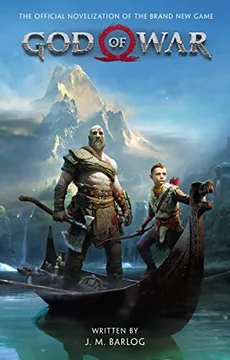


Plot Summary
The Stag and the Troll
Faye has recently died, leaving her son Atreus and her husband Kratos alone with a grief neither knows how to share. During a hunt, Atreus misses a stag, then wounds it with his next arrow. When he cannot bring himself to kill the suffering animal, Kratos guides his hand and ends its life.
A troll arrives for the carcass, forcing father and son into their first dangerous fight together. Atreus watches Kratos nearly lose, then attacks the fallen troll in a burst of fear and rage. His coughing fit reveals the illness that returns when emotion overwhelms him. Kratos calls him unready, while Atreus hears only another rejection from the one parent he has left.
The hunt makes competence feel like a test of belonging. Atreus wants proof that he can fill the space his mother’s death has opened, while Kratos treats preparation as the only reliable form of love. Their conflicting methods turn the stag’s death into a lesson about necessity, but Atreus experiences it as emotional abandonment. The troll exposes what training cannot control: grief erupts as violence, then becomes physical illness. Kratos sees danger in his son’s loss of control, yet his bluntness deepens the insecurity he hopes to cure.
A Stranger Names the Past
A tattooed stranger arrives at their home claiming to know Kratos and demanding answers. Kratos tries to avoid violence, but the stranger strikes first and proves unnaturally strong, healing from injuries that should have killed him. Kratos finally snaps his neck and leaves him in a crevasse, then finds Atreus safe beneath the floor.
The battered house can no longer shelter them, so Kratos orders his son to pack. He carries Faye’s ashes, intending to honor her request by scattering them from the highest peak. On their way out, Atreus spots that the golden trees form a protective rune around their forest, broken where Kratos cut trees for Faye’s funeral pyre. Their quiet life was never as simple as Kratos believed.
Baldur’s arrival makes Kratos’s concealed past an immediate physical threat, not a private burden. His attempt at restraint fails under provocation, exposing how much violence still lies ready beneath his new life. The broken forest stave also recasts the family home: its safety depended on protections Faye understood and Kratos did not. Leaving therefore means more than fleeing an attacker. Kratos and Atreus step into a world shaped by the mother they have lost, carrying her ashes and unanswered decisions with them.
Blood on the Boy’s Hands
On the road, Atreus learns to fight draugr beside Kratos, whose instructions prize accuracy and obedience over speed. Their next danger comes from bandits who trap them behind a gate and plan to eat them. Kratos cuts through the attackers, but one man grabs Atreus from behind. Atreus stabs him to escape, then freezes beneath the dead man’s weight.
Kratos tells him to shut his heart to the killing and pushes him onward, even when the boy struggles to process what he has done. Later, they meet Brok, a blue-skinned blacksmith whose stubborn pack animal blocks a bridge. Atreus senses ravens hiding nearby, and Kratos trusts him enough to throw his axe at the tree, exposing the birds.
Atreus’s first human kill is a threshold that cannot be crossed back over. Kratos’s advice offers a survival rule, but it also reveals his own emotional defense: he has learned to make violence manageable by refusing to feel its cost. Atreus copies that lesson without yet understanding it. His accurate detection of the ravens offers a counterpoint to the killing, showing that his sensitivity can be useful rather than merely dangerous. Kratos’s decision to trust that perception is a small but consequential change in their relationship.
The Witch Beneath the Tree
Atreus wounds a strange boar while trying to prove his skill, then finds its owner, a stern woman who calls herself the Witch in the Woods. Kratos and Atreus help her close the animal’s wound with herbs and magic. The witch recognizes that both travelers are gods, though Atreus does not yet know this, and warns Kratos that the local gods will eventually find them.
Before they leave, she paints protective runes on their necks and gives them food. Her cottage rests beneath a giant tortoise, and a hidden passage leads them back toward their mountain route. The encounter softens Atreus, who sees kindness in the witch, while Kratos remains suspicious. When a deadly black mist blocks the mountain path, she returns with a way forward.
The boar’s wound reverses the hunt’s earlier lesson: Atreus’s arrow now creates suffering he must help repair. The witch does not excuse his mistake, but she gives him a practical role in saving the creature, allowing guilt to become responsibility. Her secrecy also mirrors Kratos’s own concealment, though she uses knowledge to protect rather than dominate. Atreus responds to her warmth because it resembles the care he misses from Faye. Kratos’s distrust is understandable, yet his willingness to accept the protective runes marks the first step toward relying on someone outside the family.
The Serpent Raises the Lake
Before reaching the mountain, Kratos and Atreus row across a lake where an ancient inscription asks them to surrender their weapons. Kratos throws his Leviathan axe into the water, and the World Serpent rises, returns it, and exposes a submerged temple. Atreus recognizes the creature from his mother’s stories, which have begun to prove true.
Near the mountain, the black mist blocks their route. The witch explains that only Alfheim’s light can disperse it, then leads them to Týr’s temple and teaches them to use its realm-travel mechanism. She gives Atreus a magical bowstring for his bow. When they step into Alfheim, a force drags the witch away before she can finish warning them, leaving father and son alone in a hostile realm.
The lake turns inherited stories into dangerous, tangible knowledge. Atreus’s excitement grows because his mother’s world is becoming real, while Kratos treats each marvel as a possible threat. The choice to throw the axe is an early act of trust in something neither can control. The witch’s disappearance then removes the guide who made the crossing possible, forcing the pair to act without her protection. Her unfinished warning leaves them with a tool but not full understanding, an imbalance that will shape their struggle in Alfheim.
Alfheim’s Light Goes Dark
Alfheim is withered by war between Light Elves and Dark Elves. Kratos and Atreus avoid choosing a side, but the Dark Elves attack them as they approach the temple’s light. They find the Light trapped inside a hive and bring the structure down by severing its supporting tendrils. The released light restores the temple, but Atreus reaches into it and hears what he believes is his mother’s voice.
Kratos enters the light to recharge the Bifröst, where visions of Faye expose how lonely Atreus has felt. While Kratos experiences only a short passage, hours pass outside. Atreus survives a Dark Elf attack alone, then pulls his father back. Kratos returns with the charged crystal, but his first concern is his missing axe, not his son’s ordeal.
Alfheim turns the father-son conflict into a question of attention. Kratos enters a private encounter with Faye, while Atreus waits in real time, exposed to the danger his father cannot see. The unequal experience makes Kratos’s absence feel like repetition to the boy, who has already spent his life longing for a more present father. Atreus’s solo defense demonstrates genuine capability, but his pride collides with Kratos’s emotional reserve when the axe comes first. The restored light solves the external problem while leaving their relational injury more visible.
Sindri’s Dragon Debt
Back in Midgard, the Bifröst lets the pair clear the black mist and continue toward the mountain. They pass giant-made chambers, traps, and a mining lift, where Atreus’s curiosity helps him understand the machinery even after a careless move jams its counterweight. On the climb, Sindri is cornered by a dragon.
Kratos lets Atreus draw its attention, and the boy lands an arrow in its eye, creating the opening Kratos needs to kill it. Sindri rewards them with arrows and uses the dragon’s tooth to alter Atreus’s bowstring so it can shatter crystals. The ascent teaches Atreus that his ingenuity can matter as much as his aim, while Kratos begins assigning him more than the role of someone to protect.
The dragon encounter converts Atreus’s growing skill into a necessary contribution. He does not defeat the creature alone, but his shot creates the vulnerability Kratos needs, making their cooperation concrete rather than ceremonial. The earlier machinery mistake also matters: Atreus’s curiosity can cause danger, yet the same habit lets him notice how systems work. Sindri’s crystal-breaking enchantment gives that curiosity a lasting practical form. Kratos’s willingness to send his son into danger reflects necessity, but it also begins to resemble trust.
The Highest Peak Lies Elsewhere
At the mountain summit, Kratos and Atreus find Mimir, an imprisoned sage whose body is bound into a tree. Mimir recognizes Kratos and explains that Baldur’s earlier attack was part of a search for someone traveling with a child. He also corrects their understanding of Faye’s final request: the highest peak is in Jötunheim, the realm of the giants, not Midgard.
The only remaining route there is sealed, and Mimir offers to guide them if Kratos removes his head and takes it to someone who knows old magic. Kratos agrees, despite Atreus’s fear that the witch may be dead or unable to revive him. Their destination has changed from a mountain journey into a search for a lost realm.
Mimir’s revelation changes the journey’s scale without changing its emotional purpose. The ashes remain the reason to go on, but fulfilling Faye’s request now requires entering a realm closed to nearly everyone. Cutting off Mimir’s head makes the cost of progress grotesquely literal, while Atreus’s objection shows how much more readily he feels responsibility for others than Kratos does. The new route also casts Baldur’s pursuit in a wider political light: the family’s private grief has become entangled with a struggle over access to Jötunheim.
Freya Wakes the Head
At the witch’s cottage, Kratos and Atreus discover that the woman is Freya, a powerful figure hiding under a modest identity. She is alarmed by the mistletoe arrows Sindri gave Atreus and burns them, warning that they are dangerous. Then she uses old magic to restore Mimir’s severed head to life.
Kratos objects to her secrecy, and Freya answers his distrust with her own anger, but she still helps them. Mimir identifies the World Serpent as the only being who can guide them toward Jötunheim. Before leaving, Atreus wonders why Freya’s strange window shows a distant home he cannot reach. Her trapped longing makes a lasting impression on him, though Kratos keeps the family moving.
Freya’s care and concealment coexist, unsettling Kratos’s belief that trust requires full disclosure. She has already saved Atreus’s boar and now restores Mimir, yet Kratos interprets her secrecy through his own fear of gods. Atreus, by contrast, notices the loneliness behind her window and responds with empathy. The destroyed arrows plant a crucial detail whose importance neither father nor son understands. Freya’s actions protect them in the immediate moment, but her warnings and refusals show how protection can also become a form of control.
The Serpent’s Strange Directions
Mimir helps the pair speak with the World Serpent, who remembers him and directs them toward two necessary objects: a fragment of the giant stonemason Thamur’s chisel and the Black Rune hidden in Týr’s temple. The serpent moves the lake’s bridge to point them toward the chisel. Mimir also explains that the creature’s future may already be its past, leaving Atreus bewildered by the way time bends around prophecy.
Their route now joins giant history to the Aesir gods’ search for Jötunheim. Atreus asks whether fate can be changed, while Kratos insists that the gods’ predictions do not dictate what they choose. They set off across the lake, still unaware that the next fight will revive Atreus’s dangerous illness.
The World Serpent makes the story’s mythology operational: prophecy, time, and lost history now determine the route the family must take. Mimir’s explanation unsettles Atreus because it makes his own encounter part of a loop he cannot comprehend. Kratos rejects fate not as an abstract doctrine but as a defense against the idea that violence is inevitable. The two responses reveal their different vulnerabilities. Atreus fears what he cannot understand; Kratos fears surrendering moral agency to forces that excuse harm.
Thamur’s Chisel, Magni’s Blood
The trail leads to Thamur’s frozen corpse, where Kratos drops the giant’s hammer onto the ice and breaks a path to the chisel fragment buried beneath it. Thor’s sons Magni and Modi arrive before they can leave. Kratos kills Magni in the fight, while Modi escapes. Atreus has fought beside his father, but rage at the brothers’ insults makes him cough blood and collapse.
Mimir urges Kratos to seek Freya, and the sight of his son’s weakness finally overrides his suspicion. Freya sends Kratos to Helheim for the bridge keeper’s heart, the only ingredient she believes can save Atreus. Kratos must retrieve it before his son’s fever and coughing become fatal.
The battle exposes the difference between physical strength and emotional control. Atreus’s anger helps him fight, but it also triggers the sickness that leaves him helpless afterward. Kratos’s first instinct is to treat danger as something he can overpower; here, his son’s body defeats that strategy. Magni’s death also escalates the family’s conflict with the Aesir, making a private rescue mission politically dangerous. Kratos’s turn toward Freya signals that responsibility for Atreus matters more than his pride or distrust.
Helheim’s Cold Heart
Freya’s instructions send Kratos into Helheim, where his frost axe cannot help him. He retrieves the Blades of Chaos he had hidden beneath his old home, accepting the weapons and memories he spent decades trying to bury. Their fire lets him defeat the bridge keeper and take its heart. In Helheim, visions of Zeus and Kratos’s violent past torment him, while Mimir insists that Atreus must learn the truth.
Freya uses the heart to treat the boy, then tells Kratos that his secrecy is worsening Atreus’s conflict. On the journey toward Týr’s temple, Kratos finally reveals that he is a god and that Atreus is one too. Atreus responds first with wonder, then with questions his father cannot answer.
Kratos’s return to the Blades of Chaos is not a triumphal reclaiming of power. It is an admission that the past cannot be discarded simply by hiding its tools. Helheim makes that past visible through the image of Zeus, while Freya identifies the present cost of Kratos’s secrecy in Atreus’s illness. The confession changes the father-son relationship because it replaces a protective lie with a dangerous truth. Atreus’s curiosity shows that identity can initially feel like possibility, even when Kratos understands it as a burden.
The Black Rune’s Price
In Týr’s temple, Kratos and Atreus navigate mechanisms, traps, and rooms preserving the god’s history of diplomacy. Atreus deciphers the symbols needed to free the Black Rune, while Kratos fights the creatures guarding it. A rising-water trap forces Atreus to solve a puzzle before his father drowns; later, he breaks his mother’s hunting knife to jam a mechanism and save Kratos from crushing spikes.
Kratos acknowledges the sacrifice by giving him a second knife, forged for him at birth from metal brought from both their homelands. He tells Atreus that their power must be governed by discipline. Atreus accepts the lesson, but his new understanding of godhood is already making him more eager to claim authority.
The temple makes knowledge and restraint as consequential as strength. Atreus saves Kratos by reading the puzzle, then sacrifices the knife that carried his strongest physical connection to Faye. Kratos’s replacement gift recognizes the boy’s readiness, but it cannot restore what the broken knife represented. His instruction about discipline is an attempt to give Atreus a moral structure before power distorts his judgment. The temple’s history of peacekeeping quietly challenges the assumption that gods must prove themselves through force.
Modi Falls, Baldur Returns
On the way back to the mountain, the battered Modi taunts Atreus about Faye. Kratos restrains his son once, but Atreus later kills Modi and kicks his body into a ravine, insisting that gods decide justice for themselves. Kratos sees his own old cruelty taking shape in the boy. At the summit, they use the Black Rune and the chisel to open the gateway to Jötunheim.
Baldur ambushes them, wounds Kratos, and destroys the gateway while trying to seize Atreus. Kratos and his son struggle against him, but Baldur takes the boy onto a dragon and escapes. Kratos leaps after them, refusing to let his son be taken, and is pulled into a violent passage toward Helheim.
Atreus’s killing of Modi is the sharpest consequence yet of Kratos’s incomplete teaching. The boy has learned that gods are powerful and dangerous, but not how to distinguish survival from vengeance. Kratos recognizes the resemblance to himself only after the damage is done. Baldur’s attack then converts their moral fracture into immediate peril: Atreus’s confidence cannot protect him from a foe beyond his ability. The ruined gateway makes their progress feel reversible, while Kratos’s leap after his son shows the clarity of his deepest commitment.
Odin’s Library in Hel
In Helheim, Kratos finds Atreus beneath wreckage, but begins their escape by angrily condemning his son’s behavior rather than comforting him. The realm forces both to witness painful memories: Atreus sees his own killing of Modi, while Kratos confronts the violence of his past and his conflict with Zeus.
They reach a warship and turn its sail into a hot-air lift, using fire to rise through Helheim while undead attackers try to extinguish it. The improvised flight crashes into a hidden chamber belonging to Odin. There, Mimir recognizes a concealed diagram in a panel depicting Týr and discovers a possible plan for reaching Jötunheim. The journey is not over, but the broken gateway no longer seems to be their only route.
Helheim externalizes what the family has avoided discussing. Atreus must see his violence from outside himself, while Kratos’s past appears in forms his son can no longer be shielded from. Kratos’s anger at Atreus repeats the emotional harshness that helped produce the boy’s defiance, even as both depend on each other to escape. The ship’s flight offers a literal improvisation against a closed path. Crashing into Odin’s library turns apparent failure into new knowledge, but it also brings them deeper into the gods’ conflict.
Týr’s Hidden Branch
Back in Midgard, Brok and Sindri set aside their feud long enough to forge the delicate key Mimir’s diagram requires. They use their separate skills to complete it, and their collaboration briefly repairs a family bond they had treated as irreparable. The key opens a hidden chamber in Týr’s temple, where Kratos and Atreus find a talisman and step off the usual path through the realm between realms.
They discover Týr’s missing tower and restore it to the realm-travel network. But the mechanism lacks the crystal needed to open the Jötunheim route. Mimir remembers that Odin hid his missing eye inside Thor’s statue, which the World Serpent swallowed. The new passage exists, but they must enter the serpent to complete it.
The dwarves’ cooperation offers a small-scale answer to the family’s larger conflict: shared work can resume before every grievance is settled. Týr’s hidden branch similarly rewards a willingness to leave the prescribed route, making curiosity an act of navigation rather than distraction. Yet the restored tower remains incomplete, preventing a neat victory. The missing eye sends the heroes back into danger and shows how Odin’s efforts to control knowledge have physically shaped the path. Progress comes through repair, but never without another dependency.
Mistletoe Breaks the Spell
Kratos and Atreus enter the World Serpent to retrieve Mimir’s missing eye, but the serpent is struck and spits them out near Thamur’s corpse. Freya appears, seeking her estranged son, and Baldur emerges from beneath the serpent. He attacks her, and Kratos intervenes. During the fight, a mistletoe fragment hidden in Atreus’s repaired quiver strap breaks the magic shielding Baldur from pain.
Atreus and Kratos can finally hurt him. When Baldur is beaten, Atreus asks his father not to kill him. Kratos relents, but Baldur renews his attempt to kill Freya. Kratos kills him to stop it. Freya mourns and curses Kratos, while Atreus accepts that saving her was still the right choice.
The mistletoe fragment turns an ordinary repair into the answer to a supernatural problem, linking Atreus’s practical dependence on his gear with the story’s larger concern for overlooked details. Once Baldur can feel pain, the conflict changes from containment to choice. Atreus’s plea tests whether Kratos can act differently from the violent man he fears he still is. Kratos initially chooses restraint, then kills Baldur only when the threat to Freya becomes immediate. The act saves her and wounds her at once, refusing the comfort of a morally clean victory.
Loki in the Giants’ Wall
With Mimir’s eye restored, Kratos and Atreus activate the Jötunheim route and reach the giants’ hidden realm. A wall of images reveals that Faye was a giant and had recorded events from their journey, including the conflict with Baldur. Atreus discovers that the giants knew him as Loki; Kratos explains that he chose the name Atreus to honor a Spartan warrior.
They reach the highest peak and scatter Faye’s ashes together over a landscape filled with the dead giants. Kratos finally lets Atreus carry the pouch, then shares the act of release with him. Their destination is empty of living giants, but Faye’s concealed history explains why she sent them on this road.
The mural transforms Faye from a remembered caregiver into an unseen author of the journey’s conditions. Her secrecy protected her family, but it also left Kratos and Atreus to interpret her choices without her. The name Loki complicates Atreus’s identity without replacing the name his father gave him; he inherits several histories rather than a single destiny. Scattering the ashes together resolves the opening’s physical task while changing its emotional shape. Kratos’s willingness to hand over the pouch marks grief becoming shared rather than guarded.
Epilogue
Kratos and Atreus return to their snowbound home as Fimbulwinter begins ahead of its expected time. Odin’s ravens circle above them, but Faye’s falcon, Jöphie, drives the spies away. Inside, Atreus learns from Mimir that Faye was known as Laufey the Just, a protector of people threatened by the Aesir.
He decides that helping others may be one way to honor her, though Mimir reminds him that her final choice was her family and that his own path remains his to make. After father and son fall asleep, thunder wakes them. A cloaked visitor stands outside their door, and the hammer at his belt identifies him as Thor.
The return home closes the physical circle without restoring the family’s old life. Atreus comes back with a larger inheritance than the house can contain: Faye’s public acts, his own divine and giant lineage, and the unresolved question of what kind of god he will become. Jöphie’s attack on Odin’s ravens turns the forest’s earlier mystery into evidence that Faye’s protections still matter. The final arrival of Thor makes the homecoming provisional. The family has earned a moment of shelter, not an escape from consequence.
Analysis
The novel makes the journey’s external obstacles mirror a specific family problem: Kratos can survive almost anything, but he cannot protect Atreus by withholding every truth. His commands initially offer safety at the cost of trust. Atreus, meanwhile, converts his hunger for recognition into risk-taking, then into a dangerous imitation of the authority he associates with godhood. Their conflict is not solved by making the boy stronger. It changes when Kratos begins to distinguish teaching survival from teaching domination.
Faye’s absence shapes the story as an active inheritance. Her ashes give the journey its purpose, her lessons equip Atreus to read a world Kratos does not know, and her concealed history explains why the route is possible. The revelations about her and Atreus enlarge their identities without erasing the intimate relationship they remember. The story treats inheritance as information that can guide, burden, or mislead, depending on when it is shared.
The gods’ disputes offer no simple moral division between power and goodness. Freya’s protection saves lives but harms her son; Kratos’s violence can stop Baldur yet also echo the violence he fears passing down. Atreus’s plea for restraint matters because he has already seen what vengeance makes of him. Kratos finally kills Baldur only when the threat becomes immediate, then accepts the cost of that choice rather than claiming it is clean justice.
The ending does not promise that fate has disappeared. The murals, the premature Fimbulwinter, and Thor at the door all suggest that old prophecies and political consequences remain in motion. What changes is the family’s relation to them. Kratos and Atreus leave the peak with the ashes scattered, the truth partly spoken, and a shared responsibility to choose what their power serves.
Review Summary
God of War receives mixed reviews, with some praising its faithfulness to the game and emotional depth, while others criticize it for lacking the game's subtlety and impact. Fans appreciate the expanded scenes and character insights, particularly through Mimir's narration. However, many feel the novelization falls short in world-building and character development compared to the game. Some reviewers suggest playing the game instead for a more immersive experience. Despite criticisms, the book serves as a decent companion piece for fans and a story refresher before playing the sequel.
People Also Read
Characters
Kratos
Guarded warrior fatherKratos is a formidable warrior who has chosen a secluded life in Midgard and speaks more readily through commands than affection. He measures danger with relentless care, but his effort to control every risk often leaves his son feeling shut out. Faye’s death forces him into a journey where protecting Atreus requires more than physical strength. Kratos is shaped by a violent past he does not want to revisit, and by the fear that he will pass its damage to his child. His central struggle is not whether he can defeat an enemy, but whether he can remain present, honest, and disciplined when grief and anger press him toward old habits.
Atreus
Curious young hunterAtreus is an observant, compassionate boy raised in the forest by his mother, with little experience beyond his parents. He wants to become useful to Kratos, but his father’s severe standards make each mistake feel like evidence that he is unwanted. Faye taught him to read tracks, languages, and living creatures, giving him an attentiveness that often catches what Kratos misses. Atreus is eager for stories and connection, and he can also be impulsive when fear or anger overwhelms him. His growing strength makes self-understanding urgent: he must learn not only what he can do, but how to choose what he ought to do.
Faye
Absent guiding motherFaye is Kratos’s wife and Atreus’s mother, whose death begins the journey. In memory, she is patient with Atreus, skilled in hunting, and attentive to the knowledge he will need beyond their secluded home. Kratos remembers her as a partner who shaped their family’s life, though he recognizes how much of her thinking he never understood. Her final request gives father and son a shared destination, while the protections and lessons she left behind continue to influence their choices. Faye matters not only through grief, but through the deliberate care with which she prepared her family for a world she knew better than they did.
Baldur
Relentless tattooed strangerBaldur is a pale, tattooed fighter who arrives at Kratos’s home with an intimate interest in the family’s hidden life. He provokes rather than negotiates, and his willingness to endure extraordinary violence makes him difficult to understand or deter. His pursuit draws Kratos and Atreus into conflicts larger than their private journey. Baldur’s fierce certainty masks a deep grievance and a painful history with his family. He is a threat shaped as much by what has been done to him as by what he chooses to do in response.
Freya
Witch of the woodsFreya lives apart from other people in a cottage beneath a giant tortoise, devoting herself to old magic and to the care of her boar companion. She is capable, guarded, and fiercely protective, yet her concern can become entangled with fear and control. Atreus responds to her warmth because it recalls the security he has lost, while Kratos distrusts the secrets she keeps. Freya’s history has left her isolated from both her home and her family. Her compassion remains real, but the story shows how love can become complicated when protection is imposed without listening to the person being protected.
Mimir
Clever realmwise guideMimir is an ancient adviser with knowledge of the realms, their histories, languages, and political feuds. His wit makes him an unusually lively companion, but his confidence is tempered by gaps in memory and the consequences of his long imprisonment. He guides Kratos and Atreus toward Jötunheim, interprets the World Serpent, and explains the tangled motives of gods and giants. Mimir is frank about the damage caused by secrecy, especially when Kratos withholds truths from Atreus. His learning is valuable, but the story also makes clear that knowledge alone cannot settle what a family owes one another.
Brok
Blunt blue blacksmithBrok is a blue-skinned dwarf blacksmith who travels with a stubborn pack animal and a portable workshop. He is crude, sharp-tongued, and more generous than his insults suggest. As one of the makers of Kratos’s axe, he takes professional pride in its care and improvement. His estrangement from his brother Sindri gives him a personal stake in the story’s recurring questions about family, work, and forgiveness. Brok dislikes sentimentality, but he feeds Atreus, helps the travelers, and eventually shows that loyalty can survive years of resentment.
Sindri
Fastidious dwarf craftsmanSindri is a gifted dwarf blacksmith and Brok’s estranged brother. His exacting habits and strong aversion to dirt make him anxious around the violence and grime that surround Kratos, yet he repeatedly uses his skill to help the travelers. He values craft as an expression of care and is especially protective of weapons he has made. His conflict with Brok reflects different ideas about what their work should become. Sindri is cautious where Brok is blunt, but both share a loyalty that their quarrel has not erased.
Magni
Thor’s confident sonMagni is one of Thor’s sons and arrives with his brother Modi to hunt Kratos and Atreus. He is physically imposing and treats violence as proof of strength. His confidence in his family’s power shapes the way he approaches the travelers, whom he regards as targets rather than people with their own reasons for being on the mountain.
Modi
Thor’s anxious sonModi is Magni’s brother and another son of Thor. He is eager to impress his father, but his insecurity often emerges as taunting and cruelty. He singles out Atreus with personal insults, trying to provoke him into proving himself. Modi’s relationship with Magni is colored by competition, and both brothers measure their worth by the approval of a powerful parent.
The World Serpent
Giant lake-dwellerThe World Serpent is a colossal, intelligent creature who lives in the Lake of the Nine. Though his size could make him terrifying, he behaves with restraint and curiosity when Kratos and Atreus encounter him. His presence alters the lake and exposes places hidden beneath its surface. He communicates in an ancient language that Mimir can interpret, making him an important guide through the realms’ history and the route to Jötunheim.
Odin
Distant Aesir rulerOdin is the ruler of the Aesir and a powerful presence even when he is absent from the travelers’ path. Other characters describe him as hungry for knowledge and determined to influence the future of the realms. His spies, imprisoned enemies, and secret projects make his reach felt across Midgard and beyond. Odin’s desire to control information contrasts with Týr’s older tradition of sharing knowledge and seeking peace.
Týr
Peacekeeping god of warTýr is remembered as a god of war who used learning and diplomacy to prevent conflict rather than cultivate it. His temple preserves traces of his journeys and his relationships with the different peoples of the realms. The Aesir’s suspicion of his ties to the giants led to his fall from influence. Though he is not present to guide Kratos and Atreus, his hidden work becomes essential to their attempt to reach Jötunheim.
Hildisvíni
Freya’s wounded companionHildisvíni is the boar Freya loves and treats as a friend. Atreus wounds him while trying to demonstrate his hunting skill, and Freya’s frantic efforts to save him reveal the depth of her care. The animal’s suffering forces Atreus to confront the consequences of treating a living creature as mere practice.
Jöphie
Faye’s watchful falconJöphie is a great falcon associated with Faye. Atreus remembers her as part of his mother’s life and wonders whether she has abandoned them after Faye’s death. Her return near the end of the journey offers him a concrete sign of continuity with the home and family he has lost.
Thamur
Giant master stonemasonThamur is a giant stonemason whose enormous frozen body lies beneath a lake. Mimir recounts his work on a protective wall and his painful conflict with his son. The remains of Thamur and his tools turn his family tragedy into the landscape Kratos and Atreus must cross.
Zeus
Kratos’s haunting fatherZeus appears in the memories and illusions that Helheim draws from Kratos’s past. As Kratos’s father, he represents a history of violence and unresolved conflict that Kratos has tried to leave behind. His brief appearances make that past impossible to keep entirely separate from Atreus’s present.
Athena
Phantom from Kratos’s pastAthena appears to Kratos as a vision during his return to his old home. Her presence presses on his guilt and his fear that he cannot escape the person he once was. She functions as a reminder that the past can speak with authority without necessarily determining what Kratos chooses next.
Plot Devices
Leviathan Axe
A weapon that returnsForged by Brok and Sindri, the Leviathan axe is Kratos’s primary weapon in Midgard. He can throw it with immense force, summon it back to his hand, and use its frost to freeze enemies and mechanisms. Its return makes it practical in combat and useful in puzzles, while its origin connects Faye to the dwarves and to the wider conflict between their craft and Thor’s hammer. The axe represents the life Kratos has built in Midgard, but it also cannot keep the past from reaching him.
Blades of Chaos
The past made weaponKratos hid these chained blades beneath his old home and swore never to use them again. Their fire works against the dead in Helheim, where his frost axe is ineffective. Retrieving them allows him to reach the bridge keeper and take the heart Freya needs to treat Atreus. Their return makes Kratos confront the violence and guilt he has tried to bury, turning a practical rescue into a reckoning with the person he fears he remains.
Bifröst
A bridge between realmsThe Bifröst crystal captures Alfheim’s light and powers the mechanisms that connect the nine realms. Kratos and Atreus rely on it to cross into Alfheim, return to Midgard, and pursue the route to Jötunheim. Its use requires both knowledge of the correct runes and careful alignment of Týr’s temple machinery. The crystal’s finite power makes each journey consequential, while its dependence on hidden knowledge reflects how access to other worlds can be controlled or withheld.
Mistletoe Arrow
The overlooked weaknessSindri gives Atreus a bundle of special arrows, which Freya destroys after recognizing their danger. Later, when Atreus’s quiver strap breaks, Kratos repairs it with a mistletoe arrow. A fragment remains unnoticed. During the final fight with Baldur, that fragment punctures the magic that has protected him from pain, making him vulnerable. The device turns an overlooked repair into a decisive consequence and links the story’s practical attention to weapons with its larger conflict over magical protection.
Giant Runes and Murals
A map hidden in historyRunes and images left by the giants guide Kratos and Atreus through abandoned places, mechanisms, and the route to Jötunheim. Atreus’s ability to read them repeatedly turns his mother’s lessons into practical knowledge. The forest’s protection stave, Týr’s hidden plans, and the final mountain murals connect the family’s present journey with events Faye understood before they did. These markings reveal that the path was prepared, but they do not make its meaning simple or remove the characters’ need to choose what to do.
Download PDF
Download EPUB
.epub digital book format is ideal for reading ebooks on phones, tablets, and e-readers.








