

Key Takeaways
A 20-foot escape jump becomes a fight to save an unborn child.
A desperate opening. The memoir begins with Bob Fu evading guards who monitor his Beijing apartment. His wife, Heidi, is pregnant, and because they lack the required permit under China’s one-child policy, they fear authorities will force her to abort. She slips out in disguise. Fu climbs down through the building and jumps from a second-floor window into the dark, hoping the shrubs will break his fall.
From flight to advocacy. The escape leads through hiding places, a perilous route out of China, and eventual refuge in the United States. Their story makes the book’s central stakes concrete: state power can reach into the home, the body, and family life. Survival becomes inseparable from defending other people facing the same coercion.
The opening makes political repression legible through a private decision: whether a couple can protect a wanted pregnancy. That human scale is powerful because rights violations are often obscured by policy language and large statistics. It also raises a difficult distinction between individual rescue and systemic change. Escaping protects one family, but it does not dismantle the policy that endangered them. The story’s force comes from showing how personal survival can become the beginning of public witness, not a substitute for reform.
Let childhood deprivation train your attention toward people others abandon.
Poverty leaves a map. Fu’s mother survived years of famine and homelessness after the Great Leap Forward disrupted village food production. A stranger eventually offered her and her children food and a home. Fu grows up poor, with a disabled father and a chronically ill mother, but also in a household that shares scarce meals with beggars and a neighbor stigmatized as an enemy of the people.
Compassion becomes action. At school, Fu persuades classmates to help a hungry student stay enrolled. Later, he and friends impersonate school officials to pressure an abusive family into letting another girl finish her education. His mother calls him a person who carries others’ troubles in his heart. The instinct to intervene predates his Christian faith and political activism.
The memoir treats compassion as learned attention, not a personality trait that appears fully formed. Having known hunger, Fu notices needs other people can ignore, then acts with the limited tools available to a student. This resembles what social psychology calls perspective-taking: imagining another person’s constraints can make distant suffering feel immediate. Yet empathy alone does not guarantee wise intervention. His improvised tactics work in these stories, but durable aid usually also requires listening to those affected and understanding the power relations around them.
When government controls the story, independent information becomes dangerous.
A stolen newspaper widens the world. As a high school student, Fu sneaks into his headmaster’s office to read a restricted digest of foreign reporting. The articles feed his interest in politics and prompt him to publish a student newspaper. He also writes to local officials about alleged corruption in the electricity system, believing the government might correct it.
A peaceful protest meets force. In 1989, students mourn former reform-minded official Hu Yaobang, then demand political accountability and freer speech. Fu helps organize demonstrations at his university and travels to Tiananmen Square. He leaves when Heidi becomes seriously ill. After the June 4 crackdown, a friend returns with blood on his clothes and describes escaping over dead bodies. The state’s denial collides with what witnesses saw.
This section shows censorship as more than missing information. It shapes what people believe is possible, while independent reporting gives them a basis for collective action. Researchers of social movements often emphasize that coordination depends on shared accounts of events; a suppressed report can isolate people, while testimony can restore common knowledge. Still, a memoir cannot settle every disputed detail of a mass political event. Its distinctive contribution here is the witness’s account of how official narratives and firsthand experience diverged within one student community.
Work inside power by day, protect the people it targets by night.
Two roles, one purpose. After graduating, Fu becomes an English teacher at the Communist Party School, training future officials. He has chosen the job partly because it leaves time for Christian work. By night, he and Heidi help lead unregistered Christian gatherings, train house church leaders, and arrange the printing and distribution of religious materials.
The title becomes literal. Fu jokes that he is a double agent: an employee of a party institution who secretly serves a community the state distrusts. The arrangement is practical, not glamorous. His government salary is small, his family worries about money, and the same authorities who employ him may arrest him. His professional access gives him room to work, but also makes surveillance and exposure especially consequential.
The double role captures a familiar strategy in constrained systems: use access to an institution without confusing access with allegiance. Similar forms of quiet resistance appear wherever people preserve spaces for independent learning or mutual aid under official oversight. The strategy can be effective precisely because it is ordinary, but it carries a serious risk. Infiltration metaphors can make complex institutions seem more unified than they are, and people working inside them may face conflicting duties. Fu’s account is strongest when it shows the cost and uncertainty, not just the cleverness.
Let faith interrupt despair without pretending the believer is already righteous.
A book changes the question. Under surveillance after the protests, Fu faces isolation, public denunciation, and the loss of his plans for graduate school. He begins contemplating suicide and even imagines killing the university president who betrayed him. A classmate gives him a biography of Xi Zizhi, a Chinese scholar and opium addict who became a Christian through contact with missionaries.
Conversion turns the light inward. Reading Xi’s story helps Fu imagine hope, but also exposes his own contradictions. He had opposed corruption yet tried bribing an official. He had demanded freedom yet helped seal classrooms to enforce a boycott. The new faith does not make him morally flawless; it makes revenge less compelling and self-examination possible. He later shares the book with Heidi, who also becomes a Christian.
The conversion story gains depth because it is not simply a victory over a bad regime. It is also a disruption of Fu’s self-image as the righteous reformer. That movement from grievance to self-scrutiny resembles moral repair: a person acknowledges harm and inconsistency without concluding that change is impossible. The memoir presents faith as the source of that interruption. Readers need not share its theology to recognize the psychological importance of a framework that can loosen the grip of revenge while preserving a commitment to justice.
Train local leaders, not just distribute forbidden books.
Underground church means independent. Fu uses the term house church for Christian congregations that meet outside government-controlled religious institutions. After police scrutiny intensifies, students use coded language, small gatherings, and indirect routes to meet. The goal is both worship and the creation of community under surveillance.
Knowledge is scarce. During rural ministry, Fu learns of a network with more than six hundred congregations but only two teachers. With mentors and overseas partners, he helps create a covert training center for thirty students from different regions. They study for three months, then return to teach. The team also arranges Bible printing because authorized supply is limited and many believers cannot easily obtain Scripture. The work joins local leadership, education, and material access.
The contrast between hundreds of congregations and two teachers highlights a capacity problem, not merely a shortage of religious texts. Training people who already belong to local networks can multiply knowledge while respecting local language and context. This is a principle shared by community health and adult education: durable programs build the skills of participants rather than treating them as passive recipients. The clandestine setting also complicates scale. Greater reach can mean greater exposure, so growth has to be balanced against the safety of students and host communities.
In prison, trust can turn captives into unexpected listeners.
Prison theology names preparation. The term refers to the belief, taught to Fu by a Chinese pastor who had endured decades in prison, that imprisonment can deepen a Christian’s understanding of God and prepare the church. Fu and Heidi pray for time to mature before arrest, but police eventually detain them for their underground work.
A cell becomes a community. Fu spends two months among men facing charges ranging from drug offenses to corruption. Prisoners endure degrading food, beatings, and long hours of forced stillness. At first they avoid Fu because guards warn that his beliefs are dangerous. As he earns their trust, he listens to their stories and speaks about his faith. When he sings a Christian song, others join in, and nearby cells take it up too.
The prison account reverses the expected direction of influence: the state intends isolation and intimidation, yet shared confinement creates opportunities for human connection. In trauma research, being heard without immediate judgment can help restore agency, even when circumstances remain unjust. The memoir’s religious interpretation gives Fu a reason to treat fellow inmates as people rather than as threats or cases. A necessary caution is that finding meaning in suffering should not romanticize abuse. The value lies in human response to cruelty, not in cruelty itself.
Turn testimony into evidence, allies, legal defense, and public pressure.
A witness needs infrastructure. After escaping China, Fu founds ChinaAid to document religious persecution and support legal defense, training, and advocacy. The work grows from personal experience into an organization that collects accounts, connects lawyers with prisoners, and communicates cases to journalists and officials.
Documentation can change the stakes. Fu and partners compile a report from secret Chinese government documents describing how officials targeted religious groups. They present the material publicly before a visit by President George W. Bush. The report receives major press coverage, helping put religious freedom on the diplomatic agenda. ChinaAid also organizes legal support for five South China Church leaders sentenced to death. Their sentences are overturned, although the memoir does not claim that advocacy alone caused the decision or that every case ends well.
The transition from testimony to organized evidence is the book’s clearest institutional lesson. A personal account can move an audience, but documentation, legal expertise, and relationships with decision-makers make it harder to dismiss as anecdote. This resembles investigative journalism and human-rights monitoring, where corroboration is essential for credibility. Publicity also has limits: it may raise the cost of repression without ending it, and visibility can expose vulnerable people to retaliation. The strongest advocacy therefore pairs public pressure with careful consent, case protection, and realistic claims about what caused a result.
Build rescue networks, but admit when urgency compromises someone else's dignity.
Escape depends on other people. Fu’s family survives through church members who provide shelter, money, documents, and routes out of China. Years later, he helps rescue the family of activist Guo Feixiong after their asylum application is rejected. With no legal route in time, Fu uses his children’s passports to help Guo’s children enter the United States. The plan works, but it exposes the family and their British helper to serious legal consequences.
Courage does not erase judgment. Fu also regrets excluding Guo from a White House meeting after other dissidents threatened to boycott it. He recognizes that he used prayer to cover a decision he did not want to make directly. Together, these episodes show the moral strain of advocacy: urgency can save lives, but can also impose risks or indignities on the people being helped.
This is a useful corrective to heroic storytelling. Refugee rescue often unfolds where formal systems are too slow, yet bypassing them can create new harms for the people at risk and for those assisting them. The same tension appears in emergency ethics: a decision can be understandable under pressure and still deserve scrutiny afterward. Fu’s admission about Guo is especially important because it shows accountability as part of advocacy, not a threat to it. Respect for the person helped includes giving them voice in decisions whenever circumstances permit.
Amplify the witness, not the advocate, when a dissident risks everything.
Chen tells the story himself. Chen Guangcheng, a blind legal advocate in Shandong, documents forced abortions and sterilizations in his county. After prison, authorities confine him and his family at home. He secretly records their conditions, then escapes after months of planning, navigating walls and roads despite his blindness and injuries. His account reaches international audiences, and he eventually enters the United States Embassy.
Public attention is a tool. Fu becomes a key spokesperson and helps Chen address Congress by phone from his hospital room. The attention increases pressure on officials, though it does not resolve every danger facing Chen’s relatives. The episode closes the memoir’s arc: Fu’s work is not to become the central hero, but to help a threatened person’s own testimony travel farther than the walls built to contain it.
The distinction between advocacy and representation matters. A spokesperson can open doors, translate across institutions, and create protection through visibility, but the affected person should remain the authority on their own experience and wishes. That principle is central to ethical journalism and contemporary human-rights practice. The Chen episode dramatizes it through a direct channel to lawmakers, while also exposing the limits of visibility: public attention can deter some abuses, but it cannot guarantee safety for relatives or ensure that promises are honored.
Analysis
This memoir is built around a dramatic transformation: a poor village boy first seeks money and political authority as tools for justice, then loses faith in those routes after witnessing the state crush peaceful protest. Christianity gives Fu a different account of change, one rooted in personal moral repair and service, while his subsequent work turns that conviction into organization, documentation, and public advocacy. The double-agent image links these stages. It is both a literal description of his work inside the Communist Party School and a metaphor for living across worlds that distrust one another.
The book’s greatest strength is its narrative specificity. A jump from a building, a confiscated address book, a prison song, and a phone held up in a congressional hearing make abstract questions of religious liberty and state coercion immediate. Its supporting network is equally important. Heidi, local Christians, overseas churches, lawyers, journalists, and political allies make clear that resistance is rarely an individual achievement. The story is less a lone-hero account than a record of fragile cooperation across borders.
The memoir should also be read as a participant’s account, shaped by a Christian interpretation of events and advocacy aims. Its testimony is valuable, but individual episodes do not by themselves establish every disputed statistic or causal claim. Public pressure can coincide with a prisoner’s release without being the sole cause. The book is most persuasive when it distinguishes observed events from interpretation and when Fu acknowledges personal failures, including choices that harmed or excluded allies.
Its enduring insight is that moral commitment needs both courage and infrastructure. Faith motivates Fu, but evidence, trusted relationships, legal work, and careful communication make action possible. The account does not offer a simple formula for balancing family, safety, law, and urgent rescue. Instead, it shows the real cost of choosing among them, and insists that advocacy must remain answerable to the people whose lives it claims to defend.
Review Summary
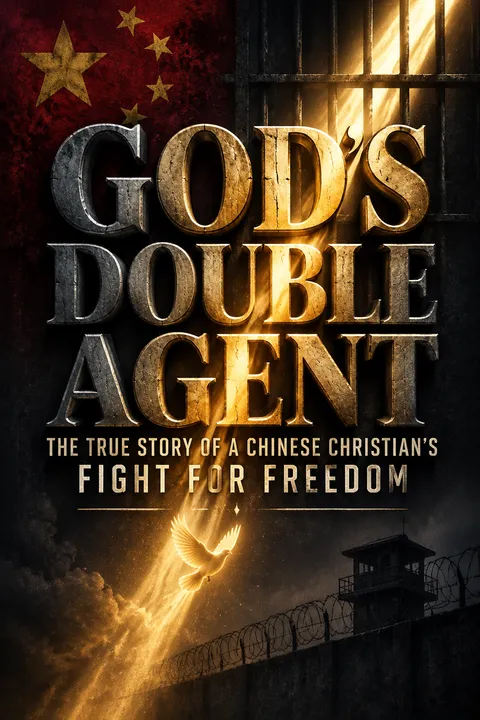
Reviewers overwhelmingly praise God's Double Agent, averaging 4.54 out of 5 stars. Many describe it as riveting and thriller-like, despite being an autobiography. Readers highlight its eye-opening portrayal of Christian persecution in China, the underground church movement, and oppressive government policies. The book is frequently called inspiring and challenging, prompting reflection on personal faith and religious freedom. Some noted difficulty following the many names in the latter sections. Most recommend it for older teens and adults due to mature content involving torture and forced abortion policies.
Glossary
Three Self Patriotic Movement
State-supervised Protestant churchesThe Three Self Patriotic Movement is the Chinese government-recognized Protestant church structure described in the memoir. Its name refers to self-governance, self-support, and self-propagation. Fu portrays it as operating under state oversight, with religious leaders and church activity subject to political influence. Christians who worship outside this structure are often described as belonging to house churches.
house church
Independent Christian congregationIn Fu’s account, a house church is a Christian congregation that meets independently of the government-recognized church system. Meetings may take place in homes or other discreet locations. House churches provide worship, teaching, community, and ministry, but their unregistered status can expose leaders and members to surveillance, detention, property confiscation, or other forms of state pressure.
prison theology
Faith formed through imprisonmentPrison theology is the perspective Fu encounters through Chinese Christian leaders who endured imprisonment for their beliefs. It holds that prison can deepen reliance on God and prepare Christians and their communities for hardship. In the memoir, the idea helps Fu and Heidi confront the possibility of arrest. It does not treat imprisonment as harmless or desirable, but interprets faithfulness within suffering.
three huas
A three-part Christian missionThe three huas describe mentor Jonathan Chao’s vision for Christian work in China: evangelization, Christian influence on Chinese culture, and the development of a Christian church. Fu explains that the Chinese expressions share a common ending meaning a process of transformation. During interrogation, he describes the vision in general terms while trying not to reveal operational details of the underground ministry.
Fire Taking Time
Rural church learning exchangeFire Taking Time is a program Fu describes that brought university Christians into rural Chinese house churches. Urban students could bring biblical knowledge, while rural believers demonstrated strong commitment and hospitality despite limited resources. The exchange was intended to strengthen students’ faith and connect them with local congregations, rather than treating the rural church only as a recipient of outside help.
ChinaAid
China rights advocacy organizationChinaAid is the organization Fu establishes to support religious freedom and document persecution in China. Its work includes public reporting, legal assistance, training, and support for people facing detention or other penalties. The memoir presents it as a bridge between threatened individuals inside China and lawyers, journalists, churches, and public officials outside the country.
Download PDF
Download EPUB
.epub digital book format is ideal for reading ebooks on phones, tablets, and e-readers.








