

Plot Summary
The Interview He Hid
Marcus St. James, a Chicago news executive, is in New York interviewing for a powerful broadcasting post when Gabe Romero, the young cellist he has only recently begun seeing, calls with a grievance: Marcus knew about the trip and interview but never told him.
Gabe ends the call and switches off his phone. The silence follows Marcus through the interview, which he later realizes he barely heard, and into his hotel room. After failed calls, he finds Gabe’s law office number and uses his driver’s surname to reach him at work.
Gabe explains that the possible move matters because they are already involved, not because he expects a promise. Marcus wants to explain that nothing is decided, but Gabe ends the call again. Rather than wait, Marcus decides to return to Chicago and apologize face to face.
The first conflict is less about geography than about recognition. Marcus treats the interview as a private business matter because he has spent years organizing life around his own decisions; Gabe experiences the omission as evidence that Marcus has not yet made room for him. Their different expectations expose the relationship’s central asymmetry: Gabe is willing to name what they are, while Marcus is still learning that intimacy creates obligations before either person has settled the future. Marcus’s inability to concentrate at work is the first practical sign that his priorities have already shifted, even though he has not yet learned how to communicate that shift.
Ramen On Gabe’s Terms
Marcus appears outside Gabe’s apartment after flying back, still dressed for business and accompanied by his driver. Gabe refuses to let him smooth over the argument with sex; instead, he invites Marcus in and makes the weekend a lesson in Gabe’s ordinary life.
Marcus cooks the only food available, chicken ramen, and the modest dinner gives them room to talk about family, work, and the mistake he made by leaving without telling Gabe. Marcus apologizes and admits Gabe has become a priority.
In the morning, after Gabe’s roommate Ryan finds Marcus in the apartment, Gabe and Marcus settle the question of what they are and agree they are dating. Ryan chooses to stay elsewhere for the weekend, giving the new couple privacy without turning the apology into another grand gesture.
The ramen matters because it strips away the material language Marcus usually uses to make life orderly. He cannot solve the conflict with money, a driver, or an impressive dinner; he has to accept Gabe’s terms and participate in a small domestic ritual. Gabe, meanwhile, does not punish Marcus indefinitely. He sets a boundary, then offers a path back through attention and accountability. Their decision to call themselves a couple is therefore not a reward for Marcus’s dramatic return. It follows his willingness to acknowledge that Gabe’s feelings should affect his choices.
Axes, Shots, Surrender
Gabe’s weekend plan takes Marcus to a bar where patrons throw hatchets, a sharp break from the polished restaurants and controlled routines Marcus prefers. After a coach teaches him the basics, Gabe turns their practice into a drinking game: missed throws earn shots, and both men end the night thoroughly drunk.
The contest lets Marcus fail in public, laugh at himself, and follow Gabe’s lead instead of managing every outcome. Back at Gabe’s apartment, their teasing turns into sex, but the next morning brings a quieter kind of intimacy.
They discuss the way each has used their supposed blackmail to keep the other close, then Gabe reveals that his first serious relationship was with a music professor at Northwestern. Marcus responds without judgment, showing Gabe that the age difference does not make him dismiss Gabe’s past or agency.
The date translates emotional risk into physical play. Marcus has to hold a weapon he does not know how to use, accept instruction, and tolerate being bad at something; these are small rehearsals for a relationship in which competence cannot guarantee control. Gabe’s confidence makes the outing feel safe rather than humiliating, and Marcus’s willingness to participate becomes a form of trust. The morning conversation deepens that trust by allowing Gabe to describe an unequal past relationship without being reduced to a cautionary tale. Marcus listens instead of asserting authority, a meaningful departure from the executive persona that governs his professional life.
A Seat Returns
At work, Gabe is handling invitations for Mitchell & Madison’s client dinner when Chicago Symphony Orchestra conductor Stefan Vogt calls. Vogt saw Gabe play cello at a recent concert and wants to discuss a possible place in the orchestra’s summer program.
For Gabe, whose hand injury interrupted his musical education and career, the invitation is both a chance and a test. He tells Marcus the news that evening, and Marcus encourages him to meet Vogt rather than letting fear decide what the call means.
At their Saturday appointment, Vogt confirms that he heard Gabe perform and invites him to audition for an available cello seat. The opportunity is not yet a permanent position, but it gives Gabe a concrete way back toward the ensemble playing he had feared losing for good.
Gabe’s musical return is not framed as a miraculous cure or a simple recovery of his former life. The call offers a trial, not certainty, so his hope remains attached to work he must still do. That distinction preserves his agency: he is not rescued by Marcus, whose support helps but cannot substitute for practice, skill, or the conductor’s judgment. The cello also gives Gabe a future that is independent of romance. As the relationship intensifies, the story makes clear that loving Marcus cannot be the only route to fulfillment; Gabe’s ambition has its own history and demands its own space.
The Bass Beneath
After the meeting with Vogt, Gabe brings Marcus to his parents’ home to celebrate. Daniela welcomes Marcus warmly, while Santiago, a high school music teacher, tests the polished executive with careful questions about his work and intentions.
Marcus explains that Gabe has reminded him to make room for life beyond the newsroom, and the Romeros begin to see the man behind his title. Daniela’s Spanish remark about Marcus being the bass beneath Gabe’s treble heart leaves Gabe embarrassed and Marcus curious.
Later, unable to sleep before the audition, Gabe practices in Marcus’s library. Marcus wakes and follows the cello’s sound, watching Gabe play in the firelight. The performance makes clear how much of Gabe’s identity lives in the music he nearly lost, while the shared night deepens their sense of belonging.
The family dinner places Marcus inside a world where status carries less weight than care. Santiago’s questions test whether Marcus can be present as a partner rather than as a powerful employer, and Marcus answers by describing a change in his own priorities. Daniela’s musical metaphor gives the couple a vocabulary for complementarity without making them interchangeable: bass and treble remain distinct parts that can sound together. The nocturnal cello scene then turns that idea into an experience. Marcus does not merely approve of Gabe’s ambition; he witnesses the discipline and vulnerability through which Gabe expresses it.
Three Cities Compete
Gabe auditions the next day and earns a place in the CSO’s summer program, a temporary appointment with the possibility of more. At the same time, Marcus’s career becomes a three-city calculation.
New York’s Summit Broadcasting wants him to lead its news division, Los Angeles has also shown interest, and ENN owner Gloria Tennant makes a generous offer to keep him in Chicago. Gabe tells his employer, Logan Mitchell, about the orchestra work and his longer-term hope of returning to music full time; Logan supports him and asks only for honesty and focus.
Marcus explains the competing offers over dinner. Instead of choosing for him, Gabe proposes a weekend in New York so Marcus can experience the city beyond its offices. Marcus agrees to go, making the career decision a shared question without assigning Gabe the power to decide it.
The simultaneous professional openings create a genuine conflict rather than a manufactured romantic obstacle. Both men have work that matters to them, and neither can responsibly ask the other to erase a long-term ambition. Gabe’s conversation with Logan models the candor Marcus failed to show at the novel’s opening: he discloses his plans while preserving his commitment to his current job. Marcus, in turn, includes Gabe in the discussion before making a decision. The New York trip is a compromise in method, not a verdict. It gives Marcus information while requiring both men to tolerate uncertainty.
New York After Dark
Gabe accompanies Marcus to New York, shows him Summit’s impressive offices, and asks whether the job would offer challenges Marcus actually wants. Marcus admits the role could reshape the network, but Gabe’s question about long distance reveals the cost beneath the opportunity: Marcus would not choose a remote relationship, though he says Gabe is the person he is considering.
Gabe has not planned to move, but he learns that New York has a conservatory and a philharmonic, so music might have a place there too. That night, he surprises Marcus with tickets to a jazz club, where the band recognizes him and invites him to play double bass.
A sudden downpour sends them back to the hotel soaked. Marcus asks whether Gabe would consider moving; Gabe says he would, but Marcus refuses to make him abandon the CSO.
The trip gives both men a chance to imagine a future rather than argue over an abstraction. Marcus sees a workplace and a city with real professional appeal; Gabe discovers that relocation might not mean surrendering music. Yet the rain-soaked hotel scene exposes a deeper impasse: each is so determined not to coerce the other that neither states what he most wants. Marcus’s refusal to ask Gabe to give up the symphony is loving, but it also assumes that protecting Gabe means deciding what Gabe would be willing to sacrifice. Their restraint preserves respect while increasing the emotional distance between them.
Love Kept Unspoken
Back in Chicago, Gabe tells Ryan that he has fallen in love with Marcus, but he cannot say it while Marcus is choosing between cities. Ryan urges him not to confuse silence with generosity.
Marcus reaches a similar realization in a call with his sister Abby, a novelist, and admits that he loves Gabe; Abby tells him that withholding the truth denies Gabe a say in their future. A few days later, Abby visits Gabe at work to discuss her musician character. As Gabe describes the cello’s exacting demands, Abby explains how Marcus’s work-first habits have softened since Gabe entered his life.
Gabe nearly confesses his love to her, then stops himself. Their separate conversations confirm the depth of the bond but do not resolve the problem: both men still think silence is a way to protect the other.
The mirrored confidences make the lovers’ problem legible as a shared defense, not a failure of affection. Each man understands love as a reason to avoid pressure, but each also uses that ethical concern to evade vulnerability. Ryan and Abby function as interpreters who expose the cost of this strategy: Marcus and Gabe are trying to preserve the other’s freedom while withholding the information that would let him choose. Abby’s response to Gabe’s musical explanation also connects their careers to the relationship. She recognizes that his art is not decorative talent but sustained work, while her account of Marcus reveals the emotional cost of his old devotion to work.
A Dance, Then Distance
At Mitchell & Madison’s formal client dinner, Marcus introduces Gabe to Gloria, the ENN chief who is deciding whether to retain him, as his boyfriend. The public acknowledgment reassures Gabe until Gloria dances with him and presses him about Marcus’s possible move to New York.
Gabe retreats to the balcony, where Logan recognizes his heartbreak and urges him to tell Marcus what he feels before the decision is made. Gabe leaves the event and takes an Uber to Marcus’s house, where he plays cello in the library.
Marcus confronts Gloria about questioning Gabe, then follows the music home. He understands that Gabe has chosen the library because it feels like home to him. The party’s public display of their relationship has brought them close, but the career question still hangs between them as Marcus enters the room.
The dinner brings private uncertainty into a public setting. Marcus’s introduction of Gabe as his partner is an act of recognition, yet Gloria’s questions turn Gabe into a proxy for Marcus’s employment decision. His escape is not simply jealousy or insecurity; it is the consequence of being asked to account for a future Marcus has not yet chosen. Logan’s counsel shifts the focus from protecting Marcus’s freedom to respecting Gabe’s own agency. By going to the library, Gabe returns to the place where his music and Marcus’s attention have repeatedly met, preparing to speak through the art that first made his inner life visible.
The Bass Clef Promise
In Marcus’s library, Gabe finishes playing a piece on the cello and tells Marcus that he loves him. Marcus answers in kind, then opens his shirt to reveal a bass clef tattoo modeled on the musical pendant Gabe wears.
He explains that he visited Daniela to confirm the design and had the mark placed over his heart. The image transforms the mother’s earlier metaphor into a deliberate promise: Marcus sees himself as the bass that answers Gabe’s treble. He admits that his career has ruled his adult life, but meeting Gabe changed what he wants from the future.
Marcus does not ask Gabe to abandon music; he says he wants a life with him wherever they can build it. Gabe accepts, and they choose to face the decision together rather than keeping love outside the conversation.
The confession resolves the story’s central communication failure by making desire explicit without turning it into a demand. Marcus’s tattoo is not a substitute for speech; it is a physical sign that he has acted on a meaning Gabe’s family first articulated and that the lovers later discussed. Its placement over his heart makes a private symbol visible, while the conversation supplies its ethical content: choosing Gabe does not mean choosing Gabe instead of Gabe’s future. The couple’s agreement changes the question from which person must yield to how their lives can be organized together. Love becomes a practice of disclosure, not an excuse to decide on someone else’s behalf.
Epilogue
By summer, Marcus has renewed his contract with ENN for four years, with an agreement to reconsider their plans later, and Gabe is performing with the Chicago Symphony Orchestra. At Gabe’s first concert, Marcus sits with Gabe’s parents, Ryan, Abby, Logan, and Tate. Gabe takes his place among the cellists for Beethoven’s Ninth, while Marcus watches from the box seats.
The performance restores Gabe to the stage he had feared losing, and the crowded balcony shows how their relationship has joined their separate circles of family and friends. After the music ends, Gabe sees Marcus’s hand over the bass clef on his chest and recognizes the future they chose together.
The ending refuses the easy romance solution in which one partner simply gives up a calling. Marcus stays in Chicago for a defined contract, while Gabe returns to professional music; the agreement to reassess keeps their future open rather than pretending ambition has disappeared. The concert completes Gabe’s musical arc in public, but its emotional force comes from the audience gathered around him. His return is witnessed by family, friends, and Marcus, whose support is no longer private or tentative. The novel closes not on a permanent guarantee but on a workable form of commitment: two careers, a shared city, and the willingness to revisit the arrangement honestly.
Analysis
Good Intentions builds its romance around a consequential difference in how its leads understand responsibility. Marcus has learned to protect his autonomy by keeping decisions within the boundaries of work; Gabe understands intimacy as a reason to share uncertainty before it becomes a fait accompli. Their opening conflict therefore establishes more than a communication lapse. It reveals how a person can be attentive in private and still behave as if a new partner has no claim on information that affects their shared future.
The novel gives this conflict material form through contrasting spaces and activities. Marcus’s New York office, Chicago newsroom, and formal client dinner are places where he has authority and knows the rules. Gabe’s apartment, cello practice, and chaotic axe bar ask him to surrender that authority and meet another person on unfamiliar ground. The shifts are not simply lifestyle contrasts. Each setting tests whether Marcus can participate without controlling the terms, and whether Gabe can set boundaries without turning affection into a contest. Gabe’s musical recovery protects the story from making romance his sole source of restoration. His CSO audition follows practice and judgment, not Marcus’s influence, and the temporary seat is a credible step rather than a magical return to certainty. Marcus’s career remains equally real. The central resolution is consequently not that one man gives up ambition for love, but that both stop treating their ambitions as private facts the other must accommodate after the decision.
The bass and treble imagery brings the novel’s emotional argument into focus. Gabe and Marcus do not become the same person; their differences remain audible. The final commitment works because they share the decision-making, not because either disappears into the other. The epilogue’s four-year contract and promise to reassess preserve that principle. Their future is not presented as guaranteed or effortless. It is made possible by the practice that the opening lacked: telling the truth early enough for both people to choose.
Review Summary
Good Intentions by Ella Frank receives mixed reviews with a 4.22/5 rating. Readers praise the steamy romance between Marcus and Gabe, their chemistry, and the sweet, low-angst conclusion to the duet. Many loved the 20-year age gap handled well and cameos from other series characters. However, critics note the book feels like filler with minimal plot development, predictable storyline, and could have been condensed with the first book into a standalone. Some found it boring despite enjoying the characters. The audiobook narrators received particular praise.
People Also Read






Characters
Marcus St. James
The guarded news chiefMarcus is a highly successful broadcasting executive whose judgment, discipline, and capacity for command have shaped his adult life. He is accustomed to solving problems through planning and professional competence, which makes intimate uncertainty difficult for him to read. His attachment to Gabe disrupts that self-sufficient pattern: he begins to notice what work has crowded out, from unhurried time with family to ordinary domestic closeness. Marcus is not emotionally cold so much as inexperienced at treating another person’s needs as part of a decision before it is settled. His central tension is between ambition and connection, and his growth depends on learning that honesty is not a loss of control but a form of respect.
Gabriel Romero
The ambitious cellistGabe is a young cellist whose confidence and quick wit can make him seem fearless, though his ambition carries the vulnerability of a career interrupted by injury. He works as a personal assistant while trying to rebuild the musical future he once thought he had lost. Gabe is socially bold and emotionally perceptive; he notices when Marcus retreats into professional habits and challenges him directly, but he also fears that asking for commitment could become pressure. His music gives him a language for discipline, identity, and desire, while his playful provocations invite Marcus out of his guarded routines. Gabe’s challenge is to remain generous without making himself silent.
Abby St. James
The perceptive sisterAbby is Marcus’s younger sister and a novelist with a romantic imagination and a sharp understanding of her brother’s habits. She is one of the few people who can challenge Marcus without being intimidated by his authority. Her interest in Gabe’s musical experience gives them a reason to connect independently, while her observations help Marcus recognize how thoroughly he has organized life around work. Abby’s warmth does not make her indulgent: she can tease her brother while insisting that he take responsibility for what he feels.
Ryan
The loyal roommateRyan is Gabe’s roommate and close friend, as well as a colleague in the legal office where Gabe works. His humor makes awkward situations easier to survive, but his concern for Gabe is serious beneath the banter. He is wary of the power imbalance created by Gabe dating the head of his employer’s newsroom, and he encourages Gabe to protect his own needs rather than assume Marcus will understand them. Ryan offers candid advice without trying to control Gabe’s choices.
Logan Mitchell
The candid employerLogan is Gabe’s boss and a partner at Mitchell & Madison. He gives Gabe meaningful responsibility at work and treats his musical ambitions as part of his future rather than a threat to the firm. Logan is direct, perceptive, and willing to use his own relationship experience to help Gabe confront difficult feelings. His firm’s welcoming atmosphere also gives Gabe a stable professional home while he rebuilds his artistic career.
Tate
Logan’s protective partnerTate is Logan’s husband and a familiar presence around the law firm’s social circle. He is affectionate and protective, and his relationship with Logan offers a visible example of commitment within the network Gabe enters through work. Tate is not central to the career decisions, but his easy partnership helps establish the supportive, openly queer community surrounding Gabe and Marcus.
Gloria Tennant
The formidable network chiefGloria owns the broadcasting company where Marcus works and is a shrewd executive who knows the value of the people she wants to retain. She negotiates assertively, combining respect for Marcus’s record with a willingness to press for a decision. Her curiosity about his relationship reflects her habit of reading personal and professional dynamics together, sometimes crossing boundaries in the process. Gloria is formidable without being a simple antagonist: she wants Marcus’s talent at her company and is prepared to compete for it.
Daniela Romero
Gabe’s tender motherDaniela is Gabe’s warm, observant mother. She celebrates his musical hopes and welcomes Marcus into the family with generosity. Her romantic interpretation of Gabe’s musical pendant gives the couple a symbolic language they later make their own. Daniela’s affection is expressed through food, family rituals, and an instinct for seeing emotional connections before the people involved are ready to name them.
Santiago Romero
The proud music teacherSantiago, Gabe’s father, teaches music at a high school and takes deep pride in his son’s talent. He welcomes Marcus cautiously, asking the practical questions of a parent who wants to understand the person close to his child. His belief in Gabe’s musicianship is steady, even when Gabe himself doubts how much of his former career can be recovered.
Stefan Vogt
The discerning conductorStefan is the experienced music director and conductor of the Chicago Symphony Orchestra. He recognizes Gabe’s ability after hearing him play and offers him a chance to demonstrate that he is ready for ensemble work. Stefan’s standards make the opportunity meaningful: he is encouraging, but he expects musicianship to be proved through performance rather than sentiment.
Franklin
Marcus’s steady driverFranklin is Marcus’s longtime driver, a discreet and dependable presence in his daily routine. Gabe’s easy rapport with him helps bridge Marcus’s polished professional world and Gabe’s more informal life.
Alexander Thorne
Marcus’s trusted anchorAlexander is a leading journalist and anchor at ENN who reports on a devastating oil spill. He respects Marcus’s leadership and serves as a reminder of the demanding newsroom responsibilities competing for Marcus’s attention.
Robbie Thornton-Priestley
The irreverent connectorRobbie is one of Priest’s husbands and the manager of The Popped Cherry. Outspoken, flirtatious, and funny, he brings food and levity into the law firm’s workplace, embodying the unconventional but affectionate community around Logan and Gabe.
Julien Thornton
The generous chefJulien is a celebrated chef and one of Robbie’s husbands. His cooking appears at the law firm’s client dinner and helps turn a formal event into a welcoming social occasion. He is gracious toward guests who appreciate his food.
Priest
The reserved partnerPriest is a partner at Mitchell & Madison and one of Robbie’s husbands. More reserved than Robbie, he is still part of the close, affectionate circle surrounding the firm and helps arrange Julien’s food for the office and its client event.
Milt Morgan
The generous bandleaderMilt leads the jazz quartet playing at The Blue Haze. He recognizes Gabe and invites him to join the group on double bass, giving Gabe an unexpected chance to perform in a different musical setting.
Plot Devices
The competing job offers
Career pressure made intimateMarcus’s potential move to New York, the interest from Los Angeles, and the retention offer from Chicago turn career planning into a relationship test. The offers are not merely external obstacles: they expose Marcus’s habit of making decisions alone and Gabe’s fear that stating his wishes could become coercion. Gabe’s New York visit gives the couple practical information about the city and Marcus’s possible role, while the CSO opportunity ensures Gabe has a future of his own to weigh. The device keeps the romance from resolving through a simple sacrifice and makes honest negotiation necessary.
The cello and pendant
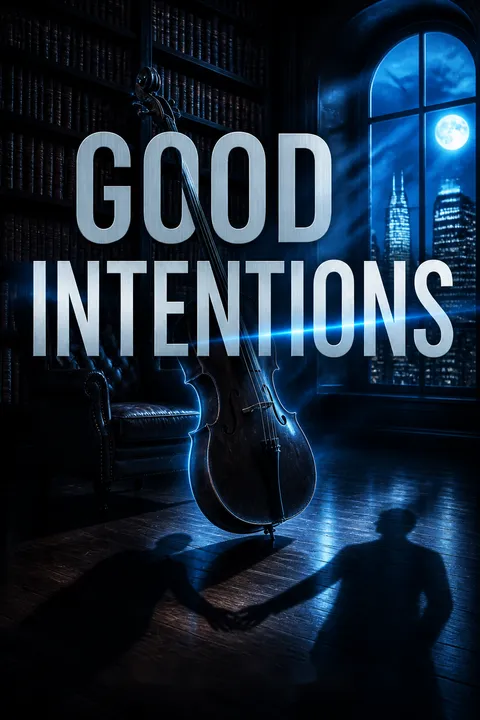
Music as shared languageGabe’s cello represents both the career interrupted by his injury and the disciplined work required to reclaim it. Playing first at the symphony, then in Marcus’s library, and later with a jazz quartet lets music carry emotional information that Gabe struggles to state directly. His pendant’s treble clef becomes a personal emblem, and Daniela’s image of bass and treble offers Marcus a way to understand their differences as complementary rather than competitive. The music is not only romantic symbolism; it remains Gabe’s independent vocation and a concrete force shaping their choices.
The negotiated weekends
Closeness through shared playThe weekend stays begin as a way to repair conflict, but Gabe and Marcus gradually use them to experience each other’s ordinary worlds. Ramen replaces Marcus’s polished hospitality; axe throwing, cheap shots, and a New York jazz club challenge his controlled routines. These activities create situations in which Marcus must follow rather than direct, while Gabe can show him a life beyond high-status work. Their playful arrangements also expose how each uses rules to ask for closeness without having to request it plainly.
The late disclosures
Silence delaying choiceThe first major breach occurs when Marcus withholds his New York interview from Gabe. Later, both men repeat a milder version of the same pattern by hiding their love to avoid pressuring the other over the move. Calls, texts, and conversations with Ryan and Abby show how easily concern becomes avoidance. The pattern gives the story its emotional suspense: the question is not whether the men care, but whether they will share the information needed to choose a future together. Gabe’s music eventually provides the setting for the direct confession that their earlier conversations lacked.
Chicagoverse Series



Download PDF
Download EPUB
.epub digital book format is ideal for reading ebooks on phones, tablets, and e-readers.








