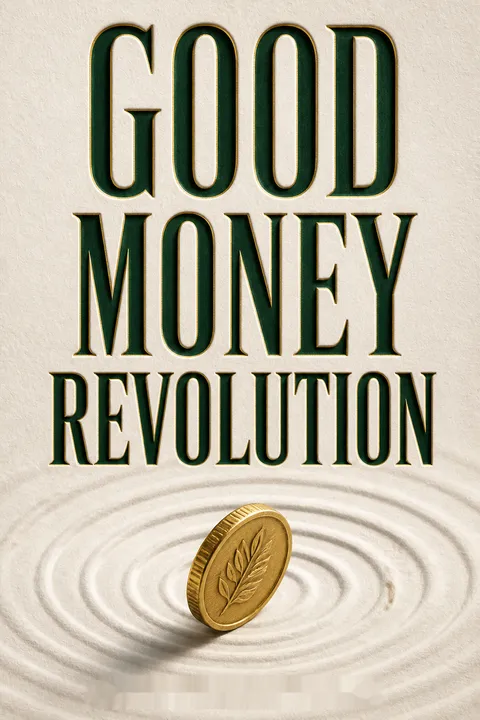


Key Takeaways
Treat money as a tool for impact, then build more of it deliberately
Money can serve good. Derrick Kinney grew up with limited means, but his mother never taught him that money was shameful or that wealthy people were automatically bad. As a teenager, he tracked his earnings, worked multiple jobs, and gave part of his paycheck to his church and a local food pantry. He came to see money not as a badge of status, but as a practical way to help people and widen choices for his family.
The purpose changes the pursuit. Kinney’s central argument is that earning more and living generously can reinforce each other. A larger income can provide security and options, while intentional giving connects work to a cause beyond personal consumption. Money itself is morally neutral; its consequences depend on the choices of the people who control it.
What's compelling is the book’s refusal to make financial ambition and moral concern opposites. Money expands the scale of what a person can do, but it does not supply the values that guide those actions. That distinction makes the case stronger than a simple defense of wealth. It also keeps the responsibility with the owner: earning more is not automatically virtuous, and generosity does not erase harmful business practices. The useful question is not whether money is good in the abstract, but what it enables, who benefits, and whether the means of earning it match the ends.
Use income for security and generosity, not endless upgrades
More has a limit. The book describes a Princeton study of more than 450,000 adults in which income above roughly $75,000 was not associated with greater day-to-day positive emotion. Other studies cited in the book place the income point where happiness gains flatten at different levels, so the figure is not a universal threshold. Still, money can ease strain: paying bills, reducing debt, and affording safer housing or healthier food can improve daily life.
Spending choices matter. In a study discussed by the author, students given five or twenty dollars were assigned to spend it either on themselves or someone else. Those who spent on others reported a greater rise in happiness that day. The lesson is not that every purchase for oneself is wasteful, but that accumulation alone rarely provides lasting meaning.
This distinction helps separate money’s protective function from its status function. Financial security can reduce immediate stress, while repeated upgrades often reset expectations without resolving the deeper desire for satisfaction. The spending experiment offers a concrete alternative: make some financial choices visibly useful to another person. Its limits matter, however. A short-term mood measure cannot define happiness across a lifetime, and giving should not replace adequate personal care or financial stability. The stronger principle is to treat money as one ingredient in well-being, not as a complete substitute for relationships, health, or purpose.
Name the cause your paycheck serves before deciding how much to earn
Purpose gives work a target. Kinney calls a personally meaningful cause a Generosity Purpose. It can be a community problem, an organization, or a person whose needs matter to the giver. The idea is to connect earning and saving to a tangible reason, rather than treating a higher income as an end in itself.
Make the idea operational. The Good Money Framework turns that purpose into a money plan. It asks readers to choose a cause, set a few important financial goals, define a desired income, look for ways to earn more, and create savings, investment, and giving plans. Regular check-ins help reveal whether the plan is working. One client, a manufacturer whose enthusiasm had faded, tied part of his business growth to funding a school he had seen overseas. Three months later, sales were up 20 percent, and the school was nearly funded.
A cause can convert an abstract goal into a source of motivation. In behavioral terms, it gives delayed financial work a more immediate meaning: an extra sale or a monthly contribution becomes connected to a visible outcome. The client’s sales growth is encouraging, but one case cannot show that giving caused the increase. Purpose may energize effort, yet market conditions, execution, and timing also matter. The framework is most useful when the cause is paired with clear financial limits and regular review, so commitment inspires action without turning a charitable aspiration into an excuse for imprudent risk.
Give every dollar a job, from emergency cash to long-term growth
Three levers build capacity. Kinney’s Good Money Levers are saving more, reducing debt, and earning more. They work together: savings provide a cushion, debt payments reduce the cost of borrowing, and higher income creates room for both investing and giving. He recommends automatic transfers so important priorities happen before discretionary spending absorbs the paycheck.
Match money to its purpose. The author describes four investment lanes: accessible cash for near-term needs, relatively stable investments for goals a few years away, diversified long-term holdings for retirement, and a small speculative account for riskier ideas. He also broadens investing beyond financial assets: invest in oneself through learning and reflection, and in others through encouragement, time, or practical support. Market volatility is easier to tolerate when the purpose and time horizon for each pool of money are clear.
The strongest insight here is functional separation. Money needed next month should not be exposed to the same risks as money intended for decades from now. That principle can reduce panic-driven decisions and make financial trade-offs easier to discuss. The author’s traffic-lane image is memorable, but the labels are not a substitute for a tailored portfolio. Risk tolerance, taxes, fees, debt costs, and changing circumstances all affect the right allocation. A small speculative account may also encourage risk-taking, so it only makes sense when essential needs and long-term plans are protected first.
Raise your income by solving valuable problems, not merely demanding more
Pay follows useful contribution. The book advises employees to learn what their organization values, take on responsibilities that address real needs, and make a fact-based case for higher compensation. One engineer, Debbie, researched how the company earned revenue, proposed gaining a useful certification, and suggested a referral payment for bringing in clients. Her employer agreed to a salary increase after the certification and a referral incentive.
Build options before leaping. When advancement is limited, the author recommends exploring a side business based on existing skills or interests. A teacher developed classroom-management materials and became a speaker; a couple turned their talent for trip planning into a small travel business. Kinney urges experimentation and treats failed attempts as information. Leaving a secure job may be right for some, but testing demand and developing a transition plan can make the risk less blind.
This approach treats negotiation as a problem-solving conversation rather than a contest of confidence. It asks the employee to understand the employer’s incentives and demonstrate a contribution that can be recognized. That is more persuasive than a demand detached from evidence. At the same time, pay is not always a clean measure of social value: bargaining power, industry norms, and institutional constraints shape compensation too. The book’s emphasis on individual initiative is energizing, but it should not imply that every wage gap reflects a worker’s failure to add value. Practical agency and structural awareness belong together.
Test your retirement lifestyle before quitting, using a 90-day spending trial
A personal budget beats a slogan. Jim and Ellen received conflicting advice about whether retirement would require half, 80 percent, or 90 percent of their working income. Kinney suggested that they track spending and live on a proposed retirement budget for three months. They adjusted their plan during the trial and discovered they could retire earlier than they had expected.
Plan for the life, not just the account. The Sweet Spot Solution describes a period when children may no longer depend financially on their parents and major expenses, such as a mortgage, may be easing. The author recommends assessing current finances, cash flow, insurance, desired retirement lifestyle, monthly income needs, and the amount one is prepared to save. Couples should compare expectations, since one partner may want travel while the other wants a quieter routine. Test low-cost versions of big plans before committing.
The 90-day trial is powerful because it replaces imagined retirement costs with observed behavior. It also treats retirement as a change in daily life, not merely an account balance. That distinction can uncover disagreements about travel, work, caregiving, and time together before they become expensive surprises. Still, a short spending test cannot capture every future cost or market condition. The book’s suggestion to withdraw 2 to 3 percent of retirement assets annually should not be treated as a universal rule; sustainable income depends on individual circumstances and professional planning.
Replace inherited money scripts with visible practice, not financial perfection
Old beliefs can keep steering. Money Scripts are recurring beliefs about money, often shaped by early experience. Kinney recounts a client, Nancie, who feared a bounced check could lead to jail because, as a child, she had seen a store threaten her father over a similar mistake. Decades later, the old association still triggered panic, even though she had enough money to cover the check.
Teach through what children see. The author argues that children learn from household behavior as much as direct instruction. Parents can discuss budgeting, saving, investing, and giving without pretending to know everything. Kinney’s daughter initially showed little interest in his money lecture, but became curious when he introduced a school business club and a practical challenge. He also recommends sharing appropriate mistakes, so money conversations feel like learning rather than a performance of expertise.
The example shows how a financial reaction can be disproportionate to the immediate event because it carries an older emotional meaning. Naming the belief creates space to respond to the present facts instead of reenacting the past. The family-learning approach is also more realistic than waiting until a parent feels fully qualified. Its boundary is important: openness should be age-appropriate and should not make children responsible for adult anxieties. Modeling calm decisions, admitting uncertainty, and seeking better information can teach sound judgment without requiring parents to present themselves as flawless.
Give before you feel rich, and assign generosity a line in your budget
Start at a sustainable scale. The book offers several ways to make giving concrete: live on 80 percent, save 10 percent, and give 10 percent; or, while paying down debt, live on 70 percent, save 10 percent, direct 10 percent to debt, and give 10 percent. For people with tighter finances, Kinney suggests beginning with 1 percent and increasing the share as circumstances improve. The point is to begin deliberately, not to imitate a percentage that does not fit.
Choose recipients thoughtfully. A People Portfolio is the author’s term for the range of people and causes one may support, including relatives, friends, community organizations, and strangers. Giving can include money, useful items, time, or encouragement. Kinney describes anonymous gifts and family discussions as ways to make generosity a recurring practice rather than an occasional reaction to a request.
A planned giving line turns generosity from a leftover into an intentional choice. The graduated options also recognize that financial capacity differs, which makes participation more accessible than a single prescribed percentage. A useful extension is to combine generosity with recipient knowledge: ask what help is wanted, check whether an organization can use a contribution, and revisit results. The book’s encouragement to give while repaying debt can provide meaning, but it is not an obligation to give at the expense of essentials or urgent high-cost obligations. Sustainable generosity should strengthen agency, not create fresh instability.
Put purpose inside the workday, not only after payday
Ordinary work can help someone. Bea Boccalandro’s idea of job purposing is to reshape a task so it creates a social or environmental benefit. A parking attendant checks customers’ tires for unsafe wear. An administrative assistant, nicknamed TP Tina, collected partly used toilet-paper rolls that janitors would otherwise discard and delivered them to a homeless shelter. The shelter saved money and used some of it for a community activity.
Purpose can support a business. Kinney describes companies that connect products or operations to a cause, including Bombas, which donates an item for each purchase. He also cites an internal Manulife study in which employees who felt their work helped others had 60 percent less turnover than employees who did not. These examples suggest that meaningful work can strengthen engagement and customer relationships, though businesses still need to deliver a reliable product or service.
Job purposing expands the idea of generosity beyond philanthropy budgets. It asks whether existing work can be performed with less waste, more care, or a clearer community benefit. That can give employees a sense of contribution even when they lack control over company strategy. The commercial case deserves a boundary: a cause should not become a thin marketing wrapper for a poor product or harmful practice. Sincere purpose requires credible action and transparency. The best version benefits recipients and workers directly, while any gains in loyalty or sales remain a welcome consequence rather than the sole reason to give.
Plant some giving now, not only in your will
Impact has a time dimension. Kinney contrasts the financial value of allowing money to grow with the immediate value of putting some of it to work for people now. He illustrates the choice with a hypothetical bequest of $10,000 to Doctors Without Borders many years in the future, compared with giving $2,000 today. The smaller present gift could help people sooner and allow them to contribute to their families and communities over time.
Act while needs are visible. The author calls this perspective the eternal economy: the belief that present generosity can create effects that continue beyond the original gift. The image is a short human life followed by a long line of consequences. The practical invitation is to discuss giving with family and advisers, then decide what can be contributed now without neglecting future responsibilities.
The argument makes time part of philanthropy’s value calculation. A gift can matter not only by how large it is, but by when it arrives and what it enables recipients to do. That is a useful corrective to the assumption that waiting always maximizes good because the account balance may grow. Yet immediate giving and future bequests are not opposing moral camps. Endowments can support durable institutions, while current gifts address present needs. The wiser choice depends on the donor’s obligations, the recipient’s capacity, and the kind of impact being sought. Timing deserves the same deliberation as amount.
Analysis
Good Money Revolution combines personal finance, career advice, behavioral coaching, and a moral argument about philanthropy. Its distinctive proposition is not simply that generosity feels good. It is that a chosen cause can reorganize the incentives around earning, saving, investing, and work. This turns generosity from the final destination of surplus into a reason to create surplus in the first place.
That synthesis has practical strength. A person who knows what financial progress is for can translate an abstract target into a concrete commitment, then use budgeting, automation, debt reduction, and career initiative to pursue it. The narrative examples make the approach accessible: clients revive a business by funding a cause, children learn financial judgment through small projects, and a retirement budget becomes real through a test period rather than a rule of thumb. The book is most persuasive when it moves from values to specific behaviors.
Its central tension is the suggestion that generosity can also increase income, business growth, and personal health. The cited experiments support the claim that prosocial spending can improve reported happiness, while business examples show plausible mechanisms such as employee engagement and customer trust. They do not establish that giving reliably produces commercial returns. Keeping the distinction clear protects generosity from becoming a disguised investment strategy. It also recognizes that economic outcomes reflect opportunity, bargaining power, and circumstance, not only individual mindset.
The book’s broader contribution is to frame money as both a private resource and a social instrument. That view avoids the false choice between personal security and care for others, while asking readers to define a defensible balance. Its best test is not whether someone adopts a particular giving percentage or pursues entrepreneurship. It is whether the person can explain what money is meant to accomplish, make choices consistent with that purpose, and review the consequences honestly. Generosity then becomes less a slogan than a disciplined practice.
Review Summary
Good Money Revolution receives mixed reviews, with ratings ranging from 2 to 5 stars. Many readers appreciate the book's fresh perspective on money, emphasizing generosity and purposeful giving. Some find the ideas revolutionary and life-changing, praising Kinney's approach to connecting wealth with meaningful causes. However, critics note redundancy, oversimplification, and a lack of depth in financial advice. The book's focus on families and Christian values resonates with some readers while alienating others. Overall, reviewers agree that the book offers a unique take on money management and philanthropy.
People Also Read








Glossary
Generosity Purpose
Cause guiding your moneyA personally meaningful cause, person, or problem that gives direction to earning, saving, and giving. It may involve a community need, an organization, or someone close to the giver. The purpose is meant to make generosity ongoing and intentional, rather than a one-time response to a request.
Good Money Framework
Purpose-led financial planKinney’s planning approach for connecting financial goals with giving. It guides readers to identify a cause, set priority goals, choose a desired income, explore ways to earn more, plan saving and investing, schedule contributions, and review progress. Its purpose is to turn a general wish to make an impact into a practical money routine.
Good Money Levers
Three wealth-building actionsThe three financial actions Kinney emphasizes: save more, reduce debt, and earn more. He presents them as mutually reinforcing rather than isolated tactics. Saving creates resilience and investment capital, debt reduction limits interest costs, and increased earnings can expand the resources available for financial goals and giving.
Sweet Spot Solution
Personalized retirement catch-up planKinney’s approach to retirement planning, especially for people who may have more capacity to save as children become independent or major expenses decline. It begins with an honest financial assessment, then considers spending, protection, desired lifestyle, monthly income needs, and a realistic savings commitment. The plan is individualized rather than based on a single income-replacement formula.
People Portfolio
People and causes to supportKinney’s term for the range of people and organizations a person chooses to support. It can include family, friends, local groups, charities, and people with promising goals who need practical help. Support may be financial or nonfinancial, such as time, encouragement, useful items, or assistance with education and work.
job purposing
Adding social good to workA practice described by Bea Boccalandro in which a worker adapts one or more job tasks to produce a charitable, equitable, environmental, or other public benefit. The work itself becomes a vehicle for contribution, rather than relying only on donations made outside the workplace.
eternal economy
Giving for lasting consequencesKinney’s perspective that money given in the present can create value that extends beyond the immediate transaction and the giver’s lifetime. It emphasizes the timing and human consequences of charitable gifts, while contrasting current impact with money reserved solely for future inheritance or bequests.
Money Scripts
Learned beliefs about moneyA term associated with financial psychologist Brad Klontz and discussed by Kinney for recurring beliefs about money that are shaped by personal history and family experience. Such beliefs can influence earning, spending, saving, and reactions to financial events. The book encourages readers to identify these learned assumptions and examine whether they still serve them.
FAQ
1. What is "Good Money Revolution" by Derrick Kinney about?
- Money as a Force for Good: The book argues that money is not inherently bad; instead, it can be a powerful tool for positive change when used by good people.
- From Success to Significance: Kinney encourages readers to move beyond personal financial success and use their wealth to make a meaningful impact in their communities and the world.
- Practical Financial Framework: The book provides a step-by-step framework for earning more, saving more, and giving more, all while connecting your financial goals to a greater purpose.
- Mindset Shift: It challenges traditional negative beliefs about money and promotes a mindset that pairs prosperity with generosity.
2. Why should I read "Good Money Revolution" by Derrick Kinney?
- Breaks Money Taboos: The book helps readers overcome guilt, shame, or confusion about wanting to make more money and shows how wealth can be used for good.
- Actionable Steps: Kinney offers practical advice and exercises for improving your financial situation, regardless of your starting point.
- Purpose-Driven Wealth: It teaches how to align your financial goals with causes you care about, making your pursuit of wealth more fulfilling.
- Inspiration and Motivation: Through real-life stories and interviews, the book inspires readers to believe they can achieve both financial freedom and significance.
3. What are the key takeaways from "Good Money Revolution" by Derrick Kinney?
- Money is Good: The core message is that money, in the hands of good people, leads to good outcomes and should not be vilified.
- Generosity Fuels Wealth: Giving is not just a moral act but a practical strategy that can actually help you make more money and find greater satisfaction.
- The Good Money Framework: Kinney’s seven-step framework helps readers discover their "Generosity Purpose," set financial goals, and create a plan for earning, saving, and giving.
- Mindset Matters: Changing your beliefs about money—from scarcity and fear to abundance and purpose—is essential for lasting financial and personal transformation.
4. How does Derrick Kinney define the "Good Money Framework" in "Good Money Revolution"?
- Seven-Step Process: The framework includes discovering your Generosity Purpose, setting top financial goals, determining desired income, reviewing options to earn more, creating a saving/investing plan, implementing a generosity strategy, and tracking progress.
- Purpose-Driven Planning: Each step is designed to connect your financial actions to a cause or purpose that excites and motivates you.
- Practical Exercises: The book provides fill-in-the-blank exercises for each step, making the framework actionable and personalized.
- Continuous Improvement: Regular tracking and family discussions are encouraged to keep your financial and generosity goals aligned and evolving.
5. What is the "Generosity Purpose" concept in "Good Money Revolution" by Derrick Kinney?
- Personal Cause Connection: Your Generosity Purpose is the specific cause, injustice, or need that you feel passionate about and want to support with your money.
- Motivation for Earning: Identifying a Generosity Purpose gives you a compelling reason to earn more, as your increased income directly supports something meaningful.
- Practical Implementation: The book guides you to articulate your Generosity Purpose and integrate it into your financial planning and daily work.
- Cycle of Giving: By connecting your cash to a cause, you create a motivating cycle where earning, saving, and giving reinforce each other.
6. How does "Good Money Revolution" by Derrick Kinney address the relationship between money and happiness?
- Money Buys Happiness—To a Point: Research cited in the book shows that increased income boosts happiness up to a certain level, after which more money doesn’t necessarily mean more happiness.
- What You Do Matters More: True happiness comes from how you use your money, especially when you spend it on others or support causes you care about.
- Generosity and Well-Being: Studies and stories in the book demonstrate that giving money away leads to greater satisfaction, health, and even contagious happiness.
- Purpose Over Possessions: The book emphasizes that fulfillment is found in generosity and impact, not in accumulating more possessions.
7. What are the three "Good Money Levers" in Derrick Kinney's "Good Money Revolution"?
- Save More: Building a habit of saving, automating contributions, and treating your money like a business with every dollar having a job.
- Crush Your Debt: Aggressively paying down high-interest debt, tracking progress quarterly, and using accountability and rewards to stay motivated.
- Earn More: Treating your job like a business, adding value to your company, starting side hustles, and negotiating raises or promotions.
- Lever Synergy: Pulling all three levers together amplifies your wealth-building and generosity potential.
8. How does "Good Money Revolution" by Derrick Kinney suggest you invest your money?
- Three Buckets Approach: Invest for yourself (traditional investments), invest in yourself (education, skills, personal growth), and invest in others (relationships, community).
- Four Lanes Strategy: Diversify your investments across checking/savings (safe), 2-5 year investments (moderate), retirement accounts (long-term growth), and a "play account" (higher risk/speculative).
- Consistency Over Timing: Start investing early and regularly, focusing on long-term goals rather than trying to time the market.
- Align Investments with Purpose: Ensure your investment strategy supports your financial goals and Generosity Purpose.
9. How does "Good Money Revolution" by Derrick Kinney help readers overcome negative money mindsets?
- Identifying Limiting Beliefs: The book explores common negative attitudes about money, such as scarcity, fear, and the belief that money is bad or unattainable.
- Flipping the Script: Kinney provides strategies to reframe these beliefs, encouraging readers to see money as a tool for good and to embrace abundance.
- Family and Cultural Influences: The book discusses how childhood experiences and societal messages shape our money scripts and how to consciously rewrite them.
- Practical Exercises: Readers are guided through self-reflection and action steps to build a healthier, more empowering relationship with money.
10. What advice does Derrick Kinney give in "Good Money Revolution" for teaching kids about money?
- Be an Investor, Not a Spender: Teach kids to evaluate purchases, save, and invest rather than just spend.
- Build Wealth Confidence: Encourage habits like automatic saving, giving, and budgeting from an early age.
- Create Money, Don’t Just Receive It: Inspire entrepreneurial thinking and side hustles, showing kids how to be creators of money, not just recipients.
- Open Conversations: Model transparency about money, share both successes and mistakes, and involve kids in family financial discussions and giving decisions.
11. How does "Good Money Revolution" by Derrick Kinney connect generosity with business and career success?
- Generosity as a Business Strategy: The book shows that companies and individuals who give back attract more customers, retain employees, and build trust.
- Purpose-Driven Branding: Aligning your business or career with a Generosity Purpose differentiates you in the marketplace and creates loyal relationships.
- Case Studies: Examples like Bombas, TOMS, and personal stories illustrate how giving can drive both profit and impact.
- Employee Engagement: Giving at work increases morale, creativity, and retention, benefiting both individuals and organizations.
12. What are the best quotes from "Good Money Revolution" by Derrick Kinney and what do they mean?
- "Money is good, and good people should have more of it." – This encapsulates the book’s core message that wealth in the right hands leads to positive change.
- "Connect your cash to a cause, your money to a movement, your profits to a purpose." – Kinney’s call to action for aligning financial goals with meaningful impact.
- "You reap what you sow." – Emphasizes that generosity and wise financial habits lead to greater rewards, both personally and financially.
- "Failure is not final. It’s the start of a new story." – Encourages readers to see setbacks as learning opportunities on the path to success.
- "The way you’re choosing to use your money can change your family, your health, your wealth, your happiness, your fulfillment, and the world." – Highlights the transformative power of intentional, purpose-driven financial decisions.
Download PDF
Download EPUB
.epub digital book format is ideal for reading ebooks on phones, tablets, and e-readers.








