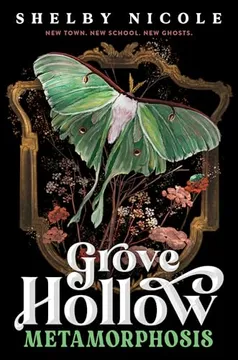


Plot Summary
Blythe House Inheritance
After her grandfather dies, seventeen-year-old Jade Whitney leaves the Oregon coast with her sheepdog, Toby, and arrives in Grove Hollow, New York, to live with Ruth, her grandfather’s estranged twin sister.
The move begins badly when Toby steals a cheerleader’s pastry in the middle of Main Street. Blythe House, Ruth’s eccentric and understaffed mansion, is stranger still, filled with taxidermy and theatrical relics. Over dinner, Ruth explains that the Whitneys once belonged among America’s wealthiest families, a history Jade’s grandfather concealed while raising her simply.
Jade feels betrayed, yet the mansion is now her only home. That night, an unseen presence stirs the room, Toby growls at empty air, and a huge green moth slips away into the dark.
Jade’s arrival gives grief a physical setting: the sea shack and the grandfather who made it home are replaced by a mansion that carries a family history she cannot access. Her grandfather’s silence may have protected her from inherited privilege, but Jade experiences it as another loss, a final secret he took with him. Ruth’s ornate house makes ancestry impossible to ignore, while Jade’s discomfort shows that family identity is not simply received; it must be interpreted. The moth and disturbed room quietly unsettle the boundary between memory and the supernatural before Jade has any reason to trust what she sees.
The Academy's First Impressions
On her first walk to Grove Hollow Academy, Jade pauses at the abandoned Montgomery Manor and sees a young man watching from an upper window. Aubrey Jackson, a sharp-dressed student with white hair, helps Jade up after she falls and walks her to school, where rumors already cast Ruth as a witch.
At a jammed locker, Jade tumbles into rugby player Brad Phillips; their brief, awkward meeting leaves her hoping to see him again. In French class, cheerleader Allison Ashmore demands Jade’s seat and throws her notebook aside, but the teacher sends Allison away.
At lunch, Aubrey introduces Jade to her friends Julian, Wes, and Davy, who call themselves the Misfits and invite her to their secret gathering at Montgomery Manor. Jade accepts, grateful to have been included.
The academy sorts students before Jade can understand its rules. Allison can claim a classroom seat by force, while Brad’s attractiveness and athletic status give him an immediate glow in Jade’s eyes. Aubrey offers a different kind of recognition: she befriends Jade before asking her to prove she belongs. The Misfits’ invitation provides a refuge, though their plan to trespass places Jade between her hunger for connection and her instinct to stay safe. The school’s cliques are more than social decoration. They determine who is protected, who is watched, and whose account of events will be believed.
The Death Card
During Ruth’s late-night gathering with three lifelong friends, Jade watches them read tarot cards and agrees to a reading of her own. The cards suggest two men will enter her life and that she will face a consequential choice; a loose Death card gives the prediction an ominous edge.
The next night, an invisible intruder opens drawers and throws Jade’s possessions across her bedroom, then presses down on her bed before vanishing. Exhausted at school, Jade tells Aubrey what happened. Aubrey offers to spend the night and help watch for the presence.
While Allison humiliates Jade in the girls’ bathroom, Aubrey stands up for her and reveals how the school excuses rich students’ cruelty. Later, with Aubrey asleep nearby, Jade sees the shadowy young man again, then watches the balcony doors close by themselves.
The tarot reading gives Jade a framework for the romantic confusion that is coming, but its warning also names a broader problem: she does not yet know how to distinguish desire from danger. The intruder’s unseen violence turns that uncertainty into a bodily threat. Aubrey’s response matters as much as the apparition. She offers companionship without requiring Jade to prove that the haunting is real, and she defends her against Allison despite the social cost. Jade’s first reliable bond in Grove Hollow therefore forms through shared vulnerability, not through family lineage or popularity.
A Locket Under Floorboards
When the Misfits and their guests break into Montgomery Manor for a night of drinking and Manhunt, Jade explores the neglected rooms rather than staying with the group. She finds old letters, a portrait of a young man, and a damaged floorboard concealing a green beetle-shaped locket. During the search game, Eddie, an older guest who has been drinking heavily, follows her and tries to force a kiss.
Jade escapes into a bedroom and shuts the door on him, cutting his forehead. She injures her ankle on the broken floor and leaves with Aubrey and Julian before the party ends. The man in the photograph is identified as William Montgomery, a member of the family murdered in the house. Jade keeps both the photograph and the strange locket.
The abandoned house is not merely a spooky setting; it is a material archive, with letters and objects preserving the life its history erased. Jade’s discovery makes curiosity consequential: she finds the locket by trespassing, but must also protect herself from a living man who mistakes intoxication for permission. Her escape depends on her own quick action, then on friends who take her injury seriously. The contrast between Eddie’s entitlement and Will’s later attention gives Jade a practical measure of trust. The locket’s beauty and concealment make it tempting, but its meaning remains inaccessible.
The Ghost at Willows
Aunt Ruth takes Jade to Manhattan for clothes, then helps transform her into Cleopatra for a costume party at The Willows. Jade misses Brad’s rugby game in traffic, but attends the party with Aubrey and the Misfits, who disguise themselves as Mötley Crüe.
After Brad kisses her briefly, Allison pours a drink down Jade’s dress. Jade retreats to a balcony, where the Victorian-dressed man she noticed in the ballroom approaches. He identifies himself as William Montgomery, dead for roughly a century, and recognizes the beetle locket from his final memories.
He cannot take it because his hand passes through the metal. Jade promises to meet him the next day. Brad then drives her home, holds her hand, and kisses her again, leaving Jade with both a living boy’s attention and a dead stranger’s urgent request.
Two kinds of recognition collide in the same night. Brad’s kiss answers Jade’s desire to be chosen by someone admired at school, while Will recognizes the object she found and asks her to take his long search seriously. Neither connection is simple: Brad remains tied to Allison, and Will cannot even touch the locket that may change his existence. Jade’s decision to meet Will begins as an act of compassion, but the party’s sequence also exposes how vulnerable she is to being valued through appearance and status. The tarot’s two suitors become real, though their stakes are profoundly unequal.
Sherlock and the Stranded Heir
The next day, Will climbs to Jade’s balcony and admits he has searched the old mansions for decades, though he remembers little of his life or murder. Jade records what he can recall, then follows him through a hidden opening in Montgomery Manor’s wall to a garden his parents created.
Will explains that he is twenty-one in appearance and has spent a century unable to touch living people, leave Grove Hollow for long, or taste food. Their shared grief over lost family makes his isolation legible to Jade, who promises to help him understand the beetle.
Back in the manor, she and Will collect his journal, letters, and a travel trunk. Notes about an 1884 expedition to Mexico and a gold jaguar medallion provide their first evidence that his travels may connect to the locket.
Will’s condition turns time from a resource into a prison. He has had a century to roam, yet his inability to leave Grove Hollow and his fading memories make that apparent freedom hollow. Jade responds not by treating him as a puzzle alone, but by listening to the emotional facts of his existence: his parents, his lost touch, and his interrupted life. Her detective role gives her a way to act on compassion without pretending she can solve grief itself. The garden is especially revealing: a place built for remembrance survives, but its keeper cannot fully recover the memories it was meant to preserve.
The Price of Brad's Secret
At school, Brad grows affectionate in private but cools toward Jade when his rugby friends are watching. Rumors portray Jade as the aggressor after he kisses her at The Willows.
In the old shower room, Brad admits that he and Allison are still officially together: their families expect them to marry, and his father depends on Allison’s banker father for a business partnership. He asks Jade to keep their relationship secret while he works out a way to leave Allison, and Jade agrees.
Soon they go public, but Allison attacks Jade in French class, and Julian receives punishment for defending her. In American History, Mr. O’Connor reveals the Whitney family’s old business feud with the Montgomery railroad interests and the Ashmores. The discovery makes Jade’s new romance part of a much older conflict.
Brad’s secrecy is not just adolescent indecision. His family’s economic dependence gives private desire a public cost, which helps explain his fear without excusing the harm he causes Jade. She accepts the arrangement partly because she wants to believe his feelings outweigh his conduct. Meanwhile, the school converts historical family conflict into present social currency: Jade is judged for a business scandal she did not create. Julian’s punishment for defending her shows how that institution protects the powerful. The section asks whether intimacy can remain ethical when one person’s safety and reputation are purchased with another person’s silence.
Poppet's Painted Face
Jade and Will take the locket to Mr. Willoughby, a retired Harvard historian who recognizes it as an ancient Egyptian scarab associated with rebirth and the afterlife. He agrees to consult a jewelry expert in London.
Back at Blythe House, Jade and Will search the attic for a board to organize their clues. They uncover a portrait of a dark-haired girl whose features resemble Jade’s, and Ruth identifies her as Poppet, a distant Whitney relative erased from family history. Ruth says Poppet murdered the Montgomery family.
Jade cannot bring herself to tell Will that his murderer was her ancestor. She instead gives him a false account of the portrait, preserving their closeness at the cost of his trust. The locket’s possible power now carries a troubling family inheritance.
The investigation alters its moral shape when Jade learns that the past she is trying to repair belongs to her own family’s violence. Her resemblance to Poppet makes inherited history intimate, but not equivalent to inherited guilt. Jade’s lie is motivated by fear of losing Will, which makes it emotionally understandable and ethically corrosive at once. Mr. Willoughby offers knowledge through scholarship, while Ruth offers a family version shaped by shame and erasure. Between them, Jade sees that history is never just evidence; it is also what families choose to conceal and what descendants must decide to reveal.
A Birthday Between Worlds
On Halloween, Jade turns eighteen and spends the evening with the Misfits at The Underground, where Aubrey’s band performs. Will appears in the crowd, and Jade dances with him though no one else can see her partner.
Her friends give her a mixtape and strawberry champagne, while Will later brings her an engraved pocket watch. Back at Blythe House, they bake a cake together, laughing when the old mixer sprays flour across the kitchen. Will’s closeness and the candlelight bring them almost to a kiss, but Jade blows out the flame before they touch.
The next day, Will apologizes and insists the moment meant nothing. Jade agrees, though she is hurt. Their friendship survives, but the boundary between helping Will and loving him has become difficult to maintain.
Jade’s birthday places two forms of belonging beside each other. The Misfits celebrate her as a friend who has earned a place in their group; Will gives her a personal keepsake linked to the life he cannot recover. Their shared cake-making briefly makes their relationship domestic and reciprocal, despite his inability to eat or touch her. The interrupted kiss exposes the limit of that intimacy, and their quick apology does not dissolve what they feel. The pocket watch quietly concentrates the section’s conflict: Jade is entering adulthood while Will remains fixed at the age his life stopped.
The Missing Scarab
After Will warns her that Brad may be using her, Jade rejects his advice and goes on a date with Brad. At a party, they play beer pong, fall into a swimming pool, and move upstairs, where Jade chooses to have sex with him.
Brad removes the scarab and leaves it on the nightstand; afterward, it is gone. When Jade tells Will, he searches The Willows and returns empty-handed. He reveals that he heard Brad’s friends making bets about Jade and learned that Brad kissed Allison on the team bus.
Their argument exposes Jade’s unspoken knowledge: she has also withheld that Poppet killed Will’s family. Will leaves for North Carolina, while Jade ends things with Brad after confirming that he did kiss Allison. Neither relationship can return to the trust it had before.
Jade’s choice is presented as agency, but the morning after makes clear that consent to sex does not guarantee emotional readiness or satisfaction. The lost locket then turns a private decision into a material crisis: an object Jade promised to protect is missing, and Will’s hope depends on it. Both lovers have reasons to distrust her, but the asymmetry matters. Brad concealed his relationship with Allison and kissed her; Jade concealed the truth about Poppet and failed to safeguard the amulet. Her pain comes not from being simply wronged or simply guilty, but from recognizing that she has participated in the concealment she resents.
The Misfits Paint Back
Hurt by Brad and estranged from Will, Jade skips school with Aubrey and the Misfits. The next day they find their David Bowie mural defaced with an insult. When they confront the rugby players and cheerleaders, a fight erupts; Julian is badly hurt, yet the Headmaster punishes the Misfits with in-school suspension through the holiday break and excuses the athletes.
He advises Jade to befriend Allison because their families are prominent. Jade rejects that logic and later helps repaint the mural with a message celebrating difference.
Brad leaves Jade a note explaining that Allison kissed him during a dare, but Jade recognizes that she, too, has hidden the truth when it suited her. Will remains absent. Four weeks pass, and Jade offers Blythe House as the Winter Formal venue after snow collapses the school gym roof.
The school’s response turns its social hierarchy into policy: athletes who attack the Misfits are spared, while the students who object are confined. Jade’s refusal to accept the Headmaster’s proposed friendship with Allison marks a shift from wanting admission into the favored group toward judging what that admission costs. Repainting the mural makes solidarity visible in the same alley where her friends first welcomed her. Brad’s note complicates the breakup without undoing it; his account may be true, but he still withheld it. Jade’s emerging ethics depend on seeing how her own silences resemble the systems she criticizes.
The River Takes Jade
Aunt Ruth transforms Blythe House into a winter ballroom, giving the suspended Misfits a place to stage the formal. Brad attends with a girl Jade assumes is a new date, but she later learns the girl is his cousin. During the dance, Jade spots the missing scarab around Allison’s neck and follows her outside. Allison promises to return it only if Jade gives up Brad, then throws the locket into the river when Jade agrees.
Jade dives after it in the blizzard, and the cold water pulls her under. Will reaches the dock and tries to pull her out with a branch, but it breaks. Brad hears that Jade is missing, jumps into the river, and saves her. The effort leaves Jade in a coma with severe hypothermia; she remains unconscious for five days.
The formal turns the mansion’s inherited grandeur into a stage for choices Jade cannot control. She has offered to surrender Brad, but Allison rejects even that bargain, using the locket to force Jade into a life-threatening act. The river makes the cost literal: Jade’s loyalty to Will’s hope overwhelms her ability to protect herself. Yet the rescue comes from Brad, the person whose behavior she had reason to distrust, while Will can only reach her with a branch that fails. The scene refuses an easy moral sorting of people into saviors and villains. Actions matter, but they do not erase earlier harm.
A Scarab Opens
Jade wakes in the hospital after five days unconscious and learns Brad pulled her from the river. Will has stayed nearby, blaming himself for leaving her after their fight; he admits he traveled to North Carolina to face his grief, then regretted going. Jade explains that Allison threw the scarab into the water.
After her discharge, the locket drops from Jade’s belongings at Blythe House, and its beetle wings open for the first time. Will catches it in his hand, proving he can now hold it. The engraved interior depicts a green man and a winged woman, while the London expert’s letter identifies the green stone as malachite, associated with resurrection. The discovery gives Will a new lead, though Jade is still recovering.
The locket’s return follows Jade’s near-death, but the scene avoids treating survival as a simple reward. Her body has been damaged, Brad has saved her, and Will has confronted the grief that kept him tethered to Grove Hollow. When the scarab opens, its change is relational as well as magical: Will can finally hold the object he has pursued for a century. The new clue suggests that the amulet responds to conditions neither of them understood. Their next task is not merely to identify an artifact, but to discover what its power asks them to risk.
New York, No Return Train
Ignoring her doctor’s instruction to rest, Jade slips out to join Will and buys the Egyptian Book of the Dead in Grove Hollow. Mr. Willoughby tells them his London contact, Frederick Kraus, is in Manhattan for an auction, so they take a train south.
Will confronts his fear of rail travel, a reminder of the family deaths tied to his father’s railroad life. At Stuard’s Auction House, Kraus examines the open scarab, then steals it and orders security to remove Jade.
Will secretly follows him into the back room and uses his invisible presence to frighten Kraus and the guard into letting the locket go. The pair escape, but holiday train service has ended. They spend New Year’s Eve at the Actias Hotel, where Jade confesses that she wants to kiss Will and he admits he has wanted the same.
The journey asks both characters to cross a boundary they have avoided. Jade disregards medical caution because the clue may be time-sensitive; Will boards a train associated with family trauma because he chooses to accompany her. Kraus’s greed shows how scholarly expertise can become possession when an artifact is valued more than the people connected to it. Will’s invisible intervention protects Jade without giving him physical access to her. Stranded in the city, they finally name their attraction, but recognition does not solve the central obstacle. Their closeness makes the coming choice more painful, not less.
The Mirror Claims Will
At midnight, Will finds the scarab’s story in the Egyptian Book of the Dead: Isis used the amulet to reunite with Osiris, whose green body and scattered remains echo Will’s fate. Its images symbolize joined souls, protection, and renewal; the amulet’s power is activated by breath. A green light appears in the hotel mirror, where Isis and Osiris wait for the locket.
Will understands that they have come to claim it and that he must leave with them. Jade begs him to stay, but Will tells her that her life is still ahead of her. He enters the mirror carrying the scarab, and her reflection is left alone. She says goodbye, believing she has lost him for good.
The myth does not promise resurrection as a return to ordinary life. Isis restores Osiris only long enough for their bond to continue in another form, and the mirror offers Will a passage rather than a conventional cure. The story’s central question shifts from how Jade can keep him to whether love can permit his departure. Will’s choice honors the possibility of an afterlife that Jade cannot verify, while her grief makes the cost immediate. His departure resolves his century-long suspension, but the ending deliberately leaves open whether separation is final.
Epilogue
Alone in the Actias Hotel, Jade tries to force her way through the mirror that took Will, but the glass remains solid. Then his broken pocket watch begins ticking. A green light gathers in the mirror, and Isis and Osiris appear with the scarab.
When Jade reaches toward them, her hand passes through the glass. A hand reaches back and clasps hers. The rose signet ring identifies the person on the other side as Will.
The epilogue turns an apparently final farewell into a threshold without explaining what lies beyond it. The watch’s renewed motion links time to possibility: Will’s century of stillness may have ended, but Jade cannot yet know what his return means. More importantly, she no longer waits passively for him to choose her. She reaches through the mirror herself, and the answering hand makes reunion a reciprocal act. The scene preserves the emotional truth of loss while opening a new question about whether love can cross the boundary that separated them.
Analysis
Grove Hollow Metamorphosis makes inheritance both a mystery and a moral pressure. Jade arrives believing that her grandfather’s death has left her with almost nothing, then discovers a mansion, a fortune, and a family history that includes the destruction of Will’s family. These revelations do not make her responsible for her ancestors’ actions, but they force her to choose what to do with knowledge that her relatives tried to bury. The houses embody different relationships to the past: Blythe House is preserved through Ruth’s theatrical excess, while Montgomery Manor decays around Will’s fragmentary memories.
The novel also tests the difference between being desired and being known. Brad gives Jade the recognition she longs for at school, but his secrecy and dependence on family approval repeatedly limit that intimacy. The Misfits offer a less glamorous, more durable form of acceptance, grounded in art, friendship, and shared risk. Will’s bond with Jade begins in investigation but deepens through an understanding of bereavement and loneliness. Because he cannot touch her, their closeness depends on attention and imagination, not physical possession.
The scarab concentrates these questions into an object that can be treated as treasure, evidence, or a passage. Kraus sees something to own; Jade and Will see a chance to understand what was taken from him. Yet the amulet’s power does not let Jade keep Will in the form she wants. His departure makes love an ethical choice rather than a prize: she must recognize his right to seek an ending beyond her reach. The epilogue complicates that ending without undoing its grief. A hand returns through the mirror, suggesting that separation may be a threshold, but the story leaves the nature of reunion uncertain.
Review Summary
Grove Hollow: Metamorphosis receives mostly glowing praise for its immersive 1980s atmosphere, gothic charm, and endearing characters, particularly the ghost Will and eccentric Aunt Ruth. Readers love the nostalgic pop culture references, found-family dynamics, slow-burn romance, and spooky mystery surrounding a cursed locket. Critics note underdeveloped characters, stilted dialogue, and pacing issues. Most reviewers eagerly anticipate the next installment in the series.
Characters
Jade Whitney
The grieving investigatorJade is a quiet, book-loving teenager raised by her grandfather on the Oregon coast. His death sends her to Grove Hollow, where her newly discovered family wealth offers little comfort against the grief and dislocation she carries. She notices details, asks questions, and turns uncertainty into investigation, first at school and then in the history of Montgomery Manor. Jade wants to belong without having to become someone else, yet her longing to be chosen can make her trust people before their actions warrant it. Her growth centers on taking responsibility for her choices, defending the friends who accept her, and learning that love can involve letting someone go.
William Montgomery
The vanished heirWill is a thoughtful, formally mannered young man tied to the abandoned Montgomery estate. He reads widely, sketches birds, and remembers fragments of travel, family, and a life interrupted. His wit can soften his melancholy, but long solitude has made him protective of the few connections he forms. He wants to understand the strange object linked to his past and discover whether his existence can move forward. His relationship with Jade grows through shared books, historical clues, and a mutual recognition of grief. His old-fashioned expectations sometimes clash with Jade’s independence, revealing that tenderness does not automatically make him right.
Brad Phillips
The celebrated rugby captainBrad is Grove Hollow Academy’s attractive, popular rugby captain, accustomed to being watched and admired. His ease around teammates contrasts with his awkwardness when Jade first meets him. He is drawn to her, but his relationship with Allison and his family’s dependence on her father complicate his choices. Brad wants to pursue his own desires without paying the social and financial costs that come with defying family expectations. That conflict makes him capable of genuine affection and damaging evasions at once. His relationship with Jade exposes the difference between private tenderness and public courage.
Aubrey Jackson
Jade’s first true allyAubrey is a white-haired, outspoken student who befriends Jade on her first morning and brings her into the Misfits’ circle. She protects her friends fiercely, even when the school punishes them for resisting the wealthy students’ bullying. Her humor, punk style, and eagerness for adventure can disguise her sensitivity to class prejudice and family instability. Aubrey values loyalty, but she also expects Jade to understand the risks of choosing a popular athlete over the people who have stood by her. She offers Jade a model of belonging built on mutual care rather than status.
Ruth Mayfield
The theatrical great-auntRuth is Jade’s great-aunt and the twin sister of Jade’s grandfather. She lives amid theatrical costumes, exotic decorations, cigarettes, and cocktails, and treats an extravagant party as a natural response to almost any problem. Beneath her eccentricity, she is generous and welcoming, giving Jade a home, clothes, and practical support. Ruth also holds the family’s history, including its most shameful secrets, and her accounts reveal how reputation can shape what relatives choose to remember. Her affection makes Blythe House feel less like a museum of wealth and more like a place Jade might inhabit.
Julian Jones
The principled bookwormJulian, called Jean in French class, is a literature-loving member of the Misfits and Aubrey’s cousin. He has experienced the academy’s violence firsthand and knows that the school punishes resistance more readily than privilege. Julian supports Jade when Allison spreads lies and helps organize the Winter Formal. His dry humor and principled loyalty make him a steady presence, though his willingness to confront bullies can bring consequences he cannot control.
Wes English
The Misfits’ steady centerWes is Aubrey’s boyfriend, an artist and musician who plays guitar and sings in the Misfits’ band. He is protective of the group and often handles practical tasks, from arranging rides to organizing their gatherings. His anger at injustice can turn physical, especially when the school’s favored athletes target his friends. Wes sees how quickly people judge students by appearance and status, and he offers Jade a clear-eyed account of why popularity is not proof of character.
Davy Jackson
The fearless cousinDavy is Aubrey’s cousin, an artist and jokester whose easy irreverence helps give the Misfits their distinct character. He reads, paints, and plays drums, and he is willing to confront the academy’s privileged students when they threaten his friends. His humor does not make him careless about their safety; he repeatedly joins the group in defending Julian and Jade. Davy’s creativity and bluntness make him an important counterweight to the school’s rigid social order.
Allison Ashmore
The protected cheerleaderAllison is a wealthy cheerleader and Brad’s longtime girlfriend. She is accustomed to commanding attention and reacts to Jade as a threat to her relationship and standing. Her insults, rumors, and acts of intimidation are reinforced by a school that values her family’s donations. Allison’s privilege helps explain why she expects consequences to fall elsewhere, but it does not excuse the harm she causes. She represents the academy’s polished public image and its willingness to overlook cruelty when it comes from the right family.
Toby
The watchful sheepdogToby is Jade’s large English Sheepdog, a gift from her grandfather and her most tangible link to him after his death. He is affectionate, timid in unfamiliar places, and prone to stealing food, including a cheerleader’s pastry on Jade’s arrival. He reacts to the strange presence in the old houses before Jade understands what she is seeing, serving as a loyal companion whose instincts often register danger first.
Nigel Winslow
Blythe House’s loyal stewardNigel is the elderly, dutiful steward who manages Blythe House and looks after Ruth and Jade. He handles the house’s vast routines despite its reduced staff and his own physical strain. His formal manners and quiet attentiveness make the mansion less intimidating for Jade; he leaves food when she forgets to eat and helps her navigate its hidden rooms. Nigel’s practical loyalty grounds the household’s eccentricity.
Mr. Willoughby
The historian booksellerMr. Willoughby is a retired Harvard professor who runs Grove Hollow’s old bookshop. Curious, generous, and open to unlikely possibilities, he helps Jade identify the scarab and contacts a London expert who can investigate it further. His shop is also a gathering place for students and artists, making him one of the few adults who treats young people’s questions seriously. His knowledge helps the search, though he cannot control how others use it.
Mr. O’Connor
The severe history teacherMr. O’Connor teaches American History with a strict, military bearing. He expects students to follow his rules and uses a lesson on industrial history to expose the Whitney family’s old business scandal. His public method makes Jade bear the weight of actions committed long before her birth.
The Headmaster
The academy’s gatekeeperThe Headmaster represents Grove Hollow Academy’s polished authority. He disciplines the Misfits more harshly than the athletes who provoke them and urges Jade to cultivate Allison’s friendship because of their families’ prominence. His decisions reveal how the school’s ideals of leadership and character bend around money.
Eddie
The intrusive party guestEddie is an older acquaintance of the Misfits’ circle who arrives at Montgomery Manor with alcohol. As he drinks, he ignores Jade’s discomfort and tries to force a kiss. Jade escapes by shutting a bedroom door on him, making his behavior an early warning about the difference between attention and respect.
Jake
Brad’s careless teammateJake is a rugby player and Brad’s friend. He treats the school’s social hierarchy as natural and offers Brad cynical advice about keeping Allison while pursuing other girls. His casual judgments help Jade see the values surrounding Brad, even when Brad does not openly share them.
Plot Devices
The Beetle Scarab
A key to the afterlifeJade finds the green beetle-shaped locket hidden beneath a floorboard in Montgomery Manor. Its connection to Will’s final memories makes it the focus of their investigation. Mr. Willoughby identifies it as an Egyptian scarab, and a London expert links its malachite to resurrection traditions. The locket is eventually lost, recovered from the river, opened, stolen by Frederick Kraus, and reclaimed through Will’s unseen intervention. Its changing accessibility tracks the story’s central question: whether Will can move beyond his suspended existence.
The Whitney and Montgomery Archives
Family history as evidenceLetters, portraits, travel journals, newspaper clippings, and the hidden family painting turn the two neighboring mansions into competing archives. Jade and Will use these objects to reconstruct Will’s expedition and the Whitney family’s connection to the Montgomery murders. Ruth’s account of Poppet demonstrates that family records can be deliberately shaped by shame, while Will’s incomplete memories leave gaps no single document can fill.
The Tarot Reading
A forecast of divided desireRuth’s friend reads Jade’s cards shortly after her arrival and predicts that two men will enter her life and that she will face a consequential choice. A Death card appears as a sign of major change. The reading does not explain what Jade should choose, so it functions less as an answer than as a frame through which she understands her growing attachments to Brad and Will.
Mirrors and Reflections
A threshold between worldsJade first sees Will in reflections and windows, before she can understand his presence. Later, Mr. Kraus’s fixation on a mirror hints at the scarab’s symbolism, and the locket’s interior links the souls of Isis and Osiris through reflection. At the hotel, a mirror becomes the passage Will uses to leave the living world. The epilogue reverses the image when Jade reaches through the glass and a hand reaches back.
Grove Hollow’s Social Order
Privilege shapes the consequencesThe academy’s wealthy families, rugby players, and cheerleaders receive deference that the Misfits do not. Allison can bully Jade with little penalty, the Headmaster protects the school’s public image, and Jade’s family history changes how classmates treat her. The mural and its vandalism make the conflict visible beyond school grounds. This structure ties Jade’s personal search for belonging to the town’s long-standing willingness to excuse people with money and punish those who challenge them.
Download PDF
Download EPUB
.epub digital book format is ideal for reading ebooks on phones, tablets, and e-readers.








