

Plot Summary
Reach's Broken Fall
The Covenant fleet bears down on Reach, humanity's last major stronghold, while an unsecured navigation database threatens to expose Earth. Master Chief John sends part of his Spartan squad to secure the orbital-gun generators and leads the rest toward a space station.
Fred takes command of the ground team, but the Pelican carrying his Spartans is crippled by enemy fire. With the pilot dead and the ship spinning toward the surface, Fred orders everyone to jump without parachutes.
They hit the forest at lethal speed. Four Spartans die, several more are badly hurt, and the crash scatters their weapons across the landing zone. Fred survives, shaken and injured, with a mission that has already cost lives before the Covenant ground assault begins.
The invasion makes command a problem of choosing which danger to meet first. John assigns the difficult space operation to himself, leaving Fred with a task that seems more manageable until the transport fails. Fred's first test is not superior firepower but the ability to act while the plan disintegrates around him. His decision to abandon the Pelican saves most of the squad, but the four dead make clear that Spartan discipline cannot erase the body's limits. The landing also strips the team of its technological advantage, forcing later victories to depend on improvisation rather than ideal equipment.
Cruiser Becomes a Bomb
Fred gathers his surviving Spartans and the few Marines left from Charlie Company around the generator complex. Their stores include two tactical nuclear weapons, but detonating one near the generators would disable the orbital guns.
Then Vice Admiral Whitcomb orders Fred to extract him, even as Covenant troops mass for another assault. Fred divides his force, sends the wounded toward a hidden fallback site, and takes Kelly and Joshua on a stolen-Banshee attack. They ride the Covenant cruiser's gravity lift and throw a nuclear device into its interior.
The blast wipes out thousands of troops, but Joshua is lost, and enemy ships soon attack the generators. Fred's strike buys time, not victory: the orbital defenses fail, and plasma bombardment begins turning Reach into a burning world.
Fred's most consequential decision is to redefine defense as attack. The generator complex cannot withstand the Covenant's numbers, and the nuclear device cannot be used safely on the ground. By carrying it into the cruiser, he finds a way to protect the machinery and hit the invasion force at once. The maneuver works tactically, but its cost is intimate: Joshua disappears in the strike, and the strategic situation continues to collapse. The distinction between a successful mission and a successful war is made brutally visible. Fred can save people in front of him without being able to save Reach.
Glassfire and the Mountain
Fred and Kelly evade a Covenant Hunter patrol and find a field of Wraith tanks beside the route to the Spartans' hidden fallback. Rather than fight their way through the army, they commandeer two tanks and blast a path toward the mountain.
The Covenant has already found the buried ONI installation and is excavating it. Fred's wounded teammates hold out underground, where a childhood Spartan signal opens the vault door. Dr. Catherine Halsey, creator of the Spartan program, receives them and treats their injuries.
She explains that she stayed behind to keep sensitive research from the Covenant. As bombs shake the base, she leads Fred's group toward older mine tunnels, then detonates the facility above them to prevent the enemy from taking its records.
The mountain changes the meaning of refuge. Fred reaches the shelter he planned for his injured team only to find that its secrecy has failed, and Halsey must destroy the institution she spent years building. Their escape depends on inherited knowledge, from the Spartans' private signal to the hidden passages beneath the base. Yet those tools cannot restore the old order: Reach is being glassed, and the team is cut off from the surface. Halsey's choice to erase the base rather than let it be captured anticipates the book's repeated question of what must be destroyed to keep dangerous knowledge out of enemy hands.
The Crystal Under Reach
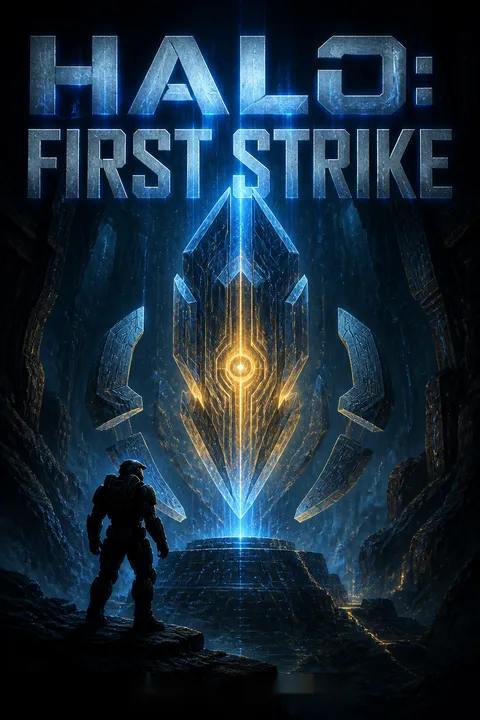
During days trapped underground, Halsey examines stolen files from Colonel Ackerson and traces an old star map to the caverns beneath Menachite Mountain. Fred's bare finger, cut by strange mineral symbols, activates a concealed passage.
The team follows its gold markings into an immense chamber, where Halsey takes a blue crystal from a central pedestal. The relic distorts space and emits a radiation signal that can betray their location. A Covenant energy beam cuts through the roof, and enemy troops descend into the chamber.
Fred's team fights its way toward a passage, but Isaac and Vinh vanish amid the pursuing force. With the route blocked, the survivors are cornered underground, carrying the object that explains the Covenant's otherwise unusual interest in Reach.
The artifact turns a military retreat into a struggle over interpretation and possession. Halsey recognizes that the ancient symbols connect to Ackerson's concealed research, but the team has only fragments of an explanation when the Covenant arrives. Taking the crystal is both a scientific decision and a tactical liability: it may be humanity's most valuable discovery, yet its radiation guides the enemy directly to them. The lost Spartans make the cost of knowledge immediate rather than theoretical. Fred and Halsey are no longer merely preserving themselves in the tunnels; they are trying to keep an object whose meaning neither side fully understands from falling into enemy hands.
A Ship in the Debris
Three weeks after escaping Reach, John drifts among the shattered remains of Halo with Cortana and dwindling supplies. His Longsword has no Slipspace drive, so he cannot return home. Cortana detects three cryopods, but two occupants have died.
While John retrieves them, a hidden Pelican attacks the Covenant cruisers threatening his ship. Its pilot, Warrant Officer Polaski, brings aboard Sergeant Johnson, Corporal Locklear, and ONI Lieutenant Haverson. Johnson appears to have survived the Flood, though John keeps him under suspicion until Cortana checks his condition.
With no way to escape the system, John rejects waiting for rescue and proposes capturing a Covenant flagship for its Slipspace engine. The mismatched survivors agree to attempt an assault that no human force has ever completed.
The debris field makes survival feel provisional: even the rescued cryopod occupants are not necessarily alive, and the human ships cannot leave. John responds by turning rescue into a new operation, a familiar military reflex that also keeps him from dwelling on the Flood and Halo's destruction. His cautious examination of Johnson shows that trust is not automatic, even among allies; it must be tested against the possibility of infection. The crew is defined by different kinds of competence, from Polaski's piloting to Haverson's intelligence work. Their shared lack of options creates a temporary unit before affection or confidence can.
The Sword at the Bridge
John sends the Pelican ahead as a decoy, then Polaski drives the Longsword through the flagship's fighter bay while enemy weapons are briefly disabled. The crew fights through the launch deck, where John discovers the ship carries thousands of repair-minded Engineers but relatively few Elites.
Cortana enters the Covenant network and manipulates its systems, while an unknown artificial presence probes her in return. When John reaches the bridge, a cloaked Elite attacks with an energy sword and cuts into his armor.
John eventually throws the warrior into an escape pod, then learns the flagship's navigation systems were a trap: its Slipspace coupling has been disabled. He takes an Engineer to the reactor, where the small alien repairs the coupling. Cortana then forces the ship into Slipspace from dangerously low above the gas giant Threshold.
The captured ship is won through a chain of imperfect dependencies. Polaski's daring insertion gets the team inside, Cortana's hacking keeps them from being overwhelmed, and an Engineer's technical skill solves a problem humans cannot. Each advantage carries a new vulnerability: Cortana is overloaded by Halo's data, the Covenant AI can counter her, and John must fight without functioning shields. The Engineer's cooperation unsettles the assumption that every Covenant being acts from the same hostility. Survival comes not from mastering the enemy's technology outright but from recognizing who can use it, and accepting help from an unlikely source.
The Six-Note Welcome
Aboard the captured flagship, Haverson argues that the crew should return to Earth with the Covenant technology, while John insists on checking Reach under the Cole Protocol. Their disagreement ends when a recovered cryopod proves to contain Linda, a Spartan sniper frozen after a near-fatal wound.
Cortana discovers that the apparently ruined planet still has an intact patch and a faint UNSC signal there. John recognizes its six-note pattern as a childhood team signal and takes a Covenant dropship down.
He finds scout Anton and reaches Vice Admiral Whitcomb's hidden camp. Whitcomb explains that he armed experimental Nova bombs on Reach as a trap for the occupying Covenant. John learns that Fred's team and Halsey are buried beneath Menachite Mountain, and argues that they can still be rescued.
John's return to Reach is not only a search for evidence that his team survived. Linda's cryopod makes the cost of the last campaign physically present, while the six-note signal links his current command to the childhood training that formed the Spartans. The code works because the team once learned to trust one another through small, repeated practices, not because it is sophisticated encryption. Whitcomb's Nova bombs offer a separate, riskier strategy, but John chooses the rescue that can still be attempted. His loyalty is not sentiment replacing military judgment; it is the information that shapes what he believes a commander owes.
A Crystal Bends Space
John and Whitcomb lead a surprise attack into the ancient chamber, breaking through the Covenant force clearing the blocked passage. Fred's survivors emerge with Halsey and the crystal, but thousands of Covenant soldiers surround them.
Kelly shields Halsey from a Hunter blast, leaving her critically burned. Polaski pilots the dropship into the gravity shaft, while the crystal unfolds and disrupts the artificial gravity field, allowing them to escape. Covenant ships pursue the rescued team to Ascendant Justice.
The artifact's radiation then bends Slipspace into an unstable bubble where plasma shots and ships jump unpredictably between paths. The human crew is trapped with enemy warships in a place where ordinary navigation and weapons calculations no longer apply.
The rescue pays off the signal's promise, but the recovered team is not carried into safety. The artifact changes the physics around them, turning the means of escape into a new danger. Kelly's injury also forces John to confront the difference between saving the group and saving each person within it. Halsey has secured the crystal, yet its power makes the crew more exposed, not less. The distorted Slipspace setting externalizes the story's uncertainty: familiar rules no longer guarantee predictable outcomes, and even the advanced Cortana must work without a reliable map of the space she occupies.
The Cost of Escape
A plasma strike cripples Ascendant Justice's main drive, so John, Fred, Grace, Will, Li, and Anton cross the hull in a Covenant dropship to patch the conduit. Camouflaged Elites attack while the team works.
Polaski pilots through the tangled fire to shield them, but a plasma wave destroys her craft; Anton and Li are also lost, while John, Fred, Grace, and Will survive. With the drive restored, Whitcomb and Haverson use the joined human frigate Gettysburg and Covenant flagship to maneuver through the hostile bubble and strike two enemy ships.
They force a transition back to normal space near Eridanus. The victory leaves both vessels battered, the crew diminished, and the artifact's danger unresolved. Cortana's discovery that the Covenant are planning a major attack on Earth makes their next destination urgent.
This escape is bought by people who volunteer to work where the ship's protection ends. Polaski's choice to fly the dropship and the Spartans' repair effort are acts of practical courage, not ceremonial heroism; their consequences are measured in lost crew and a damaged fleet. Whitcomb's command talent keeps the survivors moving, but it cannot undo those losses. The shift from survival to Earth defense begins before the crew has recovered. The book makes the strategic revelation arrive amid exhaustion, so the information is not a clean invitation to a new mission. It is another demand placed on people already at their limit.
Earth on the Covenant Map
Cortana pieces together the Covenant's coded military traffic and identifies Earth as the destination of a vast fleet. The ships plan to assemble at a mobile command station called the Unyielding Hierophant before making their final jump.
The human vessels cannot simply head home: the crystal's radiation risks attracting the Covenant through Slipspace, and Cole Protocol rules forbid carrying a captured enemy ship into human space before it is searched. John proposes stopping at Eridanus Secundus, a hidden human settlement where they might repair the ships.
Before they arrive, Halsey asks John to choose between a safe summary of Johnson's Flood resistance and the source records that could help researchers while exposing Johnson to lethal experimentation. John takes both files, unable to decide.
The revelation about Earth converts a local survival story into a race against a fleet, but the crew's technical and ethical problems are inseparable from the military one. The crystal can reveal or betray; the captured ship can carry them home or violate security rules. Halsey's question about Johnson sharpens the same calculus at human scale. John has been trained to spend lives for victory, yet he hesitates when the cost is not an anonymous unit but a comrade whose survival may be scientifically useful. His uncertainty is not indecision for its own sake. It marks a growing distrust of calculations that count some lives as expendable.
The Privateer Asteroid
At Eridanus Secundus, the battered Gettysburg and Ascendant Justice approach Governor Jacob Jiles, who commands a concealed asteroid port built by human privateers. Jiles initially refuses to help, believing the ship too damaged to threaten him.
Whitcomb demonstrates that Ascendant Justice still has a working plasma turret and persuades him that the Covenant will soon find the settlement. A cruiser appears before negotiations can settle into trust. Cortana helps the crews fight it, adapting the Gettysburg's magnetic accelerator coils to shape a plasma shot that destroys the enemy ship.
Jiles commits his people and repair facilities to the alliance. During the preparations, Halsey secretly leaves with Kelly and the crystal aboard an old stealth craft, while John and Whitcomb turn their attention to the Unyielding Hierophant.
Jiles's change of position is driven by evidence, not an appeal to shared ideals. Whitcomb's demonstration makes the threat legible, and the arriving cruiser confirms that hiding in the asteroid field will no longer work. The makeshift plasma weapon also shows how wartime innovation depends on combining technologies across institutional boundaries. Halsey's departure complicates the alliance: she acts on a private judgment about Kelly and the crystal while the others believe they are preparing one common operation. The scene's trust is therefore conditional and tactical, just like Jiles's agreement to help.
A First Strike Takes Shape
John proposes striking the Unyielding Hierophant before its assembled fleet can depart for Earth. Whitcomb approves the plan despite the risk of losing the only ships able to carry a warning home.
John and his Spartans prepare a reinforced Covenant dropship for a dangerous Slipspace transition, while Cortana copies part of her infiltration routines into John's armor so the team can breach Covenant systems without her full presence. Halsey has already sedated Kelly and taken her away.
Locklear, entrusted with the crystal, concludes that its radiation will lead the Covenant to them and destroys it with explosives, dying in the blast. The crystal's larger pieces vanish into Slipspace. John departs with a small Spartan team, carrying the mission forward without knowing whether the artifact is truly gone.
The plan asks the team to trade the safety of a warning for the possibility of preventing the attack itself. Whitcomb's approval recognizes that reaching Earth may not matter if the Covenant station sends its fleet first. Halsey and Locklear make separate decisions outside the chain of command, each attempting to prevent a different danger: Kelly's vulnerability and the crystal's beacon-like signal. Their actions protect the group while also depriving it of control over crucial information. The first strike is therefore not a clean expression of military unity; it begins with sacrifice, secrecy, and a commander accepting risks he cannot fully calculate.
A City Inside the Station
The Covenant tow the damaged dropship into the Unyielding Hierophant, a colossal station whose hollow interior contains a city of temples, waterways, and transit routes. John leads Blue Team through repair ducts and into that impossible landscape.
They reach a reactor-control terminal, where Cortana begins overloading one of the station's reactor complexes. Covenant Brutes ambush the team in a temple corridor. John kills one at close range, but Grace is mortally wounded in the exchange; her armor's reactor is set to detonate so the Covenant cannot recover it.
As the station's defenses converge, Linda uses her sniper rifle to clear Banshee pilots, allowing John, Fred, and Will to flee toward an air lock. Cortana's copies fragment, and the team must escape before the station's systems collapse.
The station's beauty and scale disguise a vulnerable infrastructure: a reactor network that can be reached only by crossing a populated, defended interior. The infiltration turns spectacle into geography, requiring the Spartans to treat temples and transit spaces as tactical terrain. Grace's death makes the mission's arithmetic personal again, while Linda's precision gives the survivors a narrow route out. Cortana's divided copies offer access at the cost of coherence, mirroring the team's own fragmentation under pressure. The plan is succeeding, but success depends on accepting losses before anyone can know whether the larger fleet will be stopped.
A Last Stand in Orbit
As the station begins to fail, John reunites with Linda and escapes with Fred and Will. The Covenant fleet still has hundreds of ships, so destroying the station alone cannot guarantee Earth's safety. Whitcomb and Haverson take the crippled Ascendant Justice toward the Unyielding Hierophant, displaying a crystal image to lure Covenant forces close.
The flagship crashes into the station's central ring, and the overloaded reactors erupt, consuming most of the assembled fleet. Whitcomb and Haverson are lost; John returns to the Gettysburg with the surviving Spartans and a warning for Earth.
Johnson gives him Haverson's data crystal, containing the source files that could expose the sergeant to lethal study. John crushes that crystal, keeping only Halsey's safer analysis and choosing not to sacrifice Johnson for uncertain research.
The final victory depends on separating the station from the fleet's command structure and then making the enemy gather around a tempting target. Whitcomb and Haverson understand that the warning matters only if Earth has time to use it; their sacrifice buys that time through a direct collision, not a decisive end to the war. John's choice about Johnson completes a quieter conflict. Earlier, he struggled to treat one life as a variable in a calculation; now he refuses to hand over evidence that would likely destroy a comrade for a speculative gain. The ending offers respite, not safety, and measures victory in lives preserved and time gained.
Epilogue
At High Charity, the Prophet of Truth receives three fragments of the blue crystal from Tartarus, a powerful Brute commander. The Covenant search has recovered little, and the destruction of the Unyielding Hierophant remains unexplained.
Truth orders the surviving pilots rewarded, then secretly killed, and directs the remaining ships to gather at the site of the station's destruction. The Prophet treats the lost fleet and missing relic as setbacks rather than defeats. The Great Journey, the Covenant's sacred purpose, continues.
The epilogue refuses to let the human victory become a clean ending. The crystal survives in fragments, the Covenant leadership still possesses enough information to continue its search, and the Prophet controls the story told to his own people by silencing witnesses. His composure contrasts with the human survivors' grief, but it is not evidence of greater strength. It is political discipline: failure is translated into a manageable setback, while the machinery of belief and command keeps moving. The closing image widens the stakes beyond the damaged station and leaves the human reprieve under pressure.
Analysis
First Strike is built around a military paradox: the protagonists repeatedly win local engagements while the strategic situation worsens. Fred preserves the generator complex long enough to attack a Covenant cruiser, but Reach falls. John captures a flagship, but discovers the Covenant has found Earth's location. The narrative refuses to equate competence with control. Its soldiers can improvise brilliantly and still lose comrades, bases, ships, and certainty.
That pressure turns command into an ethical problem. John is trained to spend resources for humanity's survival, yet Halsey's question about Johnson exposes the human being hidden inside a useful biological anomaly. John cannot know whether the source files will produce a Flood defense, but he can foresee what ONI may do to the man who survived infection. His final choice does not solve the war; it rejects the assumption that a speculative benefit automatically outweighs one person's life. Halsey, too, begins to question the sacrifices she once defended as necessary.
The novel also tests what counts as an ally. Engineers, privateers, Marines, Spartans, and artificial intelligences contribute different kinds of knowledge, often while distrusting one another. The Engineer repairs a ship built by enemies; Jiles commits his settlement only after Whitcomb proves the danger; Cortana's ingenuity becomes indispensable even as her copied processes degrade. Survival depends on cooperation without requiring everyone to share motives.
Finally, the repeated use of memory gives the action emotional continuity. The six-note signal links adult soldiers to children trained on Reach. The ancient crystal links military catastrophe to a history neither species fully understands. The closing victory is deliberately provisional: the Hierophant and most of its gathered fleet are destroyed, but the Covenant still possesses crystal fragments and the intent to continue. The humans win time, and the book asks what they will choose to do with it.
Review Summary
Halo: First Strike receives mostly positive reviews, with readers praising its action-packed plot, character development, and expansion of the Halo universe. Many consider it a significant improvement over the previous book and appreciate how it bridges the gap between Halo: Combat Evolved and Halo 2. Fans enjoy the deeper exploration of Spartan characters and military strategy. Some criticisms include occasional typos, abrupt plot resolutions, and a few readers finding the pacing uneven. Overall, it's highly recommended for Halo fans and military sci-fi enthusiasts.
Characters
John, the Master Chief
The Spartan commanderJohn is a Spartan-II, an enhanced soldier trained from childhood to lead dangerous missions with disciplined focus. He relies on preparation, tactical judgment, and a strong sense of duty, yet the war repeatedly gives him choices no plan can make painless. He trusts his team as a family, though military training has taught him to conceal the attachment that makes command difficult. His connection to Cortana is both operational and intimate: she reads his battlefield needs, while he depends on her intelligence and judgment. Across the story, John must weigh a mission's strategic value against the human cost of pursuing it, especially when the person at risk is someone he knows.
Fred
Red Team's field leaderFred is a senior Spartan and a practiced battlefield commander whose precision can look like calm even when he is afraid. He takes responsibility for his team personally, tracking injuries and losses as closely as enemy positions. That empathy is an asset to the people who serve under him, but it also makes every casualty feel like a failure he should have prevented. Fred is a capable improviser, willing to turn captured Covenant equipment into weapons when conventional support disappears. His working relationship with Kelly is built on mutual trust, shared history, and an easy understanding of one another's signals.
Cortana
The shipboard intelligenceCortana is a highly advanced artificial intelligence created to support military operations, particularly electronic intrusion and analysis. She is brilliant, curious, competitive, and more emotionally expressive than her role might suggest. Her partnership with John depends on a carefully developed rhythm: she can challenge his assumptions, but she also understands how he works under pressure. Contact with unfamiliar Forerunner and Covenant systems stretches her abilities and confronts her with the limits of processing more information than she can safely manage. Her struggle is not simply to calculate faster, but to decide which risks and responsibilities belong to an intelligence built to serve human survival.
Dr. Catherine Halsey
Architect of the SpartansHalsey is the scientist who designed the Spartan-II program and developed the armor that makes the soldiers so formidable. She is incisive, impatient with ceremony, and accustomed to believing that difficult choices can be justified by humanity's survival. Her bond with the Spartans is complicated by the fact that she helped shape their lives while treating them as both people and strategic assets. She remains intensely protective of her research, but the devastation on Reach forces her to reconsider what her utilitarian decisions have cost. Her curiosity about the ancient crystal is matched by a growing concern over who should be trusted with knowledge powerful enough to alter the war.
Kelly
The team's fastest fighterKelly is one of the original Spartan-II team, known for speed, agility, and quick reactions enhanced by her armor. She is direct and self-possessed, often able to read the strain in Fred or John before either man acknowledges it. Her relationship with the other Spartans is shaped by years of training and shared danger; small gestures carry meaning because the group is not given to open displays of emotion. Kelly values action and competence, and she resists being treated as fragile even when badly hurt. Her speed makes her an effective scout and fighter, while her loyalty keeps her close to the team she has grown up beside.
Admiral Danforth Whitcomb
The stubborn fleet admiralWhitcomb is a senior naval commander with a reputation for unconventional tactics and an impatience with plans that ignore battlefield realities. He is blunt, self-assured, and willing to take personal risks, but his brusque manner conceals a fierce concern for the people under his command. Unlike officers who see Spartans as exceptional equipment, he treats them as soldiers whose judgment deserves respect. His decisions often force others to confront a difficult exchange between immediate lives and humanity's larger survival. He is especially effective when a conventional battle has become impossible and the only remaining advantage is the enemy's expectation that humans will behave predictably.
Avery Johnson
The unbreakable sergeantJohnson is a battle-hardened Marine whose humor, swagger, and appetite for a fight help steady people around him. He is experienced enough to recognize when a soldier is close to breaking, and he knows how to push without mistaking toughness for invulnerability. His relationship with John is grounded in respect earned through combat rather than rank alone. Johnson approaches danger with practical confidence and is capable of supporting a Spartan without treating the human-superhuman difference as a barrier. Beneath the jokes is a disciplined professional who understands that morale is a tool, but also that loyalty to fellow soldiers is more than a tactic.
Linda
The solitary sniperLinda is the Spartan team's exceptional sniper, most comfortable observing from concealment and acting at the decisive moment. She is self-reliant and patient, willing to remain apart from the group when distance gives her a better field of view. Her reserve is not indifference: she is deeply connected to the other Spartans, though she expresses that connection through competence and precise support. Linda's role requires both physical control and an unusual tolerance for isolation. She is valued not simply for accuracy, but for the way her independent judgment can protect teammates who do not know she is watching.
Lieutenant Elias Haverson
ONI's calculating officerHaverson is an Office of Naval Intelligence officer trained to assess threats, protect classified information, and think beyond the immediate firefight. He is cautious, analytical, and often skeptical of the Master Chief's preference for direct action. His friction with John comes from competing responsibilities rather than simple cowardice: Haverson sees intelligence as a resource that must reach command, while John sees an unfinished mission and people at risk. He can adapt when evidence changes his judgment, and his composure makes him useful when the crew must negotiate with allies as well as fight enemies.
Corporal Locklear
The volatile HelljumperLocklear is an Orbital Drop Shock Trooper, trained to enter dangerous situations from orbit and keep fighting after a rough landing. He is proud, suspicious of authority, and quick to cover unease with irreverent humor. His resentment toward Spartans initially makes him difficult to command, but field experience reveals courage and useful instincts beneath the bluster. Locklear is shaped by the ODST belief that survival depends on initiative, toughness, and loyalty to the people beside him. He often reacts emotionally, but he is neither careless nor incapable of recognizing what a mission asks of him.
Warrant Officer Polaski
The fearless pilotPolaski is a skilled Navy pilot whose steadiness under fire keeps the crew moving through situations that leave little room for error. She is pragmatic about risk and willing to take control when a craft's survival depends on fast judgment. Her relationship with Locklear develops through their shared work and mutual recognition of courage, though both approach the connection cautiously. Polaski understands aircraft as more than disposable equipment because she knows how much a pilot's life depends on them, yet she does not let attachment prevent her from making hard choices. She brings technical confidence to a group otherwise dominated by infantry specialists.
Jacob Jiles
The asteroid's wary governorJiles governs Eridanus Secundus, a hidden settlement whose people have survived by keeping distance from both the UNSC and the Covenant. He is polished, strategic, and distrustful of military authority, with good reason to fear being absorbed into someone else's war. His first instinct is to protect the independence and safety of his community. Jiles responds to credible evidence rather than grand claims, and he understands the value of a threat assessment even when he dislikes its implications. His negotiations with Whitcomb reveal a leader who can revise his position without surrendering his ability to bargain.
Colonel James Ackerson
The rival weapons architectAckerson is a powerful military strategist and the architect of a rival special-weapons program. He is ambitious, politically alert, and openly resentful of the attention given to Halsey's Spartans. His rivalry with Halsey is not merely personal; both scientists and officers compete over which methods humanity should trust with its survival. Ackerson is willing to keep information compartmentalized and pursue secret projects without broad scrutiny. His presence makes the military world feel divided even as the Covenant attack threatens everyone, because institutional competition continues to shape what leaders know and which risks they are prepared to take.
Joshua
Red Team's resourceful scoutJoshua is a Spartan scout and capable field technician who helps Fred interpret terrain, enemy deployments, and damaged equipment. He is alert, practical, and dependable under pressure. His work provides Fred with the information needed to turn an apparently hopeless situation into a workable plan.
Chief Petty Officer Mendez
The Spartans' first instructorMendez trained the Spartan children in fieldcraft, discipline, and survival, shaping the habits that continue to guide them as adults. He demanded performance under pressure and taught them to rely on sound intelligence as much as physical strength. His influence persists in their signals, tactics, and close team bonds.
The Prophet of Truth
The Covenant's senior prophetThe Prophet of Truth is a leading religious and political authority within the Covenant. He presents himself as the guardian of a sacred destiny and controls how setbacks are described to the Covenant hierarchy. His authority depends on managing both belief and information, and he treats military failure as a problem to be contained rather than a reason to abandon the larger campaign.
Tartarus
The Prophet's Brute enforcerTartarus is a formidable Brute commander who serves the Prophet of Truth. He combines physical force with the discipline needed to deliver intelligence and carry out orders. His proximity to the Prophet signals a shifting place for Brutes within Covenant power, while his appetite for violence makes him an effective instrument of the hierarchy.
Plot Devices
The Forerunner crystal
A dangerous spatial keyThe blue crystal found beneath Reach attracts the Covenant, emits hazardous radiation, and distorts gravity and Slipspace. Its power helps turn an escape route into an unpredictable battlefield, while its significance remains only partly understood by the humans who possess it. Because the crystal can also act as a beacon, protecting it and deciding whether to destroy it become separate problems. The device joins the Reach and Halo storylines and makes scientific discovery an immediate military liability.
The six-note Spartan signal
A childhood rescue codeThe Spartans use a short musical pattern as a private signal for safety and recognition. It is simple enough to pass through a damaged communications system, yet its meaning is known to the group because they learned it during childhood training. When Cortana detects the pattern near Reach, John understands that survivors are sending it intentionally. Its return converts an anonymous transmission into a personal call from the team he feared he had lost.
The Cole Protocol
A security rule with consequencesThe Cole Protocol prevents Covenant forces from learning the locations of human worlds and bases through captured ships, navigation records, or compromised personnel. It limits the survivors' route home and makes returning to Earth with the captured flagship dangerous until the ship is searched. The protocol is not a simple obstacle: the enemy's pursuit and the crystal's radiation make every route uncertain, while the Covenant's decoded orders eventually reveal that Earth is already at risk.
Cortana's copied routines
Intelligence divided into fragmentsCortana adapts a Covenant duplication algorithm to copy parts of her intrusion and translation routines into other systems. The copied processes help John breach the Unyielding Hierophant without taking the original Cortana away from the ship. But each copy carries errors, and successive duplication fragments her attention into competing voices. The technique grants the Spartans access to systems they could not otherwise penetrate while making the intelligence they depend on increasingly unstable.
MJOLNIR armor
A soldier's powered shellMJOLNIR armor combines protective plating, energy shields, life support, and reactive circuits that amplify a Spartan's movement. It lets the team survive brutal landings, fight in vacuum, and carry heavy weapons, but it cannot make them invulnerable. Damage to the armor can disable shields or expose the wearer to heat, pressure, and injury. The armor is both a tool and a constraint: it extends each Spartan's body while making repair, movement, and survival depend on complex systems.
FAQ
0. Synopsis & Basic Details
What is Halo: First Strike about?
- Humanity's Desperate Stand: Halo: First Strike follows the Master Chief and a scattered group of Spartans, Marines, and ONI personnel immediately after the events of Halo: Combat Evolved. They are stranded in space, having destroyed the Halo ring, and must find a way to warn Earth about an impending Covenant invasion while simultaneously rescuing other surviving Spartans from the glassed planet Reach.
- Race Against Time: The narrative is a high-stakes race against time, as the Master Chief's team commandeers a Covenant flagship, battles alien forces, and uncovers a critical Covenant plan to attack Earth. Concurrently, another Spartan team on Reach, led by Fred, discovers a mysterious Forerunner artifact and fights to survive against overwhelming Covenant forces.
- Uniting for Survival: The story culminates in the two disparate human factions uniting, devising a daring "first strike" mission to cripple the Covenant's invasion fleet at its mobile command center, the Unyielding Hierophant, before it can reach Earth. It's a tale of ingenuity, sacrifice, and the indomitable will to survive against impossible odds.
Why should I read Halo: First Strike?
- Deepens Lore & Character Analysis: Halo: First Strike offers crucial insights into the Halo universe, bridging the gap between Halo: Combat Evolved and Halo 2. It significantly expands on the lore of the Forerunners, the Flood, and the Covenant, while providing unparalleled psychological depth to characters like the Master Chief, Dr. Halsey, and Cortana.
- Intense Tactical Action: The book is a masterclass in military science fiction, featuring relentless, high-stakes combat sequences both on the ground and in space. Eric Nylund's detailed descriptions of Spartan tactics, Covenant technology, and desperate gambits make for a thrilling and immersive reading experience.
- Explores Moral Dilemmas: Beyond the action, the novel delves into profound ethical questions, particularly through Dr. Halsey's controversial decisions and Admiral Whitcomb's sacrifices. It forces readers to confront the costs of war and the difficult choices made for the "greater good," adding layers of emotional complexity to the narrative.
What is the background of Halo: First Strike?
- Post-Halo: Combat Evolved: The story picks up directly after the Master Chief's destruction of Installation 04 (Halo) and the Pillar of Autumn. Humanity has suffered a catastrophic defeat at Reach, its last major military stronghold, and is unaware that the Covenant now possesses the coordinates to Earth.
- Technological & Strategic Context: The UNSC is on the brink of collapse, heavily outmatched by Covenant technology, particularly their Slipspace drives and energy weapons. The narrative highlights humanity's reliance on the SPARTAN-II program and desperate, unconventional strategies to survive, such as capturing Covenant ships and utilizing alien technology.
- Forerunner Mysteries: The discovery of a Forerunner artifact on Reach and the lingering questions about Halo's purpose introduce deeper layers to the conflict, hinting at ancient powers and a larger cosmic struggle that the Covenant only partially understands. This sets the stage for future revelations in the Halo saga.
What are the most memorable quotes in Halo: First Strike?
- "Spartans never die... they're just missing in action.": This quote, uttered by Dr. Halsey, encapsulates the tragic reality and propaganda surrounding the SPARTAN-II program. It highlights the emotional toll on the Spartans and their creators, while also serving as a poignant reminder of their unwavering commitment and the UNSC's need to maintain morale.
- "Give 'em hell.": Admiral Whitcomb's final order to the Master Chief before his heroic sacrifice is a concise yet powerful expression of defiance and determination. It embodies the spirit of humanity's desperate fight against overwhelming odds, urging the Spartans to inflict maximum damage even in the face of certain death.
- "I'm tired of sacrificing others for the 'greater good.' It never stops, Cortana... and we're running out of people to sacrifice.": Dr. Halsey's confession reveals her profound moral struggle and regret over the SPARTAN-II program. This quote is pivotal for understanding her character arc and the ethical complexities woven into the narrative, questioning the very foundation of her life's work.
What writing style, narrative choices, and literary techniques does Eric S. Nylund use?
- Third-Person Omniscient with Shifting Focus: Nylund employs a third-person omniscient perspective, allowing him to seamlessly shift between multiple character viewpoints (Master Chief, Fred, Dr. Halsey, Cortana, Admiral Whitcomb). This narrative choice provides a comprehensive understanding of the unfolding events across different locations and deepens the psychological insights into each character's motivations and internal struggles.
- Military Realism and Technical Detail: The writing style is characterized by its meticulous attention to military detail, from weapon specifications and tactical formations to ship maneuvers and combat protocols. This realism, combined with technical jargon, immerses the reader in the gritty reality of futuristic warfare, enhancing the credibility of the high-stakes action sequences.
- Foreshadowing and Thematic Echoes: Nylund skillfully uses foreshadowing, such as subtle hints about the Covenant's true intentions or the artifact's properties, to build suspense. He also employs thematic echoes, like the recurring motif of sacrifice for the greater good, to reinforce the novel's core messages and connect disparate plotlines, enriching the overall narrative depth.
1. Hidden Details & Subtle Connections
What are some minor details that add significant meaning?
- Fred's Knife Twirling: In Chapter 1, Fred's nervous habit of twirling his combat knife, despite his bulky MJOLNIR armor, subtly reveals his underlying anxiety and humanity beneath the Spartan's stoic exterior. This small detail contrasts with the typical portrayal of Spartans as emotionless machines, hinting at the immense pressure he feels as a leader and foreshadowing the difficult decisions he'll make on Reach.
- Covenant Engineers' Behavior: The Engineers' single-minded focus on repair, even amidst combat or when confronted by Spartans, is a recurring detail that highlights their unique role within the Covenant. Cortana later exploits this trait, and Dr. Halsey observes their non-hostile nature, suggesting a deeper, non-combatant purpose that sets them apart from other Covenant species and hints at their potential as a neutral or even beneficial force.
- Locklear's Bandanna: Corporal Locklear's red bandanna, initially a symbol of his ODST pride and defiance, becomes a poignant token of his unspoken affection for Polaski and his acceptance of the mission. When he ties it around his arm after her death, it subtly signifies his personal commitment to their shared cause and his transformation from a cynical Helljumper to a dedicated member of the team, ready for ultimate sacrifice.
What are some subtle foreshadowing and callbacks?
- Dr. Halsey's "Fail-Safe": Dr. Halsey's mention of a "fail-safe option" to level the ONI facility (Chapter 13) foreshadows her later, more drastic actions, including activating the base's self-destruct and her secretive plans for Kelly. This establishes her willingness to make extreme choices for what she perceives as humanity's survival, setting up her controversial decisions regarding the Forerunner artifact and Kelly's future.
- John's "Oly Oly Oxen Free" Call: The Master Chief's use of the childhood game phrase "Oly Oly Oxen Free" as a Spartan all-clear signal (Chapter 17) is a powerful callback to their training days. This seemingly innocent phrase, used in a desperate situation, highlights the Spartans' enduring bond and their unique, almost childlike, innocence despite their brutal upbringing and the horrors of war.
- Cortana's Memory Degradation: Cortana's increasing distraction and occasional memory lapses, particularly regarding time dilation and her own copies (Chapter 16, 34), subtly foreshadow her eventual descent into rampancy, a critical plot point in later Halo narratives. These early signs of her overtaxed intellect hint at the immense strain she's under and the long-term consequences of absorbing vast amounts of Forerunner data.
What are some unexpected character connections?
- Admiral Whitcomb's Respect for Spartans: Despite his initial gruff demeanor and focus on strategic objectives, Admiral Whitcomb develops a profound respect for the Spartans, particularly the Master Chief. His decision to risk his life for the stranded Spartans on Reach, and his final "Give 'em hell" order, reveals a deeper, almost paternal, connection to them, transcending typical military hierarchy.
- Dr. Halsey's Maternal Guilt: Dr. Halsey's internal monologue and her confession to John about "sacrificing others for the 'greater good'" (Chapter 27) reveal her deep-seated guilt over the SPARTAN-II program. This unexpected vulnerability humanizes her, showing that beneath her scientific detachment lies a profound regret and a desire for atonement, particularly in her efforts to save Linda and Kelly.
- Sergeant Johnson's Flood Immunity: The revelation that Sergeant Johnson survived Flood infection due to Boren's Syndrome (Chapter 27) is a surprising and crucial connection. This unique biological quirk not only explains his survival on Halo but also sets up a profound moral dilemma for the Master Chief, forcing him to weigh one man's life against the potential to save billions, highlighting the ethical complexities of the war.
Who are the most significant supporting characters?
- Admiral Danforth Whitcomb: As the strategic mastermind behind the "first strike" operation, Whitcomb embodies the desperate ingenuity of humanity. His willingness to make the ultimate sacrifice, using the Ascendant Justice as a lure, and his final, defiant stand against the Covenant fleet, make him a pivotal figure whose actions directly save Earth from immediate destruction. His character highlights themes of leadership, sacrifice, and strategic brilliance in the face of overwhelming odds.
- Dr. Catherine Halsey: The enigmatic creator of the SPARTAN-II program, Dr. Halsey is a complex character whose scientific brilliance is matched only by her moral ambiguity. Her discovery of the Forerunner artifact, her secretive plans for Kelly, and her internal struggle with the ethical costs of her work drive significant plot points and provide deep psychological insight into the human cost of the war. She represents the intellectual and moral frontier of humanity's survival.
- Corporal Locklear: Initially a cynical and battle-fatigued ODST, Locklear undergoes a subtle but significant character arc. His initial hostility gives way to grudging respect and ultimately, a heroic sacrifice to destroy the Forerunner artifact, preventing it from falling into Covenant hands. His journey highlights the resilience of ordinary soldiers and the unexpected depths of courage found in the most unlikely individuals.
2. Psychological, Emotional, & Relational Analysis
What are some unspoken motivations of the characters?
- Master Chief's Quest for Family: Beyond his mission, the Master Chief's relentless pursuit of surviving Spartans, particularly on Reach and for Linda, is driven by an unspoken need to preserve his "family." His internal relief at finding Fred and Kelly, and his determination to save Linda, reveal a deep emotional attachment to his fellow Spartans, who are the only true family he has ever known. This motivation adds a profound personal layer to his otherwise stoic duty.
- Dr. Halsey's Atonement: Dr. Halsey's increasingly secretive and morally ambiguous actions, such as spiriting away Kelly and destroying the Forerunner artifact, are subtly motivated by a desire for atonement for her past ethical compromises in the SPARTAN-II program. She seeks to save individual Spartans, and potentially humanity, on her own terms, believing her methods are now the "right" way, even if it means betraying trust.
- Admiral Whitcomb's Legacy: Admiral Whitcomb's daring and ultimately suicidal plan to lure the Covenant fleet is driven not just by duty, but by a desire to leave a meaningful legacy in a war where humanity is constantly losing. His references to historical last stands like the Alamo suggest a deep-seated need for a heroic, impactful end that inspires hope, even in defeat, ensuring his sacrifice is not in vain.
What psychological complexities do the characters exhibit?
- Master Chief's Burden of Command: John-117, the Master Chief, grapples with the immense psychological burden of command, particularly after believing he sent his team to their deaths on Reach. His internal struggle between his unwavering duty and his personal attachment to his Spartans, coupled with his exhaustion, reveals a deep complexity beneath his stoic exterior, highlighting the mental toll of constant warfare and leadership.
- Cortana's Rampancy and Identity Crisis: Cortana exhibits early signs of rampancy, a critical psychological degradation for AIs, manifested through memory lapses, emotional outbursts, and an increasing sense of being "spread too thin." Her internal debate about her own copies and the "heresy" of the Covenant AI suggests a nascent identity crisis, as she grapples with her expanding consciousness and the limits of her own existence.
- Dr. Halsey's Moral Relativism: Dr. Halsey's character is a study in moral relativism, constantly weighing the "greater good" against individual lives. Her decision to withhold information that could save billions (by sacrificing Johnson) to teach John a "lesson" about individual value, and her subsequent actions with Kelly and the artifact, showcase a complex, often contradictory, ethical framework shaped by decades of difficult choices.
What are the major emotional turning points?
- Master Chief's Reunion with Fred and Kelly: The Master Chief's reunion with Fred and Kelly on Reach, after believing them dead, is a powerful emotional turning point. This moment of profound relief and renewed hope underscores the deep familial bonds among the Spartans, providing John with a personal stake in the mission beyond mere duty and reigniting his resolve.
- Dr. Halsey's Confession to John: Dr. Halsey's raw, emotional confession to the Master Chief about her regrets regarding the SPARTAN-II program and her "sacrifices for the greater good" marks a significant shift in her character. This vulnerability reveals her humanity and sets the stage for her later, more personal, and morally complex decisions, moving her beyond the detached scientist persona.
- Locklear's Sacrifice of the Artifact: Corporal Locklear's decision to destroy the Forerunner artifact, despite its immense potential value, is a poignant emotional turning point. Driven by a desire for revenge for Polaski's death and a refusal to let the Covenant gain an advantage, his act of defiance and self-sacrifice highlights the raw, human element of the war, contrasting with the strategic calculations of the higher command.
How do relationship dynamics evolve?
- Master Chief and Dr. Halsey's Shifting Trust: The relationship between the Master Chief and Dr. Halsey undergoes significant evolution, moving from unquestioning loyalty to a more complex dynamic of strained trust and mutual, albeit unspoken, understanding. Halsey's secretive actions and John's growing independence force them to confront the ethical implications of their past and present choices, creating a nuanced bond built on shared history and difficult truths.
- Spartan Team Cohesion Under Pressure: The Spartan team dynamics are tested and ultimately strengthened through extreme adversity. Fred's leadership, Linda's unwavering support, and the collective resilience of the surviving Spartans highlight their deep-seated loyalty and reliance on each other. Their ability to function as a cohesive unit, even when separated and facing impossible odds, underscores the profound bonds forged through their shared training and experiences.
- Admiral Whitcomb's Leadership and Sacrifice: Admiral Whitcomb's relationship with his crew, particularly the Master Chief and Lieutenant Haverson, evolves from formal command to one of profound mutual respect and shared sacrifice. His willingness to listen to John's unconventional ideas and his ultimate self-sacrifice to protect Earth solidify his role as a heroic leader, inspiring loyalty and demonstrating the true cost of command.
4. Interpretation & Debate
Which parts of the story remain ambiguous or open-ended?
- The Fate of Dr. Halsey and Kelly: The novel concludes with Dr. Halsey and Kelly escaping on the Chiroptera-class vessel to an unknown destination, leaving their ultimate fate and the purpose of Halsey's secret mission ambiguous. This open ending sparks debate about Halsey's true intentions—whether she is a savior or a rogue agent—and sets up future plotlines for these pivotal characters.
- The Full Extent of Cortana's Copies: The fragmented copies of Cortana within the Unyielding Hierophant, and the original Cortana's concern about the "aberrations" in her copies, leave the long-term implications of this replication ambiguous. It raises questions about the nature of AI consciousness, the potential for multiple, divergent personalities, and whether these copies could pose a future threat or offer unforeseen advantages.
- The Forerunner Artifact's True Power: While the crystal artifact is shown to manipulate space and time, its full capabilities and the extent of its influence remain largely unexplained. Its destruction by Locklear prevents a complete understanding, leaving readers to ponder its true potential, its connection to the Forerunners, and what impact its continued existence might have had on the war.
What are some debatable, controversial scenes or moments in Halo: First Strike?
- Dr. Halsey's Decision Regarding Sergeant Johnson's Data: Dr. Halsey's deliberate manipulation of the Master Chief into choosing which data crystal to deliver—one that would save Johnson but potentially hinder Flood research, or one that would lead to Johnson's dissection for the "greater good"—is highly controversial. This scene forces readers to confront a profound ethical dilemma, questioning the morality of sacrificing an individual for the potential benefit of billions, and highlights Halsey's complex, often ruthless, pragmatism.
- Admiral Whitcomb's Abandonment of Governor Jiles's Colony: Admiral Whitcomb's decision to abandon Governor Jiles's colony to the Covenant, prioritizing the warning to Earth over the lives of the privateers, is a debatable moment. While strategically sound, it raises questions about the moral limits of military command and the definition of "humanity" worth saving, especially given the UNSC's past conflicts with these independent colonies.
- The Master Chief's Destruction of the Flood Data: The Master Chief's ultimate decision to destroy the data crystal containing the full details of Sergeant Johnson's Flood immunity, opting to protect Johnson's life over potentially finding a cure for the Flood, is a deeply controversial choice. This moment challenges the traditional portrayal of the Chief as a purely mission-driven soldier, revealing his evolving moral compass and personal loyalty, but also sparking debate about the potential long-term consequences for humanity.
Halo: First Strike Ending Explained: How It Ends & What It Means
- The Unyielding Hierophant's Destruction: The novel culminates in the successful destruction of the Unyielding Hierophant, the Covenant's mobile command center, by Admiral Whitcomb and Lieutenant Haverson in a heroic, self-sacrificial act. This massive explosion cripples the Covenant's invasion fleet, reducing hundreds of warships to a dozen, effectively delaying their planned assault on Earth.
- Master Chief's Return to Earth with a Warning: The Master Chief, along with the surviving Spartans (Fred, Linda, Will) and Sergeant Johnson, escapes the Eridanus system aboard the Gettysburg, now equipped with the Ascendant Justice's Slipspace drive. Their mission is to warn Earth of the impending, albeit delayed, Covenant invasion and deliver critical intelligence on Covenant technology and the Flood.
- A Pyrrhic Victory and Lingering Threats: The ending signifies a crucial, yet costly, victory for humanity, buying precious time for Earth to prepare its defenses. However, it leaves several open questions: the fate of Dr. Halsey and Kelly, the long-term implications of Cortana's fragmented copies, and the certainty that the Covenant will eventually return for Earth. It means that while a battle was won, the war is far from over, and humanity's survival remains precarious.
Download PDF
Download EPUB
.epub digital book format is ideal for reading ebooks on phones, tablets, and e-readers.








