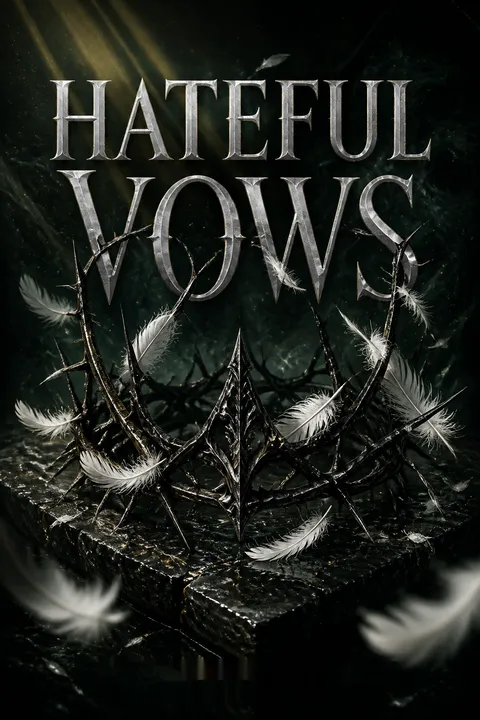


Plot Summary
The Unwanted Partner
Wren Delaney arrives at wealthy Wicked Falls University on a scholarship she believes her mother, Vicky, secured. Students mock her worn clothes and judge her for Vicky’s affair with a married man, Robert Weston. In Early American Literature, Professor Morgan assigns a major project in pairs. No one will work with Wren, so she approaches the professor for another option.
Briggs Weston, Robert’s son and one of the town’s privileged heirs, volunteers as her partner. His stare makes clear this is no act of kindness. Wren knows his family blames hers for the collapse of their home, but she has not caused that history. The assignment ties her to the one student most determined to make her pay for it.
The partnership turns a routine academic task into an imposed intimacy. Wren’s scholarship gives her access to the institution but not to its social protections: she is admitted into a place whose informal rules still mark her as an outsider. Briggs reads her not as an individual but as a living reminder of his family’s grief. That substitution is psychologically consequential. His anger may have an intelligible history, yet he directs it at someone with no responsibility for its cause. The project creates a structure in which their unequal power can become personal, repeated, and difficult for Wren to escape.
Humiliation Goes Public
Briggs follows Wren between classes, obtains her schedule from the administration, and turns her vulnerability into a campus spectacle. In a bathroom, he frightens her with a staged sexual threat, then tells students she performed a sex act on him. The rumor spreads faster than Wren can correct it.
Someone paints a slur across her old car, and Maya, a student who is also bullied, kneels beside her to collect the books and art supplies scattered during a cafeteria attack. Maya believes Wren and offers her company. Together, they try to remove the paint, only to strip away the car’s original finish as well. Wren loses more than property: the public lie now shapes how strangers treat her, while Maya becomes her first ally.
The bullying works through an audience. Briggs does not only intimidate Wren in private; he recruits bystanders, rumor, and institutional silence to make his version of events appear more credible than hers. The damaged car makes that social violence materially visible, and the failed cleaning attempt underlines how hard it is to remove a stigma once others have written it onto her life. Maya’s help matters because it interrupts the crowd’s consensus. Her solidarity does not solve Wren’s danger, but it gives Wren one relationship in which she is believed rather than judged by her mother’s reputation.
The Cafeteria Knife
Briggs turns a meal into another test of control. He orders the cashier to charge Wren extra, forcing her to abandon most of her food and buy only water. Then he blocks her from leaving and takes out a knife when she refuses to eat an apple he has offered. Students watch but do not intervene.
Wren obeys because she believes no one will protect her, and Briggs takes their silence as proof that he owns the space around them. His authority is not merely personal menace: classmates, staff, and the campus hierarchy routinely yield to his family’s power. The encounter leaves Wren more wary of open resistance, even as her anger at him sharpens.
The knife scene compresses the novel’s social order into one public moment: a powerful student threatens, a victim complies, and witnesses calculate that looking away is safer than helping. Wren’s obedience is a survival decision, not evidence that she accepts Briggs’s authority. Briggs, however, mistakes forced compliance for confirmation of his entitlement. That misreading fuels the pattern between them. The scene also makes institutional complicity concrete. His cruelty succeeds because ordinary people convert family influence into everyday permission, while Wren must measure every act of defiance against the possibility that she will face the consequences alone.
A Ride With a Price
After Wren’s unreliable car fails, Briggs notices finger-shaped bruises on her arm from Brandon, a drunken acquaintance of her roommate Buck. Wren hides what happened, but Briggs forces her into his truck and insists on seeing where she lives. At the apartment, he mocks its poverty, then demands sexual contact as payment for the ride.
Wren complies under threat, left feeling ashamed and violated. The episode does not make Briggs her protector; it shows that he treats her safety as another reason to claim control over her. Wren returns to a home where Brandon is still a danger, and the difference between Briggs’s violence and Brandon’s does little to make her feel secure.
Briggs’s response to Wren’s bruises exposes the possessive logic beneath his cruelty. He objects to another man touching her, but not because he recognizes her right to safety; he frames her body as his territory. His intervention therefore reproduces the coercion it claims to displace. Wren’s poverty compounds the trap: accepting a ride is practical, yet Briggs converts that practical need into leverage. The apartment scene refuses an easy protector narrative. His attention can reduce one immediate danger while creating another, and Wren’s apparent compliance must be understood within the limited choices he has engineered.
Three Men, One Room
Briggs and his friends Carter and Preston corner Wren in an empty classroom and threaten to use her sexually. Briggs forces her into a degrading act before deciding to let her go, while Carter and Preston reinforce the threat. Wren reaches home shaken, only to find Brandon there again.
When he grabs her, she swings a lamp into his head; he recovers and punches her before Buck returns and drives him out. Buck offers an apology for bringing Brandon into their home and gives Wren ice for her swelling face. The day leaves Wren assaulted by two different men, with one trusted friend able to help only after the danger has already reached her.
The sequence places Wren between overlapping forms of male entitlement, but it does not make them interchangeable. Briggs and his friends exploit status and group intimidation; Brandon exploits access to her home. Wren’s strike with the lamp marks a crucial shift from enduring danger to acting within it, even though she is still injured. Buck’s return offers a limited form of accountability: he recognizes that his choices brought Brandon into Wren’s space. Yet the timing matters. Protection arrives late, emphasizing how often Wren must first manage a crisis herself before anyone else acknowledges it.
Briggs Hunts Brandon
When Briggs sees Wren’s black eye, he demands to know who caused it. She identifies Brandon, and Briggs tracks him to another run-down apartment and beats him. The retaliation is violent, but it also reveals a new instability in Briggs: he reacts to harm done to Wren as though it has violated his personal claim over her.
Meanwhile, Maya invites Wren to a party with people she trusts, hoping to give her one evening away from campus hostility. Wren accepts after Maya covers her bruises and lends her a dress. She wants to feel ordinary for a night, unaware that Briggs and his circle will soon intrude on the gathering.
Briggs’s attack on Brandon looks like protection from a distance, but its motive remains entangled with possession. He does not yet challenge the premise that he may hurt Wren; he objects that someone else has done so. This is a change in attention rather than a moral conversion. Wren’s decision to attend Maya’s party, by contrast, is a small act of reclaiming pleasure after repeated humiliation. Borrowed clothes and makeup are not a cure for violence, but they let Wren briefly imagine herself outside the identity her classmates have imposed on her.
The Party Turns Dark
At Tyler’s crowded house party, Wren begins to relax among Maya’s old friends. Tyler secretly puts a drug in Wren’s drink. Briggs notices after she has swallowed some, takes her upstairs, and has sex with her while she is intoxicated and unable to give meaningful consent. Wren is a virgin, and she wakes the next morning with fragments of the night returning.
She tells Briggs he took advantage of her; he dismisses her objection by pointing to her drugged reactions. Maya, meanwhile, has been forced to leave the party by Tucker and cannot reach Wren. Briggs drives Wren back to her car, leaving her to face the event as an assault he refuses to name.
The party’s apparent escape from campus power collapses when Tyler drugs Wren and Briggs exploits her incapacitation. Her bodily response during the encounter cannot substitute for consent, but Briggs uses that confusion to deny her account and preserve his control over its meaning. Maya’s removal isolates Wren at the exact moment an ally might have helped. The scene marks a severe breach in trust and raises the stakes of the novel’s eroticized power dynamic: attraction and involuntary response do not erase coercion. Wren’s clear recognition the next morning is a crucial act of self-trust, even when Briggs refuses to honor it.
A Dorm Becomes a Cage
Briggs overhears his father, Robert Weston, tell Richard Kingsley that he arranged Wren’s full scholarship. He concludes, without evidence, that Wren traded sex for admission. At the same time, students cut off Wren’s long braid while she sleeps through class. Briggs then secures her a dorm room, not as a gift but to keep her within reach, and coerces another sexual act there.
When Wren resists moving in, Briggs forces the move and gives her a cannabis brownie without explaining what it contains until she is already affected. Their ensuing sexual encounter is gentler than his usual attacks, but Wren is still impaired and uncertain of her choices. His tenderness offers no reliable boundary between care and control.
The scholarship revelation intensifies Briggs’s inherited grievance by giving him a false explanation for Wren’s presence. Rather than ask what happened, he fills the gap with the sexual accusation he already expects to believe. The cut braid is another assault on Wren’s self-presentation, while the dorm room becomes a physical version of Briggs’s claim that he can decide where she lives. The brownie and resulting intimacy complicate the emotional texture without resolving the consent problem: withheld information leaves Wren unable to make a fully informed choice. The novel’s central tension becomes increasingly visible in the gap between moments of gentleness and the power that surrounds them.
The Deadbolt Fails
Wren and Maya install a deadbolt on Wren’s dorm room after Briggs insists she live there. He breaks in and takes Wren to a pool party, where he knows she cannot swim. As he pressures her to enter the water, Tiana pushes Wren into the deep end. Briggs dives in and pulls her to safety.
A call then reports that his little sister, Tia, has a fever, so he carries Wren and Tia home. Robert greets them drunk and hostile. Briggs sends Wren to his room, where she sees him caring for his sister and confronting his father. That night they share an unexpected closeness, and the contrast unsettles Wren’s understanding of the boy who has harmed her.
The deadbolt is Wren’s attempt to convert a boundary into a physical fact. Briggs’s breach shows how little that protection can do when he feels entitled to override it. At the pool, his rescue is real, but so is the danger he created by bringing her there and exploiting her inability to swim. The chapter’s emotional pivot comes at home, where Wren witnesses Briggs acting tenderly toward Tia and standing against Robert’s drunken rage. This does not excuse his violence toward Wren. It does reveal a capacity for care, forcing her to hold contradictory evidence rather than reduce him to a single, simple image.
The Threats Reach Home
After Briggs drives Wren back to campus, she finds her dorm room ransacked and a death threat left on her desk. Believing Briggs may have arranged it, she seeks shelter with Vicky. Her mother finally explains that Robert secured Wren’s scholarship after Vicky agreed to end a pregnancy by him.
Vicky says she wanted Wren to have a future beyond poverty, though the bargain has exposed her daughter to danger. Briggs finds Wren at Vicky’s apartment, denies sending the threats, and asks her to stay at his house, where he believes his family name can protect her. Vicky supports the plan after seeing Wren’s vandalized car. Wren accepts, though trust between her and Briggs remains fragile.
The scholarship turns out to be neither simple rescue nor simple corruption. Vicky made a painful choice in the hope of opening a path for her daughter, but the arrangement bound Wren’s future to the same powerful family whose resentments now threaten her. The revelation also changes Wren’s understanding of her mother: neglect and selfishness coexist with a genuine, if compromised, wish for her to escape. Briggs’s offer of shelter follows his denial, but his past conduct makes safety difficult to separate from dependence. Wren accepts not because trust has been restored, but because her other options have narrowed.
Robert’s Basement Trap
While Wren stays at the Weston house, she tells Briggs that Steven, one of Vicky’s former boyfriends, touched her when she was twelve. Briggs listens and vows to find him. Later, Briggs leaves to speak with Paul Wilder, and Robert confronts Wren alone. He calls her a threat to his family, admits he sent the notes, and says he wants her dead.
He drags her toward the basement; she falls down the stairs, and he kicks her while she is injured. Briggs returns, hears her scream, and attacks his father. Wren stops him before he can kill Robert. Briggs calls Paul, who takes responsibility for the next steps, while he carries Wren to the hospital.
The climax brings private family history into direct physical danger. Robert’s threats are not random campus cruelty: they emerge from his resentment, his fear of losing control, and his conviction that the Weston name should shield him. Briggs’s violence against his father is both retaliation and a repetition of the household’s established language of force. Wren’s plea stops the beating, demonstrating that she can influence Briggs without becoming responsible for managing him. Her earlier disclosure about Steven also matters: she has begun naming harm rather than minimizing it, even as she faces a new assault.
An Apology Without Certainty
Doctors find that Wren has several broken ribs, bruises, and a head injury, but no damage to her lungs. Robert has fled before Paul can secure him. Briggs stays beside Wren in the hospital with Tia, arranges better security at home, and tells Wren he is sorry for the ways he punished her for his parents’ affair.
He cannot promise that he knows how to love her, but he promises not to hurt her again and to protect her. Wren remains uncertain about their relationship, yet she smiles at his honesty. The immediate danger has been identified and interrupted, but Robert is still missing, and the trust between Wren and Briggs must rest on what he does next.
The resolution offers accountability without pretending that an apology erases accumulated harm. Briggs names the original injustice: he made Wren answer for choices made by their parents. His promise is meaningful partly because it remains limited; he admits uncertainty instead of presenting protection as proof that he has become safe. Wren’s smile signals openness, not a completed recovery or an uncomplicated romance. Robert’s escape also keeps the ending from turning danger into a neatly closed event. The relationship’s future depends on sustained behavior, while Wren’s survival and ability to articulate what she needs become the firmer ground beneath it.
Epilogue
Two months later, Robert is still missing, and Briggs has temporary custody of Tia. The other Weston family leaders agree that Briggs may take over his father’s territory after graduation, with the remaining families managing it until then. Wren spends most of her time with Briggs and Tia, and the campus harassment has stopped.
Maya helps Briggs create a room for Wren, filled with books and a new art station. Wren tells Briggs she loves him; he says he loves her too and reveals he hopes she will move in. Their future is not free of the family power they inherited, but Wren now has a home, room to make art, and a relationship she has chosen to continue.
The epilogue converts protection from a dramatic rescue into ordinary provision. Briggs gives Wren a dedicated place for art, while Wren’s affection is stated openly rather than inferred from danger or sexual intensity. That domestic gesture matters because her earlier life offered little stable space of her own. At the same time, Briggs’s authority is not discarded: he inherits a political territory and still speaks as someone accustomed to taking what he wants. The ending therefore joins intimacy to unresolved power. Its hopeful note rests less on a clean transformation than on Wren’s visible agency and the possibility that care can become practical, sustained behavior.
Analysis
Hateful Vows builds its romance inside a structure of inherited privilege, family trauma, and coercion. Wicked Falls’s ruling families do not merely possess money; their influence shapes what the university staff, students, and police appear willing to tolerate. Wren’s scholarship gets her through the gate, but it does not protect her once she is inside. Her vulnerability is therefore social as well as personal: she is judged through her mother’s reputation, lacks reliable institutional support, and must improvise safety with Maya, a deadbolt, and eventually the very household whose history helped endanger her.
Briggs’s grief gives his hatred a source, not an excuse. He has witnessed his father’s alcoholism and carries the loss of his mother, yet he converts those injuries into control over Wren. The novel’s most unsettling psychological pattern is his possessiveness masquerading as protection. He objects when others harm her while repeatedly violating her boundaries himself. His growing attachment only becomes meaningful when he recognizes that distinction and admits what he has done. Even then, his apology cannot retroactively make earlier encounters consensual or undo their damage.
Wren’s development is not a simple passage from fear to romantic surrender. She seeks friendship, fights Brandon with a lamp, tells Maya the truth, and eventually names childhood abuse to Briggs. These acts show her gaining language and leverage, even when her material options remain constrained. Her drawings are a private form of self-regulation, a place where her attention belongs to her rather than to the people watching her. The ending offers hope through practical signs of a different life: protection, a room for art, care for Tia, and Wren’s ability to speak about love openly. That hope remains complicated by Briggs’s authority and the story’s dark erotic frame. The strongest measure of change is not his desire for Wren, but whether he can consistently treat her choices as hers.
Review Summary
Hateful Vows is a dark bully romance that has polarized readers. Many praise its intense storyline, steamy scenes, and complex characters, while others criticize the excessive bullying and dubious consent. The book follows Wren and Briggs' tumultuous relationship in a college setting. Some readers found the writing immature and the plot underdeveloped, while others appreciated the author's handling of dark themes. Trigger warnings are emphasized, as the book contains graphic content. Overall, it's a fast-paced, emotionally charged read that appeals to fans of dark romance.
Characters
Wren Delaney
The stubborn outsiderWren is a creative, observant student from a poor background who arrives at Wicked Falls University carrying the stigma attached to her mother’s reputation. She sketches to steady herself and studies because education represents a way to build a life unlike the one she grew up in. Her first instinct is often to keep quiet, assess danger, and endure, but her anger and courage surface when she refuses to let humiliation define her completely. Wren is vulnerable to coercion, yet she is not passive: she seeks help, makes practical plans, and gradually becomes more able to name what has been done to her. Her central struggle is to distinguish genuine choice from the narrow options other people leave her.
Briggs Weston
The grieving heirBriggs is the son of one of Wicked Falls’s ruling families, a volatile college student whose mother’s death and father’s alcoholism have left him angry, numbed, and hungry for control. He channels his grief into cruelty toward Wren, whom he associates with the affair that fractured his family. His fierce care for his younger sister, Tia, reveals a capacity for tenderness that he does not initially extend to Wren. Briggs’s self-image depends on power, but his fixation on Wren unsettles the emotional numbness he has cultivated. He is compelling and dangerous in equal measure: understanding his pain explains his behavior, but does not absolve his choices or the harm he causes.
Maya
Wren’s first allyMaya is a warm, outspoken student who knows what it is like to be targeted by the powerful boys at Wicked Falls. She helps Wren gather her scattered belongings, believes her when others accept a humiliating rumor, and offers practical support with clothes, transportation, and the dorm-room lock. Her generosity is not naïveté; she understands the social risk of standing beside Wren and chooses to do it anyway. Maya gives Wren a friendship outside the coercive orbit of Briggs and his circle.
Vicky Delaney
Wren’s compromised motherVicky is Wren’s unreliable mother, known around town for relationships with married men. Her choices have left Wren exposed to gossip and instability, and their relationship carries years of disappointment. Vicky is not simply indifferent, however; she wants her daughter to have an education and a better life, even when the decisions she makes to secure that future are painful and morally complicated. Her mix of neglect, regret, and love makes her difficult for Wren to trust.
Robert Weston
The volatile patriarchRobert is Briggs and Tia’s father, a wealthy family leader whose drinking and temper make home unpredictable. He resents his diminished standing among the ruling families and expects others to absorb the damage caused by his choices. His authority within the family contrasts with his eroding influence in town. Robert’s volatile presence shapes Briggs’s sense of danger and responsibility, particularly toward Tia.
Tia Weston
Briggs’s little sisterTia is Briggs’s young sister, cheerful and perceptive, whose ordinary childhood needs are complicated by their father’s instability. Briggs protects her from the worst of the household’s turmoil and handles the daily responsibilities their father neglects. Tia’s trust in her brother gives him a reason to act carefully even when anger threatens to take over. She offers a glimpse of the family life Briggs wants to preserve.
Buck
Wren’s flawed roommateBuck is Wren’s older roommate, a heavy drinker with a rough appearance and a generally generous nature. He offers her a place to live and responds decisively when his acquaintance Brandon becomes a danger. His drinking and unreliable social judgment mean that his home is not always safe or peaceful, but he does not dismiss Wren’s distress once he understands what has happened.
Carter Wilder
Briggs’s loyal friendCarter is Briggs’s longtime friend and one of the privileged young men who move through Wicked Falls with a sense of immunity. His father, Paul, is the town’s police chief, giving Carter another connection to local power. Carter joins in the group’s treatment of Wren and often reinforces Briggs’s assumptions. His familiarity with Briggs makes him both a confidant and an enabler.
Tucker
Maya’s tormentorTucker is one of Briggs’s close friends and the son of a powerful school figure. He has tormented Maya for years, treating her discomfort as entertainment. His easy confidence reflects a social world where family influence protects young men from ordinary consequences. Tucker’s presence also complicates the friendship between Maya and Wren, since Maya must navigate his circle as well as her own loyalties.
Paul Wilder
The police chiefPaul is Carter’s father and the chief of police in Wicked Falls. As a member of the town’s influential families, he occupies both a public office and a private network of authority. Briggs knows that Paul may be able to act where ordinary residents would hesitate, though the town’s close ties between power and policing make his position morally complicated.
Brandon
Buck’s dangerous acquaintanceBrandon is one of Buck’s drinking companions, a stranger in Wren’s home who mistakes access for permission. His predatory behavior turns the apartment into another place where Wren must defend herself.
Steven Walters
A troubling presenceSteven is one of Vicky’s former boyfriends, remembered by Wren from childhood. His presence belongs to the unsafe history Wren has learned to minimize, and his behavior affects how she understands trust and bodily boundaries.
Preston
A cruel accomplicePreston is one of Briggs’s friends, blunt about his interest in sex and willing to join in the group intimidation directed at Wren. His presence helps turn Briggs’s private cruelty into a coordinated threat.
Tyler
The party hostTyler is a wealthy student who hosts the party Wren attends with Maya. He appears welcoming, but his conduct at the gathering makes the party unsafe for Wren.
Tiana
A reckless partygoerTiana is a young woman at the pool party who approaches Briggs and treats Wren with contempt. Her careless cruelty has serious consequences because she ignores Wren’s inability to swim.
Richard Kingsley
A family power brokerRichard is a prominent member of Wicked Falls’s ruling families and a father within Briggs’s social circle. He can influence major decisions in the town and its institutions, including the university. His authority helps reveal how the Five Families maintain their standing.
Professor Morgan
The literature instructorProfessor Morgan teaches Early American Literature and assigns the project that binds Wren and Briggs as partners. He represents the ordinary academic structure that becomes entangled with the influence and intimidation surrounding his students.
Plot Devices
The literature project
Forced proximityProfessor Morgan’s paired project gives Wren and Briggs a reason to remain connected after their hostile first meeting. It turns an ordinary class requirement into a recurring point of contact and gives Briggs another pretext to demand Wren’s time and labor. The assignment also places their conflict inside an institution that should be neutral but repeatedly yields to the status of the Weston family. Its importance lies less in the paper they must produce than in the enforced access it gives Briggs to Wren.
The Five Families
Inherited civic immunityWicked Falls is governed by a small circle of powerful families whose influence reaches the university, local police, and town leadership. Their children inherit more than wealth: they expect staff and peers to accommodate them, while Wren struggles to find anyone willing to challenge their behavior. This structure explains why public intimidation can continue with few immediate consequences and why ordinary routes to help seem unreliable. It is the social machinery behind the characters’ personal conflicts, not merely a marker of luxury.
Vicky’s bargain
A costly scholarshipWren’s full scholarship initially appears to be a chance at a different future. The later explanation connects it to a private bargain between Vicky and Robert, made around an unwanted pregnancy and Vicky’s desire to secure Wren’s education. The arrangement binds Wren to the family history she is already blamed for and gives Briggs a misleading reason to suspect her. It reframes the scholarship as both an act of maternal hope and a source of danger. The details reveal a major story secret.
The threatening notes
A hidden antagonistNotes warning Wren to leave school or die shift the conflict from ongoing bullying to a credible threat against her life. Their arrival prompts her to seek shelter, makes Briggs reconsider the danger around her, and drives the characters toward the Weston house. The messages eventually connect the school’s hostility to a more intimate family conflict. Their source is a central revelation, so this description contains a spoiler.
Intoxicants and impaired choice
Compromised consentAlcohol, cannabis, and a drugged party drink repeatedly alter how Wren and Briggs perceive events. Tyler’s drugging of Wren enables Briggs to assault her while she cannot meaningfully consent; later, undisclosed cannabis in a brownie further blurs Wren’s ability to choose freely. Intoxication also changes Briggs’s behavior, sometimes making him less hostile, but it does not erase the power imbalance between them. The device exposes the difference between bodily response, apparent compliance, and informed consent, while shaping several of the novel’s most consequential encounters.
Download PDF
Download EPUB
.epub digital book format is ideal for reading ebooks on phones, tablets, and e-readers.








