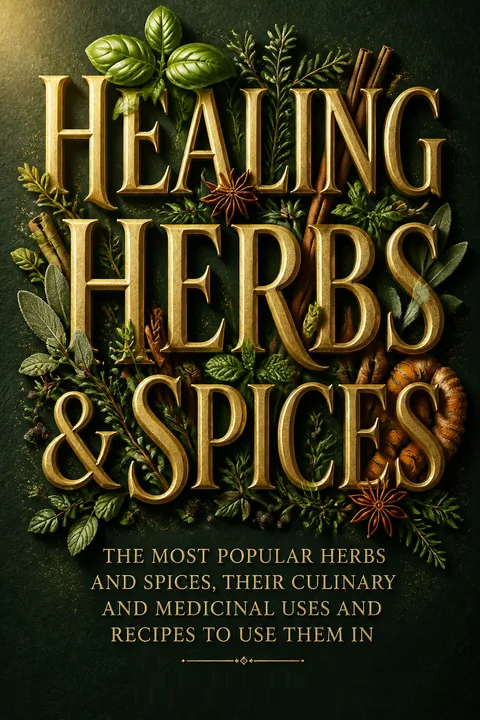


Key Takeaways
Make herbs part of everyday cooking, not a substitute for medical care.
A change in the kitchen. Dobbins describes growing up with little seasoning and discovering in her mid-thirties that food could affect how she felt. Her mother-in-law helped start a lasting interest in food and health. The book grows from that personal shift: ordinary ingredients can make everyday meals more varied, flavorful, and potentially beneficial, without requiring a special diet or elaborate routine.
Start with the plate. The practical invitation is to use herbs and spices in food, rather than treating them only as remedies. The recipes range from basil pesto and ginger cookies to turmeric-seasoned chicken. The author also cautions that food-based information is not a replacement for medical advice or treatment.
The book's most durable idea is behavioral, not medicinal: people are more likely to keep using ingredients that make dinner taste good. Flavor gives a health-minded practice an immediate payoff, instead of asking for faith in a distant promise. That is a useful distinction in a culture drawn to supplements and quick fixes. The limit is that adding an herb does not automatically make a meal nutritious, especially when some recipes also use substantial sugar, butter, or cream. The cooking practice is the invitation, not a health guarantee.
Separate plausible plant chemistry from proof that a remedy works.
Tradition is a clue. The book recounts long medicinal histories for ingredients such as ginger, garlic, and fennel, and sometimes points to modern studies. But Dobbins also acknowledges that clinical trials are limited and that many benefits come from traditional use rather than established medical evidence. A study in cells or animals, or a report of a promising compound, does not by itself prove that eating a seasoning treats an illness in people.
Keep claims in scale. The book's own disclaimer says its material is educational, makes no claim to cure disease, and should not replace modern care. That caution should guide how readers interpret the health sections: useful prompts for further questions, not a diagnosis, treatment plan, or reason to stop prescribed medicine.
This distinction is central to reading any popular account of food and health. A plant may contain a biologically active substance, yet ordinary culinary use, concentrated extracts, and a clinical treatment are different exposures with different evidence behind them. The book is strongest when it presents a possibility and weakest when a long list of traditional uses can sound like a list of confirmed effects. Readers can preserve curiosity without confusing mechanism with outcome. That stance neither dismisses folk knowledge nor grants it more certainty than the evidence described supports.
Protect flavor by choosing the right form and cooking moment.
Freshness changes the result. Dobbins repeatedly recommends buying whole seeds or pods and grinding them just before use, because aroma fades after grinding. Fresh basil and cilantro generally retain more flavor than their dried forms. Storage matters too: saffron should be shielded from light, while whole allspice berries keep their character longer than ground powder.
Timing matters as much. Delicate basil and cilantro are best added near the end of cooking, when heat is less likely to flatten their aroma. Bay leaves are different: their flavor emerges during a longer simmer, and the tough leaves are usually removed before serving. The useful rule is not simply “fresh is best.” Match the ingredient's form and cooking time to the flavor you want.
These handling tips turn a pantry into a small lesson in food chemistry without requiring technical equipment. Grinding releases aromatic compounds, while time, heat, air, and light can diminish them. The book's advice is practical because it connects those changes to an observable test: smell the spice before and after preparation. Its rules are not absolute, though. Dried herbs can be convenient and flavorful, and a long-cooked dish may benefit from their concentrated taste. The reader's nose and the recipe's cooking time remain better guides than a rigid fresh-versus-dried hierarchy.
Pair each herb with foods its aroma can clarify, deepen, or lift.
Build flavor by contrast. The book shows how a small amount of an herb can redirect a familiar dish. Fennel's licorice-like notes suit sausage, fish, vegetables, and even cookies. Mint appears not only in sweet foods but also with haddock, ginger, yogurt, and savory salads. Tarragon's anise-like flavor works with chicken and seafood, while rosemary's strong pine-like aroma suits potatoes and roasted meat.
Recipes make the pairings concrete. Allspice, cinnamon, and nutmeg bring warmth to squash and baked goods; cilantro and lime brighten chicken; thyme gives rice and roasted vegetables an earthy accent. These are starting points rather than strict rules. The book's central culinary lesson is that herbs and spices can add character across cuisines, not just in the familiar dishes most associated with them.
A useful way to apply these pairings is to think in sensory roles: some ingredients add warmth, some freshness, and some a sharp or savory edge. This helps a cook adapt a recipe rather than follow it mechanically. It also explains why a herb can move from dessert to dinner: sweetness is only one part of an aroma's character. The book's wide-ranging examples encourage experimentation, though strong ingredients such as rosemary, sage, or cayenne can overwhelm a dish if used without restraint. Small additions make it easier to learn what a flavor contributes.
Distinguish a spice in dinner from its concentrated active compounds.
Preparation can change chemistry. The book describes allicin as an active compound associated with garlic and says it is strongest shortly after a clove is crushed, then loses potency with cooking. It identifies curcumin as a key component of turmeric and capsaicin as the source of cayenne's heat. These examples help explain why preparation and form appear repeatedly in the health sections.
A compound is not a cure. The author cites research into these substances, including early or animal studies, but that does not establish that a normal serving produces a medical effect. A garlic clove, a turmeric-seasoned meal, and a concentrated extract are not interchangeable. The book's most reliable use of this chemistry is to make readers curious about ingredients, while its evidence limitations counsel restraint about therapeutic conclusions.
The distinction between food and extract is a basic but often neglected principle of pharmacology: dose and delivery matter. A compound's activity in a laboratory does not tell a reader how much reaches a relevant part of the body after a meal, or whether that amount changes a health outcome. Cooking also alters compounds, sometimes in ways that reduce one property while improving flavor or usability. The culinary approach remains valuable even when a medicinal claim is uncertain. Taste is an immediate, observable benefit; disease prevention requires much stronger evidence.
Treat essential oils and high doses as medicines, not seasonings.
Concentrated forms carry different risks. Dobbins warns that essential oils can be toxic if swallowed. She also notes that high amounts of nutmeg or mace can cause serious effects, and that some herbs may be unsuitable during pregnancy or for particular conditions. Garlic, turmeric, licorice, and other ingredients may interact with medicines or affect health conditions, according to the cautions in the book.
Food use is not universal permission. The author generally distinguishes ordinary culinary amounts from medicinal use, but even that should not be treated as a personal safety guarantee. The book advises consulting a qualified health professional before trying remedies or adding herbs when health concerns or medications are involved. That guidance is especially important for concentrated products, which are not equivalent to a pinch of seasoning.
The phrase “natural remedy” can hide a change in concentration. A culinary leaf or seed is one thing; a highly concentrated oil is another, and the latter deserves the same caution readers would give any potent product. This is also where a reference cookbook has a clear boundary: it can flag possible risks, but it cannot assess an individual's medications, pregnancy, or diagnosis. The practical lesson is not to fear herbs. It is to avoid assuming that familiar ingredients are harmless in every form, amount, and circumstance.
Use the recipes to explore flavor, not to certify a meal as healthy.
Experiment through familiar food. The book offers more than 70 recipes to help readers use herbs and spices in ordinary cooking. Examples include Jamaican jerk seasoning, basil pesto, fennel cookies, saffron rice, and roasted squash with turmeric. The range matters: a reader can try a new ingredient in a dish they already understand, then notice how it changes the flavor.
“Healing” is not a nutrition label. The collection includes recipes the author calls healthy, alongside favorites that may be less so. Some dishes use sugar, cream, butter, or other rich ingredients. The book's recipe value lies chiefly in making herbs accessible and showing where they fit, not in establishing that every finished dish meets a particular health standard.
Recipes lower the barrier between information and action. Instead of asking readers to memorize a plant's claimed properties, they show how to put it into a meal and decide whether the taste earns a place in the kitchen. That is a form of practical learning: repeated use builds familiarity. The word “healing,” however, can blur flavor, nourishment, and medical treatment. Keeping those categories separate makes the recipes more useful, not less. A dish can be enjoyable and introduce a spice without being a therapy or a complete model of healthy eating.
Remember that spices shaped trade long before they seasoned your shelf.
Flavor has a history. The preface traces the high value of spices in fifteenth-century Europe, where traders sought routes to the sources of prized goods. The Venetian Republic held a powerful position in the trade, and Columbus's voyage was intended to find a route to Asia's spices. The book also notes that herbs and spices have served many purposes across history, including medicine, food preservation, religious practice, and flavor.
A pantry reflects exchange. Ingredients now treated as everyday staples once traveled through distant networks and carried considerable cultural and economic weight. Their present-day availability makes it easy to forget those histories. Remembering them adds context to a spice rack: familiar flavors are also evidence of long journeys, changing cuisines, and contact among societies.
The historical framing gives an everyday act, seasoning dinner, a larger context. Food history shows that taste is not merely personal preference; ingredients move through trade, migration, power, and cultural adaptation. The preface's Columbus account usefully links exploration to the demand for spices, though the familiar language of “discovery” can make European arrival sound like the start of American history. A more careful reading keeps the book's point about commercial motives while recognizing that the lands and peoples encountered already had histories and food traditions of their own.
Analysis
Healing Herbs and Spices is best understood as a practical culinary reference with a wellness premise, not as a medical guide. Its organizing pattern is simple: introduce an herb or spice, describe its history and flavor, summarize claimed health benefits, then offer recipes. That repetition makes a large catalog approachable, and the recipes are the book's strongest bridge from reading to action. Readers learn how an ingredient can work in both a sweet dish and a savory one, and why freshness, storage, grinding, and cooking time affect the result.
The health material needs a more critical reading. The book itself acknowledges that clinical trials are limited and includes a clear warning against substituting its information for professional care. Yet its entries often place traditional uses, laboratory findings, animal research, and human studies close together. Those kinds of evidence do not carry equal weight. A compound's possible biological activity cannot establish that ordinary seasoning prevents or treats disease, and an essential oil or supplement is not equivalent to a culinary serving. The author's cautions are therefore not fine print; they are essential to interpreting the book.
The most persuasive version of the book's thesis is modest: herbs and spices can make everyday meals more interesting, and that alone is a strong reason to use them. The word “healing” is better treated as a prompt to learn than as a promise of clinical benefit. This framing preserves the book's curiosity about plant chemistry while avoiding the common leap from “contains an active compound” to “works as medicine.” It also respects the cultural histories behind ingredients whose value once shaped trade and travel. As a short introduction to culinary variety, the book remains useful; as a source for treatment decisions, it directs readers appropriately toward qualified medical advice.
Review Summary
Healing Herbs and Spices receives mostly positive reviews, with an average rating of 3.59 out of 5. Readers appreciate the book's informative content, describing it as a helpful reference for identifying and using herbs and spices in cooking and for health benefits. Many reviewers praise the book's organization, detailed explanations, and inclusion of recipes. Some readers note its value as a comprehensive resource on both herbs and spices. A few criticisms mention editing issues and a lack of pictures. Overall, readers find the book useful for understanding the origins, uses, and healing properties of various herbs and spices.
Glossary
Carminative
Gas-relieving substanceA carminative is an herb or other substance traditionally used to ease gas and related digestive discomfort. The book applies the term to ingredients such as caraway, fennel, and ginger. It describes a traditional use, not proof that a particular herb treats an underlying digestive disorder.
Allicin
Garlic-derived compoundAllicin is a sulfur-containing compound associated with crushed or chopped garlic. The book says it becomes strongest shortly after garlic is cut and loses potency during cooking. It uses allicin to explain some of garlic's reported antimicrobial properties, while culinary use should not be confused with a proven treatment.
Curcumin
Turmeric's studied compoundCurcumin is a yellow compound in turmeric that the book identifies as a source of its color and as a subject of research into inflammation and other health questions. The text describes promising studies, including animal research, but does not establish that turmeric or curcumin treats disease in people.
Capsaicin
Chili pepper's heat compoundCapsaicin is the pungent compound associated with cayenne and other chili peppers. The book connects it with the pepper's heat and discusses studies of topical use for pain and possible effects on inflammation and circulation. These claims concern particular forms and uses, not a general guarantee from eating spicy food.
Eugenol
Aromatic plant compoundEugenol is an aromatic compound that the book associates with allspice and describes as having pain-relieving and antimicrobial properties. It notes that eugenol is used in some dental and topical products, and warns that concentrated allspice oil should not be swallowed. A compound's use in a product does not make home use equivalent.
Glucosinolates
Plant compounds under studyGlucosinolates are plant compounds discussed in the book in connection with horseradish and mustard. The text cites research into possible effects on cancer-related processes and the body's handling of certain compounds. These findings are presented as research possibilities, not as evidence that eating these plants prevents or treats cancer.
Essential oil
Concentrated aromatic extractAn essential oil is a concentrated extract containing volatile aromatic compounds from a plant. The book discusses oils in relation to flavor, topical uses, and traditional remedies, while warning that some can be harmful if swallowed or used improperly. Essential oils are much more concentrated than the herbs and spices used in ordinary cooking.
Download PDF
Download EPUB
.epub digital book format is ideal for reading ebooks on phones, tablets, and e-readers.








