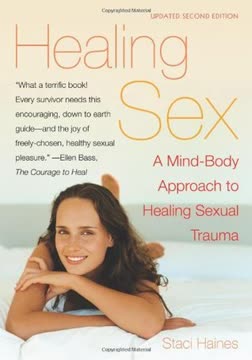
Key Takeaways
1. Your Body Holds the Key to Healing Trauma
In somatics we say that the person then begins to shape his or her self, ideas, worldview, and actions around that experience.
Somatic wisdom. The body, mind, and emotions are an interconnected biological system, not separate entities. Trauma, especially sexual abuse, literally touches your body, and its memories and experiences are often "held" within your physical self. Healing requires including the body, recognizing its intelligence, and allowing it to process and complete the trauma.
Beyond thinking. Traditional therapy often focuses on mental processes, assuming the body will follow. However, understanding trauma intellectually doesn't always translate into embodied change. Survivors often dissociate or "check out" from their bodies as a survival mechanism, but this prevents the full processing of trauma and the experience of pleasure.
Re-embodying is healing. Reconnecting with your body allows a self-generated healing to begin, as the body's inherent immune system or intelligence works towards health and balance. Practices like body-oriented therapy, martial arts, yoga, and dance can help release stored tension and trauma, restoring pleasure, balance, and presence.
2. Reclaim Your "Yes," "No," and "Maybe" in Sex
Consent is the ability to choose, based on your own internal experience, what you want physically, emotionally, mentally, spiritually, and sexually, and then to communicate those wants.
Empowered choice. Childhood sexual abuse teaches you to disregard your own boundaries and desires, often forcing you to say "yes" when you meant "no." Reintegrating choice and consent into your sex life is vital, meaning you have the final say on what kind of sex you want, when, where, and with whom, regardless of external pressures or past patterns.
Embodied consent. True consent stems from your body's sensations and signals. Learning to recognize your internal "yes" (e.g., stomach relaxes, warmth in pelvis) and "no" (e.g., shallow breath, tight stomach) is crucial. Contradictory feelings are common, and distinguishing between fear and genuine disinterest is a key part of this process.
Communicate clearly. Good sexual communication is the most important tool for an empowered sex life. Practice saying "yes," "no," and "maybe" aloud, using specific sexual terms. This includes discussing safer sex, relationship expectations, and even your abuse history with partners, fostering trust and ensuring your needs are met.
3. Triggers Are Your Map to Sexual Freedom
What if triggers were not to be avoided but rather explored, felt, and healed?
Messengers of healing. Triggers are automatic responses connected to past abuse that rush into the present, manifesting as images, emotions, or physical sensations. Instead of avoiding them, view triggers as flags signaling areas needing healing and attention. They are healable, and processing them can lead to profound release.
Tracking patterns. Identify what specifically triggers you: sights, smells, positions, or even enjoying certain sexual acts. Notice the physical changes (e.g., holding breath, tensing muscles) and emotional shifts (e.g., sudden anger, grief). This awareness allows you to recognize the trigger and choose how to respond, rather than being overwhelmed by it.
A trigger plan. Develop a plan to navigate triggers:
- Notice: Identify the trigger and your body's response.
- Stop & Breathe: Pause sexual activity, ground yourself with breath.
- Choose: Select a strategy (e.g., go into the trigger, take a break, change activities).
- Engage: Stay present with your chosen action.
- Return: Re-evaluate and re-engage as needed.
This systematic approach helps retrain your body and mind.
4. Masturbation: Your Cornerstone for Self-Discovery
Masturbation is the center of my sexuality now. I have learned that I turn myself on, that I am responsible for my own pleasure.
Self-loving practice. Masturbation is a powerful tool for sexual healing, allowing you to learn what truly turns you on, explore your sexual responses, and build a positive relationship with your body. It's a safe space to practice embodiment, work through triggers, and discover areas of your body that may be frozen or numb from past abuse.
Beyond the bad rap. Despite historical shaming, masturbation is a healthy part of sexual development and expression. For survivors, it offers a way to reclaim sexuality on your own terms, differentiating personal pleasure from the trauma of abuse. It helps dismantle the belief that you are "damaged" or "bad" for experiencing sexual feelings.
Five steps to great masturbation:
- Breathe and Relax: Communicate safety to your body.
- Move Your Body: Release tension and held memories.
- Make Some Noise: Express sensations and keep your body open.
- Touch Your Whole Body: Explore all erotic zones, not just genitals.
- Stay Present and Embodied: Practice being fully "there" for your pleasure.
This intentional practice helps integrate your sexual self.
5. Information is Power: Know Your Sexual Anatomy and Response
Information is power, especially where sex is concerned!
Demystify your body. Childhood sexual abuse often provides harmful, distorted information about sex. Re-educating yourself about sexual anatomy is crucial for empowerment. Understand that your genitals are a healthy, natural part of your body, deserving no shame.
Female anatomy insights:
- Clitoris: Not just the glans, but an extensive structure of erectile tissue.
- Vagina: Pliable, self-cleaning, with different areas sensitive to movement vs. pressure.
- G-spot: A sensitive area on the front vaginal wall, capable of intense pleasure and even ejaculation for some.
- PC muscle: Strengthens orgasms, prevents incontinence, and increases genital awareness.
- Breasts: Can be highly erotic, with varying sensitivities.
Male and anal anatomy:
- Penis/Testicles: Understand their structure and function in a non-abusive context.
- Prostate: An internal gland in men, highly sensitive to anal stimulation.
- Anus: Rich in nerve endings, capable of pleasure, but requires lubrication and careful penetration (flanged toys are essential).
Knowing these details helps you communicate desires and ensure safer, more pleasurable experiences.
6. Feel to Heal: Embrace the Full Spectrum of Emotions
You can't heal if you can't feel.
Emotions as healing agents. Survivors often tune out emotions as a survival mechanism, but these unfelt emotions remain stored in the body, mind, and spirit. Feeling and expressing these emotions is the ticket to healing, allowing you to move from being run by past trauma to experiencing a full, rich emotional life.
The five stages of emotions:
- Emergence: Sensations and feelings arise.
- Intensification: Attending to emotions makes them grow.
- Fullness: Emotions reach a peak, like a wave about to break.
- Release: Bodily expression (crying, shaking, yelling) discharges the emotion.
- Completion: Integration, relief, and renewed energy follow.
This cycle applies even to orgasm, which can be a powerful emotional release.
Navigating difficult emotions:
- Anger/Rage: Express safely (e.g., hitting pillows, yelling) to reclaim dignity.
- Grief/Loss: Mourn what was taken (childhood, safety, trust) to move on.
- Fear/Terror: Differentiate past fear from present safety, use grounding techniques.
- Longing: Acknowledge desires for love, safety, or connection.
- Shame/Guilt: Counter with self-forgiveness, recognizing the abuse was never your fault.
Emotional flexibility allows you to experience and interpret feelings without being overwhelmed.
7. Break Free from Sexual Aversion and Compulsion
Whatever you did to survive sexual abuse, to be able to go on, is powerful.
Beyond self-denial. Sexual abuse teaches you to deny your needs, leading to either sexual aversion (avoiding sex) or sexual compulsion (using sex to fill non-sexual needs). These were intelligent survival strategies, but they prevent authentic sexual expression and healing.
Healing sexual aversion:
- Explore how avoidance protected you.
- Challenge negative associations with sex (e.g., "sex is hate").
- Educate yourself on healthy sexuality.
- Use embodiment practices and masturbation to re-engage slowly.
- Recognize that your sexual energy is not too big or dangerous.
Healing sexual compulsion:
- Identify non-sexual needs you're trying to fill (e.g., comfort, self-worth).
- Practice embodied consent to make conscious choices.
- Consider a temporary break from sex to explore underlying emotions.
- Learn to say "no" and set boundaries without guilt.
The goal is to reclaim your sexuality on your own terms, making choices that truly serve you.
8. Cultivate Self-Forgiveness and Deserve Pleasure
Forgiving myself and being forgiven by a community of people who love me was the most moving thing that I have experienced in my healing process.
Forgive yourself first. Survivors often internalize blame for the abuse, believing it was their fault due to factors like not fighting back, experiencing orgasm, or even their inherent "sexiness." This self-blame is a profound barrier to healing and pleasure. Self-forgiveness is paramount, granted not earned, and allows you to move forward.
Let yourself off the hook:
- Examine beliefs: Identify specific reasons you blame yourself.
- Reality check: Share these beliefs with trusted friends or therapists.
- Active forgiveness: Practice saying, "X may be true, and I forgive myself. I am so sorry this happened to me."
- Witnessing: Allow others to witness your self-forgiveness, reinforcing your worthiness.
This process helps dismantle the deep-seated shame and guilt.
Embrace pleasure. Many survivors feel they must suffer or don't deserve pleasure. Reclaiming pleasure is a gradual process, like rehydrating a dried sponge. Start by identifying small joys and consciously incorporating them into your life. Practice taking in pleasure, little by little, to build your capacity for joy and ease.
9. Expand Your Erotic Horizon: Beyond Vanilla Sex
Sex is complex. Your desires may not be tidy or fit into a design that is reflected in the mainstream version of sex.
Diverse expression. Sex is what you want it to be, extending beyond penetration or orgasm to include kissing, touching, oral sex, anal sex, S/M, and more. Exploring diverse sexual expressions, including S/M, role-playing, and fantasies, can be powerful tools for self-discovery and healing.
S/M as consensual play:
- Consent is key: Negotiate desires, limits, and safewords with partners.
- Power exchange: A willing, agreed-upon dynamic between consenting adults.
- Sensation play: Explores intensity, often enhanced by endorphins.
For survivors, S/M can be an arena to re-enact abuse dynamics with new, empowered endings, reclaiming control and transforming fear.
Fantasy as fertile ground:
- Explore desires: Use imagination to try new ideas, lovers, or roles.
- Challenge shame: No fantasy is inherently "bad"; assess its positive or negative impact.
- Avoid dissociation: Ensure fantasies enhance presence, rather than escape it.
- Diversify: Avoid getting stuck in a single, repetitive fantasy, especially if it mirrors abuse dynamics.
These explorations, when approached with awareness and consent, can enrich your sexual life.
10. Partner with Empathy and Mutual Growth
You are not a savior, and your lover is not a patient.
Shared journey. As a partner of a survivor, remember that her pain is not your fault, even if your actions trigger it. Avoid falling into savior/patient roles; instead, view each other as courageous individuals on a shared healing path. Your role is to witness, support, and respect her process, not to fix her.
Self-care is crucial:
- Recognize limits: Don't deplete yourself trying to "solve" her pain.
- Seek support: Find friends or counselors educated about trauma.
- Maintain hobbies: Balance your life with activities that bring you joy.
This ensures you remain a resourced and present partner.
Evolving together:
- Expand repertoire: Be open to new sexual expressions and communication styles.
- Respect boundaries: Understand that her sexual needs and desires will evolve.
- Communicate: Discuss triggers, safewords, and sexual preferences openly.
- Embrace change: Your own sexuality and relationship will transform, offering opportunities for mutual growth and deeper intimacy.
11. Envision and Create Your Empowered Sexual Self
What would a compelling sex life look like to you? Who do you want to become sexually?
Dynamic vision. Your journey of sexual healing is ongoing, and your vision for your empowered sexual self will evolve. Set interim goals, celebrate small successes, and allow yourself to be a novice in this process of self-discovery.
Craft your ideal sexuality:
- Embodied presence: Feel your body, be present in your experiences.
- Authentic choice: Practice healthy boundaries and consent.
- Open communication: Share desires and fantasies with partners.
- Safer and sacred sex: Integrate practices that align with your values.
- Self-referential: Base your sexuality on your own needs, not external expectations.
Three lives exercise. Imagine three full lives, each expressing a different sexual self. This helps bypass self-censorship and reveals deeper desires. Create an external representation of your vision (e.g., journal, collage) to keep it alive and guide your actions. Your empowered sexual self is a source of encouragement, reminding you of your capacity to grow and expand.
Last updated:
Review Summary
Healing Sex receives overwhelmingly positive reviews (4.29/5) for its somatic approach to recovering from childhood sexual abuse. Readers praise its comprehensive coverage of sexuality topics, practical exercises, and validating tone featuring real survivor voices. Many found it life-changing and recommend it for survivors, partners, and therapists. Reviewers appreciate its sex-positive, inclusive stance toward various sexualities. Common critiques include outdated terminology, gendered language assuming female readers, intense content requiring slow processing, and some abstract emotional concepts. Several note it's best used alongside therapy and requires careful pacing through difficult material.
Similar Books