


Plot Summary
Prologue
After giving birth to Blair,5 a young mother2 notices the faint hair on her newborn’s5 ears and feels the past stirring beneath the life she has built. Her body carries an old scar, a record she has kept hidden from her husband.13
Holding the child,5 she sees danger in the hospital’s hard edges and small objects, then focuses on the baby’s5 downy skin. The moment links the tenderness of new motherhood to a history of fear, secrecy, and another child whose story has never been told.
The opening makes the body an unreliable archive: it preserves what the mind has sealed away, while birth creates a new bond that sharpens the mother’s sense of risk. The scar and the infant’s fine hair are quiet clues, not explanations. Their emotional force comes from the gap between the life this woman appears to have and the history she cannot safely name. The scene also sets the novel’s central tension in intimate terms. Protecting a child can be an act of love, but it can also become a way to hide from the past.
The Chief Arrests Her Mother
Callie Hauser1 has returned to Pine Lakes after her best friend, Jane,4 was struck by a hit-and-run driver, and now serves as the town’s first female police chief. On patrol, she stops a swerving car and discovers its driver is her estranged mother,3 Jenna,3 who is barefoot, drunk, and driving with an expired license.
Callie1 arrests her despite the ache of seeing the old pattern resume. At the station, she overhears officers ridicule Jenna3 and mention that, as a teenager, she found a dead newborn beside the road. The case was never solved. Callie1 orders the file for the morning, then lies awake deciding that an unidentified baby cannot remain a forgotten local story on her watch.
Callie begins by applying the law to the person who most shaped her distrust of disorder. Arresting Jenna is professionally defensible, but emotionally it repeats the childhood role Callie has tried to escape: she manages the consequences of her mother’s behavior. The officers’ casual treatment of the dead infant changes the meaning of the stop. Their joke exposes how institutions can bury a case not through a dramatic conspiracy but through routine contempt. Callie’s decision to reopen it is both an act of policing and an attempt to correct a family history in which she learned that neglect was ordinary.
The Woods Give Nothing Back
The old file says Baby Doe died from exposure only hours after birth. A broken amber bracelet lies near the scene, but the original investigation was thin and its evidence may be degraded. While Callie1 studies the case, she revives Layla Hart,15 a teenager overdosing on heroin in a disused bus at a paintball park. Layla15 survives, and the park owner quietly identifies local dealer Billy Fauver.14
Callie1 also finds an Alcoholics Anonymous chip in Jenna’s3 newly tidy house, evidence that her mother’s3 claim of three months sober was true. Then a hiker finds Jenna’s3 purse on a distant trail, with heroin inside, and Jenna3 herself has vanished. Her sponsor22 confirms she had missed meetings and never previously used drugs.
The section makes the cold case and the overdose crisis echo one another without making them identical. Callie can intervene physically when Layla stops breathing, but the older death has no immediate remedy and the evidence is already fragile. Jenna’s sobriety chip complicates Callie’s familiar story of her mother as simply unreliable. That complication arrives just as the purse seems to confirm the worst. Callie’s search for truth therefore carries a personal cost: each new fact forces her to revise a judgment she had relied on for self-protection.
A Bracelet Names Sabrina
Callie1 learns that people once blamed Sabrina Riley,6 a teenage bait-shop worker who disappeared around the time Baby Doe was found. Billy Fauver14 admits he knew Sabrina6 but denies causing her disappearance; he redirects Callie1 toward Trent Brentwood,20 who remembers Sabrina’s6 twin sister,2 Annabelle,2 and a long scar on her arm.
At the bait shop, owner Gary Hines recognizes the amber bracelet from the crime-scene photograph as Sabrina’s.6 Callie1 visits the sisters’ derelict family home and finds their yearbook, confirming the twin connection, while Della17 quietly gives her Sabrina’s6 full name.
Meanwhile, mutilated muskrats appear in Callie’s1 mailbox, and a halfway-house resident reports that Jenna3 feared a man from her teenage years was hunting her.
The investigation advances through objects and other people’s partial memories because the official record has failed. Sabrina’s bracelet is stronger than the town’s sexualized rumors, yet it does not explain what happened to her. Callie recognizes that the same community which dismissed teenage girls as reckless also allowed their absence to become unremarkable. The dead animals bring that old dismissal into the present as intimidation. Jenna’s fear suggests that the case is not merely an archive problem: someone may still be protecting a secret, and Callie’s authority offers less safety than she assumed.
Annabelle Enters the Car
In 1990, Annabelle Riley2 walks home from a store when an older man mistakes her for her twin, Sabrina.6 She recognizes him as the man Sabrina6 calls the Coyote,7 and, curious about the life her sister has hidden, accepts his ride. He takes her to a secluded blue sinkhole and has sex with her despite her fear and pain.
Annabelle2 later realizes he knew she was not Sabrina.6 At home, she hides the encounter from her sister, who has withdrawn into a secret relationship with him. The twins’ closeness curdles into rivalry: Annabelle2 resents Sabrina’s6 amber bracelet and private knowledge, while Sabrina6 senses that Annabelle2 has crossed into a part of her life she cannot share.
Annabelle’s choice to enter the car is driven less by desire than by exclusion. She wants access to the secret that has displaced her in her twin’s life, but the man converts that curiosity into sexual exploitation. Their near-identical appearance becomes a trap rather than a source of solidarity: Annabelle can step into Sabrina’s place, yet cannot control what follows. The scene also establishes the sinkhole as a landscape of false invitation. Its clear blue surface conceals dangerous depth, much like the Coyote’s charm conceals the power imbalance beneath his attention.
The Help That Wasn't Help
Annabelle2 realizes she is pregnant after months without a period, while Sabrina6 has left school and their alcoholic father is mostly absent. Annabelle2 hides her condition, clings to college plans, and finally calls a pregnancy center after seeing a flyer.
Its volunteers promise care, then refuse her request for an abortion, take her savings, and pressure her to continue the pregnancy. She returns home without money or a medical plan. Sabrina6 discovers the pregnancy and, despite their strained bond, begins reading about birth and collecting infant supplies.
She promises that they will find a place to live and raise the baby together. Annabelle2 wants to believe her, but Sabrina’s6 bruises and renewed contact with the Coyote7 make their plan feel precarious.
The center’s coercion turns Annabelle’s search for help into another loss of control. Its language of care masks the removal of her money and the denial of her choice, leaving her with fewer practical options than before. Sabrina’s response is loving but improvised: she studies childbirth from library books because neither sister has reliable adults or medical access. Their promise to raise the baby together is both genuine attachment and a fragile fantasy. The novel places their private resolve against institutions that speak of protecting life while failing to protect the young women already living in danger.
One Sister Waits Alone
Sabrina6 tells Annabelle2 she will meet the Coyote7 and demand money, then disappears into the winter night. Annabelle2 waits through the hours, preparing a fire and food, until labor begins. Alone in the house, she bites her desk chair through contractions, follows imagined voices into the woods, and gives birth near the abandoned factory. The baby is alive but weak.
Annabelle2 carries her to the roadside, hoping a passing driver will find them, then leaves when the infant’s cries stop and she believes the child has died. Jenna,3 delivering newspapers as a teenager, later finds the newborn. Annabelle2 returns home, takes what she can carry, and leaves town with Della’s17 cash, abandoning the name and future she once planned.
Annabelle’s abandonment is neither a clean decision nor an act that can be reduced to one motive. She is a frightened adolescent in labor, without a trusted adult, medical care, or certainty that the infant can survive. Her belief that the baby is already dead becomes the condition that lets her walk away, while the bracelet on the ground marks how completely her sister’s promised return has failed. The scene refuses easy exoneration, but it also refuses the public fantasy of a composed adult choosing cruelty. Survival and harm emerge from the same desperate act.
Blair Finds the Hidden Past
Years later, Blair,5 Annabelle’s2 daughter, searches her mother’s2 closet for something to wear and finds a packed duffel containing a metal lighter, a pressed flower, and a note in unfamiliar handwriting. She follows Iris2 to a wooded construction site and watches her stack stones into two cairns, then digs up a buried letter.
Blair5 develops old film from the bag and discovers photographs of a girl who resembles Iris2 but has a scar-free arm, alongside images of abandoned ruins and a broken jar. The pictures make Blair5 suspect that her mother2 once lived another life. Seeking family history, she orders a consumer DNA kit, unknowingly giving investigators the genetic link they need to reopen the Baby Doe case.
Blair’s curiosity begins in a familiar adolescent register, shaped by a new romance and the discovery that her mother has private desires. It becomes more consequential when objects make secrecy material: the packed clothes imply an escape once imagined, while the cairns and letter suggest grief deliberately buried. The photographs complicate the idea that a parent is a stable, fully knowable person. Blair’s DNA test is meant to restore a family story, but genetic data has no regard for the emotional readiness of the people it connects. In this novel, a search for belonging can expose another person to punishment.
Callie Finds Annabelle
A cold-case geneticist tells Callie1 that her own old DNA profile links her as a paternal half-sister to Baby Doe. Callie1 had never known her father’s7 identity, and the result transforms an abstract homicide into a lost sibling. Following the trail through the Riley house, yearbook, and former teacher Lynne Hamilton,16 Callie1 identifies Annabelle’s2 new name as Iris Owens2 and finds her living in New York with a husband13 and three children.
When Callie1 approaches, Iris2 mistakes her for someone sent by Sabrina.6 Callie1 explains who she is and asks about the sisters. Iris2 admits that she became pregnant by the older man both sisters called the Coyote,7 and that Sabrina6 went to confront him the night before the baby was found.
The DNA result makes kinship arrive as evidence before it can become a relationship. Callie learns that she has a sibling through a case file, while Iris has spent decades constructing a family life around a concealed identity. Their meeting is charged by asymmetry: Callie wants answers, Iris has been waiting for a sister who never returned. Callie’s choice to approach gently, rather than treat Iris only as a suspect, signals a shift from solving a case toward understanding its human costs. Yet that humane approach cannot control what forensic systems or public attention will do next.
A Private Case Goes Public
Iris2 tells Callie1 that Sabrina6 planned to blackmail the Coyote7 for money and that she never came home. Callie1 promises to pursue Sabrina’s6 disappearance without exposing Iris,2 but investigators soon connect Blair’s5 submitted DNA to the infant and arrest Iris.2 Genetic genealogist Rebecca Nixon19 publicizes the case online before the family can prepare.
Viewers identify Iris,2 post her address, and turn Blair’s5 life into a spectacle. At trial, Blair5 refuses to repeat the internet’s caricature of her mother.2 She describes the care Iris2 gave her and her brothers,13 while knowing that Iris2 had left another child in the woods. After bail, Blair5 destroys the buried letter, choosing to shield her mother’s2 private confession from further circulation.
The section contrasts two kinds of storytelling: Blair’s intimate knowledge of everyday care and Nixon’s viral reduction of a person to a shocking crime. Neither cancels the infant’s death, but the public story treats complexity as evasion and goodness as proof of calculated evil. Blair’s testimony does not solve the moral contradiction; it insists that a mother’s later acts of love are also facts. Destroying the letter is a consequential choice about who owns a confession. It protects Iris from exposure while leaving Blair to carry knowledge she cannot make public.
Jane's Secret Dealer
Callie1 suspects Damien8 of using drugs after Opal11 finds an empty green heroin baggie in his truck, but Jane4 finally tells her the truth. During the pandemic, Jane4 and Damien8 sold psychedelic mushrooms on private hikes to cover expenses and escape the constriction of caregiving. They stopped when Fauver14 expanded into heroin and other dangerous drugs.
Jane4 says one of Fauver’s14 associates ran her down after she tried to break away from the operation. Callie1 realizes the hit-and-run that brought her back to Pine Lakes was tied to the drug trade. Her friendship with Jane4 fractures over the concealment, while evidence in Sabrina’s6 notebook, especially a star-shaped charm, begins pointing toward the Caputo family9 and the old case.
Jane’s confession overturns Callie’s assumption that the central danger lies in a male addict or dealer. Jane’s business began as an attempt to reclaim agency from domestic exhaustion, but its success created a route into a more lethal market. Callie’s law-enforcement role makes disclosure difficult: she cannot promise that friendship will protect Jane from consequences. The green baggie is especially potent because it changes meaning according to who holds it, first suggesting Damien’s addiction, then exposing Jane’s choices. The section asks whether care can remain honest when loyalty has become another form of concealment.
The Blue Hole Ambush
Frank9 summons Callie1 to a remote sinkhole, but Damien8 is waiting instead. He attacks her, binds her with kayak straps, and reveals that he killed Sabrina6 after she threatened Luke,7 his older brother.7 Luke7 is the Coyote,7 the former officer who exploited teenage girls and fathered Callie1 and Annabelle’s2 baby.
Damien8 says Frank9 and Luke7 expected him to remove Callie1 before she uncovered the family’s crimes. As he prepares to push her into the cold water, Jane4 arrives with the rifle she uses for wildlife protection. She shoots Damien8 in the leg, frees Callie,1 and has already called state police. Officers take Damien8 into custody while the two women leave together to reach Opal.11
The climax gathers the novel’s recurring forms of loyalty into one physical confrontation. Damien’s violence grows from a need to prove himself useful to a family that favored Luke, while Frank’s authority has helped make that family appear untouchable. Jane’s arrival reverses the old pattern in which Callie rescues her: Jane acts despite pain and limited mobility, choosing her friend and daughter over silence. The sinkhole’s beauty becomes a literal edge between concealment and exposure. Callie survives not through superior control, but because someone she trusted chooses to intervene.
The Cabin Is Real
After recovering from a concussion, Callie1 follows a hiker’s directions to the family hunting cabin Jenna3 once described as a childhood fantasy. Jenna3 is there, sober and alert.
She explains that Damien8 planted the heroin in her purse and sent Callie1 toward Fauver14 to mislead her; she escaped because she knows the woods better than the Caputos.9 Jenna3 also admits that Luke,7 while a police officer, pursued her when she was fifteen and later fathered Callie.1
She had hidden the truth because she feared Callie1 would choose the respectable Caputo family.9 Jenna3 says she tried to warn officials about Luke7 after Baby Doe was found, but Frank9 intimidated her into silence. Callie1 apologizes for doubting her, and mother3 and daughter1 begin speaking honestly.
Jenna’s cabin converts local folklore into family history: the place Callie dismissed as one of her mother’s inventions becomes proof that Jenna had a life and inheritance beyond addiction. Her account also reframes her disappearance as a deliberate escape from danger, not merely a relapse. Callie’s apology matters because it acknowledges the harm of treating sobriety as unbelievable and family shame as evidence. Their reconciliation does not erase Jenna’s failures or the time lost. It gives both women a more accurate account of how power, fear, and institutional credibility shaped their relationship.
Heather Gets Her Name
Divers recover Sabrina’s6 body from the sinkhole, and nine women come forward with accounts of Luke’s7 abuse. Frank9 is arrested for his role in the attempt on Callie,1 and Luke7 faces charges. Iris2 is acquitted of first-degree murder but convicted of involuntary manslaughter and sentenced to one year in prison followed by probation.
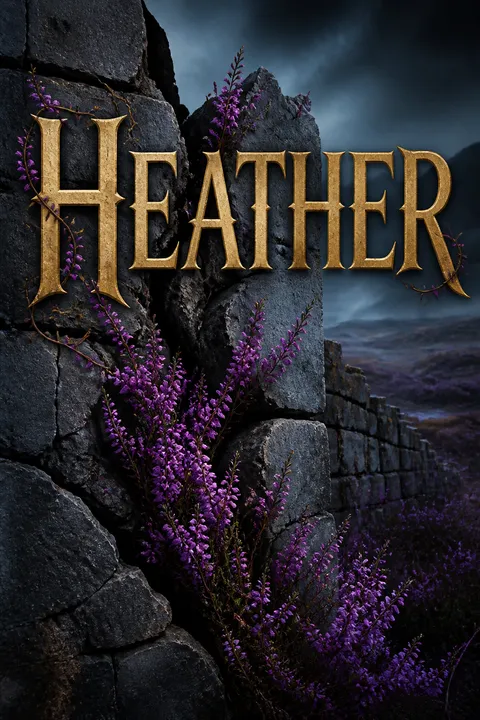
Blair5 testifies about her mother’s2 care, while the public debate continues to simplify both women. Later, Iris2 returns to the Riley land with her family and Margot. They place roses beside graves for Sabrina6 and the infant. Iris2 names the child Heather, after the hardy plant that thrives in the Pines, and buries the amber bead she kept from the night she left the baby.
The ending offers accountability without pretending that a verdict can make the past coherent. Iris receives a lesser conviction than the prosecution sought, but neither sentence nor public sympathy restores Heather or Sabrina. The graves create a place where the family can name what had been reduced to an unidentified baby and a missing girl. Heather’s name joins the child to the landscape and to a lineage of women who endured it, rather than to the anonymous category of Baby Doe. The final burial of the bead turns a private token of survival into a shared act of mourning.
Analysis
Heather asks what happens when family history is treated as private property, then shows how little control any one person has over the answer. Jenna3 hides the story of her teenage exploitation because she expects Callie1 to choose the respectable Caputos.9 Annabelle2 hides her identity because shame makes reinvention feel safer than explanation. Blair5 searches for an ancestry that her mother2 will not narrate, and her DNA sample turns that search into evidence. Each generation tries to protect the next by withholding information; each silence instead leaves the younger person to interpret fragments alone.
The novel is careful not to make harm disappear inside explanation. Annabelle’s2 fear and isolation contextualize her decision to leave the infant, but Heather still dies. Jane’s4 exhaustion explains her entry into the mushroom trade, but it does not neutralize the danger that follows. Callie’s1 desire to serve the law is tested when legal exposure threatens people she loves, and when a viral version of a case turns procedural fact into public punishment. The story distinguishes accountability from spectacle: evidence can establish what happened, while institutions and crowds may still distort who deserves compassion.
The women’s bodies carry what official records omit. Annabelle’s2 scar, Jenna’s3 addiction, Jane’s4 injuries, and the birth itself are not abstract symbols; they are consequences that persist after other people stop asking questions. Objects perform a similar kind of memory. The amber bracelet, the charm, the photographs, and the DNA samples travel between generations, carrying facts that no single character can safely speak. By the end, naming Heather and placing her beside Sabrina6 does not repair the past. It gives the lost a place in the family’s account, and lets survival begin with truth rather than with the demand to be innocent.
Review Summary
Characters
Callie Hauser
Cold-case police chiefCallie is a thirty-year-old former narcotics detective who returns to Pine Lakes to help her injured best friend and becomes its police chief. Having grown up with an alcoholic mother3, she trusts procedure because rules once gave her a way to survive instability. She is disciplined, ambitious, and sharp at reading danger, but she can mistake emotional distance for objectivity. Her loyalty to Jane4 and her unresolved feelings about Jenna3 repeatedly complicate the clean division she wants between work and family. Callie’s central struggle is not simply to uncover facts, but to learn what justice demands when the people she loves are implicated and when exposure can cause harm as well as accountability.
Annabelle Riley
Studious twin with secretsAnnabelle is the quieter, academically driven twin, inclined to follow rules and imagine that achievement can carry her beyond a chaotic home. She shares a deep emotional bond with Sabrina6, but their closeness also breeds competition, especially as Sabrina6 develops a private life beyond their childhood code. Annabelle is observant and inward, often able to describe other people’s motives more readily than her own needs. Her wish to be good is partly aspiration and partly defense: if she can be careful enough, perhaps she can avoid the damage surrounding her. She is vulnerable to isolation because she has learned to hide distress rather than risk being judged or separated from the people she depends on.
Jenna
Callie's estranged motherJenna is a gifted singer with a rebellious streak, a quick wit, and a long history of alcohol dependence. As Callie’s1 mother3, she has been loving in flashes but inconsistent in the daily work of parenting, leaving Callie1 alert to every sign of danger. Jenna’s stories about the Jersey Devil and her family’s cabin give her a private language for fear, though they can also let her evade responsibility. Beneath her defiance is a woman who remembers what it felt like to be young, poor, and unheard. Her relationship with Callie1 is strained by old injuries and mutual misreading, but both women continue to want a connection they do not know how to ask for.
Jane
Callie's injured best friendJane has been Callie’s1 closest friend since college, a former chemistry student and athlete who built a life in the Pines with her husband8 and daughter11. Warm and funny, she is also proud, private, and uncomfortable with dependence. Her serious injuries make ordinary tasks and motherhood feel newly difficult, while the loss of physical independence presses on the identity she had built around competence. Jane can be protective of Callie1, but she withholds information when she fears that honesty will endanger her family. Their friendship is a chosen kinship, strong enough to survive anger but not exempt from the damage secrets cause.
Blair
Curious daughter and witnessBlair is Iris2 and Ben’s13 teenage daughter, a soccer player balancing school, friends, and a new romantic relationship. She is perceptive about social power, especially the way girls are watched, judged, and pressured to perform maturity. Finding objects from her mother’s2 past makes her both suspicious and protective; she wants to know her family’s history without understanding how much the answer may cost. Blair’s interest in ancestry reflects a desire to locate herself within a continuous family story. She is capable of tenderness toward her mother2 while still recognizing that love does not erase what happened to another child.
Sabrina Riley
Defiant twin and sisterSabrina is Annabelle’s2 twin, more openly confrontational and socially daring than her sister. She works at a bait shop, experiments with clothes and makeup, and resists being confined to the role of the good or bad Riley girl. Her quick temper can wound Annabelle2, but it also makes her a forceful protector when men threaten them. Sabrina’s private relationship with an older man pulls her away from the shared world she once built with Annabelle2. She remains difficult for others to understand because the town turns her into a rumor instead of asking what she wants or what she has endured.
Luke Caputo
Nursery-owning older brotherLuke is Damien’s8 older brother and the owner of a local plant nursery. He is self-assured, socially adept, and comfortable keeping parts of his life separate from the family’s respectable public image. His closeness to the woods and his easy manner can make him seem independent of the town’s institutions, though he remains connected to the Caputo family’s9 influence. Luke’s relationships with Callie1, Damien8, and Jane4 are marked by unequal power and unspoken history. He is the kind of man whose charm makes others wonder whether they have misread him, a quality that complicates the task of separating genuine generosity from control.
Damien Caputo
Jane's older husbandDamien is Jane’s4 husband, Opal’s11 father, and Luke’s7 younger brother. He runs outdoor trips and has built a family life around the landscape, though financial pressure and caregiving responsibilities strain the household. Damien is attentive to Opal11 and can be tender with Jane4, yet he is also defensive and deeply shaped by his position within a family that prizes loyalty. He wants to be regarded as capable and useful, particularly beside his more forceful brother7. The gap between his gentle domestic manner and his resentment makes him difficult for Callie1 to read, especially when he avoids direct questions.
Frank Caputo
Retired chief and patriarchFrank is Pine Lakes’ former police chief, the respected father of Luke7 and Damien8, and the man who recommends Callie1 for her position. He remains a familiar presence at the station and expects his experience to carry weight. His authority is paternal and institutional at once, which allows him to offer genuine guidance while intruding on Callie’s1 independence. Frank values family reputation and the stability of the department, but his instinct to protect the people close to him can conflict with a fair investigation.
Lorraine Caputo
Caputo family matriarchLorraine is Frank’s9 wife and the polished center of the Caputo household. She marks family life through meals, keepsakes, and ritual hospitality, and she is devoted to her sons7 and granddaughter11. Her warmth can be genuine, but it also helps preserve a family image in which difficult matters are kept outside the dinner conversation. Lorraine’s charm bracelet and careful hosting make the Caputo history feel tangible, even when the people around her avoid speaking plainly.
Opal
Jane and Damien's daughterOpal is Jane4 and Damien’s8 three-year-old daughter and Callie’s1 beloved godchild-like presence. Imaginative and energetic, she invents secret houses, unicorn cities, and games with shifting rules. Her innocence does not make her oblivious: she notices tension between adults and gives it child-sized images. Opal’s need for care raises the stakes of Jane4 and Damien’s8 choices, while her affection gives Callie1 a glimpse of family life that is not organized around crisis.
Adrian
Kayaking scientist and partnerAdrian is a waterways scientist and Stockton professor who meets Callie1 while collecting creek samples. He is patient, attentive, and at ease outdoors, offering a form of companionship that does not require Callie1 to perform toughness. His love of kayaking and careful cooking stand in contrast to her work-driven habits. Adrian gives Callie1 room to speak about painful events without turning them into a problem he must solve, while his desire for commitment asks her to consider a life beyond work and emergency.
Ben Owens
Iris's husband and fatherBen is Iris’s2 husband, a CPA, and the father of Blair5 and her two brothers. He is warm, domestic, and proud of his family, and he tries to offer Iris2 a stable life without knowing the full history she carries. His generosity appears in small acts of care and in the ordinary future he imagines for his children. Ben’s trust makes Iris’s2 hidden past more consequential, because it places her secret inside a relationship built on affection and shared responsibility.
Billy Fauver
Volatile local mechanicFauver runs an autobody shop and has a record of violence and conflict with women. He is physically imposing, contemptuous of authority, and skilled at making other people feel they are wasting his time. His name surfaces both in the old Riley investigation and in the present-day drug trade, giving Callie1 a plausible but incomplete lead. Fauver embodies the way a small-town reputation can protect a man when complaints are treated as ordinary trouble.
Layla Hart
Teenager caught in the drug tradeLayla is a fifteen-year-old who survives an overdose after Callie1 administers Narcan. Angry and guarded, she resents police intervention and fears the consequences of speaking about the people around her. Her friendship with Amanda and her attachment to a local nursery job hint at a life larger than her drug use. Layla’s encounters with Callie1 show how help can feel like an intrusion to someone already being controlled by others.
Lynne Hamilton
Former teacher and mentorLynne Hamilton taught Annabelle2 history and advised the school yearbook committee. She noticed Annabelle’s2 academic promise and tried to support her future, but worried that involving outside authorities might separate the twins or worsen their precarious home life. Years later, she is a successful teacher who remains guarded about the Riley sisters. Her character illustrates the difficult space between recognizing danger and taking action when every available intervention carries risk.
Della
Station clerk and family friendDella works reception at the police station and once knew the Riley family through her friendship with their mother. She quietly gives Callie1 Sabrina’s6 name and later helps bring attention to the old case. Della is cautious about the risks of speaking against powerful people, especially while supporting her own family, but she does not forget the girls. Her modest interventions show how information can survive through people who were never officially assigned to preserve it.
Wren
Della's writer daughterWren is Della’s17 adult daughter, a writer who returns to Pine Lakes for the holidays. Her memories of exploring the Riley property with friends give Callie1 a lead to the abandoned factory. Wren is imaginative and alert to the stories places accumulate, but she also recognizes that turning real suffering into material can be ethically fraught. Her work gives the town’s buried history a route into public view.
Rebecca Nixon
Freelance genetic genealogistRebecca Nixon uses genetic genealogy to connect old crime-scene evidence with modern DNA databases. She is ambitious, polished, and convinced that her work can solve cases the police left unresolved. Her confidence makes her effective, but she treats publicity as part of the achievement and is less attentive to the families caught in the story. Nixon represents the tension between technological breakthroughs and the human consequences of making private histories searchable.
Trent Brentwood
Former Riley classmateTrent is a former classmate of the Riley twins who now works at a fish market. He is flirtatious, unreliable in his judgments of women, and candid about his own messy personal life. His recollection that Annabelle2 had a twin and a visible scar gives Callie1 a crucial lead.
Benny Healy
Cold-case investigatorHealy is Callie’s1 former colleague, now working cold cases. He helps locate old evidence and bring genetic genealogy into the investigation. He is brusque and practical, focused on what can be proved, even when Callie’s1 personal connection makes the work harder.
Steve Wilkins
Jenna's AA sponsorSteve is Jenna’s3 Alcoholics Anonymous sponsor, a married man who speaks with her regularly and takes her recovery seriously. His gentle concern challenges Callie’s1 assumption that Jenna3 has no one in her life besides family. He offers a small but important sign that Jenna3 is trying to build support beyond her daughter1.
Plot Devices
The amber bracelet
A fragile physical clueThe broken amber bracelet found near Baby Doe’s body belonged to Sabrina6 and once belonged to the twins’ mother. Its appearance in the old file initially offers Callie1 one tangible detail in an investigation otherwise built from rumor. When Annabelle2 later recognizes it, the bracelet connects the crime scene to the missing sisters and to the last night before the birth. It does not explain the whole crime by itself, but its absence from the twins’ lives gives their private conflict a physical trace. The beads become a measure of what the official record failed to understand.
The green glassine bags
A trail through the drug tradeThe local heroin is packaged in green glassine bags stamped with pine boughs. Callie1 recognizes the distinctive packaging at overdose scenes and uses it to connect Layla15, the paintball park, the town’s teenagers, and Fauver’s14 network. When an empty bag turns up among Opal’s11 playthings, the same object misdirects Callie1 toward Damien8 before Jane4 explains the family’s involvement in mushroom sales and their later separation from harder drugs. The bags make an invisible trade visible, while also showing how easily evidence can be misunderstood when investigators act on assumptions.
Consumer DNA databases
Kinship becomes evidenceA consumer DNA test Callie1 took years earlier reveals her paternal relationship to Baby Doe. Later, Blair’s5 own test gives investigators a genetic path to Iris2 and makes the old case actionable. The technology bypasses the silence that protected the family secret, but it also exposes people who never consented to become public evidence. DNA can establish biological relationships with startling precision; it cannot explain the circumstances of a birth, distinguish moral responsibility from coercion, or decide what justice should look like. Its accuracy is powerful precisely because its meaning remains human and contested.
The Jersey Devil
Fear given local shapeThe Jersey Devil folklore gives Jenna3 a language for danger in the Pine Barrens and threads through the stories the characters tell about the woods. As children, the Riley twins hear the legend from Jenna3 and use it to imagine a threat outside their home. In the present, Jenna’s3 references to the Devil can sound like another sign of her instability, making it easier for Callie1 and others to dismiss her. The legend’s function is not to confirm the supernatural but to show how fear gets translated into stories when the real source of danger is difficult to name.
The old photographs
A past self made visibleA hidden film canister preserves images Annabelle2 took as a teenager: her twin, the decaying family home, the factory ruins, and the men who moved freely through their lives. Blair5 develops the film and sees a girl who resembles her mother2 but does not seem to be the woman she knows. The photographs turn memory into something another generation can inspect, while leaving room for ambiguity about what a single frame can prove. They lead Blair5 toward genetic testing and help Callie1 understand that a private past has been preserved, not erased.
Download PDF
Download EPUB
.epub digital book format is ideal for reading ebooks on phones, tablets, and e-readers.








