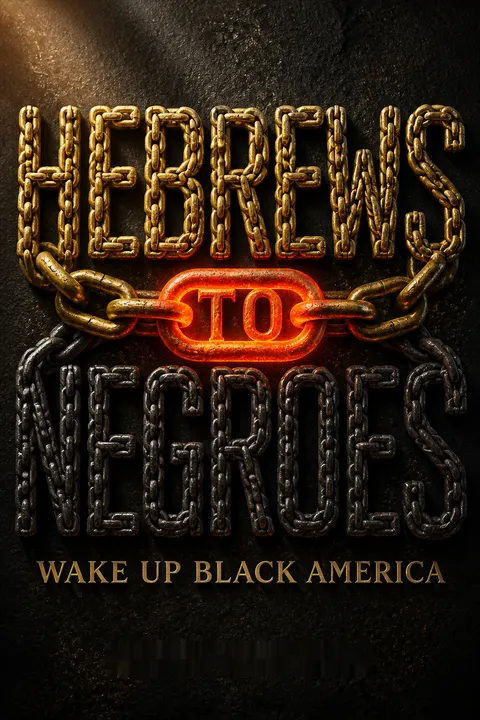


Key Takeaways
Turn paycheck-to-paycheck exhaustion into questions that can be tested.
The book opens in exhaustion. Ronald Dalton describes working from a young age, struggling to cover rent, tuition, food, and bills while trying to finish college. Later, as a physician assistant in Detroit, he says workplace racism and unmet needs in Black neighborhoods sharpened his questions. His opening concern is that a life consumed by labor can leave little time to ask who benefits from the arrangement.
A personal awakening. Dalton traces his search for answers to conversations with a thoughtful colleague and his own study of history and religion. He urges readers to ask why their lives feel constrained, what might change, and what could happen if nothing does. That personal story leads into a much larger explanation of Black hardship.
What's compelling is the starting point: exhaustion is not merely personal failure when work, bills, and caregiving leave little room to live. Asking who benefits can uncover neglected questions about wages, time, and public services. The caution is that feeling trapped does not, by itself, prove a hidden plan. Strong inquiry separates a genuine problem from a proposed explanation, then looks for evidence that could confirm or disprove it.
Interrogate the claim that Black Americans are Israel's scattered descendants.
The central identity claim. Dalton argues that African Americans descend from ancient Hebrew Israelites who were scattered through captivity and the slave trades. He reads biblical passages about exile, servitude, and lost heritage as a description of Black history. In this interpretation, the book's title is both a claim about ancestry and a call for Black Americans to recover an identity the author believes was erased.
A broad historical arc. Dalton connects the biblical Israelites to African peoples and to descendants of enslaved people across the Americas and elsewhere. He presents the Arab, Indian Ocean, and Atlantic slave trades as successive dispersals. These links are the book's interpretation of scripture and history, not a conclusion established by the text itself.
The search for a name, family history, or collective past can be powerful, especially after slavery deliberately severed records and kinship. Yet a biblical prophecy can offer a meaningful interpretive lens without proving biological descent. Ethnic identity, religious belonging, and genealogy are related but distinct questions. Treating them separately preserves the force of historical loss without requiring every Black community to share one ancient origin story.
Compare translations before treating familiar biblical language as original.
A case for comparison. Dalton questions how biblical books and names reached modern readers. He compares the King James Version with the Greek Septuagint and Ethiopian Bible, discusses books such as Enoch and Jubilees, and argues that translations and omissions obscure the identity of the Israelites. He also challenges familiar English forms of God's name and Jesus' name, suggesting that readers should examine how Hebrew, Greek, Latin, and English versions differ.
Translation shapes interpretation. The book treats these differences as evidence that religious history has been manipulated. It asks readers to inspect the wording rather than accepting every familiar phrase as original. Its wider point is that access to religious texts matters, especially when a community's history has been filtered through institutions it did not control.
Comparing translations is a sound habit: words shift across languages, and religious communities do not all use the same biblical canon. That fact alone, however, does not prove a coordinated effort to hide a particular ancestry. Textual criticism depends on comparing manuscripts, dating sources, and explaining variants, not simply choosing the version that best fits a preferred conclusion. The book's questions are useful; its certainty about the answers is less secure.
Treat ancient images and skin-color arguments as clues, not proof.
The book's visual case. Dalton argues that ancient Egyptians, Canaanites, Ethiopians, and Israelites were Black or brown-skinned. He points to biblical descriptions of dark skin, ancient reliefs depicting captives, and accounts by Greek and Roman writers. He also uses passages about leprosy turning skin white and references to hair like wool to challenge familiar images of biblical figures as European-looking.
Appearance as evidence. Dalton adds claims about melanin, sunlight, and inheritance to argue that the Israelites' descendants should resemble people of African descent. These claims support his interpretation of biblical history, but the book often treats descriptions and images as more decisive than they are. Ancient populations and modern racial categories do not map neatly onto one another.
The book is right to ask why European-looking biblical art became so familiar, and to notice that artistic conventions can shape religious imagination. But skin tone, hair texture, or a single ancient carving cannot establish tribal ancestry. Images may be stylized, damaged, or interpreted through modern assumptions. A careful reconstruction uses multiple kinds of evidence and distinguishes what an artifact shows from what a later reader wants it to mean.
Trace present hardship through institutions, not just individual choices.
From prophecy to policy. Dalton connects biblical accounts of captivity and hardship to current problems facing Black Americans. He discusses unequal schooling, limited job opportunities, debt, food assistance, incarceration, health care, and media portrayals. His own stories of financial strain as a student and discrimination at work give these concerns a personal frame. He argues that barriers repeat across generations rather than ending with the legal abolition of slavery.
A social diagnosis. The book also calls attention to the pressure of working multiple jobs while spending little time with family or community. Dalton interprets modern hardship through the biblical Curses of Israel. That interpretation is his theological framework; the concrete issues he raises can also be examined through local histories, policies, and measurable outcomes.
The distinction between individual effort and structural constraint is important. School resources, hiring practices, housing, health care, and criminal justice can shape which choices are realistically available. At the same time, a single explanation rarely accounts for every community or outcome. Serious analysis asks which policies create a barrier, who is affected, and what evidence shows that a proposed remedy works. That approach makes the book's call for attention more actionable.
Separate structural criticism from claims of a secret Jewish conspiracy.
A serious weakness. Alongside its critique of racial inequality, the book repeatedly claims that Jewish families or organizations control banking, media, and political events. It also argues that European Jews descend from Khazars and that hidden elites plan Black depopulation. The text presents these assertions as explanations for oppression, but does not substantiate them with reliable evidence. They echo longstanding antisemitic conspiracy claims and blur distinctions among Jewish people, institutions, and governments.
Keep the inquiry precise. Dalton's concerns about discrimination, media influence, and unequal power deserve examination. Those concerns do not require blaming an ethnic or religious group collectively. Specific institutions, policies, ownership structures, and decisions can be investigated without converting structural criticism into a theory about a hidden people controlling the world.
What's essential here is separating legitimate scrutiny of concentrated power from collective accusation. Media ownership, financial rules, and state policy are appropriate subjects for evidence-based criticism. Assigning secret coordination to Jews as a group is not analysis; it substitutes an ethnic scapegoat for verifiable mechanisms and can fuel real-world hostility. A stronger argument follows documents, incentives, and decisions, while resisting claims that cannot be tested or that turn a diverse population into one culprit.
Turn solidarity into Black-owned schools, businesses, and financial institutions.
Build lasting capacity. Dalton argues that unity should produce institutions, not remain a slogan. He proposes Black-owned businesses, banks, schools, and community investment as ways to keep more wealth circulating locally. He invokes Tulsa's Greenwood district, known as Black Wall Street, whose businesses and homes were destroyed in the 1921 race massacre. The book estimates that if 44 million Black Americans each contributed $1,000, the pool would approach $40 billion.
An invitation, not a tested plan. The calculation illustrates the scale of collective capital, but it is hypothetical. It does not resolve how funds would be governed, invested, protected, or shared. Dalton's larger point is that ownership can create jobs and reduce dependence on businesses that extract money from Black neighborhoods without reinvesting in them.
The turn from protest to institution-building is a productive extension of the book's argument. Capital held collectively can support businesses, education, and local services, but trust requires transparent governance, accountable leadership, and clear measures of public benefit. History also shows that ownership alone cannot erase discriminatory policy or unequal access to markets. Community investment is strongest when paired with civic advocacy and safeguards against concentrating power in a new, unaccountable elite.
Let faith prompt moral repair without replacing evidence or action.
A spiritual call. Dalton frames the book as a wake-up message grounded in Christianity. He emphasizes repentance, water baptism, and what he calls the Holy Ghost, especially the practice of speaking in tongues. He urges readers to resist materialism, strengthen family and community ties, and seek a more direct relationship with God. His account reflects his own religious interpretation and his emphasis on Pentecostal and Apostolic forms of Christianity.
Faith and responsibility. The conclusion calls Black Americans to recover knowledge, reject destructive behavior, and help one another. Dalton sees spiritual renewal as a source of strength amid economic and social pressures. His message is not only to believe, but also to act: question, learn, support community, and refuse to let hardship become a reason to abandon hope.
Religious practice can give people language for suffering, rituals of belonging, and motivation to serve others. In this book, faith also anchors a call to collective responsibility rather than private comfort alone. Christian traditions differ, however, on baptism, spiritual gifts, and salvation. A useful reading can respect Dalton's conviction while recognizing that one denomination's interpretation is not the only Christian account, and that spiritual hope works best alongside practical responses to material need.
Analysis
This is a hybrid work: part memoir, part biblical interpretation, part social critique, and part polemic. Its narrative begins with Dalton's experience of financial strain as a student and later workplace discrimination, then expands into a sweeping account of Black identity, biblical history, slavery, and contemporary inequality. That movement gives the book emotional momentum. It asks readers to connect personal hardship with larger systems and insists that recovering history can restore dignity and solidarity.
The adaptation's central distinction is between the urgency of the questions and the reliability of the answers. The book raises real subjects, including school closures, unequal access to work and health care, incarceration, food insecurity, and the loss of family history under slavery. But it often moves from those concerns to claims about ancient ancestry, biblical translation, and hidden coordination without demonstrating the links. Biblical interpretation can shape communal identity, but it cannot alone establish genealogy. Ancient images, modern racial categories, and theological readings require different kinds of evidence.
The most serious limitation is the book's reliance on claims that Jews collectively control finance and media or secretly orchestrate Black oppression. Those claims reproduce antisemitic conspiracy tropes and weaken the book's otherwise important attention to unequal power. Criticizing specific policies, corporations, or institutions is more persuasive when evidence identifies who acted, how decisions were made, and what outcomes followed, rather than assigning blame to an ethnic group.
The book's strongest practical impulse is its appeal for Black solidarity and local ownership. Its proposed shared fund is illustrative, not a demonstrated solution; durable institutions require transparent governance, public accountability, and attention to unequal resources. Read most usefully, the work is a record of urgent identity-seeking and frustration with systems that leave communities feeling trapped. Its call to investigate history and build collective capacity merits engagement, while its historical and conspiratorial claims require careful verification rather than automatic acceptance.
People Also Read




Glossary
Black Hebrew Israelites
Black Israelite ancestry claimIn this book, the term describes the claim that African Americans and other people of African descent are descendants of the ancient Israelite tribes, dispersed through captivity and slavery. The author treats this as a recovered identity. The summary presents it as the book's thesis, not as established genealogical fact.
Lost Sheep of Israel
Dispersed Israelites in scriptureA phrase from the New Testament that the author applies to Black people whose ancestry and heritage, he argues, were disrupted by enslavement and migration. In the book, it links biblical language about Israel's dispersion to a modern identity claim. It is a theological interpretation, not a neutral historical designation.
Curses of Israel
Biblical warnings for IsraelThe author's name for passages, especially in Deuteronomy 28, describing hardship, exile, servitude, and dispersion following Israel's disobedience. He interprets these passages as a description of the historical experience of Black people. Other readers may understand them differently; the term refers to his interpretive framework.
Tetragrammaton
Four-letter divine nameThe term for the four Hebrew letters YHWH, traditionally associated with the divine name in the Hebrew Bible. The book discusses competing pronunciations and argues that later translations obscured the original name. The spelling is widely recognized, while pronunciation and religious use vary among Jewish and Christian traditions.
Nephilim
Biblical giants or beingsA term appearing in Genesis and Numbers, rendered as giants in some translations. The book follows an interpretation in which the Nephilim were offspring of fallen angels and human women, and connects them to later giant figures. This is a religious interpretation of difficult biblical passages, not a verified account of a historical population.
Willie Lynch Letter
Alleged slavery-control textA speech or letter attributed to a slaveholder named Willie Lynch, which the book uses to describe methods of dividing enslaved people by age, skin tone, and gender. Dalton presents its ideas as a continuing pattern of control. The text's historical authenticity is disputed, so it should not be treated as a verified primary document.
New World Order
Alleged global power planA phrase the book uses for a supposed project by hidden elites to centralize political and economic control. Dalton connects it to banks, governments, media, and international institutions. The book presents this as a conspiracy narrative; the term itself does not establish that a coordinated secret plan exists.
Ashkenazi Jews
Central and Eastern European JewsA term for Jewish communities historically associated with Central and Eastern Europe. The author argues that Ashkenazi Jews descend mainly from Khazar converts rather than ancient Israelites. That ancestry claim is contested and should be distinguished from the standard historical use of the term for these Jewish communities.
Download PDF
Download EPUB
.epub digital book format is ideal for reading ebooks on phones, tablets, and e-readers.








