

Plot Summary
The Clock Enters Therapy
Hector is an experienced psychiatrist who listens carefully, but his patients begin giving him a problem he cannot treat with a simple prescription. Sabine feels that work and family duties leave her no time for herself.
Fernand measures the life ahead in the few dogs he expects to own, while a young boy called Hector wants to grow up immediately because school makes every day drag. Their opposing wishes, to slow time, count what remains, or hurry through it, stay with the doctor after their sessions.
When Hubert, an astronomer, regrets neglecting his wife until she left, Hector adds another warning to his notebook: people often notice what mattered only after it is gone. The patients have made time personal, urgent, and impossible to ignore.
These opening cases make time legible through ordinary choices rather than abstract theory. Sabine experiences it as a resource captured by care work, Fernand turns mortality into an unsettling arithmetic, and the child mistakes adulthood for freedom from imposed schedules. Hubert adds the ethical cost of looking backward: regret cannot restore attention withheld in the past. Hector's listening method lets incompatible experiences coexist without forcing a single diagnosis. The notebook begins as a clinician's tool, but the questions it collects will also expose his own evasions. His inquiry starts because professional empathy has made his patients' unease impossible to keep at a distance.
Gray Hair, Old Questions
Marie-Agnès, who tries to preserve her youth through exercise, diet, and beauty products, admits that she misses the limitless future she imagined at twenty. Hector notices his first gray hairs and tells Clara, his partner, that so many people seem to be racing time.
Clara explains that women often feel age arriving when younger rivals appear and the possibility of having a child starts to feel less abstract. That night, Hector dreams of an empty train whose speed changes when he runs through it.
He cannot escape, and a familiar old monk appears as a young man. The dream gives his unease an image. Seeking help to interpret it, Hector visits his former colleague François, who connects the train to time's passage and Hector's struggle against it.
The chapter links aging to more than physical decline. Marie-Agnès's elaborate routines reveal how self-care can become a form of obedience to other people's judgments, while Clara's concern is tied to a concrete, time-sensitive wish for a family. Hector's gray hairs do not cause his crisis so much as make an existing question visible on his own body. The dream then dramatizes the limits of control: his effort changes the train's movement but never grants an exit. François refuses a neat symbolic cure, offering uncertainty alongside interpretation. The story's philosophy grows out of intimate pressure, not detached speculation.
A Monk Disappears
Hector learns that some of his older colleagues dye their hair, while François accepts his white hair and admits that romance can make him feel young, then leave him feeling older when it ends. Their talk about philosophers gives Hector more questions than answers, so he turns again to travel.
Before he can set out, a newspaper reports that the old monk Hector befriended in China has vanished amid international accusations against the Chinese government.
Hector wants to know whether his friend is safe and hopes the monk can help him understand time. His school friend Édouard, now working to support poor communities, invites him to a remote Inuit settlement where he is stationed. Clara refuses to go into the extreme cold, so Hector leaves without her.
The monk's disappearance converts Hector's inward inquiry into a plot with a destination. The contrast between François, who pursues romance despite its costs, and the monk, whose whereabouts are unknown, broadens the novel's possible responses to aging without ranking them yet. Édouard's invitation matters because it brings Hector to a culture living under a different rhythm, while Clara's refusal exposes a small but important distance in their relationship. Hector tells himself that travel is research, but the separation also tests his promise to remain faithful. The journey therefore carries both an intellectual question and an emotional risk.
Winter Has Its Own Clock
Hector reaches the Arctic by a tiny ski-equipped plane, sharing champagne with Hilton, an ice researcher, and its pilot, Éléonore. At Édouard's camp, he sees how aid can help Inuit families while also drawing them toward outside habits that may erode hunting and local independence.
During a long winter gathering, the chief introduces Hector to an elderly shaman. The shaman holds Hector's hands, and Hector falls into a vision of himself aged and alone on a frozen plain, tempted by a succession of inviting homes until darkness leaves him lost.
He wakes among the Inuit, disturbed by the image. As the villagers pray for the returning sun, the shaman explains through Édouard that his journey may have shown a past or future life. Hector sings against the pressure to live by someone else's clock, and the Inuit carry the song forward.
The Arctic makes time bodily: darkness, cold, hunger, and the return of daylight set limits that cannot be negotiated away. Édouard's work complicates any easy admiration of tradition, since medicine and fair trade can improve lives even as imported systems disrupt them. Hector's vision converts his familiar temptation to postpone decisions into a literal landscape where every attractive detour risks leaving him stranded. The shaman does not certify the vision as prophecy, preserving uncertainty rather than offering supernatural authority as a shortcut. The song becomes Hector's first public response to his inquiry: not an answer about time, but a refusal to let productivity define every life.
Clara's Clock Is Ticking
Back home, Hector finds Clara increasingly sad and learns that she fears their relationship has grown too settled for marriage or a baby. She cries that her life feels nearly over and that she has done nothing worthwhile. Hector recognizes signs that could point to depression, feels guilty for missing them, and urges her to consult François.
Before Hector leaves for China to search for the monk, Clara encourages him to go because she hopes what he learns may help her. His patients complicate the departure: Marie-Agnès has begun seeing Paul, an older executive who records wasted minutes and calculates his remaining days, and she invites Hector to a conference Paul is organizing about time.
Paul cannot attend Hector's appointment, but soon suffers a severe panic attack. Hector accepts the invitation, now carrying Clara's distress and Paul's crisis with him.
Clara's confession turns Hector's professional subject into a failure of attention at home. He knows how to recognize depressive thinking in patients, yet his emotional exhaustion and familiarity with Clara have kept him from noticing her decline. Her encouragement to travel is both generous and difficult: she wants Hector's search to produce something useful, even while she needs support herself. Paul supplies a parallel extreme. His careful accounting appears to promise mastery, but the panic attack shows that numerical control cannot secure emotional safety. These paired crises sharpen the novel's question: what is time for if the people one loves remain unattended?
The Past Is Still Moving
On the flight to China, a fellow passenger tells Hector that the missing monk may be the same man once believed to be his own father, which would make him extraordinarily old. In the city, Hector reunites with Ying Li, a woman whose life he once helped change and who is now married with children.
Their affection remains, but meeting her family makes clear that their lives have moved on. Hector then visits Hubert at a remote observatory. Hubert explains that light lets astronomers see distant stars as they existed long ago, while relativity means a traveler moving near light speed could return to find Earth far older than himself.
He also describes hypotheses involving multiple space-times. The science gives Hector a wider frame for his questions, but no route back to lost choices.
This section places private memory beside physical time. Ying Li's present life is not an erasure of their earlier bond; it is evidence that love can matter without becoming a claim on the future. Hubert's astronomy offers a precise account of temporal difference, yet even its most astonishing possibilities carry emotional costs: traveling forward could separate someone from everyone they love. The revelation about the monk's age intensifies the search but does not solve it. Science, memory, and attachment each disclose a different dimension of time, and none can return Hector to a past moment or tell him exactly what to do next.
The Island Conference
After Hector returns to China, Édouard relays a new instruction from the Inuit shaman: Hector must find an island and a man who laughs often, or someone he loves may suffer later. Hector follows the clue to an island where Paul has gathered experts to discuss time.
Paul privately describes waking in terror, convinced that all his achievements and schedules have not kept life from slipping away. Hector helps him breathe through the panic, then joins the conference, where philosophers, business advisers, and a biologist consider time's meanings and the body's aging.
The biologist describes experiments on cell aging, but Hector sees that longer life would raise questions about inequality, children, and purpose. The island's unusually high number of centenarians gives him a place to look beyond laboratory answers.
The island brings Hector's private investigation into contact with competing public systems for managing time: philosophy, corporate efficiency, biology, and medicine. Paul's breakdown makes the conference's commercial setting sharply ironic, since a leader in the beauty industry cannot make himself feel secure through achievement or youthfulness. Hector's response remains clinical but modest; he can steady Paul's immediate panic without pretending to resolve mortality. The biological promise of extending life also reveals that longevity is not a neutral good. Its benefits would be distributed unevenly and reshape family, risk, and social responsibility. The shaman's cryptic direction pushes Hector toward lived examples rather than a final theory.
Music Beats the Stopwatch
Hector studies the island's older residents and finds that food alone cannot explain their longevity; family ties, familiar routines, and a shared community matter too. After missing some conference talks, he falls asleep and dreams of two centenarians discussing the fear of ending up isolated in an old people's home.
They reject the idea that a life must be packed full from beginning to end. Instead, they compare it to music, whose meaning depends on what came before and what follows, and describe how attention to the present can make a moment feel complete.
Hector wakes with a way to speak to Paul. He suggests that Paul think of life less as a container to fill and more as a sequence whose notes matter in relation to one another. Paul begins to whistle.
The centenarians' counsel revises the productivity model that has shaped Paul's diary and the conference's business language. A life is not made meaningful by maximizing its contents; its parts gain force through relation, memory, anticipation, and attention. The musical image also avoids a simplistic demand to live only in the present. A note matters partly because other notes surround it, just as Hector's past and future inform what he can feel now. The dream is psychologically useful without needing to be treated as supernatural evidence. Hector turns an image into care, translating reflection into a small intervention that helps Paul loosen his grip on measurement.
The Ticket Seller Returns
That night, Hector dreams of the conference participants aged far into the future and cannot remember whether he built a family with Clara. Éléonore comes to his room, and their attraction becomes difficult to dismiss.
Hector recognizes that giving in would betray Clara, remembers the relationship he has been trying to protect, and remains faithful. The next morning he joins Édouard and Éléonore to visit Trevor and Katharine, the retired teachers he met on the mountain. They reveal that the old monk was born in a remote Himalayan valley now inside China and wants to return there.
Hector understands that the quiet ticket seller at the mountain railway was the monk in disguise, but he had failed to recognize him. Éléonore studies the map and offers to fly them toward the unmarked valley.
The temptation is not a detachable romantic episode. It tests whether Hector's growing awareness of time will lead him to act or merely to philosophize about action. His fidelity is difficult rather than automatic, and his irritation with Clara the next morning shows that restraint does not instantly produce emotional clarity. The ticket seller's disguise extends the novel's recurring problem of recognition: Hector has been searching for an extraordinary, visibly wise figure while overlooking the ordinary person in front of him. Trevor and Katharine's map converts that missed encounter into a concrete route. The story shifts from interpreting time to making a consequential choice about where to go.
A Valley Beyond Maps
Éléonore pilots Hector and Édouard through a mountain range whose narrow passages leave little margin for error. The route offers no safe runway, and she finally lands on a meadow beside a lake, leaving the plane unable to take off again. Villagers, monks, and children greet the first white visitors they have seen, then guide the travelers uphill to the monastery.
Hector enters alone and finds the old monk alive, resting in a plain room. The danger of the flight and the difficult climb have brought Hector to the friend he sought, but the meeting is quiet rather than triumphant. The monk is visibly frail, and Hector understands that the conversation he has traveled so far to have may be one of their last.
The flight makes the search's cost literal. Éléonore's skill brings the group through the mountains, but the landing commits them to a place from which departure cannot be immediate or simple. The village's welcome contrasts with the public spectacle surrounding the monk's disappearance: here, ordinary hospitality replaces international accusation and media attention. Hector's solitary entrance preserves the intimacy of the friendship at the center of the journey. The scene also changes the emotional tempo. After repeated travel, theorizing, and deferral, he reaches a vulnerable person whose time is limited, so listening becomes more urgent than collecting another explanation.
The Monk's Last Lessons
The old monk explains that he disappeared because the world had begun treating his age as proof that his religion could defeat death. He had used the stationmaster disguise to avoid attention and enjoyed watching travelers pass, but he also observed how modern people pursue constant novelty and find aging harder to accept.
He admits that his public history as father and son was a story he arranged to preserve freedom and privacy. When Hector asks whether the present and eternity are the same, the monk describes the present as at once everything and nothing, because it exists only as it is being lived.
Hector returns several times, but the monk's strength fades. Édouard decides to remain in the valley, while Hector and Éléonore prepare to leave before worsening weather traps them.
The monk's revelation dismantles the fantasy that extraordinary longevity offers a cure for ordinary fear. He has not been untouched by time; rather, he has managed attention, privacy, and identity within it. His invented family history shows that even a revered teacher uses practical strategies, not pure detachment. His account of the present is deliberately paradoxical, but the story grounds it in bodily fact: his strength is failing, and Hector cannot preserve him by understanding him. Édouard's decision to stay suggests that the search has changed more than Hector. The lesson is not withdrawal from the world, but a different way of inhabiting it.
A Future Chosen Today
After leaving the valley, Hector returns to his patients and finds that life has continued without him. Sabine has reduced her working hours to make room for her children, while Fernand now has two dogs and laughs openly about counting them.
Hubert is cautiously hopeful about reconnecting with his wife, and Little Hector is less bored because he has made a friend at school. Clara has seen François and is feeling better. Later, Hector learns that she is pregnant.
In a final dream, the old monk reads Hector's notebook and distinguishes between organizing time and accepting that life ends. He cautions that detachment can itself become another obsession. Hector wakes without retaining his final insight, but the pregnancy makes his choice to build a life with Clara concrete.
The ending refuses the tidy closure Hector has sought in a definitive theory. His patients make incremental changes, not permanent escapes from aging, and Clara's pregnancy gives their relationship a future that is real precisely because it remains unfinished. The old monk's warning prevents acceptance from becoming passivity: letting go of control is not the same as refusing responsibility. Hector forgets the dream's concluding idea, a fitting limit for a book that treats understanding as provisional and lived rather than possessed. What he retains is practical: love requires timely attention, and a meaningful future is made through choices in the present.
Analysis
The novel treats time less as a single force than as a set of pressures created by work, memory, bodily change, love, and culture. Hector's patients give these pressures distinct shapes: Sabine has too little discretionary time, Little Hector wants to skip ahead, Fernand counts the future in dogs, and Paul tries to audit every wasted minute. Their differences matter because the book does not offer one ideal attitude that solves them all. Even apparently wise positions carry risks. Living only for the present can become an evasion; attempting detachment can turn into another rigid attachment; pursuing longevity can intensify inequality and fear.
The journeys make these ideas concrete. The Inuit community experiences time through weather, food, hunting, and seasonal return, while Hector's professional world divides it into appointments and deadlines. Neither life is romanticized: modern medicine saves lives, but modernization can also disrupt the social rhythms that sustain them. At the observatory, relativity enlarges time beyond human perception, yet Hubert's scientific knowledge cannot undo his marital loss. Philosophy, science, religion, and dreams each offer partial ways to understand experience, none sufficient to abolish finitude.
Hector's real development is ethical. He begins as a careful listener who assumes attention is something he reliably gives, then recognizes that he has failed to notice Clara's suffering. His search teaches him that thought must eventually become conduct: fidelity when tempted, presence with the old monk, and commitment to a future with Clara. The ending does not reward him with a master key. He forgets the last insight from his dream, but he has learned that accepting limits need not mean passivity. A full life is not a schedule with every space filled. It is a life in which attention, work, memory, and love are allowed to matter while they are here.
Review Summary
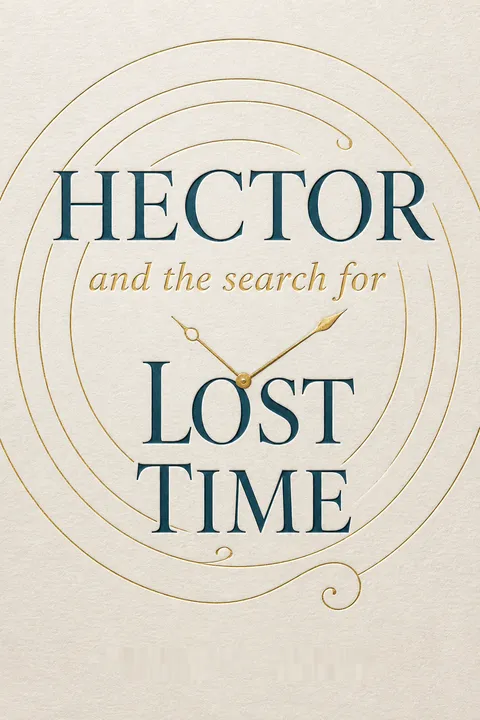
Hector and the Search for Lost Time receives mixed reviews, with an average rating of 3.65/5. Readers find the simple writing style charming but divisive. Some appreciate the philosophical exploration of time, while others feel it lacks depth. The book is praised for its humor and thought-provoking moments but criticized for underdeveloped characters and rushed endings. Many readers compare it to the previous books in the series, noting it doesn't quite match the charm of the first installment but still offers an entertaining and light read.
People Also Read






Characters
Hector
The listening psychiatristHector is a thoughtful, conscientious psychiatrist who believes patients can often discover their own answers when someone listens closely enough. Their concerns about aging, regret, boredom, and mortality gradually become his own questions. He is curious and humane, but also capable of overlooking distress in someone close to him after spending his days caring for others. Travel, conversation, dreams, and the notes he keeps help him test ideas against lived experience. His characteristic movement is from analysis toward action: he tries to turn abstract reflections into attention, care, and choices that affect the people he loves.
Clara
Hector's uncertain partnerClara works in the pharmaceutical industry and shares a loving but sometimes hesitant relationship with Hector. She is capable, perceptive, and often more direct than he is about the practical stakes of time, especially the prospect of marriage and having a child. Her concern about aging is not merely vanity; it is tied to a fear that postponing a decision may quietly close off a life she wants. Clara can be optimistic and funny, but she also carries private sadness that Hector does not immediately recognize. She represents the difference between discussing commitment and accepting its consequences.
The old monk
Hector's elusive teacherA wise, warm, and playful monk whom Hector befriends in China, the old monk has traveled widely and endured long periods of confinement. He helps people understand difficult matters without turning every answer into a lecture. His humor makes his authority feel human rather than remote, and his interest in the changing lives of ordinary people keeps his outlook connected to the world. For Hector, he is both a trusted friend and a model of another relationship to time. His evasiveness and quiet independence also make him difficult to find and easy to misunderstand.
Édouard
The reforming friendHector's old school friend, Édouard is quick-minded, restless, and accustomed to moving from one job and place to another. He once pursued wealth and professional advancement, but his work with poorer communities reflects a desire to make his skills useful. In the Arctic, he tries to help Inuit families trade fairly without stripping away their independence. His friendship with Hector gives the journey practical support and honest companionship. Édouard's relationship to time is shaped by a long habit of hurry, which makes his gradual interest in slower ways of living especially meaningful.
Old François
The philosophical colleagueAn older psychiatrist and Hector's trusted colleague, François has a traditional manner, white hair, and a lively interest in philosophy. He is candid about aging, faith, love, and the limits of psychological explanations. Rather than offering Hector a final answer, he supplies ideas and interpretations that keep the inquiry moving. His romantic life also makes him a comic counterpoint to the claim that wisdom necessarily produces calm. He takes Clara seriously as a patient while respecting the boundaries of confidentiality.
Éléonore
The fearless Arctic pilotÉléonore pilots small aircraft in dangerous conditions and is comfortable living without a settled home or conventional schedule. She is intelligent, adventurous, and interested in both philosophy and horoscopes, combining scientific skill with a taste for less rational ways of interpreting life. Her independence is genuine, but she is not indifferent to time or intimacy. Her presence challenges Hector to distinguish freedom from escape, while her skill becomes essential whenever the journey enters difficult terrain.
Paul
The executive counting daysPaul is an ambitious business executive who organizes his days around achievement and keeps an exacting account of time he considers wasted. His confidence rests on control, status, and visible accomplishment, making it difficult for him to admit when fear overwhelms him. A relationship with Marie-Agnès brings him into Hector's orbit, and a conference he organizes gives Hector a public setting in which to consider time. Paul embodies the psychological cost of treating life as a performance that must continually prove its value.
Marie-Agnès
The woman resisting ageMarie-Agnès is charming, self-aware, and deeply concerned with preserving her youth and desirability. Her history of leaving relationships when they become serious has left her reflecting on missed possibilities, though she does not simply want to return to the past. She uses exercise, careful eating, and beauty products to manage the visible effects of aging. Her relationship with Paul connects Hector to the island conference, and her experience reveals how the wish to stay young can shape both self-image and romantic choices.
Fernand
The solitary dog loverFernand is a kind, lonely man whose unusual habit of measuring his remaining life in the number of dogs he may own unsettles the people around him. Hector recognizes that the idea is not simply eccentric: it makes mortality concrete in a way most people prefer to avoid. Fernand's concern for his dog also allows Hector to compare human reflection about the future with an animal's immediate experience. His dry humor and affection for dogs make him one of Hector's most memorable patients.
Hubert
The grieving astronomerHubert is an astronomer whose work demands intense attention to distant stars and complex calculations. His devotion to that work contributed to his neglect of his marriage, and the loss leaves him preoccupied with how events unfolded. Through him, Hector encounters the scientific scale of time, including the delayed light of distant stars and the effects of relativity. Hubert's intellectual precision does not protect him from grief, but it gives him a language for questions that remain emotionally unsettled.
Ying Li
A love from Hector's pastYing Li is a Chinese woman Hector met during an earlier journey, when she was in a difficult situation. Their brief closeness left a lasting impression on both of them, but she has since built a family and a life of her own. She is warm and thoughtful, and her affection for Hector does not erase her commitment to her present relationships. Her story gives Hector a concrete encounter with a past that remains meaningful without needing to be resumed.
Trevor
The reflective retired teacherTrevor is a retired teacher who has spent many years with Katharine and has learned to make peace with change through work, memory, and philosophy. He values effort while recognizing that not every loss can be prevented. His reflections on accepting what cannot be changed give Hector a practical counterweight to endless speculation. Trevor and Katharine's affection offers Hector an example of long companionship without pretending that time has left them untouched.
Katharine
The artist who notices changeKatharine is a retired drawing teacher and Trevor's longtime partner. She notices how places and people change, but she can also recognize that returning to a place means returning as a changed person. Her warmth and humor make reflection feel companionable rather than solemn. Through her marriage to Trevor, Hector sees how shared history can deepen affection while preserving a sense of discovery.
Édouard's Inuit hosts
Keepers of seasonal timeThe Inuit community in the Arctic lives with seasons that shape hunting, travel, food stores, and social life. Its members welcome Hector and share their understanding of urgency as something tied to immediate needs rather than abstract schedules. They are not presented as untouched by modernity: medical care, trade, and technology bring real benefits as well as risks. Their perspective forces Hector to consider how a society's tools can alter its sense of time.
The Inuit shaman
The dream-guiding elderAn elderly Inuit spiritual leader, the shaman is treated with respect by his community and is associated with Hector's unsettling visions. His guidance is cryptic rather than explanatory, directing Hector toward people and places without spelling out what he must learn. The shaman's presence leaves open whether Hector's dreams are prophecy, intuition, or the mind working through fear. He is a catalyst for the journey, not a source of easy certainty.
Little Hector
The impatient young patientA schoolboy named Hector, Little Hector is bored by lessons and longs for adult independence. He assumes growing up will let him choose how to spend his time. His impatience gives the older Hector an early glimpse of how age can look like freedom from the outside.
Sabine
The overburdened motherSabine works in an office while caring for her children and trying to preserve time for herself. Her reflections prompt Hector to see that the pressure of time is often produced by daily obligations, not simply by fear of death. She is thoughtful and capable of changing her working life when its demands become unsustainable.
Hilton
The ice-core researcherHilton is an American researcher studying air trapped in ancient ice. His work makes the distant past tangible, while his easy humor helps Hector through the Arctic journey. His research team represents the scientific effort to recover evidence of earlier climates.
Olivier
The aging biologistOlivier is a biologist who studies cellular aging and explains how the body changes across generations of cells. His research raises the possibility of extending life, while Hector's questions reveal the moral and social consequences such a breakthrough could bring.
Roger
The religious patientRoger is a patient who experiences religious voices and has needed careful treatment to manage them. His faith gives him a hopeful framework for aging and death, though his conviction can become overwhelming. He offers Hector a perspective in which mortality is part of a spiritual journey.
Plot Devices
Hector's time exercises
Questions made practicalHector records short exercises inspired by his patients and encounters, from measuring a lifespan in dogs to imagining how a remembered past might shape a probable future. The notebook gives the episodic story a connecting thread and shows Hector testing ideas rather than merely collecting them. Its exercises sometimes expose uncomfortable truths, but they do not work as universal prescriptions. The notebook's unfinished quality reflects the book's central refusal to reduce the experience of time to one formula.
The changing train
An image of no escapeHector's dream train slows when he runs and accelerates when he stops, but never offers him a way off. The image gathers his fear that time is moving too quickly, his wish to return to childhood, and his temptation to flee aging. The old monk's appearance in the dream links Hector's private anxiety to the journey ahead. Later train and ticket imagery echoes the dream without turning it into a literal prediction.
Dogs as a lifespan
Mortality made countableFernand estimates the future in the number of dogs he may have time to own. The measure is comic but exacting: it turns an abstract lifespan into a sequence of finite relationships and anticipated losses. Hector's patients and friends react uneasily because the method makes death difficult to keep at a comfortable distance. It also gives the novel a memorable shorthand for the changing amount of life people imagine they have left.
Dreams and visions
Uncertainty turned into imageHector's dream of the train, his vision on the Arctic ice, and his later encounters with the centenarians and old monk place philosophical problems inside vivid scenes. The narrative never requires the reader to decide whether every vision is supernatural, predictive, or psychological. Their value lies in what they make Hector feel and do. Each vision presses him toward a concrete question about attachment, mortality, or the kind of life he wants to choose.
The hidden ticket seller
A friend in plain sightThe old monk hides from the public search by taking an ordinary job selling tickets for the mountain railway. Hector has encountered him before the revelation but fails to recognize him because he expects the monk to appear in his familiar robes. The disguise turns the search into a lesson in attention: Hector is looking for a symbol of wisdom and overlooks the person beneath a different appearance. Recognition eventually redirects him from the public spectacle toward the monk's birthplace.
FAQ
What's "Hector and the Search for Lost Time" about?
- Plot Overview: The book follows Hector, a psychiatrist, as he embarks on a journey to understand the nature of time and how it affects people's happiness and well-being.
- Character Exploration: Hector encounters various characters, each with their own struggles and insights about time, which help him piece together a broader understanding.
- Philosophical Themes: The novel delves into philosophical questions about time, existence, and the human condition, often through Hector's reflections and interactions.
- Narrative Style: Written in a whimsical and contemplative style, the book combines storytelling with philosophical inquiry, making complex ideas accessible.
Why should I read "Hector and the Search for Lost Time"?
- Philosophical Insights: The book offers a unique exploration of time, blending philosophy with storytelling to provoke thought and reflection.
- Relatable Characters: Through Hector's journey, readers encounter diverse characters whose experiences with time mirror common human concerns.
- Engaging Narrative: François Lelord's writing style is both engaging and accessible, making complex ideas about time and existence easy to digest.
- Self-Reflection: The book encourages readers to reflect on their own perceptions of time and how it influences their lives and happiness.
What are the key takeaways of "Hector and the Search for Lost Time"?
- Time Perception: The book explores how different people perceive and are affected by the passage of time, highlighting its subjective nature.
- Life's Priorities: It emphasizes the importance of understanding what truly matters in life and how time should be spent accordingly.
- Philosophical Inquiry: The novel encourages readers to question their own beliefs about time and existence, offering various philosophical perspectives.
- Personal Growth: Through Hector's journey, the book illustrates the potential for personal growth and understanding through introspection and exploration.
What are the best quotes from "Hector and the Search for Lost Time" and what do they mean?
- "Time doesn’t pass... we do." This quote suggests that time is a constant, while it is humans who move through it, emphasizing the transient nature of life.
- "The present is eternity, nothingness and at the same time everything that exists." It reflects the idea that the present moment is all-encompassing, containing both the potential for everything and the void of nothingness.
- "Detachment, but not inaction." This encourages a balanced approach to life, advocating for engagement with the world while maintaining a sense of detachment from material concerns.
- "Do your best to change the things that can be changed, accept the things that cannot be changed and know the difference between them." A reminder to focus efforts on what can be influenced and to find peace with what cannot.
How does François Lelord explore the concept of time in the book?
- Character Interactions: Through Hector's conversations with various characters, the book presents multiple perspectives on time and its impact on life.
- Philosophical Reflections: Hector's introspections and dreams serve as a vehicle for exploring deeper philosophical questions about time.
- Cultural Comparisons: The book contrasts different cultural attitudes towards time, such as those of the Inuit and modern Western societies.
- Time Exercises: Hector devises exercises to help people understand and manage their perceptions of time, offering practical insights.
What is the significance of Hector's journey in "Hector and the Search for Lost Time"?
- Personal Growth: Hector's journey is a metaphor for personal growth and the quest for understanding life's deeper meanings.
- Exploration of Time: It serves as a narrative device to explore various philosophical and cultural perspectives on time.
- Character Development: Through his interactions, Hector evolves, gaining insights that challenge his initial perceptions and beliefs.
- Universal Themes: The journey reflects universal themes of searching for meaning, dealing with change, and understanding one's place in the world.
How does "Hector and the Search for Lost Time" address the midlife crisis?
- Character Experiences: Several characters, including Hector, grapple with the realization of time's passage and the reassessment of life goals.
- Philosophical Inquiry: The book uses philosophical questions to delve into the existential aspects of a midlife crisis.
- Time Exercises: Hector's exercises are designed to help individuals navigate the challenges of midlife by re-evaluating their relationship with time.
- Narrative Resolution: The story suggests that understanding and acceptance of time's nature can lead to personal fulfillment and peace.
What role do dreams play in "Hector and the Search for Lost Time"?
- Symbolic Meaning: Dreams in the book often symbolize Hector's subconscious processing of his thoughts and experiences.
- Philosophical Exploration: They serve as a narrative tool to explore complex philosophical ideas in a more abstract and accessible way.
- Character Insight: Through dreams, Hector gains insights into his own psyche and the nature of time, aiding his personal growth.
- Narrative Device: Dreams help advance the plot by providing Hector with revelations and guiding his journey.
How does François Lelord use cultural contrasts to explore time in the book?
- Inuit vs. Western Time: The book contrasts the Inuit's cyclical perception of time with the linear, fast-paced Western view.
- Philosophical Implications: These cultural differences highlight philosophical questions about the nature of time and existence.
- Character Development: Hector's interactions with different cultures broaden his understanding and challenge his preconceived notions.
- Narrative Depth: The cultural contrasts add depth to the narrative, enriching the exploration of time's impact on human life.
What is the significance of the old monk in "Hector and the Search for Lost Time"?
- Symbol of Wisdom: The old monk represents timeless wisdom and a deeper understanding of life's mysteries.
- Philosophical Guide: He serves as a guide for Hector, offering insights that challenge and expand Hector's worldview.
- Narrative Catalyst: The monk's disappearance and the quest to find him drive the narrative forward, prompting Hector's journey.
- Cultural Bridge: The monk embodies a bridge between different cultural and philosophical perspectives on time and existence.
How does "Hector and the Search for Lost Time" address the concept of eternity?
- Philosophical Exploration: The book explores eternity as a concept beyond human understanding, intertwined with the present moment.
- Character Reflections: Characters, including the old monk, offer insights into eternity, challenging conventional perceptions of time.
- Narrative Resolution: The story suggests that experiencing the present as eternity can lead to a deeper understanding of life.
- Thematic Depth: Eternity is presented as a theme that transcends time, offering a sense of peace and acceptance.
What are the "Time Exercises" in "Hector and the Search for Lost Time" and their purpose?
- Practical Tools: The exercises are designed to help individuals reflect on their relationship with time and manage it more effectively.
- Philosophical Insights: Each exercise encourages philosophical inquiry, prompting readers to question their perceptions of time.
- Personal Growth: They serve as a means for personal growth, helping characters and readers alike to find balance and fulfillment.
- Narrative Device: The exercises advance the plot by providing Hector with a framework to explore and understand time's complexities.
About the Author
Other books by François Lelord


Download PDF
Download EPUB
.epub digital book format is ideal for reading ebooks on phones, tablets, and e-readers.








