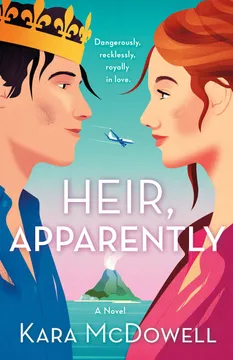


Plot Summary
The Certificate Under Wren's Bed
Eighty-eight days after a comet nearly destroyed Earth, Wren Wheeler arrives at Northwestern still unable to settle into ordinary life. At a freshman party, she cannot bring herself to kiss a kind boy, then checks her alerts for Comet, the yellow Lab she rescued during her European escape with Theo, now King of England.
A video shows Theo with Comet and his royal siblings, and Wren remembers the marriage certificate hidden under her bed, bearing Theo's real name. She has avoided telling anyone that the supposedly fake wedding may be legal. Her best friend Naomi notices her distress, and Wren finally admits the secret. She decides to drive to Toronto, retrieve Comet, and find out what the certificate means.
The almost-apocalypse has ended, but Wren experiences survival less as liberation than as a demand to invent a future without instructions. Her inability to choose a major echoes her inability to classify the marriage: real or pretend, love or crisis-born attachment. The dog alert gives her a practical excuse to pursue Theo, letting action carry the confession she cannot yet make. The opening makes the aftermath itself the inciting force. Wren survived the deadline, but has not learned how to live without one.
The King in High Park
Naomi agrees to join the trip, and Wren's older sister Brooke lends them her car after Wren admits they are going to Toronto. At High Park, security and crowds make a dog theft impossible. Wren's whistle draws Comet away from Princess Victoria, and the delighted Lab knocks her to the grass.
When guards detain Naomi for causing a commotion, Wren shows a royal protection officer the marriage certificate and demands to see Theo. He releases Naomi and meets Wren in a garden, but refuses to give Comet back.
Their reunion ends in a hug photographed by the press. Guards rush them into a car as photographers pursue them through traffic, then take them to a hotel. Theo's siblings arrive, and the certificate's image appears online, turning Wren into a target.
Wren's reunion with Comet confirms that the bond survived distance, but the same affection makes her visible to a media machine she cannot control. The certificate changes function here: what had been private evidence becomes leverage with security, then public scandal. Her use of it rescues Naomi, yet the press converts her vulnerability into a story about ambition. The sequence also sharply exposes the status gap between Wren and Theo. They can recognize one another intimately, but the institution around him can transform that intimacy into a spectacle before either has chosen what it means.
London Before the Crown
At a crisis meeting, Theo's advisers consider denying the marriage and portraying Wren as a deluded impostor. Theo rejects that account, while warning that reporters have already found her family and friends.
When Wren's parents show her journalists camped outside their home, she accepts Theo's offer of temporary protection in London. Brooke and Naomi insist on going too. Before the flight, Wren overhears Theo tell his secretary that she is only a girl he briefly knew, meant to protect her from the Firm's scrutiny.
She takes the remark as proof he does not care. The royal party boards a private plane with Comet and bodyguard Winston. A severe storm destroys both engines, and the aircraft plunges toward the Atlantic before anyone can settle what their reunion means.
The royal communications staff treat Wren as a risk to be managed, while Theo's attempt to shield her reproduces the very erasure she fears. Because they have not spoken plainly, his protective lie lands as rejection. The plane's failure then strips away the press narrative and the hierarchy that shaped it, placing the young people in a situation where titles cannot substitute for trust. The transition from palace procedure to physical danger is not merely an adventure escalation: it forces Wren and Theo back into the shared uncertainty that first bound them.
The Flight Breaks Apart
As the plane drops through the storm, Wren and Theo cling to each other. Theo admits he loved her during their first escape, but Wren hears the past tense and fears their connection belongs only to crisis. The aircraft strikes the ocean and floods.
Theo frees Wren's jammed seat belt, then pulls her toward the torn-open cabin. A strap from her backpack catches on wreckage and drags her underwater; she releases Theo's hand to escape it. Theo dives after her without his life vest.
Wren surfaces injured, then finds Brooke, Naomi, Henry, Victoria, Comet, the pilot Reggie, and Winston, whose leg is broken. Theo resurfaces alive. Reggie directs them toward a rocky shore, and the survivors climb inland with salvaged luggage and almost no supplies.
The crash literalizes the danger that has governed Wren's thinking since the comet: every attachment can feel like an anchor, but letting go can endanger someone else. Her escape from the backpack requires a choice for her own survival, while Theo's dive turns love into an uncalculated risk. Neither action settles their relationship; instead, each exposes how quickly affection becomes entangled with guilt. On shore, Reggie takes command, creating a temporary structure for the group. The survivors must now learn whether following orders is enough when the landscape offers no guarantee of rescue.
One Bar, One Mistake
Wren's arm bleeds heavily, so Henry stitches the wound with the first aid kit while Naomi and the others stabilize Winston. Theo swims back toward the wreckage, searching for something he will not explain.
He later leads Wren to a phone with a weak signal, but she selects Henry's former girlfriend instead of Theo's sister. The call reaches a number that may be blocked, and the battery dies before they can confirm anyone received the voicemail. At camp, Brooke gets a fire going and Naomi finds a stream.
Theo tells Wren that his father died by suicide after relentless press coverage of his parents' separation, and that his mother had helped seed the damaging stories. Reggie insists they wait near the wreck, even as the group questions whether anyone knows where they are.
The failed call is an ordinary mistake with disproportionate consequences, precisely the kind of event that turns survival into moral bookkeeping. Wren interprets the dead phone as evidence of personal failure, while the group is already weakened by wounds, thirst, and uncertainty. Theo's account of his father's death gives the media threat a human history: royal visibility is not abstract inconvenience but a system capable of exhausting a person past endurance. His fear for Wren therefore has substance, even when he expresses it through control or concealment.
The Island Turns Hostile
After a Portuguese man o' war stings Naomi, Reggie orders the others to stay put. The survivors learn they are on Flores, but Reggie refuses to search for its settlement because he expects aircraft to find them.
When he admits the plane may have gone down far from its planned route, Theo leads the others over the island despite the pilot's objections. Naomi remains behind with Winston. During the trek, Theo reveals that he had searched the wreck for Victoria's insulin.
Wren realizes she had found Victoria's black purse while escaping the plane, then let it sink after a spiteful exchange. She says nothing at first. Victoria grows weak and nauseated; after the group finds passion fruit and a hot spring, she collapses. Wren and the others give her fruit and water until she wakes.
Wren's guilt is no longer a vague fear that she has ruined everything; it is attached to a specific, selfish choice with potentially fatal consequences. The delayed realization makes her account of herself less comfortable: she can be brave and resourceful while still acting from resentment. Theo's decision to leave the beach also marks a conflict between institutional safety and immediate responsibility. His sister's crisis makes the cost of waiting visible, while the group's improvised care shows that survival depends on shared competence rather than rank.
Lava Under the Island
Victoria runs from the others, and Wren cuffs herself to the princess to stop her fleeing while ill. An earthquake opens a lava tube beneath them, trapping Wren, Victoria, and Comet underground. Wren admits she sank Victoria's purse; Victoria breaks the handcuffs and helps them escape as the volcano erupts. Theo and Henry pull them out while lava advances.
The group reaches the far shore and discovers Flores is uninhabited. Later, Wren tells Theo the full truth about the purse. He is hurt, and she runs off to build a raft, then collapses. The others find her beside a crude rescue signal they made from branches. Helicopters finally land, but Wren's infected wound leaves her unconscious as Theo carries her toward medical help.
The volcano turns buried consequences into visible force. Wren's confession comes during the same crisis that makes concealment impossible, and Victoria's choice to free them complicates Wren's self-image as the sole cause of harm. Yet the island's empty shore offers no neat absolution: even after the group survives the eruption, Wren and Theo must face what she hid. Her flight to build a raft repeats her reflex to solve guilt through solitary action. Rescue arrives through collective effort, not her private plan, and she reaches safety only after surrendering consciousness.
The Blood-Type Clue
Wren wakes in a London hospital after Henry has donated blood to save her. He and his younger sister Louise visit, and Henry brings Comet to her room. When Brooke learns that Henry is AB-negative while Theo is O-positive, she points out that the brothers cannot share both biological parents.
At Clarence House, where Wren stays after discharge, she researches old royal gossip and recognizes Richard Graves, Theo's press secretary, as a likely candidate for Henry's biological father.
Graves's long-standing preference for Henry now looks less like neutral judgment. Before the coronation, Theo tells Wren that he plans to abdicate in Henry's favor. She realizes the succession would pass to a man whose birth may make him ineligible, and hurries to tell Theo what she has found.
The blood group functions as evidence that cuts through the stories the institution has maintained about family and succession. Wren's inference is not a triumph of gossip but a consequence of noticing how public narratives distribute sympathy: Henry receives praise, while Theo is framed as unreliable. Yet the revelation offers no simple liberation. Theo is already preparing to surrender a role he never wanted, and Wren must decide whether to interrupt a plan built on incomplete knowledge. Her investigative attention, once focused on Theo's photographs, has become a tool for reading power.
A Crown Offered Freely
Theo and Henry enter the Throne Room smiling, ready for Theo's planned abdication, but Wren stops them and explains her suspicion about Graves and Henry's parentage. Theo understands that Henry may not be a legitimate successor.
With the coronation imminent and no settled alternative, Wren proposes that she and Theo marry for real, choosing the royal life rather than being pushed into it by the leaked certificate. Theo warns that palace life could cost her privacy and freedom; she insists that loving him is a choice, not a substitute for one.
Victoria agrees to stand beside Wren, and the group prepares a secret ceremony. Henry supports his brother despite his own hurt, while Wren and Theo set out for Westminster Abbey on the eve of the coronation.
Wren's proposal reverses the book's central imbalance. The first wedding was made under an apparent death sentence, and the certificate later turned it into a public accusation; this choice is meant to be deliberate. But Wren is also drawn to the certainty of a royal role when her own future feels undefined. Her decision therefore contains both agency and escape. Theo's warning recognizes that love does not neutralize structural costs. The tension is not whether they care for each other, but whether a shared life can be chosen without one person disappearing into the other's institution.
The Wedding That Stops
On the way to Westminster, photographers pursue Henry's car, and a second vehicle strikes it. No one is seriously injured, but the collision revives Wren's fear of a life permanently organized around danger and surveillance.
Theo says he loves her too much to let her become queen under those conditions. Wren admits she wanted the crown partly because it would give her a ready-made purpose. She asks Theo to leave the royal life with her instead. He cannot imagine what their future would be outside it, and his silence answers her.
Wren removes his ring from its chain and leaves him outside the Abbey. The coronation proceeds without her, and she returns to Northwestern, where she begins taking classes and exploring photography rather than borrowing a royal plan.
The accident functions as a test of the fantasy Wren has built around marriage: the real cost is not merely ceremony or press attention, but the repeated loss of control over ordinary movement. Theo's refusal is protective, yet it also leaves Wren to confront the distinction between wanting him and wanting a life that makes sense. Her admission about the crown is crucial because she recognizes that purpose cannot be outsourced to a title. Leaving is painful, but it is the first decision in the novel that does not depend on catastrophe forcing her hand.
Chicago, Chosen at Last
Four weeks after Theo's coronation, Wren is back in Chicago, still famous as one of the plane-crash survivors but gradually building a life through classes, photography, and time with Naomi.
On a rain-soaked trip toward Wrigley Field, Naomi's messages and an unfamiliar British number send her searching the train platforms. Theo appears with Comet. He explains that Victoria asked to take the throne and presented a plan for leading; Parliament has now accepted Theo's abdication.
He has left the crown rather than ask Wren to surrender her own choices. Theo returns his ring, but frames their future as something they choose rather than something fate guarantees. Wren invites him to make a home near her campus, and they walk together through her city.
The ending answers the opening's anxiety about what a second chance is for. Wren does not receive certainty in the form of a major, career, or prescribed royal role; she learns to tolerate the open space and make small choices within it. Theo's abdication matters because it changes the material conditions that made their romance unequal, rather than asking Wren to prove love by absorbing those costs. Victoria's willingness to lead also prevents the resolution from treating the throne as a prize to be discarded without consequence. The couple's future remains unwritten, but now both participate in writing it.
Analysis
Heir, Apparently treats survival not as a clean reset but as an interruption that leaves people with the same unfinished selves. Wren and Theo have already lived through a countdown, and afterward each is asked to construct an ordinary future from choices made under extraordinary pressure. Wren's uncertainty is not simply youthful indecision: her first refuge is a ready-made role, whether the royal marriage or the crown, because institutions can make a life look legible. Her growth comes when she recognizes that a plan can be comforting and still not be hers.
The monarchy operates as both a family system and a public institution. Theo's grief is shaped by inherited expectations, while the press turns private pain into a political liability. His father's death gives the romance a real structural obstacle: Theo does not merely fear embarrassment for Wren; he fears the machinery that consumed someone he loved. Yet protection can become another form of control. Theo's instinct to decide what Wren can endure repeats the institution's assumption that other people should manage her life. Their relationship only becomes viable when neither asks the other to disappear into a role.
The island plot makes these tensions bodily. A dropped purse, a misdialed call, a wound that becomes infected, and a choice to wait or hike all have consequences no title can undo. Wren's guilt over Victoria's insulin is especially important because it prevents the heroine from being idealized as endlessly resourceful. She has to admit that care and selfishness can coexist, then accept that confession does not guarantee forgiveness. The group's survival depends on practical cooperation, not romantic destiny.
The ending refuses to make fate the agent of happiness. Theo gives up the crown because Victoria wants to lead, while Wren builds a life in Chicago without first securing a perfect career plan. Their reunion becomes possible because both revise the conditions that made love unequal. The book's answer to the failed comet is not that everything happens for a reason. It is that a future remains open, and people can choose how to meet it.
Review Summary
Reviews for Heir, Apparently are generally positive, averaging 3.86 stars. Readers praise the action-packed plot, charming romance between Wren and Theo, and entertaining humor. Many enjoyed the expanded cast, including Theo's royal siblings, and the survival storyline following a plane crash on a volcanic island. Common criticisms include overly frequent cliffhangers, excessive drama, underdeveloped secondary characters, and a rushed ending. Most who read the first book found this a satisfying, if imperfect, conclusion, though some preferred the original.
Characters
Wren Wheeler
The reluctant survivorWren is an eighteen-year-old American freshman still carrying the emotional residue of a week in which she expected the world to end. Quick-witted and capable under pressure, she once relied on plans and improvisation; afterward, the abundance of possible futures leaves her paralyzed. Her humor lets her approach fear without naming it, but it can also hide guilt until consequences force her to face it. Wren loves animals, especially Comet, and is deeply loyal to friends and family. Her central struggle is not simply choosing between Theo and college, but learning to distinguish an authentic desire from the relief of having someone else provide a plan. She wants intimacy without surrendering the right to shape her own life.
Theo
The burdened young kingTheo is a nineteen-year-old heir thrust into kingship after the death of his mother. He is charming, teasing, and attentive, but his ease in public masks grief, depression, and a profound resentment of the role he inherited. He feels responsible for the people around him and often tries to protect them by withholding information or making decisions on their behalf. That instinct collides with his desire for genuine closeness, especially with Wren, who knew him before his title defined every interaction. Theo's history has taught him that public image can damage private lives, so he fears that love may expose Wren to the same machinery that harmed his family. His deepest conflict is between duty and self-determination.
Naomi
Wren's loyal co-conspiratorNaomi is Wren's best friend, an ambitious student with a fascination for weather and a gift for turning panic into movement. She joins Wren's impulsive trip to Toronto, provides cover when Wren cannot explain herself, and stays close through danger without pretending not to be frightened. Her royal enthusiasm makes the palace world entertaining, but her loyalty is personal rather than starstruck. Naomi can tease Wren about Theo while still recognizing that the relationship has hurt her. Her own plans for college matter to her, yet she is willing to interrupt them when her friend needs help.
Brooke Wheeler
The practical older sisterBrooke is Wren's older sister, a highly capable student who has deferred law school to reconsider the future she once assumed was settled. Her first instinct is to organize, investigate, and protect, even when she is trying to appear casual. The near-end of the world has unsettled her certainty too, though she expresses that uncertainty less openly than Wren. Brooke's loyalty is direct and sometimes overbearing; she challenges royal authority, backs her sister in tense rooms, and notices details others miss. Her analytical mind becomes especially valuable when a family mystery can be tested against concrete evidence.
Victoria
The sharp-edged princessVictoria is Theo's seventeen-year-old sister, an observant princess with a dry wit and little patience for being treated as ornamental. She resents the scrutiny surrounding her family and resists revealing vulnerability, even when her health makes honesty important. Her sharpness toward Wren grows from fear about how outsiders affect Theo and the family, not simple dislike. Victoria wants a meaningful voice in the monarchy's future and is willing to challenge traditions that constrain her. Beneath her guarded manner is fierce loyalty to her siblings and a desire for her family to become less governed by grief and public expectation.
Henry
The charismatic spareHenry is Theo's eighteen-year-old younger brother, known for his curls, dimple, easy confidence, and unusually favorable press. He studies royal history and performs his public role diligently, partly because he believes the monarchy can do good and partly because he wants recognition from a family whose attention has often centered on Theo. His teasing and flirtation conceal a persistent rivalry with his brother. Henry can be generous and dependable, especially when practical help is needed, but he also understands how badly he wants the position Theo occupies. His competing motives make him more complicated than the carefree image suggests.
Comet
The rescued yellow LabComet is the Labrador Wren rescued during her European flight with Theo. Affectionate, energetic, and devoted to play, he becomes a source of comfort for Wren and the royal siblings alike. His presence keeps the question of belonging concrete: the people may argue over status, ownership, and family, but Comet trusts those who care for him.
Richard Graves
The Crown's press strategistGraves is the royal communications secretary, a disciplined operator who treats public perception as something to be managed before it can threaten the institution. He speaks in the language of risk, timing, and official need, often reducing personal crises to problems for the Crown. His cool manner makes him an antagonist to Wren's independence, though he sees himself as serving the monarchy rather than acting from personal malice. Graves understands that public stories can determine political stability, and his influence reaches beyond the press office into the royal family's private history.
Reggie
The hard-nosed pilotReggie is the experienced pilot who survives the crash and imposes practical rules on the stranded group. He trusts visibility, rationing, and staying near the wreck more than risky exploration, and his blunt manner reflects a belief that discipline keeps people alive. His decisions are not always right for the changing situation, but he is trying to manage limited supplies and protect a group whose members are frightened and injured.
Major Winston
The royal bodyguardWinston is a senior royal protection officer responsible for Theo and his family. Alert and composed, he treats security as both a practical craft and a personal obligation. He can be strict about procedure, yet he gives useful medical guidance when the group is stranded. His loyalty to the Crown is tested against the immediate needs of the people he protects.
Louise
The thoughtful younger princessLouise is one of Theo's younger sisters. Shy but considerate, she offers to help Wren prepare for her hospital discharge and reveals a creative streak through her interest in makeup. Her warmth provides a gentler counterpoint to the palace's formal atmosphere.
Penny
The royal family's steady caretakerPenny has cared for Theo since he was a child and remains a trusted maternal presence for him and his younger siblings. Her affection is direct and unceremonious, offering the kind of care that royal protocol cannot provide.
Wren's parents
Her protective home baseWren's parents support her through the royal scandal and the sudden danger to their family. Her mother is a lawyer, while both parents try to give Wren room to make her own choices even when they fear the consequences.
Plot Devices
The failed comet
A second chance without a mapThe comet that nearly struck Earth is the pressure behind Wren and Theo's earlier escape and the emotional weather of their reunion. Because the catastrophe never happens, the characters must live with decisions made when they believed there would be no tomorrow. Wren's indecision about college and Theo's grief after his mother's death show that surviving an apocalypse does not automatically create clarity. The event also links the novel's private romance to a collective shock that has not disappeared simply because society has resumed its routines.
The marriage certificate
Private vow, public crisisThe certificate bearing Wren's name and Theo's real name turns an intimate, improvised ceremony into a legal and political uncertainty. Wren keeps it hidden because she does not know whether Theo meant the marriage to be real; when she uses it to gain access to him, the document becomes a bargaining tool. Its leak gives the press a scandal to exploit and forces Wren into the royal family's orbit. Later, learning that the ceremony was not legally registered removes one constraint but leaves the emotional promise unresolved.
The royal press machine
Private lives become public propertyPhotographers, tabloids, palace advisers, and public commentary shape the characters' choices long before anyone speaks openly. Wren is quickly cast as a manipulator, while Theo's public image is used to judge his fitness for the crown. His parents' history shows that press coverage can be more than humiliation: it can expose and amplify private suffering. The media pressure drives Wren to London, complicates the couple's attempt to reconnect, and makes Theo fear that a relationship with him would cost her privacy and safety.
The island's survival chain
Small choices carry life-or-death weightThe crash on Flores creates a sequence of linked practical problems: injuries, a weak phone signal, limited water, lost insulin, a dangerous hike, an earthquake, and a volcanic eruption. Each hazard tests the characters' habits. Wren's impulse to act can save people, but guilt can also make her reckless; Reggie's caution can preserve energy, but waiting becomes dangerous when the group may be off course. The island forces cooperation across class and rank, while Comet, the first aid kit, salvaged supplies, and the signal fire turn small objects into essential resources.
The blood-type clue
Biology unsettles royal successionHenry's blood donation saves Wren, and Brooke notices that his blood type cannot be inherited from the same two biological parents as Theo's. That concrete fact makes Wren question the accepted family story and investigate Graves's unusual influence over Henry's public image. The clue works because it shifts the succession question away from gossip and toward evidence, while still requiring interpretation. It forces Theo to reconsider the abdication plan he has made and changes what Wren believes is possible for their future.
Download PDF
Download EPUB
.epub digital book format is ideal for reading ebooks on phones, tablets, and e-readers.








