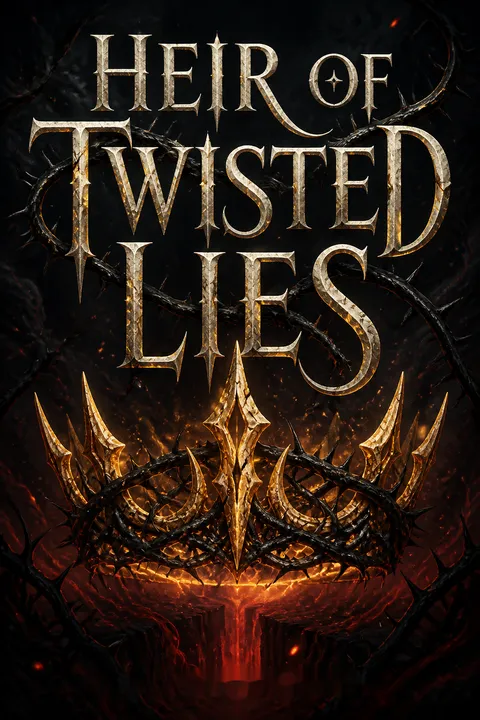


Plot Summary
A Captive Among Enemies
As the Dark Watch ferries Lyra across the Black Fjords, she can think only of Kael, her foster brother, still held at Stonegate by Queen Ingir and the supposedly dead melder Fadey. Roark Ashwood, the man who rescued her from the Jorvan fortress and then left Kael behind, is now beside her as a prince of Dravenmoor.
His hidden identity and divided soul have turned cherished intimacy into evidence she cannot trust. His cousin Emi stays close, though Lyra knows she helped conceal Roark’s secrets. When Draven warriors try to separate the two women, Lyra follows the procession inland, furious at Roark and still pulled toward him, with no choice but to enter the kingdom that once wanted her dead.
The opening makes captivity emotional as well as physical. Lyra has escaped one fortress only to enter another political system, and her deepest injury is the forced choice between her own survival and Kael’s. Roark’s protection cannot immediately reassure her because it is inseparable from his deception. The novel therefore begins with intimacy under suspicion: the bond between them remains powerful, but Lyra insists that desire is not proof of trust. Her unresolved guilt about leaving Kael gives every step toward Dravenmoor a cost.
Blood at the Ravine
At the Red Ravines, Draven warriors send the captives across a pair of perilous rope bridges. Roark’s childhood friend Gunter Blackvale intervenes when a hostile watcher tries to force Lyra onto the crossing, and Roark binds himself to her so she cannot fall. Before they can start, another guard lunges with a knife.
Roark’s divided soul erupts as Skul Drek, the phantom assassin Lyra has encountered in the mirror realm, and shields her. Roark then kills the attacker in full view of his clan, staining himself with the dead man’s blood to mark him as an enemy. His public choice protects Lyra, but it also makes clear that the prince will challenge his own people rather than conceal his loyalty to her.
The attack turns Roark’s private devotion into a public political fact. Until now, he has tried to disguise his attachment as strategy; the moment he kills a fellow Draven, that performance becomes impossible. Lyra, meanwhile, sees Skul Drek not as an external monster but as a part of the man she loves. The scene complicates the usual division between tenderness and violence: Roark’s brutality is frightening, yet it is also the means by which he refuses to let his clan decide Lyra’s worth.
The Prince’s Old Wounds
Near the royal palace, a pack of fara wolves surrounds Roark and Lyra. They are halted by Virki, Roark’s uncle and Emi’s abusive father, while Queen Elisabet insists Lyra must remain unharmed until the clan hears her case. The queen separates Roark from Lyra and sends her with Brynn and Auki Oakbriar, Roark’s former betrothed and her twin brother.
Brynn’s blunt account of their childhood arrangement makes Lyra fear she has displaced a rival, but Brynn explains that her old promise was to defend Roark’s true soul bond. Gunter has also kept Emi safe. Lyra’s captors are not yet allies, but their actions begin to loosen her assumption that every Draven wants her dead.
The palace replaces open danger with a more difficult test: Lyra must judge people whose loyalties are entangled with family, custom, and old injuries. Brynn’s introduction overturns the easy rival narrative. Her support is not romantic generosity so much as fidelity to a promise made before Lyra existed in Roark’s life. Virki, by contrast, embodies the danger of authority turned inward, since his power over Emi and his hostility toward Lyra arise from the same conviction that other people’s gifts and choices are his to control.
A Soul Split Twice
Before the Draven council, Roark writes that his people abandoned him after his elder brother Nivek died and his own soul was split into a weapon. The rite cost him his voice and left Skul Drek under Queen Elisabet’s control. When councillors threaten Lyra, Roark answers that he will kill anyone who harms her, then loses control of the darkness inside him.
In the soul realm, Skul Drek confronts Elisabet about creating him and demands protection for Lyra. The queen swears a soul vow to keep Lyra alive and reveals that one of the Wanderer’s hidden remnants may lie beyond the Night Ledges. She also suggests that sealing Lyra and Roark’s bond could make her Draven by law.
Roark’s history reframes the role he has played in Lyra’s life: he was not simply a secret prince but a child made into a tool by the same people who now claim authority over him. His inability to speak makes writing both a practical necessity and a record of what the council would rather suppress. The soul vow is a fragile form of accountability, but it also exposes Elisabet’s central contradiction: she has harmed her family in the name of saving it. Protection and control have become difficult to distinguish.
Arrows Through Glass
While Lyra waits with Emi, Gunter, Brynn, and Auki, arrows break through the windows. Auki is wounded, and the attackers keep firing as the group takes cover. Lyra borrows Gunter’s bone dagger, uses her melding craft to guide it into an archer’s chest, then enters the mirror realm and finds Skul Drek already hunting the second shooter.
When Roark reaches her, Lyra sees that his shadowed half is not a stranger but part of him. The attack gives her a reason to trust the people who stood between her and the arrows, though not yet the comfort of forgetting Roark’s lies. Once they are alone, she presses him to explain his split soul and the old history that shaped his mission.
Lyra’s craft shifts from a burden imposed on her to an instrument she chooses to use. She acts to protect herself and the people around her, not to strengthen a king’s army. At the same time, Skul Drek’s arrival in the mirror joins the magical and romantic plots: Lyra’s attraction to Roark cannot be separated from the darkness he has concealed. Her emerging trust remains conditional, grounded in what people do under pressure rather than what they claim to feel.
A Bond Chosen Freely
Roark explains that a sealed sjeleven bond would make Lyra his wife and place her under Draven law, deterring the clan from killing her for her craft. Lyra withdraws to weigh the offer, remembering both his betrayals and the sacrifices he has made to keep her alive. She returns only after making him prove that marriage is something he wants, not merely a convenient shield.
With Emi, Gunter, Brynn, and Auki as witnesses, Gunter performs the blood rite. Lyra and Roark exchange vows, and glowing runes mark their hands. The bond becomes a deliberate union rather than an order of fate, making Lyra part of the Draven household while giving Roark a relationship he once believed his divided soul made impossible.
The sealing matters because Lyra first subjects the proposal to the very standard Roark has failed: informed choice. The bond offers legal protection, but its emotional force comes from their willingness to accept one another with knowledge of the risks. This distinction prevents the supernatural connection from functioning as a substitute for consent. For Roark, the ritual also challenges the logic of his childhood punishment. His soul was split to prevent a forbidden attachment, yet he and Lyra choose to deepen that attachment openly.
The Council’s Narrow Welcome
When Roark and Lyra present their seal to the úlfur, Virki calls the marriage treason and questions whether Lyra can be trusted. Lyra describes how King Damir forced her to create Berserkir warriors and how she helped Roark resist his plans to find the Wanderer’s bones. Roark identifies Councilman Asmund as the man who sent archers after her; confronted by the queen, Asmund admits it and is taken away.
The council divides evenly on whether to accept the bond, so Elisabet’s deciding vote recognizes Lyra as Draven. Lyra then names Emi as her lady, keeping her out of Virki’s household. The decision grants Lyra protection, but the clan’s support remains divided and her safety is still precarious.
Recognition here is neither unanimous nor sentimental. Lyra earns a place by recounting the coercion behind her work, while Roark’s power exposes a concrete threat within the council itself. The tie vote makes political belonging contingent rather than assured; the queen’s decision matters, but it cannot erase prejudice. Lyra’s intervention for Emi turns acceptance into reciprocal care. She is no longer only the person others must defend. She can use her new position to shield someone else from an abusive household.
Fadey Finds the Mirror
Lyra searches Dravenmoor’s mirror realm for the Wanderer’s bones, but when she reaches toward Stonegate to learn whether Kael is alive, Skul Drek detects blood wards. Fadey appears and hooks her with a frayed tether, nearly dragging her toward the Jorvan gates. Roark pulls her out before the spell can seize her.
Gunter suspects that Queen Ingir’s blood craft has linked Fadey to Lyra, although neither understands how the connection lasts. Skul Drek senses that Kael’s soul still shines, but it is clouded by pain. Roark forbids further searching until they understand the trap. Lyra now knows both that her brother survives and that reaching him through her craft could expose her to Fadey.
The mirror realm, once a private space where Lyra could investigate magical remains, becomes an extension of the enemy’s surveillance. The change matters psychologically: knowledge no longer feels safe simply because it is inward. Lyra’s attempt to confirm Kael’s survival gives her hope, but the answer arrives inseparable from evidence of his suffering. Roark’s order to stop protects her while also repeating the pattern of others deciding what risks she may take. Their shared bond must negotiate protection without returning Lyra to helplessness.
A Welcome Made Public
At the feast announcing Lyra’s place in the royal household, Queen Elisabet seats her beside Roark and introduces her as family. A child approaches with a broken bone-handled knife, and Lyra repairs it with her craft in front of the watching Dravens. The small act draws more attention than any speech could: her magic can restore rather than corrupt.
Elisabet then reveals that King Damir is dead and that Stonegate has accused Lyra of killing him. The news threatens to turn the welcome into a renewed hunt. Before the clan can settle on what it means, Elisabet privately asks Lyra to help Roark summon Nivek’s soul, hoping the dead prince can explain the history of the missing bones.
The repaired knife offers the clan an image of melding that is neither a weapon nor a royal command. Lyra’s smallest act becomes a counterexample to the political story that her craft is inherently monstrous. Yet inclusion does not remove danger: news of Damir’s death immediately recasts her as a suspected killer. The feast shows how public identity is made through competing narratives. Elisabet’s appeal to summon Nivek also shifts the story from court politics toward inherited memory, where the dead may clarify what the living have distorted.
Nivek’s Warning
Lyra melds a shard connected to Nivek, allowing Roark to call his brother into the mirror realm. Nivek confirms that the prophecy about a god-queen’s daughter and three royal heirs has been badly interpreted, and directs them toward the River Clan beyond the Night Ledges. He warns that the firstborn heirs matter to the fate of the realms, but does not reveal exactly how.
Lyra and Roark also learn that Fadey wants more than the bones themselves. At the feast, the Draven clan accepts Lyra’s new status, and she receives a house mark. Soon afterward, Jorvan soldiers attack, using an illusion of Kael to lure her. Lyra’s foster parents, Thorian and Selena, are killed, and she melds an attacker’s bones in a rage that horrifies her.
Nivek’s intervention transforms prophecy from a fixed sentence into a problem of interpretation. The heirs are endangered, but their significance is not simply that they carry objects to be collected. Meanwhile, Lyra’s public acceptance is immediately followed by a violence that confirms the cost of being visible. The deaths of Thorian and Selena strip away the last ordinary refuge associated with her childhood. Her lethal response reveals that power does not corrupt only through ambition; grief and self-defense can also lead someone across a boundary she fears.
The False Rescue Letter
As Lyra and Roark plan to escape Dravenmoor, Elisabet leads Lyra to a hidden supply cache, then lets Jorvan agents seize her. Lyra wakes in a tent with Prince Thane and Princess Yrsa, who believe a forged letter from Lyra asked them to rescue her from Roark’s supposed control. Thane has no knowledge of the attack that killed Thorian and Selena.
Lyra cannot persuade them while the spell in her wounded hand leaves her weak, so she pretends to recover and reaches for Roark through their sealed bond. When Roark’s party finds the camp, he pulls Thane into the soul realm rather than fight him in front of the guards. Lyra escapes the tent and confronts both princes before their old friendship can become a battlefield.
The forged letter weaponizes a genuine virtue: Thane and Yrsa respond because they believe Lyra is in danger. Their mistake is not foolishness but a consequence of limited knowledge and Fadey’s ability to manipulate appearances. For Lyra, the abduction renews the old experience of being moved between kingdoms by people who claim to protect her. Her strategy of feigning confusion is a meaningful reversal. She uses the mask imposed on her to regain agency and reach the person she chooses.
Brothers in the Shadows
In the soul realm, Roark explains to Thane that Skul Drek is not a separate enemy but the weapon created when Draven magic split Roark’s soul. Thane struggles to reconcile that truth with the Sentry who once served him and the assassin who attacked his people. Lyra joins them and persuades both men to stop treating their past bond as irreparable.
Thane accepts Roark’s account, though he punches him for concealing his royal identity and the curse. The group shares what it knows about Fadey, Ingir, and the prophecy, then continues toward the Night Ledges. On the way, Jorvan soldiers ambush them and Kael appears as a Berserkir, forcing Roark to knock him unconscious rather than kill him.
Roark and Thane’s reconciliation requires more than an explanation. Thane must absorb the fact that someone he loved as a brother was also forced to attack him, while Roark must face the consequences of withholding the truth. The punch is a small but important return of ordinary friendship: Thane can be angry without making Roark an enemy. Kael’s corrupted appearance then tests the group’s new trust in a more visceral way. They must distinguish the brother Lyra loves from the violence Fadey has fused to his body.
Gammal Names the Blood
At the Unfettered gates, Lyra is blocked by a ward made from her own blood. Gammal, the woman who raised her and taught her to hide her silver eyes, removes it and reveals that Fadey is Lyra’s biological father. She explains that he once sought to protect the Wanderer’s power, but grew determined to seize it through the prophesied daughter and the royal heirs.
The ancient craft is not stored in four buried bones as the stories suggest; its veins persist within the firstborn lines of bone, blood, and soul. Gammal also traces the kingdom’s disasters to Virki, whose ambition helped drive the soul-rending of Roark’s father and the destruction of Nivek’s life. Lyra’s childhood was shaped by a prophecy others misread as a verdict against her.
The revelation of paternity changes the meaning of Fadey’s pursuit without making it intimate or redemptive. Biology explains his access to Lyra’s blood, but it creates no moral claim over her. Gammal’s account also exposes prophecy as a social force: fear of a predicted future helped produce the violence people then treated as proof that the prophecy was true. The hidden craft within living heirs replaces the fantasy of recoverable relics with a more disturbing inheritance. Power is not elsewhere; it is embodied in people who can be exploited.
Nivek’s Hidden Family
In the River Clan, Lyra and Roark find Jordis and Sindri, Nivek’s secret wife and young son. Nivek’s soul marks confirm their bond, and Roark learns that his brother built a family beyond Dravenmoor while secretly helping protect Lyra. Brokk, a local landholder, claims Jordis and Sindri through a debt that has kept them under his control.
Roark and Thane pay it, freeing them to join the group. Lyra begins removing the soul bones Fadey forced into Kael, while Brynn’s presence helps Kael resist the berserker rage and reveals a possible bond between them. Before they leave, Roark forces Brokk to lose his house and gives Sindri the payment, declaring through a written message that no prince should be owned.
Nivek’s family gives Roark a living continuation of the brother he thought he had lost to history. The discovery also makes the consequences of secrecy tangible: Nivek’s love endured, but his wife and son were left exposed to local power. The group’s payment of Brokk’s debt is not a clean triumph, since it uses the same transactional system that trapped Jordis. Roark’s retaliation answers humiliation with force. Meanwhile, Lyra’s careful removal of Kael’s bones and Brynn’s stabilizing presence offer a different model of power: painful, patient repair.
A Curse in Roark
As Lyra removes another of Kael’s corrupted bones, Fadey draws her into the mirror and uses a curse to attack Skul Drek. Roark’s shadowed half vanishes, then returns trapped inside his body, leaving him feverish and close to losing control. Gammal’s warning suggests the curse will kill him unless it is broken by confronting its maker.
On their return toward Dravenmoor, Yrsa brews a blood charm using drops from the people Roark protects, and Sindri uses his soul craft to quiet the violent remnant. Roark steadies, but scouts report that Jorvan and Myrdan forces are approaching. Elisabet reveals that Virki has betrayed Dravenmoor and joined Fadey, making the coming battle both a defense of the kingdom and a reckoning within Roark’s family.
Fadey’s curse attacks Roark through the very division that once defined his life, turning his survival into a contest between forced wholeness and chosen connection. The remedy is deliberately communal: Yrsa’s charm gathers the blood of people who matter to Roark, while Sindri’s craft restrains the fragment rather than erasing it. These are temporary measures, not a cure, but they counter Fadey’s premise that power belongs to whoever can dominate it. Virki’s betrayal confirms that the danger is not only foreign invasion; it has been cultivated inside the family.
Three Crafts Against Fadey
The final battle begins with Lyra’s flaming, melded arrow striking a Berserkir. Draven, Jorvan, Myrdan, and Unfettered fighters clash as Thane and Yrsa confront their parents, Emi kills King Hundur, and Jordis kills Queen Ingir. Roark defeats Virki, but the curse and battle leave him vulnerable. Fadey attacks Lyra, pins her, and melds bone shards into her body.
She escapes into the mirror, where Skul Drek holds Fadey while Lyra draws on the ancient craft within Thane, Yrsa, and Sindri. Rather than steal their powers, she joins the three veins with her own, uses their combined force to destroy Fadey, then returns each inheritance to its bearer. His death ends the immediate threat, and the heirs survive with their crafts intact.
The climax resolves the central ethical conflict through the form of Lyra’s action. She could take the heirs’ ancient power and become the solitary ruler Fadey wants to be; instead, she joins their strengths temporarily and gives them back. The distinction between unity and possession is the book’s decisive argument. Violence remains necessary, and Lyra’s victory is not morally effortless, but the use of power changes because its holders consent to stand together. Fadey loses not because craft is stronger than his, but because he cannot imagine strength that is shared.
A Crown Without Conquest
After the battle, Roark and Lyra wash themselves in Fadey’s blood, then help honor the dead, including Elisabet, Virki, and Draven warriors. Thane takes responsibility for Jorvandal’s role in the conflict, while Yrsa and Emi choose a life together without the marriage alliance once planned for Thane. Jordis and Sindri enter Dravenmoor’s royal household, and Roark becomes guardian of the young heir.
A month later, the rulers gather to negotiate peace. Thane recognizes alliances with Dravenmoor and Myrda, and the council proposes that Roark and Lyra lead a new high court for all crafts. Neither sought a crown, but they accept the role together, choosing to defend a shared order rather than claim the Wanderer’s power for themselves.
The resolution refuses to treat victory as a return to the old arrangement. The kingdoms must acknowledge how their institutions enabled the conflict, and Thane accepts inherited responsibility without pretending that he personally caused every crime. Relationships also move beyond strategic marriage: Emi and Yrsa choose one another, while Jordis and Sindri gain a place in the family that Nivek kept hidden. Roark and Lyra’s authority is offered as a safeguard for shared craft, not as a reward for conquest. Their final choice turns leadership into a burden they accept together.
Epilogue
Months later, Lyra and Roark travel to meet Brolin, her maternal uncle, who searched for her after the raids. The reunion gives Lyra a living connection to the family she lost. The new realms continue to settle: Sindri grows into his place as Draven heir, Thane develops his bone craft, and Kael works to resist the corrupted bones still lodged in him with Brynn’s help.
Lyra and Roark remain in Dravenmoor as rulers of the shared high court. Before meeting Brolin, Roark worries over Thane’s separate journey, but Lyra steadies him. Their life still carries danger and duty, yet now they face both by choice, with a family built across old borders.
The final reunion does not restore Lyra’s murdered household, and the distinction matters. Brolin offers continuity without pretending loss can be undone. The epilogue also refuses a frictionless cure: Kael still struggles with the soul bones, and the new political order requires continued work. What has changed is the structure of support around the characters. Roark’s fear for Thane, Lyra’s concern for Kael, and the alliances among the kingdoms are no longer isolated burdens. The closing image of a family reunion makes belonging an active practice, not a reward granted by blood or a crown.
Analysis
Heir of Twisted Lies treats magic as a question of ownership. Lyra’s craft can mend a child’s knife, create a warrior, or destroy a person from within; its moral meaning changes with the conditions under which it is used. The repeated coercion of Lyra shows how institutions convert ability into obligation, then blame the gifted person for the damage that obligation causes. Roark’s divided soul sharpens the same problem. His violence is real, but it has also been shaped by a rite imposed on him and by commands from people who call their control protection. The novel’s central ethical distinction is therefore not between light magic and dark magic, but between power that is claimed for oneself and power exercised with others. Fadey wants the ancient crafts gathered into one body so that he can rule through them. Lyra defeats him by joining the heirs’ powers without keeping them. That choice makes the climax more than a victory over a villain: it rejects his underlying model of authority. The romance follows the same logic on an intimate scale. A soul bond may create a pull, but it cannot substitute for informed consent, especially after Roark’s concealments have damaged Lyra’s trust. Their marriage becomes meaningful only when Lyra asks what he wants and chooses the bond herself. The political ending extends this private principle into public life. The realms do not become safe simply because Fadey is dead; they begin to change because former enemies accept shared responsibility, recognize old harms, and refuse to make marriage the sole instrument of alliance. The book’s optimism is consequently earned but provisional. Grief remains, Kael’s recovery is incomplete, and governing will still require negotiation. What changes is not the presence of power, but the willingness to keep it answerable to the people it affects.
Review Summary
Reviews for Heir of Twisted Lies are largely positive, averaging 4.22/5 stars. Readers praise the unique magic system, compelling found family dynamics, and the chemistry between protagonists Roark and Lyra. Roark's mute characterization and dual soul are frequently highlighted as standout elements. Common criticisms include slow pacing, insufficient groveling after book one's betrayal, too many new characters, and a somewhat anticlimactic ending. Many readers hope for a spin-off featuring fan-favorite Thane. Most agree it's a satisfying, if imperfect, conclusion to the Stonegate duology.
Characters
Lyra Bien
The unwilling melderLyra is an orphan raised in Skalfirth, marked by silver scars that identify her rare melding craft. She is observant, stubborn, and inclined to measure people by their actions rather than their titles. Because rulers repeatedly treat her magic as a resource, she has learned to hide both her craft and her needs. Her attachment to Kael and her complicated love for Roark reveal a capacity for loyalty that survives betrayal, but she does not confuse loyalty with obedience. Lyra’s central struggle is to claim authority over what her power means, especially when fear, grief, and the needs of others pull her toward choices she might otherwise reject.
Roark Ashwood
The divided princeRoark is the silent Sentry who served at Stonegate while concealing his birth as a Draven prince. A soul-rending rite divided him and made his darker half a feared assassin, Skul Drek. He communicates through hand gestures and writing, and his careful control often masks a history of abandonment and coercion. Roark is fiercely protective, but that protectiveness can become possessive, especially when Lyra is threatened. He measures love through action and sacrifice, yet must learn that devotion cannot excuse secrecy. His bond with Lyra challenges the belief that his violent half makes him incapable of a whole life.
Skul Drek
The shadowed halfSkul Drek is the ruthless soul fragment bound to Roark, feared across the kingdoms for his violence and his ability to reach into other souls. He first appears to Lyra as a phantom in the mirror realm, separate in appearance but tied to Roark’s hidden identity. His instincts center on threat, possession, and protection, leaving little room for ordinary judgment. Yet his connection to Lyra complicates the idea that a divided soul is only a weapon. He is not a second person with an unrelated history, but a part of Roark whose needs and actions must be understood alongside the man’s tenderness.
Emi Nightlark
The loyal bone crafterEmi is Roark’s cousin, a Draven bone crafter who has lived among Jorvans and understands the danger of being judged for an unwanted gift. Her friendship with Lyra is complicated by the secrets she keeps to protect Roark, but her loyalty is not passive: she takes risks, fights effectively, and makes room for Lyra to belong. Emi carries the pain of her father’s rejection and the loss of her mother, while her feelings for Yrsa challenge the defenses she built against attachment. Her resourcefulness and humor help make a frightened group into a family, even when old betrayals remain unresolved.
Thane
The bold Jorvan princeThane is the heir of Jorvandal and Roark’s closest friend from their years at Stonegate. He is energetic, impulsive, and committed to the people under his protection, often preferring direct action to political caution. His loyalty makes him vulnerable to betrayal, but it also gives him the capacity to reconsider what he believes when presented with evidence. Thane’s friendship with Roark is rooted in shared experience rather than blood or rank. His relationship with Yrsa is affectionate and trusting, and he resists treating marriage as the only way to bind kingdoms together.
Kael Darkwin
Lyra’s foster brotherKael is the young man Lyra calls her brother, though they are not related by blood. Warm, mischievous, and protective, he represents the ordinary family life Lyra lost when the raids scattered House Bien. His loyalty to Lyra is instinctive, but he also has a strong desire to protect others and choose his own path. Kael’s experience with bone craft gives him an important perspective on how magic can be both a gift and a source of harm. His connection to Lyra rests on years of shared life, not on prophecy or political usefulness.
Fadey
The ambitious melderFadey is a powerful melder who served the Jorvan court under a concealed identity. He is strategic, patient, and adept at turning other people’s fears into instruments of control. His expertise makes him especially dangerous because he understands how to manipulate bones, blood, and souls rather than relying on force alone. Fadey presents his ambitions as a way to end conflict and restore a lost order, but his methods reveal a deep conviction that other people may be sacrificed for his design. His history among the Unfettered and his position at Stonegate connect him to several rival factions.
Elisabet
The calculating Draven queenElisabet rules Dravenmoor with political discipline and an instinct for keeping plans close. As a soul render, she possesses a power that has shaped her family as profoundly as her crown. She can be protective and severe in the same breath, and her choices are difficult to separate from the fear of losing the people she loves. Elisabet does not offer easy reassurance; she relies on vows, strategy, and carefully managed appearances. Her relationship with Roark is strained by choices made when he was young, while her dealings with Lyra test whether political calculation can become genuine responsibility.
Yrsa
The Myrdan princessYrsa is a Myrdan princess whose intelligence and knowledge of blood craft are often underestimated, including by herself. She is loyal to Thane and attentive to the people around her, but her upbringing under a demanding father has taught her to distrust her own judgment. Her relationship with Emi asks her to weigh honesty against the fear of being deceived. Yrsa’s practical skill with spells and remedies complements her capacity for courage in battle. Beneath her composed royal manner is someone learning that inherited expectations do not have to dictate whom she loves or what abilities she claims.
Gunter Blackvale
Roark’s steadfast friendGunter is Roark’s childhood friend and a Draven soul weaver. Blunt, teasing, and often irreverent, he uses humor to ease tension but does not mistake levity for lack of loyalty. He understands the customs surrounding soul bonds and helps make Roark and Lyra’s union possible. Gunter is also a capable fighter, willing to stand against his own clan when its members threaten the people he trusts. His friendship gives Roark a link to the life he lost in Dravenmoor.
Brynn Oakbriar
The oathkeeping warriorBrynn is Auki’s twin, a skilled warrior and keeper of fara wolves. Once promised to Roark through a childhood arrangement, she values the bond between them as friendship rather than possession. Her loyalty to an old promise leads her to support Lyra, even while she speaks frankly and tests whether Lyra understands Roark’s sacrifices. Brynn’s steadiness, humor, and command of her wolf make her a natural protector. She is also perceptive enough to recognize the emotional needs of others without claiming the right to choose for them.
Auki Oakbriar
The fara wolf keeperAuki is Brynn’s twin and a Draven keeper whose craft allows him to guide wolves. He is practical, protective, and less theatrical than his sister, though he shares her loyalty to Roark. Auki begins learning Roark’s hand gestures so the two can communicate directly, an effort that restores a friendship strained by years apart. His skill with the fara packs makes him valuable in battle, while his willingness to acknowledge old loyalties helps bridge the divide between Draven and Jorvan companions.
Gammal
Lyra’s Unfettered guideGammal is the Unfettered woman who cared for Lyra in childhood and taught her to conceal her silver eyes. As a seemódir, she interprets visions and guides her community, though she knows that prophecy can be distorted by those who fear it. Gammal’s affection for Lyra is genuine, but she also carries regret for the choices and omissions that helped shape the girl’s dangerous path. Her knowledge links Lyra’s personal past to the wider conflict among the kingdoms.
Nivek
Roark’s admired elder brotherNivek is Roark’s elder brother, remembered as honorable, protective, and willing to question the rules of his clan. Roark admired him and measured much of his own childhood against Nivek’s example. His choices connect the Draven royal family to the Unfettered lands and to Lyra’s early history. Nivek’s presence in the story is felt through memories, family loyalties, and the questions left behind by his decisions.
Jordis
Nivek’s Unfettered wifeJordis is an Unfettered woman with a strong protective bond to her son. She is courageous and direct, but her life has been constrained by the debts and local customs she accepted to keep him safe. Her marriage to Nivek gives her a connection to Dravenmoor without erasing her own identity or community. Jordis is a fighter in her own right, not simply a keeper of her husband’s memory.
Sindri
The young soul chainerSindri is Jordis and Nivek’s son, raised in the River Clan and unaware of the full scope of his Draven heritage. He is curious, loyal to his mother, and eager to prove that he can protect the people he loves. His soul craft is powerful but physically taxing, and he must learn restraint as well as courage. Sindri’s youth gives him a different perspective on the old conflict: he wants a place among his father’s people without being consumed by the burdens attached to his birth.
Virki
The embittered uncleVirki is Roark’s uncle and Emi’s father, a powerful Draven who places clan loyalty and his own authority above the needs of his family. He is suspicious of melders and sees dangerous craft as justification for controlling or punishing its bearers. His treatment of Emi reflects a broader inability to accept what challenges his expectations. Virki’s influence within Dravenmoor makes him a threat even when he is not openly fighting.
Thorian
Lyra’s village protectorThorian helped raise Lyra in Skalfirth and defended her from cruelty when she was a child. A steady, generous presence, he represents the ordinary kindness that existed in Lyra’s life before kingdoms claimed her craft.
Selena
Lyra’s foster motherSelena helped give Lyra a home in Skalfirth and offered the care of a mother. Her compassion and quiet protection shaped Lyra’s understanding of family, belonging, and the ordinary life she longs to preserve.
Brolin
Lyra’s searching uncleBrolin is Lyra’s maternal uncle, a farmer who never stopped looking for his sister’s lost child after the raids. His life connects Lyra to a family history that survived outside the kingdoms’ battles.
Plot Devices
The sjeleven bond
Chosen love, legal protectionA sjeleven bond is a Draven soul connection that can be sealed through a ritual involving blood and vows. Roark and Lyra’s seal makes their marriage a sacred legal bond, giving Lyra standing and protection among the Dravens. It also allows them to sense one another across distance and enter the mirror realm together. The device is most important when it supports, rather than overrides, choice: Lyra pauses before agreeing, and both characters commit with knowledge of the risks. Their connection later becomes a source of strength against Fadey’s attempts to isolate or control them.
The deledan soul
A weapon inside RoarkA deledan is a soul split through Draven soul craft, leaving a powerful remnant that can act as a weapon. Roark’s darker half becomes Skul Drek, the feared assassin who can attack, sense, and sometimes manipulate souls. The split costs Roark his voice and leaves his actions vulnerable to outside control. The device externalizes the conflict between his capacity for violence and his capacity for attachment, but the story resists treating the darker fragment as a separate evil to discard. Roark must learn to control his divided nature without allowing others to use it against him.
The mirror realm
A passage into soulsWhen Lyra uses melding craft, she can enter a decayed reflection of the living world where the traces of souls and bones become visible. Skul Drek can meet her there, and the realm gives Lyra a way to investigate magical connections that ordinary sight cannot reveal. It also lets the dead be contacted under particular conditions. The mirror is not a safe refuge: blood craft can ward its thresholds, and Fadey finds ways to reach Lyra through it. Its changing landscapes turn inward discovery into both a powerful investigative tool and a source of vulnerability.
Soul bones and Berserkir
Power with a human costSoul bones are marked remains melded into living warriors to create the nearly indestructible Berserkir. The process strengthens fighters but can corrupt their judgment and drive them into berserker rage. Lyra is forced to make these warriors for King Damir, then later uses the same craft to fight and to carefully remove bones from Kael. The device joins the political conflict to the bodily one: rulers can turn magic into military power, while individuals suffer the consequences inside their own flesh. Lyra’s ability to mend as well as weaponize bones makes the ethics of her craft central to the story.
The Unfettered prophecy
Fear shaped into fateAn Unfettered seer’s vision warns that a daughter of the god-queen’s line and the heirs of three crafts will change the realms. The kingdoms interpret the warning as a prediction of destruction and hunt Lyra, while Fadey interprets it as a path to absolute power. Later revelations show that the ancient crafts persist within the heirs rather than in a simple set of buried relics. The prophecy drives the raids, Roark’s soul-rending, and the search for the heirs, but its ambiguity also exposes how political actors manufacture the catastrophe they claim to prevent.
About the Author
Other books by L.J. Andrews



Download PDF
Download EPUB
.epub digital book format is ideal for reading ebooks on phones, tablets, and e-readers.








