

Key Takeaways
Make the name do emotional work before the sales pitch begins.
A name starts the conversation. A brand name is often the first thing a potential customer encounters, so it should prompt recognition, interest, or pleasure before anyone is there to explain it. Watkins favors names built from familiar words and ideas over invented strings that look clever to their creators but leave customers puzzled. Kryptonite suggests protection, while Mayday evokes urgent help. Neither name describes every feature; each gives people an accessible idea to hold onto.
Use a practical filter. The book’s SMILE & SCRATCH test asks whether a name evokes the brand, matters to its audience, creates a mental picture, supports future brand expressions, and feels engaging. It also checks for avoidable friction, from awkward spelling to insider-only meaning. The point is not to make a name explain the whole business. It is to make the first encounter feel inviting rather than confusing.
What's striking is the shift from naming as decoration to naming as a small piece of customer experience. A clear, engaging name lowers the effort required to notice and recall a business, while an obscure one can make every introduction feel like a correction. That does not make naming a substitute for a useful product or credible service. A charming label cannot repair a poor experience. Its more realistic job is to make the first step easier and give satisfied customers something memorable to repeat.
Choose words your audience can picture, value, and remember.
Meaning belongs to customers. A name can feel insightful to its founders and still mean little, or the wrong thing, to buyers. Norcal Waste Systems served communities increasingly focused on recycling and reclaiming materials, but its name foregrounded waste. The company adopted Recology, a name that better reflected its environmental work and gave employees and customers a more affirmative idea to identify with.
Pictures make names stick. Watkins argues that imagery should come from the name itself, not only from years of advertising or a familiar logo. Timberland readily suggests an outdoor landscape; an unfamiliar string of letters gives memory less to work with. The audience’s situation matters, too. A useful name considers what customers care about and how they want to feel, not merely what the company sells.
A name acts like a compact signal: it can imply a category, a personality, or a promise before the customer has enough information to assess the full offering. Recology illustrates how that signal can better match an organization’s actual work. The limit is that one name rarely speaks equally well to every audience. A company serving both household and business customers may need a broad name, then use descriptions and proof points to clarify what each group should expect.
Give a name room to generate a whole brand world.
Look for generative themes. Watkins calls a name with “legs” one that supports related language and brand elements over time. Firetalker PR, created for a high-energy publicist, offered a fire theme that could extend to her role, workspace, and service packages. The name did more than label the firm: it supplied a consistent source of ideas for marketing.
Plan for a family. A business may add products, services, or locations after its first launch. A broad theme can help those additions feel connected, as Apple’s series of “i” products demonstrates. A tightly matched name can do the opposite: iRobot’s Roomba and Scooba made related vacuum products sound like a set, but also created a naming pattern that became difficult to extend to products outside that mold. Choose a theme with enough flexibility to grow without becoming a gimmick.
The deeper value of a flexible name is organizational, not just verbal. A shared theme can help teams make related choices across product labels, campaigns, and customer touchpoints, so the brand feels like one system rather than a pile of unrelated decisions. But consistency has a cost when it turns into a naming rule that every future product must obey. The useful test is whether the theme helps customers understand the family, while leaving the business room to make sensible exceptions.
Remove pronunciation and spelling traps before customers find them.
Friction keeps charging rent. If customers must ask how to spell or say a name, employees repeat the correction, and recommendations become harder to pass along. The baby-clothing company Speesees used a spelling designed to imitate how a baby might write “species.” The explanation did not make the name easier to say, spell, or trust. A name spelled backward, such as Xobni, can pose the same basic problem: distinctiveness alone does not make a name usable.
Test it out loud. Say the name to voice-recognition software and see what it transcribes. Ask a person unfamiliar with the business to read it without coaching. Check whether capitals, punctuation, numbers, or unusual letter combinations are doing hidden work. These tests will not predict every misunderstanding, but they expose obvious obstacles before the name is printed on signs, packaging, or business cards.
This advice recognizes a basic tradeoff between novelty and processing ease. A strange name can attract attention, but if people cannot reconstruct it from hearing it, attention may not become a search, referral, or purchase. The goal is not to eliminate every unfamiliar sound. Names can be distinctive without making customers feel tested. The strongest candidates often offer a small surprise while still giving people enough familiar language to pronounce, remember, and pass along.
Don't sacrifice a strong name to an exact-match dot-com.
Separate the name from its address. Watkins argues that an unavailable exact-match .com should not automatically kill a good brand name. Customers can find a business through search, links, and useful website content, while domains can add a descriptive word or a memorable phrase. Bliss, for example, used Bliss-World.com rather than abandoning its brand name. Peanut Butter & Co. also directed visitors to a longer, affectionate web address that was easier to remember than a bare company name.
A domain is not ownership. Registering a URL does not establish trademark rights. Before paying a seller or building a business around a name, search for similar brands and consult appropriate trademark professionals. A domain made from an obscure country extension or a clever spelling may appear available yet make the name harder to communicate. Secure a workable address, but do not let the address dictate the brand.
The distinction matters because founders often treat the most visible technical constraint as if it were the strategic problem. A domain is a route to a business, not the business’s identity. That perspective can prevent a cheap available URL from exerting too much influence over a name customers must say and remember. The caution is that domain convenience still matters in real use. The better decision weighs brand clarity, likely customer behavior, legal clearance, and practical access together.
Write the naming brief before anyone starts inventing names.
Give creativity ingredients. A creative brief gathers the information needed to judge whether a name fits: the assignment’s goal, target audience, positioning, competitors, desired customer experience, brand personality, and words or themes to explore or avoid. It is a road map, not a demand that the eventual name summarize every paragraph. A name has little space, so the brief establishes which ideas deserve that space.
Describe behavior, not just preference. In Watkins’s sample brief for a children’s snack company, the team notes that many children resist foods that sound healthy, even when parents want healthier choices. That observation changes the naming challenge: the name must appeal to children without ignoring parents. When several decision-makers are involved, agreeing on the brief before brainstorming also reduces the chance that each person is secretly solving a different problem.
A good brief turns taste into a question that can be examined: does this name serve the audience and positioning, or does it merely please its creator? The distinction resembles design work in which constraints guide invention rather than suppress it. The brief also surfaces conflicts, such as a product needing to feel both responsible to parents and appealing to children. Those conflicts are useful information. If they remain unstated, the team may mistake strategic disagreement for a shortage of creative ideas.
Mine the internet for associations, then keep every promising spark.
Search sideways for ideas. Watkins recommends beginning with words from the brief, then following associations through online thesauruses, image searches, glossaries, dictionaries, clichés, films, books, and music. While naming a frozen-yogurt shop, a search about snow sports led to Chatter, a word that connected cold weather with teenagers socializing. The name emerged from a chain of associations, not from staring at a blank whiteboard.
Save possibilities, not just winners. Watkins sorts ideas into strong candidates, maybes, and sparks that could inspire another name. Her chosen name Spoon Me came from an image search related to eating frozen yogurt. The method is exploratory, but the brief stays nearby as a guardrail. Generate many candidates because trademark conflicts and practical problems can eliminate a substantial share. Do not become attached to a single early favorite.
The method treats creativity as guided search: a concrete starting point generates branches, and unexpected connections can reveal a more distinctive angle than direct description. It also reduces the social pressure that can silence quieter contributors in a group meeting. The risk is mistaking endless browsing for progress. A written brief and a visible list of ideas keep exploration accountable; otherwise, the most entertaining association can win even when it has little to do with the customers or business.
Test strategic fit independently, then clear the strongest candidates legally.
Judge fit before popularity. When several people review names, Watkins advises having them assess the list independently before meeting. Ask whether a name suits the brief, not simply whether each person likes it. Review names in the settings where customers will encounter them, such as a sign, website, or caller ID. Focus groups and open-ended public polls can favor safe choices and invite reactions from people who lack context about the brand.
Screen before committing. Watkins estimates that 30 to 50 percent of generated names may already be used or pose conflicts. Initial searches through Google and trademark databases can help remove obvious problems, but they are not legal clearance. A domain registration is not a trademark, and a professional review may be necessary before launch. Protecting a chosen mark also matters: familiar brand names can drift toward generic use if their owners do not distinguish them from the product category.
Independent review helps prevent an early speaker, senior executive, or vivid negative reaction from setting the group’s judgment. The emphasis on fit also makes disagreement more productive: people can explain what a name communicates instead of treating personal taste as a verdict. Still, customer research is not inherently useless. The issue is asking strangers to pick a favorite without context. Carefully designed research can test comprehension or unintended associations, while strategic decisions remain the responsibility of the people building the brand.
Replace a name that makes customers hesitate or employees apologize.
A name can be repaired. Businesses often keep a poor name because customers already know it, founders feel attached, or changing signs and materials seems costly. Watkins argues that the old name also imposes ongoing costs when people struggle to pronounce it, misunderstand the offer, or need an explanation. Public-relations consultant Lynette Hoy changed from using her personal name for the business to Firetalker PR, a name that better reflected its energetic style.
Weigh the whole transition. A rename can refresh the brand and create a reason to reconnect with customers, but it can require new signage, materials, and internal agreement. Email, website redirects, and social channels can help people follow the change. A company should also be prepared to explain the new name and deliver on its promise. The objective is not novelty for its own sake; it is to stop a persistent mismatch from becoming part of every customer interaction.
A rename is best understood as a transition problem, not a referendum on whether the original founders made a mistake. The relevant comparison is between the one-time cost of changing course and the repeated cost of confusion, awkward introductions, or a name that no longer reflects the business. The book’s practical optimism is useful, particularly for smaller organizations that assume a rename is impossible. Yet familiarity has value, so a change deserves a plan that preserves recognition while making the new identity clear.
Analysis
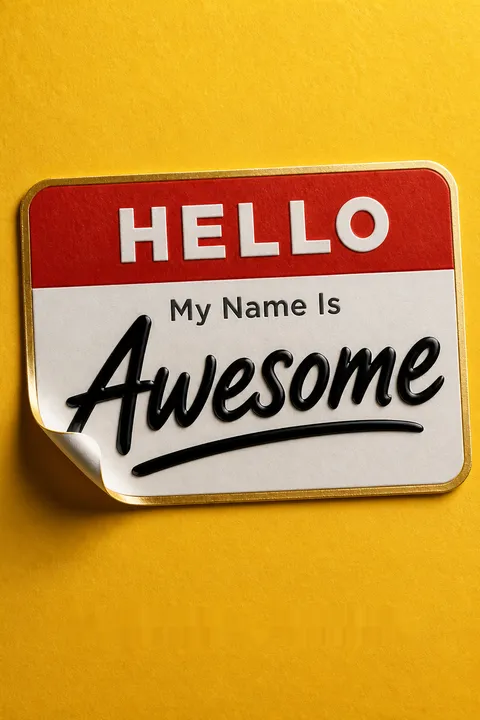
Hello, My Name Is Awesome is a practical business guide organized around a memorable evaluation framework, a naming process, and a sequence of real client stories. Its central argument is not simply that clever names outperform dull ones. A name must create a useful first impression and remain easy to carry through conversation, search, product extensions, and customer memory. The book repeatedly contrasts meaningful surprise with empty novelty: an evocative word can help people understand a brand, while altered spelling or opaque letter combinations often make the audience do unpaid interpretive work.
The strongest contribution is its insistence that naming is a strategic decision before it is a word game. The creative brief identifies whom the name must serve and what it should suggest. Online association-building then generates options, while independent review and trademark screening prevent enthusiasm from outrunning judgment. This sequence is valuable because it separates divergent thinking, where unusual connections are welcome, from evaluation, where fit and practical risks matter.
The approach also has limits. The author’s examples come largely from professional naming projects, and individual success stories cannot establish that a memorable name caused a business to thrive. A name works alongside product quality, distribution, design, reputation, and legal protection. The advice against bland description is strongest when a brand needs distinction and emotional character, but direct descriptive names can be useful when customers need immediate clarity. The appropriate choice depends on the purchase context, not on a universal preference for wit.
The durable lesson is therefore more disciplined than “be creative.” Build a name that is distinctive enough to earn attention, legible enough to travel, and flexible enough to remain useful as the business changes. Treat customer comprehension and trademark rights as design constraints, not cleanup tasks. The best candidate is not necessarily the funniest or most original option. It is the one whose associations help the right people recognize, remember, and trust the offer without requiring a founder to stand nearby and explain it.
Review Summary
Hello, My Name is Awesome receives generally positive reviews for its practical advice on creating effective brand names. Readers appreciate the author's straightforward approach, humor, and numerous examples. The book's concise nature and actionable tips are frequently praised. Some criticize occasional factual errors and opinionated statements. Many find the SMILE and SCRATCH frameworks helpful for evaluating names. While some readers wish for more depth, most agree the book offers valuable insights for entrepreneurs and marketers dealing with naming challenges.
Glossary
SMILE & SCRATCH name evaluation test
A screen for name qualityA two-part checklist for assessing brand names. SMILE considers whether a name suggests the brand, connects with its audience, creates imagery, supports related brand expressions, and evokes feeling. SCRATCH identifies potential problems such as confusing spelling or pronunciation, imitation, excessive limits, forcedness, blandness, and meaning that only insiders understand. The test helps teams discuss names using shared criteria instead of taste alone.
Googlestorming
Online associative brainstormingWatkins’s playful term for using Google and other online resources to generate naming ideas through association. A brainstormer starts with words from the brand brief, then explores related images, definitions, idioms, specialist glossaries, media titles, and other search results. The aim is to discover unexpected connections and collect possibilities, not to assume that any single search result is a finished name.
SLURL
A misleadingly joined web addressA domain name whose words run together to create an unintended or embarrassing reading. The term combines “slur” and “URL.” Because web addresses remove spaces, a phrase that looks harmless when separated can form another word or phrase when typed as one continuous string. Reviewing the full address as a single sequence can reveal problems before it appears in advertising or customer communications.
Curse of Knowledge
Insiders forget what outsiders lackA cognitive bias in which people who know a subject find it difficult to imagine how it appears to someone unfamiliar with it. In naming, this can lead a company to rely on acronyms, technical shorthand, or internal stories that potential customers cannot decode. A name may feel meaningful inside the organization yet communicate little to the audience it is supposed to reach.
FAQ
What's "Hello, My Name Is Awesome" about?
- Brand Naming Guide: "Hello, My Name Is Awesome" by Alexandra Watkins is a comprehensive guide on creating memorable and effective brand names.
- Practical Advice: The book offers practical advice and strategies for developing brand names that resonate with consumers and stand out in the marketplace.
- SMILE & SCRATCH Test: It introduces the SMILE & SCRATCH test, a method to evaluate the quality of a brand name.
- Real-World Examples: The book is filled with real-world examples and case studies to illustrate successful naming strategies.
Why should I read "Hello, My Name Is Awesome"?
- Improve Naming Skills: If you're involved in branding or marketing, this book will enhance your ability to create impactful brand names.
- Avoid Common Mistakes: It helps you avoid common pitfalls in naming, such as choosing names that are hard to spell or pronounce.
- Engaging and Fun: The book is written in an engaging and humorous style, making it an enjoyable read while being informative.
- Proven Techniques: Learn from Alexandra Watkins' proven techniques and insights from her experience in the naming industry.
What are the key takeaways of "Hello, My Name Is Awesome"?
- SMILE & SCRATCH Test: A brand name should make you smile instead of scratch your head, focusing on qualities like being suggestive, meaningful, and emotional.
- Avoiding Pitfalls: Avoid names that are spelling-challenged, copycat, restrictive, annoying, tame, cursed with insider knowledge, or hard to pronounce.
- Creative Process: The book emphasizes the importance of a structured creative process, including brainstorming and using a creative brief.
- Domain Name Strategies: Offers strategies for securing a good domain name without compromising the brand name's quality.
What is the SMILE & SCRATCH test in "Hello, My Name Is Awesome"?
- SMILE Qualities: SMILE stands for Suggestive, Meaningful, Imagery, Legs, and Emotional—qualities that make a name memorable and effective.
- SCRATCH Sins: SCRATCH stands for Spelling challenged, Copycat, Restrictive, Annoying, Tame, Curse of Knowledge, and Hard to pronounce—traits to avoid in a brand name.
- Objective Evaluation: The test provides an objective framework to evaluate potential brand names.
- Practical Application: It helps ensure that a name will resonate with consumers and avoid common naming pitfalls.
How does Alexandra Watkins suggest brainstorming names in "Hello, My Name Is Awesome"?
- Online Resources: Watkins recommends using online resources like thesauruses, glossaries, and image searches to generate ideas.
- Structured Process: She advocates for a structured brainstorming process, starting with a creative brief and using specific techniques to explore different angles.
- Solo Brainstorming: Emphasizes the effectiveness of individual brainstorming over group sessions to avoid groupthink and encourage creativity.
- Diverse Sources: Encourages looking at diverse sources such as book titles, song lyrics, and idioms for inspiration.
What are some examples of successful brand names mentioned in "Hello, My Name Is Awesome"?
- Spoon Me: A frozen yogurt franchise name that is playful and memorable, appealing to its target audience.
- Neato: A robotic vacuum name that is simple, catchy, and suggests the product's neatness and efficiency.
- Gringo Lingo: A Spanish language school name that is humorous and memorable, appealing to its target market.
- Church of Cupcakes: A bakery name that is quirky and evokes curiosity, making it stand out.
What are the best quotes from "Hello, My Name Is Awesome" and what do they mean?
- "A name should make you smile instead of scratch your head." This quote encapsulates the book's philosophy that a brand name should be intuitive and evoke positive emotions.
- "Consumers don’t fall in love with brand names created by scientific processes." Highlights the importance of emotional connection over technical or overly complex naming strategies.
- "The most powerful brand names connect with people and move them to buy." Emphasizes the need for brand names to resonate with consumers on an emotional level to drive sales.
- "A name can’t say everything, but it should suggest something about your brand." Suggests that while a name can't convey every aspect of a brand, it should hint at its essence or value proposition.
How does "Hello, My Name Is Awesome" address the issue of domain names?
- Domain Name Myths: The book dispels the myth that an exact match domain is necessary for success.
- Creative Solutions: Offers creative solutions like adding modifier words or using catchy phrases to secure a domain name.
- Alternative Extensions: Suggests considering alternative domain extensions like .net or .biz if .com is unavailable.
- Focus on Brand Name: Emphasizes that the quality of the brand name should not be compromised for the sake of a domain name.
What is the role of a creative brief in the naming process according to "Hello, My Name Is Awesome"?
- Foundation for Naming: A creative brief serves as the foundation for the naming process, outlining the brand's goals, target audience, and desired positioning.
- Guides Brainstorming: It guides the brainstorming process by providing a clear direction and criteria for evaluating names.
- Ensures Alignment: Helps ensure that all stakeholders are aligned on the brand's vision and objectives before naming begins.
- Prevents Missteps: By clearly defining what the brand stands for, a creative brief helps prevent missteps and ensures the name aligns with the brand's identity.
How does "Hello, My Name Is Awesome" suggest handling name changes?
- Pros of Changing: Highlights the benefits of changing a name, such as refreshing the brand and eliminating the need to explain a difficult name.
- Cons of Changing: Acknowledges the potential downsides, including emotional attachment and the cost of rebranding.
- Successful Examples: Provides examples of successful name changes to illustrate the potential positive impact.
- Communication Strategy: Emphasizes the importance of a communication strategy to inform customers and stakeholders about the change.
What are some common naming pitfalls to avoid according to "Hello, My Name Is Awesome"?
- Spelling Challenges: Avoid names that are difficult to spell or require constant explanation.
- Copycat Names: Steer clear of names that mimic competitors, as they lack originality and can lead to legal issues.
- Restrictive Names: Avoid names that limit future growth or pigeonhole the brand.
- Annoying or Tame Names: Stay away from names that are forced, flat, or uninspired, as they fail to engage consumers.
How does "Hello, My Name Is Awesome" suggest evaluating potential brand names?
- Objective Criteria: Use the SMILE & SCRATCH test to objectively evaluate potential names based on specific criteria.
- Independent Review: Encourage independent review of names by decision-makers to avoid groupthink and ensure diverse opinions are considered.
- Focus on Positives: Focus on what works about a name rather than negative aspects to build consensus.
- Avoid External Opinions: Discourage seeking opinions from outsiders or focus groups, as they may not understand the brand's vision or objectives.
Download PDF
Download EPUB
.epub digital book format is ideal for reading ebooks on phones, tablets, and e-readers.








