

Key Takeaways
Treat circumstances as facts, not verdicts, then choose your next move
Interpretation shapes the response. The book’s central model traces a sequence: circumstances prompt thoughts, thoughts influence feelings, feelings shape actions, and actions produce results. A person who is late may decide the delay proves others do not respect her, then react angrily. Or she may treat the delay as an inconvenience, stay calm, and respond differently. The event is the same; its meaning changes the next step.
Agency has limits. The opening story imagines Ann and Beth stranded on identical islands. Ann fixates on danger and gives up, while Beth searches for water and food. The contrast makes the value of active thinking memorable, though real hardship is not always overcome by perspective alone. The practical invitation is to notice the story being attached to a circumstance, then ask whether another interpretation could support a useful action.
This model resembles cognitive behavioral approaches, which distinguish an event from the interpretation attached to it. That separation can create a pause in which a person considers more than one response. Its strength is practical: it directs attention toward the next controllable action rather than endless blame. The island story also needs a careful reading. Beth’s resourcefulness is an illustration, not evidence that attitude can overcome every external constraint. Poverty, illness, discrimination, and unsafe conditions are not merely interpretations. Agency is valuable, but it works best when paired with an honest view of what lies beyond individual control.
Find your real why before waiting for motivation to arrive
Purpose sharpens a goal. The book argues that motivation is less dependable than commitment. Before pursuing a change, ask what the goal is for, what it may cost, and how much effort it requires. A weekly hour of quiet reflection can help distinguish a borrowed ambition from a personally meaningful one. The author suggests listing what matters, identifying past accomplishments, and imagining what life might include if money were no obstacle.
Failure need not define you. Barbara Corcoran’s story illustrates the point. After a relationship ended with a prediction that she would fail without her partner, she built a real estate business over many years. She also froze during a speech to a room of bankers, then chose to face public speaking again the next morning. The change began with a decision, but persistence turned it into a different outcome.
The distinction between motivation and commitment is useful because motivation fluctuates with sleep, stress, and immediate reward. A personally grounded reason can help sustain action when enthusiasm fades. The book’s reflection questions also resemble values clarification, a practice used to connect difficult actions with what a person considers important. Still, a compelling why does not guarantee success, and failure is not always evidence of insufficient effort. Corcoran’s story shows one possible response to rejection, not a universal formula. Good goal-setting leaves room to revise a plan when costs, circumstances, or the goal itself change.
Catch distorted thinking before it turns a setback into identity
Name the mental habit. The book calls recurring patterns such as catastrophizing, personalization, filtering out positives, and all-or-nothing judgment “thought distortions.” Rumination is the repeated replay of a troubling event, which can make the problem feel larger without producing a solution. One example is assuming that a spill at breakfast means the entire workday is doomed. Naming the pattern creates a chance to test whether that conclusion is accurate.
Respond with self-compassion. This means noticing distress, treating oneself with care, and recognizing that imperfection is part of ordinary human life. The book recommends redirecting attention, writing a painful thought down and discarding the paper, or reframing a setback. A friend whose wedding was canceled eventually reconsidered warning signs in the relationship. The aim is not to deny pain, but to avoid turning one painful event into a permanent verdict about oneself.
The practical value here is metacognitive distance: noticing a thought as a thought rather than treating it as a proven fact. That move is central to cognitive behavioral therapy and can reduce the force of habitual self-judgment. Reframing can be especially helpful when it opens possibilities that distress has obscured. It should not become compulsory optimism, however. A canceled wedding can reveal useful information, but that does not make the loss painless or automatically fortunate. Compassion and reality testing work together: acknowledge the hurt, then examine whether the harshest conclusion is the only reasonable one.
Make gratitude concrete by noticing, recording, and expressing it
Gratitude includes other people. Psychologist Robert Emmons, as presented in the book, defines gratitude as recognizing something good and noticing that it came partly from outside oneself. A traveler whose tire is changed by a stranger has reason to appreciate help, not just feel fortunate. The author also describes changing her behavior toward restaurant servers after learning how demanding and low-paid the work could be. Seeing the person behind the service shifted her response from complaint toward appreciation.
Make the practice visible. The book recommends recording five things each day, ranging from loved ones to a pleasant meal or an easier commute. It also suggests a gratitude jar, where short notes can be revisited during a difficult moment. Emmons’s work is cited for benefits from gratitude journaling in as little as three weeks. Remembering a hard past can help too, because it highlights what has changed and what is now valued.
Gratitude is more than a mood when it involves recognizing dependence on other people. That perspective can strengthen relationships by making contributions visible, a feature shared with research on reciprocal cooperation and social trust. A brief journal also trains attention toward details that routine tends to erase. There is an important boundary: gratitude should not be used to silence justified anger or pressure people to accept harmful conditions. The book’s best examples involve noticing real help and choosing a considerate response, not pretending that difficult experiences are secretly blessings.
Build habits through tiny actions, not dramatic Monday-morning makeovers
Lower the starting cost. Drawing on advice from James Clear, the book recommends beginning with a small version of a desired behavior rather than attempting a complete life overhaul. Someone hoping to exercise might start with a five-minute walk, then extend it as the routine becomes familiar. Someone changing their diet might improve one meal rather than replace every item in the kitchen at once. The author warns that trying to change too many habits together can make the plan overwhelming.
Make the setting cooperate. Repeated actions become easier when the environment supports them. That may mean keeping tempting foods out of the home or making walking shoes easy to reach. The book emphasizes focusing on the behavior itself, not only the hoped-for result, and treating progress as cumulative. A short walk is useful not because it instantly transforms fitness, but because it helps establish a repeatable pattern.
This advice aligns with behavioral design: reducing friction makes a desired action more likely, while a supportive environment lowers the need for repeated self-control. Tiny starts also make feedback immediate, allowing a person to learn what is realistic before investing in a larger plan. The method is strongest when small actions genuinely connect to a valued outcome, rather than becoming a ritual without purpose. A five-minute walk is a starting point, not a complete fitness prescription for everyone. Accessibility, health, safety, and available time shape what counts as a workable first step.
Treat cravings as information about feelings, not proof of weak character
Look for the trigger. Emotional eating means eating in response to feelings rather than physical hunger. The book’s friend Samantha injured her wrist and could not write comfortably for months. During that period, she repeatedly ate sweets and gained weight. She understood that the food was soothing self-pity, but did not stop until her pain began to improve. Her story shows that awareness can reveal a pattern without instantly making it easy to change.
Keep a simple record. Note what was eaten, when, and how you felt just beforehand. Reviewing those entries can reveal whether food follows boredom, feeling ignored, conflict, or another trigger. The book suggests using that information to address the underlying need, such as speaking up about a hurtful comment rather than eating in silence. This is observation, not punishment. The goal is to understand the pattern and find a healthier response, not to label oneself a failure.
A food record can turn a vague cycle into observable information: time, context, emotion, and response. That is useful because eating may serve several functions, including comfort, distraction, and pleasure. Samantha’s example also resists a simplistic willpower story. She recognized what was happening, yet the behavior continued while pain and loss disrupted a meaningful part of her life. Emotional eating can be an occasional coping response, not automatically a disorder. When it is distressing, persistent, or tied to significant health concerns, professional support may be more appropriate than self-monitoring alone.
Use food and movement to support mood, not promise a cure
Daily inputs matter. The book encourages regular movement, hydration, and meals rich in fruits, vegetables, and other nutrient-dense foods. It highlights a British study of 80,000 people in which those reporting seven to eight daily servings of fruits and vegetables also reported greater life satisfaction. A small pilot study described in the book found mood improvements among participants who shifted to a vegetarian diet. These findings support interest in diet and mood, but they do not prove that a particular food will treat depression.
Make exercise sustainable. The author recommends attainable goals, a supportive workout partner, group activities, variety, and modest rewards. One friend called repeatedly until the author got up for morning jogs, showing how social accountability can help. The chapter lists nutrients and foods, but also advises readers to check with a physician before taking supplements. Food and fitness can support general well-being; they are not substitutes for diagnosis or treatment when someone is seriously unwell.
This chapter usefully treats sleep, movement, food, and social support as parts of the same daily ecology rather than isolated fixes. Exercise can provide routine, mastery, and contact with others, benefits that extend beyond calories burned. The evidence described for specific diets and mood is more limited than the chapter’s confident language sometimes suggests. Observational findings cannot establish that produce causes greater satisfaction, and small pilot studies do not justify broad prescriptions. Nutrient supplements also require individual context. The safest durable message is to build nourishing, enjoyable routines and seek qualified care for persistent mental or physical symptoms.
Leave autopilot for deliberate attention to the life happening now
Autopilot saves effort. The book uses the term for familiar actions performed with little conscious attention, such as driving a regular route and arriving without recalling much of the trip. Mindfulness is the deliberate practice of noticing the present moment and engaging with it. The risk is not routine itself, but letting routine crowd out conversations, commitments, and restorative activities that matter.
Choose a small interruption. Oxford researcher Mark Williams is cited on how automatic habits can leave people inattentive to what they see, hear, or taste. The author describes postponing enjoyable activities until work is finished, only to find another obligation waiting. Her practical question is what small act could nourish a person in the next hour. That might mean a short walk, a real conversation, or a pause without a screen. A modest, immediate action can interrupt the cycle of perpetual deferral.
Attention is a limited resource, and routines can conserve it for tasks that truly need deliberation. The danger appears when efficiency becomes the default for every domain, including relationships and rest. Mindfulness offers a way to notice that drift, not a demand for constant concentration. It is also worth distinguishing ordinary distraction from clinical conditions that impair attention or mood. A short pause may help someone reconnect with the present, but it cannot resolve every source of overload. The strongest application is selective: automate chores where useful, and protect attention for moments that cannot be repeated.
Practice empathy outward without abandoning your own boundaries
Listen before advising. The book describes active listening as sustained attention to another person’s words and feelings, without rushing to interrupt or prepare a response. It also encourages curiosity about people beyond one’s usual social circle and challenging assumptions about them. Claiborne Paul Ellis, a Ku Klux Klan member, worked with Black activist Ann Atwater on a community committee addressing school tensions. As they worked together, their shared concerns about poverty challenged his prejudices, and he left the organization.
Care includes limits. Empathy can deepen connection, but constant exposure to another person’s distress can be draining. The book recounts Robin’s experience living with a depressed friend whose repeated despair affected Robin’s well-being. It recommends planning time, reviewing commitments, and setting aside time to rest. Listening and helping matter, but one person cannot force another to accept help or carry another person’s distress indefinitely.
Empathy combines perspective-taking with attention to the specific person in front of someone. Ellis and Atwater’s collaboration illustrates how sustained, cooperative contact can complicate stereotypes more effectively than abstract argument alone. The example does not imply that all prejudice disappears through conversation; institutions and material inequalities also shape how groups meet. The section’s boundary-setting advice is equally important. Compassion without limits can become exhaustion, resentment, or an attempt to manage another person’s choices. Healthy empathy stays curious and responsive while recognizing that support is not the same as responsibility for another person’s recovery.
Analysis
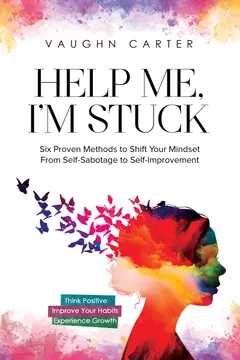
Help Me, I’m Stuck is a practical self-help book organized around a broad claim: people can change by altering how they interpret difficulty and by building routines that support different responses. Its six-part progression moves from focused thinking through positive habits, gratitude, diet and exercise, negative thought patterns, and empathy. The recurring sequence from circumstance to thought, feeling, action, and result gives this wide-ranging material a central thread. Ann and Beth, stranded in the same imagined conditions but responding differently, establish the book’s central contrast between resignation and agency.
The book is most useful when it turns abstract advice into observable exercises. Readers are asked to record food and feelings, reflect on what a goal is for, begin with a small behavior, and give another person undivided attention. Stories about Barbara Corcoran, Samantha, Robin, and the collaboration between Ellis and Atwater make these practices concrete. The examples also broaden change beyond willpower: relationships, habits, surroundings, and social support affect whether a new response is possible.
The evidence is uneven. Psychological practices such as self-compassion, journaling, and attentive listening are presented alongside dietary claims and health statistics with varying levels of certainty. The book sometimes treats associations as if they imply direct causes, and some nutrition advice is more confident than the cited findings warrant. Readers should distinguish general wellness practices from medical treatment, particularly around depression, supplements, and persistent eating problems. A second tension is the claim that circumstances have no power unless a person grants them power. This is motivational when it means that interpretation can influence behavior. Taken literally, it understates material constraints and risks blaming people for suffering they did not choose. The most defensible version is narrower: circumstances matter, but interpretation can still reveal some available choices. Read that way, the book offers a practical toolkit, not a promise that positivity alone can solve every problem.
Review Summary
Reviews of Help Me, I'm Stuck are polarizing. Many critics condemn the book for its misogynistic undertones, excessive focus on weight loss, and poor citations, arguing the content is surface-level and easily found through a Google search. Several reviewers were troubled by a male author presuming to understand women's struggles. Positive reviews highlight its accessible mindset-shifting strategies, practical tips on gratitude, empathy, and nutrition, and its value for self-help newcomers. The consensus suggests experienced self-help readers may find little new here, while beginners may find genuine encouragement.
Glossary
Thought distortions
Habitual inaccurate thinkingPatterns of thought that overstate danger, erase positive information, or assign meaning without enough evidence. The book identifies filtering, personalization, catastrophizing, and all-or-nothing thinking as examples. Recognizing a distortion does not prove that a concern is baseless; it helps a person examine whether the conclusion fits the facts.
Rumination
Repeated replay of distressThe habit of returning again and again to a troubling event or thought without moving toward resolution. The book compares it to a record stuck in a groove: repeated attention can deepen the mental pattern and intensify distress. Distraction, attention redirection, or a deliberate reinterpretation are offered as ways to interrupt the loop.
Emotional eating
Eating in response to feelingsEating primarily to soothe, distract from, or respond to an emotional state rather than physical hunger. The book describes triggers such as sadness, frustration, boredom, and feeling overlooked. Tracking food, time, and mood can help identify patterns, but emotional eating is not automatically a disorder or a moral failing.
Self-compassion
Kindness toward personal distressA response to difficulty that combines noticing one’s suffering, treating oneself with care, and recognizing that imperfection is part of being human. The book presents self-compassion as an alternative to self-insults after mistakes. It does not mean denying responsibility; it means addressing a problem without turning it into a judgment of personal worth.
Mindfulness
Deliberate present-moment attentionPaying attention to current experience and engaging with people or tasks intentionally, rather than moving through them automatically. The book contrasts mindfulness with autopilot, the low-attention performance of familiar routines. Mindfulness can make everyday experiences and commitments more noticeable, but it does not require constant concentration or eliminate all distraction.
Active listening
Attentive, responsive listeningListening with sustained attention to what another person says and how they may feel, rather than planning a reply or allowing distractions to take over. The book recommends asking clarifying questions, maintaining appropriate attention, and avoiding repeated interruption. The purpose is understanding, not simply applying a conversational technique or rushing to offer advice.
Highly Empathic People (HEP)
People strongly attuned to othersA label the book uses for people who listen closely, notice others’ emotions, show concern, and try to help. It also notes that strong empathy can make boundaries difficult, leaving a person overwhelmed or depleted. Empathy is presented as a capacity that can be practiced, alongside the need to protect time and energy.
Download PDF
Download EPUB
.epub digital book format is ideal for reading ebooks on phones, tablets, and e-readers.








