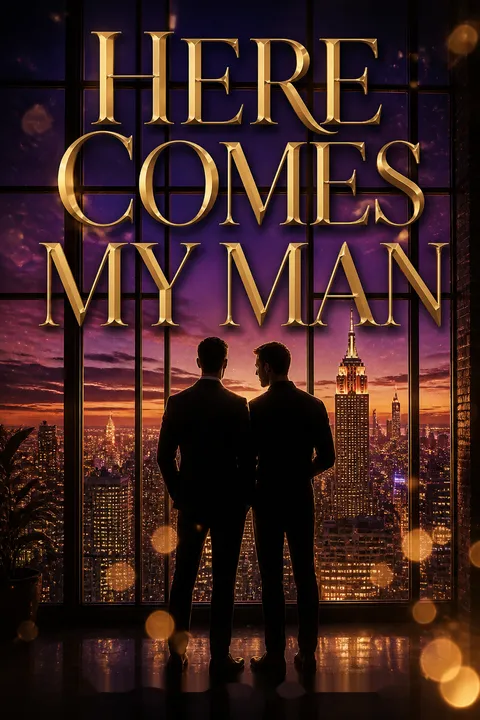


Plot Summary
Prologue
A year after Flynn, the chicken-shop owner, publicly ended their brief relationship on television, TJ Hardman is still being treated as the man whose heart was broken on camera. The account is convenient, but incomplete. His writing stopped only after he left Jude Fox in Los Angeles, following a fight that turned their second attempt at love into another separation.
TJ has not answered Jude’s later call or message. Now, with Jude’s face plastered across film promotions and TJ unable to write, the novelist admits to himself that the private breakup, not the public humiliation, is the wound he cannot escape.
The opening establishes a split between public story and private cause that governs the romance and the career plot alike. TJ permits the public to blame Flynn because a visible rejection is easier to narrate than his own decision to leave Jude and then refuse repair. The prologue also links creative paralysis to emotional avoidance: his inability to write is not a mysterious loss of talent but a refusal to approach the experience that once made him feel. By presenting the coming reunion as an unforeseen turn, the book frames romance not as a cure delivered from outside, but as a history TJ has not yet learned to tell truthfully.
The Deadline Finds Jude
In Central Park, TJ spots Flynn beside a new partner at the chicken truck and, unexpectedly, finds the scene useful: he rushes home and writes ten chapters of a new romance. His agent, Mason, sees past the burst of productivity and rejects the manuscript as a breakup story with no convincing love plot. TJ admits that he has lost his belief in romance, while the book he owes his publisher is already far overdue.
Mason proposes a practical intervention: TJ should date again and gather material for a love story. He has arranged a public fake-boyfriend scheme with actor Jude Fox, who needs better press. TJ agrees only after learning Jude is the proposed partner, his former London roommate and the man he left in Los Angeles.
The inciting pressure is not simply a deadline; it is the collision between TJ’s practiced professional identity and his private refusal to feel. His quick manuscript proves that craft remains available, but Mason recognizes that technical fluency cannot substitute for romantic conviction. The fake-boyfriend arrangement is therefore both a publicity device and an imposed experiment in emotional exposure. TJ accepts it partly to protect his career, yet the choice also returns him to the person he has avoided. The chapter’s irony is precise: the story TJ cannot write is the one his life is forcing him to inhabit again.
The Reunion Is Ice
Jude has his own version of the Los Angeles breakup. After Olivia challenges his belief that TJ flew west to exploit him, Jude learns the Webflix deal happened through a fast, unplanned negotiation, not a scheme against him.
He tries calling TJ to apologize, but TJ declines the call and ignores his message, so Jude concludes that he has been rejected again. When Holly reveals that TJ will be his fake boyfriend, Jude is shaken but hides their history from his agent.
At the agency meeting, TJ and Jude meet with publicist Slade, who invents a plausible romance built on their London roommate years and a recent reunion in New York. Their ease recalling the past briefly warms the room, but their separate versions of the breakup remain between them.
The first major misunderstanding is not a single false fact but a chain of emotionally plausible inferences. Jude reads TJ’s business success through his own fear of being less successful and therefore less desirable; TJ interprets Jude’s later silence as proof of rejection, without recognizing that he created that silence by refusing contact. Their fake public history is more generous than the real one: it supplies the conversations and reconnection they never managed. Slade’s invented narrative exposes the missing work in their actual relationship. They can perform a shared past convincingly because the affection was real, yet neither can safely assume the other remembers it the same way.
The Cheek Kiss Misses
At the opening of a fashionable restaurant, TJ arrives late and struggles to behave like Jude’s boyfriend while blogger Piper questions them. Jude smoothly covers TJ’s clumsy claims, but the pair fail to deliver the cheek kiss Slade requested, and they leave separately after the event.
The next morning, Slade collects them and explains that a gossip post has already called their relationship short-lived. TJ and Jude realize that a public romance must include visible departures as well as visible affection.
In the limo, Jude insists their kiss was genuine; TJ challenges him to prove it. Their argument turns into a passionate kiss neither can honestly dismiss as acting. The encounter leaves them rattled, and TJ returns home to write his first promising sentence in months.
The restaurant scene makes performance a concrete skill rather than an abstract metaphor: a relationship that exists only for cameras still requires timing, touch, and coordination. Their failure is not lack of chemistry but their attempt to separate public behavior from private consequence. Slade’s correction about leaving together turns a logistical error into pressure to acknowledge one another in public. The limo kiss reverses the arrangement. The agency needs evidence of desire, but the men produce desire before an audience is watching. TJ’s renewed writing afterward suggests that emotional charge can restore his imagination, although the book has not yet established whether desire alone can repair trust.
Broadway Rekindles London
At the musical’s opening, Jude kisses TJ on the lips before photographers can catch them, and the image finally makes their romance look effortless. He recalls their London years to reporter Trish, including how TJ helped him prepare for an early acting role.
When Trish asks whether Jude will inspire TJ’s next book, TJ freezes; Jude recognizes that the question touches his stalled career and reassures him privately. He suggests they revisit the kind of outings they once used to gather ideas, this time exploring New York.
After the show, actor Christian Laird greets TJ warmly and describes their work together on the stalled Top-Notch Boyfriend adaptation. Jude’s jealousy surfaces, while a message from William thanking Jude for a call intensifies TJ’s suspicion. They go to Jude’s apartment, each carrying questions neither has yet asked.
This section gives the couple a third language beyond publicity and sex: artistic collaboration. Jude remembers that TJ once encouraged him before success, and he offers that same kind of confidence when the question about inspiration exposes TJ’s shame. Their proposed city outings echo their London research walks, making memory a possible practice rather than merely a source of longing. Yet Christian and William show how quickly old insecurity can distort incomplete information. TJ does not know what Christian means to Jude, and Jude does not know why TJ is so affected by him. Their growing closeness makes ambiguity more painful, not less.
The Truth After Midnight
At Jude’s apartment, TJ sees William’s message and asks whether Jude has been involved with him. Jude demands the truth about Christian in return. Their questions finally uncover what neither expected: Christian is only a colleague, William is a friend Jude has tried to help through dangerous drinking, and neither man has dated anyone since their breakup.
TJ admits he has been unable to move on; Jude admits he was still hung up on TJ. They kiss, have sex, and spend the night together. In the morning, TJ writes again.
He explains that he avoided bringing Jude to his own apartment because his shelves and notebooks are crowded with the book that came between them. Jude accepts the explanation, and they begin speaking about the hurt instead of only acting it out.
Jealousy functions here as an imperfect but necessary route to disclosure. Each man asks about a rival because asking directly whether he is still loved feels more dangerous. Their answers dismantle the imagined competition: Christian is not a lover, and William’s apparent intimacy with Jude is an attempt to help a friend in crisis. But the decisive revelation is mutual solitude. Their separation did not give either man the clean emotional freedom he assumed the other possessed. Sex reconnects them physically; the apartment conversation makes the wound legible, especially the way TJ’s successful book became both a career triumph and a reminder of their failed relationship.
Pomander Walk, No Cameras
Jude takes TJ to Pomander Walk, a tucked-away New York lane that reminds them of London and gives them a date without Slade’s cameras. On a bench, Jude apologizes for accusing TJ of using him in Los Angeles and admits his fear that TJ’s success meant he was not good enough.
TJ accepts responsibility too: he had withheld the Webflix news, then refused Jude’s call and message after leaving. Jude also explains that he only glanced at a few lines in TJ’s journal by accident, a misunderstanding TJ now chooses to trust him about.
They agree not to let their attraction derail the publicity arrangement, though their kiss makes that promise difficult. Slade soon expands the assignment into a press trip through Las Vegas, Paris, and London, keeping them together on the road.
Pomander Walk changes the conditions of conversation. Away from publicity, the men can name the fears that had disguised themselves as accusations: Jude’s career insecurity and TJ’s instinct to protect himself by withholding information. Their apologies are meaningful because neither treats regret as a request for instant absolution. TJ’s decision to believe Jude about the journal is an active choice, not a factual certainty, and that distinction marks a new form of trust. Their agreement to keep the fake arrangement professionally contained is already fragile, but the trip raises the stakes by forcing prolonged proximity while their private reconciliation remains unfinished.
Vegas Opens the Secrets
In Vegas, TJ and Jude’s private breakfast is photographed by Rikki Finch, who later links their romance to the troubled Webflix adaptation of TJ’s bestseller. Before that report, Slade sends them a scripted breakup plan, prompting them to escape the hotel and go thrift shopping.
Among the racks, TJ explains the secret he has kept since adolescence: his mother’s affair with his twin brother Chance’s baseball coach, a discovery he concealed to protect his family. Jude responds with his own history.
His former agent, Harry, slept with Jude’s ex Arlo, helped Arlo take roles meant for Jude, and contributed to Jude withdrawing emotionally from auditions. They recognize how shame and self-protection shaped their earlier mistakes. The exchange turns their attraction into a more deliberate form of intimacy.
The thrift store becomes a site of reciprocal disclosure because both men are doing more than narrating trauma; they are explaining the habits that govern their present behavior. TJ’s silence began as an attempt to protect his brother and parents, but it hardened into a general strategy of withholding. Jude’s career history similarly shows how betrayal by people with professional power taught him to anticipate exploitation. These histories do not excuse their Los Angeles choices, but they make those choices intelligible. The contrast between the staged breakup plan and their private honesty sharpens the central conflict: an institution is scripting the end of a relationship that the men are only now learning how to sustain.
The Real FoxMan
Rikki tells TJ that Webflix may abandon the adaptation after another failed rewrite. At drinks with Malcolm Mann, the self-help celebrity who wants to enter romance publishing, TJ refuses to endorse Malcolm’s sexist and dismissive view of the genre.
At the charity concert, TJ introduces Jude to his friend Jason as the man he is truly dating, not merely a publicity partner. William joins Stone Zenith onstage and tells Jude and TJ afterward that he has begun recovery, attended meetings, and reached one week sober. The friends celebrate over dinner, where William and Christian flirt cautiously.
TJ posts a group photograph and creates a private account for genuine moments with Jude. The next morning, Mason calls with a chance for TJ to repair the adaptation in Los Angeles, forcing an abrupt separation just as the relationship becomes real.
This turning point expands intimacy beyond the couple. TJ’s introduction of Jude to Jason is a small public act with large psychological weight: he stops treating love as a sealed compartment that must be protected from everyone he knows. William’s recovery likewise complicates the earlier tabloid story, replacing the image of a scandalous rival with a friend undertaking difficult, ongoing work. TJ’s confrontation with Malcolm shows him claiming authority over romance as a genre and over his own experience. Yet professional opportunity interrupts the emotional opening. The Los Angeles call tests whether TJ can pursue success without repeating the old pattern of leaving important things unsaid.
The Book Was a Letter
Before leaving Vegas, TJ asks Jude to become his real boyfriend, and Jude accepts. TJ then flies to Los Angeles to oversee the film adaptation, while Jude travels through Paris and London for work.
In Paris, Jude refuses Harry’s attempt to represent him again, choosing not to return to a relationship that once diminished his career. In Los Angeles, TJ restores the original meeting scene to the adaptation and realizes how much his first bestseller borrowed from his London love with Jude. He sends Jude a copy.
Reading it on the flight back, Jude recognizes their shared details: the first meeting, the art shops, their notes, and the book of Wilde’s play. The novel, which Jude believed had come between them, has preserved their first love in disguise.
Distance clarifies what proximity had made difficult to say. Jude’s refusal of Harry is a boundary grounded in experience, while TJ’s work on the adaptation reconnects his professional voice to the story he once avoided naming. The bestseller’s hidden autobiographical structure changes the meaning of the book that divided them. It was not simply a career object or a rival for TJ’s attention; it was also a record of their intimacy, transformed into fiction because TJ could not share it directly. Jude’s recognition turns reading into an act of interpretation and trust. The love letter was present all along, but only Jude could decode its particulars.
The Scoop Names the Lie
As Jude returns to New York, Rikki publishes the truth that the agency arranged TJ and Jude’s romance, though she wrongly assumes TJ was paid and predicts a scheduled breakup. TJ is embarrassed but tells Mason what the relationship has become.
When Jude arrives, the agents and Slade gather at TJ’s apartment to manage the scandal and propose more publicity. TJ refuses their plan and sends them away, choosing a private evening with Jude over another performance. The men finally say plainly that they love each other.
Jude also confronts TJ about the clues hidden in his bestseller, and TJ explains that Jude has inspired his romances since their first separation. The exposure threatens their reputations, but it also ends the need to pretend their feelings are only part of a campaign.
Rikki’s report is factually accurate about the scheme and wrong about the emotion, capturing the limits of public interpretation. The couple’s crisis is therefore not that a secret has been exposed, but that a true relationship is being reduced to the machinery that first arranged it. TJ’s decision to dismiss the handlers marks a reversal of his earlier compliance: he no longer lets professional protection dictate the terms of his private life. Their love declaration answers the opening’s central problem. TJ had hidden the real cause of his paralysis inside a public account of heartbreak; now he can name both the love and the fear that shaped it.
Their Story Goes Public
Jude and TJ record a video acknowledging that their relationship began as a publicity arrangement but became genuine. They recount meeting in London, losing each other, and finding a way back through the dates arranged for the cameras.
Their private account becomes public, alongside photographs and mementos that document their real time together. In the epilogue, Jude loses the Academy Award to Sebastian Lowe but takes pride in helping Sebastian navigate being openly gay in Hollywood.
Later, Webflix offers Jude the lead role opposite Christian in the adaptation TJ has repaired, giving him the queer romance project he once lost. A year later, TJ proposes in the London bookshop where they first met, and Jude accepts. Their reunion becomes not a last-minute fix, but a life they continue choosing.
The video resolves the difference between disclosure and exposure. Rikki makes private information public for clicks; TJ and Jude choose what to share, how to frame it, and what remains theirs. Their account does not erase the agency’s manipulation or claim that a staged romance was harmless. Instead, it distinguishes the origin of the arrangement from the reality of their later choices. The later career outcomes reinforce that love does not require either man to abandon ambition: Jude gains a major role, TJ returns to writing, and Sebastian receives support without being forced into a timetable. The proposal in the original bookshop completes the spatial circle while leaving the relationship open-ended in the best sense.
Epilogue
At the Oscars, Jude loses the best-actor award to Sebastian Lowe but celebrates the win and later helps Sebastian talk through coming out in Hollywood. Webflix subsequently offers Jude the lead in the adaptation TJ has helped repair, opposite Christian Laird. TJ is halfway through a new romance novel, and readers respond warmly after the couple shares their story.
About a year later, TJ and Jude live together with two rescue cats. During a London book-tour event at the shop where they met, TJ gives Jude a specially made copy of The Importance of Being Earnest, then proposes. Jude accepts, and the bookshop becomes the beginning of their shared future as well as the place where their first attraction took root.
The two epilogues resist the idea that romantic closure requires professional perfection. Jude does not win the Oscar, but he has a partner who steadies him and a meaningful role in another actor’s journey. TJ’s creative recovery continues through work rather than ending with a single breakthrough. Their public honesty does not destroy their readership; it allows them to inhabit a story they once had to disguise. The London proposal returns to the bookshop and the Wilde play, objects that have carried memory, desire, and delayed communication throughout the novel. Marriage is presented not as a reward that resolves every conflict, but as a promise to keep revising a shared life together.
Analysis
Here Comes My Man treats romance as a problem of interpretation as much as attraction. TJ and Jude repeatedly misread evidence because each has a reason to fear what it might mean: a book deal becomes proof of exploitation, silence becomes proof of indifference, and photographs become proof of an affair. The novel does not solve those misunderstandings through chemistry alone. Their sexual connection is intense, but repair begins when they name the histories beneath their reactions and accept that trust involves a choice made under uncertainty.
The book also examines privacy as both protection and isolation. TJ learned to keep secrets to shield his family, then carried that strategy into adult love. Jude’s professional betrayals taught him to expect that intimacy could be used against him. Their fake romance makes them publicly visible while they remain privately cautious, creating an ironic setting in which performance can prompt genuine self-disclosure. The agency’s fabricated story is easier to tell than the truth at first, but it cannot contain the relationship once the men begin choosing each other outside the cameras.
Creative work is not merely a career backdrop. TJ’s writer’s block registers his refusal to approach the loss that shaped his most successful book, while Jude’s acting career has also been damaged by fear and betrayal. Their art improves when they become more emotionally available, but the novel avoids claiming that love automatically cures professional uncertainty. Webflix’s project remains precarious, Jude does not win the Oscar, and recovery takes practical effort. The resolution instead joins ambition with mutual support: neither has to disappear into the other’s success.
The recurring books, photographs, and private account ask who has the right to narrate a relationship. Gossip converts images into consumable stories; TJ and Jude reclaim authorship by describing their own history. Their public video does not reveal everything. It distinguishes what they are willing to share from what belongs to them alone. The lasting romance is therefore not a perfect plot but a continuing practice of telling the truth before silence hardens into another ending.
Review Summary
Here Comes My Man concludes the Hopelessly Bromantic duet, following TJ and Jude's third chance at love through a fake dating scheme designed to fix their career problems. Readers praised the swoony romance, chemistry, and character growth, with many highlighting the exceptional full-cast audiobook narration by Teddy Hamilton and Shane East. Common criticisms included the story being stretched unnecessarily across two books, failed trope execution (not truly enemies-to-lovers), heavy-handed marketing of side characters' future books, and excessive coincidences. Most found the central romance compelling despite plot contrivances.
People Also Read



Characters
TJ Hardman
Blocked romance novelistTJ is a bestselling romance novelist whose wit and professional confidence conceal a guarded emotional life. He learned early to keep family secrets and protect others by withholding his own feelings. That habit becomes costly when he fears that success might divide him from Jude and when he refuses to answer Jude after their Los Angeles fight. TJ is drawn to humor, wordplay, and the deliberate structure of love stories, yet he struggles to apply their clarity to himself. His writing block exposes the gap between the romance he can create on a page and the vulnerability he avoids in life. His central motivation is not simply to save his career, but to find a way to be honest without feeling that honesty endangers everyone he cares about.
Jude Fox
Ambitious actor with doubtsJude is a British actor whose career has moved from long stretches of uncertainty to sudden recognition. He is observant, warm, and socially agile, but professional betrayal has left him alert to signs that people may use or discard him. His connection with TJ matters because TJ believed in him before the roles and acclaim arrived. Jude wants both artistic success and the security of being chosen for himself, not for status or convenience. He tends to react quickly when fear touches old wounds, then has to work through the harm his assumptions create. His tenderness, humor, and ability to encourage others sit beside a fierce need to protect his dignity.
Mason
TJ’s blunt literary agentMason represents TJ as an agent and acts as his unsentimental professional advocate. He recognizes that TJ’s stalled manuscript lacks a genuine romantic engine and presses him to take practical steps before the publisher’s patience runs out. His jokes and theatrical confidence soften a demanding role, but his loyalty is visible in how closely he tracks TJ’s work and emotional decline. Mason thinks in deadlines, story structure, and market realities, making him a useful counterweight to TJ’s habit of retreating into uncertainty.
Holly
Jude’s protective agentHolly is Jude’s agent at CTM, sharp about publicity and fiercely protective of her clients’ careers. She understands the difference between managing an image and policing a private life, and she initially treats Jude’s tabloid troubles as a practical problem to contain. Her own history of leaving an unfaithful husband gives her a grounded independence. She offers Jude professional support without demanding access to every personal detail.
Slade
The agency’s PR puppeteerSlade is CTM’s energetic publicist, delighted by strategy, staged dates, and the mechanics of a convincing celebrity romance. He turns the fake relationship into a schedule of appearances and repeatedly corrects TJ and Jude when they forget to perform for cameras. His comic exuberance can obscure the power he holds over the clients’ public image. Slade is not indifferent to their careers, but he initially treats their chemistry as a tool to manage rather than a private bond with its own needs.
Hazel
TJ’s candid writer friendHazel is a romance novelist, TJ’s close friend, and the person who can read his moods as readily as his drafts. She offers humor without letting him hide behind it, encouraging him to consider what secrecy costs him. Her creative partnership with TJ includes sharing pages and inventing characters, but her deeper value is personal: she can challenge his self-protective habits without making vulnerability feel like a professional failure.
William Halifax
Their struggling musician friendWilliam is a musician and an old friend from the men’s London years. His charm and affectionate openness coexist with a serious struggle around alcohol, which Jude tries to address without abandoning him. William’s position in the tabloid photographs makes him an apparent romantic rival, although his actual importance is as a friend connected to both men’s shared past. His story brings questions of care, boundaries, and recovery into the romance.
Olivia
Jude’s loyal reality checkOlivia is Jude’s longtime friend, visiting from London and willing to challenge his assumptions directly. She listens to his account of the Los Angeles fight, recognizes that he and TJ never truly talked, and pushes him to reconsider his belief that TJ used him. Her bluntness is grounded in affection rather than judgment. She helps Jude see that emotional intensity can make an accusation feel like evidence.
Rikki Finch
Hollywood’s relentless bloggerRikki runs The Hollywood Scoop and turns celebrity sightings into influential stories. She is persistent, resourceful, and difficult to dismiss because she often gets the facts right, even when her interpretation is incomplete. Her camera captures moments the couple would rather keep private, and her reporting raises the stakes of their public arrangement. Rikki’s work reflects an attention economy in which intimacy becomes material for an audience.
Malcolm Mann
The self-help romance noviceMalcolm is a swaggering self-help personality who plans to write romance despite dismissing the genre’s craft and history. He assumes that being a man gives him special authority over love stories and treats a public breakup as a marketing tactic. His bluster makes him an easy target for jokes, but his willingness to cultivate bloggers and study publicity gives him a calculating side. He provokes TJ to defend the emotional labor behind romance writing.
Christian Laird
Actor and TJ’s colleagueChristian is a successful actor connected to TJ through the stalled adaptation of Top-Notch Boyfriend. His warmth and professional respect make him a plausible source of Jude’s jealousy, though their relationship is work-focused. At the Vegas dinner, Christian shows interest in William, bringing a light, tentative flirtation into the friend group. He is confident without being aloof and treats Jude’s acting with genuine admiration.
Jason
TJ’s football-playing friendJason is a professional football player and one of TJ’s friends. He shares TJ’s enthusiasm for pinball and offers an uncomplicated welcome when TJ introduces Jude. Jason’s own past heartbreak makes him attentive to the emotional risks of romance, but he does not pressure TJ to explain himself before he is ready. His presence gives TJ a first step toward letting his private life into his friendships.
Chance
TJ’s identical twinChance is TJ’s identical twin brother, close enough to share jokes and even trade shirts for a playful impersonation. TJ’s protective instincts are especially strong toward him, shaping the silence TJ keeps about their parents’ marriage. Chance’s importance lies in the family bond that makes TJ’s secrecy feel, to him, like an act of care rather than avoidance.
Ellie Snow
Jude’s television co-starEllie plays Jude’s love interest in Unfinished Business. Quick-witted and expressive, she shares an easy rapport with Jude and understands the awkward politics of celebrity events. She gives Jude a welcome ally at a formal gathering where publicists restrict whom he can approach. Her suggestion that she and Jude spend time with TJ later reflects her practical, generous approach to building friendships on set.
Harry
Jude’s former agentHarry is Jude’s former agent, an industry professional whose past conduct is tied to Jude’s loss of work and trust. He reappears when Jude’s visibility has risen, hoping to regain a place in his career. Harry’s polished manner contrasts with the harm Jude associates with him. He represents the professional relationships Jude must learn to assess by their history, not their promises.
Arlo
Jude’s opportunistic exArlo is one of Jude’s former partners and an actor whose career became entangled with Jude’s professional setbacks. Jude’s experience with him contributes to a lasting fear of being used by people who appear close to him.
Flynn
The chicken-shop exFlynn owns the chicken café that became part of TJ’s public breakup story. Their brief relationship ended on television, leaving TJ with a highly visible but misleading explanation for his later heartbreak.
Sebastian Lowe
Jude’s fellow actorSebastian is an acclaimed actor whose performance places him in Jude’s awards-season orbit. He is thoughtful about questions of sexuality and visibility in Hollywood, and his presence gives Jude a chance to offer support as a colleague rather than compete for recognition.
Nolan
TJ’s college friendNolan is TJ’s college friend and a source of easy camaraderie. He shares recommendations and social connections that help TJ imagine Jude as part of his existing life, not only as a partner within the publicity arrangement.
Luke
The Leopards’ backup quarterbackLuke is a professional football player who joins TJ’s circle in New York and Vegas. His confidence can be more theatrical than secure, and his humor helps make the group’s dinners and games feel relaxed rather than like another public appearance.
Helen
Jude’s vintage-shop friendHelen runs Angie’s Vintage Duds, a thrift shop Jude values as a refuge from celebrity scrutiny. Warm, teasing, and confident in her predictions, she encourages Jude to tell TJ what he feels and helps him find a fox-print shirt that carries their private history.
Jude’s mother
A guarded family presenceJude’s mother is part of the family life he protects from public attention. Jude’s career and relationships are shaped by his wish to build a life of his own without losing the people and loyalties that ground him.
Plot Devices
The fake-boyfriend contract
Turns publicity into proximityJude needs a respectable public partner after photographs with William damage his image, while TJ needs to restart his writing and satisfy an overdue publishing contract. Their agents and Slade arrange a fake romance, complete with invented backstory, red carpets, restaurant openings, and a planned breakup. The arrangement forces the former lovers into repeated contact, but its demands also create pressure to act affectionate before they have repaired the breakup that made them strangers. As the scheme develops, the central question shifts from whether the public will believe their performance to whether the two men can distinguish a performance from a relationship they are choosing for themselves.
Top-Notch Boyfriend
Hides a love letter in fictionTJ’s bestselling romance, inspired by his first relationship with Jude, becomes a crucial object in the present plot. Its characters, meetings, places, and small shared details preserve the London romance TJ could not discuss directly. At first, the book seems to embody the career success and professional deal that helped drive the men apart. Jude later reads it and recognizes their history beneath the fictional names. The novel within the novel turns authorship into a form of delayed communication: TJ has been expressing his love through stories while remaining unable to say it plainly to the person who inspired them.
The Hollywood Scoop
Makes privacy a public plotRikki Finch’s celebrity blog converts candid photographs into narratives that affect the men’s careers. Images of Jude with William suggest a romance that does not exist; photographs of Jude and TJ can either support their fake-couple campaign or expose its artifice. Rikki’s reporting also tracks the troubled Webflix adaptation, making private dates and professional setbacks part of the same public spectacle. The device highlights how a photograph can be accurate about what happened while misleading about what it meant. It forces the protagonists to decide not only what is true, but who gets to explain it.
The adaptation deadline
Binds romance to creative recoveryTJ’s overdue novel threatens his publishing relationship, while the adaptation of his bestseller struggles through repeated revisions at Webflix. His writer’s block and the film’s stalled production mirror each other: both projects have lost the emotional center that made the original story work. The pressure initially drives Mason to push TJ into dating, but the breakthrough comes when TJ faces the love and longing he had buried. Later, TJ is asked to oversee the adaptation and restores the original meeting scene, showing that creative recovery depends on returning to the story’s human beginning rather than polishing around its absence.
The London keepsakes
Carry memory across separationsThe Wilde play, the notes exchanged in the London flat, and the details embedded in TJ’s novel give the lovers material evidence of a relationship that distance and silence could not erase. These objects recur at moments when either man must decide whether to trust the other. The play first represents a private joke and an unfinished goodbye; later, it helps Jude understand the concealed source of TJ’s fiction and becomes part of their public account. In the final London scene, a specially prepared copy returns the story to the place where it began and gives TJ a concrete way to ask for a future.
About the Author
Other books by Lauren Blakely







Download PDF
Download EPUB
.epub digital book format is ideal for reading ebooks on phones, tablets, and e-readers.








