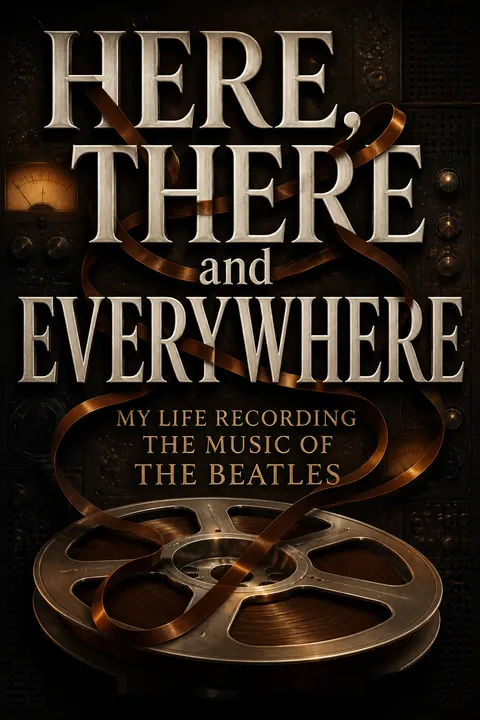


Key Takeaways
Turn childhood listening into deliberate, job-ready craft
Curiosity became training. Geoff Emerick’s career began with obsessive listening, not a plan to become famous. As a child, he played classical records from a box in his grandmother’s basement, tried to guide the recorded orchestra with a pencil, and wondered how sound reached a speaker. A visit to a radio and television exhibition introduced him to recording engineers and tape machines. He taught himself editing by cutting songs from radio broadcasts, then wrote to record companies asking for work.
Persistence met an opening. Rejections did not end the search. A school career counselor eventually arranged an interview at EMI, and Emerick began as an assistant at fifteen. He learned by operating machines, observing experienced engineers, and listening closely across classical and pop sessions. By nineteen, he was asked to engineer the Beatles’ Revolver sessions, an opportunity that terrified him as much as it thrilled him.
The story makes expertise look less like a credential and more like accumulated attention. Emerick’s informal experiments gave him a vocabulary for hearing problems before he had authority to solve them. That resembles apprenticeship in crafts such as surgery or carpentry, where perception is trained through repeated exposure and feedback. His path also depended on a counselor noticing unusual persistence and opening a door. Curiosity matters, but access matters too. The memoir’s useful lesson is not that passion guarantees a career; it is that sustained interest can make a person unusually prepared when a rare opportunity appears.
Translate a musician’s metaphor into a sound the room can make
Listen beneath the words. John Lennon often described the sound he wanted through images rather than technical instructions. For “Tomorrow Never Knows,” he wanted his voice to feel distant and otherworldly, like a chant heard from far away. Emerick interpreted that image by routing the vocal through a Leslie speaker, whose rotating speakers altered the sound. The effect worked so well that Lennon immediately embraced it.
Experiment with what exists. Emerick also reshaped Ringo Starr’s drums for the song. He moved microphones unusually close, muffled the bass drum with a sweater, and deliberately drove a limiter hard to give the drums more force. These choices broke EMI’s rules, but they served the track’s strange, droning atmosphere. The engineer’s job was not simply to obey instructions literally. It was to understand the musical intention and find a practical route to it.
This is a vivid example of translation across different kinds of expertise. The artist contributes an image, the engineer converts it into a test, and the playback tells the team whether the translation works. That process resembles design work in which a client’s desired experience must become a tangible prototype. It also explains why technical skill alone is insufficient: a technically correct result can still miss the emotional target. The method has a limit, however. A metaphor is ambiguous, so the engineer’s interpretation can redirect the art. Repeated listening and artist approval keep invention from becoming self-display.
Use limited tracks to force decisions, not endless repairs
Scarcity shaped the sound. During Revolver and Sgt. Pepper, the Beatles worked mainly with four-track tape. When tracks filled up, the team combined recorded parts onto another tape, a process called a reduction or premix. The move freed space for new instruments but made earlier balances difficult to change. On “Being for the Benefit of Mr. Kite,” several reductions were needed, so each mix decision had to anticipate what might be added later.
Make choices early. The limits pushed Emerick to plan microphone placement, effects, and balances before recording new layers. Tape loops for “Tomorrow Never Knows” turned the mixing desk into a playable instrument, while backward tape, speed changes, and unusual edits expanded the available palette. More tracks could have offered flexibility, but they also might have encouraged the team to postpone decisions instead of committing to a sound.
The memoir captures a productive paradox: fewer options can sharpen attention, because each choice carries a cost. In creative practice, constraints often prompt recombination rather than invention from nothing. Yet scarcity is not automatically virtuous. The Beatles had unusual access to studio time, expert colleagues, and EMI equipment, so their limited track count coexisted with substantial resources. The broader lesson is to distinguish a constraint that focuses the work from one that merely withholds necessary tools. Deliberate limits can generate coherence, but only when the people affected have enough skill and time to work within them.
Choose the performance over pristine gear and technical showmanship
The song leads. Emerick learned that equipment could enhance a record but could not supply its musical center. He recalled Norman Smith’s insistence that the essential quality of a hit came from the song and performance, not from the control room. The fan invasion during the recording of “She Loves You” intensified the Beatles’ energy; Smith also changed microphone and compression choices to make the rhythm section more forceful. Both the playing and the recording decisions mattered.
Hear the whole arrangement. Paul McCartney was especially attentive to how instruments worked together. On “Eleanor Rigby,” he wanted the strings to sound sharp rather than lush, so Emerick placed microphones unusually close to the players. On “Paperback Writer,” he experimented with using a loudspeaker as a microphone to capture more bass. In each case, technique followed a musical need, rather than being added simply because it was available.
The distinction between means and ends is central to recording, but it applies well beyond music. A tool can increase expressive range while also distracting its user into optimizing what is measurable. Emerick’s stories suggest a useful test: can the technical choice be explained in terms of the listener’s experience of this particular song? The account also resists a simple performance-versus-production split. “She Loves You” depended on both heightened playing and careful engineering. The caution is that a compelling performance is not always enough; arrangement, access, and sound reproduction determine whether that performance reaches its audience.
Make records through complementary judgment, not solitary genius
Different skills converged. George Martin brought musical training and arranging experience, while Smith understood pop musicians and often helped translate musical ideas into language the Beatles could use. Emerick shaped recorded sound; the band supplied songs, performances, and sometimes vivid but vague directions. The work was collaborative even when credit and authority were not shared evenly. Martin’s piano and celeste additions to early Beatles records, for example, expanded the group’s sound without replacing its musical identity.
The band itself was unequal but productive. Emerick saw McCartney as the strongest musical organizer, Lennon as the source of provocative ideas, Harrison as a growing source of Indian and guitar textures, and Starr as a drummer with a distinctive feel. Those descriptions reflect one participant’s perspective, not an objective ranking. Still, the sessions show how different temperaments and capabilities could create a richer result when they were coordinated rather than forced into sameness.
The memoir complicates the familiar lone-genius story. A record emerges from a network of contributions, including people whose names are less visible than the performers’. In organizational terms, effective collaboration depends not on identical skills but on complementary expertise and a shared standard for the result. The account also shows that informal power can be unequal: McCartney’s musical authority and Martin’s formal producer role did not always align. Emerick’s judgments about personalities should be read as recollections shaped by proximity and loyalties. Even so, the production history makes the value of distinct roles hard to miss.
Success can turn the studio into both refuge and prison
Fame changed the workplace. By the height of Beatlemania, fans sometimes overwhelmed security at Abbey Road. During the “She Loves You” session, they broke into the EMI building, and the Beatles could no longer use the canteen or move freely through the corridors. The studio became a protected space, but also a place they were effectively confined to. Later, the band stopped touring because screaming audiences made it impossible to hear their performances.
Freedom brought a new kind of work. Without concerts to prepare for, the Beatles could make records that could not be reproduced onstage. Sgt. Pepper took more than seven hundred hours over roughly four and a half months. The studio became part of composition itself, with overdubs, orchestral writing, tape effects, and long experiments. That freedom produced ambitious work, but late nights, isolation, and constant demands also exhausted the people making it.
This is a useful account of how success changes the conditions that produced it. Public adoration created security problems, which pushed the band indoors; abandoning touring then opened new artistic possibilities while removing an important outlet. Similar tradeoffs appear in other high-profile careers: protection can become confinement, and autonomy can become overwork. The memoir rightly links creative freedom to time and resources, rather than treating innovation as pure inspiration. It also risks romanticizing a costly process. Seven hundred hours enabled experimentation, but the exhaustion described here is a reminder that extraordinary output can conceal unsustainable working conditions.
Leave a creative team when contempt replaces collaboration
The White Album felt different. When the Beatles returned from India, Emerick found the atmosphere tense, with business disputes, changing relationships, and arguments following them into the studio. John Lennon’s new partner, Yoko Ono, attended sessions, while the group’s business ally Alexis Mardas, known as Magic Alex, made grand technical promises that undermined trust in the Abbey Road staff. New studio manager Alan Stagge added friction by disrupting established teams and resisting artists’ requests to work late.
A breaking point arrived. During work on “Ob-La-Di, Ob-La-Da,” McCartney and Lennon clashed, and producer Martin openly lost patience. Emerick realized he could no longer tolerate the hostility and quit in the middle of the album. The memoir presents the walkout as a response to an environment where the people making the record no longer treated one another as partners.
Emerick’s departure makes the cost of a damaged working climate concrete. The creative process requires disagreement, but disagreement becomes destructive when people cannot challenge ideas without attacking one another. Modern organizational psychology often calls the safer condition psychological safety: the ability to speak candidly without fear of humiliation or retaliation. This section shows its absence through more than one cause, including business uncertainty and poor management. The memoir’s account is necessarily personal, especially in its descriptions of Ono and individual motives. Its strongest evidence is not the blame assigned, but the visible collapse of trust and the author’s decision to leave.
Separate the people when needed, then let the music reconnect them
Abbey Road used distance. When Emerick returned for the 1969 album, the Beatles were more civil, but they often worked separately. If one member was recording, the others might go home rather than wait or argue. This arrangement did not restore the group’s earlier closeness, yet it allowed the sessions to move forward. Harrison’s “Something” and “Here Comes the Sun” also showed how much his songwriting and confidence had grown.
A shared performance still mattered. Near the end of the project, Lennon, McCartney, and Harrison traded short guitar solos on “The End.” They rehearsed briefly and recorded the exchange in one take. Emerick remembered it as a rare moment when the three played together with pleasure rather than rivalry. The album’s linked sequence of songs likewise gave separate compositions a collective shape, even as the band’s personal unity was fading.
The session offers a subtle model of collaboration under strain: sometimes cooperation is sustained not by forced closeness but by designing enough space for people to do their work. That is different from reconciliation, and the distinction matters. Abbey Road’s best moments do not prove that the band’s conflicts were resolved; they show that shared craft could briefly outlast them. The guitar exchange is especially telling because its form requires individual voices, yet its effect depends on listening and turn-taking. A team can preserve a meaningful joint result without pretending that every relationship is whole.
Adapt your craft when the studio, band, or country changes
The post-Beatles years demanded reinvention. At Apple, Emerick inherited Magic Alex’s unusable recording setup and helped design a professional studio from the ground up. He learned about acoustics, construction, and equipment while also producing artists. After Apple’s operation began to unravel, he moved to George Martin’s AIR Studios and worked with Paul McCartney again.
Lagos tested practical judgment. For Band on the Run, Wings recorded in Nigeria with a reduced lineup, an eight-track machine that could play back only four tracks at once, and limited microphones. Paul’s notebooks and demos were stolen during a mugging, so he recreated songs from memory and wrote new material. The team also built acoustic screens locally and worked around heat, insects, and unreliable conditions. The resulting album became a major success, demonstrating that strong listening and adaptation can matter more than a perfect facility.
This episode shifts the memoir from Beatles history to professional resilience. Emerick’s work changes from engineering performances to designing a building, managing a team, and solving problems in an unfamiliar studio. That flexibility resembles the idea of transferable expertise: deep knowledge is useful not because every setting is familiar, but because it helps identify which principles still apply. The Lagos account also complicates the romance of adversity. The stolen demos and limited equipment created real risks, not just colorful anecdotes. Adaptation helped the project succeed, but the memoir does not suggest that hardship itself improves art.
Preserve the human fingerprints technology is tempted to erase
The finished record is more than cleanliness. Emerick valued audible signs of performance, including timing quirks, imperfect notes, and expressive distortion. On some Beatles recordings, mistakes were left in or even made more prominent when they added character. His work with Paul McCartney and Elvis Costello continued that emphasis on shaping sound around the mood and meaning of a song.
Memory also needs stewardship. After Lennon’s murder, the surviving Beatles reunited to complete “Free as a Bird” from a home demo. Emerick later helped review archival recordings for the Anthology project, preferring to stay close to the original sound rather than remake the past. He worried that excessive editing or remixing could alter what listeners remembered. For him, recording technology mattered most when it served emotion, not when it concealed the evidence of human performance.
The argument is not simply that analog is authentic and digital is artificial. It is that every technical process carries an aesthetic choice: what to preserve, what to correct, and what to make audible. Contemporary editing can improve clarity and accessibility, but limitless revision can also flatten differences that give a performance its identity. Archival work raises a related ethical question: a technically possible change is not automatically an artistic improvement. Emerick’s position is strongest as a demand for intentionality. Preservation need not mean refusing new tools; it means understanding what a tool changes before calling the result better.
Analysis
This memoir is at once an apprenticeship story, a technical history, and a witness account of a partnership dissolving. Its most valuable contribution is not a definitive explanation of the Beatles, but a close view of how recorded sound became part of their composition. Emerick describes a chain of translation: a songwriter imagines a mood, a producer clarifies the musical structure, and an engineer tests how microphones, tape, rooms, and instruments can make that mood audible. The process makes recording feel less like documentation and more like authorship shared among people with different kinds of expertise.
The narrative also links artistic possibility to material conditions. Four-track limits required premature commitment; long studio access made experimentation possible; fame made ordinary movement difficult; and the loss of trust made even technically successful sessions exhausting. These are not background details. They shape the music and the people making it. The book’s account of the White Album and Abbey Road is especially revealing because it refuses the convenient idea that great work requires a harmonious group. The Beatles could create strong records while their relationships deteriorated, though the cost to participants was high.
Emerick’s judgments remain those of one participant, often an emotionally involved one. His interpretations of motives, especially around Yoko Ono, Magic Alex, and individual bandmates, should not be mistaken for neutral history. The memoir is most persuasive when it describes observable working practices and least conclusive when it assigns private causes. Its retrospective claims about modern recording also invite qualification: digital tools can erase performance detail, but they can equally preserve, restore, and expand access to recordings.
The enduring insight is therefore not that old equipment made better art. It is that limitations, attentive listening, trust, and deliberate choices helped turn musical ideas into records with distinctive character. Technology is neither the villain nor the genius. The people who decide what it should reveal are the authors of the sound.
Review Summary
Here, There and Everywhere receives mostly positive reviews from Beatles fans and music enthusiasts. Readers appreciate Emerick's insider perspective on the band's recording process and studio dynamics. Many find the technical details about sound engineering fascinating. Some criticize Emerick's apparent bias towards Paul McCartney and against George Harrison. The book is praised for humanizing the Beatles and providing new insights into their creative process. While occasionally dry or self-promotional, most reviewers consider it an essential read for serious Beatles fans.
People Also Read


Glossary
balance engineer
Shapes recorded soundAt EMI, the balance engineer operated the mixing console during a recording session, adjusting the relative levels and tonal qualities of voices and instruments. The role was distinct from the producer’s musical and organizational responsibilities and from the maintenance engineer’s technical work. Emerick understood the job as creatively balancing a performance, not merely operating equipment.
varispeed
Changes tape speedVarispeed is a control that changes the speed of a tape machine during recording or playback. Because changing tape speed also changes pitch, engineers could use it to alter a performance’s tempo and tonal character. Emerick describes using it to match recordings made at different speeds and to create unusual textures, including on Beatles recordings.
Automatic Double Tracking (ADT)
Thickens a recorded soundAutomatic Double Tracking is a studio effect that creates the impression of a second performance by delaying and modulating a copy of the original signal. It can make a voice or instrument sound fuller without requiring the performer to record a second take. Emerick describes its use on Beatles vocals and instruments, especially in later, more layered recordings.
comping
Combines the best takesComping is the process of assembling one performance from selected sections of multiple recorded takes. During the recording of “A Day in the Life,” the team chose the strongest lines from different Lennon vocal takes and combined them on a track. The technique preserves a singer’s best phrasing and expression without relying on one uninterrupted performance.
four-to-four reductions
Combines tracks to free spaceA four-to-four reduction transfers a four-track recording to another four-track tape while combining existing parts into fewer tracks. This frees tracks for additional overdubs, but the combined parts become harder to alter independently and the new copy may lose some audio quality. The technique was important to Sgt. Pepper, which was made with four-track equipment.
ambiophony
Shapes a room’s soundAmbiophony was an experimental Abbey Road system that used loudspeakers installed around a studio’s walls. By adjusting delays in the signals sent to those speakers, the room’s acoustic character could be altered. Emerick used the system during the orchestral recording for “A Day in the Life,” where the performers needed to sound expansive and build toward a climax.
Download PDF
Download EPUB
.epub digital book format is ideal for reading ebooks on phones, tablets, and e-readers.








