

Plot Summary
The Gate Into Freedom
In 1987, Keto Kipiani1 follows her daring friend Dina2 through a gap in the rusty fence around Tbilisi’s Botanical Garden. Ira,3 the disciplined chess prodigy, and Nene,4 whose powerful uncle12 rules the criminal underworld, overcome their own fears and follow. They race through a dark tunnel, climb to a waterfall, and leap into the water together.
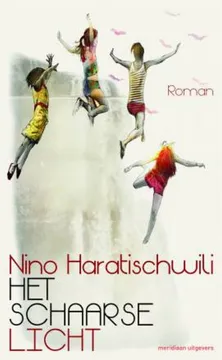
Keto1 remembers the night decades later because it seemed to promise that their friendship could carry them anywhere. The photograph opening Dina’s2 2019 Brussels retrospective brings that moment back: four schoolgirls poised at the threshold of lives they cannot yet imagine. Keto1 has come reluctantly to honor Dina’s2 work and face the two friends she has avoided for years.
The garden is both a real place and the girls’ first chosen territory. They do not merely disobey adults; they discover that fear can be crossed collectively, with Dina leading and the others lending one another courage. Keto’s later memory turns the leap into an origin myth, but the framing exhibition complicates that nostalgia. The girls’ freedom was real, yet never protected them from the political and familial powers gathering around them. Beginning with a remembered photograph also makes the novel’s central tension visible: a frozen image can preserve intimacy, but it cannot restore the people who once inhabited it.
A Friendship Takes Shape
Keto1 first notices Dina2 when her unconventional mother, Lika,8 moves with her daughters16 into a gloomy courtyard basement. Dina2 later catches Keto1 outside, invents a fantastical story about an old photograph, and takes her to swing beneath a summer storm.
Their friendship deepens when Dina2 brings Keto1 to her supposed father’s grave, though the man is unrelated; Dina2 simply believes the lonely dead deserve visitors. Meanwhile, Ira’s3 classmates steal and mock her private calendar diary.
Dina2 retrieves it from their ringleader, adds encouraging notes, and returns it, offering Ira3 friendship without demanding an explanation. Nene,4 already Keto’s1 childhood companion, joins the circle despite her family’s restrictions. The four girls begin to share secrets, excursions, and a sense of being a chosen unit.
The girls create intimacy through acts that adults might dismiss as pranks or impulsive kindness. Dina’s fabricated grave story reveals her instinct to turn loneliness into a story she can act upon, while her rescue of Ira’s diary answers humiliation with solidarity rather than pity. Keto’s role is different: she notices what others conceal and tries to keep the group balanced. Yet the diary episode also plants a fault line. Ira’s private self is exposed to ridicule, and the care that follows cannot erase how vulnerable she feels when others decide what is best for her.
Love Divides the Circle
As the girls approach adulthood, their attachments begin to pull them in different directions. Dina2 persuades Keto’s1 rebellious brother Rati5 to finish school by challenging his pride, then becomes his lover; he gives her their mother’s Leica, the camera that will shape her work.
Keto’s1 secret bond with Rati’s5 friend Levan6 grows through private talks about music and a first kiss, but Levan6 keeps his softer interests hidden from his street companions. Nene4 falls intensely for Saba Iasjvili,7 while Ira’s3 love for Nene4 remains unspoken and increasingly painful.
At school, Ira’s3 rival Anna14 once exposes her diary, leaving Ira3 humiliated. Dina’s2 camera turns the friends into subjects, preserving a closeness that their changing desires and loyalties are already beginning to strain.
Romance does not arrive as a private refuge. Each attachment is negotiated inside a social order that dictates who may desire, who may choose, and which feelings must remain secret. Rati and Levan perform toughness for the boys around them, while the girls experience desire as both self-discovery and exposure. Ira’s unreturned love is especially difficult because it has no socially available language. Dina’s camera seems to offer a way to hold the group together, but it also makes the girls visible to one another as changing bodies and incompatible needs.
Nene Runs, Then Returns
At the end of school, Nene4 and Saba7 disappear from a party, hoping to escape her uncle Tapora’s12 control. Their friends search, but Nene4 is brought back and the family confines her. She later resumes seeing Saba7 in secret, even using dark metro tunnels during power cuts as meeting places.
The political crisis outside worsens: Soviet troops, curfews, demonstrations, and street violence make ordinary movement dangerous. Nene’s4 family eventually forces her to marry Otto Tatisjvili,13 a wealthy associate whose brother is the cruel schoolboy Anna14 once feared.
Nene4 refuses intimacy with Otto13 and keeps her love for Saba7 alive, but her marriage is treated as a transaction between powerful men. Ira3 watches Nene’s4 compromises with alarm, while Nene4 experiences them as the price of remaining attached to her family.
Nene’s choices cannot be reduced to either submission or rebellion. She risks punishment to see Saba, then returns to the family that controls her because the ties of dependence and love are real, not simply imposed from outside. Ira wants freedom to function as a clean break, but Nene’s circumstances make every escape costly to people she loves. The marriage reveals how patriarchal power operates through both wealth and protection: Nene is materially privileged, yet decisions about her body and future are made for her. Her secret meetings become a small, dangerous claim to selfhood.
Five Thousand Dollars
During the collapse of the state, police seize Rati5 and accuse him of resisting officers and possessing heroin. His release appears to require five thousand dollars, money his family cannot raise.
Dina2 and Keto1 carry their collected funds toward a lawyer, but gunmen in the zoo are beating two young men over a gambling debt. One lies dead; the red-haired survivor15 is bleeding. Keto1 first flees with Dina,2 then turns back when Dina2 insists they cannot abandon him.
She offers the money to the gunmen in exchange for his life, and Keto1 escorts him out while Dina2 remains behind. Dina2 later secures Rati’s5 release through Tsotne,10 who desires her, and she sleeps with him. When Rati5 learns what she did, he condemns her instead of recognizing the choice she made.
The zoo forces Keto to confront the difference between survival and moral action. She initially chooses escape, then returns because Dina makes the human cost impossible to ignore. Dina’s bargain saves the stranger and helps free Rati, but the act places her body inside the same economy of male power she is trying to defeat. Rati’s response exposes the limits of his professed honor: he can accept protection from a criminal network, but not the sexual cost Dina paid to secure it. The resulting shame and silence become a wound inside the friendship as well as the romance.
A Love Under Fire
After Rati’s5 release, he rejects Dina2 when she tells him she slept with Tsotne10 to save him. Dina2 turns away, and Rati5 interprets her sacrifice as betrayal. Nene4 and Saba7 continue their clandestine relationship despite her marriage to Otto.13
When Otto13 discovers them together, he beats Saba7 and shoots him. Nene4 is pregnant with Saba’s7 child, but her family sends her away and later pressures her into another marriage, this time to the Moscow businessman Kote.23 She gives birth to Loeka, who unmistakably resembles Saba,7 and refuses to let the child be erased from his father’s story.
Ira,3 who has tried to protect Nene,4 gives up a scholarship opportunity in America before Nene4 persuades her to go. Keto1 begins restoration studies and leaves for Istanbul with Rezo,9 seeking temporary distance.
The women’s different responses to love sharpen the novel’s central conflict. Dina acts decisively and is punished for choosing; Nene preserves her attachment through secrecy, then protects Saba’s child within a compromised marriage; Ira mistakes self-denial for loyalty until Nene releases her from that obligation. Keto’s departure with Rezo is not a clean escape, but it gives her a craft and a place where attention can be directed toward damaged objects rather than people. The child’s resemblance to Saba makes private love a visible fact that the family cannot fully suppress.
The City Eats Its Young
As civil war spreads and shortages become routine, Tbilisi’s criminal factions fill the vacuum left by the state. Rati5 builds a protection business against Tapora’s12 territory, while Tsotne10 secretly expands into heroin with contacts from Russia.
Goega,11 Nene’s4 gentle older brother, tries to escape his family’s criminal world through sport and his devotion to Anna.14 After Anna14 is sexually assaulted, Goega11 hopes to marry her, but trauma leaves her unable to return to their imagined future. The family later arranges Nene’s4 marriage to Kote,23 and Goega11 becomes entangled in Tsotne’s10 plans.
His death from heroin devastates Nene4 and deepens Tsotne’s10 conflict with Rati.5 The girls’ childhood courtyard, once governed by gossip and shared meals, now measures power through guns, debts, drugs, and who can make others obey.
The criminal economy is not a separate underworld; it grows directly through the state’s collapse and enters homes, relationships, and the body. The courtyard’s informal community once supplied forms of mutual care, but its old hierarchies become tools for extortion. Goega’s longing for an ordinary future with Anna cannot withstand the violence visited on her, and his family’s power offers no protection from addiction. Nene’s later marriage secures material safety without emotional freedom. The book shows how survival systems can become indistinguishable from the forces that make survival necessary.
The Shot in Sololaki
After Goega’s11 death and the breakdown of his relationship with Dina,2 Rati5 confronts Tsotne10 in the courtyard. He shoots him, leaving Tsotne10 gravely injured and unable to walk normally. Authorities avoid a conventional murder trial by declaring Rati5 mentally unfit, and he is confined in a psychiatric clinic rather than prison.
Dina,2 who has tried to keep him alive and close, is shut out again; Rati’s5 family visits him, but the treatment leaves him distant and heavily medicated.
Tsotne10 survives and eventually rebuilds his influence, while the conflict between the two men continues through their followers. Dina’s2 photographs gain recognition abroad, yet her growing public reputation cannot repair her private isolation. Keto1 sees her brother’s5 confinement as another loss she is expected to endure quietly.
Rati’s act is both an eruption of grief and a claim to power. He wants to avenge Saba and reassert control over his neighborhood, but the result is not justice: the state converts his violence into psychiatric confinement, while Tsotne’s network survives. Dina’s choice to care for Rati cannot restore their former intimacy because he cannot accept the form her loyalty took. Her public success creates a cruel mismatch: strangers celebrate the images she makes, while the people closest to her cannot reach her through them.
Ira Builds a Case
Ira3 returns from America trained in law and determined to confront the criminal system that has shaped her friends’ lives. She secretly works with a journalist to gather recordings and evidence against Tsotne’s10 organization, using an informant inside its network.
Her plan becomes public when a television broadcast exposes the criminal operation and makes arrest unavoidable. Nene4 learns that Ira3 has acted behind her back and sees the prosecution as another betrayal of her family, especially while she is trying to protect her children.
The case brings convictions and ends Tsotne’s10 immediate impunity, but it also costs Ira3 her home, her reputation, and the possibility of easy reconciliation with Nene.4 Keto1 is once again caught between the two women, unable to make their different ideas of freedom agree.
Ira’s legal campaign transforms the intelligence she once used to win school competitions into a tool for public accountability. Yet legal evidence cannot settle the moral question of whether Nene wanted to be rescued from her family’s world. Ira acts from love and conviction, but she also assumes that her interpretation of another person’s freedom is authoritative. Nene’s anger is not merely resistance to justice; it is the response of someone whose private choices have again been made public without consent. The courtroom shifts power, but it does not repair intimacy.
The Last Rescue Fails
Years later, Rati5 reappears in Dina’s2 atelier, addicted to heroin and desperate to stop. Dina2 gives him a place to use safely, believing she can guide him toward treatment. She spends her own money arranging a clinic abroad and asks him to leave with her. Rati5 accepts the plan, then disappears before the trip, returning to the drug world that has already taken Goega.11
Dina2 continues to photograph and work, but her attempts to save Rati5 consume her remaining strength. Keto1 stays away, angry at Dina2 and ashamed of her own absence. When Rati5 dies from an overdose, Dina2 loses the last person whose fate she still believed she could alter. She tells Keto1 she has lived too much too soon, a warning Keto1 understands only after it is too late.
Dina’s care for Rati is not naïve optimism; she knows how addiction works and still chooses to make one more attempt. The failed treatment plan repeats the book’s painful pattern: a woman organizes a rescue for a man, while the man retains the power to refuse it. Dina’s photography offers witness but not control. Keto’s distance compounds the loss because her protective instinct has become entangled with shame and avoidance. Rati’s death does not arrive as a single surprise so much as the final consequence of a world in which drugs, violence, and isolation have become ordinary.
Dina’s Missing Memory
In 2019, Keto,1 Ira,3 and Nene4 reunite at Dina’s2 retrospective in Brussels, where her younger sister Anano16 has assembled the photographs. The women circle one another through the crowded exhibition, carrying decades of grievance: Nene4 resents Ira’s3 prosecution of Tsotne,10 Ira3 still believes she acted to free Nene,4 and Keto1 has spent years trying to keep peace by withdrawing.
At the end of the night, they leave the reception and make their way toward a botanical garden, echoing their first forbidden excursion. As they talk, Keto’s1 memory breaks open.
She remembers entering Dina’s2 atelier and finding her friend hanging from a gymnastics ring. The recollection explains the gap in Keto’s1 account and makes the exhibition’s photographs unbearable evidence of a life she could not save.
The final revelation is not a detective’s solution but the return of a memory Keto’s mind had sealed away. Her role as mediator depended on arranging other people’s pain into a survivable order; forgetting the discovery was one way to keep functioning. The women’s walk toward the garden reverses their childhood journey: they are not escaping into freedom, but approaching the place where their shared story began. The truth does not reconcile them instantly. It removes the protection of a false chronology and asks each survivor to carry what the others could not.
Three Beneath the Fountain
At dawn, the three women break into the Botanical Garden, repeating the childhood trespass that once joined them. They find the fountain and climb into its basin, laughing and splashing despite the cold. For the first time that night, they stop arguing over who betrayed whom and toast their friendship and Dina.2
Nene4 photographs Keto,1 Ira,3 and herself, leaving an open space where Dina2 might have stood. After Nene4 and Ira3 depart together, Keto1 sits beside the fountain with the notebook Ira3 gave her and begins to draw.
She realizes that Dina’s2 title, The Scarce Light, names more than the exhibition’s dim rooms: it marks the light the friends fought to preserve. Keto1 adds Dina2 to the drawing, not as a ghost restored, but as the missing presence their lives still make room for.
The ending returns the novel to its first image without pretending that the girls can become children again. Their trespass now carries knowledge of death, complicity, and the cost of survival, yet they choose to make one more shared act. Keto’s drawing matters because she had abandoned her own artistic impulse; beginning again is a modest recovery of agency, not a cure. By leaving space for Dina and then drawing her in, Keto neither denies the loss nor lets the dead dictate the shape of every remaining day. The fountain offers no absolution, only a brief, chosen fellowship.
Analysis
The novel treats friendship as a form of shelter built inside institutions that repeatedly fail the characters. The courtyard, the workshop, the clandestine metro meetings, and the shared photographs all create small spaces where people can recognize one another. None is durable enough to defeat political violence, patriarchal control, or addiction, but each makes a different kind of survival possible. The women are not offered a clean choice between freedom and dependence. Nene’s4 family protects and confines her; Ira’s3 intervention pursues justice while violating trust; Dina’s2 self-determination can become a demand that others act at her pace; Keto’s1 mediation preserves bonds but also delays decisions.
Photography and restoration provide parallel practices of attention. Dina2 records what public narratives prefer to conceal, while Keto1 repairs objects by preserving their accumulated history rather than inventing an untouched past. Both practices resist erasure, but neither can restore a person. The retrospective therefore becomes an uneasy civic ritual: the survivors encounter images that belong at once to their private lives and to a country’s public catastrophe. Keto’s1 recovered memory demonstrates that witnessing is not the same as understanding. Trauma can preserve a fact while burying its meaning, and the return of that meaning changes the witness’s account of herself.
The novel’s political violence is concrete and intimate. A failing state leaves room for criminal networks; criminal networks regulate business, family, and desire; heroin then turns the promise of power into bodily dependency. The characters inherit not just trauma but systems of behavior, including masculine codes that make vulnerability shameful and women’s bodies negotiable. Yet the book refuses to make the past a simple explanation for every choice. Its survivors remain responsible for what they do, even when their options have been violently narrowed.
The closing drawing is deliberately modest. Keto1 cannot bring Dina2 back or settle the women’s disputes, but she can begin making images again and include the absent friend2 without pretending the absence has closed. The hard-won gesture suggests that survival is not recovery to an earlier self. It is the continuing work of making room for love, anger, and memory in the same life.
Review Summary
Reviews for Het schaarse licht are overwhelmingly positive, with readers praising Haratischwili's vivid portrayal of four female friendships set against Georgia's turbulent post-Soviet history. Many highlight the rich character development, cinematic atmosphere, and emotionally devastating storytelling. Critics frequently compare it to Elena Ferrante's Neapolitan saga. Some readers note the book's excessive darkness and melodrama, particularly in the second half, and a few felt the narrative structure was inconsistent. Despite its 700+ pages, most found it impossible to put down.
People Also Read


Characters
Keto Kipiani
The keeper of memoriesKeto narrates the story as an art restorer who notices what other people conceal. As a girl, she follows Dina2 into risk but often tries to soften conflict, mediate between friends, and keep adults from worrying. Her talent for drawing and her closeness to her brother Rati5 and to Levan6 give her several routes into the violent world around her. She is not simply timid: when pushed, she makes consequential choices and carries their moral weight. In later life she has built a disciplined, quieter existence, yet the past remains active in her body and memory. Her central drive is to preserve what can be saved without pretending that repair can return anything to its original state.
Dina Pirveli
The fearless photographerDina is the group’s catalyst, a restless observer who treats fences, social expectations, and artistic limits as invitations to look closer. Raised by the unconventional furniture restorer Lika8, she trusts curiosity and action more than caution. Her boldness attracts friends and lovers, but it also makes her impatient with hesitation and capable of wounding people while trying to force them toward freedom. Photography gives her a way to witness a country collapsing around her, and her work is inseparable from personal experience. She wants life in its full intensity, not merely safety. Beneath her confidence lies a demanding need to remain true to herself, even when that demand becomes destructive.
Ira Jordania
The strategist with a conscienceIra begins as an exceptional student who believes discipline and achievement might earn her the acceptance she longs for. She is precise, observant, and protective, especially toward Nene4, whose impulsiveness awakens Ira’s caretaking instincts. Her intelligence can read people and systems quickly, but her confidence in her own judgment has a cost: she sometimes mistakes intervention for consent. Law gives her a language for challenging corruption, while her private attachments remain harder to manage than any case. Ira is driven by justice and by the desire to make power answer for itself. Her central tension is whether love can justify acting on another person’s behalf without asking.
Nene Koridze
The guarded romanticNene is warm, theatrical, flirtatious, and more forceful than her delicate appearance suggests. Her family’s criminal hierarchy surrounds her with luxury and restricts her choices, so she learns to use charm, patience, and performance as forms of negotiation. She longs for passionate love, but she is also deeply attached to family members whose power can threaten the people she chooses. Nene can appear carefree while carefully reading the dangers in a room. Her friendships with Keto1, Dina2, and Ira3 offer forms of belonging that her family cannot provide, although she does not always know how to accept their help. She is driven by a stubborn hope that tenderness can still be found inside a violent world.
Rati Kipiani
The defiant older brotherKeto’s1 older brother is charismatic, rebellious, and fiercely sensitive to hypocrisy. His anger at his father18 and at the corrupt state gives him a moral vocabulary for resistance, but the street economy gradually turns his protest into another form of power. Rati wants recognition from the people he loves and respect from the men around him, needs that often collide. He is protective of Saba7 and close to Levan6, yet his pride makes intimacy difficult when another person’s choice wounds him. He views himself as a self-made alternative to corrupt authority, though he is also shaped by the same masculine codes he claims to oppose. His loyalty and his appetite for control coexist uneasily.
Levan Iasjvili
The tender street loyalistLevan is Saba’s7 younger brother and Rati’s5 close companion. He is energetic, curious, and privately devoted to music, but he hides that sensitivity behind a provocative street persona. His secret conversations with Keto1 create a rare space where he can show interests his friends might mock. Levan admires Rati5 and values loyalty, yet he is also drawn to status and retaliation. The conflict between his gentler self and the role he performs becomes increasingly difficult to contain. He wants closeness, but he has trouble separating love from possession and tenderness from the masculine rules governing his circle.
Saba Iasjvili
The gentle older brotherSaba is Levan’s6 elder brother and Rati’s5 closest friend, a shy, beautiful young man with a love of architecture and a gift for quiet attention. He is a contrast to the swaggering boys around him, though Rati’s5 protection lets him remain within their circle. Saba’s gentleness is not weakness, but it leaves him poorly equipped for a world that treats violence as proof of manhood. His connection with Nene4 is built on tenderness and shared imagination, qualities that become especially precious under family control.
Lika Pirveli
The restorer and refugeDina2 and Anano’s16 mother is a self-taught furniture restorer who raises her daughters with unusual freedom. Her own life has included disappointed ambitions and exploitative men, yet she does not pass those injuries on as rules for her children. Lika’s workshop gives Keto1 a place to learn patient, practical care. She teaches that restoring an object means preserving the marks of its history rather than inventing a perfect past. Her warmth is genuine but not blind; she sees the danger gathering around the young people even when she cannot stop it.
Rezo
The patient art mentorRezo is an experienced fresco restorer who works with Keto1 in Georgia and later offers her a professional opening abroad. He is pragmatic, wry, and more attentive than his initially self-contained manner suggests. Unlike the men Keto1 has known, he does not demand that affection become obedience or that a partner give up her ambitions. He can offer closeness without insisting on possession, although that does not make him immune to hurt. His steady presence introduces Keto1 to a different model of intimacy and to the possibility that art can be work, discipline, and refuge at once.
Tsotne Koridze
The heir to the shadow worldNene’s4 younger brother is raised to inherit the criminal authority of his uncle Tapora12. Tsotne is controlled, observant, ambitious, and skilled at understanding how fear organizes people. His hard exterior conceals a capacity for deep attachment, though he has few acceptable ways to express it. Unlike Rati5, he does not need to be liked; he wants power and the respect that power can command. His private feelings for Dina2 complicate his role in the Koridze family, but do not erase his participation in its coercive system. He embodies the temptation to believe that control can substitute for safety.
Goega Koridze
The family’s gentle giantGoega is Nene4 and Tsotne’s10 older brother, a large, shy man who never seems comfortable in the family’s criminal world. He is affectionate and easily embarrassed, with a long-standing devotion to Anna Tatisjvili14. Goega finds confidence through sport and hopes to build an ordinary domestic life, but his family’s expectations repeatedly pull him back toward danger. His kindness is sometimes mistaken for weakness, even by those who love him. He represents the quiet people caught inside systems built by more forceful relatives.
Tapora, Dito Koridze
The uncle above the lawKnown by the feared nickname Tapora, Dito is Nene’s4 uncle and the senior authority in the Koridze family. He rules through a mixture of money, favors, intimidation, and carefully maintained codes. His protection gives his relatives comfort and status, but it also binds them to his decisions. Tapora believes family loyalty and reputation matter more than individual desire. He is not simply a brute: his power depends on reading alliances and ensuring that people owe him. His presence shapes Nene’s4 life long before she can challenge him.
Otto Tatisjvili
The entitled husbandOtto is Anna’s14 brother and a wealthy young man protected by his family’s influence. He is entitled, cruel, and accustomed to treating other people as instruments for his desires. His marriage to Nene4 is part of a bargain among powerful men, not a mutual choice. Otto’s conduct makes visible the violence hidden beneath the respectable façade of wealth and family honor. He carries forward the coercive behavior already tolerated in his own household.
Anna Tatisjvili
The fallen school princessAnna is the beautiful, high-achieving girl who once ruled Keto1 and Ira’s3 classroom. She is used to praise and social deference, and initially treats Ira3 as a rival when Ira’s3 intelligence threatens her position. As an adult, Anna faces the consequences of being connected to a family whose power has turned toxic. Her story exposes how beauty and privilege can conceal vulnerability rather than protect someone from it.
Gio Dvali
The red-haired survivorGio is the young man Keto1 and Dina2 encounter wounded in the zoo. Before the war, he is an ordinary student drawn into a gambling debt and a violent confrontation. His red hair makes him unforgettable to Dina2, but he is not a symbol to himself; he wants to live, study, and recover an ordinary future. His later connection with Keto1 complicates her attempt to make the past meaningful.
Anano Pirveli
Dina’s devoted younger sisterAnano is Lika’s8 younger daughter and Dina’s2 sister. She grows up in the same unconventional household but occupies a gentler, more accommodating place within it. In adulthood she helps preserve Dina’s photographic legacy and organizes the Brussels exhibition that brings the surviving friends together. Anano is warm and practical, able to celebrate her sister’s2 art without pretending that she can replace her.
Nina and Rostom Iasjvili
Saba and Levan’s parentsNina is a gentle librarian who shares books and care with the courtyard’s older women. Rostom is a reserved photographer who develops portraits in his darkroom, introducing children such as Dina2 to the possibilities of the camera. Their home offers warmth and artistic attention, a counterpoint to the public performance of toughness outside. They love their sons but have limited power against the violence shaping the neighborhood.
Goeram Kipiani
Keto’s restrained fatherKeto1 and Rati’s5 father is a physicist whose reserve often makes affection difficult to read. He retreated into research, jazz, and formulas when family life overwhelmed him, and he struggled to understand Rati’s5 rebellion. His own history includes ambition sacrificed for marriage and grief he rarely discusses. Though he is not an effective protector in the collapsing city, his respect for Keto’s1 independent choices becomes an important form of support.
Eter and Oliko Kipiani
The rival grandmothersKeto’s1 grandmothers, called Baboeda One and Baboeda Two, are intellectual women shaped by political violence and private loss. Eter is disciplined and Germanist; Oliko is an exuberant French translator who searches for beauty and romance. Their lifelong arguments are comic, but their histories reveal the terror that formed their generation. They help raise Keto1 and Rati5 through stories, lessons, food, and a stubborn insistence that life can still contain art.
Manana Koridze
The fearful family matriarchNene’s4 mother lives within the protection and restrictions of her brother-in-law Tapora’s12 power. She is conservative, anxious about family reputation, and often unable to defend her daughter4 from the men who govern their household. Her attachment to her children is real, but fear and dependence distort how she expresses it.
Tamas and Gioeli Jordania
Ira’s opposing parentsIra’s3 father Tamas is quiet and happiest tending plants at his country house. Her mother Gioeli is practical, ambitious, and skilled at using the housing bureaucracy to secure advantages. Their contrasting temperaments help explain Ira’s3 combination of intellectual discipline, strategic instinct, and longing to be loved.
Tarik
The courtyard’s gentle observerTarik is the youngest son of a Kurdish family in Keto’s1 courtyard. He is kind, socially overlooked, and devoted to stray animals. His instinct to help others draws him into the dangers adults create, while his quiet presence exposes the prejudices that the courtyard’s residents prefer not to acknowledge.
Kote Boekia
Nene’s pragmatic husbandKote is a wealthy businessman connected to Tapora12 and much older than Nene4. Their marriage is arranged to stabilize family interests, though he proves more accommodating than the men who control her earlier life. He wants children and a respectable household, and he allows Nene4 freedoms within the bargain they make. His provision does not erase the unequal terms on which their union begins.
Norin
Keto’s distant companionNorin is a European partner with whom Keto1 shares a long, carefully bounded intimacy. He is attentive to detail and drawn to the disorder and pain she often tries to conceal. Their connection offers companionship without a conventional shared life, reflecting Keto’s1 difficulty trusting permanence even after she has built a stable home.
Plot Devices
Dina’s photographs
Memory made visibleDina’s2 camera begins as a gift from Rati5 and becomes her means of looking directly at the people and political violence around her. Her photographs preserve moments the characters would rather forget, but each image is incomplete: viewers debate what it shows, while Keto1 remembers private contexts the public cannot see. In 2019, the retrospective turns the women into spectators of their own past and provides the structure for the novel’s returns across time. The images do not heal or explain events. They make denial harder, and they give Keto1 a route back to the memory she has buried.
The Botanical Garden
A circle of returnThe girls first enter the Botanical Garden by slipping through a broken fence, then reach the waterfall after crossing a dark tunnel. That trespass becomes an image of childhood freedom and the beginning of their shared history. Decades later, the surviving friends return to a garden after the exhibition, repeating the act with full knowledge of what their lives have cost. The place links an early leap into the unknown with a late choice to remain connected. Its fountain cannot undo the past, but it offers the women a small, physical ritual of companionship.
Restoration and repair
Preserve without erasingKeto’s1 work restoring furniture and frescoes gives her a practical vocabulary for living with damage. Her mentor9 teaches her to conserve what survives rather than pretend that a historical object can be returned perfectly to an original state. The idea shapes Keto’s1 relationship to memory: she cannot repair her friends, but she can learn to look closely and preserve their histories. Restoration also offers temporary refuge during war and hardship, giving Keto1 work when the world outside becomes difficult to bear. Its limits matter as much as its promise: preservation is not resurrection.
The shadow economy
Power without a stateAs public institutions collapse, protection payments, criminal codes, weapons, and drug trafficking take over their functions. Tapora’s12 network offers safety and opportunity while dictating who may work, love, travel, or make decisions. Rati5 tries to build a rival organization in the language of protection, while Tsotne10 expands into heroin and later faces Ira’s3 legal challenge. The same system also shapes intimate choices, from Nene’s4 marriages to Dina’s2 bargain to free Rati5. Its power comes not only from guns, but from making dependence feel like the only available form of security.
The withheld memory
Trauma breaks chronologyKeto’s1 first-person account moves between childhood, war, exile, and the 2019 exhibition. Her memory is precise about some details and blank around others, especially the event that ends Dina’s2 life. The narrative’s gaps are not tricks for their own sake; they reflect how grief can preserve a sensory fragment while concealing its meaning. The eventual return of the missing scene forces Keto1 to revise her understanding of her own past. The device also prevents a simple, orderly history: the survivors remember differently, and their incompatible versions reveal the emotional stakes of each event.
Download PDF
Download EPUB
.epub digital book format is ideal for reading ebooks on phones, tablets, and e-readers.








