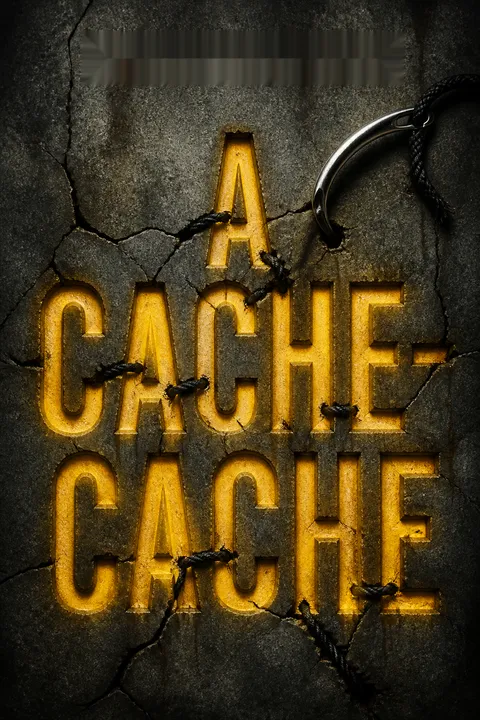


Plot Summary
Holloway’s New Prisoner
Leah Smith, serving life for stabbing a pregnant woman she says she did not know was expecting, hurries back to her cell at Holloway Prison, convinced other inmates are hunting her. She survives the walk, then lies awake thinking of her young twin boys and tomorrow’s visit with her mother. At the same prison, Detective Inspector Helen Grace counts the days until trial.
She has been jailed after her nephew, Robert Stonehill, framed her for three murders, and the inmates know she once put many of them behind bars. When an officer finds Leah missing from the morning roll call, the blanket on her bed conceals something far worse than a missed breakfast. Helen’s grim new world has acquired a second crime scene.
The opening makes imprisonment an active force rather than a backdrop. Leah’s fear is shaped by the prison’s informal hierarchy, while Helen’s authority has been stripped away and turned against her. Their adjacent cells create an uneasy pairing: a convicted killer and a disgraced detective, both exposed to a system that claims to contain danger but cannot reliably protect its occupants. Leah’s thoughts of her sons give her a future to reach for, making the concealed body a particularly cruel interruption. The story begins with two forms of confinement, legal and social, already closing around its characters.
A Smile Sewn Shut
Governor Celia Bassett finds Leah dead, her mouth and eyelids stitched shut with blue thread. The work is careful, the cell shows no obvious disturbance, and the cause of death is unclear.
The Prisons and Probation Service sends Benjamin Proud to take charge, unsettling a staff already worn down by Holloway’s violence and impending closure. Leah’s mother, Cathy, arrives with the twins expecting a visit and learns instead that something has happened to her daughter. In the prison, rumours spread that Leah was murdered because she informed on someone.
Helen hears that the corpse was deliberately altered and recognizes that this was no ordinary fight or suicide. The authorities begin their inquiry, but the frightened inmates suspect that whoever entered Leah’s cell can reach them too.
The carefully altered corpse makes the murder both physical evidence and a message whose meaning remains uncertain. The absence of an obvious cause of death prevents investigators from relying on the familiar signs of a prison assault, while the concealed face denies Leah even the dignity of being recognized as herself. Cathy’s interrupted visit carries the violence beyond the prison walls: the boys lose the mother they came to see, and their grandmother must absorb the news before she can explain it to them. Meanwhile, staff and prisoners have different reasons to fear an investigation, so the official search begins amid competing silences.
The Drug Queen’s Warning
Helen asks Leah’s neighbour, Rosie, whether she heard anything, but Rosie insists Leah’s conviction made her a target and refuses to help. The inmates’ suspicion turns on Helen when she argues that an unknown killer could choose any cell next.
Wheelchair Annie, who controls much of the prison’s drug supply, warns Helen to stop prying. Annie’s lieutenant, Alexis, later pins Helen down, while security chief Cameron Campbell searches Helen’s cell and accuses her of the murder. Helen finds no protection in the official channels, but Babs, an elderly lifer who keeps records on former inmates, lets her consult the prison’s clippings.
Her first leads point toward Leah’s possible dealings with Annie, though Helen cannot yet tell whether the killer is an inmate, a staff member, or someone using the prison’s routines against everyone.
Helen’s investigative instincts return before her institutional power does. She can read fear and test inconsistencies, but she cannot compel cooperation or command a scene; each question therefore costs her safety. Annie’s warning and Campbell’s accusation show how different kinds of authority converge to contain her, whether through prison commerce or formal discipline. Babs’s scrapbooks offer a quieter counter-institution, a memory archive built by someone the system might otherwise overlook. The tension lies in Helen’s need to trust precisely the people she once would have treated as suspects, while knowing that prison survival rewards discretion more than truth.
Stonehill On Camera
Outside prison, Helen’s former colleague Charlie Brooks searches for Stonehill, convinced he framed Helen. She canvasses shops with a false assault report until a newsagent recognizes Stonehill on old security footage.
The recording shows a man resembling him buying groceries on September 14, the day before the first murder, wearing the same brand of trainers as a footprint found at Helen’s base near the docks. Charlie brings the footage to Helen’s replacement, Joanne Sanderson, but Sanderson calls it circumstantial and closes the inquiry.
Superintendent Jonathan Gardam reinforces the demand for loyalty to the official case. Charlie’s evidence does not free Helen, yet it establishes that Stonehill was near Southampton at a crucial time. She continues alone, risking her standing in the force and straining her relationship with her partner, Steve.
The CCTV image is a small, imperfect fragment, but it changes the moral weight of the case against Helen. Charlie sees a pattern where her superiors see isolated details, revealing how institutional certainty can be produced by selecting which evidence counts. Her fabricated report is ethically compromised, yet it arises from a conviction that the lawful process has stopped serving truth. Sanderson’s refusal is not simple villainy: she has inherited a damaged team and must prove she can control it. The conflict becomes a contest between procedural closure and persistent doubt, with Charlie paying personally for refusing to confuse a closed file with a solved crime.
The Unborn Child
Proud’s pathologist, Dr Asim Khan, finds no clear wound or signs of a struggle, but his examination reveals that Leah was in the early stages of pregnancy. Helen obtains the report through Sarah Bradshaw, a prison officer who has been leaking information to journalist Emilia Garanita for money.
The pregnancy makes the crime more disturbing and strengthens Helen’s suspicion that Leah knew her killer well enough not to resist. Her drug supply had recently dried up, and inmates believed she had tried to trade information for a move to a safer wing.
Annie remains a possible suspect, but Helen notices that an officer could move between cells with less scrutiny than any prisoner. She begins looking beyond the prison gangs, even as Campbell’s hostility makes her own position more precarious.
The pregnancy does not explain Leah’s death, but it changes what her body represents: she was not only a mother separated from two living children, but carrying another life in secret. That discovery sharpens the emotional cost of the murder while complicating the suspect list. Helen’s inference that the killer may have been trusted is psychologically astute, though not yet proven. Sarah’s theft of the report also blurs the boundaries between investigator, witness, and informant. In a place where every exchange has a price, facts travel through compromised hands, yet even compromised information can expose what official routines have failed to notice.
A Cell Left Open
Helen slips out of her locked cell to meet Sarah in the gymnasium, where Sarah names Campbell as an officer surrounded by rumours of abusing prisoners. Returning through the darkened wings, Helen sees a tall figure leaving Jordi Baines’s cell and gives chase, but the stranger jumps onto the prison’s safety net and escapes.
Inside, Helen finds Jordi dead, her face and other openings treated like Leah’s. The two women had been close, and Jordi had recently lost another chance at parole, leaving her despairing about ever reuniting with her daughters.
Helen notices a fresh injection mark beneath Jordi’s arm, a detail that echoes Leah’s medical report. The parallel murders make prison gossip look inadequate as an explanation, while Helen’s unauthorized movements leave her vulnerable to punishment.
Jordi’s death turns Helen’s inquiry into a personal obligation. Her friend’s parole rejection had already narrowed the future to a life of separation; the murder removes even the possibility of ordinary contact with her daughters. Helen’s escape from her cell demonstrates both ingenuity and danger: prison routines can be manipulated, but every breach exposes her to discovery. The fleeing figure offers a rare glimpse of the killer’s access without resolving identity. Most important, the injection mark shifts attention from the theatrical mutilation to a nearly invisible medical detail. The book asks the reader to look past the shocking surface and notice the small evidence that can make a pattern legible.
The Third Silent Death
Proud’s team finds traces suggesting sexual contact on Jordi’s body, while Helen’s stolen report confirms a similar injection mark on Leah. Prison officer Mark Robins, usually gentle with inmates, becomes harder to dismiss after Helen sees him limping away from the cell where Jordi was killed.
Then transgender prisoner Lucy is found dead with the same strange alterations, and fear spills into a prison-wide riot. Helen is confined to segregation after a drug test turns positive, although she has taken no drugs.
Sarah secretly passes her a preliminary report, and Helen realizes the sample may have been tampered with to keep her out of the wings. Robins is questioned, but his connection to the deaths remains uncertain. With guards and inmates fighting for control, the killer’s access to the prison has become a danger to everyone.
The repeated crime scene invites pattern recognition, but it also tempts Helen and the reader toward premature certainty. Robins’s limp is a meaningful clue, yet a clue is not a verdict; the novel keeps suspicion unstable by showing how credible evidence can coexist with misleading appearances. Helen’s segregation removes the one person actively investigating, turning administrative procedure into a weapon whether or not Campbell arranged it. Lucy’s death then transforms private fear into collective violence. The riot is not simply disorder: it is the consequence of a prison population that no longer trusts the people charged with keeping it safe, and whose pleas have been answered with suspicion and confinement.
The Hunt Reopens
Charlie follows Stonehill to a hospice where he works under another identity, but he attacks her and escapes in a stolen car. She traces the false benefit claims he used to survive, linking them to recently deceased people at the same hospice, then persuades Sanderson that his movements deserve a full investigation.
Sanderson defies Gardam and joins Charlie in London. Their first raid on Stonehill’s squat fails when he escapes down a drainpipe and knocks Sanderson down. Charlie and Sanderson keep searching while Stonehill shaves his head and prepares to vanish.
During the prison riot, a later pursuit brings him face to face with Charlie again; this time her stab vest stops his knife, and she brings him under arrest. His capture gives Helen’s defence a real evidentiary path, not just Charlie’s loyalty.
Charlie’s search shifts from private certainty to a case that others can verify: footage, benefit records, aliases, attacks, and a physical pursuit. Sanderson’s change of position matters because it costs her the protection of obedience to Gardam. The two detectives do not erase their earlier conflict; they redirect it toward a more demanding standard of proof. Stonehill’s repeated escapes show that his advantage has depended on invisibility and other people’s assumptions, not supernatural brilliance. When Charlie survives his knife attack because she wears a vest, the scene turns the investigation’s emotional risk into a concrete consequence, while making his capture the first serious crack in the frame around Helen.
Babs’s Hidden History
Released from segregation amid the riot, Helen enters the mortuary and identifies adrenaline as the likely cause of the victims’ sudden cardiac arrests. She remembers the needle marks and learns from Annie that someone obtained adrenaline from the infirmary stores.
In Babs’s cell, Helen finds a newspaper clipping identifying the elderly lifer as a former nurse suspected of killing patients with insulin and adrenaline. Babs’s letters from her daughter are unopened, contradicting her stories of a loving family. Under the bed, Helen uncovers a syringe and a vial of adrenaline.
Her earlier trust has concealed the killer in plain sight: Babs had offered companionship and prison lore while steering Helen away from herself. The evidence explains the deaths, but Helen must still confront Babs before she can deliver it safely.
Babs’s revelation reorders earlier acts of kindness without making them unreal. Her listening, advice, and shared knowledge were genuine forms of intimacy, but she used them to control what Helen could see. That mixture is more unsettling than a purely false persona because it shows how care can become a rationale for domination. The hidden vial gives the investigation its first tangible link between the unusual deaths and a specific person. The scene also makes the prison archive double-edged: Babs’s scrapbook preserves the evidence of her past, yet Helen initially overlooks it because affection has become its own filter.
The Good Samaritan’s Last Act
Babs returns to Helen’s cell, retrieves the evidence, and admits she killed Leah, Jordi, and Lucy because she believed their lives in prison had become unbearable. She had used adrenaline to stop their hearts, then stitched and sealed their bodies to keep the prison’s vermin away. Before Helen can escape, Babs injects her and cuffs her to the bed.
At the same time, Charlie hears that a riot is consuming B-Wing and smashes through the prison barrier in her car. She reaches Helen’s cell to find her without a pulse, then works with the responders until they revive her. Babs is taken into custody, and the person who once presented herself as a rescuer is finally exposed as someone who made death her private form of mercy.
Babs’s justification rests on a real perception of prison despair, but she converts empathy into unilateral authority. By deciding that other people have no future, she repeats the deepest violence of incarceration: removing their power to choose what happens to their lives. Her efforts to protect the dead from vermin reveal tenderness entangled with possession, not a simple absence of feeling. Helen’s near-death makes the distinction between rescue and control bodily immediate. Charlie’s breach of the prison’s perimeter reverses the institution’s central promise: the person outside must risk breaking in because the people inside cannot protect Helen from the danger among them.
Truth Leaves Holloway
In custody, Stonehill describes how he committed the three earlier murders and planted evidence to make Helen look guilty. The confession confirms Charlie’s case, and the charges against Helen are dropped.
Gardam is dismissed after an inquiry finds he obstructed the truth and helped preserve the false case. Babs remains in segregation awaiting trial, while Stonehill faces charges for murder and his attacks on Charlie and Sanderson.
Helen leaves Holloway with a walking stick and a few returned possessions, grieving Leah, Jordi, and Lucy, whose families must live with the deaths she could not prevent. She declines Charlie’s offer to stay with her, wanting her own home and time alone. Her freedom is real, but it does not undo the losses that the prison allowed.
The ending restores legal truth without pretending that truth repairs everything. Helen is exonerated, but the months of imprisonment and the deaths of three women remain irreversible. Stonehill’s confession exposes how a persuasive case can be manufactured from selected evidence, while Gardam’s dismissal shows that institutional betrayal requires accountability beyond catching the original criminal. Helen’s choice to return to her flat rather than accept immediate care is not simple rejection; it is an attempt to reclaim space and agency after months in which others controlled both. Her desire to resume her life is present, but the grief she carries prevents release from becoming a clean, triumphant reset.
Analysis
Hide and Seek builds its crime story around the unstable boundary between care and control. Helen enters Holloway already stripped of professional authority, then has to investigate a killer in a community where information is traded, withheld, or distorted for survival. Her detective skills remain sharp, but the novel repeatedly shows that intelligence is not enough: she has to learn whom to trust, notice what official systems overlook, and accept help from people she would once have judged from a distance.
The prison’s violence is not presented as an excuse for murder, but it gives the murderer’s reasoning a credible emotional source. Babs sees despair and responds by deciding for others that death is release. Her tenderness toward the dead does not soften the ethical fact that she has taken their choices away. That contradiction makes the book’s moral center more difficult than a simple contest between good and evil. Compassion without consent becomes another form of domination.
The parallel pursuit of Stonehill widens the argument from a prison to the police institution. A convincing narrative of guilt can be assembled by choosing which evidence to privilege, while a superior’s desire for institutional stability can make doubt seem disloyal. Charlie’s refusal to stop searching and Sanderson’s eventual willingness to reopen the case show that justice depends not only on forensic facts but on people prepared to question a successful official story.
The ending offers correction rather than restoration. Helen is freed and the guilty are exposed, yet Leah, Jordi, and Lucy remain dead, their children and families left with losses no confession can repair. The novel’s most durable insight is that accountability matters precisely because it cannot undo harm. A system that waits for catastrophe before listening has already failed the people it claims to protect.
Review Summary
Hide and Seek is the sixth book in M.J. Arlidge's DI Helen Grace series, receiving an overall rating of 4.28 out of 5. Readers praise the intense, suspenseful thriller that places Detective Inspector Helen Grace in Holloway Prison, framed by her nephew. While imprisoned, Grace investigates gruesome murders within the prison walls while her colleague Charlie Brooks works to prove her innocence. Reviewers commend the fast-paced plot, gritty prison atmosphere, and shocking twists, though some note it works best when read in series order.
People Also Read



Characters
Helen Grace
Framed detective behind barsHelen is a driven detective awaiting trial for murders she insists she did not commit. Her imprisonment places her among women she once investigated, stripping away the authority that usually protects her and forcing her to read danger without official tools. She is private, physically disciplined, and accustomed to acting alone, but the prison’s pressures make that self-reliance costly. Her connections with inmates such as Jordi, Babs, and Noelle test her reflex to classify people by their worst actions. She wants justice for Leah and safety for the women around her, even while her own case remains unresolved. Helen’s central tension is between the investigator’s need for control and the human need to trust others.
Charlie Brooks
Loyal detective and allyCharlie is Helen’s former colleague and the one officer unwilling to accept the conviction as settled. Resourceful and persistent, she fabricates a minor lead to keep searching, canvasses shops, studies footage, and follows Stonehill into danger without official backing. Her loyalty is not blind: Steve’s doubts force her to reckon with the risks she imposes on her family, while Sanderson’s resistance makes her question whether persistence can become recklessness. Charlie’s defining strength is her refusal to let professional consensus substitute for evidence. Yet she must learn that conviction alone cannot clear Helen; she needs material proof and colleagues willing to reopen the case.
Robert Stonehill
Helen’s dangerous nephewRobert is Helen’s nephew, shaped by the violent history of his family and by his hatred of Helen over his mother’s death. He is patient, adaptable, and capable of hiding behind ordinary identities, which makes him difficult to locate. His careful planning contrasts with his impulsive violence when someone threatens to expose him. Robert wants control over the story of his family and sees Helen’s public disgrace as a way to punish her. He is not merely a distant criminal threat: his blood relationship to Helen makes his actions a betrayal of kinship as well as a calculated attack on her professional identity.
Barbara Sarrington, Babs
Prison’s kindly historianKnown as Babs, Barbara is an elderly lifer who has survived Holloway long enough to become an informal archivist of its inmates. She is observant, composed, and generous with practical knowledge, especially toward people who seem isolated. Her warmth gives her unusual access to others, while her detailed memory of the prison’s population makes her a source of information and perspective. Babs’s understanding of suffering is shaped by decades of confinement, and she speaks with the confidence of someone who believes experience has taught her what people need. Her relationships with younger inmates can feel maternal, though her authority within them is never entirely separate from the power she has accumulated.
Leah Smith
Imprisoned mother of twinsLeah is serving a life sentence for a fatal stabbing committed during a volatile period in her life. She has twin boys, Dylan and Caleb, who live with her mother, Cathy, and she clings to their visits as proof that she remains more than her conviction. Fear, addiction, self-harm, and a fierce temper complicate her efforts to survive Holloway. Her isolation makes her vulnerable to prison politics, but she is not simply the crime other inmates remember. Leah’s longing to return to her children gives her plans and hopes a concrete shape.
Jordi Baines
Generous fellow prisonerJordi is a former sex worker serving a life sentence after a robbery with her boyfriend ended in a man’s death. She misses her daughters, Suzanne and Chloe, and keeps applying for parole despite repeated disappointment. Warm, funny, and quick to make room for someone excluded, she helps Helen through the social hazards of prison. Jordi’s generosity coexists with addiction and grief, and she often hides pain behind lively humour. Her friendship reminds Helen that compassion can survive inside a place built around punishment.
Cathy Smith
Leah’s devoted motherCathy raises Leah’s twin sons while managing work, poverty, and the strain of visiting her daughter in prison. She loves Leah fiercely but carries guilt about the choices and circumstances that preceded the crime. Her care for Dylan and Caleb is practical and steady, even when she is exhausted. Cathy’s grief is sharpened by the boys’ limited memories of their mother and by the fear that she may not live long enough to secure their future. She represents the family members who inherit consequences without having chosen the crime.
Joanne Sanderson
Cautious team commanderSanderson takes over the Major Incident Team after Helen’s arrest and faces pressure to restore confidence in a department publicly damaged by scandal. She values procedure and teamwork, but her ambition makes her attentive to how each decision will reflect on her leadership. Charlie’s evidence forces her to distinguish loyalty to an institution from loyalty to a conclusion. Sanderson is neither naturally cruel nor automatically courageous; she must decide whether the safest professional choice is also the just one.
Jonathan Gardam
Ambitious police superiorGardam is a senior officer focused on rebuilding the reputation of Hampshire Police after Helen’s arrest. He promotes discipline, unity, and a clear chain of command, presenting himself as a manager who can contain institutional damage. His confidence can make him persuasive, especially to officers trying to prove themselves. He is wary of independent investigators and treats dissent as a threat to control. Gardam’s relationship with Sanderson reveals how career pressure can shape what a superior encourages subordinates to believe.
Cameron Campbell
Cruel prison security chiefCampbell is Holloway’s senior security officer, a physically imposing man who uses humiliation and intimidation to control inmates. He treats the prison’s daily violence as routine and resents outsiders who question how it is run. His contempt for Helen makes him quick to accuse her and slow to offer protection. Campbell’s abrasive manner obscures the difference between genuine authority and personal domination, leaving both prisoners and colleagues unsure where one ends and the other begins.
Mark Robins
Gentle prison officerRobins is a prison officer known for a kinder manner than Campbell’s. His warmth makes him easier for inmates to approach, and he appears uncomfortable with the prison’s routine cruelties. That affability also makes him difficult to read: Helen initially regards him as a possible ally, then has to reconsider what his access and relationships mean. Robins illustrates how trust in a closed institution can be built through small gestures, and how those gestures do not by themselves guarantee safety.
Wheelchair Annie
Prison’s drug supplierAnnie is an inmate with multiple sclerosis who controls a lucrative drug network inside Holloway. Her wheelchair does not diminish her influence; she uses money, connections, and loyal enforcers to protect her position. She is shrewd about vulnerability, understanding how addiction can make people dependent on her. Annie’s calm manner can turn threatening in an instant, and she treats friendship as something that may be exchanged for obedience.
Alexis
Annie’s violent enforcerAlexis is Annie’s physically powerful lieutenant and a former offender Helen helped put away. She carries a personal grievance against Helen and acts as the visible force behind Annie’s warnings. Alexis values reputation and dominance, treating public defeat as an injury that must be answered. Her violence makes her dangerous, but her dependence on Annie’s protection also exposes the insecurity beneath her bravado.
Sarah Bradshaw
Compromised prison officerSarah is a prison officer whose financial insecurity leaves her open to Emilia Garanita’s offers of cash for information. She is not a confident operator; anxiety and a reputation for clumsiness shape how she moves through the prison. Despite her compromises, she supplies Helen with important records and firsthand observations. Sarah’s choices show how small financial pressures can draw someone into a dangerous arrangement, even when they do not intend to become part of a murder investigation.
Benjamin Proud
Relentless prison investigatorProud leads the external investigation into the prison deaths. He is methodical, direct, and prepared to search staff areas as readily as inmate cells, a stance that makes him unpopular with Holloway’s exhausted employees. He understands that prison evidence disappears quickly and presses for prompt interviews and forensic testing. Proud’s confidence can shade into impatience, but his focus on the facts gives the inquiry a stronger foundation than the prison’s internal chain of command.
Celia Bassett
Strained prison governorCelia has governed Holloway through staff shortages, inmate violence, and the looming closure of the prison. She cares about the institution’s reputation and her officers’ prospects, but struggles to balance those concerns with the demands of an external murder inquiry. Her authority depends on a workforce that is tired and increasingly distrustful. Celia’s isolation in the role leaves her prone to seeking comfort in private rather than making difficult decisions in public.
Lucy
Isolated transgender inmateLucy is a transgender woman held in Holloway because the prison service houses her according to her biological sex. She is fighting to be transferred to a men’s prison and is repeatedly misnamed by other inmates. Depression and anger make her unpredictable, while her father remains a rare source of steady affection. Her daily treatment shows how institutional categories can intensify a person’s isolation rather than address the needs beneath it.
Andrew Holmes
Prison’s earnest chaplainHolmes offers spiritual support to inmates who have few other people willing to listen. His patience makes him a regular point of contact for Lucy and other prisoners, though Helen finds his religious optimism difficult to trust. He believes that conversation and faith can give people a reason to endure, even when the institution around them offers little hope.
Emilia Garanita
Ambitious freelance journalistEmilia built her profile by reporting on Helen’s arrest and now seeks exclusive material from inside Holloway. She pays Sarah for information and uses dramatic images to shape public opinion before the facts are settled. Ambitious and alert to a story’s commercial value, Emilia is willing to rely on insinuation when solid evidence is scarce. Her work makes her a force in the case, even when she is not present at the crime scenes.
Noelle
Loyal prison allyNoelle is a drug dealer who treats Helen fairly and helps protect her when prison violence escalates. Blunt and physically imposing, she is capable of kindness without pretending that Holloway is a safe place.
Eleanor
Listener and confidanteEleanor is an elderly inmate who offers confidential peer support through the prison’s informal Listeners group. She guards what other women tell her, even when Helen presses for answers.
Kaitlin
Squat resident with a leadKaitlin recognizes Stonehill on a police poster while living in a London squat. Fear and the promise of a reward make her weigh whether to report someone who shares her precarious shelter.
Plot Devices
Holloway’s lock and gantries
Routine becomes accessThe prison’s cells, controlled doors, staff passes, and night rounds determine who can move unseen and who remains trapped. Helen learns that inmates can obstruct cell bolts with soft material, while the killer benefits from the greater access granted to staff. The same architecture frustrates investigation: a figure can flee between wings, prisoners cannot safely follow, and the Segregation unit isolates Helen when she is getting close to the truth. Holloway is not only the setting but the mechanism that shapes the crime, the concealment, and the attempts to survive.
The damaged pathology reports
Small clues expose a patternThe reports initially offer no clear cause of death, encouraging investigators to treat each death as an unexplained prison tragedy. Helen instead notices the repeated puncture marks and unusually high adrenaline levels, then connects them to the victims’ sudden cardiac arrests. The medical evidence is difficult to interpret because the victims have histories of drug use and self-harm. It becomes decisive only when Helen compares details across all three cases and asks what the reports do not explain.
Stonehill’s borrowed identities
A criminal hides in plain sightStonehill moves through Southampton and London under aliases, including a false work identity and identities belonging to deceased people. The strategy gives him ordinary places to disappear into and makes conventional searches unreliable. Charlie counters it by following indirect traces: CCTV footage, trainer evidence, benefit claims, hospice records, and the accounts of people who have seen him. The device links the outside investigation to Helen’s case by showing that anonymity is not absence; it leaves a trail when investigators compare records that were not designed to be connected.
The false drug test
Isolation buys the killer timeHelen’s urine sample is made to test positive, sending her to segregation and removing her from the prison wings when another death is imminent. The punishment appears administratively routine, which helps conceal its strategic effect. Sarah’s access to reports and Helen’s own observation of staff movements gradually reveal that the test cannot be trusted. Its importance lies in showing how a procedure intended to monitor prisoners can be manipulated to discredit and immobilize the person most likely to interfere.
The veiled corpses
Violence disguised as mercyThe victims are found with their facial features stitched and their other openings sealed, a gruesome pattern that first suggests revenge or ritual. Helen eventually understands that the killer also wants to protect the bodies from Holloway’s rats, insects, and filth. This intention complicates the crime without excusing it: the care taken after death is bound to a lethal belief that the victims are better off dead. The altered bodies therefore conceal motive while exposing the killer’s distorted idea of compassion.
Download PDF
Download EPUB
.epub digital book format is ideal for reading ebooks on phones, tablets, and e-readers.








