

Key Takeaways
Read childhood memory as evidence, not as a clean transcript
Memory selects without permission. Lem begins by hoping his recollections will arrange themselves into a pattern. Instead, he finds that memory keeps details he considers trivial and loses what seems important. It is neither a neutral storage room nor simply the self: it has its own preferences, beyond his control.
The adult shapes the record. Even when he tries to let the child speak, his present-day mind gives remembered scenes a direction, often toward the writer he became. He admits that the memoir cannot be a complete inventory. Recalling the past means selecting and interpreting it, even when no deliberate invention is involved.
What's striking is that the book treats memory's selectivity as both a limit and a subject. Contemporary psychology likewise understands autobiographical memory as reconstructive: recollection draws on fragments and present concerns, rather than replaying a pristine recording. That makes a memoir valuable not only for what it reports, but for showing how a person organizes experience. There is a caution here, too. Candor about distortion cannot verify a particular memory. Lem's method earns trust through acknowledged uncertainty, not through a claim that introspection can recover an untouched past.
Let a child's logic count as a world in its own right
A child has a working world. Lem remembers believing that tomorrow was somewhere above his home and yesterday below it. This was not an adult theory gone wrong, but a way of making time imaginable before he could understand it abstractly. Likewise, he once thought objects could duplicate themselves if they were left in the wrong place long enough.
New knowledge does not erase old experience. His father's diploma first appeared as an impressive tube, seal, and parchment, then gradually acquired more accurate meanings as Lem grew. Yet the earliest version did not simply vanish. The memoir asks readers to take such experience seriously on its own terms, rather than treating childhood as a faulty draft of adulthood.
This perspective fits developmental accounts of learning in which children build usable models from the evidence and concepts available to them. A model can be factually mistaken and still be coherent, emotionally consequential, and useful for navigating a child's environment. That distinction helps adults listen without either endorsing every belief or dismissing it as nonsense. The qualification matters: childhood is not automatically more authentic than adulthood. Lem's stronger point is that adult explanation cannot retroactively cancel what an earlier experience felt like.
Use remembered objects to recover what faces and dates erase
Things anchor the past. Lem remembers his father partly through the contents of his pockets: medical instruments, a pencil, a watch, and a cracked mirror that distorted a child's face. He recalls an iron chest, too, whose heavy lid and large key seemed more significant than the worthless old money inside. Such things preserve a child's attention more clearly than many adult faces do.
Objects carry private histories. A small bullet hole remained in a window from fighting in 1918, unsettling the ordinary room without making its later devastation predictable. During the war, abandoned household things acquired a harsher meaning when their owners were gone. Lem treats them as witnesses to human loss, not as objects responsible for it.
Objects can function as memory cues because they retain sensory detail: weight, texture, smell, and the actions once performed around them. Material-culture historians use a similar approach, tracing how a thing's meaning changes with its owners and circumstances. Lem's chest is not important because it objectively contained treasure; it mattered because a child invested it with possibility. That distinction prevents nostalgia from turning possessions into reliable records. An object can prompt a vivid memory, but the memory still reflects the observer's perspective and may omit the lives of others.
Treat making as a passage from taking things apart to building
Curiosity first destroys. Lem describes a boy who dismantled toys, radios, and a gramophone, often ruining what he wanted to understand. He recalls the destruction not as a tidy sign of future talent, but as an impulse he could not explain. Between that period and serious construction came a phase of pretend work: he assembled imitation radios from junk, adding parts until they looked convincing.
Persistence turns play practical. Later he built an electric motor, rebuilding it about fifty times before it finally moved. He also worked through a German technical book with a dictionary and made electrical devices. Many ideas were already known or did not work. Their value lay in sustained testing, revision, and the satisfaction of making something operate.
The movement from dismantling to construction resembles exploratory learning: taking a device apart can expose its components, while building tests whether those components can be organized into a functioning system. Lem's account is especially useful because it does not pretend that every childhood experiment was an early breakthrough. The unsuccessful trials and imitation devices belong to the process. Still, destruction alone should not be romanticized as creativity. Its value depends on what follows, including opportunities to build, access materials, and learn from failure without causing serious harm.
Give imagination rules sturdy enough to generate a world
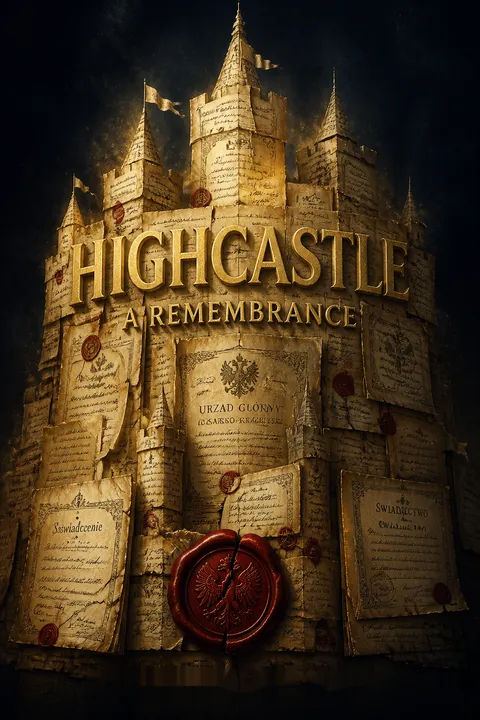
Paperwork became a cosmos. In class, Lem secretly made passports, permits, seals, and certificates authorizing precise amounts of gold or gemstones. Each document belonged to a hierarchy of officials, doors, codes, and approvals. Rather than inventing conventional characters and plots, he let the documents imply a vast, unseen institution. He later called this childhood practice Authorizationism, a form of art built from imagined administrative authority.
Limits supplied the structure. Lem argues that a creative act can gain force when its rules are treated as binding rather than chosen at every turn. His schoolboy system restricted what each permit could do, which helped the imagined world expand through detail. He compares this kind of accepted constraint with art made under religious or ritual rules, while warning that arbitrary freedom can make it difficult to choose.
The forms show how rules can generate possibility rather than merely restrict it. In games, legal systems, and software, shared constraints make complex actions intelligible: a permission matters because not everyone has it. Lem's example turns bureaucracy into a world-building engine. His broader claim about art is more debatable. Chosen constraints can focus attention, but religious or institutional limits may also silence people or enforce inherited power. The useful distinction is not freedom versus rules. It is whether a constraint gives a creator productive structure, and whether the creator can meaningfully consent to it.
Protect unclaimed time from the demand to make it useful
Highcastle meant a free hour. Near Lem's gymnasium stood a ruin and a city overlook that the students visited when a teacher was suddenly unavailable. Truants could not safely hide there, but students with a canceled class could walk openly. They had about an hour, and the pleasure came less from an activity than from being released from one.
A place can become a condition. Lem remembers the hedges, trees, and view, but says the essential feature was the suspension of school demands. The site was eventually identified to him as the remains of a once-grand building. As a child, he cared little about its history. Highcastle mattered because ordinary time briefly opened up, without a task that needed to justify it.
The episode makes leisure concrete: a known route, a brief window, and companions who share the freedom. Research on attention and recovery often distinguishes genuine respite from time merely labeled as free while still filled with obligation. Lem's hour resembles the former. Yet its pleasure depends on context. The boys could relax because school ordinarily imposed a schedule, and the canceled lesson created a temporary exception. Unstructured time is valuable, but access to it is uneven, and rest should not be treated as a substitute for fair working conditions.
Notice how a school becomes real through collective belief
Students made their own order. Lem's gymnasium had unofficial roles, including a class joker and a boy marked out as the mama's boy. The class also elected a leader and treasurer. Students resisted formal lessons by transforming desks and classroom objects into tools for their own rituals, games, and mischief. This was more than disorder: it was a social world with its own rules and status.
Authority lived in the relationship. Lem remembers teachers and school officials as carrying an almost sacred force, even when they were not physically threatening. He calls this felt presence the Absolute. It belonged neither to the teacher alone nor to the building, but arose through the whole encounter: the class, the teacher, the rules, and the students' shared sense of what was at stake.
Schools are not only places where information is delivered. They are social institutions where status, belonging, and authority are continually performed. Lem captures both sides: students invent a counterculture, yet they also reproduce hierarchies that can humiliate a classmate. The idea of authority as relational helps explain why an ordinary official can feel overwhelming in one setting and insignificant in another. It also invites a practical question for educators: which rituals create focused attention, and which merely teach students to fear judgment or accept arbitrary rankings?
Question training that perfects routines for a vanished war
Preparation can become theater. Lem's school required military instruction for years. Students drilled, cleaned old rifles, studied gas, and practiced with equipment that made war seem like a set of procedures. The training omitted tanks, despite the growing importance of mechanized warfare. In retrospect, Lem saw a large investment of time organized around an outdated model of conflict.
Procedure is not readiness. The boys could polish a rifle, follow commands, and perform exercises without seriously confronting the purpose of the weapon or the reality of killing. Their drills felt like games, even when the equipment was real. Lem does not claim that practice is useless; he shows how institutions can preserve routines whose appearance of rigor hides a failure to adapt to changing conditions.
This episode anticipates a familiar problem in organizational design: measurable routines can survive after the conditions that made them useful have changed. Training may produce fluency in a procedure while leaving people unprepared for the situation they are meant to face. The account is a warning against equating repetition with competence. There is also a hindsight limit. Once the defeat is known, earlier instruction can look uniformly futile; some skills may still have had value. The sharper criticism is that preparation lacked a serious mechanism for updating its assumptions.
Care often grows from living with imperfect, demanding things
Daily work made things matter. Lem remembers laundry days, jam making, ironing, and old cars that struggled up hills. These tasks took time and could go wrong: food spoiled, fires threatened, and machinery failed. Household life was not automated, so children watched adults manage processes that were only partly predictable.
Effort created attachment. The old vehicles seemed to Lem like individuals because their flaws demanded attention. He connects this feeling to broken electrical and mechanical objects he rescued from a flea market, cleaned, and kept without a clear practical purpose. He does not argue that hardship was better. Rather, he notices that dependence on imperfect things produced care, familiarity, and a sense of relationship that smooth, reliable machines rarely asked from him.
Lem's memories suggest that maintenance can create intimacy: repairing, tending, and anticipating failure make an object part of a person's practical life. Studies of repair cultures and everyday infrastructure similarly draw attention to the labor hidden by systems that appear seamless. This is a valuable correction to the idea that convenience is the only measure of progress. But the book also recognizes that domestic work was exhausting. The lesson is not to restore drudgery or celebrate breakdowns. It is to notice the care and knowledge that convenience can conceal, and to decide which forms of effort are worth preserving.
Resist turning a child's ordinary past into a prophecy
The future was not yet visible. Before the war, Lem saw model German tanks at the Eastern Fair. He remembers a possible unease around them, but cannot tell whether that feeling belonged to the child or was added by later events. Soon, the machinery of war would appear at full scale. The memoir refuses to claim that childhood curiosity had somehow predicted what followed.
Ordinary life continued. Adults went to work, children attended school, and families cared about uniforms, sweets, and small routines. In the epilogue, Lem recalls a world of rooms, streets, and objects that war could not leave intact. Memory preserves these details unevenly, sometimes in dreams, sometimes as fragments with no explanation. Their survival does not make them warnings; it makes them traces of a life lived before its destruction.
This is a disciplined response to hindsight bias, the tendency to see past events as more predictable after their outcome is known. A threatening symbol can acquire an air of inevitability once history has supplied its ending. Lem's hesitation preserves the difference between a child's immediate perception and an adult's knowledge of catastrophe. That distinction matters ethically: it avoids blaming ordinary people for failing to foresee what they could not know. At the same time, uncertainty should not erase genuine warning signs. The task is to examine what was knowable then, rather than importing later certainty into earlier experience.
Analysis
Highcastle is a memoir that keeps interrupting its own autobiography. Lem recalls a childhood in Lvov, but each episode opens onto a question about how experience becomes memory, how institutions acquire authority, or how play turns into art. This structure resists the familiar life story in which childhood details neatly foreshadow the adult writer. Lem insists that such patterns are partly made by the person remembering, even as his carefully arranged prose demonstrates how difficult it is to avoid making them.
The book's most distinctive archive is material. A father's instruments, a locked chest, a damaged window, a broken radio, and the streets around school hold sensory detail where faces and dates fail. These objects are not neutral evidence. Their meanings change as the child grows and as war transforms the world around them. Their power comes from the tension between their physical persistence and the vulnerability of the people who used them.
Two forms of play reveal different creative instincts. The paper bureaucracy makes an imagined universe through rules, seals, and permissions. The engineering experiments test materials through repetition and failure. One begins with a symbolic system, the other with physical resistance. Both depend on attention and limits. Lem's reflections on modern art extend this insight into a broad argument that freedom without necessity can weaken creation. That claim is provocative but not universal: constraints can focus imagination, yet they can also enforce exclusion.
Highcastle, the ruin where students spent a canceled hour, captures the book's emotional center. Childhood is not merely preparation for adulthood; it has its own durations, loyalties, fears, and pleasures. The final movement toward war makes those memories poignant without making them prophetic. The past remains irrecoverable, but its ordinary details resist being reduced to either nostalgia or a tidy explanation of what came next.
Review Summary
Highcastle is a memoir of Stanislaw Lem's childhood in pre-war Lwów, Poland. Readers appreciate Lem's vivid descriptions of the city and his unique perspective as a child. Some find the book nostalgic and introspective, while others note its lack of focus on historical events. The writing style is praised for its eloquence and humor. Critics point out the absence of certain topics, like Lem's Jewish heritage. Overall, the book offers insights into Lem's formative years and the world that shaped him.
People Also Read

Glossary
Authorizationism
Art through invented permissionsLem's name for the elaborate paper world he created as a schoolboy through passports, permits, seals, payment certificates, and ranked permissions. The documents implied a vast bureaucracy and a hidden center of authority. The practice was not simply pretend paperwork: its detailed rules generated an imagined world and, in Lem's retrospective account, became an early form of artistic creation.
Highcastle
A ruin and free-time refugeThe name associated with a former high castle near Lem's school in Lvov. Students went there when a class was canceled, enjoying a brief period without formal demands. For Lem, its importance lies less in its architecture than in the state of unhurried freedom he experienced there. The title makes this place a central image of childhood time.
the Absolute
School authority made transcendentLem's term for the overwhelming, almost sacred authority he felt in the gymnasium. It was not simply a teacher's personality or a building's power. It arose through the relationship among teachers, students, rules, and shared expectations, making an ordinary school encounter feel larger than any individual participant.
gymnasium subculture
Students' unofficial social orderThe parallel culture students built within the formal school system. It included informal roles, hierarchies, rituals, jokes, and resistance to lessons, as well as creative uses of classroom objects. Lem presents it as an organized social world, not merely a collection of pranks, while showing that its own customs could reproduce cruelty and exclusion.
laying of the psyche's foundation
Early experience shaping attachmentLem's description of how childhood encounters establish lasting emotional ties to a culture and its ordinary surroundings. Familiar sounds, objects, places, rituals, and domestic routines become personally charged before a child can explain why. These early attachments can remain powerful even when later knowledge changes how the person understands them.
FAQ
1. What is "Highcastle: A Remembrance" by Stanisław Lem about?
- Autobiographical memoir: "Highcastle: A Remembrance" is Stanisław Lem’s autobiographical account of his childhood and adolescence in interwar Lwów (now Lviv, Ukraine).
- Exploration of memory: The book is as much about the workings and limitations of memory as it is about Lem’s personal history, blending recollection with philosophical reflection.
- Childhood and creativity: Lem details his early fascinations, obsessions, and the imaginative games that shaped his later thinking as a writer and scientist.
- Cultural and historical context: The memoir provides a vivid portrait of prewar Polish society, family life, and the looming shadow of historical events that would later transform Lem’s world.
2. Why should I read "Highcastle: A Remembrance" by Stanisław Lem?
- Unique perspective: The book offers a rare, introspective look at the formative years of one of the 20th century’s most influential science fiction writers.
- Literary and philosophical depth: Lem’s reflections on memory, childhood, and creativity are both intellectually stimulating and emotionally resonant.
- Rich historical detail: Readers gain insight into the daily life, culture, and atmosphere of interwar Lwów, a city with a complex and tragic history.
- Universal themes: The memoir explores universal questions about identity, the nature of memory, and the process of growing up, making it relatable beyond its specific setting.
3. What are the key takeaways from "Highcastle: A Remembrance" by Stanisław Lem?
- Memory is unreliable: Lem demonstrates how memory is selective, interpretive, and often reconstructs rather than records the past.
- Childhood shapes creativity: The imaginative games, obsessions, and solitary explorations of Lem’s youth are shown as foundational to his later work as a writer.
- Objects and places matter: Lem’s detailed descriptions of objects, rooms, and city streets highlight how physical surroundings become repositories of meaning and memory.
- The loss of innocence: The memoir subtly foreshadows the devastation of war and the end of a world, underscoring the fragility of childhood and civilization.
4. How does Stanisław Lem approach the concept of memory in "Highcastle: A Remembrance"?
- Memory as an autonomous entity: Lem treats memory almost as a separate character, with its own will, selectivity, and logic.
- Unreliability and reconstruction: He acknowledges that memory is prone to distortion, omission, and the imposition of later interpretations on earlier experiences.
- Experiment in recollection: Lem intended the book as an experiment to see what his memory would produce if left to its own devices, though he admits to inevitably shaping the narrative.
- Philosophical inquiry: The memoir is as much a meditation on the nature of memory and self as it is a straightforward autobiography.
5. What is the significance of the title "Highcastle" in Stanisław Lem’s memoir?
- Literal location: Highcastle refers to a real place in Lwów, a hilltop ruin where Lem and his classmates would go when school was unexpectedly canceled.
- Symbol of freedom: For Lem, Highcastle represents a state of perfect, fleeting freedom and happiness, akin to a child’s paradise or nirvana.
- Metaphor for memory: The castle becomes a metaphor for the structure of memory itself—fragmentary, elevated, and partly in ruins.
- Central motif: The recurring image of Highcastle ties together themes of childhood, imagination, and the passage of time.
6. How does "Highcastle: A Remembrance" by Stanisław Lem depict childhood and its impact on creativity?
- Detailed recollections: Lem describes his childhood obsessions with objects, inventions, and bureaucratic games, showing how these shaped his later interests.
- Destructive and constructive play: He confesses to both destroying toys and inventing elaborate systems, reflecting the dual impulses of curiosity and creativity.
- Solitude and imagination: Lem’s relative isolation as a child led him to develop a rich inner world, which became the foundation for his literary imagination.
- Transition to adulthood: The memoir traces how the unique logic and freedom of childhood gradually give way to conformity and socialization.
7. What role do objects and places play in "Highcastle: A Remembrance" by Stanisław Lem?
- Objects as memory triggers: Lem’s vivid descriptions of household items, toys, and city streets serve as anchors for his memories and reflections.
- Emotional significance: Inanimate things are portrayed as honest, reliable, and sometimes more enduring than people, especially in the face of historical catastrophe.
- Symbolic meaning: Objects like the iron chest, the music box, and the family’s apartment become symbols of lost innocence, security, and the passage of time.
- Urban landscape: The city of Lwów is depicted not just as a backdrop but as an active participant in Lem’s formative experiences.
8. How does Stanisław Lem reflect on education and school culture in "Highcastle: A Remembrance"?
- Gymnasium as subculture: Lem presents the Polish gymnasium (secondary school) as a world with its own rituals, hierarchies, and resistance to authority.
- Authority and the Absolute: He describes the almost mystical awe and fear inspired by teachers and the institution, likening it to religious experience.
- Student creativity: The memoir details the inventive ways students subverted rules, from cheating methods to the creation of alternative social structures.
- Lasting impact: Lem suggests that the experiences of school—its pressures, absurdities, and camaraderie—were formative in his understanding of society and power.
9. What philosophical ideas about art and creativity are explored in "Highcastle: A Remembrance" by Stanisław Lem?
- Limits and freedom: Lem argues that true creativity flourishes within limits, using his childhood obsession with bureaucratic documents as an example.
- Art and play: He draws parallels between the serious play of children and the work of artists, suggesting that both seek meaning and structure in a chaotic world.
- Modern art critique: Lem reflects on the challenges of modern art, the dangers of excessive freedom, and the longing for boundaries and purpose.
- The role of interpretation: He discusses how meaning in art is co-created by the artist and the audience, and how even mistakes or randomness can be imbued with significance.
10. How does "Highcastle: A Remembrance" by Stanisław Lem address the historical context of prewar Lwów and its aftermath?
- Vivid prewar portrait: Lem provides detailed, affectionate descriptions of daily life, social customs, and the multicultural atmosphere of Lwów in the 1920s and 1930s.
- Foreshadowing catastrophe: The memoir is haunted by the knowledge of the coming war, the Holocaust, and the destruction of the world Lem knew.
- Innocence and ignorance: Lem reflects on the collective unawareness of impending disaster, emphasizing the “blessing of ignorance” that allowed life to go on.
- Enduring traces: He meditates on what survives—memories, objects, places—even after the people and the world they belonged to are gone.
11. What are some of the most memorable quotes from "Highcastle: A Remembrance" by Stanisław Lem, and what do they mean?
- “Memory, which is not a receptacle altogether independent of me... but on the other hand neither is memory I.” — Lem explores the paradoxical relationship between self and memory, highlighting its autonomy and unreliability.
- “I wished to let the child speak, stepping back, not interfering in any way—and instead I exploited him, robbed him, emptied his pockets...” — This quote reflects Lem’s self-critical awareness of the impossibility of pure, unmediated recollection.
- “On wings of authorization I soared above the gray vale of tears, and as I flew I plucked from nonexistence whole worlds with the stroke of a pen...” — Lem uses the metaphor of bureaucratic creativity to illustrate the power and joy of imaginative play.
- “Adults and children, we were all made equal by the blessing of ignorance, without which one cannot live.” — This line captures the memoir’s bittersweet awareness of innocence lost and the human need for hope in the face of uncertainty.
12. How does "Highcastle: A Remembrance" by Stanisław Lem conclude, and what is its lasting message?
- The persistence of memory: The epilogue reflects on the endurance and elusiveness of memory, which both preserves and withholds the past.
- Dream and reality: Lem describes how dreams can access memories and emotions that are otherwise inaccessible, suggesting the limits of conscious recollection.
- Acceptance of loss: The memoir ends with an acknowledgment of the irrevocable loss of childhood, family, and a vanished world, but also with gratitude for what remains.
- Partnership with memory: Lem likens himself and his memory to two horses pulling the same wagon—sometimes in harmony, sometimes in tension—emphasizing the ongoing, complex relationship between self and the past.
About the Author
Other books by Stanisław Lem


Download PDF
Download EPUB
.epub digital book format is ideal for reading ebooks on phones, tablets, and e-readers.








