

Key Takeaways
Let empathy reveal needs customers cannot yet articulate
Empathy begins with attention. In a job interview, Nadella was asked what he would do if he saw a crying baby alone in the street. He answered that he would call for help. The interviewer pointed out the more immediate need: pick up the baby. Years later, Nadella's son Zain, who has cerebral palsy, taught him how easily a problem looks different from the perspective of the person living it.
Design from lived needs. Zain wanted to choose his own music, but could not operate a player. Teenagers built a simple sensor he could tap with his head to change songs. Microsoft employees who spent time with former football player Steve Gleason, who has ALS, helped develop eye-gaze technology. In both cases, listening closely turned care into useful engineering.
What's powerful here is the move from empathy as a feeling to empathy as a method: observe a person's actual constraints, then design around them. This aligns with human-centered design, where prototypes and user feedback expose needs that people may not know how to describe. The disability examples also challenge a narrow idea of innovation: accessibility work can produce better interfaces and broader independence, not merely accommodation. Empathy alone, however, can become projection. It is most reliable when paired with repeated testing and the authority of users to say whether a solution truly helps.
Refresh the mission before past success becomes a reason to stand still
A mission can outlive its wording. Microsoft began with the ambition to put a computer on every desk and in every home. As that goal came within reach, the industry shifted toward smartphones, cloud services, and connected experiences. Microsoft had missed much of the phone transition, PC sales were weakening, and employees believed bureaucracy was blocking their work. Nadella argued that the company's deeper purpose was not selling a particular device, but making technology useful to people and organizations.
Change without amnesia. The updated direction emphasized mobile experiences powered by cloud computing and the broader aim of helping people do more. The failed Nokia phone acquisition made the cost of chasing a market on competitors' terms painfully clear: Microsoft later wrote down the deal and eliminated many jobs. Renewal meant returning to the company's empowering purpose, not defending every old product or strategy.
The distinction between mission and product is strategically important. A mission can preserve organizational identity while allowing the means of serving it to change. That resembles the idea of dynamic capabilities: firms must notice shifts, commit resources, and reorganize before yesterday's strengths become constraints. The Nokia episode gives the argument weight because it shows that boldness is not automatically strategic wisdom. A refreshed mission helps only if it guides concrete choices about where not to compete, and if leaders account for the human costs of failed bets.
Move toward the cloud before old revenue makes the future look optional
Build the next business inside the old one. When Nadella took charge of Microsoft's server and tools group, its established products were profitable, while its cloud effort was small and marginal. The change required shifting attention from software installed on customers' own servers to services delivered through large data centers, with computing capacity that could expand or contract as needed. Nadella chose a cloud-first direction while preserving a hybrid option for customers who needed both local servers and public cloud services.
Learn through operation. Microsoft's search business, Bing, had already taught teams to manage vast distributed systems, test product changes continuously, and apply machine learning. Those capabilities helped build Azure. The company also changed course when customers wanted Linux support, demonstrating that a cloud platform had to fit customers' real environments rather than Microsoft's old assumptions.
This is a case of organizational learning becoming infrastructure. A new business does not emerge from slogans alone; it needs operating experience, feedback loops, talent, and a revenue model. The cloud transition also illustrates why cannibalization is difficult: established units face immediate costs while benefits remain uncertain. A hybrid path can reduce customer risk, but it can also preserve old habits indefinitely. Leaders need milestones that distinguish a thoughtful transition from a permanent compromise, along with operational practices that make service reliability part of the product.
Make learning visible in customer contact, inclusive teams, and shared ownership
Replace defensiveness with curiosity. Nadella described Microsoft's old habits as a culture of proving who was smartest, protecting organizational boundaries, and treating accountability as more important than learning. The alternative drew on Carol Dweck's term growth mindset: the belief that abilities can develop through effort, feedback, and learning. At Microsoft, this meant paying closer attention to customers, inviting diverse perspectives, and acting as one company rather than as competing fiefdoms.
Give people a way to practice. The company's first large hackathon brought more than 12,000 employees from 83 countries together to tackle problems they cared about. One team created reading tools for students with dyslexia. A teacher reported that a student who had read six words per minute reached 27 in a matter of weeks. Nadella also set expectations for managers: clarify direction, create energy, and help teams deliver.
The strongest feature of this culture model is that it connects a broad belief to repeated behaviors. Hackathons, cross-team work, customer visits, and manager development make learning observable instead of leaving it as motivational language. The dyslexia project also shows how inclusion can widen the range of problems a company notices. Yet a growth mindset should not be used to blame individuals for structural barriers or to demand endless adaptation. Leaders must make time, incentives, and decision rights support learning, especially for employees with less organizational power.
Partner across rivalry when cooperation creates more value for customers
Compete without treating every interaction as zero-sum. Nadella pushed Microsoft to make Office available on Apple's iPad and iPhone, even though Apple was a major competitor. The choice reflected a shift from prioritizing Windows devices to serving customers wherever they worked. Microsoft also cooperated with Google on Android, with Red Hat on cloud services, and with Amazon in areas where their products could work together.
Repair trust through practical concessions. When Microsoft's relationship with Yahoo deteriorated over search, the company dropped an exclusivity requirement rather than let the dispute consume the partnership. Nadella's test for a partnership or acquisition was whether joining forces could create more value for customers. He also described innovation as requiring a promising idea, the capability to build it, and a culture that allows it to develop, including through outside collaboration.
Partnerships are especially valuable in platform markets, where usefulness often depends on compatibility and reach. A company can compete intensely in one category while cooperating in another, provided roles and incentives are clear. This is more sophisticated than simple friendliness: the relationship must produce mutual value and preserve each party's ability to compete. The risk is dependence. Partnerships can give customers choice, but they can also concentrate influence in a few platforms. Clear boundaries, interoperability, and candid negotiation help keep cooperation from becoming quiet lock-in.
Earn digital trust through consistent protection, transparency, and lawful limits
Trust is operational, not ornamental. After Edward Snowden's disclosures raised questions about government access to customer data, Microsoft challenged limits on what it could reveal, expanded encryption, and sought clearer rules. It also contested a US demand for email stored on a server in Ireland. In a separate crisis, the company helped distribute the film The Interview despite the risk of cyberattacks, treating free expression as a value worth defending.
Balance safety and privacy. Nadella's trust equation links empathy, shared values, and safety and reliability to trust built over time. The book argues for clear legal processes that allow legitimate investigations while protecting privacy, respecting national borders, and preventing governments from demanding weakened security for everyone. It proposes a Digital Geneva Convention: international norms to discourage state-sponsored cyberattacks and protect civilians and private infrastructure online.
The cases make trust concrete because they show that a provider's promises are tested when protection is costly. Trust also functions as economic infrastructure: customers are less likely to use services they believe expose them to arbitrary surveillance or insecure access. The proposed international norms address a real coordination problem, since cyber threats cross borders while legal authority remains fragmented. Still, technology firms cannot define the public interest alone. Their commercial incentives and their control over private data make independent oversight and democratic rulemaking essential.
Design AI to extend human abilities, then make its decisions answerable
Aim for partnership, not a contest. Nadella sees artificial intelligence as a way to augment human work, from helping people communicate across languages to supporting medical research. One example is technology built by engineer Saqib Shaikh, who is blind. A wearable device uses visual recognition to describe nearby scenes and read text aloud, helping him navigate everyday situations with greater independence.
Put values into the design. The book calls for AI that assists people, explains how it works, protects privacy, includes people across cultures and abilities, and allows humans to detect and correct harm. It also argues that empathy, education, creativity, judgment, and accountability remain essential human capacities. These safeguards matter because a system can recognize patterns without understanding how its errors affect a person's life.
This framework shifts debate from whether machines are good or bad to who designs them, whose interests they serve, and how mistakes can be challenged. That is a more useful lens than imagining AI as an independent moral agent. The emphasis on inclusion is also practical: systems trained or tested on narrow populations can fail precisely where their decisions matter most. Human oversight, however, must be meaningful rather than ceremonial. If affected people cannot inspect, question, or appeal consequential decisions, a nominal human in the loop may only legitimize automation.
Spread technology by teaching people to use it intensively, not merely providing access
Access is only the first step. Economists Diego Comin and Bart Hobijn's Cross-country Historical Adoption of Technology data compared the arrival of technologies across 161 countries. In the historical record discussed in the book, countries adopted a new technology, on average, about 45 years after its invention. The delay has shortened, but adoption alone does not guarantee broad economic gains. People and businesses also need the skills and practices to put tools to productive use.
Build on local strengths. Nadella points to Malawi, where mobile connectivity supported mobile payments in a country with many people outside formal banking, and to young Egyptian entrepreneurs using cloud services to build health-related apps. His proposed model combines education and innovation with the intensity of technology use. Rather than merely trying to attract foreign technology offices, leaders should help local firms apply technology in sectors where their regions have advantages.
This distinction between access and intensity prevents a common policy error: treating infrastructure as the finish line. Technology produces value when people can integrate it into work, improve processes, and create services suited to local conditions. That makes training and institutional capacity as important as connectivity. The argument also raises a distributional question: who owns the new businesses and captures the gains? Local adoption can support entrepreneurship, but access to tools alone cannot correct unequal capital, market power, or education.
Measure automation by the new work it creates, not only the jobs it removes
Displacement is real, but not the whole story. Economist Daron Acemoglu's research, as presented in the book, estimated that each additional industrial robot reduces employment by about three workers on average, absent offsetting changes. He also argues that technology can create more complex tasks in which people have an advantage. The balance depends on whether new human work appears quickly enough to counter losses from automation.
Prepare people for the transition. A South Carolina bicycle manufacturer moved 140 jobs from China and invested in robots, with its CEO planning to add 40 jobs a year. The new roles required different skills. Nadella argues for lifelong training, vocational education, and a stronger social contract for workers whose jobs change or disappear. Companies and governments should help workers develop the skills needed to manage new tools, not assume the market will make the transition painless.
The distinction between task automation and total employment is useful: machines may replace some tasks while creating demand for others. But the existence of new work does not guarantee that displaced workers can reach it, that wages will recover, or that new jobs will appear in the same places. The bicycle example is an illustration, not proof that automation generally increases employment. Training is necessary, but transition policy also needs to address income loss, bargaining power, and access to the jobs being created.
Analysis
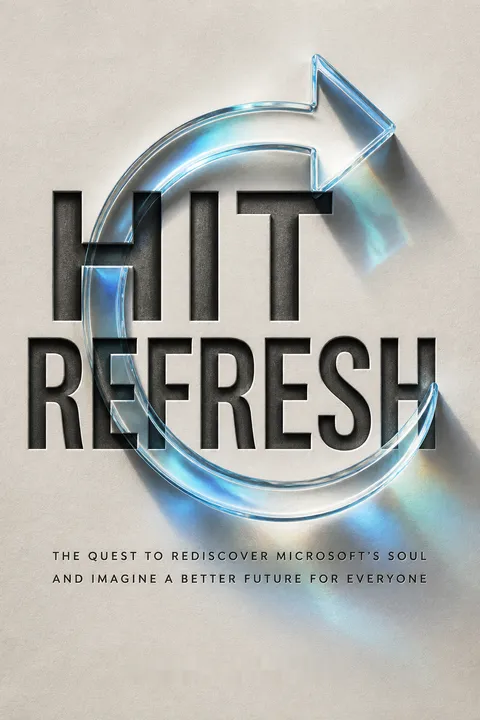
Hit Refresh is both a leadership narrative and an argument about the social responsibilities of technology companies. Its central move is to connect Nadella's personal development of empathy with Microsoft's strategic renewal: empathy informs what the company notices, culture affects whether it learns, and technology determines how widely its solutions can be deployed. The memoir's most useful episodes are concrete tests of those claims. The baby-in-the-street interview turns empathy into an actionable response. The shift toward cloud services shows how a mature company can redirect talent before its old model fully collapses. The Nokia acquisition, meanwhile, reveals that a compelling mission does not prevent expensive strategic error.
The book's strongest managerial insight is that culture is reproduced through systems and behavior, not slogans. Customer visits, cross-team work, open-source support, hackathons, and incident reviews create repeated opportunities to learn. Its treatment of trust also extends leadership beyond internal culture: a technology provider must earn confidence through security, transparency, and principled resistance to overreach. This recognizes that a company's license to operate depends on public legitimacy as well as customer demand.
The argument is less complete when it moves from corporate innovation to shared prosperity. Nadella acknowledges displacement and inequality, but often treats better training, technology diffusion, and entrepreneurship as the route through them. Those are important, yet they do not settle who bears transition costs or how gains are distributed. A firm's social contribution cannot be inferred from its products alone; labor practices, market power, and the policy environment matter too. The book is most persuasive when it treats technology as a tool whose effects depend on human choices, and least persuasive when rapid innovation appears to stand in for a detailed account of those choices. Its lasting question is therefore not simply how to refresh an organization, but how to make renewal accountable to the people affected by it.
Review Summary
Hit Refresh garners mixed reviews, with praise for Nadella's candid insights into Microsoft's transformation and his emphasis on empathy in leadership. Readers appreciate his personal story and vision for technology's future. However, some find the book repetitive, overly focused on Microsoft, and lacking depth in certain areas. Critics note it can feel like a PR piece at times. Overall, reviewers see it as an interesting glimpse into Nadella's mindset and Microsoft's evolution, though opinions on its broader appeal vary.
People Also Read









Glossary
growth mindset
Belief that abilities can developA learning orientation associated in the book with psychologist Carol Dweck. It treats ability as something that can improve through effort, feedback, and practice, rather than as a fixed trait. Nadella applies it to Microsoft's willingness to learn from customers, include different perspectives, collaborate across internal boundaries, and treat mistakes as occasions to improve.
mobile-first and cloud-first
Strategy for connected computingNadella's description of Microsoft's strategic shift away from treating the personal computer as the center of computing. The approach prioritizes experiences that move with people across devices, supported by cloud services that store data and provide computing power. It frames mobility as a human experience, not merely ownership of a smartphone.
three Cs
Test for innovation readinessA model for assessing whether an organization can turn an idea into a lasting product or service. It considers whether the concept is valuable, whether the organization has the capabilities to build it, and whether its culture can support and sustain the work. Nadella uses the model to explain why partnerships can supply missing skills or openness.
live site first
Prioritize service reliabilityAn operational culture for running cloud services, where teams treat the live system and its customers as an immediate priority. Engineers and customer-facing staff coordinate to resolve incidents, then analyze root causes so the organization can learn from failures. The principle makes reliable operation part of the product rather than a separate maintenance task.
trust equation
Model of trust over timeNadella's conceptual formula linking empathy, shared values, and safety and reliability to trust that develops over time. It is not a mathematical calculation. It summarizes the idea that products and policies earn confidence when they reflect people's needs, follow consistent principles, and protect users reliably.
Digital Geneva Convention
Proposed norms for cyberspaceNadella's proposal for an international agreement establishing norms to protect civilians and essential services from cyberattacks. It would discourage attacks on private companies and critical infrastructure, hacking to steal intellectual property, and government stockpiling of software vulnerabilities. The proposal aims to make cyberspace safer through shared commitments among governments.
Cross-country Historical Adoption of Technology (CHAT)
Dataset on technology adoptionA dataset assembled by economists Diego Comin and Bart Hobijn, examining the timing of adoption of 104 technologies across 161 countries. Nadella uses its findings to argue that economic differences depend not only on when technology arrives, but also on how intensively people and businesses use it.
global maxima
Best attainable regional outcomeA term from mathematical optimization that Nadella applies to regional economic strategy. The goal is to identify how a place can use advanced technologies alongside its distinctive strengths to generate local innovation, exports, and broad economic opportunity. It encourages leaders to ask where their region can develop real advantage rather than imitate another economy.
FAQ
What's Hit Refresh about?
- Transformation at Microsoft: Hit Refresh details Satya Nadella's journey as CEO, focusing on the cultural and technological changes he spearheaded at Microsoft.
- Personal Journey: Nadella shares his life story, from his upbringing in India to his leadership role, highlighting the values of empathy and continuous learning.
- Future of Technology: The book explores the impact of emerging technologies like AI and cloud computing, advocating for a human-centric approach to tech development.
- Corporate Responsibility: Nadella discusses the role of corporations in society, emphasizing a balance between profit and social impact.
Why should I read Hit Refresh?
- Leadership Insights: Gain valuable lessons on effective leadership and cultural transformation, with a focus on empathy and collaboration.
- Microsoft’s Evolution: Understand the strategic shifts and challenges Microsoft faced, offering insights into adapting legacy companies to modern demands.
- Inspiration for Change: Nadella's story motivates individuals and organizations to embrace change and innovation, emphasizing resilience and a growth mindset.
- Technology's Role: The book provides a comprehensive overview of emerging technologies and their societal impact, encouraging critical thinking about tech's potential for good.
What are the key takeaways of Hit Refresh?
- Empathy is Essential: Nadella stresses empathy as a core leadership principle, fostering inclusivity and innovation.
- Cultural Renaissance: Advocates for a shift from a "know-it-all" to a "learn-it-all" mindset, promoting continuous learning and adaptability.
- Technology as an Enabler: Technology should empower people and organizations, guiding Microsoft's mission and product development.
- Trust and Transparency: Emphasizes the importance of trust in technology, advocating for transparency in data use and protection.
What are the best quotes from Hit Refresh and what do they mean?
- "Our industry does not respect tradition. What it respects is innovation.": Highlights the necessity for continuous innovation to stay relevant in the tech industry.
- "Empathy, coupled with new ideas, had helped to create eye-gaze tracking technology.": Demonstrates how understanding user needs can lead to groundbreaking innovations.
- "Consistency over time is trust.": Emphasizes that trust is built through reliable actions and integrity over time.
- "We must design for transparency.": Stresses the need for transparency in technology to foster user trust.
How did Satya Nadella's background influence his leadership style in Hit Refresh?
- Cultural Diversity: His Indian upbringing instilled a deep understanding of empathy and collaboration, shaping his inclusive leadership approach.
- Personal Challenges: Experiences as a father of a child with special needs deepened his empathy and commitment to accessibility in technology.
- Education and Curiosity: His engineering and computer science background fosters a mindset of continuous learning and innovation.
- Empathy and Inclusivity: These personal experiences inform his vision for Microsoft as a company that empowers all individuals.
What specific cultural changes did Nadella implement at Microsoft?
- Growth Mindset: Introduced a "growth mindset," encouraging learning and adaptability to replace a fixed mindset.
- Customer Obsession: Emphasized understanding and meeting unarticulated user needs, driving product development with empathy.
- Inclusivity and Diversity: Prioritized building a diverse workforce and fostering an inclusive environment for better decision-making and innovation.
- Collaboration and Openness: Encouraged open communication and collaboration to overcome cultural resistance and foster innovation.
How does Hit Refresh address the future of technology?
- AI and Cloud Computing: Discusses the transformative potential of AI and cloud technologies, urging organizations to adapt to these changes.
- Human-Centric Technology: Advocates for technology that enhances human capabilities and addresses societal challenges.
- Ethical Considerations: Raises questions about the ethical implications of emerging technologies, emphasizing empathy and responsibility.
- Mixed Reality and Quantum Computing: Explores the potential of these technologies to transform industries and solve complex problems.
What role does empathy play in Hit Refresh?
- Core Leadership Principle: Empathy is foundational for effective leadership, guiding interactions with employees, customers, and partners.
- Driving Innovation: Empathy enables teams to understand user needs and create meaningful solutions, fostering innovation.
- Cultural Transformation: Encourages a culture of empathy within organizations, leading to a more engaged and motivated workforce.
- Building Trust: Empathy is key to building trust within organizations and with customers, creating an environment where individuals feel valued.
How does Nadella envision the future of Microsoft in Hit Refresh?
- Mobile-First and Cloud-First: Envisions Microsoft as a leader in mobile and cloud technologies, focusing on digital transformation.
- Empowerment through Technology: Aims for Microsoft products to empower users, emphasizing accessibility and inclusivity.
- Continuous Evolution: Acknowledges that transformation is ongoing, requiring adaptability and resilience to navigate future challenges.
- Strategic Alliances: Highlights the importance of partnerships, like with LinkedIn, to enhance capabilities and expand market reach.
What challenges did Microsoft face during Nadella's leadership transition in Hit Refresh?
- Cultural Resistance: Faced resistance to change from a rigid, hierarchical culture, requiring efforts to foster a growth mindset.
- Market Competition: Navigated intense competition from companies like Apple and Google, particularly in mobile and cloud markets.
- Legacy Issues: Addressed legacy products and outdated business models, focusing on modernizing offerings and embracing new technologies.
- Trust and Security: Emphasized maintaining trust in technology amidst growing concerns about privacy and security.
How does Hit Refresh propose to restore economic growth?
- Investing in Education: Advocates for lifelong learning and skills development to prepare individuals for the future job market.
- Encouraging Innovation: Calls for fostering an environment that encourages innovation across all sectors.
- Intense Technology Use: Emphasizes the importance of fully adopting and utilizing technology to drive productivity and growth.
- Balancing Profit and Purpose: Advocates for a business model that prioritizes both financial performance and positive societal impact.
What role do partnerships play in Hit Refresh?
- Collaborative Innovation: Highlights the importance of partnerships in driving innovation and creating value.
- Building Trust with Partners: Emphasizes trust, transparency, and mutual respect in successful partnerships.
- Strategic Alliances: Discusses alliances like the partnership with LinkedIn, built on shared goals and values.
- Enhancing Capabilities: Partnerships can enhance capabilities and expand market reach, benefiting all parties involved.
Download PDF
Download EPUB
.epub digital book format is ideal for reading ebooks on phones, tablets, and e-readers.








