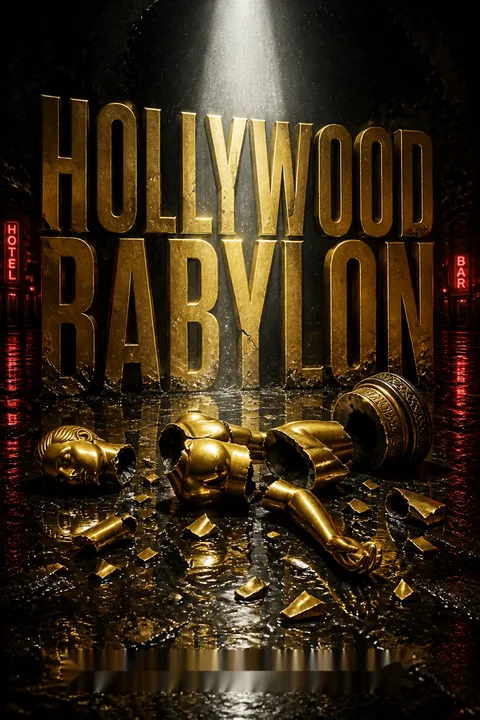


Key Takeaways
See Hollywood glamour as an industrial illusion, built to sell stars.
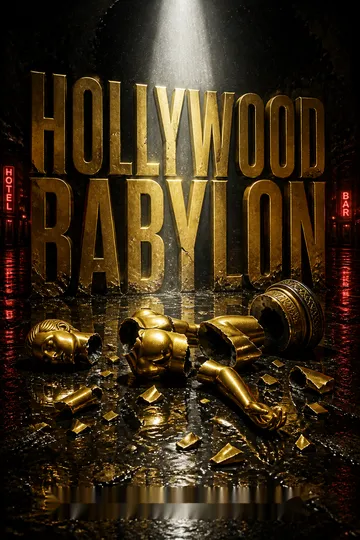
A spectacle became a blueprint. In the early 1910s, director D. W. Griffith built a vast Babylonian set for Intolerance, complete with enormous plaster elephants and thousands of extras. The production was an ambitious spectacle, but the film failed commercially, and the crumbling set lingered beside Sunset Boulevard. Anger treats those abandoned ruins as a fitting emblem for Hollywood: a town built to make illusions, with the shadow of scandal already close by.
The new Star System gave performers names, rising salaries, and sudden fame. Actors who had been anonymous workers became public idols almost overnight. That transformation made movie-making profitable, but it also made an individual’s public image a valuable asset, easily damaged when the audience turned against a star.
What's striking is how the opening image links architecture to an industry. The Babylon set was not merely scenery. It was a physical investment in spectacle, just as celebrity became an investment in recognizable faces. Media industries still depend on this conversion of people into attention-bearing assets. The analogy has limits: an abandoned set is not proof that scandal was inevitable. But it neatly introduces the book's central tension: Hollywood could manufacture dreams more reliably than it could protect the people expected to embody them.
A star system can turn public adoration into a career-ending trial.
The crowd changed its verdict. In 1921, comedian Roscoe “Fatty” Arbuckle was accused after actress Virginia Rappe became gravely ill at a party and died. The case drew sensational coverage and intense public condemnation. Arbuckle faced three trials: the first two ended without a verdict, and the third jury acquitted him. His career did not recover. Paramount canceled his contract, and his films were withdrawn.
Anger’s account shows the difference between a legal outcome and a public one. The acquittal did not undo the headlines or restore Arbuckle’s standing. The book also describes how the press circulated lurid versions of events that were not established in court. The scandal became entertainment, and a comedian’s familiar screen persona made the accusations feel especially shocking to audiences.
The case illustrates a durable problem in celebrity culture: audiences often treat visibility as evidence of familiarity, then mistake that familiarity for knowledge. A trial can test claims under legal rules; a newspaper campaign can impose consequences without comparable safeguards. That does not make acquittal proof of every private detail, but it does make the gap between accusation and verified evidence essential. The book captures how reputation can be punished more quickly than a court can establish what happened.
When studios protect their image, evidence and people can become expendable.
The crime scene became a workplace. Director William Desmond Taylor was found shot in his Los Angeles bungalow in 1922. Anger says Paramount executives arrived before the police and burned papers in the fireplace, while actress Mabel Normand searched for letters she had written to Taylor. The murder was never solved. The book presents this early handling of the scene as an example of Hollywood’s instinct to manage appearances before facts.
Anger also revisits producer Thomas Ince’s death after a party aboard William Randolph Hearst’s yacht. The official explanation described an illness, while rumors suggested violence. The investigation described in the book was limited, and the competing accounts remained unresolved. These stories do not prove a studio or media magnate ordered a cover-up. They do show how wealth, access, and control of information can make a public account difficult to trust.
These cases are most useful as studies of institutional power, not as solved mysteries. In organizational crises, the first question is often who controls the records, the witnesses, and the message. That can shape what later generations regard as knowable. At the same time, suspicion is not evidence: a compromised investigation may justify doubt without validating the most dramatic theory. Anger’s stories invite readers to examine the conditions around an official narrative while resisting the temptation to treat mystery itself as proof.
Moral reform often policed screen images while shielding industry power.
Respectability became crisis management. After scandals damaged Hollywood’s reputation, studio leaders hired Will Hays in 1922 to serve as a public-facing authority on movie morals. Studios added morality clauses to performers’ contracts and investigated private lives. Anger describes a “Doom Book,” a list of 117 people considered unsafe because of their personal conduct. The campaign was presented as protection for young audiences and an answer to public pressure.
Yet the studios’ behavior was not simply a moral conversion. Their films depended on selling excitement, including the very sex and glamour that reformers condemned. According to Anger, studio leaders often worried less about private misconduct than about whether headlines might trigger a boycott. The resulting system scrutinized performers and screen content while allowing executives to decide which scandals deserved attention and which could be quietly managed.
The tension resembles a familiar pattern in institutional ethics: visible rule-breaking is easier to punish than concentrated power. Contract clauses and public codes create the appearance of accountability, but their fairness depends on who writes and enforces them. A system can sincerely care about audiences and still use morality as a tool of brand protection. The book is strongest when it shows that reform was not simply fake or pure. It was a struggle over who controlled the industry's public image.
Gossip becomes an industry when editors monetize private life and rumor.
Private life became a product. Louella Parsons, a columnist backed by Hearst’s newspaper network, helped make Hollywood relationships and disputes regular news. The appetite for celebrity stories grew beyond ordinary columns. In the 1950s, Confidential built a business around reports about stars’ private lives, using informants, surveillance, and compromising material. Anger says the magazine eventually sold four million copies and paid as much as $1,000 for a gossip item.
The magazine’s methods also created resistance. Dorothy Dandridge sued after it published a story about her alleged conduct, and other stars followed with legal action. The contest exposed the machinery behind the apparent “inside story”: sources could be paid, claims could be embellished, and a publication could profit whether or not its subjects could repair the damage. The gossip column was not just chatter. It was a commercial system with real consequences.
This is an early portrait of the attention economy, where intimate information becomes valuable because readers want access to lives they cannot otherwise see. The commercial logic rewards novelty and vividness, not necessarily accuracy. Legal threats can restrain some abuses, but they also favor people with money and public leverage. The important distinction is between reporting private conduct because it serves a public interest and exposing it because exposure sells. Anger’s account shows how easily the second can masquerade as the first.
Treat addiction as a workplace story, not merely a star’s vice.
Exhaustion opened the door. Wallace Reid was a popular Paramount star, known for racing pictures and a robust screen image. Anger says Reid first used morphine to keep working through exhaustion during a demanding production schedule. He became dependent, was sent to a private sanitarium, and died in 1923 at age thirty. The public was told about his addiction, and his wife later toured with a film warning about drug use.
The story complicates the easy portrait of the star as simply reckless. The studio had profited from Reid’s productivity, while the demands of the job helped create the conditions Anger associates with his drug use. His treatment also became a public spectacle, then a cautionary tale. The book repeatedly depicts drugs as part of a wider environment of pressure, access, and concealment, not as an isolated moral failing.
The workplace frame matters because it shifts attention from individual blame to incentives: long hours, pressure to perform, and a culture that treats exhaustion as a private weakness. That perspective does not erase personal agency or establish a single cause of addiction. It asks what an employer gains from a worker’s self-destruction, and who carries the cost. The account also warns against turning illness into publicity. A message about health can become another product built from a vulnerable person’s suffering.
A career can collapse when technology and markets change faster than talent.
Success did not guarantee a landing. The stock-market crash of 1929 hit Hollywood alongside the wider economy. Anger reports that movie attendance fell 40 percent in 1930. At the same time, sound films displaced many performers whose fame had been built in silent pictures. John Gilbert, one of the highest-paid stars of 1928, became a symbol of the transition after his early talkies failed to sustain his position. The book suggests both changing technology and studio decisions contributed to his decline.
Other performers also lost work as studios sought new voices and new screen personalities. Anger notes that by 1931, only three stars remained from the roster of 1921, despite the arrival of 26 new talkie stars. The numbers make clear that the upheaval was not only about individual shortcomings. A major change in production and audience demand could make yesterday’s celebrated skill less marketable.
This account distinguishes talent from fit. A performer may be excellent within one technical system and struggle when the medium changes its demands. The same pattern appears whenever industries adopt new tools: expertise does not transfer automatically, and companies may choose replacement over retraining. Still, the book’s sharp portrait of Gilbert leaves room for more than one cause. Market shifts, performance style, studio politics, and public taste can overlap. The broader lesson is that creative success depends partly on institutions that decide what counts as relevant skill.
Censorship can suppress a performer and advertise the rebellion it fears.
Mae West made censorship visible. West arrived in Hollywood after building a reputation for sexual comedy on Broadway. Her 1933 film She Done Him Wrong became a major success, bringing in a reported $2 million in three months. Religious and civic pressure groups objected to her suggestive dialogue, while new enforcement of the Production Code tightened control over what studios could show. Anger describes West’s clashes with censors and the public campaigns against her films.
The conflict did not simply erase West’s appeal. The controversy helped define her public image, and studios had to balance censorship against the audience’s appetite for the very material being restricted. Later, her dialogue was cut and her films became less effective, according to Anger. Her career shows how a performer’s commercial value could depend on the same transgression that regulators tried to contain.
Censorship can create a feedback loop: a restriction signals that something is provocative, publicity magnifies the forbidden image, and audiences become more curious. But that effect is not guaranteed to protect the artist. Studios control budgets, distribution, and access to screens, so a performer may gain notoriety while losing room to work. West’s case is revealing because it makes regulation and marketing look less like separate forces than competing departments in the same business.
Political fear can turn a film community into a loyalty test.
Suspicion became an employment weapon. In 1947, the House Un-American Activities Committee investigated alleged Communist influence in Hollywood. The group known as the Hollywood Ten refused to cooperate with the committee and faced prison sentences and blacklisting. Anger contrasts them with film figures who publicly denounced supposed radicals. Some targeted workers left the country to continue their careers; others lost work or were pushed out of the industry.
The chapter presents the blacklist as more than a dispute over politics. It shows how studios, politicians, and public figures could make continued employment depend on public conformity. The book also notes an irony: some of the loudest anti-Communist voices later faced their own legal or reputational troubles. The episode makes clear that the power to label someone disloyal can be as consequential as proof of wrongdoing.
Blacklisting is a case study in how fear changes ordinary professional decisions. When employers punish association or silence rather than specific conduct, workers may comply even without believing the accusation. That pressure can spread beyond the original targets because everyone learns what is unsafe to say. Political scrutiny can be legitimate, but due process matters: a list of suspected beliefs is not a substitute for evidence of an offense. Anger’s account connects private employment decisions to a broader erosion of civic freedoms.
Use the book as a map of scandal-making, not a verified case file.
The storytelling has a point of view. Anger writes in a vivid, tabloid-inspired style that makes Hollywood’s scandals feel like one continuous drama. The stories range from public events, such as Arbuckle’s trials and the Hollywood blacklist, to disputed deaths, intimate allegations, and rumors repeated as part of the town’s mythology. The text sometimes distinguishes an official explanation from speculation, but its dramatic narration can make both feel equally certain.
A careful reader should separate three things: what the book says happened, what authorities or witnesses reportedly said, and what Anger or other sources suspect. The unresolved Taylor and Ince deaths are especially useful tests of this distinction. The book’s strongest value is its portrait of how fame, money, publicity, and power feed one another. Its most lurid claim should not be mistaken for established fact simply because it makes a compelling story.
The book is best read as cultural history filtered through a provocative narrator, not as a neutral archive. That distinction preserves its insight without granting every allegation the status of fact. Media studies often separate an event from its framing and from the audience’s reception; this book’s stories benefit from the same three-part lens. Its theatrical style reveals how scandal becomes memorable, but vividness can also conceal uncertainty. The reader gains more by asking who made a claim, what supports it, and who profited from its circulation.
Analysis
Hollywood Babylon is organized less like a conventional history than a parade of scandals, linked by the recurring spectacle of celebrity and collapse. Its deepest argument is structural: the film industry manufactures public identities, then exposes those identities to a press and audience that can convert private trouble into entertainment. The book moves from the enormous Babylon set of early Hollywood to the ruins of careers, studios, and reputations, making the opening image a guide to the whole narrative.
Its strongest material concerns systems rather than salacious detail. The Star System turns performers into commercial assets. Studios manage public crises through contracts, censorship, and control of distribution. Gossip columnists and scandal magazines sell access to private lives. The transition to sound and the Depression reveal that an adored star can be rendered economically obsolete by changes beyond personal control. The Hollywood blacklist extends the same vulnerability into politics, where suspicion can threaten employment and speech.
The book’s method is also its central limitation. Anger mixes documented outcomes, contemporary reports, rumor, and his own theatrical interpretation. An acquittal, an unsolved murder, or a contested official explanation does not settle every question, but neither does uncertainty validate the most sensational theory. The prose deliberately blurs those categories, inviting the reader into the pleasures of scandal even as it exposes the machinery that produces it.
Read critically, the book offers more than a catalogue of famous misbehavior. It asks who gets to define a public image, who can suppress inconvenient evidence, and why audiences enjoy watching the powerful fall. Its enduring subject is not simply Hollywood’s private conduct. It is the profitable cycle through which glamour attracts attention, scandal intensifies it, and institutions attempt to control the resulting story.
Review Summary
Hollywood Babylon is a controversial book detailing scandals of early Hollywood stars. Reviews are mixed, with some praising its salacious content and entertaining writing style, while others criticize its lack of factual accuracy and sensationalism. Many readers find it a guilty pleasure, offering a glimpse into the dark underbelly of Golden Age Hollywood. The book's layout and writing quality are often criticized, but its cultural impact and historical significance are acknowledged. Some view it as an important, if not entirely truthful, piece of Hollywood history.
People Also Read

Glossary
Star System
Manufactured movie-star fameThe studio-era practice of turning performers into recognizable, marketable public figures. As actors gained names, publicity, and higher salaries, studios could use their popularity to sell films. The arrangement offered extraordinary rewards but also made an actor’s public image commercially important and vulnerable to scandal, changing audience taste, or studio decisions.
Doom Book
List of unsafe performersA list described by Anger as identifying 117 Hollywood figures whose private conduct made them undesirable to studios. Compiled during the post-scandal effort to improve Hollywood’s public reputation, it represented an attempt to monitor performers and limit reputational risk. The book presents it as part of a wider system of morality clauses and private investigations.
Hays Office
Hollywood’s morals regulatorThe name used for Will Hays’s organization, established to oversee the American film industry’s public standards and screen content. In Anger’s account, it combined image management with efforts to regulate what films could depict. Its influence expanded as studios faced pressure from religious and civic groups, and as formal censorship rules were enforced.
Confidential
Celebrity scandal magazineA 1950s magazine that specialized in exposing alleged details of celebrities’ private lives. Anger describes it as relying on informants, surveillance, and compromising material, and reports that it reached a circulation of four million copies. Its legal battles with stars made the conflict between privacy, publicity, and commercial gossip unusually visible.
Hollywood Ten
Blacklisted film-industry groupThe name given to ten Hollywood figures who refused to cooperate with the House Un-American Activities Committee’s investigation of alleged Communist influence in the film industry. They were prosecuted for contempt of Congress, and the wider political response helped establish an employment blacklist. Anger uses their case to show how political suspicion could threaten careers and speech.
FAQ
1. What is "Hollywood Babylon" by Kenneth Anger about?
- Scandalous history of Hollywood: The book is a notorious exposé of Hollywood’s darkest secrets, scandals, and tragedies from the silent era through the 1950s.
- Focus on the underbelly: Anger delves into the private lives, crimes, addictions, and downfalls of movie stars, directors, and moguls, revealing the sordid side of the film industry.
- Tabloid style storytelling: Written in a sensational, gossipy tone, the book blends rumor, fact, and urban legend, often blurring the lines between them.
- Cultural critique: Beyond gossip, Anger critiques the myth of Hollywood glamour, exposing the cost of fame and the hypocrisy of the industry.
2. Why should I read "Hollywood Babylon" by Kenneth Anger?
- Iconic pop culture artifact: The book is a cult classic, referenced in countless discussions about Hollywood’s history and the origins of celebrity culture.
- Unfiltered look at stardom: It offers a raw, unvarnished perspective on the price of fame and the destructive forces at play in early Hollywood.
- Influence on later works: "Hollywood Babylon" inspired generations of writers, filmmakers, and journalists to explore the darker side of show business.
- Entertaining and shocking: The book’s lurid stories and dramatic style make it a gripping, if controversial, read for anyone interested in film history or celebrity gossip.
3. What are the key takeaways from "Hollywood Babylon" by Kenneth Anger?
- Fame’s dark consequences: The pursuit of stardom often led to addiction, exploitation, mental breakdowns, and even death for many Hollywood figures.
- Scandal as spectacle: Scandals were not just private tragedies but public entertainment, fueling the rise of gossip columns and tabloid journalism.
- Hypocrisy of the industry: Hollywood’s moral posturing (like the Hays Code) often masked a reality of vice, corruption, and cover-ups.
- Enduring myths and legends: Many stories in the book, whether true or exaggerated, have become part of Hollywood’s enduring mythology.
4. How is "Hollywood Babylon" by Kenneth Anger structured and what is its style?
- Episodic, themed chapters: The book is divided into short, punchy chapters, each focusing on a specific scandal, star, or theme (e.g., "The Clutching Hand," "Fat Man Out," "Heroin Heroines").
- Tabloid-inspired prose: Anger writes in a sensational, sometimes mocking tone, using headlines, photos, and captions to mimic the style of scandal sheets.
- Mix of fact and rumor: The narrative often blends documented events with hearsay, urban legend, and innuendo, making it both entertaining and controversial.
- Richly illustrated: The book is filled with rare photos, newspaper clippings, and visual ephemera that enhance its lurid atmosphere.
5. What are the most infamous scandals and stories covered in "Hollywood Babylon"?
- Fatty Arbuckle trial: The book details the rape and manslaughter accusations against silent film comedian Roscoe "Fatty" Arbuckle and the resulting media frenzy.
- Olive Thomas’s mysterious death: Anger recounts the suspicious overdose of the Ziegfeld Follies star and the rumors of drug addiction and marital strife.
- William Desmond Taylor murder: The unsolved murder of the director is explored, including the involvement of stars like Mabel Normand and Mary Miles Minter.
- Rudolph Valentino’s sexuality and death: The book discusses rumors about Valentino’s masculinity, his relationships, and the hysteria surrounding his funeral.
- Thelma Todd’s death: Anger investigates the mysterious circumstances of the actress’s death in her garage, suggesting possible murder.
6. How does Kenneth Anger portray the rise and fall of Hollywood stars in "Hollywood Babylon"?
- Meteoric rises, tragic falls: Many stars are depicted as rising quickly to fame only to be destroyed by addiction, scandal, or personal demons.
- Victims of the system: Anger suggests that the Hollywood machine chewed up and spit out its stars, with little regard for their well-being.
- Recurring themes of exploitation: The book highlights how young hopefuls were often exploited by producers, directors, and even their own families.
- Cycle of replacement: As one star fell, another was always waiting in the wings, emphasizing the industry’s ruthless nature.
7. What role do drugs, sex, and crime play in "Hollywood Babylon" by Kenneth Anger?
- Drugs as coping mechanism: Cocaine, heroin, and alcohol are shown as common tools for stars to deal with the pressures of fame and the demands of the studio system.
- Sexual exploitation and scandal: The book is filled with stories of affairs, casting couch encounters, and sexual blackmail, often involving underage or vulnerable women.
- Crime and cover-ups: Murders, suicides, and mysterious deaths are frequent, with Anger alleging that studios and police often conspired to hide the truth.
- Moral hypocrisy: Despite public campaigns for decency, the private lives of Hollywood’s elite were often anything but.
8. How does "Hollywood Babylon" by Kenneth Anger address the role of gossip and the media in Hollywood?
- Birth of the gossip column: The book traces the rise of figures like Louella Parsons and Hedda Hopper, who wielded enormous power through their columns.
- Media as kingmaker and executioner: Anger shows how the press could make or break careers, often amplifying or inventing scandals for circulation.
- Public’s appetite for scandal: The book argues that the American public was complicit, eagerly consuming stories of sin and downfall.
- Manipulation and payoffs: Studios often paid off journalists or planted stories to protect their stars or sabotage rivals.
9. What is the significance of the Hays Code and censorship in "Hollywood Babylon"?
- Reaction to scandal: The Hays Code was introduced as a response to public outrage over Hollywood scandals, aiming to clean up the industry’s image.
- Morality clauses: Stars were forced to sign contracts promising good behavior, but these were often ignored or selectively enforced.
- Censorship’s limits: Anger argues that censorship did little to change the real behavior of Hollywood’s elite, serving more as a PR move than a moral reform.
- Backlash and subversion: Filmmakers and stars found ways to circumvent or mock the code, and the public’s appetite for scandal remained undiminished.
10. How does "Hollywood Babylon" by Kenneth Anger explore the theme of suicide and self-destruction among Hollywood figures?
- Frequent tragic endings: The book is filled with stories of stars who took their own lives, often after career setbacks, addiction, or public disgrace.
- Symbolic locations: The Hollywood Sign and other landmarks become sites of suicide, reinforcing the link between failed dreams and self-destruction.
- Societal pressures: Anger suggests that the relentless pressure to succeed and maintain an image contributed to many breakdowns and suicides.
- Cycle of oblivion: The narrative emphasizes how quickly stars could be forgotten, their deaths serving as cautionary tales for the next generation.
11. What are the best quotes from "Hollywood Babylon" by Kenneth Anger and what do they mean?
- “Hollywood is a place where they’ll pay you a thousand dollars for a kiss and fifty cents for your soul.” – Highlights the industry’s skewed values and the cost of fame.
- “The great big golden illusion ripped open on October 29, 1929.” – Refers to the stock market crash and the end of Hollywood’s “Golden Age.”
- “The public’s craving for a nonstop movie-star titillation fix was mainlined and bylined day by day by that syndicated, sob-sister, mutant, deadlining hunt-and-pecker: the Hollywood Gossip Columnist.” – Critiques the media’s role in feeding the public’s appetite for scandal.
- “Genius is often an infinite capacity for survival.” – Suggests that those who lasted in Hollywood did so through resilience, not just talent.
12. How accurate and reliable is "Hollywood Babylon" by Kenneth Anger as a source of Hollywood history?
- Mix of fact and fiction: The book is notorious for blending documented events with rumors, urban legends, and outright fabrications.
- Controversial reputation: Many historians and critics have challenged the accuracy of Anger’s stories, though some have been corroborated over time.
- Cultural impact over accuracy: Its value lies more in its influence on pop culture and the mythology of Hollywood than as a factual record.
- Read as entertainment: Readers are advised to approach the book as a work of sensational storytelling rather than a definitive history.
Hollywood Babylon Series
Download PDF
Download EPUB
.epub digital book format is ideal for reading ebooks on phones, tablets, and e-readers.








