

Key Takeaways
Read superhero stories as clues to humanity's hunger for a rescuer
Heroes answer a longing. Captain America shields the vulnerable, Harry Potter confronts death, and Wonder Woman fights to protect people who cannot protect themselves. The book sees a shared pattern beneath these popular stories: a world damaged by evil, a hero willing to risk everything, and hope that life can be set right. Their appeal, the authors argue, reflects a human desire for justice, rescue, and a future beyond suffering.
A bridge, not proof. The authors use that pattern to point readers toward Jesus, whom Christianity presents as the ultimate rescuer. They do not claim every screenwriter intended a Christian message. Rather, familiar stories can make spiritual questions easier to discuss, especially with people who resist religious language.
Stories often give abstract needs a memorable shape. A hero makes justice visible, while a threatened world gives the need for rescue emotional urgency. That helps explain why familiar franchises can serve as conversational common ground across differences in belief. But popularity alone cannot establish the truth of a worldview: audiences may love these plots because they offer suspense, belonging, or satisfying closure. The book is most persuasive when it treats films as invitations to examine moral intuitions, not as hidden evidence that every viewer already accepts Christian theology.
Use fiction to rehearse courage, empathy, and moral choices
Stories create practice. The authors note that the US Marine Corps includes fiction on its professional reading list. Stories let readers mentally enter situations they may never face, from political oppression to battlefield danger, and consider how people respond. The book calls this a mental laboratory: a way to explore possibilities beyond personal experience and learn moral lessons without living through every crisis firsthand.
Fiction can reach past defenses. Jesus taught through parables, and the authors argue that films can work similarly. A viewer drawn in by a hero's dilemma may become more open to questions about courage, sacrifice, or justice. Discussing a character's choice can make a difficult conversation less abstract, whether at home, in a classroom, or among friends.
This connects with research on narrative transportation, the experience of becoming absorbed in a story. Such absorption can make unfamiliar perspectives easier to imagine, which helps explain fiction's value in education and ethical reflection. Still, a story is not automatically a moral lesson. It can reinforce stereotypes, reward revenge, or encourage simplistic views of conflict. The strongest use of fiction pairs emotional engagement with discussion: What did the character believe, who bore the cost, and what alternatives were available? That turns passive viewing into deliberate practice.
Judge heroism by whom a character will sacrifice for
Sacrifice reveals allegiance. The book opens with Navy SEAL Michael Monsoor, who died in Iraq after throwing himself onto a grenade to protect two teammates. His choice gives a real-world counterpart to the familiar movie hero who accepts danger to save others. Such acts are powerful because they make love concrete: the rescuer accepts a cost rather than leave someone else to pay it.
The Christian claim goes further. The authors distinguish risking oneself for friends from giving one's life for strangers, and both from Christ's sacrifice for people described in Christian teaching as God's enemies. They see this as the defining difference between Jesus and fictional heroes: Jesus' death is presented not simply as brave, but as an act that saves the guilty.
Costly rescue resonates across moral traditions because it visibly places another person's welfare above self-preservation. In evolutionary biology, cooperation and altruism are studied as ways groups survive, but a sacrifice that risks the individual still carries unusual moral force. The Christian interpretation adds a distinctive claim: love extends even to opponents. That ideal should not blur practical distinctions between courageous service and needless self-destruction. Monsoor's split-second decision is an exceptional act in an extreme situation, not a general rule that people should disregard their own safety.
Map the Christian story from creation's fracture to restored life
A five-part plot. The authors summarize the Bible's story with CRIME: Creation, Rebellion, Intervention, Mission, and Eternity. God creates humanity; spiritual and human rebellion fracture creation; Jesus intervenes through his life, death, and resurrection; Christians are called to share that message; and Christ is expected to return and restore the world. The framework explains why the book treats hero stories as more than isolated adventures: they echo a larger struggle over evil, rescue, and the world's future.
Freedom has a cost. The authors argue that love requires meaningful choice, so a world with free creatures also permits wrongdoing. Suffering may develop courage or compassion, and events can have far-reaching consequences they call the ripple effect. They acknowledge that people cannot see every consequence, while affirming that God can bring good from evil.
CRIME gives readers a compact map for connecting biblical episodes to one continuous narrative, rather than treating scripture as a set of disconnected rules. Its emphasis on agency also aligns with a long philosophical tradition that sees meaningful choice as a condition for responsibility and love. Yet the free-will response addresses some forms of evil better than others, especially suffering not caused by human decisions. The idea that events ripple forward can express humility about limited knowledge, but it should not become a shortcut for claiming that every tragedy has an evident or acceptable purpose.
Keep power subordinate to character, whether in a shield or suit
Steve Rogers protects. Captain America begins as a small, sickly recruit who is rejected by the army. A doctor selects him for his character, not his physique: Steve is brave enough to shield others and dislikes bullies without being driven by hatred. His moral steadiness makes him a trusted leader even when he has less raw power than his teammates.
Tony Stark must change. Iron Man begins as a wealthy weapons-maker whose inventions are misused. Captivity and the death of his rescuer confront him with the harm his work enables. Across the films, mistakes and relationships push him from self-interest toward service. The authors connect his struggles to sex, money, and power, arguing that technology cannot make a person good. The central question is whether the person using the suit has become trustworthy.
These contrasting character arcs offer two useful models of moral development: the stable example who helps others act well, and the flawed person whose failures prompt change. Social psychology distinguishes between learning by observing a model and revising behavior after consequences; both appear in these stories. The caution is that adversity does not reliably produce wisdom. Some people grow through hardship, while others become more fearful or defensive. Tony's transformation depends not only on suffering but also on accountability, relationships, and a clearer sense of responsibility.
Read Potter and Star Wars as redemption parables, not historical proof
Harry's story turns on death. Harry learns that part of Voldemort's soul is attached to him, so defeating the dark wizard requires Harry to accept what appears to be his own death. He returns, and the final conflict ends. The authors compare this fictional pattern with Jesus' death and resurrection, while recognizing that a fantasy plot and a claim about historical events are not the same kind of evidence.
Choices shape redemption. Star Wars traces Anakin's turn from fear and anger to violence as Darth Vader, then shows Luke refusing to give up on his father. The authors also point to Han Solo's movement from self-interest toward loyalty. These arcs dramatize the book's claim that people can be drawn into evil by desire, but love, truth, and the help of others can make repentance possible.
Comparative mythology is useful for identifying recurring questions about death, guilt, and renewal. The comparison becomes most valuable when it also attends to difference: Harry's magical world has its own rules, while Christian claims about Jesus depend on historical testimony and theological interpretation. A shared plot structure can illuminate why resurrection stories matter to audiences, but it cannot verify a resurrection. The same distinction protects art from being reduced to a coded sermon. A story can carry Christian resonance without its creator or every viewer endorsing Christian belief.
Let small, dependent heroes teach the strength of humility and mercy
The least likely bear the burden. In The Lord of the Rings, Frodo is a small hobbit tasked with carrying a corrupting ring into enemy territory. He cannot succeed through strength alone. His friend Sam stays beside him, eventually carrying Frodo when the journey overwhelms him. Gandalf guides the group, while Aragorn rallies armies to draw the enemy away.
Mercy changes the ending. Gandalf urges Frodo not to kill Gollum, the former ring-bearer, despite Gollum's betrayal and violence. At the end, Gollum's struggle for the ring leads to its destruction. The authors read this outcome as providence: good emerging through choices whose consequences no character could fully predict. Frodo's mission depends on a team, on humility, and on mercy toward someone who seems beyond repair.
The story distributes success across people with different capacities, a pattern familiar in teamwork research: complex tasks often require coordination rather than a single exceptional performer. Frodo's dependence is not merely weakness; it lets him accept help and keep moving. The Gollum episode also presents a demanding ethical question: mercy can preserve possibilities that punishment would foreclose. That does not mean mercy is guaranteed to work, or that victims must remain exposed to harm. The story's contribution is to resist assuming that a person's worst act reveals the whole of their future.
Resist evil without becoming the darkness you fight
Batman needs restraints. Bruce Wayne dedicates himself to fighting crime after his parents are murdered, but he sets rules against using guns and taking lives. His discipline reflects awareness that a crusade against evil can tempt the crusader to imitate it. In Batman v Superman, grief and fear make him crueler, and he begins to abandon those limits.
Justice needs a standard. The authors use Batman's fight to raise two questions: whether evil is more than a matter of opinion, and whether human institutions can deliver complete justice. They argue that evil is a corruption of good, and that objective goodness points to God as its source. Since courts and governments fail, they contend, ultimate justice requires an authority beyond them.
Batman dramatizes a political problem as much as a personal one: how can power be constrained when its holder believes the cause is righteous? Constitutional checks and professional ethics exist partly because good intentions are not enough. The authors' argument from moral realism is a serious philosophical position, but it is not the only account of objective morality; secular philosophers also defend moral truths. And the problem of evil remains a challenge for theism, even if evil does not logically disprove God. Naming that challenge makes the discussion stronger than dismissing it.
Join truth to love when persuasion matters more than force
Wonder Woman acts before permission arrives. In World War I, Diana crosses No Man's Land to help civilians despite Steve Trevor's warning that the crossing is nearly impossible. Her courage inspires others, but the war continues even after she kills the enemy she thought was responsible. The story confronts her with human beings' capacity for cruelty as well as love.
Persuasion can protect. In Wonder Woman 1984, Diana gives up her wish to bring Steve back because its cost threatens the world. She then urges people, including the antagonist Maxwell Lord, to reject wishes that are harming others. The authors emphasize that love is not approving every choice. It can mean opposing destructive behavior while seeking a person's good, and it works through truth and persuasion rather than force alone.
Diana's decision to step into danger is a vivid lesson in moral courage, while her later appeal to Max shows a different form of strength: trying to change someone's judgment rather than simply overpowering him. This resembles practices in counseling that support autonomy and invite people to articulate their own reasons for change. Persuasion is not always sufficient, particularly when someone poses an immediate threat. The useful principle is not to reject force categorically, but to recognize that coercion may stop an action without changing the motives that produced it.
See Jesus as the hero who saves enemies, not just allies
The book's final claim is personal. The authors present Jesus as morally perfect, radically humble, focused on serving others, and uniquely willing to die for enemies. Unlike a teacher who offers only a path to follow, Jesus is said to make himself the message: God enters human life and offers salvation through his death and resurrection.
The resurrection is the hinge. The authors argue that the Gospels' unflattering portrayals of the disciples, their testimony to Jesus' resurrection, and the movement's growth support the claim that the event happened. They invoke the Lord, Liar, Lunatic argument: Jesus' claims about himself cannot be reduced to those of an ordinary moral teacher. The book asks readers to test these claims directly, rather than treating movie parallels as proof.
The closing argument properly shifts from analogy to history: fictional heroes can clarify what salvation means, but only evidence about Jesus can support the claim that he rose from the dead. The appeal to embarrassing details in the Gospels is relevant to how historians assess testimony, though embarrassment alone does not establish accuracy. The trilemma also depends on whether the Gospel accounts reliably represent Jesus' words and whether the options are exhaustive. Its strongest use is as a prompt to take Jesus' claims seriously, not as a substitute for examining sources and alternatives.
Analysis
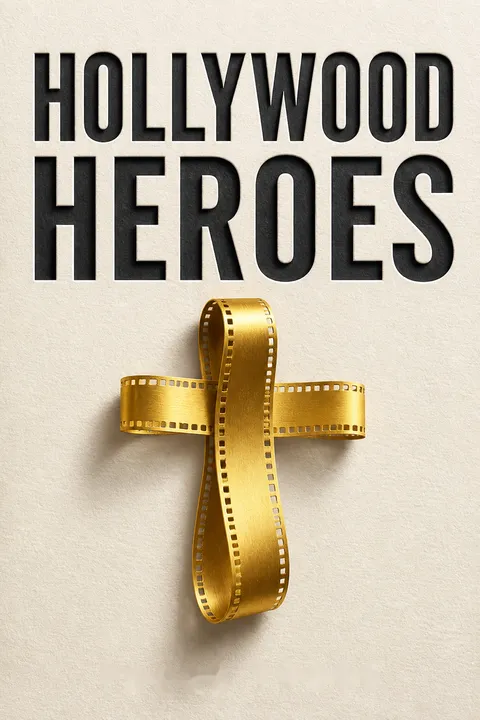
Hollywood Heroes is a work of Christian apologetics built around cultural interpretation. Rather than begin with abstract arguments and ask readers to accept them, it begins with stories many already know. Familiar characters become entry points for discussing evil, sacrifice, moral responsibility, death, and hope. Its most effective move is comparative: Captain America and Tony Stark reveal different shapes of virtue; Frodo and Sam make dependence and loyalty dramatic; Batman exposes the danger of fighting injustice without moral restraint; Wonder Woman illustrates persuasion as a form of care. These readings help translate theological ideas into memorable human situations.
The book's central inference is that recurring hero stories disclose a longing that Christianity uniquely answers. That is evocative, but the steps need separating. A narrative pattern can reveal what people find emotionally compelling without proving that its religious interpretation is true. Likewise, a resemblance between a film and the Gospel can illuminate the Gospel's themes without demonstrating that the Gospel events occurred. The book itself gestures toward historical argument in its final chapter, and that is where claims about Jesus must ultimately be assessed.
The treatment of suffering is a second area where precision matters. Free choice explains why moral agents can harm one another, and the idea of long causal ripples encourages humility about limited human perspective. Neither point, by itself, explains every instance of suffering or shows that each tragedy was necessary. The distinction between trusting that good may emerge and claiming to know why a particular evil occurred is essential.
At its best, the book invites readers to become more attentive viewers and more thoughtful conversational partners. It does not require a film to be intentionally Christian before it can raise Christian questions. Its deepest practical lesson is interpretive: notice what a story asks audiences to love, what it condemns, and what kind of rescue it imagines. Those questions can open a genuine discussion, even when the participants disagree about the answers.
Review Summary
Hollywood Heroes receives mostly positive reviews for its engaging analysis of Christian themes in popular movies. Readers appreciate the fresh perspective on familiar characters and storylines, finding it both entertaining and spiritually enlightening. Many highlight the book's accessibility and potential for sparking meaningful discussions. Some reviewers particularly enjoyed the Harry Potter chapter, while others found certain movie retellings unnecessary. The audiobook narration is noted as overly intense by some listeners. Overall, the book is praised for its unique approach to connecting pop culture with Christian faith.
Glossary
CRIME
Five-part biblical storylineThe authors' acronym for the Bible's overarching narrative: Creation, Rebellion, Intervention, Mission, and Eternity. God creates the world, rebellion damages it, Jesus intervenes to save humanity, Christians carry a mission to share that message, and Christ is expected to return and restore creation.
the unseen realm
Spiritual reality beyond sightThe spiritual dimension described in the Bible, including God, spiritual beings, and conflict that is not directly visible to human observers. The book presents this realm as active in human history and connects it to the visible struggle between good and evil.
ripple effect
Consequences spreading through timeThe idea that an event can influence many later events and people, much like ripples spreading across water. The authors use it to explain why humans may not see how suffering or wrongdoing fits into a larger chain of consequences, while God, in their account, can see the whole pattern.
true myth
A myth that happenedC. S. Lewis's description, adopted by the authors, of Christianity as a story that uses the emotionally powerful patterns found in myths but is claimed to have occurred in history. Pagan stories can express truths imaginatively; the Christian claim is that Jesus' death and resurrection are real events.
Mirror of Erised
Mirror of deepest desireA magical mirror in Harry Potter that reveals a viewer's deepest desire rather than providing ordinary reflection or reliable knowledge. Harry sees the family he has lost, while his friend Ron sees a version of himself marked by achievement. The book uses the mirror to discuss desire and character.
Horcrux
Container for a soul fragmentIn Harry Potter, a Horcrux is an object or vessel in which a dark wizard has hidden part of his soul, making it harder for him to die. Voldemort creates several through murder. The book explains that Harry unknowingly carries a fragment of Voldemort's soul, which links their stories and makes Harry's apparent death part of the final conflict.
sanctification
Growth toward Christlike characterIn Christian theology, sanctification is the ongoing process by which a believer is shaped toward holiness and service after receiving salvation. The book connects the idea to Tony Stark's gradual moral change, while distinguishing this growth from earning salvation through good deeds.
Lord, Liar, Lunatic trilemma
Three readings of Jesus' claimsAn argument associated with C. S. Lewis that asks how to interpret Jesus' reported claims to divine identity. If those claims are accurate, Jesus is Lord; if he knowingly made false claims, he is a liar; if he sincerely believed them while they were false, he may have been deluded. The book uses the argument to challenge the idea that Jesus was merely a good moral teacher.
Download PDF
Download EPUB
.epub digital book format is ideal for reading ebooks on phones, tablets, and e-readers.








