

Key Takeaways
Let home be plural, without pretending displacement hurts less
Belonging crossed borders. Sen grew up among several homes: his family house in Dhaka, the ancestral village of Matto, his grandparents’ home in Santiniketan, and childhood memories of Mandalay. Later, Cambridge in England also felt like home. When an interviewer insisted that home must mean one place, Sen rejected the premise. Belonging, for him, could be layered rather than exclusive.
Loss remains real. After Partition in 1947, his family moved from Dhaka to Santiniketan. He loved his new life but missed the old house, its garden, and the people he had left behind. Tagore’s ideal of a world connected by shared learning shaped Sen’s sense that multiple attachments can coexist, not that any one attachment is trivial.
What's striking is that plural belonging is presented as a lived arrangement, not a slogan. Dhaka, Santiniketan, and Cambridge carried different languages, memories, and obligations, yet none had to cancel the others. That outlook resists political demands for a single defining identity. It also avoids romanticizing mobility: Partition made one home inaccessible, and affection for another place did not repair that loss. A useful distinction emerges between having several places of belonging and being free to move among them.
Choose education that trains judgment, not just exam performance
Curiosity beat ranking. At St Gregory’s School in Dhaka, Sen disliked the pressure to excel. Decades later, its headmaster reported that he had ranked thirty-third in a class of thirty-seven. At Santiniketan, where he moved in 1941, grades mattered far less. Classes met outdoors, students could question teachers beyond the syllabus, and physical punishment was prohibited.
Freedom had a purpose. Tagore’s school introduced students to Indian traditions and cultures across the world, and encouraged them to reason rather than memorize. Sen and classmates also helped run night classes for tribal children who lacked access to schooling. The model was imperfect by conventional measures, but it made learning feel connected to freedom, inquiry, and the lives of people beyond the classroom.
Santiniketan’s contrast with St Gregory’s makes a sharp point about what grades can miss: a student may thrive when evaluation stops dominating the experience of learning. The school also tied intellectual freedom to service, as students taught children excluded from formal education. Still, low pressure is not a substitute for skilled teaching or sufficient resources. The more durable lesson is to combine strong instruction with room to question, explore, and connect knowledge to actual social needs.
Read traditions as conversations, not sealed civilizational property
Inheritance was mixed. Sen’s grandfather, the Sanskrit scholar Kshiti Mohan Sen, studied Hindu texts alongside Muslim Sufi poetry and the oral songs of Kabir and other rural poets. He gave weight to versions still sung by ordinary practitioners, rather than treating printed, elite editions as the only authentic record. Rabindranath Tagore drew on this scholarship to emphasize cultural exchange.
Classics contained dissent. Sen found Sanskrit not only a language of Hindu scripture, but also of Buddhist learning and materialist thought. The Lokayata tradition questioned religious explanations, while a Rig Veda hymn voiced uncertainty about creation. Bengal’s calendar also blended Hindu solar counting with a system shaped by the Mughal emperor Akbar. These histories complicate claims that cultures developed in isolation.
The account challenges a common error in cultural history: treating traditions as internally uniform and mutually sealed. Kshiti Mohan’s attention to oral poetry also raises a question about who gets to certify a culture’s meaning. Yet cultural mixture should not be mistaken for social equality. Interchange can coexist with caste hierarchy, political exclusion, or unequal authority over archives. The strongest implication is not that differences disappear, but that no group can honestly claim exclusive ownership of a shared inheritance.
Track who can buy food, not merely how much exists
Access collapsed first. In 1942, before the Bengal famine reached its worst point, rice prices in a Calcutta market rose 37 percent by mid-August and 70 percent by year’s end. By August 1943, rice cost about five times its price at the start of 1942. War spending, military purchases, new jobs, panic, and speculation drove demand and prices upward, while rural wages often failed to keep pace.
Supply was not access. Bengal still held substantial food stocks, but poor rural workers could no longer afford enough to eat. Sen calls the ability of households to command food through income or other means food entitlement. Government rationing protected Calcutta residents, while buying food in rural markets pushed prices higher there. The famine killed an estimated two to three million people.
The distinction between food in a region and food within a household’s reach is analytically powerful because it shifts attention from aggregate totals to purchasing power and distribution. It also exposes how a policy that protects one population can transfer scarcity onto another. The account does not reduce famine to markets alone: government priorities and information failures mattered too. Any serious food-security measure therefore needs to track prices, wages, and access across groups, not just the size of the harvest.
Challenge leaders who turn one identity into a license to hate
Violence followed categorization. In 1944, a Muslim day labourer named Kader Mia entered the Sens’ Dhaka home badly stabbed. He had been attacked by communal thugs in a largely Hindu area. His wife had warned him not to go there, but poverty left him little choice: his children needed food, and he had to seek work. He died after Sen’s father took him to hospital.
Hatred can be organized. Sen later saw a related danger in Burma, where military propaganda helped turn public opinion against the Rohingya minority. He was critical of Aung San Suu Kyi’s failure to defend them, especially before public vilification hardened. The lesson is not that communities have fixed characters, but that political actors can cultivate hostility by making one religious label seem more important than every other human connection.
Kader Mia’s death makes the material conditions of identity-based violence impossible to ignore. Calls to stay safe mean little when staying home means hunger. The Burma example adds a political mechanism: propaganda can make discrimination appear normal, then make resistance costly. The danger is not simply prejudice in private minds, but the combination of organized messaging, political incentives, and vulnerable targets. Cultural reputation offers no immunity; protection depends on institutions and people willing to contest the narrative early.
Defend open argument when moral certainty outruns evidence
Good causes need sound reasons. After a devastating 1934 earthquake in Bihar, Mahatma Gandhi suggested that it was divine punishment for untouchability. Tagore, who also opposed caste injustice, objected that this explanation imposed moral meaning on a natural disaster that had killed thousands. Sen learned from the disagreement that ethical urgency does not make a factual claim reliable. He also questioned Gandhi’s promotion of daily spinning, which Tagore argued needlessly preserved drudgery.
Silence can cost lives. During the 1943 famine, censorship and a newspaper’s reluctance to criticize the war effort kept public discussion limited. The Statesman editor Ian Stephens finally published forceful reporting and editorials. The famine became harder to conceal, Parliament debated it, and relief measures followed. Argument matters not as a performance of dissent, but as a way to expose mistakes and force public responsibility.
These episodes connect two forms of accountability: testing claims against evidence and making policy failures visible. Tagore’s objection does not diminish Gandhi’s opposition to untouchability; it shows why moral ends cannot excuse careless explanations. Stephens’s intervention demonstrates that information can alter what governments must answer for. Open debate is not automatically wise, however. It needs reliable evidence, access for dissenting voices, and institutions capable of translating public attention into action.
In crisis, protect the patient and the investigator within
Concern became useful agency. At eighteen, Sen found a lump on the roof of his mouth. Doctors initially dismissed his worry, but his reading persuaded him to seek further examination. A biopsy confirmed squamous cell carcinoma. In 1952, a Calcutta hospital treated him with an intense course of radium radiation, despite an estimated five-year survival chance of about 15 percent. The treatment caused severe damage before the tumour disappeared.
Two roles helped him endure. Sen described himself as both the patient facing frightening news and the agent responsible for asking questions, securing diagnosis, and pursuing treatment. His father kept detailed medical records, which proved invaluable when Sen later received care in Cambridge. There, the National Health Service’s Radio Therapy Centre monitored him closely for years. His survival story is not a claim that self-diagnosis replaces medical skill; it shows how informed participation can matter.
The patient-agent distinction offers a practical way to understand medical vulnerability without pretending that fear can simply be mastered. A person can be frightened and still help organize questions, records, and decisions. The story also shows why good care is relational: the father’s documentation and the Cambridge clinicians’ follow-up complemented Sen’s initiative. The caution is equally important. Patients need meaningful participation, but responsibility for navigating an imperfect system should not be mistaken for a substitute for competent professional care.
Treat collective decisions as design problems, not one shared will
Groups can cycle. Social choice theory studies how a society might turn differing individual priorities into collective decisions. Sen encountered the field through Kenneth Arrow’s work. A simple majority can produce a cycle: one voter prefers x to y to z, another y to z to x, and a third z to x to y. Each option defeats another, so there is no majority winner.
Impossibility is a warning, not a verdict. Arrow showed that no non-dictatorial decision rule can satisfy a set of seemingly reasonable conditions in every case. Sen rejected the popular leap from this result to the claim that democracy is impossible. The theorem depends on its assumptions, and different tasks, such as voting for leaders and judging social welfare, may require different standards. Institutions must be examined, not waved away as either perfect or futile.
The framework is valuable because it replaces vague claims about a single public will with explicit questions about rules, preferences, and consistency. It also disciplines policy debate: a decision procedure can be fair in one respect and unsatisfactory in another. Mathematical impossibility results do not themselves dictate political choices; interpretation depends on which conditions matter and what alternatives exist. The broader lesson is to treat democratic design as a continuing problem of trade-offs, rather than expecting one voting rule to resolve every conflict.
Protect liberty while confronting exploitation and unmet need
Marx offered more than prices. Sen resisted dismissing Marx solely because the labour theory of value is a weak account of market prices. It can also describe the unequal social relation between workers and owners. Marx distinguished payment according to work from a needs principle, which allocates according to what people require. He preferred the latter as a moral aim, while recognizing that incentives and practical conditions complicate its immediate use.
Equality needs political safeguards. Sen also found Marx insufficiently attentive to how power should be organized and restrained. Communist movements often treated individual liberty as a distraction, despite Marx’s own defense of freedom of choice. Sen’s conversations with Piero Sraffa reinforced the point that liberty is not an ornamental extra: people need space to speak, organize, and oppose authority if egalitarian reform is to avoid becoming another form of domination.
This reading avoids two simplifications: that Marx’s work stands or falls with one theory of price, and that egalitarian aims automatically justify centralized power. The needs principle identifies a real moral limit of distributing everything by productivity, while the concern about incentives remains practical rather than trivial. Liberty supplies both protection against abuse and a means for people to contest what counts as need. These principles can conflict, but treating one as disposable makes the other less secure.
Judge economies by lives they enable, not imperial claims or growth totals
Count human outcomes. Sen rejects the easy comparison of India in 1757 with India in 1947 as proof of what British rule caused; history would not have stood still without empire. Still, the record at independence was stark: adult literacy remained below 15 percent, life expectancy was at most thirty-two years, and real income per person had barely advanced over roughly two centuries. British rule did connect Indian intellectuals with European thought, but imperialism was not the only possible route to global exchange.
Public provision changes the measure. During the Second World War, Britain rationed food and expanded access to care. Life expectancy in England and Wales rose sharply during the 1940s, even as food supplies were constrained. Sen uses this contrast to argue that education, nutrition, and health cannot wait until growth delivers prosperity. Institutions should be judged by what people can actually live and do.
The book asks readers to separate contact with the wider world from domination by an empire, and to assess both by effects on ordinary lives. Its historical caution about counterfactuals is important: observed change cannot reveal exactly what an alternative path would have produced. The outcome figures nevertheless challenge celebratory accounts that privilege infrastructure or administration over literacy, health, and survival. Growth remains relevant, but it is a means whose value depends on whether people gain real access to its benefits.
Let contact widen the circle of people whose welfare matters
A stranger offered help. In East Berlin, Sen missed his train connection and faced a day without enough money for a room or meals. A Bengali student, Shyam Sundar De, whom he had never met, arranged food and lodging, lent him cash, and returned to the station two weeks later to check that he had made it back. The encounter gave practical form to the kindness Sen had found in friendships across national and political lines.
Connection can change concern. Sen links travel, learning, trade, and cultural exchange to the possibility of seeing distant people as morally relevant. He also watched postwar Europeans try to build cooperation after national rivalries had produced catastrophe. Contact does not guarantee solidarity, but it can make other people less abstract and enlarge the range of lives considered when judging justice.
Shyam’s generosity is memorable because it joins trust to concrete assistance, not merely warm sentiment. The episode also clarifies how encounters can revise a person’s sense of who belongs within the scope of obligation. Yet contact alone is no cure for hostility: unequal relations can deepen stereotypes, and travel is not equally available to everyone. The more careful claim is that exchange creates occasions for recognition. Whether those occasions become solidarity depends on how people interpret them and whether institutions support cooperation.
Analysis
Home in the World uses a life story to make a case about how people learn to reason across boundaries. Its shape is not simply chronological. Childhood scenes in Dhaka, Burma, and Santiniketan return as intellectual origins: rivers suggest both abundance and danger; a famine teaches the difference between food stocks and access; a murdered labourer reveals how poverty and religious identity interact. Later encounters with economics, politics, and philosophy are presented as continuations of questions first encountered in ordinary life.
The memoir’s strongest method is to resist single-cause explanations. Hunger is not just a shortage, political violence is not merely ancient communal hatred, and a society is not reducible to one religious or national identity. Sen repeatedly asks which institutions and incentives turn possibilities into outcomes. That approach makes abstract arguments memorable, but it also establishes a standard for reading the memoir itself: personal experience can illuminate mechanisms without representing everyone who endured them. Sen acknowledges the limits of memory, yet his experiences of unusually supportive schools, teachers, family, and medical care are not typical evidence of what institutions provide to most people.
Its account of pluralism is consequently more demanding than a celebration of cultural mixture. Interdependence does not erase hierarchy, and shared traditions can coexist with violence. The book insists that exchange and argument need political conditions: public information, education, freedom to dissent, and protection for vulnerable people. Its treatment of British rule similarly resists both imperial nostalgia and simplistic counterfactual certainty. The question is not whether empire produced any change, but whether its claims of improvement survive scrutiny of people’s health, education, and agency.
The result is a memoir that treats intellectual work as a civic practice. Mathematical models clarify what collective decisions can and cannot guarantee; historical examples show how public reasoning changes policy; friendships make distant lives less abstract. Its central wager is that reason and sympathy are partners. Reason tests claims, while sympathy helps determine which people and consequences deserve attention. Neither is sufficient alone.
Review Summary
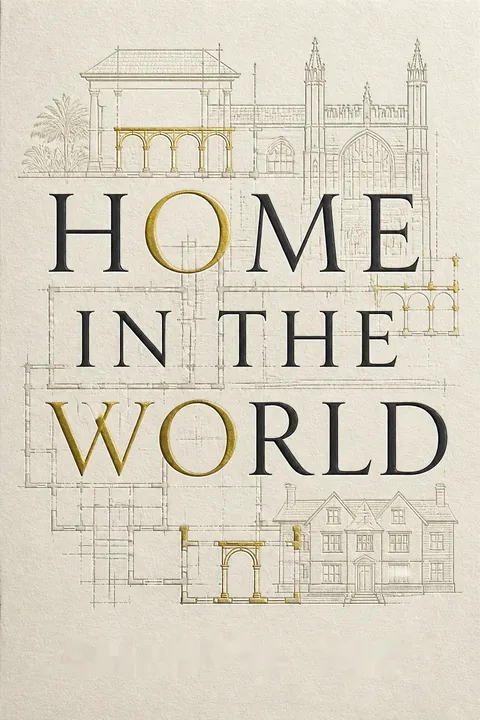
Home in the World is a memoir by Amartya Sen that offers insights into his early life and intellectual development. Readers appreciate Sen's humorous anecdotes, discussions on Indian culture and history, and explorations of social equality and religious tolerance. The book covers Sen's childhood in Bengal, his education at Cambridge, and his academic career. While some find parts of the memoir rambling or self-indulgent, many praise Sen's writing style, erudition, and ability to explain complex topics. The book provides a fascinating glimpse into the life and thoughts of a Nobel laureate.
Glossary
food entitlement
command over available foodA person’s or household’s practical ability to obtain food through income, employment, production, or exchange. The idea distinguishes access from the total amount of food present in a region. In Sen’s account of the Bengal famine, food remained available, but rising prices and low rural wages made it unaffordable to many workers.
social choice theory
aggregating individual judgmentsThe mathematical and ethical study of how collective decisions can be formed from the preferences or interests of individuals. It examines properties of voting rules and social evaluations, including whether they are consistent and fair. Sen’s work treats impossibility results as reasons to inspect a rule’s assumptions, not as proof that democratic decision-making cannot work.
objective illusion
appearance shaped by positionAn appearance that seems objectively true from a particular standpoint but may mislead when assessed alongside wider evidence. Marx used the idea to examine how market exchanges can look fair while concealing unequal bargaining power. Sen connects this kind of positional appearance to social inequalities that are not obvious from a limited viewpoint.
needs principle
distribution according to needA principle that allocates resources according to what people need, rather than according to their work or productive contribution. Marx regarded it as morally important but difficult to apply comprehensively in the near term, partly because work incentives and social conditions matter. Sen discusses it as a distinct goal, not simply a more generous version of payment by output.
niti and nyaya
rules versus realized justiceTwo Sanskrit terms Sen uses to distinguish different ways of thinking about justice. Niti concerns proper rules, procedures, and institutional arrangements. Nyaya concerns the justice actually realized in people’s lives and in the society those arrangements produce. A rule may be formally correct yet still permit severe injustice in practice.
multiple identities
overlapping affiliationsSen’s view that each person belongs to several relevant categories and relationships, such as language, occupation, nationality, religion, politics, and shared humanity. These affiliations can coexist without one defining the whole person. Treating a single identity as exclusive can hide other ties and help turn difference into political hostility.
Download PDF
Download EPUB
.epub digital book format is ideal for reading ebooks on phones, tablets, and e-readers.








