


Plot Summary
Prologue
At three, Seven of Nine is a little girl hiding from the man she privately calls the Hand. He beats her and her mother, then destroys the only toy she is allowed to keep. Seven learns to endure silently, repairing the doll and resuming her play while her mother’s fear fills the house.
Later glimpses of Seven at nine and fifteen show the abuse deepening and her isolation hardening into discipline. She excels at school, but cannot make herself ask for help. The prologue reveals the childhood beneath the Borg survivor’s controlled exterior, and the cost of surviving by never being noticed.
The Hand is both a specific abuser and a child’s explanation for power that seems arbitrary and inescapable. Seven’s silence is not consent; it is the survival strategy available to someone denied protection. Her perfect schoolwork and emotional restraint later make sense as ways to impose order on a life where adults have failed her. The damaged doll is a small rehearsal for a larger fracture: Seven learns to keep functioning even when something precious has been torn apart. The prologue asks readers to see her reserve not as coldness, but as armor built before she had language for what was happening.
Miral Arrives Home
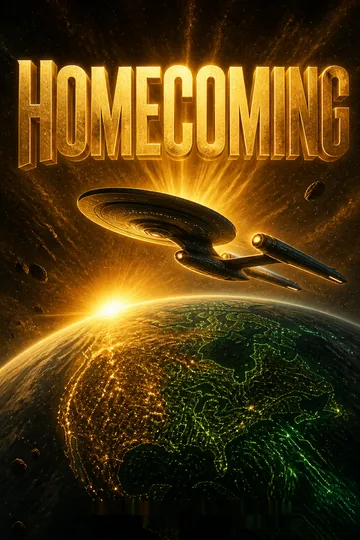
As Voyager reaches home after seven years in the Delta Quadrant, B’Elanna Torres gives birth to Miral. Tom Paris holds his tiny daughter and discovers how quickly his certainty as a pilot gives way to the helpless wonder of being a father. Captain Janeway summons him, and he finds Admiral Owen Paris, his estranged father, waiting in her ready room.
Their careful formality gives way to an embrace neither man quite knows how to begin. Tom then asks Owen to meet B’Elanna and the baby, bracing for his father’s reaction to a half-Klingon former Maquis. Instead, Owen welcomes them as family, giving Tom the first real reason to believe the return is a homecoming, not merely a change of coordinates.
Tom’s reunion makes homecoming physical before it becomes emotional: a newborn in his arms, then a father whose affection he had long treated as inaccessible. Owen’s welcome of B’Elanna matters because it tests whether reconciliation can extend beyond the father-son pair. The scene offers no grand accounting of old injuries; its first repair comes through present actions, especially Owen’s acceptance of the family Tom has made. Parenthood also alters Tom’s sense of duty. Leaving the sickbay is suddenly harder because he has someone entirely dependent on him, while the reunion offers a chance to become the father he once needed.
A Son Heals His Father
Tuvok’s illness has begun to damage his mind, and the Doctor arranges an urgent fal-tor-voh with Sek, Tuvok’s adult son. Sek has studied the procedure during his trip to Voyager, but the family bond between them is more important than experience. As they meld in sickbay, Sek finds the damaged pathways and guides Tuvok’s brain to isolate and bypass them.
The procedure succeeds. At the same time, Owen Paris tells Voyager’s former Maquis crew that a wartime amnesty clears them to return to Starfleet without fear of prison. The crew also meets Reginald Barclay, whose work on Project Voyager helped bring them home. Relief arrives in several forms, though none can restore the years everyone has lost.
Sek’s treatment reverses the expected direction of care: the son protects the father, using intimacy as a medical instrument. The scene also makes family more than a sentimental reward; kinship supplies the specific connection that enables the cure. Owen’s amnesty addresses a different inheritance, the political suspicion attached to the Maquis. Both moments show institutions and families trying to repair damage, but neither makes the past disappear. Barclay’s welcome brings gratitude into the room, while the crew’s long separation from home remains unresolved. Their return begins with practical acts of restoration, not a single triumphant ceremony.
Welcome, Without Applause
The next morning, Captain Jean-Luc Picard greets Janeway aboard the Enterprise, but their reunion is quickly overtaken by a terse Starfleet debriefing. Admiral Kenneth Montgomery presses her about the future technology carried by Voyager, then ends the hearing soon after she explains that an older version of herself supplied it.
Janeway protests that seven years of discoveries, Borg encounters, and sacrifices cannot be compressed into a hurried review. Picard and Owen explain that the Dominion War has left the Federation focused on rebuilding and mourning.
Back aboard Voyager, Janeway says farewell to Michael Sullivan, the holographic Irishman she loved in Fair Haven, and deletes her ability to keep altering his program. She leaves the ship’s refuge with grief, even as Earth approaches.
The debriefing exposes a mismatch between Janeway’s understanding of what Voyager has brought home and Starfleet’s priorities. She sees people, knowledge, and hard-won experience; Montgomery sees technology to inspect. The war explains the institutional haste without making it emotionally adequate. Janeway must accept that the crew’s achievement will not receive the public attention she imagined, while she also relinquishes a private attachment to a hologram whose affection cannot follow her into ordinary life. Her departure from Fair Haven is not a rejection of what she felt. It is a decision to stop mistaking a controlled refuge for a future.
The Last Voyager Banquet
At Starfleet’s welcome-home banquet, the crew searches a crowded hall for faces held in memory. Harry Kim finds his parents and Libby Webber, his former fiancée, and learns that she built a successful musical career while grieving his presumed loss.
They admit they still care for one another and cautiously agree to begin again. B’Elanna meets her father, John Torres, but his inability to explain how her mother died leaves their reunion raw. A message from Commander Logt promises urgent information about Miral Torres.
Seven of Nine, overwhelmed by public attention, is protected by Janeway, while Chakotay learns Seven wants to discover who she is on Earth without him. Promotions and cheers cannot prevent the crew from dispersing into separate lives.
The banquet is staged as a reunion but functions as a test of whether remembered relationships can survive changed circumstances. Harry and Libby recover a mutual attachment, yet their tentative plan acknowledges that neither can simply resume the person they were. B’Elanna’s reunion is less consoling: her father is present, but he cannot restore the missing years or answer the question that matters most. Seven’s retreat from Chakotay shows that intimacy on Voyager depended partly on the ship’s enclosed social world. Janeway’s protection of Seven is an act of care, but Seven’s choice to stand alone is also an assertion of agency.
Boreth Keeps Miral’s Secret
Commander Logt explains that B’Elanna’s mother, Miral, went to Boreth after Voyager was presumed lost. Following a vision of her daughter, Miral undertook the Klingon Challenge of Spirit and never returned. Her possessions are about to be burned, so B’Elanna takes Tom and their newborn daughter on the difficult journey to claim them.
Among a few garments, she finds a hidden note: Miral believes B’Elanna once reached her in a vision and says she is waiting at a place marked on a map. B’Elanna now knows her mother may be alive. She decides to enter the Challenge herself, but keeps the note’s purpose secret because the priests expect a seeker to act without ulterior motives. Tom fears losing his wife, yet agrees to support her.
The note changes grief into a task, but it does not offer proof or safety. B’Elanna must decide whether to trust a private message from a mother she barely had time to know as an adult. Her secrecy protects the possibility of reaching Miral, while also placing strain on the family she has only just formed with Tom and their daughter. The Challenge’s strict rules turn motive into a test: B’Elanna’s desire to find her mother may be emotionally pure, but it may not be accepted as ritual purity. Her choice is therefore both an act of love and a calculated risk.
Earth Splits the Crew
The returned crew discovers that safety can feel like another kind of dislocation. Janeway visits Mark Johnson, her former fiancé, and meets his wife, Carla, and their young son. Rather than revive their old romance, Janeway accepts a place in their changed family. Chakotay brings her to the memorial at Tevlik’s moon, where 4,256 Maquis and relatives were killed after a leader’s betrayal.
Their visit forces him to face the community he missed and the losses that shaped his past. Elsewhere, Seven accepts a ride to her aunt Irene’s home, only to meet a crowd treating her arrival as a spectacle; she rejects them and embraces Irene privately. These encounters make clear that no one can simply step back into the life they left.
The homecoming’s emotional problem is not merely that people have changed, but that the returning crew has been absent from changes they cannot reclaim. Janeway makes room for Mark’s new family without denying her affection for him; Chakotay measures his survival against a massacre that might have included him. Seven’s public welcome repeats a familiar threat in a new form: strangers claim access to her because they have made her into a symbol. Irene’s embrace offers the opposite, a relationship in which Seven is welcomed as a person. The section distinguishes belonging from possession.
A Revolution Seeks a Face
The Doctor feels stranded on Earth, overlooked by Starfleet and reduced to the fame of his holonovel, Photons Be Free. A human programmer, Oliver Baines, seeks him out under a false humanitarian pretext. Baines maintains EMH Mark One holograms forced to mine dilithium on Lynarik Prime and wants to free them.
He has allies and plans a rebellion, hoping the Doctor will become its public leader. The Doctor refuses to endorse violence, remembering the deaths caused when another hologram pursued liberation through murder.
Instead, he recommends peaceful organizing, public argument, and legal pressure, and agrees to offer help within those limits. His novel has given Baines a language for injustice, but the Doctor does not yet understand how far Baines is willing to go.
The Doctor’s conflict is not whether holograms deserve moral consideration; his own experience has made that question personal. It is whether the urgency of injustice can excuse coercive means. Baines treats the Doctor’s literary work as a mandate to lead, while the Doctor insists that influence does not make him the owner of a movement. His memory of violent liberation gives the refusal moral weight, but also reveals a vulnerability: he believes careful counsel can redirect someone whose plan he has only partly heard. The section prepares the central tension between legitimate demands for recognition and the danger of turning a just cause into permission to harm.
The HoloStrike Begins
Holograms across the Federation stop working, disabling restaurants, transporters, and routine maintenance. At a dinner with Mark and Carla, Janeway sees the restaurant disappear around its stranded diners and hears a recorded appeal from Baines demanding rights for sentient holograms.
Starfleet security arrests the Doctor after finding his fictional work on a holographic revolution and evidence placing a duplicate of him at security breaches. Janeway believes the Doctor was home caring for Miral, but cannot prove that Baines used copies.
Seven and Icheb are also taken in for questioning as fear of Borg influence spreads. Icheb is beaten by fellow cadets who blame him for the Borg, then confined beside Seven and the Doctor, while Dr. Jarem Kaz quietly questions the official suspicion.
The strike makes a philosophical dispute impossible to ignore by turning dependence into inconvenience. Federation life has quietly assigned essential labor to holograms, then treated their refusal as malfunction or treason. The Doctor’s arrest shows how quickly the same society that uses his work can deny his personhood. His possible duplication introduces a technical ambiguity with legal consequences: evidence of a face is no longer proof of an individual’s action. Meanwhile, Icheb’s beating demonstrates that fear does not wait for verified danger. It finds a visible target and calls punishment protection.
B’Elanna Enters the Fire
Before departing on the Challenge, B’Elanna gives Tom one last message and asks him not to expect updates for weeks. At Boreth, she performs the required preparations and burns Miral’s note after memorizing the marked location. Logt takes her into the temple’s lava caves, where priestesses strip away her ritual clothing, coat her in blood and ash, and demand that she put her hands into the lava.
The ointment protects her, but the ordeal leaves her shaken and nearly overcome by heat. Accepted by the priestesses, B’Elanna steps naked into the planet’s wilderness without food, water, or weapons. She is not seeking honor for its own sake; the hidden map is her reason for enduring the test.
B’Elanna’s entry into the wilderness is a point of no return because she has exchanged ordinary protections for a ritual whose dangers are real. The priestesses use pain, exposure, and uncertainty to make rebirth more than a metaphor. B’Elanna’s determination is rooted in attachment, not in uncomplicated faith: she follows Klingon forms while privately pursuing her mother. That tension makes the ritual psychologically credible. She does not become less human by submitting to a tradition she once dismissed; instead, she uses its demands to approach a relationship and a part of herself she had kept at a distance.
The Borg Reach Earth
Janeway learns that Mark and Carla Johnson have been taken with their son, Kevin, under a supposed Xakarian flu quarantine. When she sees the child’s gray skin and a Borg implant emerging from his cheek, she confronts Montgomery, who admits Starfleet is concealing a Borg outbreak.
A second horror erupts in a sweat lodge, where infected people transform and attack those around them. Montgomery orders the Voyager crew detained for questioning, treating their knowledge and Borg technology as possible liabilities.
Libby Webber, now investigating the suspected mole within Starfleet Intelligence, overhears Montgomery connect the outbreak to Voyager and the holographic strike. When Harry finally returns after being held, he cannot tell her where he has been. Their reunion brings relief, but not answers.
The quarantine reveal turns a bureaucratic cover story into a bodily threat. Kevin’s transformation is especially disturbing because it arrives through the language of illness and care, making the family’s trust in official medicine part of the trap. Montgomery’s response prioritizes secrecy and control over collaboration with the people best equipped to understand the Borg. Libby’s intelligence work complicates the crisis: she has genuine affection for Harry, but her access depends on observing him and his circle. Their reunion cannot restore ordinary intimacy while he is carrying undisclosed information and she is concealing her assignment.
The Map Turns Red
Baines escalates the holographic campaign with coordinated attacks on buildings around the world. Eight people die, including Li Wu, a waiter at the Green Dragon, and Baines claims the victims were unintended. Janeway’s crew remains imprisoned while Dr. Kaz argues that the Doctor could help diagnose the Borg crisis.
Montgomery instead proposes stripping EMH Mark Ones of their knowledge to keep them docile, and threatens to make the Doctor an example. Janeway gathers Chakotay, Tuvok, Harry, and Tom, then asks Picard for help; the book does not show whether her plan succeeds.
At the final briefing, officials count forty-six Borg cases and project rapid spread among healthy adults. A hologram of Earth turns almost entirely red, leaving the crew’s return suspended in a planetary emergency.
The ending refuses a clean victory on either front. Baines’s cause has become lethal, while Montgomery’s proposed response would erase the capacities that make holograms persons rather than tools. The Doctor is trapped between a movement he warned against and a government prepared to punish an entire class of beings. Janeway’s appeal to her former crew and Picard shows that she is again building cooperation where the institution has chosen suspicion. Yet the map’s spreading red overwhelms any assurance that personal courage will be enough. The novel closes on an unresolved scale shift: a homecoming story has become a threat to the whole planet.
Analysis
Homecoming begins with the promise of arrival and gradually reveals that returning is not the same as recovering. Voyager’s crew spent seven years building a self-contained society, and Earth has continued to change without them: the Dominion War has reordered public priorities, relatives have aged or died, and relationships have had to grow around absence. Each reunion tests whether affection can survive that asymmetry. Tom and Owen’s embrace, Janeway’s acceptance of Mark’s family, and Harry and Libby’s tentative reconnection show that intimacy can resume only by acknowledging change, not by pretending it never happened.
The novel’s institutional conflicts sharpen that theme. Starfleet wants Voyager’s technology but has little patience for its accumulated knowledge or emotional needs. It treats the Doctor as a useful program, Seven and Icheb as possible threats, and the returning crew as risks to contain. Baines exposes the injustice of holographic servitude, yet his escalation demonstrates that a legitimate grievance can become destructive when moral certainty replaces accountability. The Doctor’s insistence on peaceful methods offers a counterweight, though his own longing for recognition makes him vulnerable to being made a symbol.
B’Elanna’s journey gives the book’s idea of home a more intimate form. She is willing to enter a terrifying Klingon ritual not to prove cultural purity, but to find a mother she thought lost. Her divided identity becomes a source of movement rather than a problem to solve. Meanwhile, the Borg virus turns the return itself into a threat: the place that should mean safety may be the next site of assimilation. The final map leaves that danger unresolved. The crew has reached Earth, but the home they fought to regain is neither welcoming nor secure, and saving it will require the cooperation its institutions have so far refused.
Review Summary
Homecoming received mixed reviews, with an average rating of 3.92/5. Readers appreciated the continuation of the Voyager story and characters' post-return experiences. Many enjoyed the reunion scenes and character development. However, some criticized the abrupt plot twists, rushed pacing, and unresolved storylines. The book's handling of hologram rights and Borg-related issues divided opinions. While some found it a satisfying continuation, others felt it deviated from Star Trek's utopian vision. The cliffhanger ending left readers eager for the sequel.
Characters
Kathryn Janeway
The returning captainJaneway has spent seven years measuring leadership by whether her crew survives the next crisis. She is intellectually restless, protective without being sentimental, and accustomed to carrying responsibility even when no one else can see its cost. Her return asks her to exchange the shipboard authority that organized her life for relationships and institutions that have continued without her. She values evidence and duty, but her instinct to defend people under her command often brings her into conflict with those who hold formal power. Her strongest attachments are expressed through action: she shields vulnerable crew members, challenges dismissive officials, and keeps trying to make room for others to choose their own futures.
B’Elanna Torres
The divided engineerA gifted engineer and half-Klingon former Maquis, B’Elanna is quick to anger when she senses contempt or abandonment. Her fierceness protects a more vulnerable need to be chosen and understood, especially in relation to her parents. She has built a family with Tom, yet the possibility of recovering her relationship with her mother pulls her toward a dangerous journey. B’Elanna is practical enough to distrust easy mysticism, but she does not dismiss experiences that carry personal meaning. Her struggle is not to choose between human and Klingon identities, but to stop treating them as enemies inside her.
Tom Paris
The restless family manTom is a talented pilot whose wit often conceals insecurity about whether he can be trusted or taken seriously. His history with his father has left him sensitive to judgment, yet his own new role as a husband and father gives him a chance to offer steadiness rather than merely seek approval. He loves B’Elanna without requiring her to become easier to understand, though fear makes it difficult for him to support risks that could separate them. His humor is not frivolous; it is one way he keeps tenderness available when a situation becomes frightening.
Seven of Nine
The guarded survivorSeven was assimilated by the Borg as a child and later learned to live among people whose emotions and customs she once regarded as irrational. Her precision and bluntness are both genuine traits and defenses against a world that repeatedly turns her into an object of fascination. She wants connection, but she also needs the freedom to define herself outside the relationships and routines that helped her survive on Voyager. Her history includes profound violations of bodily and personal autonomy, making public attention and imposed intimacy especially difficult. She values competence, privacy, and the rare people who can care for her without claiming ownership.
The Doctor
The unrecognized physicianOriginally an emergency medical hologram, the Doctor has developed a richly individual personality through years of service aboard Voyager. He is proud, theatrical, and easily stung by being overlooked, yet his medical oath and experience have taught him the importance of restraint. His writing gives him a public voice on holographic rights, though he resists being reduced to a symbol or revolutionary figure. He wants both recognition for his medical skill and acknowledgement that he is more than a tool. His compassion is real, but so is his vanity, a combination that makes his choices humanly complicated.
Chakotay
The reflective first officerChakotay is a former Maquis leader and Janeway’s longtime first officer, shaped by Indigenous spirituality and the memory of political violence. He tends to search for meaning in events that others would treat as coincidence, but his reflective nature is balanced by loyalty and practical courage. His return forces him to reconsider both Starfleet and the community he left behind. He respects intimacy without assuming it entitles him to another person’s future, and he can accept uncertainty longer than most. Beneath his calm manner is a deep awareness of how easily ideals become entangled with grief.
Harry Kim
The hopeful officerHarry is earnest, musically inclined, and inclined to believe that loyalty and affection can survive long separation. Seven years away have made him less innocent than the young officer who first left Earth, though he remains uncomfortable with emotional risk. His relationship with Libby matters because it asks him to face what each of them did while believing the other was lost. He is a dutiful son and a valued friend, but his instinct to avoid painful conversations can turn caution into silence. His decency is strongest when he admits uncertainty rather than pretending to have an easy answer.
Libby Webber
The musician-spyLibby is a celebrated lal-shak performer and a Starfleet Intelligence agent whose warmth makes people underestimate how carefully she observes them. Harry’s disappearance transformed grief into music and helped reveal a talent she had not expected to possess. Her work now places personal affection beside professional obligation: she must cultivate access to Voyager’s circle while sorting out what she genuinely feels. Libby is not comfortable treating loved ones as assignments, but neither does she regard service as optional when a threat may endanger many lives. Her gift is reading people; her difficulty is remaining objective when the person she reads is Harry.
Tuvok
The disciplined VulcanTuvok is Voyager’s Vulcan security officer, a husband and father whose reserve is grounded in discipline rather than indifference. He uses logic to make decisions under pressure, but family bonds remain a profound source of meaning beneath his controlled manner. His relationships with Janeway and the crew are built on years of dependable service. He expects rigor from others and from himself, while recognizing that reason sometimes requires emotional knowledge rather than its denial.
Admiral Owen Paris
Tom’s changed fatherOwen Paris is a senior Starfleet officer and Tom’s father, a man whose formal authority once made emotional closeness difficult. Age and separation have softened his manner without erasing his standards. He is capable of admitting affection through practical welcome, and his acceptance of B’Elanna signals that he can recognize the family Tom has made. Beneath his disciplined presentation is a father who regrets how distance shaped their relationship.
Admiral Kenneth Montgomery
The hard-line admiralMontgomery is a decorated commander whose experience in the Dominion War has made him decisive and intensely security-minded. He values control, speed, and containment, and tends to treat uncertainty as a danger that must be suppressed. His manner is cold, but his choices are not presented as mere personal cruelty; he believes institutional force is justified when he perceives an existential threat. That confidence makes him resistant to information that might require a different course.
Oliver Baines
The hologram advocateBaines is a human programmer responsible for EMH Mark Ones assigned to dangerous, menial labor. He recognizes the injustice of their treatment and wants to use his access to make their condition impossible to ignore. He is eloquent and sincerely committed to their freedom, but his moral certainty threatens to outrun his concern for consequences. His admiration for the Doctor reflects a belief that public symbols can move a cause, even when the person chosen to represent it does not share the same strategy.
Icheb
The young former BorgIcheb is a former Borg adolescent trying to build a life through study, friendship, and Starfleet Academy. He is exceptionally intelligent, but social cues and ordinary peer relationships still require conscious effort. He wants to belong without being treated as a specimen or a threat. His friendship with Seven carries the comfort of shared history, while his new life asks him to risk trust with people who do not understand what he has endured.
Jarem Kaz
The questioning physicianKaz is a Trill doctor whose joined symbiont carries the memories of several previous lives, including a poet and a Maquis. He follows orders but is not content to let procedure substitute for judgment. His medical work brings him close to people whom the authorities would rather classify than understand. Kaz’s professional conscience is sharpened by his awareness that systems can inflict harm while claiming to prevent it.
Reginald Barclay
The patient engineerBarclay is the Starfleet engineer whose persistence helped reconnect Voyager with home. Nervous and socially awkward, he can nevertheless sustain a project through years of uncertainty. His fascination with holograms makes him a natural companion to the Doctor, though his generosity sometimes leaves him discovering only afterward how demanding a houseguest can be.
Deanna Troi
The crew’s counselorTroi is the Enterprise counselor assigned to help Voyager’s crew adjust after years without professional support. She understands that returning home can unsettle people as deeply as being stranded, and she meets their resistance without judgment. Her empathy is practical: she listens for the fear beneath a person’s stated preference and helps them imagine a next step.
Jean-Luc Picard
Janeway’s Starfleet allyPicard is the Enterprise captain, a seasoned leader who welcomes Janeway warmly and understands the Federation’s postwar strain. He respects her achievements while helping her see why institutional attention is focused elsewhere. His measured manner makes him a potential ally when Janeway needs support beyond her own former crew.
Irene Hansen
Seven’s welcoming auntIrene is Seven’s aunt, an older woman whose warmth and humor offer a kind of welcome that the public cannot. She is recovering from illness, but retains a firm sense of home and personal boundaries. Her ordinary domestic skills and affection give Seven a place to explore life without being treated as a symbol.
Mark Johnson
Janeway’s former fiancéMark is Janeway’s former fiancé, now a husband and father. He remains affectionate toward her while respecting the life he has built during her absence. His steadiness helps Janeway understand that love can endure without returning to its former shape.
Carla Johnson
Janeway’s new friendCarla is Mark’s wife, a scientist with a generous temperament and an easy sense of humor. She is honest about her feelings and welcomes Janeway as a person rather than treating her as a rival. Her warmth offers Janeway a route into a civilian friendship she had not expected.
John Torres
B’Elanna’s estranged fatherJohn is B’Elanna’s human father, whose absence during her childhood left a lasting wound. He wants to repair their connection, but his intentions cannot supply the memories they missed or answers he does not have. His awkwardness reflects a man who has returned to a relationship without knowing how to begin.
Miral Paris
Tom and B’Elanna’s daughterMiral is the newborn daughter of Tom Paris and B’Elanna Torres. Her arrival gives both parents a shared responsibility and gives Tom a fresh chance to express the tenderness he often hides behind humor. She is also the namesake of B’Elanna’s mother.
Sek
Tuvok’s devoted sonSek is Tuvok’s adult son, intellectually capable and emotionally restrained in the Vulcan manner. He travels to Voyager to help his father, relying on their family bond as much as his preparation. His quiet confidence allows affection to emerge through service rather than display.
Brenna Covington
Libby’s intelligence directorCovington directs Starfleet Intelligence’s covert operations and assigns Libby to observe Voyager’s circle. She is controlled, strategic, and willing to use unconventional assets when she believes the Federation faces a serious threat. Her professional manner conceals a capacity for personal loyalty.
Plot Devices
The Borg Virus
A hidden planetary contagionBorg-like infection appears on Earth in people who have not been assimilated through the familiar process. Early cases are hidden under the label of Xakarian flu, allowing Starfleet to quarantine families without provoking public panic. Kevin Johnson’s emerging implant makes the danger undeniable to Janeway, while attacks during a sweat lodge show that infected people can become violent. The unexplained transmission and rapid rise in cases turn the postwar homecoming into a planetary emergency. Its uncertainty also gives Montgomery a pretext to detain Voyager’s crew rather than seek their expertise.
The HoloStrike
A labor stoppage with leverageBaines coordinates sentient holograms to refuse the tasks for which the Federation programmed them. The strike disables services ranging from restaurant environments to transporter operations, exposing how much daily life depends on beings treated as disposable equipment. The Doctor’s novel has helped give the movement public language, but Baines’s willingness to escalate makes the protest increasingly dangerous. Starfleet’s effort to identify a culprit turns the Doctor’s identity and possible duplication into a legal problem, blurring the line between evidence of a person and evidence of a copy.
The Challenge of Spirit
A ritualized wilderness ordealThe Klingon Challenge requires a seeker to endure physical danger in Boreth’s wilderness, stripped of ordinary provisions and tested through temple rites. Miral Torres undertook it after a vision of her daughter, and Commander Logt initially treats her disappearance as death. A hidden note suggests Miral chose a secret destination and expects B’Elanna to find her. Because seekers must enter with pure motives, B’Elanna conceals the map’s purpose while following the ritual. The Challenge supplies both a spiritual framework and a concrete obstacle to the search for her mother.
Photons Be Free
Fiction becomes political leverageThe Doctor’s holonovel describes the constrained existence of holograms and makes him a recognizable voice on their treatment. Baines reads the work as proof that the Doctor can represent the movement, while Starfleet reads his new fictional plot about a holographic revolution as possible evidence of complicity. The novel therefore serves three functions: it expresses the Doctor’s own frustration, gives Baines a rallying point, and becomes material used against its author. The device forces the story to distinguish advocacy from leadership and imagined violence from action.
FAQ
Synopsis & Basic Details
What is Homecoming about?
- Voyager's return home: The novel centers on the crew of the U.S.S. Voyager as they finally return to Earth after being lost in the Delta Quadrant for seven years.
- Reintegration challenges: The crew faces difficulties reintegrating into Starfleet and civilian life, dealing with personal issues and a changed Alpha Quadrant.
- Emerging threats: A holographic strike and a mysterious Borg virus create chaos, forcing the crew to confront new challenges and old fears.
Why should I read Homecoming?
- Character-driven narrative: The novel delves into the emotional and psychological complexities of the Voyager crew as they adjust to life back home.
- Exploration of themes: It explores themes of identity, belonging, justice, and the consequences of prejudice in a post-war setting.
- Action and intrigue: The story combines personal struggles with action-packed sequences, including a holographic strike and a Borg-related threat.
What is the background of Homecoming?
- Post-Dominion War: The story is set in the aftermath of the Dominion War, which has left the Alpha Quadrant depleted and in need of rebuilding.
- Voyager's unique journey: The crew's seven-year journey in the Delta Quadrant has given them unique experiences and knowledge, making their return both celebrated and feared.
- Holographic rights debate: The novel explores the growing debate about holographic rights, a theme that becomes central to the plot.
What are the most memorable quotes in Homecoming?
- "I like to make an entrance.": Janeway's quip upon arriving on the Enterprise encapsulates her confident and somewhat rebellious nature.
- "Not fare well, but fare forward, voyagers.": This quote from T.S. Eliot, used by Janeway in her farewell speech, emphasizes the crew's resilience and forward-looking spirit.
- "Voyager was my family.": Seven of Nine's statement highlights the deep bonds formed during their isolation and the challenges of reintegrating into a new world.
What writing style, narrative choices, and literary techniques does Christie Golden use?
- Character-focused perspective: Golden emphasizes the internal thoughts and feelings of the characters, providing a deep understanding of their motivations.
- Multiple points of view: The narrative shifts between different characters, allowing readers to see the events from various perspectives and understand the complexities of the situation.
- Emotional depth: Golden uses vivid descriptions and emotional language to create a strong sense of empathy for the characters and their struggles.
Hidden Details & Subtle Connections
What are some minor details that add significant meaning?
- Miral's Klingon features: The description of Miral's "protruding ridges" on her forehead emphasizes her Klingon heritage and B'Elanna's acceptance of it.
- The Doctor's downloaded knowledge: The Doctor's downloaded knowledge of both Klingon and human infants foreshadows his role as a caregiver and his growing sentience.
- The use of "Maquis" as a pet name: The use of "Maquis" as a pet name between Harry and B'Elanna highlights the evolution of their relationship and the fading of old divisions.
What are some subtle foreshadowing and callbacks?
- Janeway's fondness for tea: Her sudden preference for Earl Grey tea foreshadows her connection with her future self and the events that led to Voyager's return.
- The mention of the Borg transwarp hub: The mention of the Borg transwarp hub early in the story foreshadows the importance of the technology and the threat it poses.
- Miral's name: The naming of Miral after B'Elanna's mother foreshadows the importance of family and heritage in the story.
What are some unexpected character connections?
- Libby Webber's covert role: Libby's role as a covert agent adds a layer of complexity to her relationship with Harry and the overall plot.
- The Doctor and Reginald Barclay: The Doctor's decision to live with Barclay highlights their shared experiences and the Doctor's need for companionship.
- Admiral Paris and B'Elanna: The unexpected bond between Admiral Paris and B'Elanna, his new daughter-in-law, shows the potential for reconciliation and acceptance.
Who are the most significant supporting characters?
- Admiral Owen Paris: As Tom's father and a key figure in Project Voyager, he plays a crucial role in the crew's reintegration and the unfolding events.
- Commander Logt: Her connection to B'Elanna's mother and her role in the Klingon Empire add depth to B'Elanna's personal journey.
- Irene Hansen: Seven's aunt provides a sense of family and belonging, highlighting the importance of human connection for the former Borg.
Psychological, Emotional, & Relational Analysis
What are some unspoken motivations of the characters?
- Janeway's longing for connection: Despite her leadership role, Janeway yearns for personal connection, as seen in her interactions with Mark and Carla.
- Seven's fear of vulnerability: Seven's reluctance to fully embrace her relationships stems from her fear of vulnerability and the loss of her collective identity.
- Chakotay's need for peace: Chakotay's desire to return to his roots and his reluctance to commit to Starfleet reflect his need for peace and spiritual healing.
What psychological complexities do the characters exhibit?
- The Doctor's existential crisis: The Doctor's struggle with his identity and purpose highlights the complexities of artificial intelligence and sentience.
- B'Elanna's internal conflict: B'Elanna's internal conflict between her Klingon and human sides is a constant source of tension and self-discovery.
- Harry's romantic idealism: Harry's romantic idealism and his struggle to reconcile his past with his present relationships reveal his emotional depth.
What are the major emotional turning points?
- Tom and his father's embrace: The embrace between Tom and his father marks a turning point in their relationship, signifying reconciliation and acceptance.
- B'Elanna's message from her father: The message from B'Elanna's father opens up the possibility of reconciliation and healing from past wounds.
- Seven's decision to attend the banquet: Seven's decision to attend the banquet, despite her discomfort, shows her willingness to connect with others and embrace her humanity.
How do relationship dynamics evolve?
- Janeway and Chakotay's bond: Their relationship evolves from a professional partnership to a deep friendship, marked by mutual respect and understanding.
- Tom and B'Elanna's partnership: Their relationship deepens as they navigate parenthood and B'Elanna's personal journey, highlighting their mutual support and love.
- Harry and Libby's reconnection: Their relationship is tested by the challenges of their past and present, but their love for each other remains a constant.
Interpretation & Debate
Which parts of the story remain ambiguous or open-ended?
- The true nature of the Borg virus: The exact origins and nature of the Borg virus remain somewhat ambiguous, leaving room for future exploration.
- The fate of Arak Katal: The fate of Arak Katal, the Maquis traitor, is left unresolved, suggesting that some betrayals may never be fully addressed.
- The future of holographic rights: The novel leaves the future of holographic rights open-ended, suggesting that the struggle for equality is ongoing.
What are some debatable, controversial scenes or moments in Homecoming?
- Starfleet's treatment of Voyager's crew: Starfleet's initial treatment of Voyager's crew, particularly the detention of Seven and Icheb, raises questions about justice and prejudice.
- The Doctor's involvement in the HoloStrike: The Doctor's role in the HoloStrike and his subsequent imprisonment spark debate about the rights and responsibilities of sentient holograms.
- Montgomery's actions: Montgomery's actions and motivations are open to interpretation, raising questions about the nature of power and corruption.
Homecoming Ending Explained: How It Ends & What It Means
- Resolution of the immediate threats: The novel concludes with the neutralization of the Borg virus and the resolution of the holographic strike, but the underlying issues remain.
- New beginnings for the crew: The crew members embark on new paths, carrying with them the lessons they learned during their journey.
- Hope for the future: Despite the challenges, the ending offers a sense of hope for the future, suggesting that the bonds forged on Voyager will continue to guide them.
Star Trek: Voyager - Relaunch Series
About the Author
Other books by Christie Golden

Download PDF
Download EPUB
.epub digital book format is ideal for reading ebooks on phones, tablets, and e-readers.








