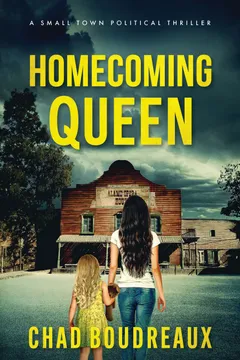


Plot Summary
Prologue
Five years before Anika returns to Miranda, Texas, eighteen-year-old Ricky Holloway is questioned by an FBI agent about Johnny Delgado’s apparent death. Johnny’s car exploded after a dangerous attempt to jump the Miranda River, yet Ricky insists the crash was not suicide and doubts Johnny died at all.
He points to the missing body and the town’s strange appetite for conflict, while the agent treats both claims as local superstition. The interview establishes the mystery that will shadow Anika’s homecoming: in Miranda, evidence can be buried, and the official story may be only another instrument of power.
The interview opens the novel by making uncertainty a social condition, not simply a puzzle. Ricky recognizes that Miranda’s residents have learned to distrust official accounts, but his certainty about Johnny’s survival is itself unverified. The agent’s impatience represents institutional confidence that facts can be separated cleanly from local myth. The exchange plants the novel’s central tension between evidence and interpretation, while the missing body turns grief into an unresolved political fact. Miranda’s folklore is not decorative background. It is one of the ways its residents explain what authority has hidden from them.
The Locked Bedroom
Anika Raven storms into her childhood home and finds her stepfather, Scotty Mathis, drunk and high while eight-year-old Samantha hides behind a bedroom door secured by two deadbolts. Their mother, Barbara, is gone again. Anika sends Scotty outside, gathers Sam and the stuffed toy she once hid in the wall, and tries to lead her sister to safety.
An invisible resistance drags at them in the hallway, but Anika forces them through the front door and drives away. Scotty threatens to expose Anika’s secret and promises to take Sam back. In the car, Sam remains silent, carrying the drawings she made in her locked room and the fear she cannot yet explain.
Anika’s rescue begins as a practical act, but the struggle to cross the hallway makes leaving feel like a contest with the town itself. She responds to neglect with force because institutions and family have both failed Sam. Her anger is protective, yet it also puts her at risk: she has returned with no legal plan and a secret Scotty can use against her. Sam’s silence should not be mistaken for passivity. Her drawings and attachment to the keepsake suggest an interior life still active beneath the damage, while Anika’s urgency makes their bond both shelter and responsibility.
A Kiss Under Searchlights
Driving through Miranda, Anika feels the same strange pull that slowed her escape from the house. At a convenience store, an elderly man watches her until she reaches the beach, where she reconnects with Ethan Danforth, an old friend who owns a surf shop. Ethan tells her his brother Logan has married, closing off the future Anika once imagined with him.
He offers the sisters a place to sleep. That night, Anika and Ethan surf beneath the moon while deputies search the beach and bungalow for Sam. Dolphins distract the sheriff long enough for the surfers to avoid discovery. Anika and Ethan kiss, an impulsive choice that complicates the reunion she had hoped would be simple.
The kiss is less a romantic beginning than a symptom of Anika’s unsettled return. She wants comfort after confronting Sam’s neglect, but she reaches for it through a choice that repeats an old pattern of acting first and absorbing consequences later. Ethan offers ease and attention, not the stability she needs, while Logan’s marriage forces Anika to recognize that the life she left behind has continued without her. The sheriff’s search also reveals how quickly private family trouble becomes a matter of public force. The town’s mysterious pull and its law enforcement seem to cooperate in making departure difficult.
The Cottage at Four Points
The morning after the surf, Anika learns she and Ethan did not sleep together, though his housemate Amber resents her presence. A shirt bearing a slogan about Johnny’s death enrages Anika until Ethan explains that the campaign raises money for charity and calls for transparency.
Logan arrives after a child-protection worker refuses to remove Sam without proof, then directs Anika to Pastor Joshua Molina’s church property. Joshua gives the sisters a cottage and warns Anika that Mayor Auntie Dodd has unusual power.
During their first meeting, Dodd listens to Anika’s account but focuses on Sam, who solves a Rubik’s Cube with startling speed. Dodd recognizes the child’s unusual ability, while Anika realizes that Sam’s quiet drawings may matter to the town.
The cottage offers a brief contrast to the Mathis home: Sam can play with dogs, and Anika can imagine a routine not organized around fear. But each apparent refuge carries a condition. The child-protection office will not act without evidence, Joshua limits access to parts of his property, and Dodd’s attention to Sam is not uncomplicated kindness. The solved puzzle makes Sam visible to adults who may value her for what she can provide. Anika’s instinct is to treat the crisis as a custody problem; Miranda is already turning it into a contest over who gets to interpret and control her sister.
The Queen's Hidden Record
At a welcome-home gathering hosted by Logan and his new wife Sarah, Anika confronts memories of the homecoming night when she betrayed Johnny with a kiss. Sarah charms the guests, while Anika notices her appetite for attention and catches a glimpse of a secret message on her phone.
Meanwhile, Joshua tells Anika that Sam’s cube drawings may reflect extraordinary powers of observation, and that the strange tug in Miranda has a local name, the koya. At a later meeting, Dodd exposes Anika’s supposed Georgetown law studies and engagement as lies. She also knows Anika is a recently released felon on probation. Dodd offers work and help with Sam in exchange for obedience, making clear that Miranda’s institutions answer to her.
Anika’s return is built on a false biography she uses to protect herself from judgment. Dodd punctures it not by offering understanding but by demonstrating surveillance and power. The exposure forces Anika to face the distance between her former promise and her present circumstances. At the same time, Joshua’s account of the cubes offers an alternative explanation for Sam’s behavior, but it remains difficult to distinguish insight from superstition. The party sharpens the contrast between Anika’s guilt over one teenage kiss and Sarah’s polished performance of social innocence. In Miranda, reputation is not merely personal; it is a currency managed by whoever controls the story.
A Dead Man's Pillow
Refusing Dodd’s bargain, Anika goes to Scotty’s house with a Bowie knife and a pillow, intending to kill him before he can reclaim Sam. She finds him already dead, then discovers police arriving while she searches for his threatening texts. Officers arrest her beside his body. Dodd privately tells Anika that she caused Scotty’s death, although she offers no evidence, and uses the danger of a murder conviction to make Anika work for her.
Joshua persuades officials to release Anika into his care, but Sam remains with child-protection services. Dodd now wants Anika to pressure local business leaders into evacuating before a predicted catastrophic hurricane, turning her family emergency into a test of political loyalty.
Anika’s attempted murder is the point at which protection and vengeance nearly become indistinguishable. Her decision is interrupted not by law but by the fact that Scotty is already dead, and the authorities immediately convert her history into evidence against her. Dodd exploits the arrest to make coercion look like rescue. Joshua’s intervention provides temporary safety without restoring Sam, leaving Anika dependent on the very mayor she distrusts. The storm broadens the stakes from one child to an entire town, but the same question persists: can Anika accept help from a powerful person without surrendering the right to decide what is best for her family?
The Ghost Rebuilt
Dodd insists that Anika persuade refinery executive LeSean Brown and railway operator Ricky Holloway to evacuate their workers, though both reject the mayor’s forecasts and fear the financial damage of closing.
At the Alamo Opera House, Anika finds that caretaker Curtis Worden has rebuilt Johnny’s wrecked 1970 Dodge Challenger, including a stronger engine. She also discovers C-4 explosives in his workshop. Dodd’s pressure campaign escalates: Ricky’s guard dogs are killed, and protesters fill Revolutionary Park with demands to remain.
Anika learns that Alamo cook Timmy also draws cubes, and that his sketches seem to anticipate unrest. The storm’s approach becomes more urgent, while every attempt to secure cooperation deepens the conflict between the mayor and Miranda’s business leaders.
The restored Challenger turns Anika’s past into a tangible object she must now drive. It carries both affection for Johnny and the physical means of a possible escape, while the explosives in Curtis’s workshop make the town’s quiet machinery of violence increasingly difficult to ignore. The business leaders are not simply stubborn: their livelihoods and workers are bound to the infrastructure they control. Dodd interprets resistance as disloyalty and answers it with intimidation. Timmy’s drawings widen the question of who can see what is coming, but they also expose the danger of treating prediction as unquestionable authority.
A Mayor Without Warning
Anika finds a medical report revealing that Sam has a brain tumor, information Dodd had kept from her while Sam underwent testing. The mayor, attempting to flee Miranda in a truck, is intercepted by Curtis and the old timers; she dies by suicide rather than return to town. Anika becomes acting mayor under local law.
Curtis brings Sam back from the clinic, and Anika learns that her mother has been placed in rehabilitation. The transfer of power gives Anika a chance to protect Sam, but it also makes her responsible for a town that may be facing a Category 5 hurricane. Her sister’s illness adds a deadline more intimate than the storm: Sam needs treatment outside Miranda, and Anika still has no safe way to get her there.
Dodd’s death does not end the political system she built. It transfers its instruments to Anika, who inherits the office, the emergency, and the temptation to use coercion for a supposedly urgent good. The hidden tumor report reframes Sam’s fatigue and silence as medical danger rather than merely trauma, making the mayor’s secrecy especially consequential. Anika’s reunion with Sam is emotionally sustaining but cannot erase the time lost. Her mother’s placement in rehabilitation offers a narrow possibility of repair, yet the family remains scattered among institutions. The new mayor’s authority is therefore both opportunity and trap: she can act, but every action risks repeating Dodd’s methods.
Boots, Bribes, and Arrests
As acting mayor, Anika uses Cyclops’s surveillance photographs to expose Sarah’s affair with Ethan, which has injured Logan and destabilized the Danforth family. Chelsea, a former surf-shop employee, joins Anika’s staff after Sarah fires her.
Anika arranges for Sarah’s prized cowboy boots to be stolen, then uses planted evidence to have Sarah arrested. She also authorizes the detention of protesters after violence grows and orders attempts to seize guns from residents.
Ricky and LeSean, accused of crimes that Anika suspects are fabricated, are taken into custody. FBI agent Brian Maxwell arrives seeking to arrest Anika for violating parole. She gives him files proving that she was framed in Johnny’s case, and he takes Ricky and LeSean away to face the evidence.
Anika’s first use of power is emotionally understandable and ethically compromised. Sarah’s betrayal gives Anika a target for old resentments, but the staged arrest shows how quickly she adopts the town’s habit of manufacturing legal certainty. Detaining protesters and pursuing guns similarly turn emergency authority into a tool that can injure people who have not been proved dangerous. Maxwell’s arrival provides a crucial counterweight: documentary evidence can still interrupt Miranda’s closed system when someone outside it is willing to read. Yet Anika’s reliance on deception to punish Sarah risks repeating the very injustice that once destroyed her life.
The Forbidden Room
Joshua refuses to promise that his congregation will obey Anika’s evacuation order, citing religious freedom and individual conscience. Suspicious of his motives, Anika enters his forbidden bedroom and finds old photographs of Miranda’s survivors after storms in several centuries.
She believes Joshua appears in images from eras before his birth. He orders her and Sam off the church grounds, though he allows Sam to remain if Anika leaves. Anika rejects the offer and returns to the Alamo, choosing to keep her sister with her.
Around them, Joshua’s followers gather, the old timers prepare for conflict, and Sam’s drawings increasingly suggest a confrontation before the hurricane. Anika cannot tell whether the coming danger is human, supernatural, or both.
The photographs turn Joshua’s abstract warnings into an intimate violation of Anika’s ordinary sense of time. She does not learn what they prove, only that their existence threatens the worldview she has used to stay functional. Joshua’s eviction is both a consequence of her trespass and a moral rupture: he offers safety for Sam, but Anika cannot accept protection that separates the sisters. Her choice is costly, especially given Sam’s illness, yet it is also the clearest expression of Anika’s developing loyalty. The coming conflict exposes a central ambiguity: faith may help people endure catastrophe, while certainty about unseen forces can also justify fear and violence.
The Child Speaks
As Hurricane Lorenzo approaches, a protester called Crazy Eyes drags Barbara through Four Points with a knife at her throat and demands the release of those detained. Anika tries to negotiate while Curtis and the old timers aim rifles from the Alamo porch. Sam, still recovering and newly able to speak, walks down the steps alone.
She talks Crazy Eyes into surrendering, and deputies take him into custody while Barbara is moved into the storm shelter. Anika then tells Sam about the brain tumor and learns Joshua had already disclosed it. Sam confirms that she understands some of her drawings and warns Anika about a danger she cannot yet identify. The sisters agree to keep Sam’s return to speech secret as the storm begins.
Sam’s intervention reverses the adults’ assumptions about who can act in a crisis. She does not overpower Crazy Eyes; she recognizes his attachments and uses them to redirect him, while the armed men’s threat has only intensified the standoff. Her restored voice makes her agency audible, but it also raises the stakes around her unusual perception and medical vulnerability. Anika’s confession about the tumor repairs some trust between the sisters, even as Sam’s prior knowledge reveals how much she has carried alone. Their secrecy is protective, but it binds them more tightly to a world where truthful information is routinely withheld or weaponized.
The Midnight Rider's Truth
During the hurricane, Joshua’s procession of church members reaches the Alamo, where a Lost Colony resident shoots one of the marchers. Logan attacks Ethan over his betrayal, then raises a knife until Curtis stops him. A gunfight follows when the displaced residents seize weapons, and Joshua is shot but survives. Curtis sends Timmy away with Joshua for safety.
As Anika prepares to flee, Curtis admits he staged Johnny’s death: he loaded the Challenger with explosives, but Johnny was not inside when it blew up. Curtis also reveals that he is Johnny’s grandfather and had helped him escape Miranda. Sheriff Karnes arrives, tries to arrest Anika, and orders her back into custody. Curtis gives up his own position to buy the sisters time.
The violence at Four Points shows how quickly competing claims of protection become lethal. The church procession, the displaced residents, the sheriff, and the mayor’s staff all believe they are preventing disaster, yet their actions produce a shooting and a near fratricide. Curtis’s confession finally gives Anika a truthful account of the loss that shaped her life, but it arrives when she has almost no time to absorb it. Johnny’s staged death also recasts Curtis’s cruelty and care as entangled rather than mutually exclusive. His decision to shield Anika and Sam is an act of love, though it cannot undo the years stolen from Anika.
The River Ramp
With the Alamo garage sealed and deputies closing in, Anika reverses the Challenger through its door and disables an armored police bus. She drives through flooded streets to the Flats, where protesters surround the car and Sheriff Karnes blocks the river crossing. An explosion destroys Sarah’s Range Rover, opening a path through the crowd.
Cyclops arrives on a forklift and positions the wooden ramp Anika and Sam secretly designed from Sam’s drawings. Anika accelerates the rebuilt Challenger toward the river with Sam strapped beside her and Faux Pooh in the back. She cannot see clearly through the rain, but she trusts the ramp, Curtis’s preparation, and Sam’s warning. The car hits the launch and rises over the water.
The escape is the novel’s convergence of practical craft, inherited knowledge, and faith under pressure. Sam’s drawings have offered a route, but the sisters still have to interpret them, build the ramp, and commit to a jump with no guarantee of survival. Anika’s final choice contrasts with Johnny’s earlier failed attempt: she acts with preparation and with Sam beside her, not from wounded pride alone. The storm erases the distinction between natural disaster and political violence, as police, protesters, explosives, and floodwaters all threaten the same vehicle. Flight becomes more than escape from Miranda; it is Anika’s refusal to let the town decide the meaning of her family’s future.
Epilogue
One year later, Curtis sits among the rebuilding work in Miranda’s park, where the town has raised a statue honoring Anika’s leadership during Hurricane Lorenzo. Chelsea is now mayor, and Barbara remains nearby as the community rebuilds. In Florida, Anika is pregnant and married to Johnny, while Samantha, recovered from her tumor and wearing a shaved head scar, walks the beach with him.
Anika feels the koya return when Sam turns and winks, recalling the warning that the person called a monster may not know what she is. She dismisses the possibility, but the unease remains as she returns to planning a nursery and watching her sister.
The epilogue supplies the physical resolution the final jump withholds: Anika and Sam survive, Johnny returns to their lives, and the town remembers Anika as a leader even as it rebuilds. Yet safety does not restore a simple world. Sam’s recovery is real, but her wink revives the possibility that her influence over events is more profound than Anika understands. The final unease resists a neat conversion from danger to domestic peace. Anika has escaped Miranda’s immediate control, not necessarily its mysteries. Her pregnancy and the nursery offer a future shaped by care, while her lingering suspicion suggests that love cannot make uncertainty disappear.
Analysis
Homecoming Queen treats the small town as both a community and an apparatus of capture. Miranda’s people know one another’s habits, histories, and vulnerabilities; that familiarity can shelter a neglected child, but it also makes surveillance feel ordinary. Authority does not operate only through police or elected office. It travels through gossip, favors, family loyalty, old stories, and the conviction that the town has a right to keep its own.
Anika’s return tests whether care can remain distinct from control. She begins by rescuing Sam from neglect, then repeatedly confronts systems that demand proof, obedience, or access to the child’s unusual abilities. As acting mayor, she discovers how readily a frightened protector can reproduce the coercion she once suffered. Her retaliations against Sarah and the protesters are not morally equivalent to every abuse committed against her, but the narrative makes their costs visible. The central danger is not simply that power corrupts. It is that emergency makes coercion feel like the only responsible option.
The novel’s competing explanations of the koya and the cube drawings deepen that problem. Some events may be supernatural; others can be explained through observation, psychology, or the tactics of people who claim special knowledge. The uncertainty matters because prediction confers authority. Whoever interprets the drawings can shape which threats are believed and whose freedom is sacrificed. Anika’s struggle is therefore epistemic as well as political: she must act without certainty, yet cannot treat every confident interpreter as trustworthy.
The storm compresses these conflicts into a physical deadline. Anika’s escape depends on engineering, memory, family cooperation, and a final leap she cannot calculate with confidence. The landing remains unresolved until the epilogue, where survival does not erase Miranda’s mysteries. Instead, Anika’s life with Johnny and Sam offers a fragile alternative to the town’s claim on them. The novel’s hard-won lesson is not that love defeats every system, but that care becomes meaningful when it protects another person’s freedom rather than possessing it.
Review Summary
Reviews for Homecoming Queen are largely positive, averaging 4.32 out of 5. Readers praise its layered storytelling, blending political thriller, supernatural, and magical realism elements set against a looming hurricane in small-town Miranda, Texas. Many appreciate protagonist Anika Raven's fierce determination to protect her sister Sam, the vivid setting, and the suspenseful pacing. Critics note inconsistent writing, underdeveloped characters, and an overabundance of storylines. Some felt the mix of thriller and paranormal elements was uneven, while others found it an unputdownable, genre-defying read full of twists.
Characters
Anika Raven
Reluctant homecoming queenAnika is intelligent, stubborn, and fiercely protective of her younger half-sister, Samantha. Once celebrated in Miranda as a high-achieving student and homecoming queen, she returns burdened by a secret past and a deep sense of guilt about the choices that preceded her departure. Her instinct is to solve danger through action, sometimes before she has measured the cost. That urgency makes her brave and also vulnerable to manipulation. Anika’s central psychological conflict is between the person she believes she should have become and the person who can actually protect her family now. Her loyalty is strongest when she must choose between public approval and the people she loves.
Samantha Raven
Silent cube-makerSamantha, Anika’s eight-year-old half-sister, is small, watchful, and initially unable or unwilling to speak. She draws intricate cubes and shows an unusual ability to solve puzzles, while a stuffed animal from Anika’s childhood gives her a link to a safer past. Sam’s silence does not mean she lacks judgment; she studies adults carefully and often notices more than they expect. Her attachment to both parents remains complicated by their neglect, and her trust in Anika grows through concrete acts of protection. Sam’s childlike playfulness persists alongside a startling composure that can unsettle the adults around her.
Joshua Molina
Pastor at the town's edgeJoshua leads Miranda’s Reformed Baptist church and offers Anika and Sam a temporary refuge. Thoughtful and direct, he takes both Scripture and human suffering seriously, resisting easy reassurance. He believes spiritual forces are real, but he also tries to explain Sam’s abilities through observation, cognition, and pattern recognition. His convictions lead him to defend religious freedom even when Anika’s emergency orders demand cooperation. Joshua’s protectiveness can feel mysterious or controlling, especially when he withholds the reasons for his boundaries. He challenges Anika to distinguish faith from superstition without demanding that she adopt his beliefs.
Curtis Worden
Miranda's quiet fixerCurtis maintains the Alamo Opera House and serves as the dependable problem-solver behind Miranda’s government. He is practical, mechanically skilled, and deeply loyal to the town’s customs. His kindness often appears through useful acts rather than confession or reassurance, and he has a particular tenderness toward people who need protection. Curtis believes that rules preserve order, even when the rules are cruel or irrational. His steady presence comforts Anika, but his capacity for violence makes that comfort uneasy. He is a man whose affection and obedience can pull in opposite directions.
Auntie Dodd
Mayor and political brokerDodd has governed Miranda for decades and treats local politics as a system of leverage, favors, and carefully managed information. Her public manner can be warm, even maternal, but she quickly reveals how much she values control. Personal loss shaped her entry into politics, yet grief has not made her gentle with those who resist her. She measures people by their usefulness to the town and to her authority, making her help difficult to separate from coercion. Dodd understands Miranda’s social networks intimately and expects others to accept that knowledge as proof of her right to decide.
Johnny Delgado
Anika's first great loveJohnny is a gifted student and a gifted basketball player whose rebellious style conceals discipline and ambition. He and Anika share an intense teenage romance, while his friendship with LeSean places him within Miranda’s close-knit social world. His fate becomes the unresolved wound around which Anika’s guilt, the town’s slogans, and the old investigation gather. Johnny’s desire for a future beyond Miranda contrasts with the town’s insistence that talented people belong to it. His absence shapes how Anika interprets love, betrayal, and the cost of leaving.
Logan Danforth
Anika's old friendLogan grew up alongside Anika and once seemed destined to become her partner. He is wealthy, capable, and inclined to solve other people’s problems, though his confidence can become naïveté. Family loyalty matters deeply to him, as does the promise of a stable life, and he struggles when those commitments collide. Logan’s affection for Anika is genuine, but he is not simply a romantic alternative: he represents the path Anika once assumed would remain open. His ease with business and public relations later makes him useful in a crisis, even when personal grief clouds his judgment.
Ethan Danforth
Surfing golden boyEthan owns the Endless Summer Surf Shop and is Logan’s younger brother. Athletic, handsome, and sociable, he moves through life with the confidence of someone rarely forced to sit with consequences. His affection for Anika is familiar and sincere, but his habits make him unreliable in intimate relationships. Ethan’s easy charm offers Anika a moment of comfort during a frightening return, while his romantic entanglements expose the limits of charm as a substitute for responsibility.
Sarah Danforth
Danforth family's new centerSarah is Logan’s polished, ambitious wife and the owner of Blouses and Boots Boutique. She reads a room quickly and knows how to make people feel singled out, a talent that can shade into manipulation. Her public identity depends on status, beauty, and control of attention. Sarah wants to be seen as self-made, even while enjoying the advantages surrounding her marriage. She is perceptive about social rivalry but less careful about the damage her appetites cause. Her confidence makes her compelling company and a potent source of friction.
Chelsea
Beach-shop quick learnerChelsea is one of Ethan’s housemates and a former employee at his surf shop. She is easygoing, physically capable, and more observant than her casual manner first suggests. Her humor and ability to adapt help her move between Miranda’s social circles, though she can be drawn to risky company. Chelsea wants work and purpose, not simply another beachside distraction. When given responsibility, she shows loyalty and initiative, but her willingness to take chances can make her an unpredictable ally.
Ricky Holloway
Railway power brokerRicky manages Miranda’s train depot and commands the loyalty of a rough, tightly connected crew. He is shrewd about business and power, but he has grown comfortable using intimidation where trust would require patience. His longstanding friendship with Anika makes their political conflict personal. Ricky resists evacuation because he distrusts Dodd’s motives and fears what closing the depot will cost his people. Beneath his swagger is a capable operator who knows the town’s hidden routes and its public weaknesses.
LeSean Brown
Refinery heir and strategistLeSean is a former Baylor football star and an executive at his family’s refinery. He combines athletic confidence with discipline, business ambition, and a strong sense of responsibility to the workers who depend on the company. His friendship with Ricky is longstanding, but his temperament is more measured. LeSean is alert to the ways authority can treat people unfairly, particularly because he has learned to navigate racial scrutiny since childhood. He trusts evidence and practical judgment more than local prophecy.
Scotty Mathis
Neglectful stepfatherScotty is Anika’s stepfather and Samantha’s father. A former truck driver and surfer whose life narrowed after injury and addiction, he explains his failures through grievances against other people. His neglect leaves Sam frightened and isolated, while his threats exploit Anika’s hidden past. Scotty is not portrayed as a grand strategist; his danger comes from the instability of a man who refuses responsibility and can turn affection into a bargaining tool.
Barbara Mathis
Absent, struggling motherBarbara is Anika’s mother and Samantha’s mother, a former aspiring actress whose substance abuse repeatedly takes her away from home. Her absences leave her daughters to navigate danger without dependable adult care. Barbara’s choices have caused lasting harm, but she remains a complicated attachment for both girls, particularly Sam. She is caught between shame, addiction, and the possibility that help might still reach her. Her relationship with her daughters reveals how love can survive even when reliability does not.
Cyrus Kleberg, Cyclops
Old-timer weather watcherKnown as Cyclops, Cyrus is an elderly Miranda fixture who studies storms, draws cubes, and trades information with the other old timers. He is theatrical, stubborn, and proud of his local knowledge. His predictions carry weight because Miranda has survived repeated disasters, though his confidence can blur the line between accumulated experience and superstition. Cyclops understands that stories and social influence can move people as effectively as official orders.
Timmy
Alamo's gifted cookTimmy prepares breakfast at the Alamo Opera House and works with uncommon focus and efficiency. He is sparing with small talk, but his warmth shows through food, music, and practical generosity. His developmental disability does not define the scope of his perception or skill. Timmy’s creative habits make him part of the town’s complicated network of people who notice patterns others miss. Curtis treats him with protectiveness, and Timmy offers affection without the social calculations that dominate Miranda.
Sheriff Peter Karnes
Town's hard-edged sheriffKarnes leads Miranda’s law enforcement and works comfortably behind the visible face of town government. He values obedience and treats dissent as a challenge to order. His authority is strengthened by the town’s informal political arrangements, which allow him to act with little outside scrutiny. Karnes is not merely a uniformed antagonist; he represents the danger of law enforcement when loyalty to a local power structure outranks impartial procedure.
Brian Maxwell
FBI investigatorMaxwell is the federal agent who investigates Johnny’s apparent death and later returns to Miranda seeking Anika. He is trained to assess testimony and evidence, but his first encounter with Anika shows how easily professional confidence can be steered by a compromised local investigation. He is neither fully cynical nor automatically trustworthy. His role tests whether an outsider can recognize when official records have been assembled to support a predetermined story.
Crazy Eyes
Unstable protesterA volatile protester with one painted eye, Crazy Eyes becomes a focus of suspicion during Miranda’s unrest. He is erratic, resentful of authority, and capable of alarming others, but he is not simply a symbol of disorder. His personal attachments prove more important than his public defiance.
Peanut
Old-timer lookoutPeanut is one of the Alamo’s elderly regulars, a watcher who shares gossip and takes part in the old timers’ surveillance. His sharp attention is often masked by a weathered, genial manner. He helps maintain the town’s informal intelligence network.
Plot Devices
The koya
Miranda's invisible pullThe koya is a physical sensation of resistance, pressure, or attraction that Anika experiences in particular places around Miranda. It affects her movement near Sam’s bedroom, the church photographs, and the roads out of town. Characters interpret it through different frameworks: spiritual influence, psychology, environmental effects, or local tradition. Its recurring presence turns geography into an active force in the plot. The novel never offers a simple scientific explanation, leaving the reader to weigh the town’s supernatural claims against the manipulation and fear already visible in its politics.
Cube drawings
Images of possible futuresSam and other unusually perceptive residents draw cubes as a way of expressing patterns, events, or possible futures. The drawings range from vague impressions to elaborate images that interpreters treat as useful intelligence. Adults use them to anticipate storms, unrest, and individual danger, but the system has no reliable safeguard against self-interest or misinterpretation. Sam’s drawings help Anika make choices, while their uncertain meaning also allows people like Dodd and Curtis to justify coercive plans. The device makes prediction both a gift and a political hazard.
The Black Ghost
A car built for escapeJohnny’s 1970 Dodge Challenger is reconstructed by Curtis after its explosive crash. Its rebuilt engine, reinforced rear, and old music tapes connect it to Anika’s memories of Johnny, while its physical power gives the sisters a possible means of leaving Miranda. Sam’s drawings point toward a wooden ramp over the river, and Chelsea helps calculate the structure’s dimensions. The car is not simply transportation: it carries the novel’s central question about whether escape is possible, and its final use requires Anika to combine preparation with an act of faith.
Miranda's storm cycle
Disaster becomes local lawMiranda’s history is shaped by devastating hurricanes said to recur roughly every sixty years. The old timers read weather and history as warnings, while residents resist evacuation because staying has become part of their identity. Revolutionary Park’s ancient oaks and the shelters built beneath them suggest that catastrophe follows rules the town understands better than outsiders do. The approaching hurricane intensifies existing power struggles, forcing characters to decide whether loyalty means staying, obeying, or escaping. Storm lore shapes public behavior whether or not every legend is true.
The missing remains
A death left unresolvedThe absence of Johnny’s body after his Challenger explodes allows the town to treat his fate as settled while leaving room for doubt. A campaign built around the persistence of bones turns that doubt into a public demand for transparency. Anika’s grief, the FBI inquiry, the restored car, and the old timers’ suspicions all circle the same missing evidence. The device makes absence active: it sustains false accusations, distorts memory, and preserves the possibility that Miranda’s official account has concealed a living person.
Download PDF
Download EPUB
.epub digital book format is ideal for reading ebooks on phones, tablets, and e-readers.








