

Plot Summary
Effia Behind Castle Walls
Effia grows up beautiful and bruised, beaten by Baaba while her father, Cobbe, punishes Baaba in turn. When Effia's first blood comes, Baaba orders her to hide it, making her appear unfit to marry the Fante chief Abeeku.
The lie helps Baaba steer her toward James Collins, the British governor, whose generous bride price benefits the family and the village. At Cape Coast Castle, Effia discovers the enslaved people held beneath the rooms where she lives. James admits they are there, and she cannot return to a family that has disowned her.
Their marriage becomes tender, then she learns he has a wife and children in England. Years later, pregnant, Effia returns to see Cobbe before he dies. Her brother Fiifi reveals Baaba is not her birth mother and gives her true mother's identity through a black stone pendant.
Effia's beauty gives her leverage, but not sovereignty: men and family elders convert it into a marriage that serves their trade. Her discovery of the dungeon exposes the moral architecture of the Castle, where comfort above depends on confinement below. James's affection complicates rather than cancels his complicity. The later revelation about Effia's mother also reframes her rejection: Baaba's cruelty is not the whole story, and the pendant carries a history Effia was denied.
Esi's Stone in Darkness
Esi is the cherished daughter of the Asante warrior called Big Man, raised among the spoils of his victories. When her mother, Maame, protects a captive house girl named Abronoma from a beating, Esi learns that Maame was once enslaved and that she has a sister who was sent away.
Esi secretly sends a message to Abronoma's father, choosing a small act of repair over her family's approval. Soon afterward, raiders attack. Maame refuses to flee into the woods again and gives Esi a black stone, confessing that she left a matching one for the sister she abandoned.
Esi is captured, marched to the coast, and sold by Fante traders. In Cape Coast Castle, she endures the dungeon and a soldier's assault. When she is finally taken toward a slave ship, she can no longer recover the stone she buried.
Esi's childhood makes the machinery of enslavement visible from both sides: her father's victories enrich the household, while captive people become its labor. Maame's confession breaks the comforting boundary between victim and perpetrator, showing how a woman can survive one violence and still be implicated in another. Esi's message to Abronoma is a modest refusal of inherited cruelty. The buried stone becomes an intimate attempt to preserve kinship when capture and sale are designed to erase it.
Quey Chooses Inheritance
Raised near the Castle by Effia and James, Quey is sent to England as a boy after his father discovers his intense attachment to Cudjo, a Fante chief's son. Years later, Quey returns to the Gold Coast as a company officer, tasked with securing the village's slave trade for the British.
His uncle Fiifi, the power behind chief Abeeku, refuses to surrender the village's bargaining position. Cudjo reappears as a leader and invites Quey to visit, stirring the desire Quey has spent years containing.
Then Fiifi returns from a dangerous raid wounded, with the Asante king's daughter among his captives. He explains that he wants Quey to inherit his influence and makes marriage to Nana Yaa the price of protecting the village from Asante retaliation. Quey accepts the life he had hoped to escape.
Quey's mixed inheritance is not a bridge between worlds so much as a demand that he serve both. The company calls him useful because he knows local customs, while the village treats his lineage as a political asset. His reunion with Cudjo briefly exposes a self outside those duties, but Fiifi's plan closes that opening. The marriage arrangement turns intimacy into statecraft, showing how private desire is repeatedly subordinated to survival in a society shaped by trade and war.
Ness Runs for Jo
Ness, Esi's daughter, grows up enslaved in the American South, where the memory of her mother's stories is nearly all she has of her African past. On a plantation called Hell, she is married to Sam, an African man punished for refusing to surrender his language.
When Ness takes the blame for damage Sam caused, the beating leaves scars across her back; his care for her begins a hard-won bond. They have a son, Jo, and join Aku, an experienced guide, in an escape north. As slave catchers close in, Ness climbs down from hiding so Aku can carry the baby onward.
The master recaptures Ness and Sam, then executes Sam in front of her. Years later, at another Alabama plantation, Ness protects the traumatized child Pinky from a beating, while the memory of her own losses shapes her guarded tenderness.
Ness's capacity for love is formed under coercion, not in its absence. She risks herself to give Jo a chance at freedom, but the choice repeats a family wound: separation becomes the cost of protection. Her scars are not merely evidence of past brutality; they alter how others perceive and treat her in the present. Caring for Pinky shows that tenderness survives, though it does not erase Ness's refusal to pretend that the damage is over.
James Escapes His Lineage
James Collins, son of Quey and Nana Yaa, travels with his parents to the Asante king's funeral. There he meets Akosua Mensah, who refuses to shake his hand because his Fante family profits from the slave trade.
Her account of losing brothers to war unsettles his inherited belief that each side merely answers the other's violence. Though his family has arranged his marriage to Amma, James later finds himself unable to consummate it. He visits the apothecary Mampanyin, who helps him admit that he wants a smaller life with Akosua.
His grandmother Effia encourages him to choose for himself. James joins the fighting near Efutu, is presumed dead, and travels secretly to find Akosua. On the fortieth day, he reaches her, abandoning his powerful family name and the marriage chosen for him.
Akosua challenges James without offering him innocence: she recognizes that every nation has participated in violence, yet refuses to treat repetition as justice. Her stance gives James a language for desire that is not organized around status. His supposed death is both escape and evasion, a way to leave without confronting his family directly. The choice promises freedom, but it also shows how difficult it is to imagine a self untouched by inherited power.
Kojo's Baltimore Shelter
Kojo, called Jo, reaches Baltimore as a child after Aku guides his family north to freedom. He grows into a ship caulker, marries Anna, and builds a crowded household of children with her and his foster mother.
When news spreads that a proposed federal law will force Northerners to return alleged fugitives, Jo fears for himself and Aku, though Anna and the children are legally free. The Fugitive Slave Act passes on the day their daughter Agnes marries. Soon afterward, Anna disappears while eight months pregnant.
A child reports seeing a white man take her in a carriage, but Jo cannot prove where she has gone. He searches, then loses his shipyard job and leaves Baltimore for New York, unable to face the boats that recall his family. His unborn child, known as H, is left beyond his reach.
Kojo's life in Baltimore demonstrates that freedom can produce a home without making it secure. His trade lets him build the ships that once carried captives, a contradiction he cannot resolve but continues to live with. The Fugitive Slave Act transforms legal status into a fragile promise, and Anna's disappearance makes that danger intimate. Jo's departure is not a fresh beginning so much as an attempt to survive grief by abandoning the places and work that hold it.
Abena's Cocoa Promise
Abena, daughter of James and Akosua, is treated as unlucky because her father's small farm repeatedly fails and no man will marry her. She defies him to visit Kumasi with her childhood friend Ohene Nyarko, sees the Golden Stool, and hears her father explain that Africans as well as Europeans have profited from the slave trade.
Back home, she and Ohene begin an affair, but years of failed harvests turn her into a scapegoat. The village threatens exile unless the land recovers or she conceives.
Ohene introduces cocoa, and its first successful crop brings food and celebration. Abena expects him to honor his promise to marry her, but learns he has pledged his next bride price to another woman. Her father gives her the ancestral stone he buried, and Abena leaves for Kumasi to join a mission church.
Abena's isolation is produced by a village seeking a human explanation for economic catastrophe. Her father resists the prestige and profit of his family history, but his principled retreat also leaves his daughter with poverty and social stigma. Cocoa rescues the community while failing to rescue Abena's relationship, separating public gratitude from private obligation. Her departure is not a simple conversion or escape; carrying the stone, she takes an inherited past into a future she must make herself.
H Beneath the Earth
H, the child Anna carried when she vanished, is born enslaved and becomes a sharecropper after the Civil War. In 1880, Alabama police arrest him on a fabricated accusation involving a white woman.
Unable to pay a ten-dollar fine, he is sold by the state to a coal mine, where convicts work in chains and die for missed quotas or collapsing tunnels. H's strength earns him the name Two-Shovel after he completes his own quota and a white prisoner's. The effort leaves his arms temporarily useless, and other miners carry his work.
When his sentence ends, he stays in Pratt City, becomes a paid miner, and joins a union strike for better wages and safer conditions. He writes to Ethe, the woman he once betrayed, and she comes to him after reading the letter.
H's arrest exposes emancipation as a change in legal vocabulary rather than a reliable change in power. Convict leasing turns poverty and racial suspicion into a labor supply, while the mine's quotas make survival depend on the same body that the state claims to own. H's double shoveling earns recognition but also reveals interdependence: other miners must later protect him. Reaching out to Ethe marks a different risk, one that requires him to ask for connection rather than prove strength.
Akua's Burning Night
Akua, raised by missionaries after her mother Abena dies, marries Asamoah and has two daughters. She hears the word obroni explained as a name for a wicked outsider, then watches villagers burn a white traveler. After the British exile the Asante king and demand the Golden Stool, Asamoah joins the war.
Akua's recurring visions of a firewoman worsen, while her mother-in-law confines her for supposed illness. Before leaving the missionary school, Akua learns that the Missionary forced her mother into a baptism that killed her, then burned her body.
During a later episode of sleepwalking, Akua sets her hut ablaze. Her daughters die, but Asamoah saves the baby Yaw and Akua, losing a leg. When villagers prepare to burn Akua in punishment, Asamoah intervenes and keeps her alive.
Akua's crisis gathers public and private violence into one image: fire, first witnessed as political vengeance, becomes the medium through which her trauma acts on her family. The Missionary's confession reveals that benevolent language can conceal coercion, just as the village's claim to punish evil conceals its own violence. Akua is held responsible for harm she did not consciously choose, yet the harm remains real. Asamoah's intervention preserves her life without repairing the losses.
Willie Loses Robert
Willie, H and Ethe's daughter, becomes known for her singing in Pratt City and marries Robert Clifton, a light-skinned miner's son. After they move to Harlem, a store clerk refuses Robert work when he arrives with Willie, and Robert begins passing as white to find employment.
Willie takes domestic work and cleans a whites-only club, where two men force Robert to prove his willingness to disown his Black wife. He loses his job and leaves.
Years later, Willie sees him across a Manhattan street with a white wife and child; she smiles, recognizing that she can release her anger without returning to him. She raises Carson alone, struggles to sing, and turns to church. At a service, she finally drops the songbook and sings again, recovering a voice that had gone silent.
Willie's marriage is split by a racial hierarchy that rewards Robert for becoming unreadable as Black and punishes her for being visible. His departure is a betrayal, but the club scene also shows how white men manipulate his fear and then discard him. Willie's singing first offers public recognition, then becomes bound to humiliation and grief. Her return to song is not a cure for abandonment; it is a claim to an expressive life that does not depend on Robert's presence.
Yaw Opens the Family
Yaw, Akua's surviving son, teaches history while carrying a facial scar and refusing to visit his mother. In class, he tells students that the powerful often decide which version of the past becomes official, but he cannot apply that lesson to his own family.
Esther, his housekeeper, gradually draws him out of his isolation and persuades him to return to Edweso. There he finds Akua alive, scarred by burns and still haunted by the fire. She explains that her dreams began after the Missionary killed Abena, worsened through war, and culminated in the blaze that killed Yaw's sisters.
She also reveals that she carries the black stone and has sought to understand their lineage through it. Yaw listens, recognizes the family history in his own wounds, and embraces his mother.
Yaw teaches that historical accounts are shaped by power, yet his estrangement shows how difficult it is to seek truth when it implicates one's own family. His scar has served as a public story others invent and a private wound he avoids. Akua's account does not restore the sisters he lost or absolve her, but it gives his pain a context wider than personal defect. Esther's steady presence makes the return possible without demanding that forgiveness arrive first.
Sonny Stays for Dinner
Sonny, Willie and Robert's son, grows up angry at his mother's absences and becomes an NAACP organizer in Harlem. Repeated arrests, police violence, and the limits of protest leave him feeling useless; after a stranger offers him heroin, he quits the organization and becomes addicted.
He moves among unstable relationships and children, while his mother keeps trying to pull him back toward family. When Sonny visits her for food and money, Willie reveals that Robert was a light-skinned Black man who later passed as white and was the father Sonny had never known.
She explains that her migration north and her singing were also acts of struggle for him. Sonny resents her silence, but when Willie places cash before him, he does not leave to buy drugs. He stays in the room.
Sonny inherits political awareness without inheriting confidence that action can change anything. His activism confronts a system that can absorb protest, then addiction offers a private escape that gradually becomes another form of possession. Willie's revelation gives his anger a history, but it does not make his father or mother simple villains. His decision to stay is deliberately small: the novel offers a moment of presence, not a sudden recovery narrative.
Marjorie Finds Her Voice
Marjorie, Yaw and Esther's daughter, spends summers with her grandmother Akua in Ghana and returns to Alabama feeling out of place in both countries. At school, Black classmates mock her Ghanaian speech, while white peers make her aware of the boundaries around belonging.
She becomes close to Graham, a white classmate who shares her love of books, but he abandons her at lunch when another student warns him against being seen with her. He later declines to take her to prom, citing the pressure of his family and school.
As Akua grows frail, Marjorie writes a poem about the two branches of her family and their different crossings of the Atlantic. She reads it at a school event, with Yaw watching. After Akua dies, Marjorie carries the unwritten poem to her burial and finally grieves.
Marjorie's divided identity is not a lack of roots but an excess of contexts that classify her differently. In Ghana, her American habits mark her apart; in Alabama, her heritage and speech make her an outsider among peers. Graham's retreat demonstrates how private affection can yield to public racial pressure. Her poem gives inherited history a form she can speak, while the delayed grief at Akua's burial joins personal loss to the family's long separation.
The Door Opens Both Ways
Marcus, Sonny's son, studies the history of convict labor and racial injustice but struggles to make his research hold the scale of his family's past. He and Marjorie, a distant cousin, travel to Ghana, visiting the towns connected to their parents.
At Cape Coast Castle, Marcus hears how the church stood above the dungeons and how captives left through the Door of No Return. He pushes through it and runs onto the beach, overwhelmed by the ocean he has feared since childhood.
Marjorie follows, though fire frightens her, and the two approach the meeting place of flame and water. She enters the waves first; Marcus follows, coughing and laughing as he surfaces. Marjorie gives him the black stone necklace she inherited, welcoming him into a shared history neither branch could hold alone.
Marcus's research has been stalled by the gap between describing injustice and feeling its accumulation. The Castle gives that gap a physical threshold, but the beach refuses to turn history into a closed memorial: descendants stand where captives were forced to depart. Marjorie's willingness to enter the water and Marcus's willingness to follow make their fears relational rather than private. The necklace's transfer joins the separated family branches without pretending that reunion can undo what was lost.
Analysis
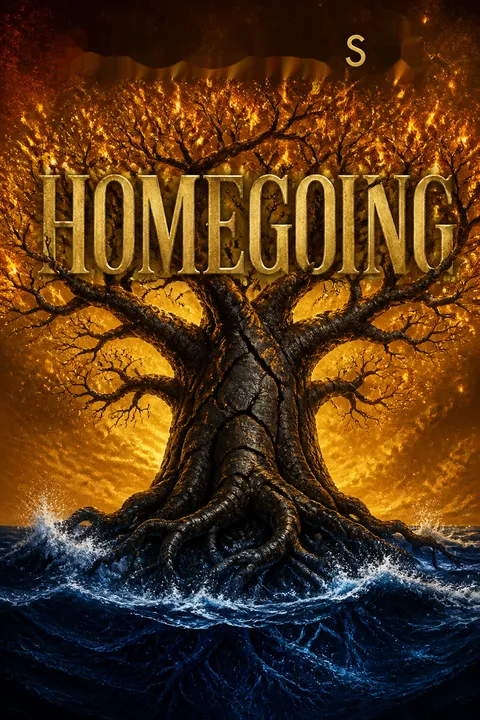
Homegoing follows two branches of one family across generations, moving between the Gold Coast and the United States from the era of the slave trade into the modern period. Its structure makes history intimate: each chapter places a new descendant inside a specific system, from Castle commerce and enslavement to convict leasing, migration, racial exclusion, and addiction. The handoff between generations matters as much as the events themselves. Parents leave children with names, silences, fears, skills, and partial stories, often without knowing what those inheritances will become.
The novel refuses a clean division between African perpetrators and European beneficiaries. Asante and Fante leaders capture and sell people; British traders and officials profit from the trade and build institutions around it. That complexity does not flatten responsibility. Instead, it shows how profit and political survival recruit people into systems whose harms outlast the decisions that began them. The American chapters extend that argument: legal freedom is repeatedly compromised by kidnapping, prison labor, racial violence, and economic exclusion.
Women often bear the cost of decisions made in the name of family security. Marriage, fertility, and motherhood can offer protection, but they can also become forms of bargaining over women's bodies. The men, too, inherit roles that narrow their choices, whether Quey's service to competing powers or Sonny's attempt to resist a world that seems designed to defeat him.
The novel's deepest counterforce is not simple optimism but recovered connection. A pendant, a song, a lesson, or a family visit cannot reverse captivity or restore the dead. They can, however, challenge the idea that violence has made the past unknowable. Marcus and Marjorie's meeting does not repair history; it gives descendants a way to stand inside it together, attentive to what earlier generations were forced to carry.
Review Summary
Homegoing is widely praised as a powerful debut novel spanning generations. Readers appreciate Gyasi's ambitious scope covering 300 years of African and African-American history through interconnected stories. The writing is lauded as beautiful and impactful, though some felt character development was limited by the structure. Many found it emotionally affecting, educational about slavery's legacy, and relevant to current racial issues. Despite its difficult subject matter, the novel is considered a must-read by most reviewers for its historical and cultural significance.
People Also Read








Characters
Effia
The castle's Fante brideEffia is a striking young Fante woman whose beauty draws gifts, proposals, and political attention before she can choose what those attentions mean. Her childhood under Baaba teaches her to measure affection against cruelty, while her curiosity and directness make her notice the human cost hidden beneath the Castle's polished rooms. Effia is not defined only by victimhood: she asks questions, observes the society around her, and forms attachments even when they complicate her loyalties. Her story begins the family line that lives near the institutions it helps sustain.
Esi
The captured Asante daughterEsi grows up adored by Big Man, an Asante warrior, and initially accepts the hierarchy that makes captives part of her household's wealth. Her compassion for Abronoma unsettles that upbringing and prompts her to act against her family's interests. Esi is observant, proud, and capable of tenderness, but her confidence is shaped by a world that teaches people to call others less than human. Her connection to her mother and an unknown sister gives her an understanding of family that survives even when she cannot protect it.
Quey
The divided interpreterQuey is the mixed-race son of Effia and the British governor James Collins. Educated in England and raised near the Castle, he moves between languages and communities without feeling wholly at home in either. His gentleness and intellectual ability contrast with the masculine power expected of him, while his role in the slave trade forces him to confront the distance between administrative work and human suffering. His friendship with Cudjo reveals a private self that his family and employers cannot easily accommodate.
Ness
The scarred motherNess is Esi's daughter, raised in enslavement in the American South. She is wary, physically resilient, and slow to trust, having learned that affection can be separated from safety without warning. Her mother's stories give her fragments of a homeland she cannot remember, while the scars on her back make violence visible to everyone who sees her. Ness's guarded manner is not an absence of feeling; it is a defense built around profound attachment and repeated loss.
James
The reluctant royalJames is the son of Quey and Nana Yaa, carrying Fante and Asante royal inheritances as well as the privileges created by his family's trade. He is thoughtful, dissatisfied with the life selected for him, and unusually alert to the difference between duty and desire. His encounter with Akosua gives him a moral language that his household's rivalries lack. James's central struggle is not simply choosing love over status, but imagining whether he can refuse a role built by generations before him.
Kojo
The guarded fatherKojo, often called Jo, is Ness and Sam's son, raised by Aku after their escape north. He is practical, affectionate, and proud of the household he builds with Anna, yet his childhood leaves him acutely alert to uniforms and sudden threats. Ship caulking gives him a skilled trade and a sense of usefulness, though the ships also recall the history that brought his family to America. His wish to protect his children grows from what he knows of separation, not from confidence that the world is safe.
Abena
The unclaimed daughterAbena is James and Akosua's daughter, raised in a small village where her father's failed farm gives her a reputation for bad luck. She is curious about the wider Asante world and impatient with the narrow future offered to an unmarried woman. Her attachment to Ohene Nyarko combines deep familiarity with a longing to be publicly chosen. Abena is strong-willed but not untouched by the judgments around her; she wants autonomy and belonging at once, and must decide what to do when those desires pull in opposite directions.
H
The convict minerH is a large, powerful man whose physical strength makes him valuable to employers and dangerous to authorities. Born into a world that denies Black people reliable freedom, he carries a blunt confidence that can protect him but also isolate him. He is capable of generosity, especially toward fellow miners, though years of punishment have taught him to distrust dependence. H's story examines the difference between being released from bondage and gaining control over one's labor, movement, and future.
Akua
The haunted motherAkua is Abena's daughter, raised by a missionary after losing her mother. She is reflective and inward, drawn to both Christian teaching and Akan spiritual practice without finding either system simple or complete. Her sensitivity to sound and dreams makes other people dismiss her as strange, while her marriage to Asamoah gives her a family and a place in Edweso. Akua's identity is shaped by the competing claims of faith, community, memory, and motherhood.
Willie
The silenced singerWillie, H and Ethe's daughter, is a gifted singer whose voice brings a mining community together. She is perceptive and forthright, but migration and racial pressure force her to navigate a world that values her labor while restricting her ambitions. As a mother, she is fiercely committed to giving her children a life beyond the mines, even when their needs consume her own plans. Music represents both the talent she wants recognized and the self she must reclaim from grief.
Yaw
The scarred historianYaw is Akua and Asamoah's son, a history teacher whose facial scar precedes him wherever he goes. He is intelligent, politically engaged, and fiercely protective of his privacy, using scholarship to question official accounts while avoiding his own family history. Years of isolation sharpen his anger but also leave him hungry for connection. Teaching allows him to turn uncertainty into a method: ask whose account is missing, and who had the power to make one version endure.
Sonny
The restless activistSonny, also called Carson, is Willie and Robert's son. He grows up absorbing his mother's music and the racial injustices that shape Harlem, then tries to answer those injustices through civil-rights organizing. His intelligence and anger coexist with a persistent sense that action is futile, making him vulnerable to escape through heroin. Sonny wants connection but often behaves in ways that push family away, especially when shame makes him feel that withdrawal is safer than asking for help.
Marjorie
The between-worlds readerMarjorie is Yaw and Esther's daughter, raised in Alabama and closely bonded to her grandmother in Ghana. Books and writing help her examine the different expectations placed on her in both places, though neither country offers uncomplicated belonging. She is observant, private, and more emotionally direct on the page than in conversation. Her relationship with her grandmother gives her a living connection to family memory, while her growing independence allows her to question what identity can mean across borders.
Marcus
The searching scholarMarcus is Sonny's son and a graduate student researching the history of racialized labor and imprisonment. He is thoughtful and analytical, but the scale of what he studies can make him feel that no account is large enough. His fear of the ocean gives physical shape to inherited trauma, while his friendship with Marjorie makes family history something shared rather than merely researched. Marcus wants to understand how the past reaches into the present without reducing himself or his relatives to evidence.
Maame
The divided motherMaame is the mother at the root of both family branches, a woman whose early life is marked by enslavement and the loss of a child. Her choices are made under threat, and the consequences continue long after she has tried to begin again. She is a mother to Esi and the birth mother of Effia, though the sisters grow up apart. The black stone she leaves behind becomes a material trace of the family connection she cannot preserve in person.
Baaba
The jealous caretakerBaaba raises Effia with a mixture of authority, resentment, and violence. She is bound to the family household but uses the power she has over a child to control the future of the young woman Effia will become. Baaba's treatment of Effia shapes the girl's ideas about love and silence, while her role in the marriage arrangement reflects the way family survival can become entangled with money and political advantage.
Fiifi
The village's hidden powerFiifi is Effia's brother and the effective authority behind Chief Abeeku's public rule. Cautious, strategic, and deeply ambitious, he understands that European companies compete with one another and uses that competition to strengthen his village. His history with Effia is complicated by family prejudice and separation. Fiifi can be both a builder of political power and a participant in the trade that makes that power profitable.
Cudjo
Quey's first true friendCudjo is the son of a Fante chief and Quey's childhood friend. Confident, athletic, and at ease in his community, he gives Quey an early experience of belonging that the Castle and England cannot provide. Cudjo's directness contrasts with Quey's caution, while their closeness carries an intimacy neither boy has a safe language for. As an adult, Cudjo remains tied to leadership and the political life Quey has been sent to serve.
Aku
The guide to freedomAku is an experienced escape guide who knows how to move enslaved people north through forests and safe houses. Her knowledge and courage help families risk a journey that offers no guarantee of survival. She becomes a maternal presence to Jo, preserving his connection to the Gold Coast through stories, language, and a fierce refusal to surrender her own sense of identity.
Sam
Ness's beloved husbandSam is an African man enslaved on the plantation called Hell, where his refusal to abandon his language makes him a target for punishment. He is physically strong, emotionally restrained, and careful with Ness after witnessing the violence done to her. Their relationship grows through small acts of care in a place built to prevent trust. Sam's devotion to Ness and their child stands against the owner's efforts to make every bond serve the plantation.
Akosua
The self-chosen nationAkosua is an Asante woman who has lost brothers to war and refuses to treat revenge as a sufficient answer. Her moral independence unsettles James because she acknowledges her people's participation in violence without surrendering her right to criticize it. She is practical and self-possessed, and her insistence that identity can be chosen rather than inherited gives James a glimpse of a life beyond family obligation.
Ethe
H's first great loveEthe is H's former partner, a woman whose sense of self is closely tied to the name her mother gave her. She has endured enslavement, separation, and betrayal, and will not let H's remorse erase what he did. Her guardedness is not coldness; it is a demand that love recognize the person who was hurt rather than rush toward forgiveness.
Robert Clifton
Willie's divided husbandRobert is a light-skinned miner's son who loves Willie but is increasingly drawn to the opportunities available if others read him as white. He is cautious, anxious about his place in the world, and uncomfortable with the expectations attached to masculinity and work. His choices reveal how racial privilege can tempt a person to abandon the relationships that expose his identity, even when that abandonment causes lasting harm.
Esther
Yaw's steady companionEsther is an Ahanta housekeeper who meets Yaw while working in Takoradi. She is lively, curious, and unafraid to ask questions that interrupt his self-imposed solitude. Her ease with language and ordinary physical life counters his tendency to retreat into books and resentment. Esther's persistence offers companionship without requiring Yaw to become a different person before he deserves it.
Amani
Sonny's troubled singerAmani is a young singer whose deep, unhurried voice captivates Sonny at a Harlem jazz club. She chooses an African name for herself while remaining skeptical of the idea that Black Americans can simply return to a homeland they have never known. Her musical talent and drug use exist side by side, making her both an object of Sonny's desire and a reminder that talent cannot shield anyone from addiction.
Plot Devices
The Black Stone
A portable family memoryThe black stone pendant links the family histories that geography and enslavement divide. It passes through the Effia branch as a gift, inheritance, and reminder of ancestors whose names were obscured. In the final generation, Marjorie gives it to Marcus, joining descendants of the two sisters. The stone cannot restore people or undo violence, but it makes continuity tangible when written records and family contact have failed.
The Firewoman
Trauma crossing generationsAkua's recurring vision of a woman made of fire carrying two children gives shape to fears she cannot explain. It connects personal trauma to family memory, appearing amid colonial violence, war, and the loss of children. The dreams are not simply prophecy or supernatural explanation; they are the form Akua's mind gives to histories she has inherited without understanding. Their imagery later helps Yaw hear his mother's account as family history rather than rumor.
The Castle and Its Door
A threshold between historiesCape Coast Castle holds multiple realities in one structure: European domestic rooms, a chapel, trade offices, and dungeons where captives wait to be shipped. The Door of No Return turns that architecture into a forced passage from Africa to the Atlantic world. Across generations, descendants encounter the Castle from different positions, first as residents or traders and finally as visitors. Marcus's passage through the door and onto the beach changes a historical site into a personal confrontation.
Names and Renaming
Identity under other people's powerThe novel repeatedly shows names imposed, withheld, altered, or chosen. Enslaved people are renamed by owners, while nicknames such as Big Man, Unlucky, Crazy Woman, and Two-Shovel reduce a person to a story others tell about them. Characters also choose names that express belonging or refusal. Naming becomes a practical instrument of power, but it cannot fully control memory: family members continue to carry names, languages, and meanings that authorities tried to erase.
Stories Across Generations
A counterarchive of memoryFamily tales, classroom lessons, lullabies, and remembered fragments carry knowledge where official histories are incomplete. The stories do not always agree, and some arrive distorted by shame or silence. Yaw teaches that the powerful shape written history, while the family itself shows how oral accounts preserve the lives left out of ledgers. Storytelling is therefore neither perfect evidence nor mere legend; it is a method for recovering relationships obscured by distance and violence.
FAQ
Synopsis & Basic Details
What is Homegoing about?
- Generational Saga of Two Families: Homegoing traces the descendants of two half-sisters, Effia and Esi, through eight generations, exploring their diverging paths in Ghana and America.
- Impact of Slavery and Colonialism: The novel examines the profound and lasting effects of the slave trade and colonialism on individuals and families, highlighting the complex legacies of these historical forces.
- Themes of Identity and Resilience: Homegoing delves into themes of identity, belonging, and the enduring human capacity for resilience, as characters navigate their personal histories and cultural heritage.
Why should I read Homegoing?
- Sweeping Historical Scope: The novel offers a unique perspective on history, spanning centuries and continents, providing a comprehensive view of the African diaspora.
- Rich Character Development: Gyasi creates complex and compelling characters, each with their own unique struggles and triumphs, allowing readers to connect with their individual journeys.
- Exploration of Universal Themes: Homegoing tackles universal themes of family, identity, and the search for belonging, making it a deeply moving and thought-provoking read.
What is the background of Homegoing?
- Historical Context of the Slave Trade: The novel is set against the backdrop of the transatlantic slave trade, exploring its devastating impact on both Africa and America.
- Colonialism in Ghana: The story also examines the effects of British colonialism in Ghana, highlighting the political and social tensions of the time.
- African American Experience: The narrative extends to the African American experience in the United States, depicting the struggles and triumphs of descendants of enslaved people.
What are the most memorable quotes in Homegoing?
- "The fire that burned, then fled, would haunt him, his children, and his children's children for as long as the line continued.": This quote from the beginning of Effia's story foreshadows the generational legacy that will follow.
- "Strength is knowing that everyone belongs to themselves.": Maame's words to Esi reveal a deep understanding of autonomy and the injustice of slavery.
- "Evil is like a shadow. It follows you.": Effia's warning to Quey highlights the inescapable nature of the past and its influence on the present.
What writing style, narrative choices, and literary techniques does Yaa Gyasi use?
- Interwoven Short Stories: Gyasi employs a unique structure, presenting the story through a series of interconnected short stories, each focusing on a different descendant of Effia and Esi.
- Shifting Perspectives: The narrative shifts between different points of view, allowing readers to experience the story from multiple perspectives and gain a deeper understanding of the characters' motivations.
- Symbolism and Foreshadowing: Gyasi uses recurring symbols, such as fire and water, and subtle foreshadowing to create a rich and layered narrative, enhancing the novel's thematic depth.
Hidden Details & Subtle Connections
What are some minor details that add significant meaning?
- The Black Stone Pendant: The black stone pendant, passed down through Effia's lineage, symbolizes a connection to their unknown ancestry and the enduring power of family history.
- The Palm Trees: Palm trees, recurring throughout the novel, represent both the beauty and the harshness of the African landscape, as well as the characters' connection to their homeland.
- The Color Red: The color red, often associated with mourning and anger, appears in various contexts, highlighting the characters' emotional states and the violence of their history.
What are some subtle foreshadowing and callbacks?
- Effia's Birth Fire: The fire at Effia's birth foreshadows the destruction and upheaval that will follow her and her descendants, a recurring motif throughout the novel.
- The Spider Web: Tansi's story of Anansi the spider and his web foreshadows the interconnectedness of the characters' lives and the intricate patterns of history.
- The Palm Fronds: Baaba's use of palm fronds to hide Effia's womanhood foreshadows the secrets and lies that will plague her family for generations.
What are some unexpected character connections?
- Fiifi and Quey: The connection between Fiifi and Quey, despite their different backgrounds, highlights the complex relationships within families and the enduring impact of shared ancestry.
- Abronoma and Esi: The shared experience of slavery and the revelation of their sisterhood creates an unexpected bond between Abronoma and Esi, emphasizing the interconnectedness of their lives.
- Nana Yaa and James: The marriage between Nana Yaa and James, though politically motivated, reveals the complex power dynamics and cultural clashes of the time.
Who are the most significant supporting characters?
- Baaba: Effia's mother, Baaba, embodies the resentment and bitterness that can result from trauma, her actions shaping Effia's life and the lives of her descendants.
- Fiifi: Effia's brother, Fiifi, represents the complex relationship between family and power, his actions influencing the course of the slave trade and the lives of his descendants.
- Maame: Esi's mother, Maame, embodies the lasting trauma of slavery and the struggle to maintain identity and dignity in the face of oppression.
Psychological, Emotional, & Relational Analysis
What are some unspoken motivations of the characters?
- Baaba's Resentment: Baaba's unspoken resentment towards Effia stems from her inability to bear children and her fear of losing her position in the family, driving her to mistreat Effia.
- Quey's Internal Conflict: Quey's unspoken desire for acceptance from both his British and African sides leads to his internal conflict and his inability to fully commit to either culture.
- James's Guilt: James's unspoken guilt over his role in the slave trade and his inability to fully love his wife, Anne, drives his desire for a connection with Effia.
What psychological complexities do the characters exhibit?
- Effia's Detachment: Effia's detachment from her family and her growing affection for James reveal her psychological struggle to reconcile her personal desires with her cultural obligations.
- Esi's Trauma: Esi's trauma from her capture and enslavement manifests in her stoicism and her inability to form close relationships, highlighting the lasting psychological effects of slavery.
- Quey's Identity Crisis: Quey's identity crisis, stemming from his mixed heritage, leads to his internal conflict and his inability to find a sense of belonging.
What are the major emotional turning points?
- Effia's Discovery of the Dungeons: Effia's discovery of the dungeons in the Cape Coast Castle marks a turning point in her understanding of her husband's role in the slave trade and her own complicity.
- Esi's Swallowing of the Stone: Esi's swallowing of the black stone symbolizes her loss of hope and her desire to escape the horrors of slavery, a moment of profound despair.
- Ness's Loss of Sam: Ness's loss of Sam during their escape attempt marks a major emotional turning point, highlighting the devastating consequences of slavery and the sacrifices made in the pursuit of freedom.
How do relationship dynamics evolve?
- Effia and James: The relationship between Effia and James evolves from a political arrangement to a complex mix of affection and resentment, highlighting the challenges of cross-cultural relationships.
- Quey and Cudjo: The friendship between Quey and Cudjo is marked by tension and unspoken desires, reflecting the complexities of navigating cultural differences and personal loyalties.
- Ness and Sam: The relationship between Ness and Sam evolves from a forced union to a deep bond of love and mutual support, highlighting the resilience of the human spirit in the face of oppression.
Interpretation & Debate
Which parts of the story remain ambiguous or open-ended?
- The Firewoman's Identity: The identity and purpose of the firewoman in Akua's dreams remain ambiguous, leaving readers to interpret her significance and her connection to the family's history.
- The Meaning of the Stone: The true meaning and power of the black stone pendant are never fully explained, leaving readers to ponder its symbolic significance and its role in the characters' lives.
- The Fate of the Characters: The fates of some characters, particularly those who disappear or are lost to history, remain open-ended, highlighting the uncertainties and complexities of life.
What are some debatable, controversial scenes or moments in Homegoing?
- Effia's Complicity: Effia's complicity in the slave trade, despite her personal struggles, raises questions about individual responsibility and the complexities of historical context.
- James's Treatment of Effia: James's treatment of Effia, despite his affection for her, highlights the power dynamics and inherent inequalities of their relationship.
- The Violence in the Mines: The brutal conditions and violence in the coal mines raise questions about the systemic injustices faced by African Americans and the dehumanizing effects of oppression.
Homegoing Ending Explained: How It Ends & What It Means
- Marcus's Journey to Ghana: Marcus's journey to Ghana represents a return to roots and a search for understanding his family's history, highlighting the importance of acknowledging the past in order to move forward.
- The Interconnectedness of the Characters: The ending emphasizes the interconnectedness of the characters' lives and the enduring impact of their ancestors' struggles, suggesting that the past continues to shape the present.
- The Cycle of Trauma and Resilience: The ending leaves readers to ponder the cyclical nature of trauma and resilience, highlighting the ongoing struggle for freedom and the possibility of healing through acknowledgment and acceptance of the past.
Download PDF
Download EPUB
.epub digital book format is ideal for reading ebooks on phones, tablets, and e-readers.








