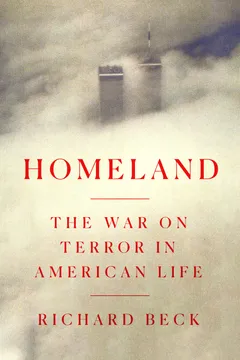


Key Takeaways
Treat the war on terror as a domestic order, not a bounded campaign.
A war without borders. The book opens with Beck at fourteen, singing in a New York cathedral when news arrives that the United States has begun bombing Afghanistan. A peace hymn continues while the country enters a conflict whose reach and meaning are still unclear. That scene captures the book’s central claim: the war was not simply a military campaign overseas. It reshaped American life, from public spaces and travel to citizenship and politics.
An elastic authorization. Congress’s 2001 Authorization for Use of Military Force gave the president broad authority to target people and groups connected to the attacks, without naming an enemy or setting an end date. By 2023, U.S. forces had fought in twelve countries, while the emergency declaration remained active. The war could be everywhere abroad and easy to ignore at home.
What's striking is how legal ambiguity and cultural invisibility reinforce each other. A conflict without a clear map, enemy, or ending is difficult for citizens to monitor, and difficult for elected officials to close. Political scientists often distinguish formal authorization from meaningful accountability: a government can follow a vote's procedure while escaping sustained public scrutiny. Beck's opening scene makes that abstraction human. The bombing begins during a ritual of peace, not in a dramatic battlefield tableau. Still, the broad category of a single war risks grouping distinct conflicts under one label. Its value here is less as a precise military description than as a way to track power's effects at home.
Watch frontier myths turn helplessness into permission for violence.
A story ready-made. Beck argues that the shock of September 11 revived older American myths about vulnerability, rescue, and righteous force. In seventeenth-century captivity narratives, white settlers imagined themselves as innocent victims seized by Native Americans. Later stories replaced the helpless captive with the self-reliant hunter, embodied by figures such as Daniel Boone: skilled, solitary, and willing to break rules to defend civilization.
From shame to revenge. Historian Susan Faludi suggests that national myths can conceal shame about being attacked by turning fear into a demand for dominance. Beck connects that pattern to the response after September 11, when the country reached quickly for an enemy to punish. A revealing detail: the code name for the 2011 operation that killed Osama bin Laden was Geronimo, the name of an Apache leader who fought U.S. expansion.
This argument treats popular stories as political equipment. Cultural memory does not dictate policy, but it supplies familiar roles: innocent victim, savage enemy, exceptional hunter. Those roles can make force feel emotionally obvious before its practical purpose is debated. The connection to shame is especially useful because anger often appears more honorable than vulnerability. Yet a cultural genealogy cannot, by itself, prove why a particular official chose a particular policy. Its strength is interpretive: it shows how violence can feel like restoration, even when it fails to repair the original wound.
Question the invincible-soldier fantasy that makes remote war feel costless.
Technology promises mastery. Early war-on-terror storytelling celebrated elite commandos, precision weapons, and equipment that seemed to make American fighters nearly invulnerable. Batman and Iron Man gave that fantasy a glamorous form: wealthy men use superior technology to protect society while standing above ordinary rules. In reality, soldiers remained vulnerable, and improved medical care often meant survivors returned with severe, lasting injuries.
Reality breaks the image. Pat Tillman, an NFL player who enlisted after September 11, was killed by fellow American soldiers. The Army initially described his death as enemy action, concealing the truth. Meanwhile, President Obama reduced troop exposure by expanding drone strikes, making the war easier for people at home to ignore. Researchers reported that contractors outnumbered U.S. troops during much of the Iraq and Afghanistan occupations, yet the government did not consistently count their deaths.
The gap between the technologically protected hero and the injured body is more than a media problem. It shapes what a public can emotionally register as a cost. Remote warfare lowers danger to U.S. personnel while also lowering the visibility of violence to voters. This resembles moral distancing in other institutions: when consequences are hidden behind intermediaries, responsibility becomes easier to diffuse. The analogy should not obscure differences between a fictional superhero and an actual soldier. It clarifies how spectacle can turn a messy, human conflict into a reassuring story of competent force.
Visible security can make ordinary places feel less safe.
Protection broadcasts danger. At the 2002 Super Bowl, the stadium celebration of national unity sat inside a security operation involving dozens of agencies, armed patrols, barriers, and a no-fly zone. The spectacle told spectators both that they were being protected and that an attack might happen anywhere. Beck calls attention to the difference between safety, a feeling of not being threatened, and security, a feeling of being threatened but guarded.
The theater often failed. Airport rules accumulated after each attempted plot, from shoe screening to limits on liquids and body scans. The TSA's behavior-detection program, known as SPOT, had no documented record of identifying a terrorist, while undercover tests in 2015 got prohibited items through checkpoints in 67 of 70 attempts. Security measures also spread into urban space: cameras, barriers, and guarded plazas made public places harder to use.
Security is partly material and partly communicative. A checkpoint can stop a weapon, yet its visible presence also tells everyone to imagine the threat. This is a classic risk-perception problem: repeated warnings can increase anxiety even when danger is statistically low. Beck's examples also suggest that security has distributional effects. An inconvenience for an affluent traveler may become surveillance, exclusion, or arrest for someone already treated as suspicious. The argument does not establish that every screening measure is useless. It asks a sharper question: what protection is gained, who bears the burden, and what kind of public life is lost?
Do not let counterterrorism turn Muslim identity into grounds for suspicion.
Suspicion became policy. After September 11, authorities detained at least 1,200 Muslim, Arab, and South Asian men. The dragnet produced no terrorism convictions, but it did separate families and expose people to deportation. Sixteen-year-old Adama Bah, a New Yorker from Guinea, was arrested with her father, interrogated without understanding her rights, and held in juvenile detention for six weeks. The government later placed her on a no-fly list despite never charging her with terrorism.
Plots could be manufactured. The term preemptive prosecution describes cases in which officials targeted people for perceived beliefs, then used informants or minor violations to create prosecutable conduct. A review of 403 federal terrorism-related convictions found that only 5.8 percent involved people who independently began terrorism-related crimes. The book argues that surveillance and entrapment did not merely search for threats. They taught Muslim Americans that civic participation could carry personal risk.
This is a case study in how preventive institutions can generate the danger they claim to detect. When suspicion is based on identity or association, ordinary community life becomes evidence, and people learn to censor themselves before the state intervenes. The chilling effect is hard to count because its most common outcome is silence, not arrest. That makes stories such as Bah's important evidence, not merely illustrations. Still, the figures depend on how researchers classify terrorism cases, and should not be mistaken for a complete census of threats. They do expose the costs of treating suspicion as proof.
Look beyond oil: the war managed a world running out of growth.
A political economy of war. Beck does not deny that oil mattered in Iraq. He argues that oil alone cannot explain the decades-long campaign across countries with different resources and strategic roles. His broader account traces capitalism's shift from rapid material expansion toward finance as manufacturing competition and profits slowed. He calls the transition from trade and production to financial speculation a sign of autumn, a marker that one leading economic power's dominance may be waning.
Iraq as a market project. After the invasion, Paul Bremer's Coalition Provisional Authority dissolved the Iraqi army and removed many Ba'ath Party members from public employment, putting more than half a million people out of work. Its economic orders opened industries to foreign investment and lowered corporate taxes, even as electricity and basic services remained unreliable. Beck reads this as an attempt to fit Iraq into a U.S.-led global system, not simply to seize its oil.
The political-economy lens usefully asks who benefits from a war even when its stated aims fail. It links foreign policy to inequality, insecure work, and the management of populations excluded from stable employment. The idea of a surplus population names people the economy cannot profitably employ, not people without value. But the book's account is a large structural interpretation, not proof that economic stagnation directly caused each decision or attack. Terrorism has varied motives, and oil, ideology, security, and bureaucratic interests can coexist. The framework is strongest when treated as a missing layer, not a master key.
A war can be approved on paper while democratic debate disappears.
The argument was narrowed. Before the Iraq invasion, major U.S. television news programs featured 267 current or former officials discussing Iraq over two weeks. Only one expressed skepticism, and even that senator spoke as if war were already likely. The New York Times repeatedly asked President Bush to make a better case, but its coverage often treated the invasion as a question of process rather than whether the evidence justified war.
Congress gave away power. The 2001 Authorization for Use of Military Force let the president decide which people or groups were linked to September 11. Congress then passed a second authorization for Iraq, leaving President Bush to decide when diplomacy had failed and military force was warranted. Representative Barbara Lee alone voted against the first authorization. Beck's point is that official debate and public consent can exist in form while meaningful choices have already been removed.
The chapter highlights a weakness in the usual picture of democracy: elections and hearings do not guarantee that citizens' preferences shape decisions. Media routines can privilege official voices, while legislators avoid votes that might carry political risk. This is a familiar problem in agenda-setting research: control over which questions receive serious attention can matter as much as the answers. Beck's critique is persuasive about the narrowness of debate, but it should not imply that all journalists or voters were passive. Protests and dissent were substantial. Their failure to change policy is precisely the institutional problem the chapter exposes.
Treat accountability as a condition of citizenship, not a postwar extra.
Impunity becomes a system. Beck uses impunity culture for the repeated failure to impose consequences on powerful officials and institutions. No senior Bush official was prosecuted for torture or the Iraq invasion. Obama expanded drone warfare and surveillance without prosecuting those responsible for earlier abuses. President Trump pardoned military personnel convicted or charged in civilian killings. The pattern reached beyond war: after the financial crisis, only one executive saw prison time.
Protest became civic practice. Occupy Wall Street and Black Lives Matter opposed different injustices, but both confronted a system that appeared insulated from public demands. In Ferguson, police used fines as a source of city revenue, while residents faced stops and arrests without reasonable grounds. In 2020, protests spread across all fifty states. Their reforms remained limited, but occupations and organizing gave participants practice in making public life together. Beck's ending resists easy optimism: protest can build civic capacity even when policy does not yield.
Accountability is not only punishment after wrongdoing. It is a signal that law applies upward as well as downward, and that public authority remains answerable to the people it governs. When that signal disappears, protest becomes both a demand for remedies and a way to rehearse citizenship outside official channels. This connects the book's institutional history to social-movement theory, where networks, shared skills, and collective identity can outlast a single campaign. The caution is important: civic education is not a substitute for material change. Movements can build capacity, but a government that refuses negotiation can still leave their core grievances intact.
Analysis
The book's central achievement is to make the war on terror legible as a lived domestic history rather than a sequence of overseas campaigns. Its structure moves from the shock and spectacle of September 11 through militarized culture, anti-Muslim suspicion, economic stagnation, democratic failure, surveillance, and impunity. The recurring question is not merely what the government did, but what those actions taught people about who belongs, who is protected, and whether public opinion matters.
Beck's strongest method is juxtaposition. A cathedral choir hears that bombing has begun; superhero technology collides with injured soldiers; a rebuilt public space becomes a guarded zone; a teenager's ordinary life is recast as a security problem. Such scenes turn abstract institutions into experiences readers can picture. The book also resists the easy claim that Iraq was simply a grab for oil, connecting war to the longer history of capitalist growth, financialization, and global inequality.
The argument is ambitious enough to invite scrutiny. The links among economic stagnation, terrorism, imperial power, and domestic political crisis are interpretive, and structural explanations cannot account for every actor's motives. The frontier-myth genealogy illuminates recurring stories of rescue and revenge, but cultural inheritance is not a direct causal mechanism. Likewise, the claim that September 11 made Trump's election possible is a provocative framing, not a testable counterfactual. These limits do not erase the book's contribution. They make its synthesis most useful as a map of reinforcing pressures, rather than a single-cause theory. Its enduring question is whether a state can preserve legitimacy when it treats citizens as risks, foreign populations as problems to manage, and accountability as optional.
Review Summary
Reviews for Homeland are mixed, averaging 3.99/5. Praise centers on Beck's ambitious scope, compelling thesis linking 9/11's aftermath to modern American political dysfunction, and engaging prose across nearly 600 pages. Admirers highlight his analysis of militarism, impunity culture, and surveillance. Critics argue the book is bloated, ideologically biased, and overly reliant on progressive assumptions, with some finding the economic analysis strained and causal links unconvincing. Several reviewers note the first half outperforms the second, and many feel Beck preaches to an already-converted audience rather than broadening understanding.
Glossary
impunity culture
Power without consequencesA recurring refusal by government and other powerful institutions to impose meaningful consequences for serious wrongdoing. In the book, it includes the lack of prosecutions for torture, illegal surveillance, civilian deaths, and misleading claims used to justify war. The term describes more than individual leniency: it names a political pattern that weakens citizenship by showing that the powerful are not reliably answerable to the public.
surplus population
People excluded from formal workPeople whose labor the economy cannot absorb into stable, formal employment. The term does not imply that people are unnecessary or have no social value. It describes their position relative to an economy with weak growth, manufacturing overcapacity, and too few secure jobs. Many survive through informal work, temporary jobs, or migration, while governments often manage their resulting poverty and movement as security problems.
sign of autumn
A hegemon's financial turnA transition in which a leading capitalist power shifts from investing primarily in trade and productive expansion toward earning more through finance. Drawing on Giovanni Arrighi and Fernand Braudel, Beck treats this turn as a sign that the power's economic dominance has matured and may be declining. Financial returns can continue even as investment in the production of goods and services weakens.
preemptive prosecution
Prosecution built around suspicionA law-enforcement strategy identified by civil rights lawyers Stephen Downs and Kathy Manley. Authorities target people because of perceived ideology, religious affiliation, or association, then use informants, conspiracy charges, material-support laws, or minor offenses to secure convictions. In the cases discussed, undercover agents sometimes proposed and developed plots that defendants had not independently initiated.
security zones
Public space restricted for securityUrban areas where governments or private organizations prioritize security controls over ordinary public use. Barriers, cameras, guards, and controlled access can limit gathering, movement, and informal civic life. The book argues that such zones shrink the public realm and communicate that access to shared space is conditional, even when the measures do not eliminate the risks they are meant to address.
repetition compulsion
Reenacting unresolved traumaA psychological concept associated with Sigmund Freud describing the repeated, often unconscious reenactment of distressing experiences. Beck applies the idea to national life: a society may repeat patterns of fear, violence, and helplessness in an attempt to master a trauma it has not resolved. The reenactment can become self-sustaining, replacing the hoped-for sense of control with resignation.
Download PDF
Download EPUB
.epub digital book format is ideal for reading ebooks on phones, tablets, and e-readers.








