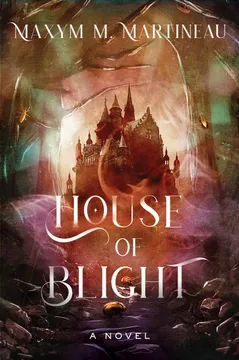


Plot Summary
Prologue
At the beginning of the world, a woman meets Death at a crossroads and refuses to choose among roads that all end with him. She returns each day for years, studying his habits, until she comes back carrying a dagger like his own. Wounding Death, she bargains for immortality for herself and her kin, secured by a moonlit stone.
Death grants the bargain, but hides the cost in its fine print: the woman and her descendants may live beyond their destined end, provided they remain within the stone’s light. He lets them feel safe long enough to forget how their bargain began.
The legend establishes that immortality in this world is not a natural state but a negotiated escape, won through observation, patience, and violence. The woman does not defeat Death by finding a path without him. She turns the terms of their encounter against him. That distinction foreshadows the novel’s central question: whether survival means obeying the bargain that protects you or discovering who benefits from it. The moonstone also makes immortality material and conditional, a resource that can be held, hidden, and perhaps lost. Its promise is therefore less a triumph over death than a fragile arrangement with it.
The Healer Hides Her Gift
Edira Brillwyn1 earns her living as a Willowfell apothecary, using medicines rather than the secret family magic that can mend living threads at the cost of her own lifespan. She has already paid that price to save her brother5 Nohr5 from a crushed leg, and years earlier she could not save her parents from blight.
When a miner named Alec arrives covered in the spreading disease, Edira1 cannot cure him; she uses her power only to quiet his agony as he dies. The effort leaves her vomiting and barely able to stand. Her brothers, Noam4 and Nohr,5 help care for her, but they had urged her to try. Their grief makes plain how little protection her secrecy can offer when blight reaches the people she loves.
Edira’s first choice is not between kindness and cruelty, but between one life and the years she needs to protect others later. Her attempt to ease Alec’s death shows that she cannot make that calculation cleanly, even when she understands its cost. The contrast between her ordinary remedies and threadmending gives her care a material logic: one can be sold, replenished, and safely practiced, while the other consumes the healer herself. Alec’s death also repeats the trauma of Edira’s parents, making each new case feel less like a fresh dilemma than a return to an unfinished failure.
Orin Finds Her Stall
At market, Edira1 recognizes Orin Fernglove,3 the Ever lord whose family rules Willowfell and whose arrival years earlier preceded her aunt6 Rowena’s6 disappearance. Orin3 says Rowena,6 a threadmender, worked with him on blight research and is now dead.
He wants to speak privately, but Edira1 refuses, unwilling to trust the man connected to her aunt’s6 removal. She leaves the market with her remedies, still unsure whether his interest is personal or a threat to her secret.
The next evening, as she prepares bathwater for her brothers, Noam4 and Nohr5 return from the mines with blight spreading from cuts they had not noticed. Their sudden illness turns Orin’s3 earlier approach from an ominous curiosity into the only possible route to keeping them alive.
Orin’s first appearance activates Edira’s history before it offers her any new evidence. She sees him through the remembered loss of Rowena, while he presents himself as someone who knew and valued her aunt. Neither account can yet be verified, so their meeting establishes an imbalance of knowledge: Orin knows what happened at Fernglove, while Edira has inherited only the warning to stay hidden. The brothers’ infection then converts distrust into urgency. Edira does not approach the powerful Ever because she has become persuaded by him. She approaches because the conditions of choice have narrowed around her.
A Bargain for Two Lives
As Noam4 and Nohr5 collapse, Edira1 throws herself into threadmending, but the blight resists her magic and drains her strength without slowing. Orin3 arrives and offers to halt its spread if she will work at Fernglove Estate and help find a cure.
Edira1 accepts only after securing his promise that her brothers will come with her. Orin3 seals the bargain with magic, then suspends the brothers in translucent, floating cocoons that keep them alive.
Edira1 faints from her failed attempt and wakes in a carriage with Orin’s3 cousins Amalyss10 and Tasia,11 who mock her, burn her clothes, and attack her when she strikes back. Rorik Fernglove2 pulls the cousins away and guides Edira1 toward the isolated estate, warning that she has been brought there to fail and die.
The bargain appears to restore Edira’s agency because she names the condition that matters most: her brothers must stay with her. Yet its structure remains coercive. She accepts while their lives are in immediate danger, and the magical contract turns that desperate decision into a lasting obligation. The cousins’ cruelty exposes a second danger beyond the blight: at Fernglove, even ordinary sarcasm can be converted into power over another person. Rorik’s blunt warning offers no comfort, but it gives Edira a clearer account of her situation than the family’s polished hospitality does. In this house, candor may be more useful than kindness.
A Mark in the Manor
Orin3 shows Edira1 her brothers, alive inside their magical cocoons, then brands the Fernglove crest onto her wrist so neighboring Ever families know she belongs to his household. At dinner, she meets his beautiful, quarrelsome relatives and the nearly motionless Mavis,7 Orin’s3 grandmother,7 who has secretly suffered from blight for years.
Edira1 understands that curing the disease is the reason she was brought here, though Orin3 has not explained the scale of the task. The next day, Rorik2 begins training her to control her breathing and build the strength threadmending will demand.
He assigns Ywena, a small, mothlike creature, to monitor Edira’s1 breath and shock her whenever panic disrupts it. Edira1 is now physically marked as Fernglove and dependent on its household for her brothers’ survival.
The crest makes belonging visible before Edira has any reason to feel she belongs. It offers a measure of protection from rival Evers, but it also turns her into a legible possession in a political landscape. Mavis’s hidden illness complicates the family’s apparent invulnerability: the immortals who command humans cannot command their own bodies back to health. Rorik’s breath training answers that problem in practical terms, forcing Edira to treat survival as a physical skill rather than a virtue. Ywena’s shocks make fear measurable, giving Edira immediate feedback where her magic otherwise offers only delayed punishment.
A Sarcasm Turns Binding
Amalyss10 and Tasia11 exploit the literal force of Ever magic: Edira’s1 sarcastic agreement to join them becomes a binding vow, and they summon her to their room. They command her to display her threadmending and persuade Tasia11 to uncover a cut beneath her glamour.
Edira’s1 attempt to mend it causes far more pain than such a small injury should, showing her that Ever threads resist her power. Orin3 discovers the trick and reprimands the cousins, while Vora,9 an attendant, warns Edira1 to be careful whom she trusts.
In the library, Edira1 studies Rowena’s6 journal and those left by earlier threadmenders. Its final entry names Mavis,7 but a page is missing. Seville8 takes Edira1 to a tailor and teaches her about permanent Ever heartbonds, planting the possibility of shared power.
The cousins’ trap turns language into a vulnerability specific to this world: meaning and intention do not protect Edira if her words can be interpreted as consent. Her injury while treating Tasia also marks a limit that discipline alone cannot solve. The missing page in Rowena’s journal becomes a physical emblem of the knowledge withheld from Edira, while the final mention of Mavis ties that absence to the household’s central illness. Seville’s conversation offers a possible way to expand Edira’s capacity, but it arrives as both practical advice and social maneuver. Even useful knowledge at Fernglove is difficult to separate from someone’s agenda.
The Fete Ends Underground
At Fernglove’s silver fete, Edira1 sees the human elite imitate Ever glamour and reconnects with Lysa,16 who does not know what happened to Noam4 and Nohr.5 Rorik2 asks Edira1 to dance, and their charged closeness unsettles her; later, Orin3 dances with her too, offering warmth that makes her distrust of him harder to maintain.
During a gathering with the Waterstones and Starglens, Rorik2 argues with Orin,3 then leaves with his consort17 Jules.17 Briar Starglen14 brings Edira1 a spiked drink and leads her away through a ley line.
She wakes in an underground chamber where the Starglens have trapped her against a tree made from their dead. Zelyria19 and Dagas18 reveal that their family, like the Ferngloves, is dying of blight and demand that Edira1 cure them before time runs out.
The fete briefly makes Edira visible as a person rather than a healer under contract: she dances, shares attention, and encounters the social life she has been denied. That reprieve is immediately weaponized by the abduction. The scene makes charm and danger coexist rather than cancel each other out; attraction to Rorik and trust in Orin cannot protect her from the politics around them. The Starglens’ demand also expands the scale of the crisis. Edira had thought herself responsible for one family and her own brothers. Now she learns that the blight crosses household boundaries and that other immortals may view her as a scarce resource to seize.
Every Ever Is Dying
Pinned by the living tree, Edira1 learns that Briar’s14 parents died of blight and that the Starglens themselves are infected. Rorik2 and Orin3 reach the chamber; Orin3 frees Edira,1 while Rorik2 kills Dagas18 and apparently the other captors as their family’s attack collapses. Back at Fernglove, Orin3 admits that all the Evers are sick and that glamour hides the disease from Edira1 and the human attendants.
He limits her obligation to curing Mavis,7 though her brothers still depend on his magic. Jules17 later arrives furious over her family’s fate, but Orin3 sends her away. Edira1 begins studying how the illness affects Ever bodies and trains with Rorik,2 who insists that strength and controlled breathing may keep her alive through the work ahead.
The rescue is not a return to safety so much as a change in who controls the danger. The Starglens have treated Edira as a means to their survival; the Ferngloves have concealed the same desperation beneath a managed appearance. Orin’s admission gives Edira a more accurate map of the crisis, but it does not erase his earlier omission or her dependency on him. Rorik’s violence offers protection at a devastating cost, as the bodies of the Starglens become part of the rescue’s aftermath. The episode forces Edira to distinguish between being saved and being free: one can happen without the other.
Ywena Reveals the Cure
After weeks of testing medicines and repeatedly failing to heal the infected stag Zotakoss, Edira1 notices Ywena drinking from a blighted flower. The creature’s life threads briefly darken, then draw the sickness inward and clear. Edira1 realizes she may be able to absorb blight rather than repair each damaged thread.
Using Rorik’s2 breathing lessons, she pulls the disease from Zota’s strands into her own body until his glamour-free form regains healthy skin and strength. Edira1 collapses and sleeps for a week. When she wakes, Vora9 confirms the stag is cured. Edira1 and Orin3 celebrate, then become lovers. Confident that the method can work on a person, Edira1 tries it on Orin,3 but his Ever blight overwhelms her and leaves her near death.
The discovery comes from watching a small creature rather than from a grand revelation in the library. Ywena’s feeding shows Edira that blight can change its relationship with a living body, and Rorik’s training gives her the breath control needed to imitate that adaptation. The cure is therefore neither a simple spell nor a triumph of will: it requires observation, experimentation, and a body willing to bear what it removes. Edira’s intimacy with Orin follows success and makes her trust more emotionally consequential. When his blight nearly kills her, the same closeness that sustains hope also raises the stakes of believing his account of himself.
Rowena’s Warning Surfaces
After Edira’s1 failed attempt on Orin3 leaves her bedridden, she reconsiders the heartbond as a way to combine their magic. Before the ceremony, Mavis7 secretly gives her a letter from Rowena.6 It says everjewels sustain Ever immortality, that blight has weakened them, and that Orin3 sought Rowena’s6 power through a heartbond.
A second message names Zeverin Ignatus Embergrave as the secret lover whose name can break the Fernglove family vow. Edira1 questions Rorik,2 who explains that the vow forbids Ferngloves from seriously harming one another, leaving the estate for long, or opposing its head.
He also reveals that Orin’s3 former heartbond, Lorelai Starglen,22 died after moving to Fernglove, and that Orin3 had planned to bond with Issa.21 Edira1 decides she must still reach the ceremony to save her brothers.
Rowena’s letter revises the meaning of nearly every kindness Edira has received. It does not prove that Orin’s tenderness was false in every moment, but it reveals that his search for a healer has a history of extracting power from women with little time to spare. The secret name offers a way to break the family’s coercive structure, yet it is not a simple escape: using it could unleash Rorik without freeing Edira’s brothers. Her decision to continue toward the ceremony is therefore strategic rather than trusting. She must enter the dangerous arrangement with her eyes open because the people she loves remain inside it.
Fernglove’s Mask Falls
Before the ceremony, Mavis7 shows Edira1 an everjewel hidden inside her wrist, then collapses as Seville’s8 desperate attempt to shield her tears away the estate’s glamour. The manor and grounds reveal their full blight, and Mavis7 dies despite Edira1 easing her final pain.
Orin3 orders the heartbond ceremony to proceed and claims Edira’s1 brothers as leverage. Rorik2 warns her that bonding will make her subject to the family vow.
When the brothers’ cocoons are moved to safety by Vora,9 Orin3 exposes the rest: he had Rorik2 use a golden beetle to track Edira1 and carry blight to her brothers, knowing their infection would force her to Fernglove. Rorik2 does not deny it. Orin3 had engineered the crisis to secure Edira’s1 healing power, and the brothers’ lives remain bound to his magic.
The collapse of glamour turns private knowledge into public fact: the disease was never confined to Mavis, and beauty at Fernglove has functioned as concealment. Mavis’s death arrives just as Edira has a possible cure, making delay itself feel lethal. Orin’s revelation about the beetle destroys the distinction Edira had tried to maintain between the man who cared for her and the lord who needed her power. Rorik’s complicity deepens the injury, even though his silence does not explain his motives. By making Edira’s family the bait, Orin converts care into a mechanism of control.
The Bond Turns the Battle
Edira1 speaks Zeverin’s full name, breaking the vow that has restrained the Ferngloves, and Rorik2 attacks Orin.3 When Orin’s3 magic threatens Edira,1 Rorik2 offers her a heartbond. She accepts, not out of forgiveness, but because his power can save her brothers. The new bond strengthens her threads. Edira1 draws blight from Noam,4 Nohr,5 Rorik,2 and the surviving Ferngloves, then turns that disease against Orin.3
Rorik2 destroys one jewel embedded in Orin,3 but Orin3 reveals that he has hidden others. Edira1 locates and shatters them with her enhanced power, forcing the accumulated blight into Orin3 until he dies. Her brothers survive, the remaining family is cleansed, and Edira1 collapses from the immense cost of saving them.
The climax rejects the idea that a bond is automatically loving or liberating. Edira chooses Rorik’s heartbond as a means to protect her brothers, while still carrying the knowledge that he helped endanger them. Its power changes what she can do, but it does not settle the moral account between them. By redirecting the sickness into Orin, she makes the instrument of coercion bear the consequences of his own system. The act is both cure and judgment. Edira does not defeat death by becoming untouched by it; she survives by choosing where the cost will fall and refusing to let Orin choose for her.
The Bond Still Carries Blight
While Edira1 lies unconscious, Rorik2 and the Ferngloves build her a shelter and tend her wounds. Her brothers recover, leave the mines, and begin pursuing the trades they had put aside: Noam4 woodworking and Nohr5 working with horses.
Vora9 stays to care for Edira1 as she regains her strength, then helps the family return to Willowfell. Two months after Edira1 first left, Mrs. Marlow delivers a parcel ordered by Seville.8 Inside are the gold-and-black garments Seville8 commissioned and, separately, a package from Rorik2 containing the embroidered leather scrap Edira’s mother made.
The gift lets Edira1 see that Rorik2 preserved a piece of her past. When she reaches toward their heartbond, she spots black blight creeping along its golden thread. The cure has saved lives, but not removed the disease’s source.
The return home restores practical freedoms that Edira lost at Fernglove: her brothers choose work for themselves, and Vora’s care is no longer organized around an Ever household. Rorik’s returned keepsake complicates Edira’s anger without resolving it. He has protected something intimate, but he remains the person who helped infect her brothers. The final black thread prevents the homecoming from becoming a simple restoration. Edira can now see that clearing visible blight is not the same as eradicating its cause. Her survival has expanded her choices, but it has also made her responsible for recognizing what remains hidden.
Analysis
House of Blight treats care as a resource that can be freely given, bought, coerced, or exhausted. Edira’s1 healing makes that conflict bodily: every rescue costs her time, while the powerful people asking for her help can hide their illness and preserve their status. Her habit of giving herself away is not presented as simple virtue. She has learned to equate usefulness with safety, first as the family’s provider and later as a healer surrounded by immortals who need her. The story’s sharpest ethical question is therefore not whether Edira1 should help, but whether she can help without surrendering the right to decide whom she serves.
The contrast between glamour and thread-sight makes concealment a political act. Fernglove’s flawless rooms and faces depend on others not seeing what the family cannot cure. Edira’s1 magic reveals illness, but revelation alone does not free her: she remains bound by bargains and her brothers’ dependence on Orin.3 The novel repeatedly shows that knowledge has to be paired with leverage. Rowena’s6 notes, Rorik’s2 explanation of the family vow, and Edira’s1 observation of Ywena each give her a different kind of leverage, from historical truth to magical power.
Romance deepens rather than resolves the problem of trust. Orin’s3 tenderness does not erase his control over Edira’s1 choices, and Rorik’s2 eventual help cannot undo his role in the brothers’ infection. Edira’s1 bond with Rorik2 is made under mortal pressure, not after a clean reconciliation. That makes the ending emotionally uneasy by design. The family is saved, the brothers return home, and Edira1 gains time, but the black filament in the bond shows that personal victory has not cured the world’s underlying sickness. Survival is possible; safety remains unfinished.
Characters
Edira Brillwyn
Reluctant thread healerEdira is a practical apothecary in Willowfell who has learned to hide her moon-white hair and her threadmending gift from the Evers who rule the mines. She is devoted to her brothers, alert to power imbalances, and quick to answer condescension with wit. Her healing magic can repair life threads, but every use shortens her life and makes her suffer a portion of the illness she treats. Edira’s independence is genuine, yet it has been shaped by years of caregiving and the loss of people she could not save. She wants control over her own work and future, but her compassion repeatedly draws her toward risks she understands better than she can resist.
Rorik Fernglove
The perilous trainerRorik is a sharp-tongued Fernglove who trains Edira1 to strengthen her body and control her breathing. He is physically formidable, difficult to read, and far less impressed by status than the rest of his family. His teasing often works as a shield for emotions he rarely permits himself to show. Rorik has spent much of his life at odds with the household around him, and his affinity for insects and the natural world gives him a different relationship to the estate’s power. He pushes Edira1 hard because he believes survival must be practiced, not merely hoped for, though his methods can make it difficult to distinguish protection from provocation.
Orin Fernglove
The charming mine lordOrin heads the Fernglove estate and controls the mines around Willowfell. Handsome, articulate, and attentive, he presents himself as a generous host and a man committed to solving blight. He seeks knowledge from Edira1 and offers her access to the estate’s resources, while his power over contracts and household magic makes every offer carry unusual weight. Orin is deeply attached to his family and conscious of his responsibilities as its leader. His charm can soften Edira’s1 suspicion, but his position means their relationship is never simply private: her gifts, his obligations, and the lives depending on his decisions remain intertwined.
Noam Brillwyn
The gentle older brotherNoam is one of Edira’s1 younger brothers, generous in spirit and warmly regarded in Willowfell. He works in the mines because the family needs the income, though the labor does not define his private hopes. His instinct is to care for people and avoid escalating conflict, a gentleness that can leave Edira1 wanting to defend him. Noam and his brother5 Nohr5 share an easy, wordless understanding built through years of surviving together.
Nohr Brillwyn
The sturdy younger brotherNohr is Edira’s1 other younger brother, a miner whose strength has helped keep the family afloat. He is loyal and direct, often stepping in when Noam4 needs support. Edira1 once used her costly threadmending gift to save his badly injured leg, deepening the bond that drives her choices. Like his siblings, Nohr has put personal ambitions aside to ensure the others have food and shelter.
Rowena
Edira’s vanished auntRowena is Edira’s1 aunt and a fellow threadmender whose disappearance shaped Edira’s1 understanding of the Evers. A poet as well as a healer, she taught Edira1 practical precautions for hiding her gift. Her affection for the family is clear even in the fragments she leaves behind, while her work with blight suggests a complicated relationship with the people who took her away.
Mavis Fernglove
The ailing matriarchMavis is the Fernglove matriarch, an ancient Ever whose failing health is concealed beneath powerful glamour. The family treats her with a mixture of reverence, discomfort, and fear, as if acknowledging her weakness might make it more real. Her past authority and her present silence give her a presence that is both vulnerable and difficult to interpret. Edira’s1 work at Fernglove is closely tied to Mavis’s illness.
Seville Fernglove
The dazzling elder sisterSeville is Orin’s3 sister, a socially skilled Ever who treats beauty, wit, and desire as tools she can wield. She delights in fashion and spectacle, but her polished persona also makes her difficult to read. Seville is candid about family tensions and takes a particular interest in Edira’s1 place among the Evers. Her sharp humor can cut, yet she notices more than she lets on and is less predictable than her public elegance suggests.
Vora
The watchful attendantVora is an experienced attendant at Fernglove, entrusted with Edira’s1 daily care. Practical, blunt, and observant, she knows how the manor works and recognizes that its residents are not equally safe within it. Her warnings are careful rather than dramatic, reflecting the risks of speaking openly in a household ruled by magical contracts. Vora becomes a rare source of grounded assistance in a place where kindness often comes with conditions.
Amalyss Fernglove
The provocative young cousinAmalyss is a young Fernglove raised among immense privilege and family rivalries. She can be cruel and impulsive, especially when she and her sister11 are entertaining themselves, but she is also curious about Edira’s1 unusual magic. Her confidence is partly inherited from the power and status surrounding her, and partly a defense against the household’s unsettled loyalties.
Tasia Fernglove
The daring young cousinTasia is Amalyss’s10 sister and another young Fernglove, quick to test rules and drawn to experiences her family considers unsafe. Her fascination with Edira’s1 healing ability exposes a restless curiosity beneath her polished glamour. Tasia is capable of cruelty, but also of hesitation and uncertainty when her choices carry consequences beyond the game she intended.
Lydia Fernglove
The formidable auntLydia is a senior member of the Fernglove family and mother to Amalyss10 and Tasia11. She prizes authority, reputation, and control over her daughters’ treatment, and she regards outsiders with suspicion. Her relationship with Orin3 is strained by competing expectations about who should lead the household. Lydia’s severity makes her difficult to approach, though it is inseparable from her fierce investment in family standing.
Clesian
Lydia’s devoted heartbondClesian is Lydia’s12 heartbond and the father of Amalyss10 and Tasia11. Broad and physically imposing, he is quieter than his partner but quick to defend his family. His devotion is expressed through presence and action, and his bond with Lydia12 illustrates the depth of commitment possible among Evers.
Briar Starglen
The watchful young StarglenBriar is a young Starglen who attends Orin’s3 lessons with the other Ever children. Quiet and intensely observant, he has a gift for summoning stars and often seems more comfortable watching than joining a conversation. His reserved manner makes it difficult for Edira1 to know what he is thinking or what loyalties shape his actions.
Ossanna Waterstone
The calculating Waterstone matriarchOssanna heads the Waterstone family and is mother to Issa21 and Flix20. Confident, politically alert, and fond of testing the people around her, she treats family alliances as matters to negotiate. Her commanding presence makes her difficult to dismiss, even when she appears to be joking.
Lysa
The generous confectionerLysa owns Willowfell’s confectionery and is the daughter of a town elder. Warm and generous, she offers Edira1 food and friendship without demanding that Edira1 first prove her usefulness. Her affection for Noam4 gives her a personal connection to the Brillwyn family, while her wealth and social standing separate her from their daily struggle to earn a living.
Jules
Rorik’s volatile consortJules is an Ever closely involved with Rorik2 and connected to the Starglen family. She is passionate, proud, and quick to make her feelings known. Her place beside Rorik2 gives her a visible stake in his attention, while her family ties draw her into the uneasy politics among the Ever houses.
Dagas Starglen
The grieving Starglen leaderDagas is one of the leaders of the Starglen household and an uncle to Briar14. He is fiercely protective of his family and carries old grievances into dealings with Orin3. His grief and anger make him dangerous, especially when he believes another family has failed to protect those he loves.
Zelyria Starglen
The resolute Starglen leaderZelyria shares leadership of the Starglen household with Dagas18 and helps raise Briar14. She is composed and deliberate, even when faced with desperation. Her concern for her family sits alongside a willingness to make hard demands, making her a formidable presence in negotiations.
Flix Waterstone
The brash Waterstone heirFlix is Ossanna’s15 son, a young Waterstone with a mischievous temperament and a talent for conjuring dark water. His showy confidence reflects the freedom and power he enjoys as an Ever.
Issa Waterstone
The sharp Waterstone daughterIssa is Ossanna’s15 daughter, a striking young Ever with a tail and a keen interest in the people around her. She is perceptive, bold, and comfortable testing the boundaries of a room.
Lorelai Starglen
A figure in Orin’s pastLorelai was a Starglen closely connected to Orin3. Though absent from the present action, her history remains part of the old tensions between the Ferngloves and Starglens.
Plot Devices
Threadmending
Healing that spends lifeThreadmenders can see the invisible strands that compose a person’s life and use their own magic to repair damaged threads. The power is costly: the healer loses some of their lifespan and experiences physical consequences related to the illness or injury they treat. Edira1 therefore relies on medicines whenever possible and must weigh each use of her gift against the people she may need to save later. Her ability to see threads also lets her notice the difference between ordinary injury, blight, and the glamour concealing an Ever’s condition. The practice begins as a dangerous form of repair and eventually becomes the basis for Edira’s1 more radical method of absorbing sickness.
Blight
The sickness beneath glamourBlight is a fast-killing disease in humans and a slower, prolonged affliction among Evers. It appears as black mold, yellow spores, rotting wounds, and tar coating life threads. Glamour can hide its visible effects and help contain it, but does not cure it. Edira1 initially believes she must mend damaged threads or endure the disease directly; observing Ywena feed from an infected flower shows her that blight can move into another living body. Her eventual cure depends on drawing it out of others, while the final image of the sickness creeping along her heartbond shows that removing blight from its victims has not eliminated its cause.
Evervows
Words turned into chainsEvers can make spoken bargains binding through magic. Such vows depend on the words spoken rather than what a mortal intended to mean, allowing a sarcastic answer to become genuine consent. Breaking a vow carries severe consequences. Edira’s1 contract with Orin3 keeps her tied to Fernglove while her brothers remain in his care, and the Fernglove family itself is constrained by a vow made by its former head. A name hidden in Rowena’s6 message can undo that older bond. Evervows make ordinary speech politically dangerous and turn trust into more than an emotional question: a promise can literally limit what a person is able to do.
Glamour and Everjewels
Immortality’s hidden anchorsEvers use glamour to conceal their nonhuman traits and, in this story, to hide the blight disfiguring their bodies and land. The magic makes Fernglove appear healthy even as its inhabitants and grounds decay. Everjewels are tied to the Evers’ immortality and can be hidden within the body; Rowena’s6 letter reveals that Orin’s3 interest in threadmenders is connected to his need for stronger power. Edira’s1 own ability to see life threads lets her recognize the jewels when glamour and secrecy can no longer protect them. The contrast between a flawless surface and a diseased interior shapes both the estate’s appearance and its politics.
Heartbonds
Shared power, permanent tiesA heartbond forms when two Evers agree to share their magic. It is permanent, granting each partner access to the other’s power even if the relationship changes. The bond carries emotional as well as magical intimacy, making it a profound commitment rather than a temporary alliance. Edira1 learns about heartbonds through Seville8 and the history books before considering one as a way to strengthen her threadmending. The possibility is complicated by the unequal power between a human healer and an immortal lord, and by the danger of binding herself to a household’s existing rules. The bond ultimately becomes a crucial source of power, but not a substitute for trust or forgiveness.
Download PDF
Download EPUB
.epub digital book format is ideal for reading ebooks on phones, tablets, and e-readers.








