

Key Takeaways
Take disturbing passages seriously before memes tell you what they mean.
An honest shock. Kimball opens with a student who grew up in church, then lost faith while studying Exodus. The killing of Egypt’s firstborn, laws about slavery, and commands restricting women seemed to contradict the loving God he had been taught about. A curious newcomer found Genesis equally jarring: talking serpent, long-lived ancestors, a catastrophic flood, and Abraham’s near-sacrifice of his son. Neither person was simply trying to mock Christianity. They had encountered texts their communities had not prepared them to read.
The book’s project. Kimball argues that hiding difficult passages leaves readers vulnerable to shallow interpretations, including the church’s own. His guide offers ways to investigate context and genre, while aiming to show that the Bible can be trusted and that its larger story reveals God through Jesus.
The opening takes doubt seriously as an intellectual and emotional response, rather than treating it as rebellion or ignorance. That matters: people often disengage when their questions are answered with reassurance before the problem has been acknowledged. Kimball’s pastoral approach creates room for examination. Still, a promise that every troubling passage has a reasonable explanation risks setting expectations too high. Some explanations may clarify what a text meant without making its moral implications comfortable or convincing to every reader.
Treat the Bible as an ancient library, not a single instruction manual.
Many kinds of writing. The Bible gathers 66 books written across roughly 1,500 years, in Hebrew, Aramaic, and Greek, by many human authors. Kimball asks readers to picture a library containing poetry, law, history, wisdom, prophecy, and letters to particular communities. A poem, a legal code, and a letter to a first-century church cannot be read as if they were the same kind of text.
One story, varied voices. Christians understand this collection as inspired by God, yet its human authors wrote from different periods, cultures, and circumstances. The distinction matters: literary form and historical setting shape what a passage is doing. Reading the Bible as a flat list of direct instructions can turn an ancient ritual or poetic image into a rule for modern life.
The library image is a useful corrective to treating every sentence as though it were a timeless policy statement. It resembles a basic principle in literary study: meaning depends partly on form, speaker, audience, and occasion. The image also prevents a different error, assuming that one contextual explanation fits every book. Its claim of a single divine author, however, is a Christian theological commitment, not a conclusion established simply by noticing unity across a diverse collection.
Recover the first audience before deciding what a passage means now.
Follow the frame outward. Kimball’s practical rule is to read beyond the isolated verse: consider its paragraph, chapter, book, original audience, and place in the Bible’s larger narrative. A line from a film can sound absurd without the scene that explains it; a biblical line can be similarly distorted when detached from its setting.
Two revealing cases. The King James Bible’s references to unicorns translate the Hebrew re’em, now generally understood as a powerful wild ox, not a magical horse. And Jeremiah’s promise of hope addressed Israelites exiled in Babylon: their return would come after 70 years, not as an immediate personal guarantee. Context does not make every interpretation easy, but it can expose what a verse is and is not saying.
This method combines close reading with historical inquiry, and it gives readers a repeatable way to test viral quotations. The unicorn example is especially memorable because translation history explains how a misleading modern meaning took hold. Context is not a magic solvent, though. Readers can disagree about the original setting, and contextual interpretation can become selective if it is used only to rescue favored beliefs. The same standards should be applied to comforting verses and disturbing ones.
Apply Israel’s ritual laws through the covenant Jesus inaugurates.
Commands had a setting. Kimball locates laws about shrimp, pork, mixed fabrics, and other practices in Israel’s covenant with God. He argues that many helped the Israelites maintain a distinct identity among neighboring peoples and their religious customs. The point of a food restriction, on this account, was not a universal judgment about shrimp.
A changed arrangement. In the book’s Christian framework, Jesus establishes a new covenant, so ritual, dietary, and civil laws given to ancient Israel are not automatically binding on Christians. The New Testament helps determine what continues: prohibitions such as murder are reaffirmed, while food restrictions are not. Even the football joke misfires twice: the rule concerned ancient Israel, and modern footballs are not made of pigskin leather.
The covenant distinction gives a principled answer to the charge that Christians simply obey the pleasant rules and ignore the awkward ones. It asks readers to examine how the Bible itself treats earlier commands. The challenge is that application still requires judgment: Christians may disagree about which principles carry forward and how. Kimball’s approach is most persuasive when it explains the textual and narrative reasoning, rather than implying that every disputed rule can be sorted into a neat category.
A regulation can limit an evil without endorsing its institution.
Slavery in context. Kimball distinguishes ancient forms of servitude, which could involve working off debt or escaping poverty, from the race-based chattel slavery familiar from the Atlantic trade. He stresses that the Bible condemns kidnapping people into slavery and includes rules that restrict some abuses, such as requiring release after certain serious injuries. The New Testament also calls a runaway enslaved person, Onesimus, a brother in Christ, challenging the status divide.
Not an easy defense. These arguments explain why the author reads regulations as attempts to constrain an existing institution, rather than God’s command to create it. They do not make the institution benign, nor do they erase the fact that biblical passages were used to defend American slavery. Kimball acknowledges that the New Testament does not simply issue an order ending slavery, leaving a difficult historical and moral question.
The distinction between regulating a harmful system and approving it is important in historical interpretation, but it should not be mistaken for a complete moral defense. The book’s comparison of ancient servitude with modern chattel slavery adds needed context, while the existence of varied forms of slavery does not remove coercion or unequal power. Kimball’s own acknowledgement of the absent abolition command is therefore essential. Readers can recognize a movement toward dignity in the text and still ask why that movement is not more explicit.
Don’t mistake the Bible’s patriarchal world for its moral destination.
An ideal and its disruption. Kimball reads Genesis as portraying women and men as equally created in God’s image and sharing responsibility for creation. He sees the later rise of male domination, polygamy, and women treated as property as part of humanity’s broken world, not as the original ideal. The Bible also presents women as leaders and teachers: Miriam, Deborah, and Huldah are examples, while Jesus speaks with women whom religious convention marginalized.
Difficult letters. Paul’s instructions about women’s silence and authority are read against the problems in the churches he addressed. Kimball notes that Paul also recognizes women praying and prophesying, and that women such as Phoebe and Priscilla serve important roles. He offers contextual explanations for the restrictive passages, while acknowledging disagreement among Christians about church offices and leadership.
Reading a text’s social world separately from its moral vision can reveal both the constraints of its setting and the possibilities it opens. Kimball gathers significant counterexamples to the claim that the Bible presents women only as passive or subordinate. Yet the move from those examples to a single conclusion about contemporary leadership remains contested, especially because the letters contain restrictive language as well as evidence of women’s ministry. The book is strongest when it names that disagreement rather than using the broader trajectory to pretend it disappears.
Let Genesis address its first audience before forcing modern science questions.
An ancient audience. Kimball says Genesis first spoke to Israelites emerging from centuries in Egypt, where many gods and creation stories shaped the surrounding culture. Its central message, in his reading, was that one God created and ordered the world, cared for people, and was not one deity among many. The creation story’s repeated pattern of forming and filling gives it a literary structure, not simply the feel of a technical report.
Several readings exist. The Hebrew word yom, translated as day, can refer to different spans of time. Kimball outlines interpretations ranging from a young earth to an old earth and evolutionary creation, arguing that Christians can hold scripture as authoritative without treating Genesis as a modern science textbook. He does not claim that this resolves every question about origins.
The distinction between a text’s ancient purpose and modern scientific questions is a strong interpretive safeguard. It discourages readers from treating a theological creation narrative as though it were written to settle debates it does not explicitly address. At the same time, the ancient context does not by itself determine which modern interpretation is best. Readers still have to weigh textual details and scientific claims, and Kimball’s range of options usefully signals that faithful interpretation is not synonymous with one creation model.
Respect religious differences without confusing conviction with contempt.
Claims are not interchangeable. Kimball challenges the idea that every religion is merely a different route to the same destination. He compares beliefs about God, Jesus, and the afterlife, noting that Christianity, Islam, and Hindu traditions make claims that can conflict. Shared ethical teachings, such as versions of the Golden Rule, do not make their accounts of God or salvation identical.
Exclusivity in context. For Christians, Jesus’ claim to be the way to God belongs to a larger story about humanity’s broken relationship with God and God’s action to restore it. Kimball reads Jesus’ words in John as comfort to his followers, not a boast about defeating other religions. He also urges humility about people who never encounter Christianity, entrusting their judgment to God rather than offering a simple verdict.
The argument usefully distinguishes respect for people from the claim that contradictory propositions are all true in the same sense. That distinction supports honest interfaith conversation: disagreement need not entail ridicule or hostility. The book’s account of other religions, however, is necessarily compressed, and its claim that they do not reveal the true God reflects Christian belief rather than neutral comparative religion. A reader can understand the logic of Christian exclusivity without treating its truth as settled by the existence of religious differences.
Historical context clarifies biblical violence, but cannot erase its moral wound.
Different texts do different things. Kimball distinguishes violence narrated as human wrongdoing from violence attributed to God. He reads the line about babies in Psalm 137 as a grief-stricken poetic cry from Israelites exiled after Jerusalem’s destruction, not as a divine command. For conquest passages, he points to a limited historical setting, warnings, opportunities to change, and ancient battle language that can exaggerate the scale of victory.
An unresolved cost. The author argues that the conquest was not simply ethnic hatred, and he cites the survival of Rahab as an example of someone who joined Israel. Yet he does not claim to have a satisfying answer for the deaths of children. The context may explain the story’s role and language, but the human cost remains disturbing.
This section models an important distinction between interpreting a passage and morally vindicating what it describes. Genre and historical setting can prevent a lament from being mistaken for an instruction, and can complicate a simplistic reading of conquest rhetoric. They cannot, on their own, settle whether violence attributed to God is just. Kimball’s admission that children’s deaths remain troubling is not a weakness in the method; it marks the boundary between contextual explanation and a complete ethical answer.
Read the whole Bible toward Jesus, then let that reading change conduct.
A connected narrative. Kimball summarizes the Bible as a six-act story: creation, human rebellion, Israel’s role in redemption, Jesus’ life and resurrection, the church’s mission, and a future restored creation. Within this Christian reading, Jesus is not an isolated New Testament figure; the earlier story prepares for him, and the later writings describe the community formed around him.
Interpretation has consequences. Kimball points to Jesus’ repeated use of Israel’s Scriptures and argues that studying them should deepen knowledge of Jesus. He also warns that Bible familiarity can become mere head knowledge if it produces arrogance or cruelty. For him, careful reading should form people who embody the love, humility, and care they claim to find in the text.
The six-act structure gives readers a map for locating difficult passages within a larger theological account, rather than treating the Bible as a pile of disconnected sayings. It also supplies a test of practical interpretation: does reading produce the character associated with Jesus? That test cannot independently prove the framework’s theological claims, but it can expose a serious mismatch between professed belief and conduct. The book’s interpretive method therefore asks for both intellectual care and ethical accountability.
Analysis
Kimball’s central contribution is less a catalogue of answers than a discipline of reading. He asks readers to slow down, identify genre and audience, recover a passage’s historical setting, and locate it within the Bible’s wider story. That sequence can correct errors on both sides: critics may turn an ancient law into a present-day rule, while believers may extract comforting promises without considering their original recipients. The recurring examples, from the King James rendering of re’em to Jeremiah’s promise to exiles, make the method practical rather than merely theoretical.
The book’s deeper framework is theological. It assumes that scripture is inspired, that its many writings belong to one narrative, and that Jesus is the narrative’s interpretive center. Readers who share those premises may find the account coherent and pastorally useful. Readers who do not may still benefit from its contextual tools, while reasonably questioning whether a proposed explanation establishes the text’s truth or moral goodness. Historical context clarifies what an ancient author may have meant; it does not automatically justify what the text depicts.
That distinction matters most in the sections on slavery, gender, and violence. Kimball acknowledges that biblical regulations did not abolish slavery, that Christian traditions differ on women’s church leadership, and that no explanation makes the deaths of children emotionally easy. Those admissions strengthen the book’s credibility. At the same time, its account sometimes moves quickly from a plausible contextual reading to a confident theological conclusion, especially when describing ancient practices or the intentions behind conquest. A careful reader should treat such conclusions as arguments to assess, not as context-free facts.
The book is at its best when it holds curiosity, faith, and moral discomfort together. It neither tells readers to ignore the difficult passages nor treats the first modern interpretation as the only possible one. Its most durable lesson is methodological: context can correct caricature, but honest interpretation also requires acknowledging what remains disputed, painful, or unresolved.
Review Summary
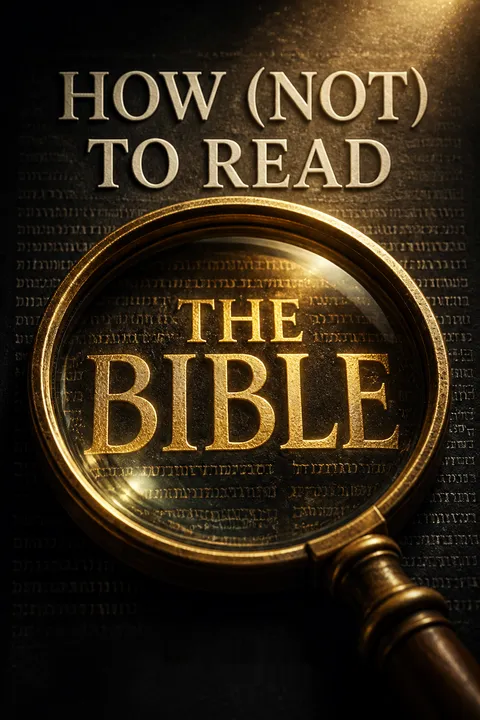
How (Not) to Read the Bible offers guidance on understanding difficult Bible passages, emphasizing context and historical background. Kimball addresses common criticisms and misunderstandings, providing tools for interpretation. Readers appreciate his accessible approach and engaging style, including memes. While some find certain explanations lacking or disagree with his interpretations, many recommend it for new or questioning Christians. The book covers topics like science, gender roles, and violence in the Old Testament, encouraging critical thinking and deeper Bible study.
People Also Read


Glossary
Bible storyline
Six-act biblical narrativeKimball’s overview of the Bible as a connected story: God creates, humanity rebels, God begins redemption through Israel, Jesus provides redemption, the church carries a mission to all nations, and God ultimately restores creation. The structure helps readers place a passage in the larger Christian narrative rather than treating it as an isolated statement.
Covenant
A binding divine agreementAn agreement between God and people that shapes how they relate to him. Kimball distinguishes the covenant made with Israel, which includes laws for that people in a particular period, from the new covenant made through Jesus. This distinction is central to his account of why Christians do not follow every ancient Israelite ritual or civil command.
yom
Hebrew word for dayThe Hebrew word translated as day in Genesis. Kimball notes that its usage can refer to different periods, including daylight hours, a full day, a season, a lifetime, or an extended span. Its range is one reason he argues that Genesis’s creation days should not automatically be treated as six modern, twenty-four-hour periods.
herem
Conquest language for destructionA Hebrew term associated with language translated as destroying or devoting something completely to God. Kimball argues that in ancient war accounts such wording could function as conventional battle rhetoric rather than a precise report that every person was killed. This interpretation remains part of a larger argument about the historical setting and ethical difficulty of biblical conquest.
texts of terror
Disturbing biblical passagesA label for passages that describe severe violence, death, or suffering and can provoke moral alarm. Kimball applies it especially to conquest narratives and texts about children killed in war. His approach is to examine genre, audience, and historical context, while acknowledging that context does not remove every emotional or ethical difficulty.
evolutionary creation
Creation through guided evolutionA Christian interpretation in which God is understood to have used evolutionary processes as part of creation. In Kimball’s account, this differs from an entirely unguided process because God remains purposeful and involved. The view treats Genesis as theological rather than as a detailed scientific description, while affirming God as creator.
FAQ
What is How (Not) to Read the Bible by Dan Kimball about?
- Addressing tough Bible passages: The book helps readers make sense of the Bible’s most confusing, disturbing, or controversial parts, such as those that seem anti-women, anti-science, pro-violence, or pro-slavery.
- Contextual understanding: Dan Kimball emphasizes reading the Bible in its historical, cultural, and literary context to avoid misinterpretation.
- Equipping readers: It’s designed for Christians, skeptics, and anyone struggling with doubts, providing tools to approach Scripture with confidence and honesty.
Why should I read How (Not) to Read the Bible by Dan Kimball?
- Tackling doubts and criticisms: The book directly addresses common objections and “gotcha” questions about the Bible, helping readers and their friends navigate faith challenges.
- Balanced and practical guidance: It offers both answers to difficult questions and teaches sound Bible study methods, making it useful for personal growth and for explaining faith to others.
- Cultural relevance: The book is especially timely for those in post-Christian or skeptical environments, where questions about the Bible’s morality and reliability are frequent.
What are the key takeaways from How (Not) to Read the Bible by Dan Kimball?
- Bible is trustworthy: Despite difficult passages, the Bible is inspired, authoritative, and reveals God’s plan of redemption through Jesus.
- Context is essential: Understanding the original audience, culture, and literary style is crucial to avoid misinterpretations and reconcile apparent contradictions.
- Faith and reason coexist: Christians can maintain a high view of Scripture while thoughtfully engaging with science, history, and other religions.
What are the four key principles for reading the Bible in How (Not) to Read the Bible by Dan Kimball?
- Bible as a library: The Bible is a collection of diverse books written over centuries, not a single book, so genre and historical context matter.
- Written for us, not to us: The Bible was written to ancient audiences; understanding their world is key to grasping the intended meaning.
- Never read a Bible verse in isolation: Always read verses within their broader context—paragraph, chapter, book, and the Bible’s overall storyline.
- All points to Jesus: The entire Bible, from Genesis to Revelation, ultimately points to Jesus as the promised Redeemer.
What Bible study methods and advice does Dan Kimball recommend in How (Not) to Read the Bible?
- Never read a verse alone: Always consider the context, original audience, and literary genre before drawing conclusions.
- Understand original intent: Ask what the human authors and God intended for the original readers, rather than imposing modern assumptions.
- Recognize different genres: The Bible contains poetry, history, prophecy, and narrative, each requiring different interpretive approaches.
How does How (Not) to Read the Bible by Dan Kimball address the Bible’s stance on women and gender roles?
- Equality in creation: Men and women were created equal and in harmony, both bearing God’s image and responsibility.
- Historical context of patriarchy: The Bible reflects a fallen world where patriarchy and misogyny emerged, but this was not God’s original design.
- Redemptive trajectory: Throughout Scripture, God elevates women as leaders and partners, and Jesus and the early church broke cultural norms to include women in ministry.
How does Dan Kimball explain controversial verses about women being silent or submitting in church in How (Not) to Read the Bible?
- Contextual reading required: These verses addressed specific cultural and church issues, such as disorder or pagan influences in Corinth and Ephesus.
- Not absolute silence: Paul elsewhere acknowledges women praying and prophesying; “silence” likely refers to respectful learning or avoiding disruption.
- Cultural customs and learning: The instructions reflect local customs and the need for learning before teaching, not permanent subordination.
What does How (Not) to Read the Bible by Dan Kimball say about the Bible and science, especially creation and dinosaurs?
- Bible not a science textbook: Genesis was written to reveal who God is, not to provide scientific details about creation or the earth’s age.
- Multiple creation views: The book presents several interpretations—Young Earth, Day-Age, Gap, God’s Temple, and Evolutionary Creation—all compatible with a high view of Scripture.
- Literalism pitfalls: Humorous examples, like “Jesus riding a dinosaur,” highlight the dangers of reading ancient texts with modern literalism.
How does Dan Kimball address the Bible’s stance on slavery in How (Not) to Read the Bible?
- Regulating, not endorsing: The Bible regulates an existing institution to protect people in a fallen world, rather than endorsing slavery.
- Different from modern slavery: Ancient slavery was often about debt repayment or servitude, not race-based chattel slavery, and included rights and protections.
- New Testament progression: The New Testament teaches equality in Christ and lays the foundation for the eventual end of slavery.
How does How (Not) to Read the Bible by Dan Kimball explain violent and disturbing Old Testament passages?
- Historical context matters: Many violent passages occurred during a specific period when God was preparing the land for Israel and judging corrupt cultures.
- Not indiscriminate genocide: The battles were strategic, with warnings given over generations, and not examples of ethnic cleansing.
- God’s character consistent: Despite the violence, God is described as compassionate, patient, and forgiving, as seen in Exodus 34:6–7.
What are some examples of misunderstood Bible verses explained in How (Not) to Read the Bible by Dan Kimball?
- “Unicorns” in the Bible: The King James Version’s “unicorn” is a mistranslation of a Hebrew word likely referring to a wild ox, not a mythical creature.
- “Rib-woman” creation: The Hebrew word for “rib” can mean “side,” indicating Eve as an equal partner, not a literal rib extraction.
- Psalm 137:9 and violence: Verses like “dash infants against rocks” are poetic expressions of grief and longing for justice, not divine commands.
What is Dan Kimball’s overall method for making sense of difficult Bible passages in How (Not) to Read the Bible?
- Understand the Bible’s nature: Recognize it as a diverse library written over centuries to specific audiences in specific contexts.
- Read in context: Never isolate verses; always read passages within their immediate and broader literary, historical, and theological context.
- Follow the storyline: Situate passages within the Bible’s overarching narrative, seeing how all Scripture points to Jesus and God’s redemptive plan.
- Distinguish covenants: Differentiate between Old Testament laws for Israel and New Testament teachings under Jesus’ new covenant.
- Engage with culture: Consider the original audience’s worldview to avoid misinterpretations based on modern assumptions.
Download PDF
Download EPUB
.epub digital book format is ideal for reading ebooks on phones, tablets, and e-readers.








