

Key Takeaways
Use a four-step intelligence habit before deciding what a crisis means
Separate the questions. Omand’s SEES model is a sequence for turning scattered information into judgment: establish situational awareness, explain what the evidence means, estimate how events may develop, and seek strategic notice of longer-term risks. Each step asks a different question, from what is happening to what may happen next. Skipping steps invites predictable mistakes, such as forecasting directly from a few observations without asking why they occurred.
The Falklands showed the cost. In March 1982, intercepted Argentine communications revealed preparations to invade. Earlier assessments had underplayed the danger, and the UK had not prepared well enough to deter or resist an attack. Omand sees failures across all four SEES stages. The framework applies to everyday decisions too, from a workplace conflict to a public emergency.
What's useful about SEES is its insistence that observation, interpretation, and prediction are different jobs. That distinction resembles the scientific method, where measurement does not by itself establish cause. It also helps teams locate where disagreement actually lies: colleagues may agree on the facts but differ about motives or likely consequences. The framework is a discipline, not a guarantee. A tidy sequence cannot repair missing evidence or incentives that reward reassuring conclusions, but it can make those weaknesses easier to name.
Let new evidence change your odds, not merely decorate your existing belief
Update, do not accumulate. Bayesian inference is a method for revising how strongly a hypothesis is believed when relevant evidence arrives. It starts with a prior view, asks how likely the evidence would be if the hypothesis were true, and uses that comparison to form a revised view. Evidence matters most when it distinguishes one explanation from its alternatives, not simply when it sounds vivid.
Cuba changed the assessment. Before the 1962 crisis, US analysts considered Soviet nuclear missiles in Cuba unlikely. Aerial photographs showed construction consistent with missile sites, while intelligence from Soviet officer Oleg Penkovsky helped analysts identify what they were seeing. The evidence sharply raised the likelihood of the missile explanation. The broader lesson is to examine source reliability, seek independent checks, and notice observations that do not fit the story already in circulation.
Bayesian thinking offers a practical antidote to both stubbornness and overreaction: beliefs should move in proportion to how diagnostic the evidence is. In medicine, for example, a test result has different meaning depending on how common the condition was beforehand. The same logic applies to reports and rumors. The method does not remove judgment, because people still estimate the reliability and relevance of evidence. A numerical-looking update can conceal weak assumptions, so the reasoning behind the odds matters as much as the final confidence.
Treat every explanation as a hypothesis competing against plausible alternatives
Facts need a story, but not just any story. The same observation can support different explanations. A farmer ordering more feed might be planning to nourish chickens or fatten them for slaughter; the chickens need context to interpret the fact. Human analysts face the same problem when they infer motives from behavior. Omand recommends listing plausible explanations and testing them against the evidence rather than building a case for a favorite.
Compare what counts against each account. Analysis of Competing Hypotheses, or ACH, is a structured technique that checks evidence against multiple explanations and favors the one with the least evidence contradicting it. In a fictional procurement case, secret purchases of specialized fuses might indicate a prohibited weapons program, a civilian research project, or another military use. The analyst asks which reports actually distinguish among those possibilities, and which are compatible with all of them.
This approach turns reasoning from advocacy into comparison. It is close to scientific falsification: a theory earns credibility not only from examples that fit, but from surviving serious attempts to find where it fails. The practice is especially valuable when facts are emotionally charged or when a compelling narrative arrives first. Its limit is that the alternatives can be incomplete or poorly specified. A rigorous comparison of three imagined explanations can still miss a fourth, so analysts must periodically ask what possibility their list excludes.
Forecast with causal models and probabilities, not confident point predictions
Explain before extrapolating. A forecast needs more than a snapshot and a trend. It needs a model of how important factors interact, plus explicit assumptions about what may change. In 1968, Western analysts saw Soviet forces gathering near Czechoslovakia but failed to anticipate the invasion. They assumed Moscow would avoid the political costs of intervention, reasoning from their own expectations about acceptable behavior rather than the Soviet leadership’s priorities.
Use ranges, not prophecy. Intelligence assessments express judgments in probability language because future events are uncertain. The right warning threshold depends partly on the cost of being wrong: missing a real threat may be far worse than issuing an unnecessary alert, or the reverse in a different setting. Capability also does not prove intent. Some future questions are mysteries, not secrets: more information about a leader cannot reveal with certainty what decision that person has not yet made.
Probability language can improve decisions by making uncertainty visible and allowing forecasts to be checked against outcomes. It also forces decision-makers to distinguish likelihood from consequence. Still, phrases such as likely or unlikely can sound more objective than they are if no common scale or track record supports them. Forecasting improves when teams record assumptions, define what would change their minds, and later compare estimates with events. Even then, complex systems can shift abruptly, so a useful forecast is a guide to action, not a promise about the future.
Prepare for risks early, even when their arrival date is unknowable
Warning is not timing. Strategic notice means identifying developments that may create serious future risks or opportunities, even when nobody can say exactly when they will occur. Iceland’s authorities had long asked airlines to test how volcanic ash affects jet engines. When the Eyjafjallajökull eruption sent ash across Europe in 2010, airspace was shut for days. Ten million passengers were affected and the aviation industry faced losses exceeding £1 billion. Advance testing could have made the response less disruptive.
Rank risk by impact as well as odds. Omand uses expected value, the likelihood of an event considered alongside its consequences, to focus attention on threats that are unlikely but potentially severe. He also distinguishes external risks, risks inherent to an activity, and risks created by major choices. Some cannot be prevented, but exercises, contingency plans, and layered safeguards can reduce the damage.
This is the logic of disaster preparedness: a forecast need not name the date of an earthquake to justify building codes. Preparation is often cheaper than improvisation, but it competes with urgent demands and can look wasteful when the feared event never arrives. Risk assessment therefore involves political and ethical choices, not just calculation. A high-impact scenario should not automatically dominate every budget. The useful question is what preparation reduces vulnerability at a reasonable cost while preserving capacity for more immediate needs.
Build procedures that expose bias before confidence hardens into certainty
Bias is individual and collective. Confirmation bias makes supporting evidence feel convincing and contradictory evidence feel suspect. Group pressure and institutional habits can amplify that tendency. The Iraq weapons assessments illustrate the danger: intelligence professionals had doubts about a source called Curveball, whose claims about mobile biological weapons facilities were false, yet those doubts were not adequately shared. Analysts also explained away imagery that conflicted with the favored account.
Make disagreement routine. Omand argues for explicit checks, including independent review, a designated contrarian, and a clear separation of what is known, unknown, and inferred. The point is not to eliminate human bias, which is unrealistic, but to create conditions where doubts can be raised without being treated as disloyalty. A review should test the reasoning afresh, not simply repeat the original steps, since the same error may survive a routine recheck.
The Iraq case shows that better individual knowledge of bias is insufficient when communication channels and authority structures suppress inconvenient doubts. This aligns with research on psychological safety, the shared belief that a group can raise questions without punishment. Dissent is most useful when it is specific, evidence-based, and connected to decision consequences. There is also a risk that contrarianism becomes performance, with a designated skeptic rewarded for opposition regardless of merit. Strong review tests competing arguments rather than assuming the minority view is automatically wiser.
Demand evidence that can escape a conspiracy's self-sealing logic
A theory must risk being wrong. James Angleton, a CIA counterintelligence chief, became convinced that Soviet deception explained nearly every troubling event and that suspected agents were evidence of an even wider plot. When contrary evidence appeared, he treated it as further proof of the plot. This closed loop damaged careers and led to the unjust treatment of a genuine Soviet defector. Omand’s test is whether a claim relies on evidence beyond the theory itself, or explains away every challenge as proof of concealment.
Name the kind of information. Malinformation is genuine information exposed to cause harm; misinformation is false information spread without deliberate intent to deceive; disinformation is false information knowingly circulated to mislead. The Zimmermann telegram, a real German proposal intercepted in 1917, was deliberately released to influence American opinion while concealing how it had been obtained. Verify provenance and purpose before sharing a sensational claim.
The closed-loop test is valuable because it shifts attention from whether a story feels plausible to what could actually disprove it. Yet a demand for evidence should not become a reflexive dismissal of wrongdoing: real conspiracies and covert actions do exist. The standard should be proportional, independent corroboration, and a willingness to revise the claim. The information categories also clarify motive, but intent is often difficult to establish from a single post. Cautious labeling and correction are more reliable than treating every error as an operation.
Negotiate from the other side's needs and a credible alternative
Perspective improves strategy. Oleg Gordievsky, a KGB officer secretly working with British intelligence, revealed Soviet leaders’ fears that the United States might launch a first strike. That insight helped US officials interpret Soviet reactions during a tense period and avoid treating every defensive move as an offensive plan. Understanding the other side does not mean agreeing with it; it helps distinguish what it wants from what it fears.
Know your fallback. BATNA means the best alternative to a negotiated agreement: a credible plan for what to do if talks fail. It is stronger than declaring a bottom line without knowing whether it can be sustained. Omand contrasts preparation with negotiations in which parties pressure one another into concessions that may not last. Durable agreements require each side to see a benefit, and backchannels can help clarify intentions when public positions make discussion difficult.
The advice links perspective-taking with bargaining power. Negotiation research similarly finds that attention to underlying interests can reveal trades that are better for both parties than haggling over fixed positions. A fallback plan reduces panic and makes refusal credible. But empathy should not become mind-reading: claims about the other side’s motives remain hypotheses and should be checked through questions, signals, and negotiation behavior. Nor does mutual benefit guarantee fairness. Differences in leverage can shape which outcomes are available and whose interests receive the most protection.
Earn trust through reliable conduct before asking for deep cooperation
Partnership rests on a record. The Five Eyes signals-intelligence partnership brings together the United States, the United Kingdom, Canada, Australia, and New Zealand. Its roots lie in wartime cooperation, and its value grew through decades of sharing sensitive information and technical work. The relationship depends not only on formal agreements but on partners reliably honoring restrictions, protecting sources, and contributing capabilities the others need.
Trust is earned in practice. Omand identifies shared values, mutual benefit, transparency, compatible legal rules, and the ability to challenge one another as foundations for durable cooperation. In a crisis, established working relationships can make coordination faster. But a partnership is not simply friendly feeling or a single successful deal. It must deliver benefits over time, allow concerns to be raised safely, and respect boundaries where partners have different laws or responsibilities.
Trustworthiness is more concrete than trust: it can be judged through consistency, competence, and respect for commitments. That distinction matters because organizations often declare confidence in one another before testing how they handle sensitive information or disagreement. Long cooperation can lower transaction costs and make ambitious joint work possible. It can also create dependency and unequal influence, especially when one partner has far more resources. Durable partnerships need both loyalty and procedures for scrutiny, boundaries, and repair when commitments are breached.
Defend democratic attention from digital manipulation without surrendering openness
Online influence can target the citizen. Digital platforms allow personal data to shape political messages for specific groups, while fake accounts, hacked material, and fabricated media can make false claims seem widely supported. Omand describes Russian efforts to inflame divisions during the 2016 US election, including social-media activity that addressed opposing sides of contentious issues. The aim was not only persuasion; it was also to weaken confidence and increase discord. Such activity exploits existing tensions rather than inventing every grievance.
Resilience needs institutions, not just vigilance. Omand’s closing optimism rests on preparation: stronger cybersecurity, transparent political messaging, critical-thinking education, responsible platform practices, and public institutions that explain uncertainty honestly. The digital world also spreads knowledge and connects people, so abandoning openness would sacrifice real benefits. The challenge is to protect informed choice while resisting covert manipulation and avoiding unchecked surveillance or censorship.
The chapter’s strongest point is that digital influence is a system problem, not merely a failure of individual media literacy. Platform incentives, targeted advertising, political secrecy, and public distrust interact to shape what people encounter. Personal skepticism helps, but it cannot substitute for transparency about who funds and distributes political messages. At the same time, safeguards can be misused by governments to suppress dissent. Democratic resilience therefore requires accountable rules, independent scrutiny, and room for legitimate disagreement, not a state authority empowered to decide which opinions are acceptable.
Analysis
The book’s central contribution is a practical architecture for judgment under uncertainty. Its four-stage method prevents a common collapse of reasoning: treating a new observation as if it were already an explanation, a forecast, and a plan. The historical cases give that architecture stakes. The Falklands, Cuba, Iraq, and the Soviet misreadings are not simply tales of missing information. They show how evidence is filtered through expectations, organizational incentives, and assumptions about what other people find rational.
That distinction matters beyond intelligence. Many contemporary failures are not caused by a total absence of data, but by confusion between data and knowledge. Search engines, sensors, and automated models increase access to observations while leaving interpretation and responsibility unresolved. Omand’s insistence on separating known facts, inference, and speculation is especially useful in this environment. His probabilistic approach also resists the false choice between certainty and ignorance: a judgment can be uncertain and still improve a decision.
The method has limits. Structured analysis cannot make weak sources reliable, guarantee that the listed explanations cover reality, or remove the political pressures shaping which questions are asked. Probability words can create an illusion of calibration unless judgments are recorded and reviewed against outcomes. The author’s strongest safeguards are therefore procedural and ethical as well as analytical: make assumptions visible, preserve dissent, communicate uncertainty, and regulate secret powers.
The digital chapters extend this argument from the analyst to the citizen. Online manipulation succeeds most readily when it exploits real fractures and rewards rapid emotional response. Individual caution matters, but platform design and institutional trust matter too. A democratic answer cannot be simply more surveillance or more content control, since those remedies may undermine the freedoms being defended. The deeper lesson is to make public reasoning more resilient: reliable evidence, transparent incentives, accountable authority, and a culture in which changing one’s mind is evidence of learning rather than weakness. Clear thinking is not a private talent alone; it is a social capacity that institutions can either support or corrode.
Review Summary
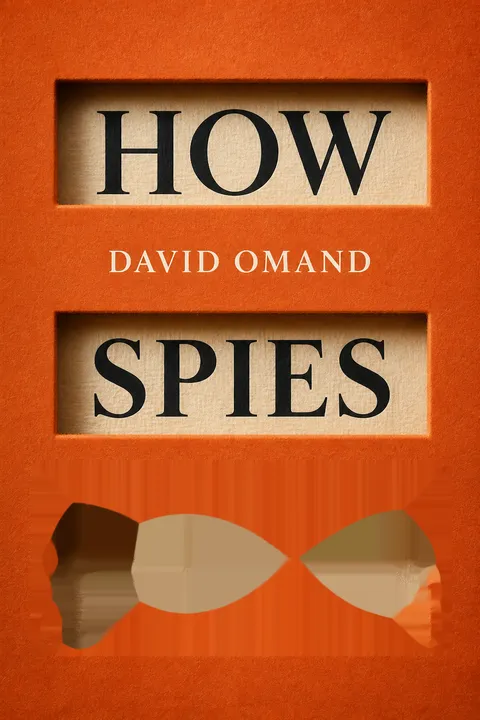
How Spies Think receives mixed reviews, with praise for its insights into intelligence analysis and decision-making. Readers appreciate Omand's experience and practical examples, finding value in the SEES model and lessons on critical thinking. Some criticize the book's dry tone and complexity, while others note its relevance to modern challenges like disinformation. The book's structure and focus on analysts rather than field agents disappoint some readers expecting more spy-centric content. Overall, it's seen as a thought-provoking read on intelligence and information processing.
Glossary
SEES model
four-stage analytic sequenceA framework for organizing assessment into four tasks: situational awareness, explanation, estimates, and strategic notice. It distinguishes establishing what is happening from explaining why, judging how events may unfold, and identifying longer-term developments that could matter. The sequence is intended to reduce errors caused by jumping from fragmentary facts directly to confident predictions.
Bayesian inference
belief revision from evidenceA method for adjusting the degree of belief in a hypothesis when relevant evidence arrives. It compares how likely the evidence would be if the hypothesis were true with how likely it would be under alternatives, starting from an initial, or prior, belief and producing a revised, or posterior, belief. Its usefulness depends on sound judgments about evidence quality and relevance.
Analysis of Competing Hypotheses
structured explanation comparisonAn analytic technique associated with CIA analyst Richards J. Heuer. Analysts list plausible explanations, then assess each item of evidence according to whether it supports, contradicts, or fails to distinguish among them. Rather than choosing the explanation with the most supporting evidence, the method favors the one with the least evidence against it and makes assumptions easier to inspect.
strategic notice
early view of future risksRecognition of longer-term developments that may create future threats or opportunities, even when their precise timing cannot be predicted. Strategic notice supports preparation, monitoring, and contingency planning before a risk becomes an immediate crisis. It differs from a tactical warning about when and where a particular event is about to occur.
mirror-imaging
assuming others think like usA reasoning error in which an analyst assumes that another person or government will respond according to the analyst’s own values, constraints, or sense of what is rational. It can obscure cultural and political differences, particularly when assessing authoritarian leaders through expectations formed in a democracy. The result can be a serious misjudgment of motives and willingness to use force.
Cassandra effect
warnings that go unheededThe failure of decision-makers to believe or act on a warning, even when it proves accurate. The term refers to the Greek figure Cassandra, whose prophecies were not believed. Warnings may be discounted because the source is distrusted, previous alerts produced no event, the message is vague, or the proposed preventive action seems too costly.
BATNA
best fallback to agreementThe best alternative to a negotiated agreement. It is a practical plan for what a party will do if negotiations fail, rather than an unsupported declaration of a bottom line. A credible BATNA reduces pressure to accept poor terms and helps a negotiator judge whether an agreement is preferable to walking away.
malinformation
true information used harmfullyGenuine information that was not intended to become public but is exposed or circulated to cause harm or influence opinion. A true private message, for example, may be stolen and released strategically. Its factual accuracy does not make its disclosure neutral; context, omissions, and the purpose of publication affect how it is used.
misinformation
false information shared innocentlyInformation that is false or misleading but is circulated without the deliberate intention to deceive. It may arise from an honest error in reporting, analysis, or public communication. Omand emphasizes correcting such errors once recognized, since uncorrected misinformation can continue to shape judgments even after the original mistake is understood.
disinformation
deliberate falsehood for effectFalse information that its source knows to be false and circulates to deceive or influence an audience. It may be designed to appear credible, exploit existing beliefs, or gain authority through repetition across several channels. Disinformation differs from innocent misinformation in intent, though intent can be difficult to establish from a single item.
auto-subversion
internal erosion of democratic normsOmand’s term for damage to a society’s democratic values that arises from within, rather than being directed solely by an outside power. Domestic actors can inflame existing fears, divisions, or distrust, sometimes while foreign actors exploit the same weaknesses. The concept warns that external interference can succeed because of vulnerabilities already present in a society.
FAQ
What's How Spies Think about?
- Intelligence Analysis Focus: The book delves into how intelligence analysts think and make decisions, using historical events to illustrate these processes.
- SEES Model Introduction: David Omand presents the SEES model, which stands for Situational awareness, Explanation, Estimations, and Strategic notice, as a framework for analyzing information.
- Real-World Examples: It includes case studies like the Cuban Missile Crisis and the Falklands War to demonstrate intelligence analysis principles and the impact of errors.
Why should I read How Spies Think?
- Improve Decision-Making: Gain insights into better decision-making in personal and professional contexts by learning from intelligence practices.
- Cognitive Bias Awareness: The book highlights common cognitive biases, helping readers become more aware of their own thought processes.
- Relevance to Modern Challenges: In an era of information overload, the lessons from intelligence analysis are crucial for navigating today’s complex world.
What are the key takeaways of How Spies Think?
- Situational Awareness Importance: Recognizing that our knowledge is often incomplete is crucial for effective decision-making.
- Explanations Over Facts: Facts require context and explanation to be meaningful, emphasizing the need for credible narratives.
- Strategic Notice: Anticipating future developments and recognizing potential risks can help avoid surprises.
What is the SEES model in How Spies Think?
- Four Components: The SEES model includes Situational awareness, Explanation, Estimations, and Strategic notice, each vital for intelligence analysis.
- Bayesian Inference Application: It incorporates Bayesian reasoning, allowing analysts to adjust beliefs based on new evidence.
- Versatile Tool: The model can be applied to various scenarios, from personal decision-making to geopolitical issues.
How does How Spies Think address cognitive biases?
- Bias Identification: Omand discusses biases like confirmation bias and mirror-imaging, crucial for mitigating their effects.
- Impact on Decisions: Biases can lead to poor judgments, especially in high-stakes situations like intelligence assessments.
- Mitigation Strategies: Methods include structured analytic techniques and encouraging dissenting opinions to foster thorough evidence examination.
What are some historical examples used in How Spies Think?
- Cuban Missile Crisis: Demonstrates the importance of situational awareness and timely decision-making with new evidence.
- Falklands War: Highlights the need for strategic notice and the consequences of ignoring warning signs.
- Srebrenica: Discusses the failure to act on intelligence, emphasizing understanding motivations and risks of inaction.
What are the best quotes from How Spies Think and what do they mean?
- “We do not have to be so surprised by surprise.”: Emphasizes strategic notice and preparation to anticipate and mitigate surprises.
- “It is our own demons that are most likely to mislead us.”: Highlights the impact of cognitive biases on reasoning, stressing self-awareness.
- “Facts need explaining.”: Underscores the necessity of context in understanding information, reminding readers that raw data is insufficient.
How does How Spies Think relate to modern challenges?
- Digital Manipulation: Discusses the complexity of information and potential for manipulation in the digital age.
- Rapid Decision-Making: Provides tools for effective decision-making under pressure in a fast-paced world.
- Global Threats: Addresses contemporary challenges like cyber threats and terrorism, emphasizing strategic awareness.
How can I apply the lessons from How Spies Think in my daily life?
- Critical Thinking: Encourages questioning assumptions and seeking evidence before forming conclusions.
- Bias Awareness: Recognizing cognitive biases can enhance interpersonal relationships and professional interactions.
- Proactive Planning: Emphasizes strategic notice for personal risk management and preparedness.
How does How Spies Think suggest we safeguard against misinformation?
- Critical Examination: Advocates for distinguishing between malinformation, misinformation, and disinformation.
- Correcting Misinformation: Stresses the importance of correcting misinformation quickly and responsibly.
- Digital Literacy: Encourages developing skills to recognize and counter misinformation, vital for a resilient democracy.
What role does trust play in intelligence and decision-making according to How Spies Think?
- Foundation of Partnerships: Trust is critical for building effective partnerships and fostering collaboration.
- Long-Term Relationships: Trustworthiness leads to lasting relationships, essential for successful intelligence operations.
- Impact on Decision-Making: Trust influences decision-making processes, allowing for effective collaboration and information sharing.
How does How Spies Think address the challenges of the digital age?
- Information Complexity: Discusses the rise of misinformation and disinformation, particularly through social media.
- Manipulation Awareness: Highlights the need for critical evaluation of online content to counter manipulation.
- Personal Responsibility: Encourages verifying information and recognizing manipulation in today’s information-rich environment.
Download PDF
Download EPUB
.epub digital book format is ideal for reading ebooks on phones, tablets, and e-readers.








