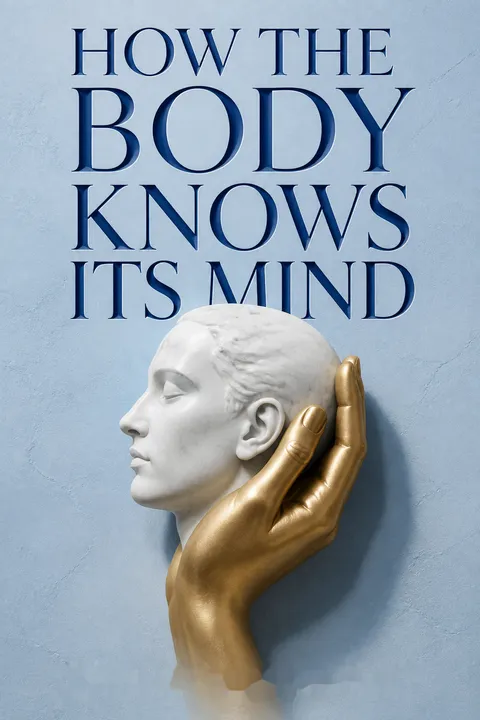


Key Takeaways
Treat your body and surroundings as working parts of your mind
Thinking is embodied. Beilock challenges the familiar picture of the brain as software running independently of the body. When we read about an eagle flying, for example, the mind can reactivate a memory of wings outstretched. Bodily experience and surroundings help shape what a situation means, not just how we respond to it.
A run changed the interview. Before a job interview, Beilock stumbled on a wooded run, then stood tall and hid her pain. She was rejected for that first job, but used exercise, outdoor walks, and confident posture in four later interviews, and received all four offers. The story is not proof that posture secured the jobs. It illustrates a practical principle: performance depends partly on the physical state and setting in which thinking happens.
The useful shift is from treating the body as a vehicle for the mind to treating it as part of the thinking system. This resembles distributed cognition, the idea that reasoning can depend on tools and surroundings as well as neural activity. A map helps navigation because it stores information outside the head; a walk may support thought by changing attention and arousal. The frame is powerful, provided it does not imply that bodily tweaks can control outcomes. The interview story itself acknowledges how many factors shape hiring, and that restraint makes the lesson more credible.
Use facial expression and posture as feedback, not just display
The face sends signals inward. In experiments, people who held a pencil in their teeth in a way that produced a smile rated cartoons as funnier than those whose grip formed a frown. Smiling during an ice-water challenge was also linked to less stress and faster recovery. A slumped posture, by contrast, can make people feel worse about their performance.
A clinical clue, not a cure-all. Laura, whose severe depression had not responded to medication and therapy, improved after Botox limited the frown muscles between her eyebrows. In a double-blind trial described in the book, participants receiving Botox reported an average 47 percent reduction in depressive symptoms six weeks after treatment began. The findings suggest that facial feedback can influence emotion, but Botox is a medical intervention, not a self-help prescription.
This is a compelling example of feedback loops: emotion shapes expression, and expression can in turn influence emotion. Similar loops appear in motor learning, where repeated actions change what a person can do next. The practical value is modest but real: posture and facial movement may be adjustable inputs when mood is low or stress is high. The evidence should not be inflated into a claim that people can smile their way out of depression. Clinical depression has many causes, and the Botox result is promising evidence, not a universal treatment.
Give children room to act, because movement helps build understanding
Motor experience is mental experience. Babies learn about the world partly by moving through it. In a visual-cliff experiment, experienced crawlers hesitated at an apparent drop, while less experienced crawlers were more likely to approach it. Their movement experience helped them judge danger. Infants who could explore also showed memory advantages over peers who could not yet move independently.
Small movements can matter. A study following 374 infants found that motor abilities at five months, such as sitting and reaching, predicted later intelligence and academic achievement, including reading and math scores at fourteen. Practicing printing letters can help children recognize them, while finger dexterity is associated with later math skill. These findings do not mean that every child develops on the same schedule. They show why motor development and hands-on exploration deserve attention alongside academic milestones.
The central implication for parents and educators is to notice what a child can physically explore, not only what the child can recite. This connects development to affordances, the opportunities an environment offers for action. A reachable object invites grasping; a safe floor invites crawling. At the same time, prediction is not proof of causation. Early motor skill may help create learning opportunities, but it can also reflect other developmental factors. The strongest response is neither to dismiss motor delays nor to treat them as a verdict, but to make exploration accessible and adapt support to the child.
Match hands-on activity to the idea you want learners to grasp
Relevant action teaches. In reading lessons designed by psychologist Art Glenberg, children acted out story events with toys as they read. Their comprehension improved by 50 percent or more compared with children who reread the sentences. In a math problem about feeding fish to hippos and alligators, students who distributed toy fish were twice as likely to solve it correctly as students who merely reread the story.
Random activity is not enough. A group that counted unrelated Lego pieces did no better than the rereading group. The toys helped only when their use reflected the problem's meaning. Physics professor Susan Fischer used the same principle: students handled a ruler with a binder clip to feel how the distribution of mass affects rotation. The lesson is not to add props indiscriminately, but to make learners physically enact the relationship they are trying to understand.
These examples clarify why active learning can work without making movement a classroom cure-all. The action supplies a concrete model of the relation in the material: one fish for each animal, or mass placed farther from a pivot. This is close to the idea of cognitive scaffolding, where a temporary support makes a difficult structure easier to grasp. The important design question is not whether students are busy, but whether the activity preserves the concept's logic. When the physical representation is misleading or unrelated, it can add effort without adding understanding.
Move, gesture, and change posture when thought needs another route
Movement can unlock ideas. In a classic tumor problem, people had to destroy a tumor without damaging surrounding tissue. Tracking a moving dot that converged on the tumor helped some participants discover the solution: aim several weaker beams from different directions. Walking also improved performance on several creativity tasks, including generating unusual uses for objects.
Hands can hold a thought. Gestures help people explain and solve problems by representing information in space. Actors also remember dialogue better when lines are linked to movement. For practical memory, the book recommends testing recall and spacing practice over time rather than relying on a last-minute cram. Expansive postures may increase feelings of power, but the evidence for hormonal effects is contested, and feeling powerful can also encourage cheating or rule-breaking.
Movement offers an alternate route into a problem when verbal, step-by-step reasoning stalls. It can externalize relationships, much as sketching lets a designer inspect an idea rather than merely imagine it. Gesture is especially useful because it can reveal a half-formed solution before a speaker can articulate it. The caveat is that movement is not inherently creative: the tumor task worked because the eye movement echoed the solution, and aimless activity may simply distract. The best experiment is a purposeful change in posture, location, or gesture that gives the problem a new representation.
Notice how bodily ease quietly shapes preference and communication
Hands reveal and shape judgment. Politicians in debate were more likely to use their dominant hand while making positive statements, with the pattern reversing for left-handed speakers. Gestures can also help the speaker think, not just persuade an audience. The side that feels fluent matters: right-handers tend to prefer objects on their right, while left-handers often show the opposite pattern.
Ease can steer choices. In one study, shoppers carrying a basket were three times more likely to choose an indulgent snack than those pushing a cart. A basket flexes the arm, a posture associated with approaching and obtaining rewards. Researchers also found that skilled typists preferred letter pairs that were easier to type, a finding called the QWERTY effect. These influences are subtle, not irresistible. Still, product placement, packaging, and interface design can take advantage of them.
This section shows that preference is not always a calm verdict delivered after conscious comparison. It can emerge from the ease of reaching, grasping, typing, or gesturing. In design terms, an object affords some actions more readily than others, and those actions can color evaluation. The same insight helps explain why small interface choices can matter in digital products. But bodily fluency is one influence among many, not a reliable way to predict an individual's choices. Awareness is most useful for noticing when convenience is being mistaken for quality or when a sales environment is shaping the decision.
Use your own action experience to read what others are doing
Understanding often involves simulation. The book describes mirror neurons, first observed in monkeys, that responded both when an animal performed an action and when it watched another perform it. In humans, action-related brain regions can also become active when people read verbs such as kick or pick. This helps explain why experience can improve interpretation: hockey players listening to a game description showed motor-system activity that nonplayers did not, and greater activity was associated with better understanding.
Expertise predicts what happens next. Experienced basketball players could judge whether a shot would score earlier than sports journalists or novices, sometimes before the ball left the shooter's hands. Similar action matching may support empathy: people partly understand another's emotion by drawing on their own emotional experience. It is not mind-reading. Context, attention, and learned social knowledge still matter.
The strongest version of this account is that perception is active: the brain uses learned action patterns to anticipate what a movement means and what is likely to follow. That is valuable in sport, language, and ordinary social life. It also explains why familiarity can make a scene legible to one person and opaque to another. Yet simulation alone cannot explain all understanding. A person may accurately interpret an unfamiliar action by reasoning from context, and mirror-system findings do not establish that one neural mechanism explains empathy or autism. The book's broader claim is more secure than any single mirror-neuron theory.
Treat warmth, distance, and rejection as signals your body interprets
Social experience has physical echoes. Harry Harlow's infant monkeys preferred a soft, warm cloth surrogate over a wire one, even when the wire surrogate supplied milk. The finding suggested that contact comfort matters alongside basic nourishment. In human studies, holding a warm object was associated with greater feelings of social connection, while coldness was linked to reduced trust.
Distance can change conduct. In Stanley Milgram's obedience experiments, participants were less willing to administer shocks when the learner was physically closer. Social rejection also activates some brain regions involved in physical pain. These overlaps help explain why exclusion can feel bodily real, but they do not mean emotional pain and physical injury are identical. The book also discusses acetaminophen research on social pain; it is a research finding, not advice to take medication for rejection.
Physical and social signals overlap because human survival has long depended on care, cooperation, and proximity. That makes the body a useful early-warning system for isolation and threat. The insight has practical consequences: a difficult conversation may feel different face to face than through a screen, and a supportive presence can reduce the felt burden of a challenge. Still, warmth is not a substitute for trust, and proximity does not guarantee empathy. The evidence points to bodily cues as influences on social judgment, not as simple controls over relationships.
Use moderate exercise to replenish attention, memory, and mental flexibility
Exercise changes the brain. In one mouse study, animals with running wheels developed roughly twice as many new brain cells as inactive mice. In children, a 20-minute brisk treadmill walk improved performance on attention tasks compared with sitting quietly. Exercise also supports working memory, the limited mental workspace used to hold relevant information while resisting distraction. Adults with lower working-memory scores benefited especially from a moderate bout of exercise.
The benefits span a lifetime. In a year-long study described in the book, older adults who walked for 40 minutes three times a week increased hippocampal volume by about 2 percent, while a stretching group showed a typical decline. Exercise can also help creative flexibility. More is not always better: strenuous or prolonged activity that causes dehydration may impair performance, and exercise improved negotiation only for people who entered confident rather than already overwhelmed.
Exercise is often framed as a trade-off against intellectual work, as if time spent moving is time stolen from thinking. These findings suggest the opposite: movement can improve the conditions under which attention and memory operate. The immediate effects are especially useful before demanding work, while long-term activity supports brain health across age groups. The nuanced prescription matters. Exercise does not erase stress, guarantee creativity, or replace treatment for cognitive or mood disorders. Its value is as a regular, scalable support for mental functioning, with intensity matched to the person and the task.
Train attention through bodily awareness instead of wrestling thoughts
Mindfulness returns attention to experience. In concentration meditation, a person notices the physical sensation of breathing and gently redirects attention when it wanders. Experienced meditators showed quieter activity in brain networks associated with mind-wandering, even when they were not meditating. The aim is not to force thoughts away, but to notice them without being pulled along.
Practice can be brief. Integrative body-mind training, a method combining posture awareness, relaxation, imagery, and mindfulness, was associated with brain changes after eleven hours of practice over a month. A separate study reported a 60 percent reduction in smoking among participants after five hours over two weeks. These are encouraging but limited findings, not proof that a short course works equally well for everyone. The book also describes a three-month retreat whose gains in attention were largely maintained among participants who continued brief daily practice.
Mindfulness treats attention as a trainable skill rather than a personality trait. Its body anchor gives the mind a concrete reference point, making it easier to notice distraction before distraction becomes the whole experience. This approach complements strategies such as writing down worries, which can reduce the mental load of anxiety. The evidence is promising, but meditation includes many different practices, and results from intensive or small studies should not be treated as guarantees. The practical test is whether a particular method helps a person return to the task, not whether it produces a dramatic inner state.
Restore focus with nature and deliberate breaks from mental overload
Nature lets directed attention rest. Attention restoration theory proposes that natural settings gently attract involuntary attention, giving effortful concentration a break. Students who walked through an arboretum improved on attention tests, while those who walked through downtown did not. Even ten minutes spent looking at nature photographs improved concentration in one study.
Green views can matter at home. Residents of Chicago's Robert Taylor Homes with more trees and grass visible from their windows reported less aggression and scored better on working-memory tests. Nature may also help people with ADHD and those experiencing depression or illness. Taking a break from a stuck problem can encourage new solutions, especially when the break changes the setting. This does not make a park a cure for urban stress. It does show that access to restorative spaces is part of the mental environment, not merely decoration.
The nature findings connect individual attention to public design. Trees, parks, and views may function as cognitive infrastructure by giving overworked attention a lower-demand setting in which to recover. That perspective makes green space relevant to schools, housing, and workplaces, not just recreation. It also raises an equity question: people most exposed to chronic stress may have the least access to restorative environments. Nature cannot remove poverty, unsafe housing, or excessive workload, but environmental improvements can complement rather than replace efforts to address those causes.
Analysis
Beilock's book is a science-led argument with a practical destination: thought is not sealed inside the skull, because body, action, and environment help produce it. Its structure is cumulative rather than a single step-by-step program. Each chapter takes a familiar experience, such as feeling rejected, struggling to learn, or getting stuck on a problem, and uses experiments to show how physical signals can participate in cognition. The recurring stories make a broad claim memorable, while the variety of examples demonstrates that embodiment is not one narrow effect.
That breadth is also the book's main summarizing challenge. Facial expression, motor learning, shopping preferences, social warmth, exercise, meditation, and green space involve different mechanisms and different levels of evidence. They should not be flattened into a claim that the body can simply command the mind. The most defensible through-line is reciprocal influence: bodily states and surroundings alter what becomes easier to notice, feel, understand, or do, while mental goals shape how people move and interpret bodily signals.
The evidence is strongest when an action directly represents the concept being learned, as when students distribute toy fish to solve a story problem. Claims based on short-lived posture or preference effects require more caution, especially when a striking result rests on a small experiment. Beilock often signals these limits, and the book is most persuasive when it distinguishes a useful influence from a guaranteed outcome.
Its enduring value is a design principle: instead of demanding that the mind overcome every obstacle by willpower, change the conditions under which thinking occurs. Let learners manipulate relevant objects, give attention restorative pauses, make movement available, and treat social and physical settings as part of performance. The body is not a magic lever. It is one of the systems through which thought becomes possible.
People Also Read









Glossary
Embodied cognition
Thought shaped by bodily experienceThe view that thinking depends partly on the body's sensations, actions, and history of interacting with the world. Understanding a word, solving a problem, or interpreting another person's movement can recruit systems also used for acting and sensing. The concept challenges the idea that cognition is an abstract process isolated from the body.
Mirror neurons
Neurons responsive to seen actionsNeurons first identified in monkeys that respond both when an animal performs a particular action and when it observes another performing a similar action. The book uses the finding to explain how action experience may support understanding of others. In humans, related activity is often discussed as a broader mirror system, and its role in empathy remains debated.
Contact comfort
Comfort from warm physical contactHarry Harlow's term for the soothing value of soft, warm physical contact. In his monkey studies, infants preferred a cloth-covered surrogate to a wire one even when the wire surrogate provided milk. The finding challenged explanations of attachment based only on feeding and suggested that physical comfort contributes to social bonding.
End-state comfort effect
Grasping for easier later useA tendency to choose an initially convenient or unusual hand position because it makes the intended final action easier. A waiter may grasp an upside-down glass with the wrist turned so that one simple movement positions it for filling. The effect shows that people plan present movements partly around the comfort of a future action.
QWERTY effect
Typing ease shapes word preferenceThe reported tendency for skilled typists to favor words or letter combinations that are easier to type on a QWERTY keyboard. The proposed mechanism is that typing fluency contributes to evaluation, often without conscious awareness. The book also describes possible associations between keyboard layout and the popularity of newer words and names.
Working memory
Limited workspace for active thoughtA limited-capacity mental system for keeping relevant information available while using it and filtering out distractions. It supports tasks such as following instructions, solving a problem while remembering intermediate results, and staying focused on schoolwork. Stress can consume this capacity, while exercise and restorative environments may support its effective use.
Integrative body-mind training
Posture-based mindfulness practiceA meditation approach described in the book that combines body relaxation, posture awareness, mental imagery, and mindfulness, often guided by an instructor or recording. Rather than forcing thoughts away, practitioners adjust attention through awareness of bodily state. The reported studies associate brief training with changes in attention and self-regulation, though the evidence does not establish equal effects for everyone.
Attention restoration theory
Nature replenishes directed attentionA theory that effortful, directed attention can become fatigued, while natural settings gently engage involuntary attention and allow directed attention to recover. Studies discussed in the book compare attention after walks in natural and urban settings, and after viewing nature or city images. The theory helps explain why green space may support concentration and self-control.
Executive control
Managing attention and impulsesAn umbrella term for cognitive abilities that help people direct attention, hold goals in mind, regulate emotion, and resist impulses. It supports actions such as working through conflict without reacting violently or resisting an immediate temptation. In the book, working memory is one important resource that contributes to executive control.
Download PDF
Download EPUB
.epub digital book format is ideal for reading ebooks on phones, tablets, and e-readers.








